

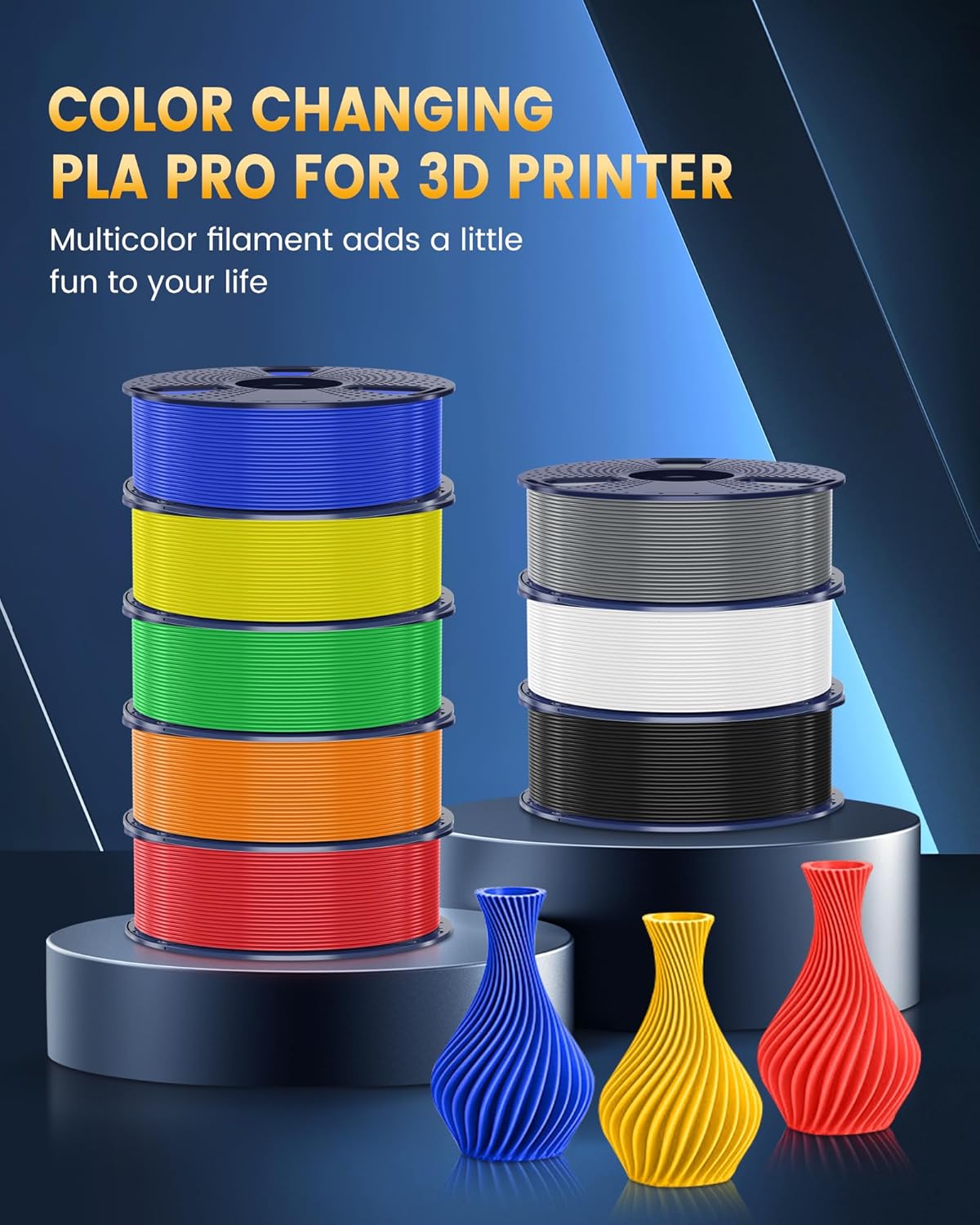
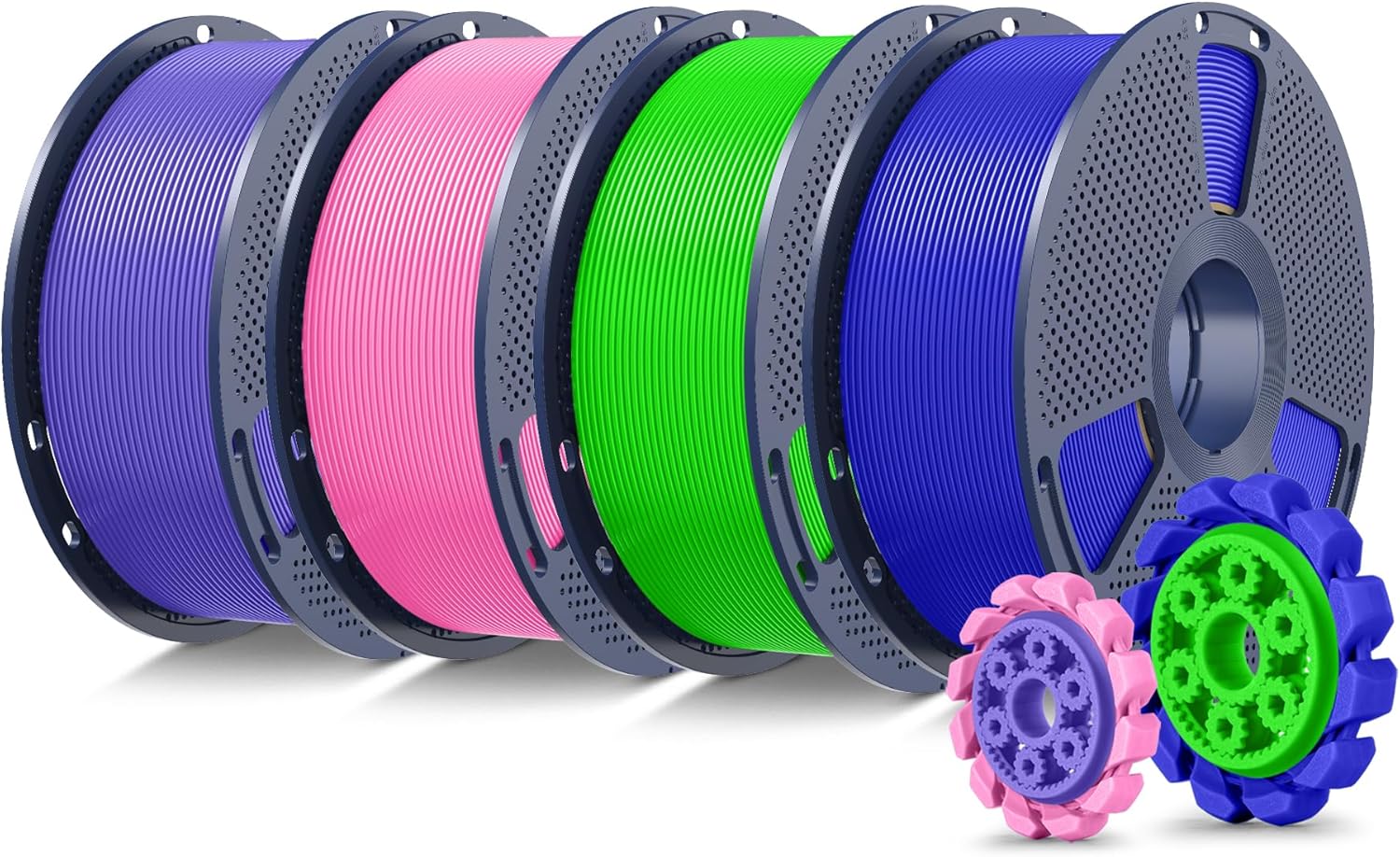
SUNLU 4KG PLA+ 2.0 filament bundle (1.75mm) – Pink, Lavender Purple, Klein Blue & Green
Product description
What this SUNLU PLA+ 2.0 bundle is for
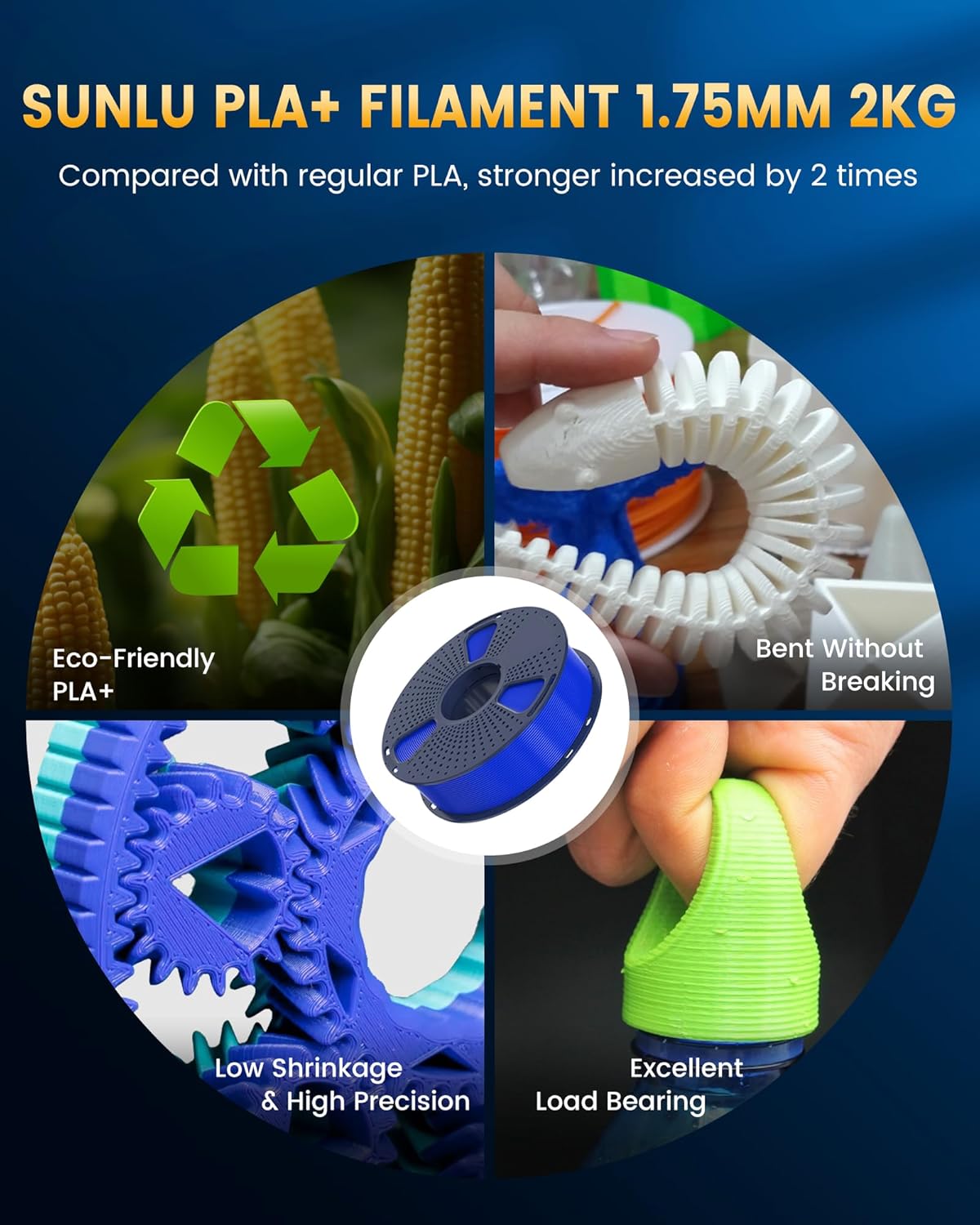
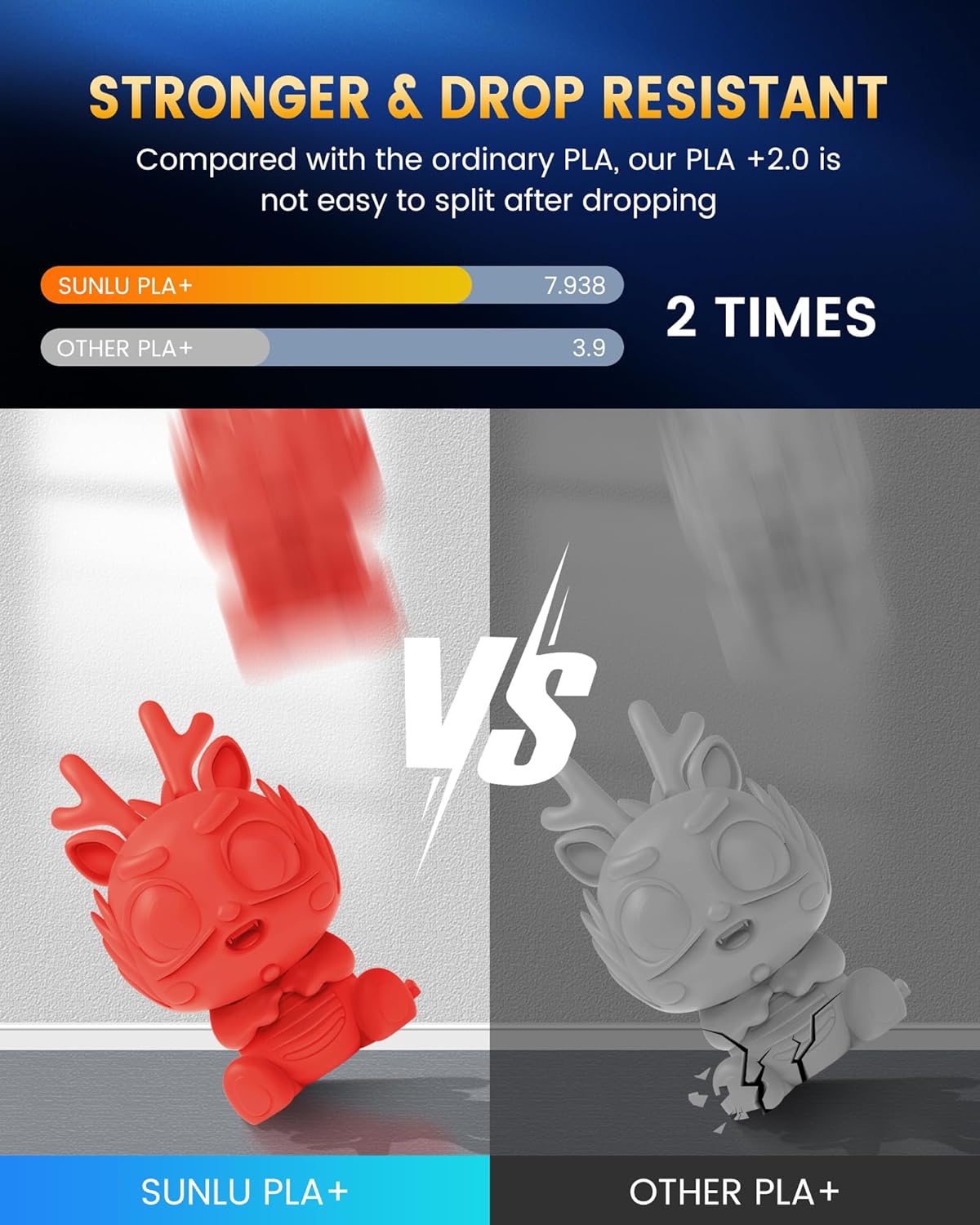
If you’re printing FDM parts and you want something more forgiving than standard PLA+, this SUNLU PLA+ 2.0 filament bundle is aimed at tougher, less brittle results. On paper, the big promise here is improved resistance to brittleness and cracking, which is the kind of problem that shows up after repeated use, small impacts, or when a part needs to keep its shape.
This bundle comes as 4 spools total (1KG per spool, 1.75mm filament). The colours listed are Pink, Lavender Purple, Klein Blue and Green, which makes it practical if you’re doing multi-part prints, swapping between prototypes, or simply like keeping projects colour-coded.
Key takeaways: where it stands out
Where this filament looks strongest is the combination of durability-focused PLA+ behaviour and a setup that’s designed to be straightforward.
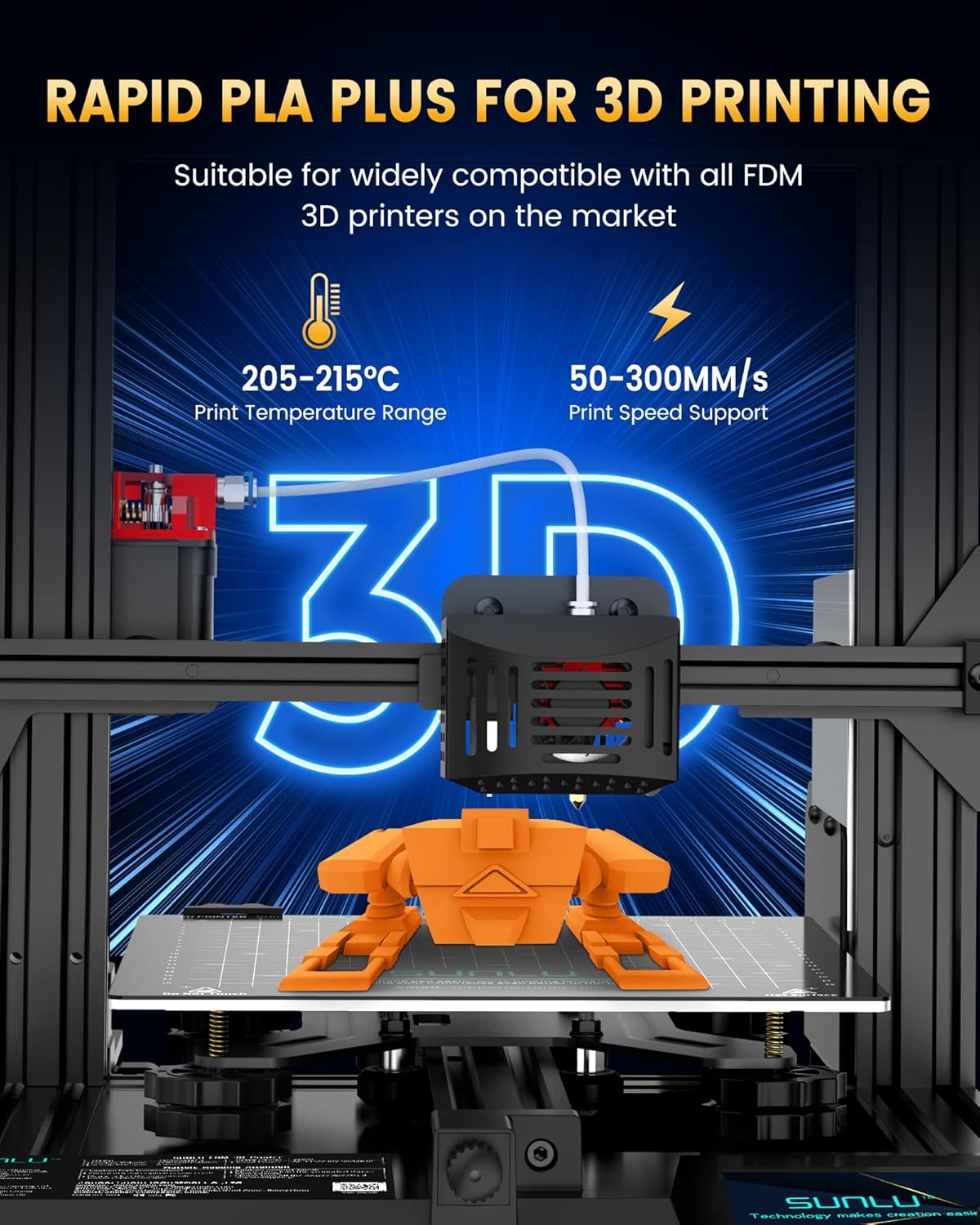
It’s described as melting quickly and flowing smoothly, with support for printing speeds up to 300mm/s. That’s the sort of spec that can help when you’re trying to get batch prints done sooner—though whether you hit those higher speeds consistently depends quite a lot on your printer, cooling, and part geometry.
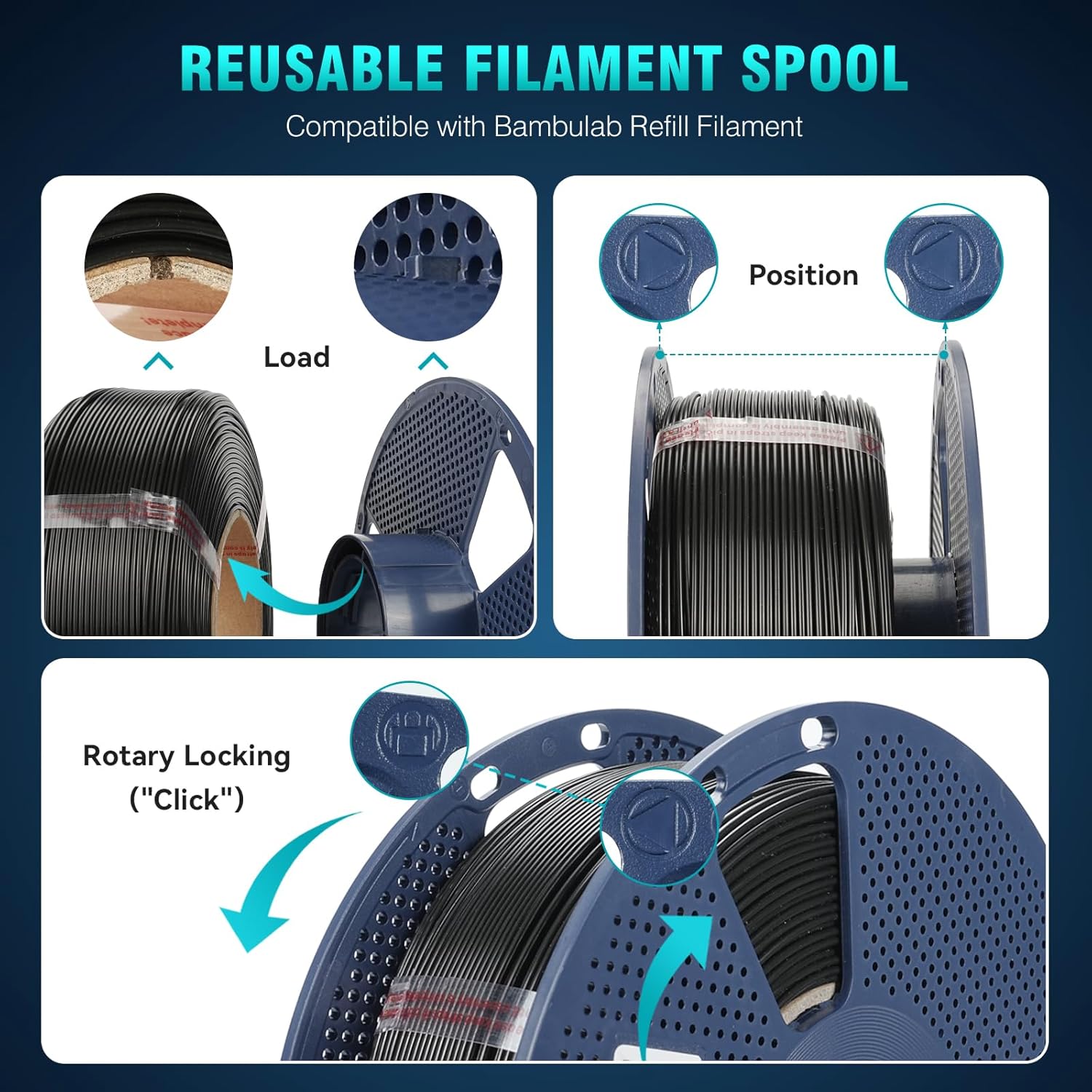
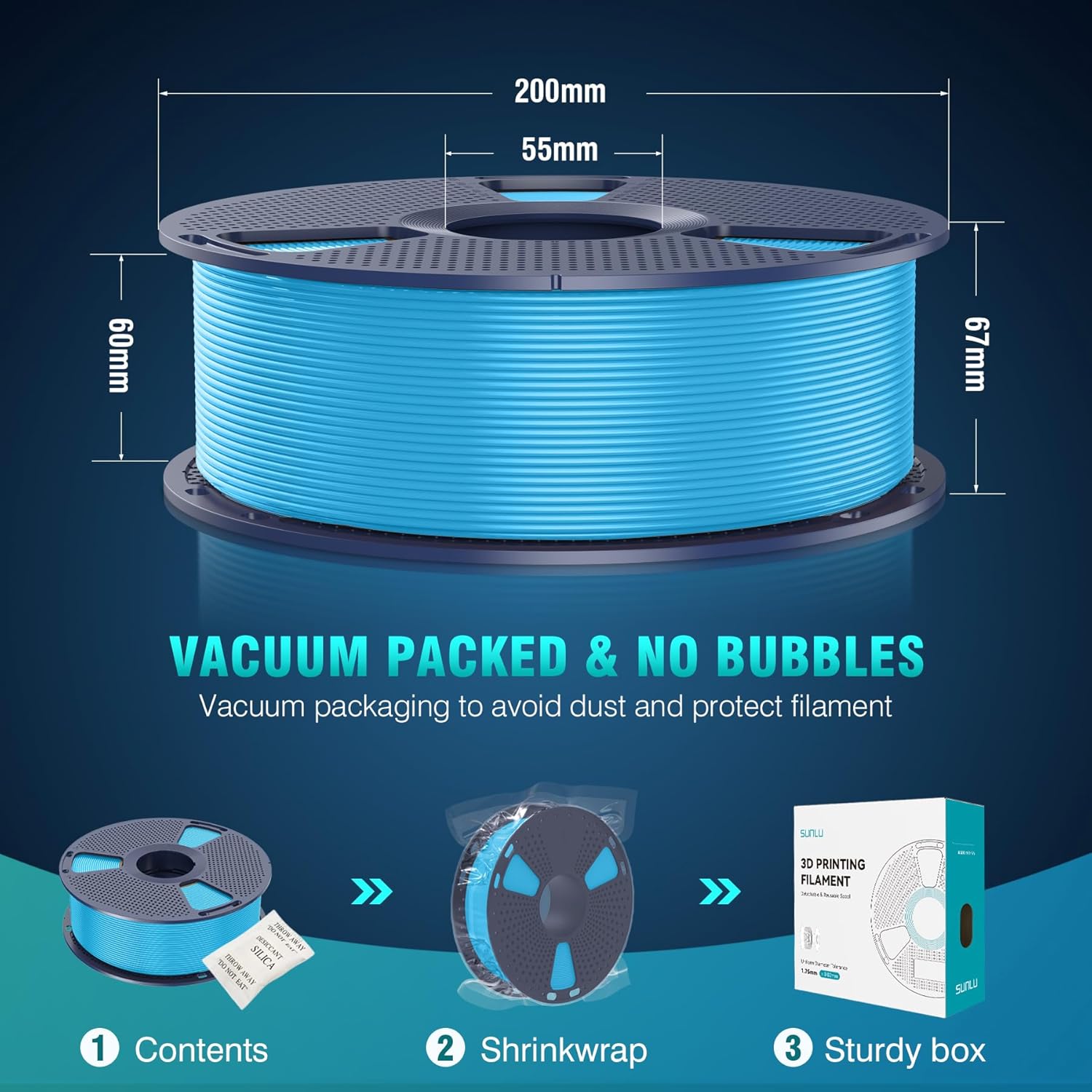
The bundle also uses a “neatly wound” design. That’s a small detail, but in real use it matters: a consistent winding can reduce the chances of tangling or clogging during printing, especially if you’re swapping spools regularly.
There’s also a dimensional accuracy claim of +/- 0.02mm. That’s the kind of figure you’ll care about if you’re printing higher-precision models or functional parts where tolerances matter.
Tech specs (what you’ll actually need to set up)
- Type: PLA+
- Size: 1.75mm
- Dimensional accuracy: +/- 0.02mm
- Recommended nozzle temperature: 205-220°C
- Recommended bed temperature: 50-60°C
- Recommended print speed range: 100-300mm/s
Where it shines in everyday printing
A good way to think about this filament is: it’s not just for pretty models. The “tougher and stronger” positioning makes it more appealing for functional-ish prints—things like brackets, fixtures, housings, or prototype parts that may get handled and bumped.
For example, if you’re printing a small clip or a cover that you expect to flex slightly during use, you may find PLA+ 2.0’s resistance to brittleness and cracking a better match than basic PLA. It’s still filament, so you’re not going to get the same performance as advanced engineering plastics, but for many home and hobby projects, this is a sensible step up.
Things to be aware of before you buy
No filament is perfect, and a couple of points are worth keeping realistic.
First, the recommended temperature and speed ranges are guidance, not a guarantee. If your printer’s hotend or firmware behaves differently, you may need to fine-tune to avoid stringing, under-extrusion, or poor layer adhesion.
Second, “up to 300mm/s” is only useful if your setup can support it without quality dropping. Thin, detailed models often benefit from slower speeds even when fast printing is possible.
Finally, PLA+ can be a mixed bag depending on the environment. If your parts will live in hot conditions or where they’ll be exposed to significant stress over time, you may still want to consider other material types—but for typical desk, workshop, and decorative-to-functional projects, PLA+ 2.0 is a practical direction.
Who it suits (and who should skip it)
It’s a solid pick if you’re looking for a multi-colour filament bundle where the emphasis is on stronger PLA+ results rather than only surface finish. It also suits people who like reliable, beginner-friendly materials but don’t want to give up on getting durable prints.
It may not suit you if you’re chasing the most demanding mechanical performance, or if you already have a preferred PLA/PLA+ setup and don’t want to adjust settings across a new spool. Also, if you only print in one colour and rarely swap materials, paying for multiple spools of different colours might be more than you need.
Mini FAQ
Is SUNLU PLA+ 2.0 compatible with most 1.75mm FDM printers?
The bundle is described as compatible with nearly all 1.75mm FDM 3D printers, based on its 1.75mm format. As always, your printer still needs to be able to reach the recommended temperatures.
What temperatures and speeds should I start with?
SUNLU recommends a nozzle temperature of 205-220°C, bed temperature of 50-60°C, and a print speed of 100-300mm/s. If you’re dialling in for the first time, starting in the middle of those ranges is a reasonable approach.
Does the bundle help reduce filament tangling?
The listing specifically calls out a neatly wound design intended to prevent tangling or clogging during printing. While results can vary by setup, it’s a positive sign for smoother day-to-day prints.
What kinds of prints is it best for?
It’s positioned for high-precision models, functional parts, and decorative items. If your functional parts need better resistance to brittleness and cracking, this is the direction the product is aiming for.
Final verdict
When it makes sense
It’s worth considering if you want 1.75mm PLA+ that’s pitched as less brittle and less prone to cracking, with easy-to-run settings (205-220°C nozzle, 50-60°C bed) and a speed range that supports faster work when your printer is up to it. The multi-spool 4KG total also helps if you regularly print in different colours or like to keep several projects on the go.
When you may want to skip it
You may want to look elsewhere if you only print one colour, or if your projects demand top-tier engineering performance beyond what PLA+ is typically used for. And if you can’t reliably tune temperatures and speeds on your machine, the “up to” speed claims and best-case flow can end up being more theory than reality.