

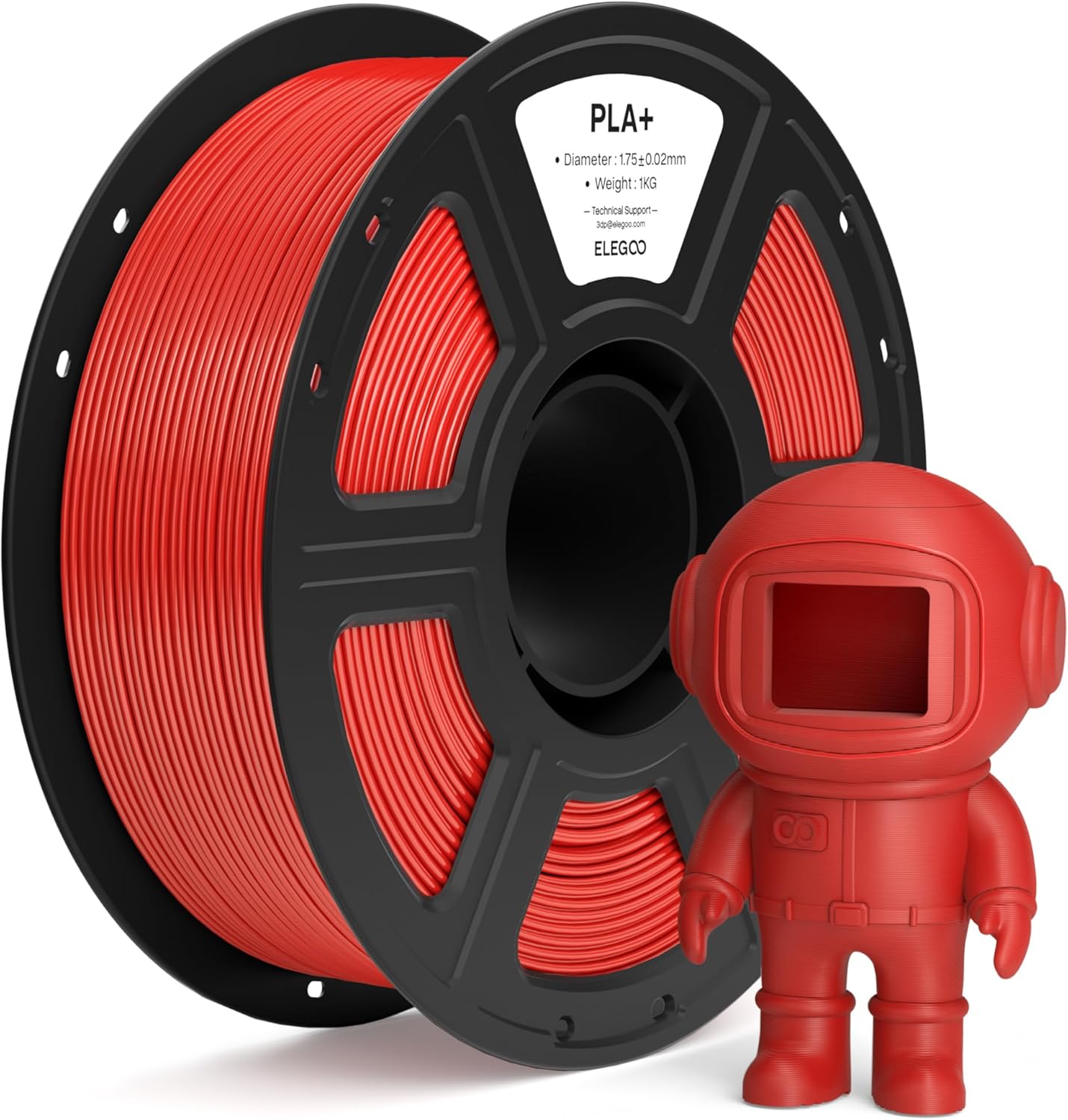
ELEGOO PLA+ Filament 1.75mm True Red (1kg spool) – High Toughness for FDM printing
Product description
What it is and why people buy it
ELEGOO’s PLA+ filament for FDM 3D printers is aimed at one common upgrade over basic PLA: tougher prints with better resistance to knocks and stress during everyday use. If you’ve ever had PLA that looks fine but chips, snaps, or feels a bit brittle once it’s out in the real world, this PLA+ positioning is the reason it tends to get attention.
On paper, it’s also set up to be straightforward to live with. The manufacturer mentions controlled diameter for smoother feeding, and a packaging approach (dried before packaging and vacuum sealed) intended to help avoid moisture-related issues. That combination—tougher output plus more consistent handling—is a pretty standard recipe for filament you don’t want to babysit.
There is a catch, though: PLA+ is still PLA-based. If your goal is heavy-duty, high-temperature performance, you may find it doesn’t fully replace more demanding material types. It’s more “stronger and friendlier PLA” than a universal answer for every engineering need.
The essentials: what you can expect in print
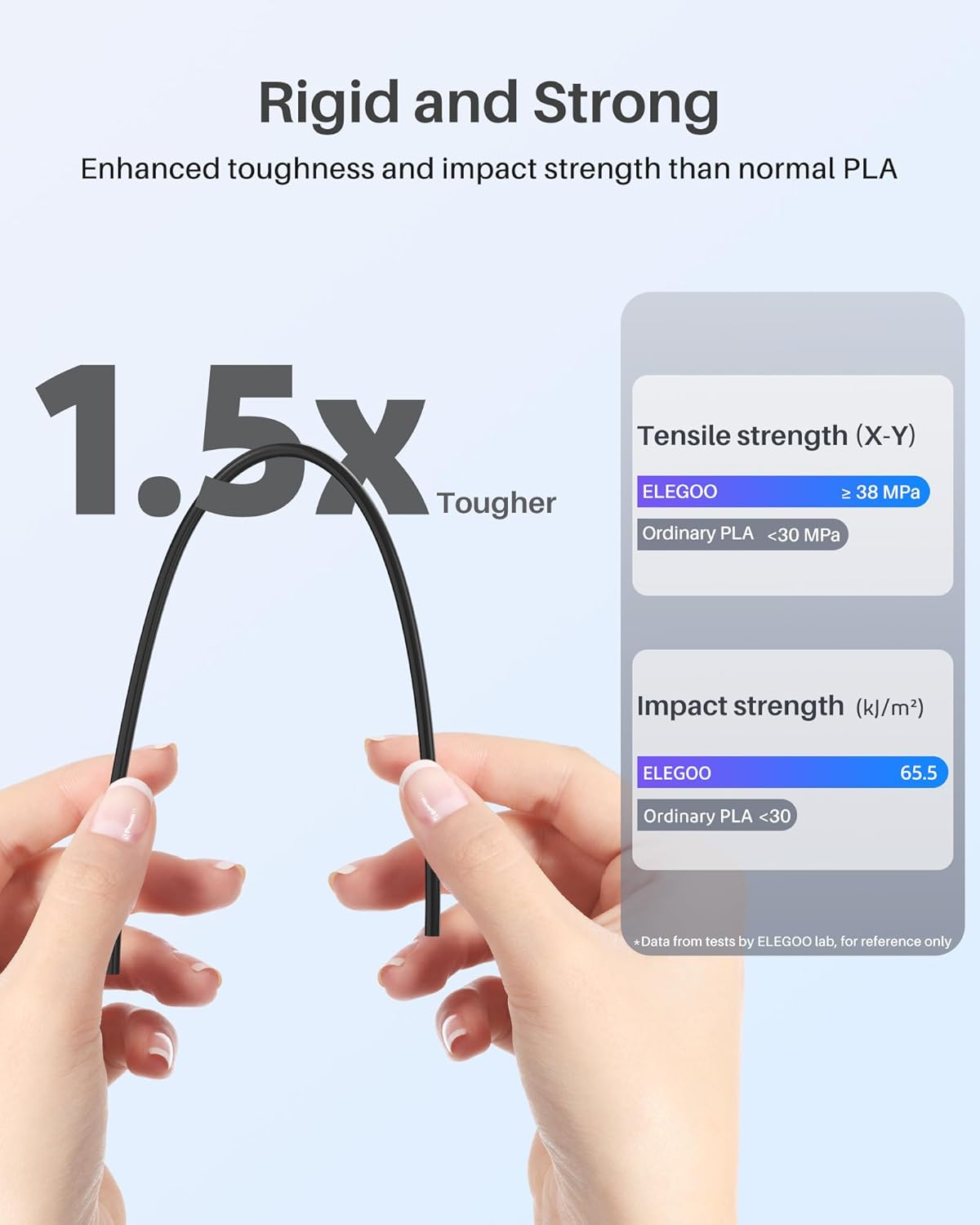
The headline traits here are improved toughness and practical printability. The filament is described as “High Toughness PLA Plus”, with stronger impact resistance and toughness compared with standard PLA. The goal is robust prints that hold up better when dropped, flexed a little, or used in day-to-day situations.
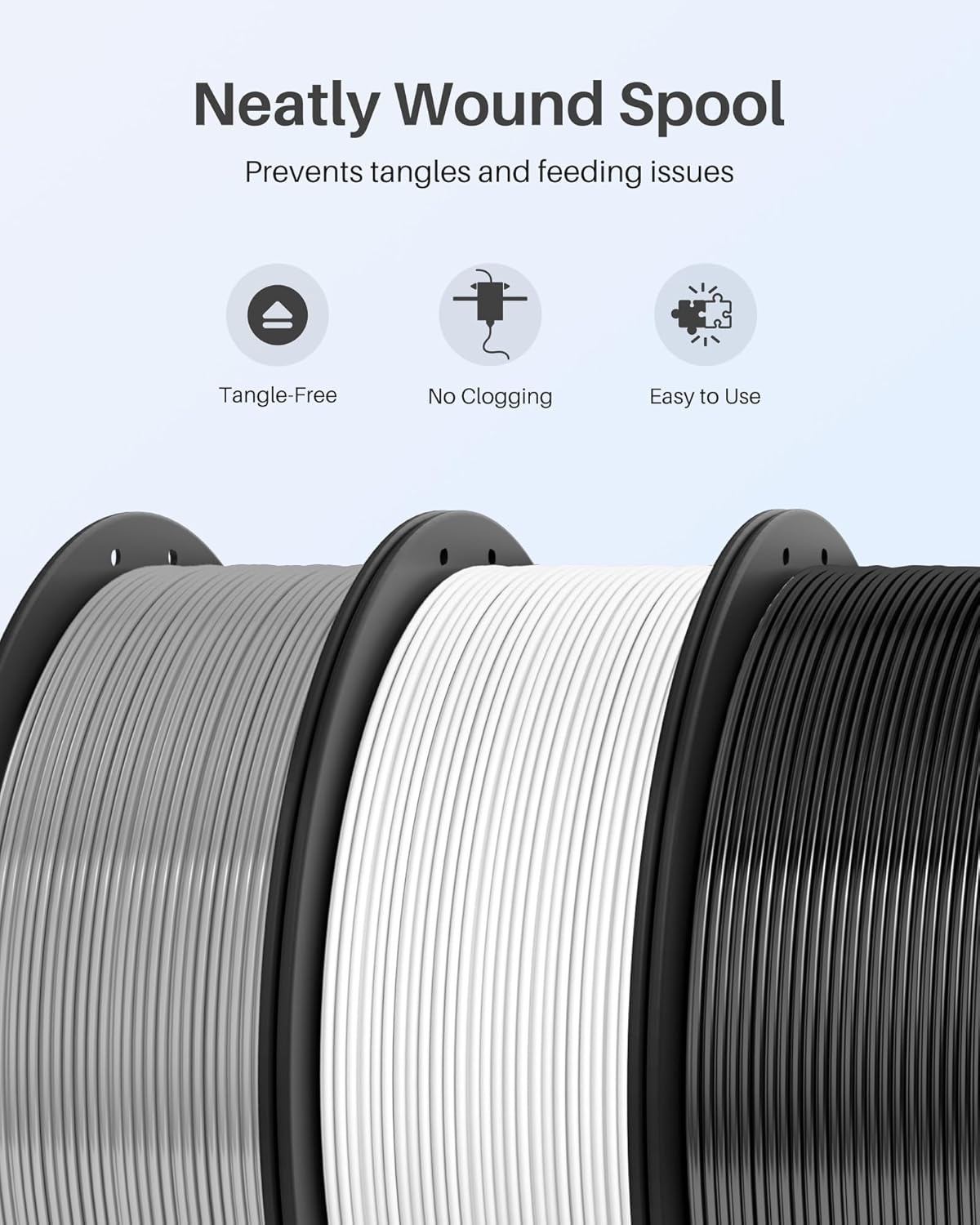
From a workflow point of view, the promise is consistent feeding and fewer annoyances. The filament is stated to be 1.75mm diameter with dimensional accuracy of +/- 0.02mm, and it’s supplied neatly wound to help reduce tangles and breakage. That matters more than people think—messy spools can turn into downtime, especially if you print regularly.
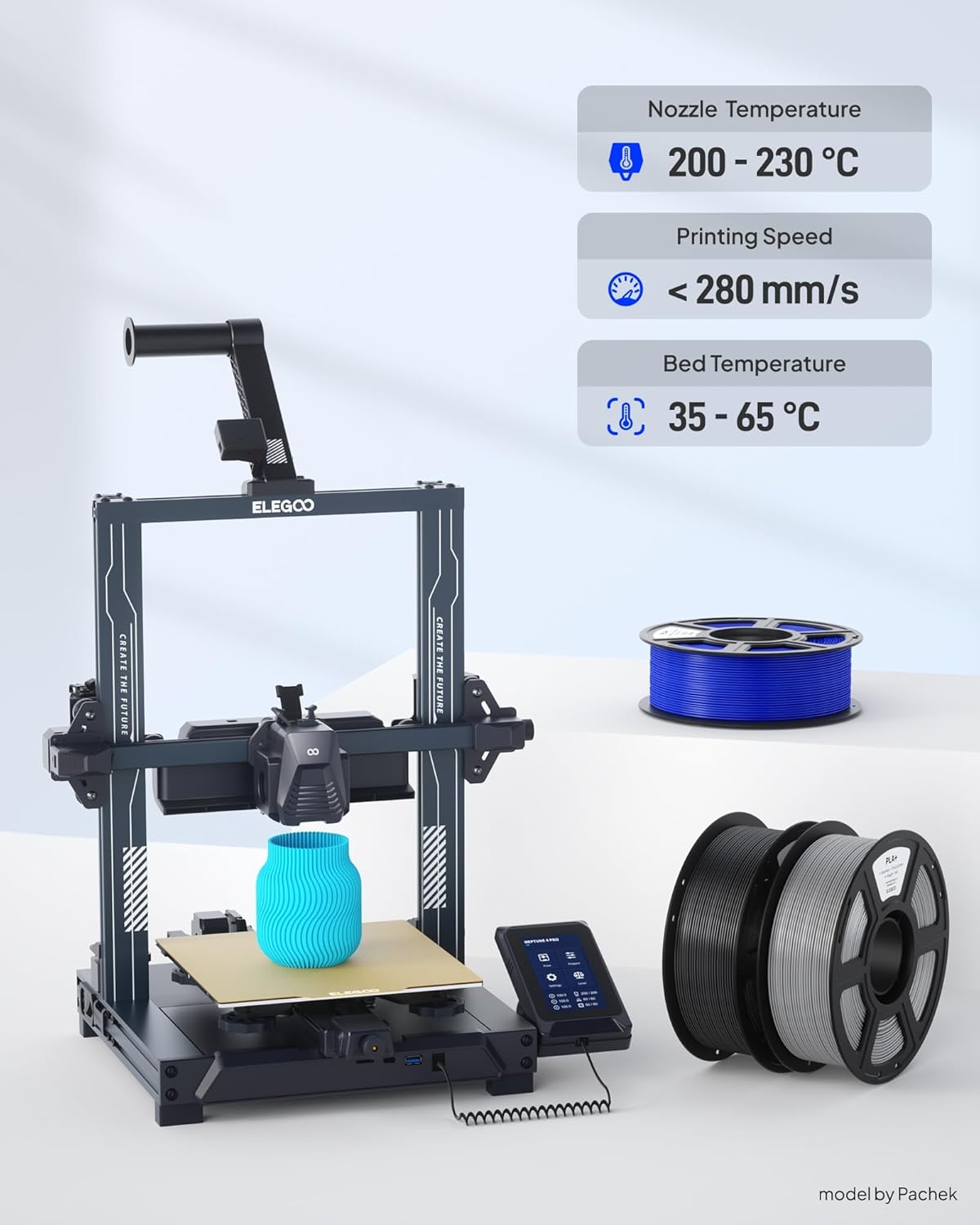
For surface finish and general reliability, the base description also points to glossy surface, strong layer adhesion, and lower warp/shrinkage. It also claims a lower printing temperature, which (in practical terms) usually makes first-time setup feel less intimidating.
Key specifications to weigh up
This PLA+ is intended for FDM 3D printers that take 1.75mm filament, supplied on a 1kg spool in “True Red”. The packaging approach is also part of the spec story: it’s described as fully dried before packaging and vacuum sealed to protect against moisture.
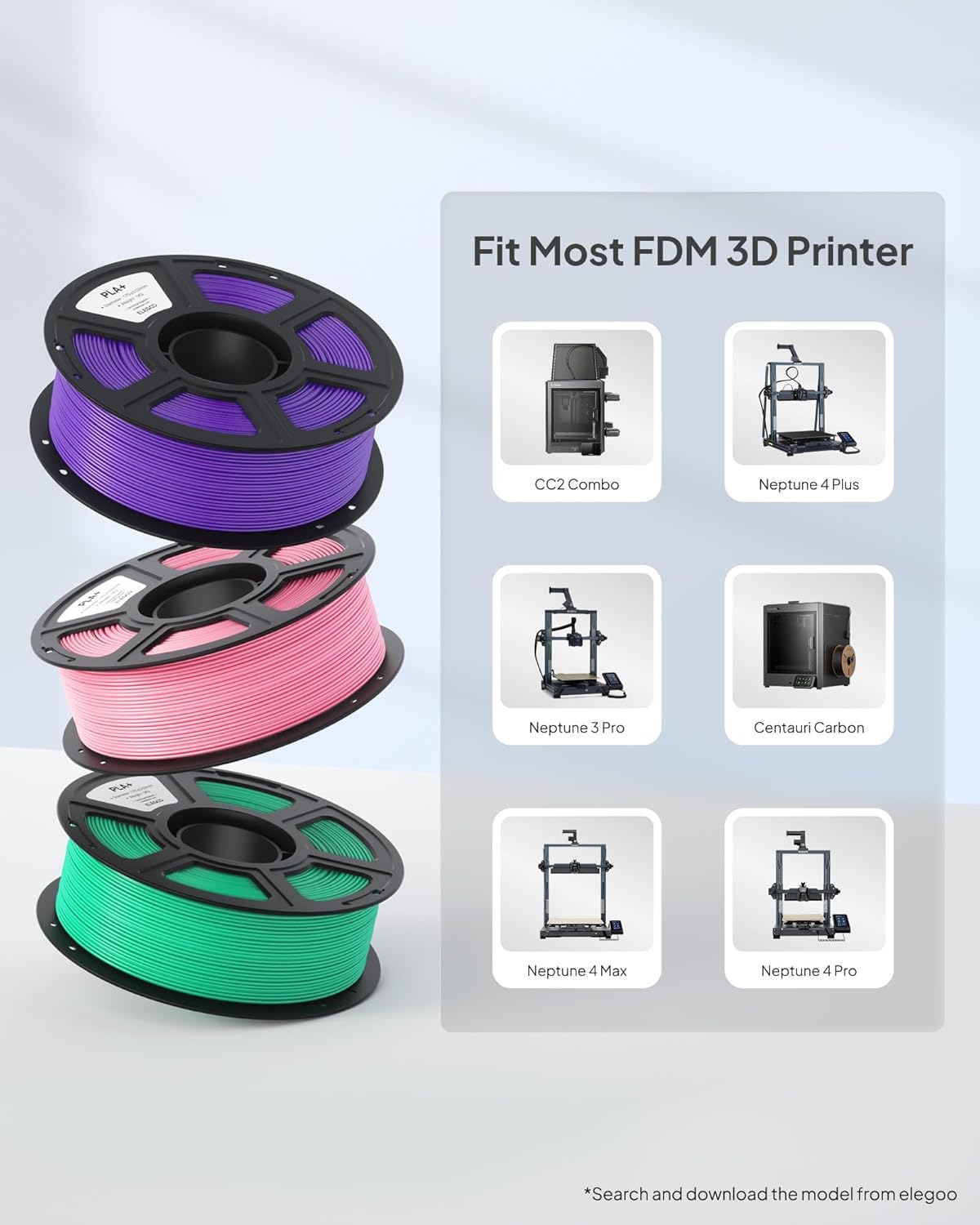
The only hard limitation you should keep in mind is compatibility with your printer’s filament system. The text says it “fits for most FDM 3D printers”, but it doesn’t name any specific constraints like nozzle type, hotend materials, or feeder style—so it’s worth double-checking your printer’s filament diameter support (1.75mm) and general PLA/PLA+ feeding expectations.
What stands out during day-to-day use
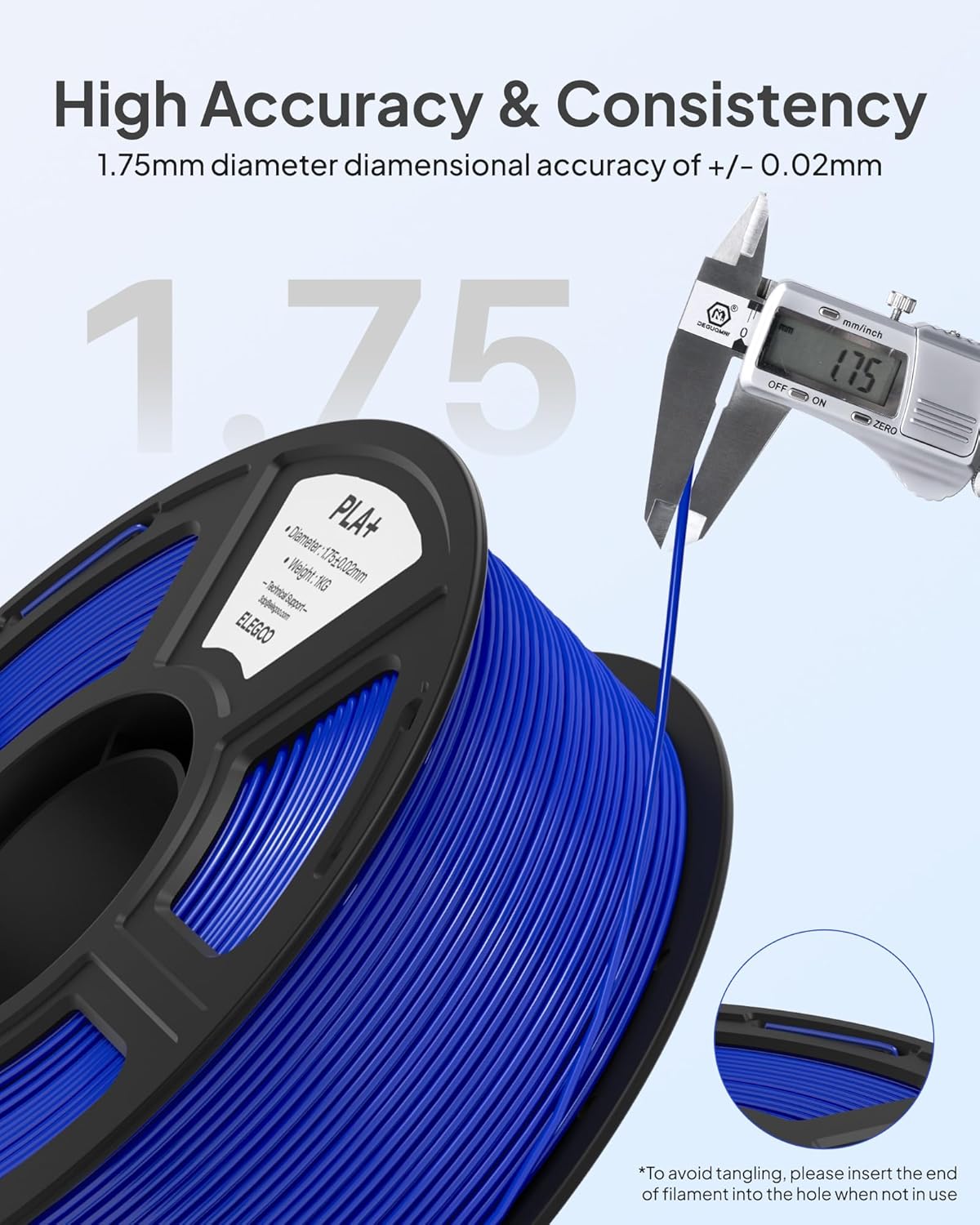
Where this filament likely wins is in the “less hassle, better end result” category. Neatly wound supply and stated low-tangle handling should make loading and reloading easier. Also, the accuracy claim (within +/- 0.02mm) is there for a reason: more consistent diameter tends to help with stable extrusion, which in turn can help produce smoother results.
Here’s a concrete micro use-case to picture the value: imagine you’re printing a small tool holder, cable clip, or a phone stand insert that needs to survive repeated handling. With standard PLA, those parts can start to feel brittle. With PLA+ positioned as tougher, you’re targeting that point where the print still looks good but becomes less fragile.
That glossy surface and strong layer adhesion are also the kind of details that matter on visible parts—brackets, organisers, and decorative functional items—where you notice layer definition.
A note of realism: “low warp and shrinkage” is a helpful aim, but it still depends on your printer settings, enclosure, and ambient conditions. No filament can completely remove the influence of your setup.
Care, storage and limitations
The description claims the filament is dried and vacuum sealed to reduce moisture problems. In practice, even with good packaging, you’ll still want to store it sensibly once opened—especially if your workspace is humid.
Also, while the base text says there’s “no clogging and no bubble” behaviour, that’s not something you should treat as a guarantee for every nozzle and every print profile. If you’re running a damaged nozzle, pushing extreme temperatures, or printing slowly enough to cause heat creep issues, you can still run into problems. This is more about reducing the common causes, not making the filament immune to all setup issues.
Is it worth it?
It’s worth buying if you want a red PLA+ filament at 1.75mm that’s aimed at tougher, more robust prints than standard PLA, and you value consistent feeding with less mess from tangles. If you print functional parts—mounts, brackets, clip-on accessories, organisers—this kind of “PLA that behaves better” tends to be a sensible step.
You may want to skip it if you’re chasing high-temperature stability or demanding mechanical performance beyond what PLA-based materials typically deliver. Also, if you’re working in a tightly controlled materials ecosystem (where you already know your preferred PLA/PLA+ brand and settings), you might find it easier to stay consistent with what you’ve tuned.
Quick FAQ before you buy
Will this fit a 1.75mm FDM printer?
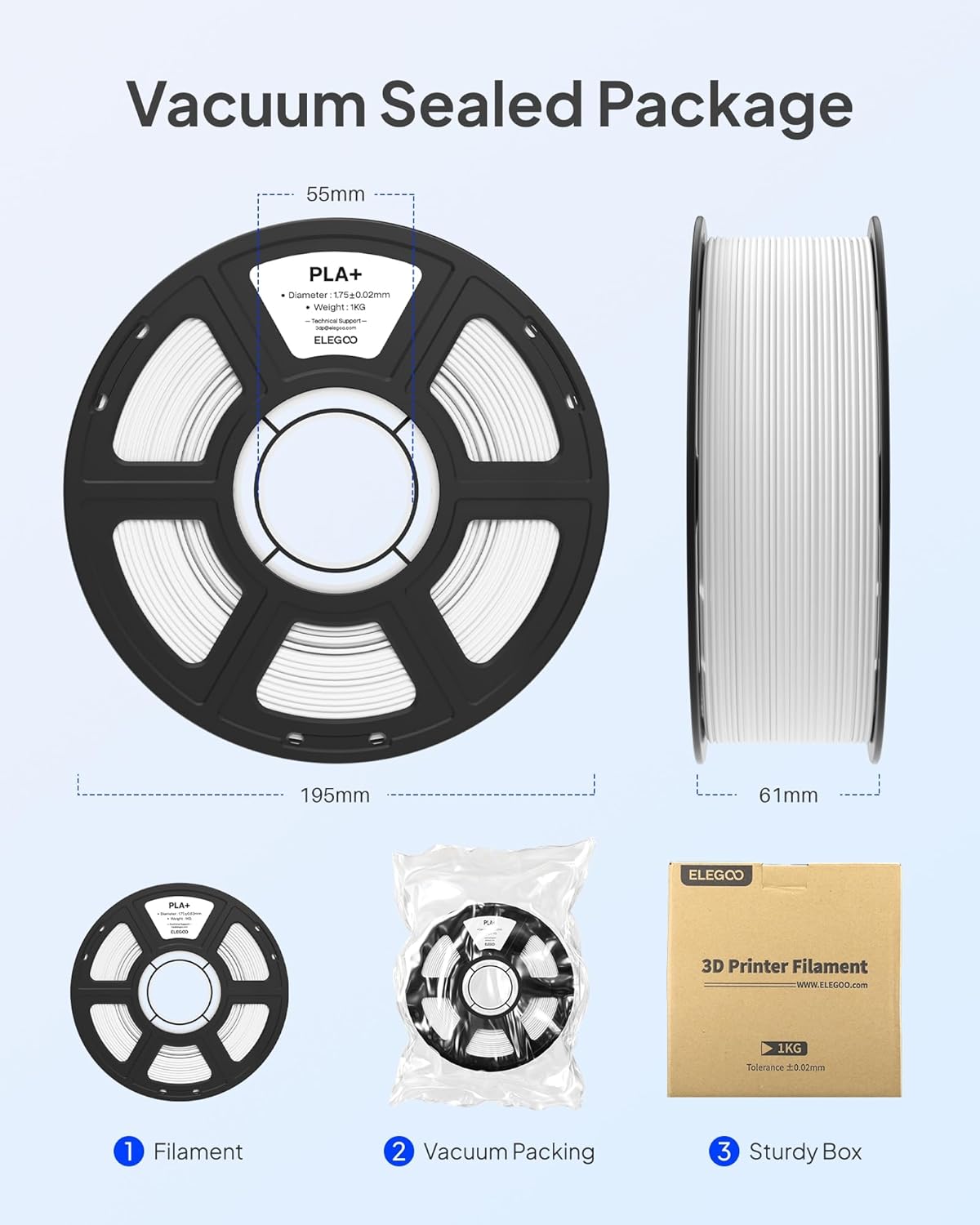
The listing positions it for FDM 3D printers that use 1.75mm filament, and the spool is 1.75mm PLA+.
Is it meant to reduce tangles?
Yes, the description mentions full mechanical winding and inspection to help keep the filament neatly wound and reduce tangling.
Does the vacuum sealing really help?
It’s described as dried before packaging and vacuum sealed to protect against moisture, which is the typical root cause of bubbling or related print issues.
Is it better than standard PLA?
On the manufacturer’s claims, it offers improved toughness and impact strength versus standard PLA, which is the main reason to choose PLA+ in the first place.
Any downside to expect?
PLA+ is still PLA-based, and the text doesn’t promise industrial-level performance or high-temperature behaviour, so it may not be the right choice for every engineering-style application.