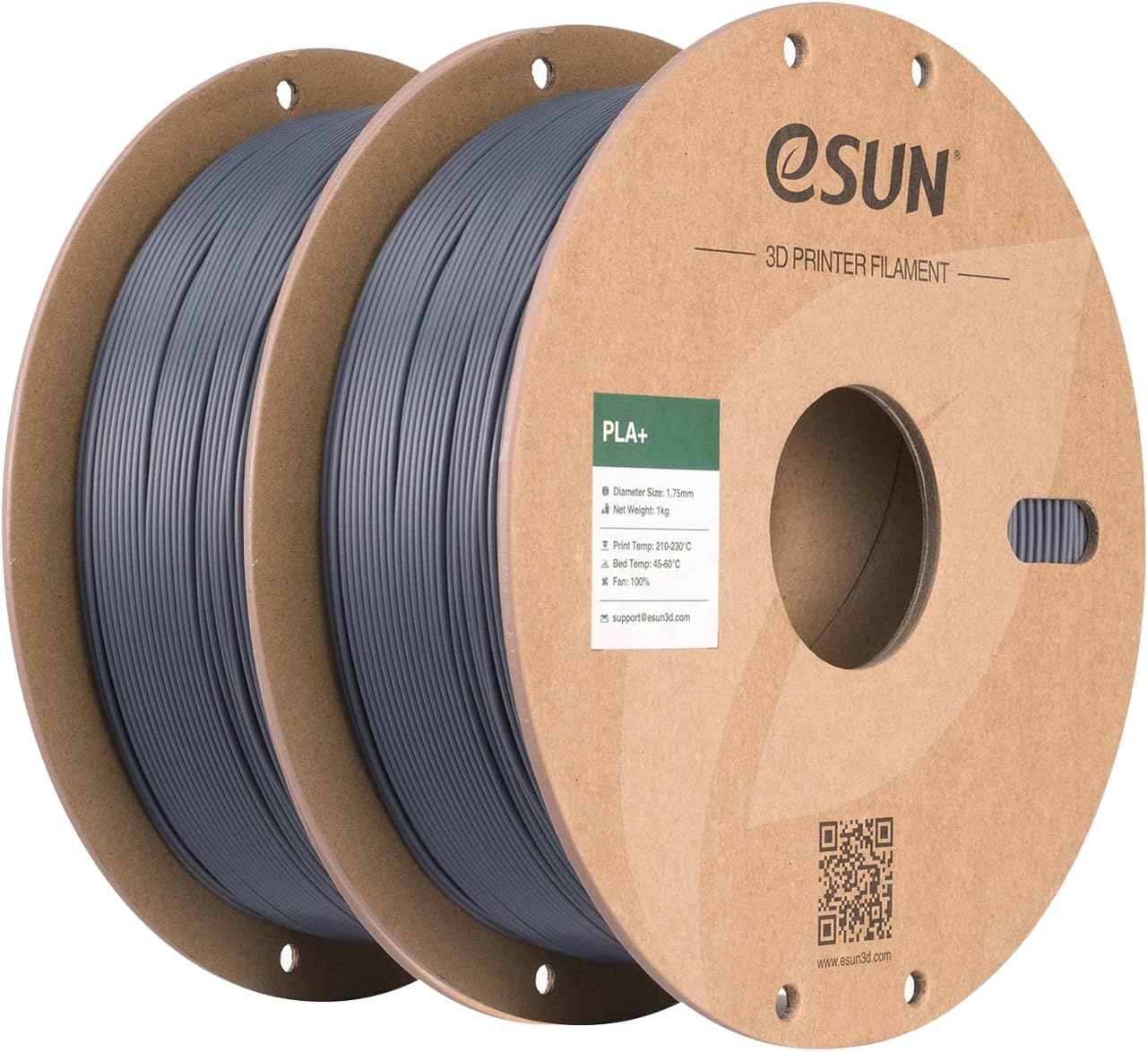
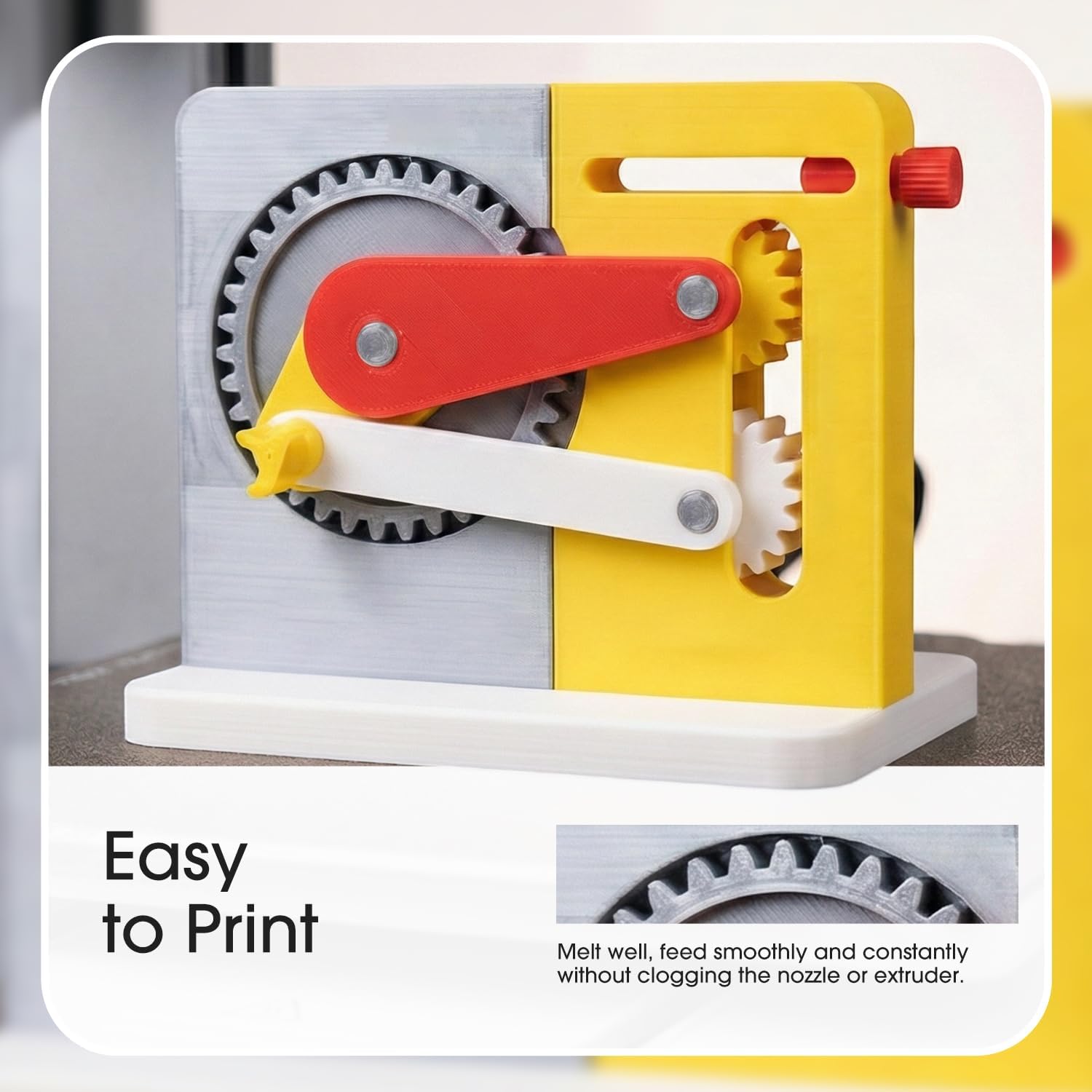
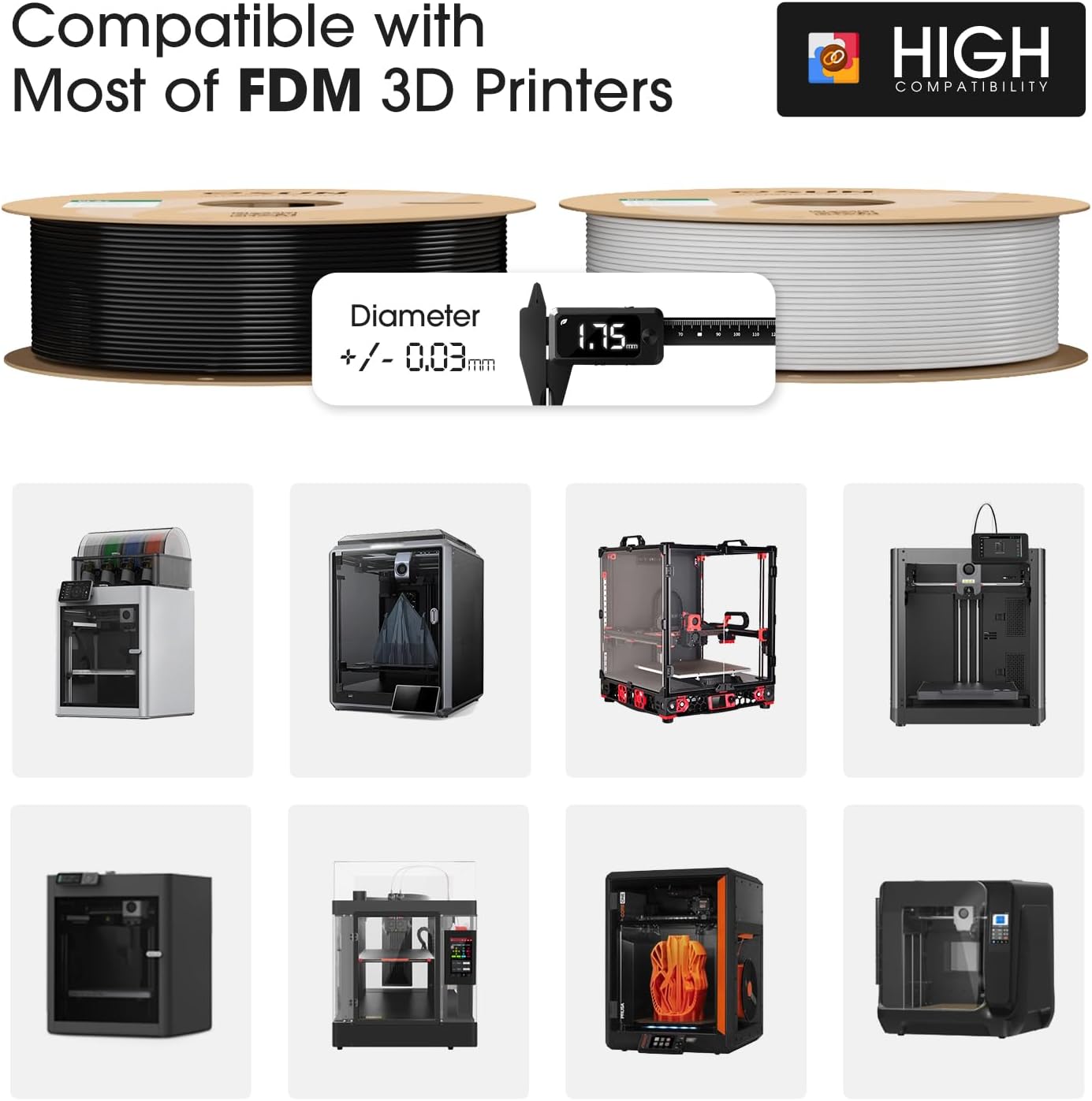
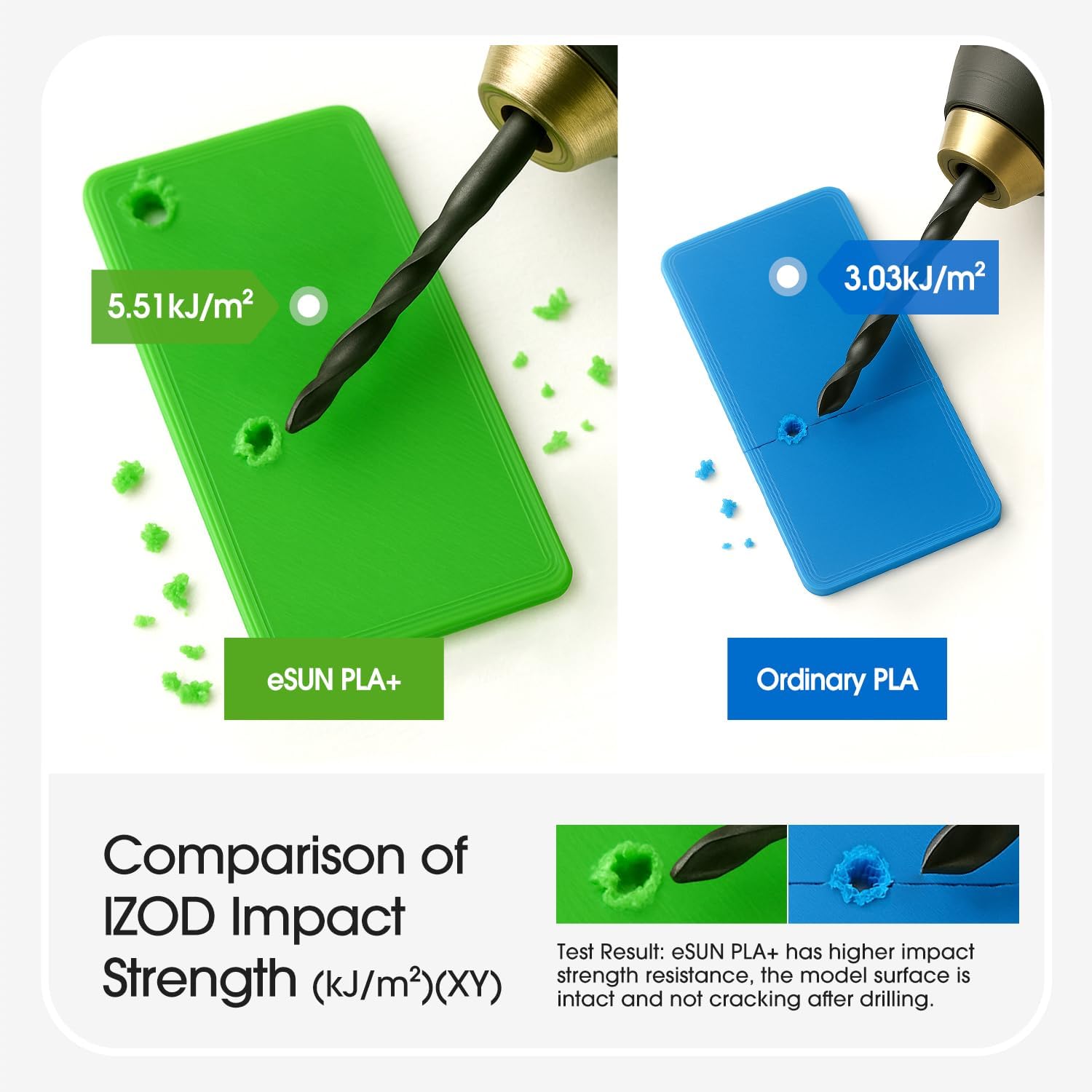
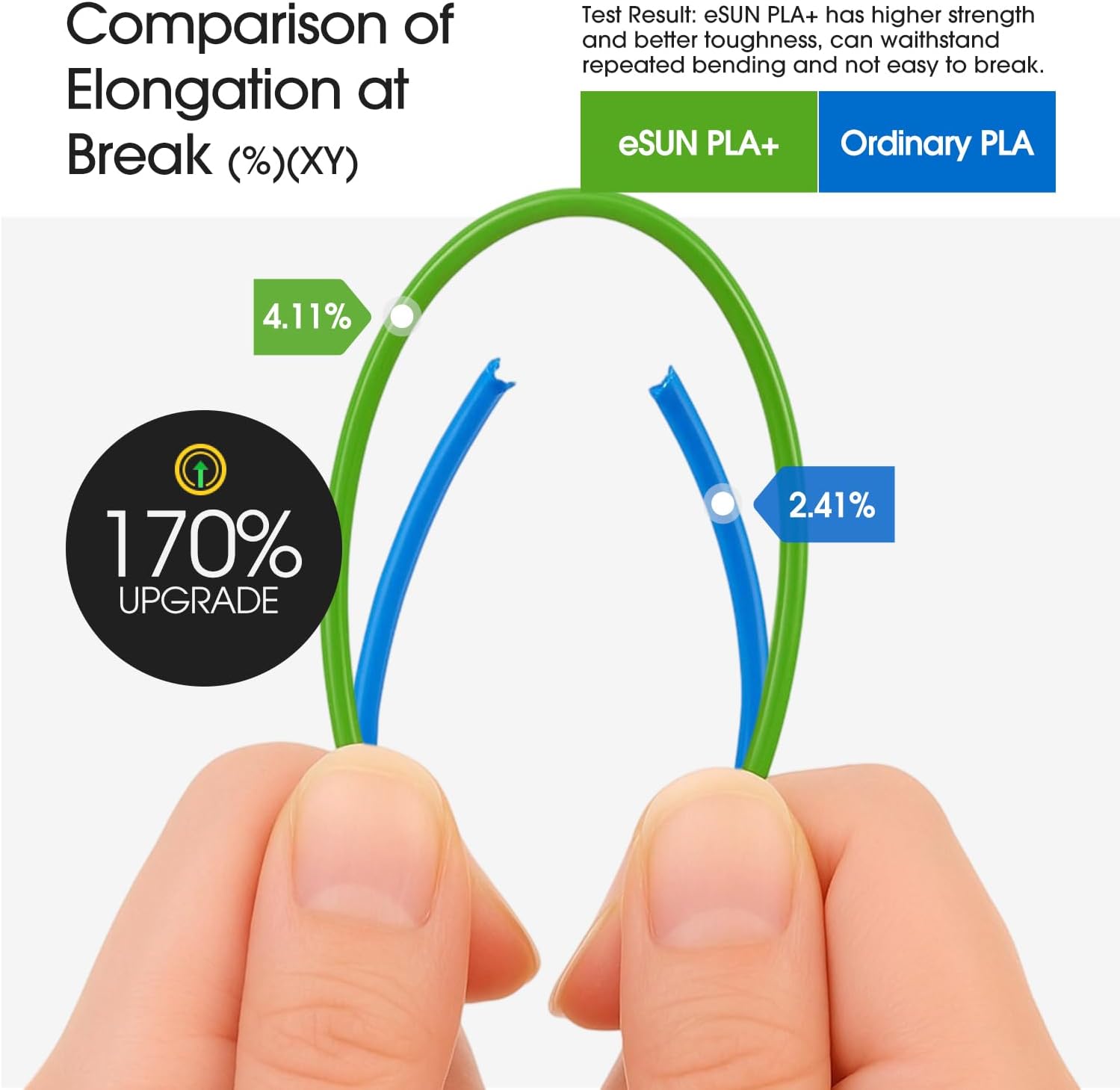
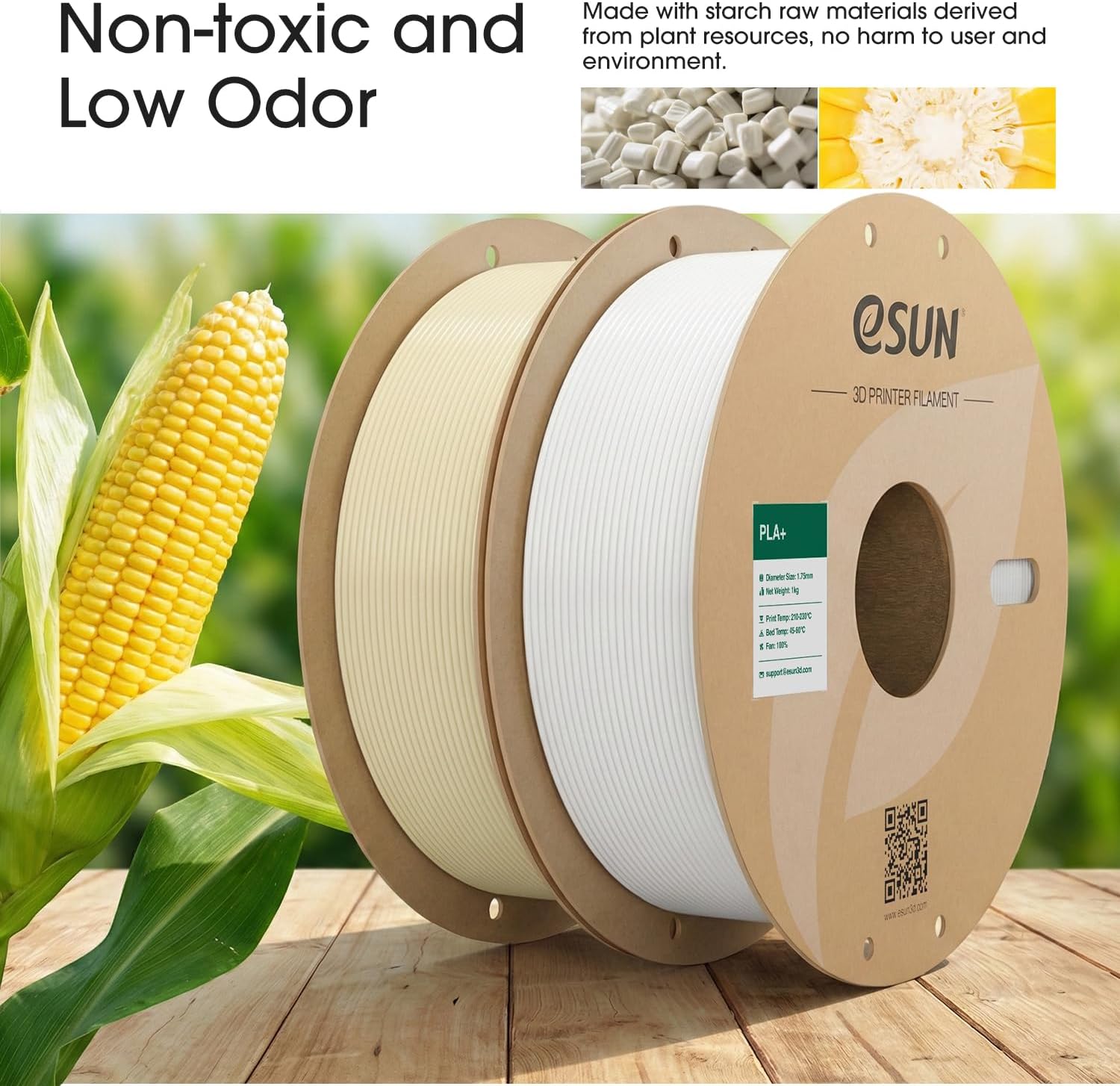
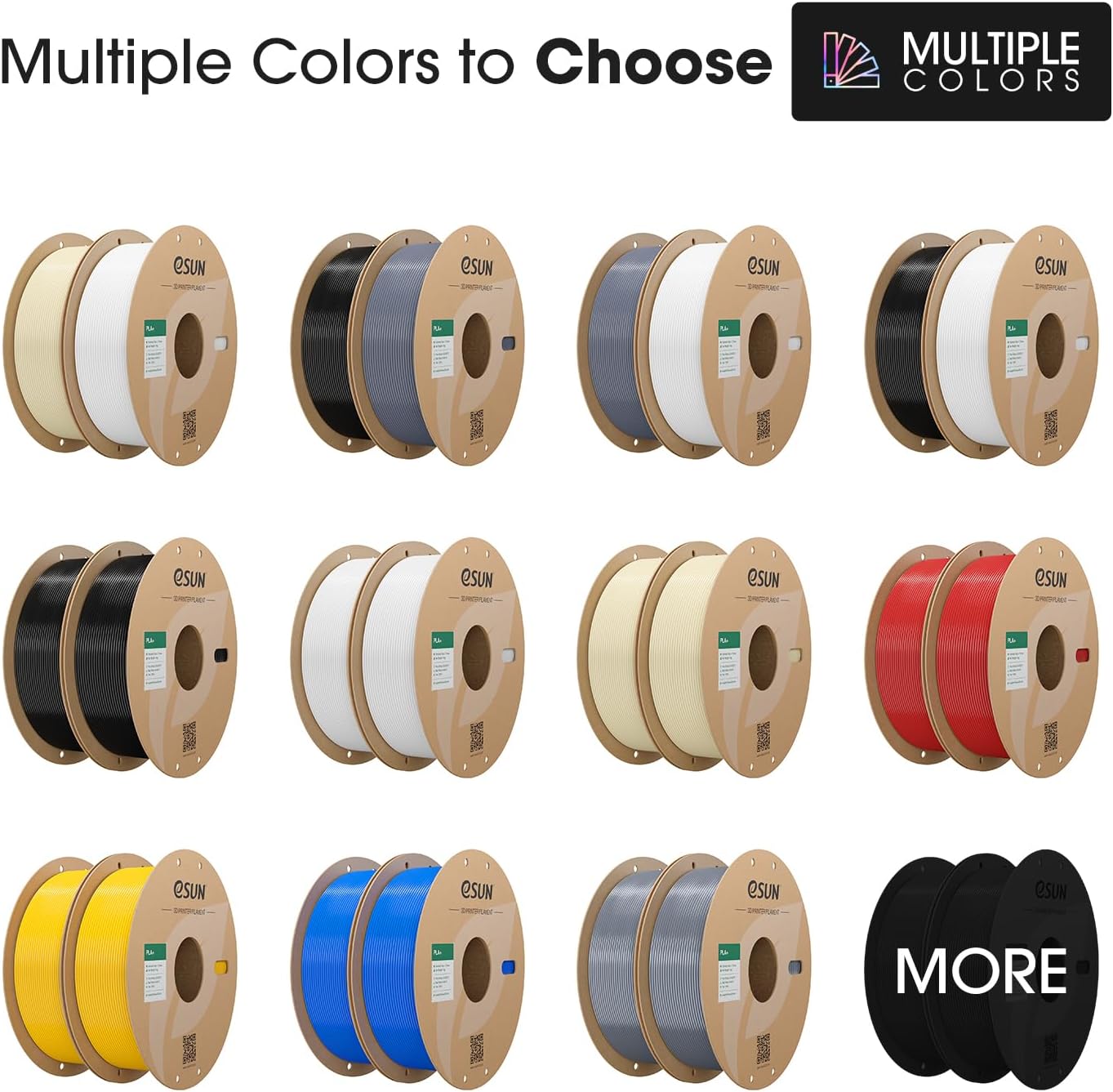
What it is and what it’s for\nThe eSUN PLA+ Filament is an enhanced toughness version of standard PLA, designed for stronger, more durable prints while keeping the easy printing characteristics of PLA. Supplied as two 1kg spools in grey, it aims to suit functional parts, fittings and small assemblies where improved impact resistance and layer adhesion matter. The material is described as eco-friendly and non-toxic, with feed consistency that supports high-speed printing without major warping.\n\n## How it performs in practice\nOn paper, PLA+ should offer higher strength and toughness than regular PLA, with low shrinkage and good dimensional stability. The manufacturer emphasises tight diameter tolerance and a long, tangle-free length (340–350m per 1kg spool), which helps minimise feeding issues and nozzle clogs. If you print quickly, you may still expect reliable layer bonding and good surface finish, while preserving the familiar ease of PLA.\n\n## Strengths you might notice\n- Enhanced toughness compared with standard PLA, potentially reducing snap points in functional parts.\n- Low warping and good dimensional accuracy, which helps with precise fits.\n- Consistent feeding thanks to tight diameter tolerance and roundness.\n- Suitable for a range of general applications, from machinery components to decorative pieces.\n\n## Limitations and what to watch for\n- Although PLA+ is tougher, it is still a PLA-based material and may not match dedicated engineering filaments for high-load mechanical use. Real-world performance depends on print settings, nozzle temperature and bed adhesion.\n- The data set doesn’t specify exact printing temperature ranges or bed adhesion methods, so initial tuning is advisable.\n- It’s sold as two grey spools, if you need colour variety for a project with multiple parts, factor in the logistics of sourcing additional colours.\n\n## Who it’s for\nThis filament suits makers who want more durable, printable parts without stepping up to more specialised materials. It’s a pragmatic choice for hobbyists building quick prototypes, light mechanical components, or cosplay props where minor impacts are expected. It may be less ideal for high-stress engineering parts or environments with elevated temperatures.\n\n## Before you buy\n- Confirm your printer supports 1.75mm filament and is compatible with PLA+ materials.\n- Expect a straightforward printing experience, but be prepared to fine-tune speeds and temperatures to balance strength and print quality.\n- Check how you’ll manage two spools in your workflow to avoid tangling or cross-contamination between prints.\n\n## How it compares to other approaches\nIf you prioritise ease of use and low maintenance, PLA+ offers a middle ground between standard PLA and more demanding engineering plastics. For projects demanding maximum toughness or heat resistance, you might consider dedicated materials, but for everyday functional parts, PLA+ typically offers a sensible balance of strength, printability and cost.\n\n## Practical use case\nImagine printing a small enclosure or gear-like component that needs a touch more impact resistance than plain PLA. You’d typically print at a speed that keeps layer bonding solid, with controlled cooling to avoid cracking, then assemble the part with confidence that it won’t crack under light handling.\n\n## Is it worth it?\nThere’s a reasonable case for PLA+ if you want sturdier prints without venturing into complex materials. It’s not perfect for every scenario, especially where extreme mechanical strength or high-temperature exposure is required. If your projects sit in the middle ground—functional parts that benefit from toughness but don’t demand engineering plastics—this PLA+ option can be a sensible choice.\n\n## Quick FAQs (based on available data)\n- How many spools are included? Two spools, each 1kg.\n- What colour is supplied? Grey.\n- What is the stated dimensional tolerance? +/- 0.03mm.\n