

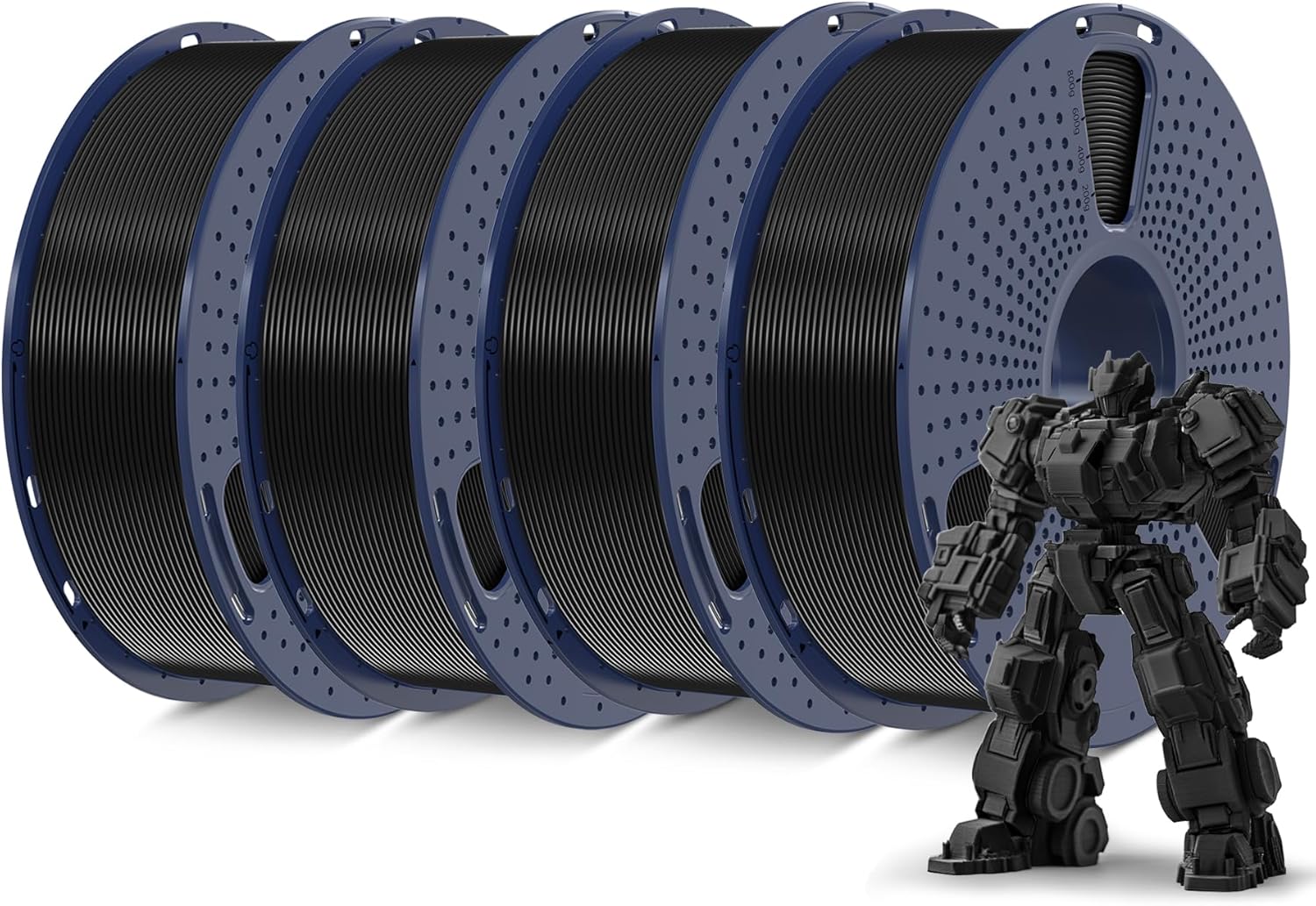
SUNLU PLA Plus 1.75mm – 4kg (4 x 1kg) Black, Tougher PLA+ Filament for FDM Printing
Product description
What it is
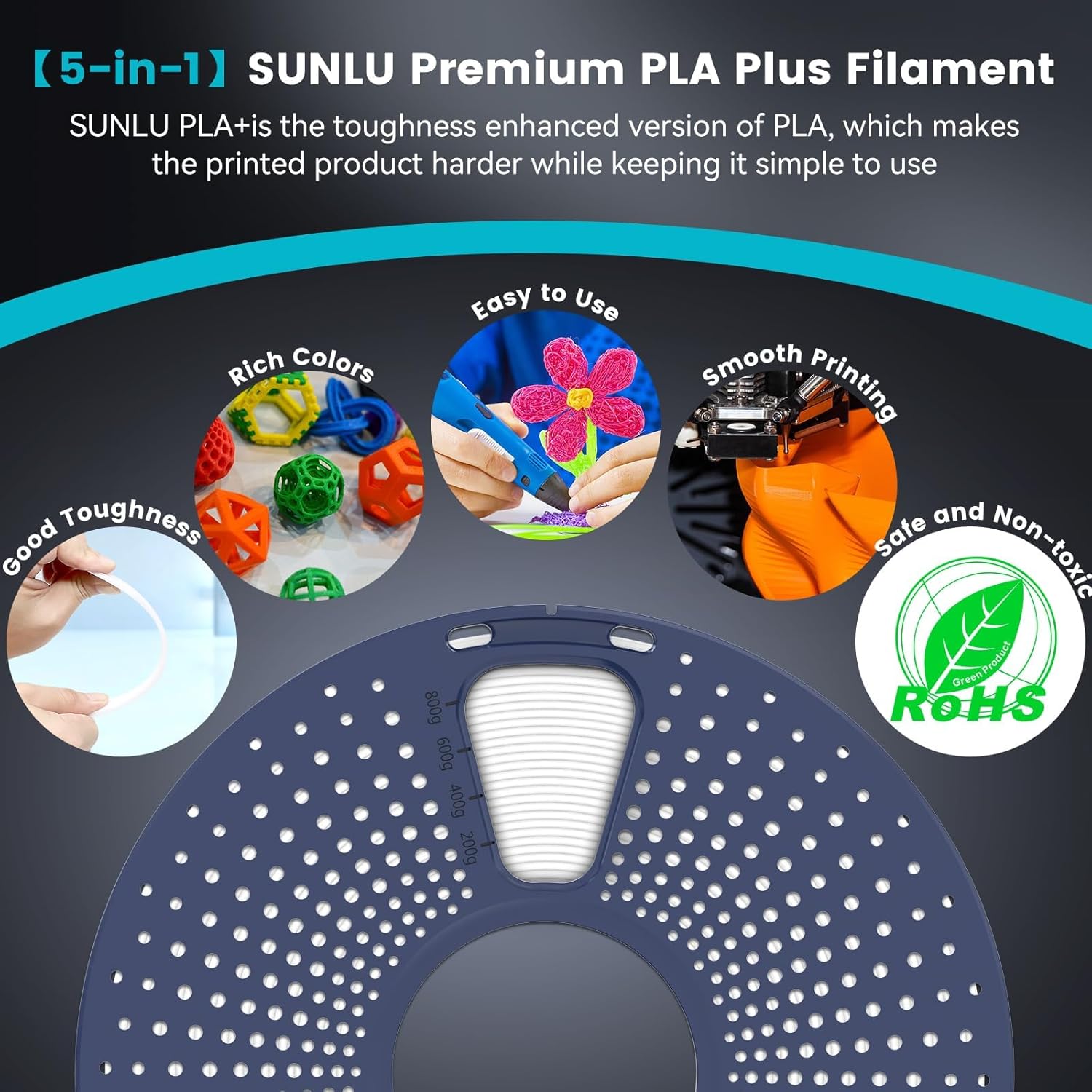
SUNLU PLA Plus filament is a tougher variant of standard PLA, designed to improve impact resistance and layer adhesion while remaining easy to print. The bundle is 4 kilograms in total, packaged as four 1 kg spools in black, suited for a range of hobby and semi-professional 3D printing projects.
How it helps in practice
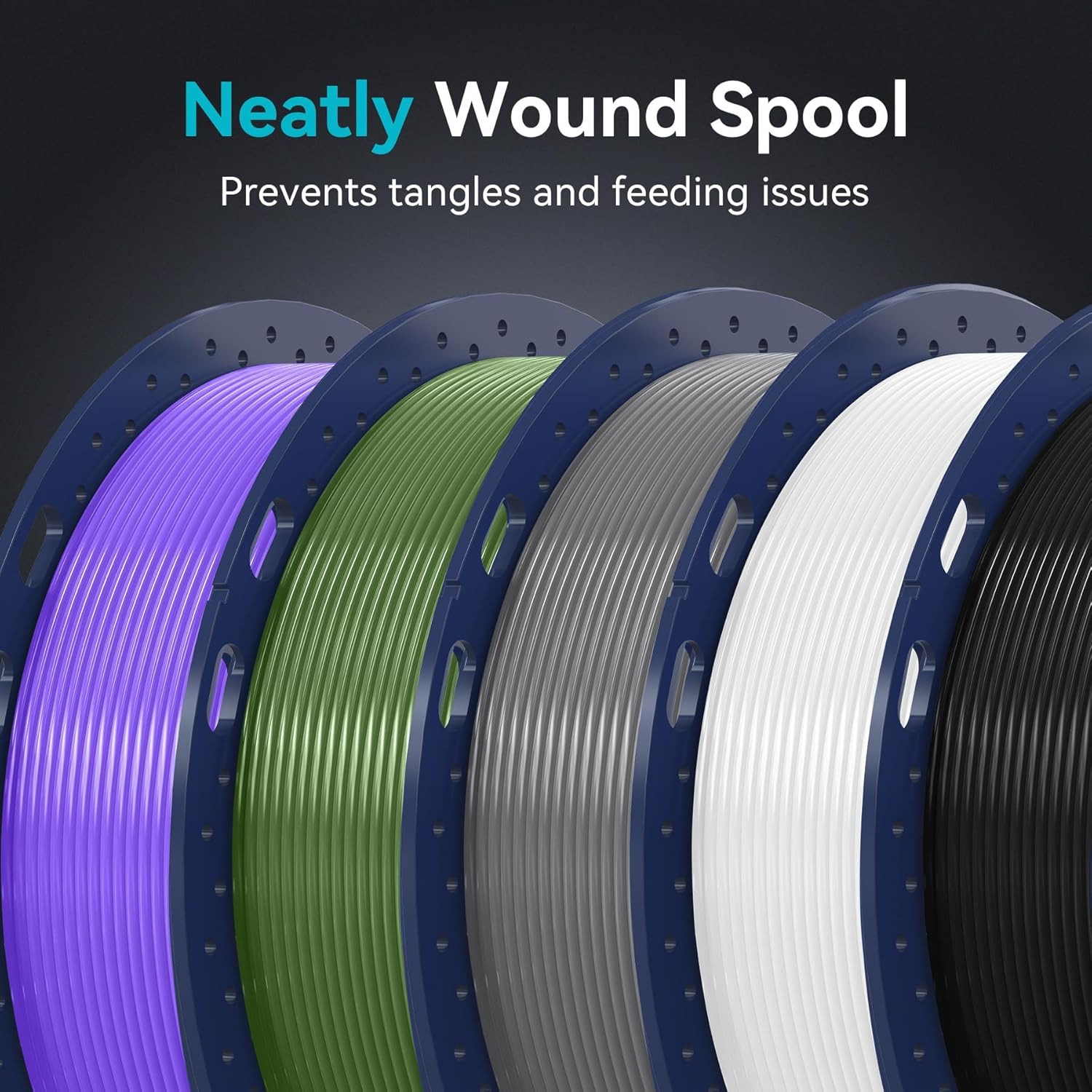
If you prioritise reliability and a smoother print process, this PLA Plus aims to reduce cracking and warping compared with basic PLA. The filament is described as neatly wound to minimise snags during feeding, and the dimensional tolerance is stated as +/- 0.02 mm, which can help with consistent extrusion and predictable results across multiple prints.
What stands out
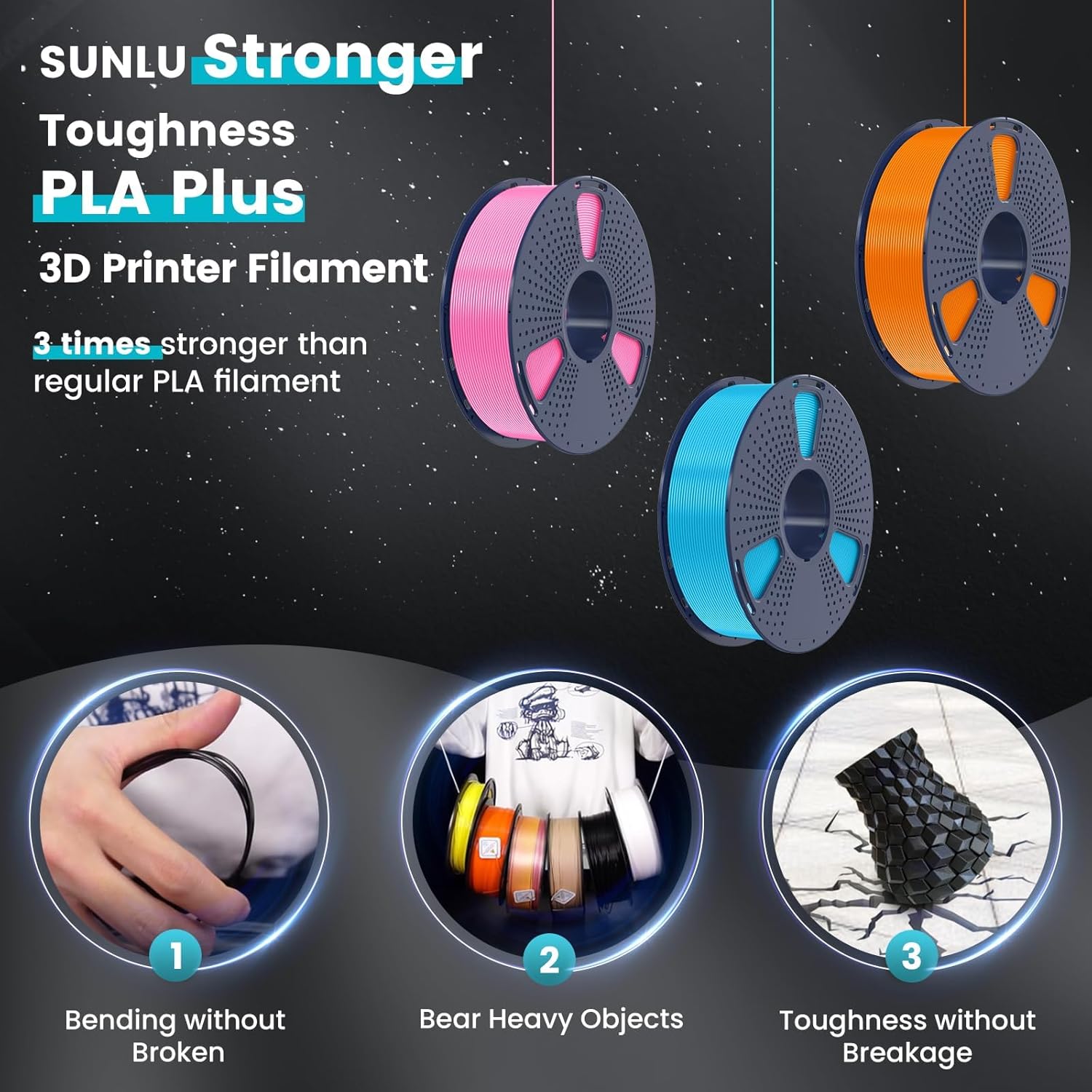
- Toughness: claimed to reach more than 11 times the toughness of standard PLA, which can be beneficial for parts needing impact resistance.
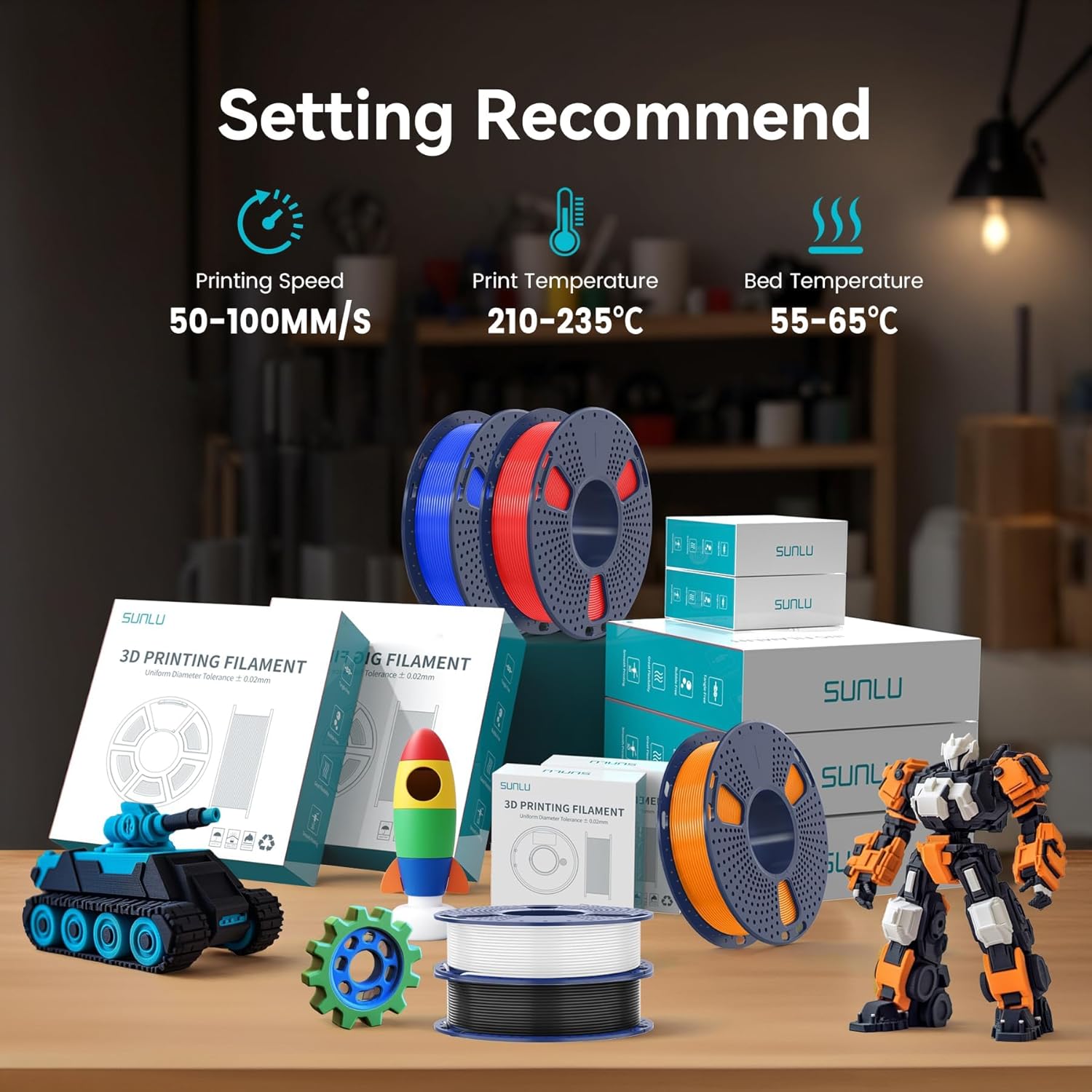
- Print settings guidance: recommended bed temperature 50–60°C, nozzle temperature 195–205°C with 50–100 mm/s speed, or 205–220°C with 100–300 mm/s, offering flexibility for different printers and enclosures.
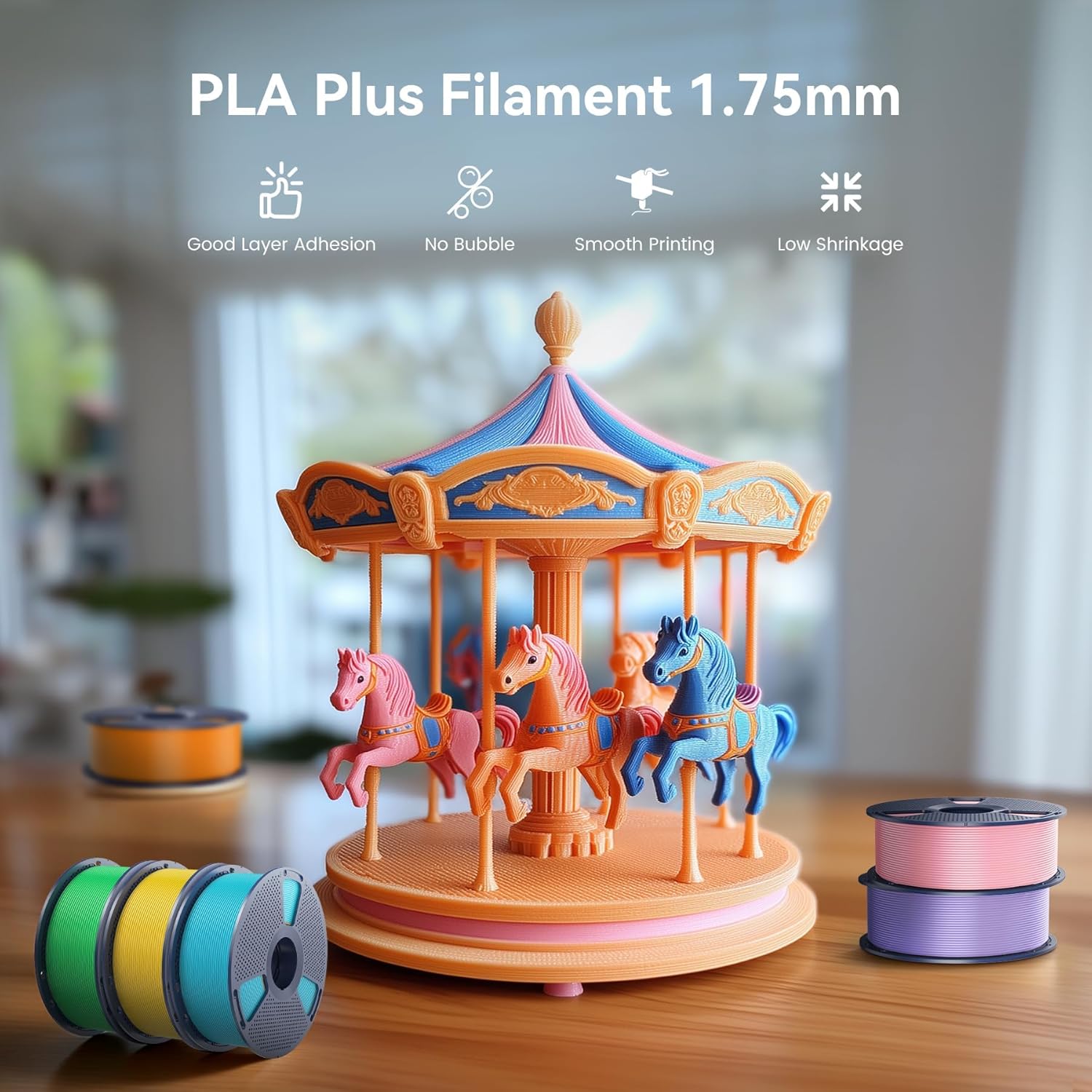
- Stability and finish: emphasis on good layer adhesion, low risk of cracking, and a smooth surface finish when printing correctly.
Limitations and caveats
The information provided focuses on on-paper performance and setup. Real-world results vary with printer, cooling, and enclosure. It may stay short of industrial-grade toughness if used on higher-load parts or in demanding environments. The brand notes a relatively modest tolerance, but practical results still depend on print practices and material handling.
Who it’s for
- Makers who want a more durable PLA option without jumping to ABS/ASA or PETG.
- Printers seeking straightforward PLA printing with fewer tweaks, especially where slight toughness benefits are desirable.
- Users running multiple copies or small functional parts where consistent diameter and minimal warping help production flow.
Who it isn’t for
- Projects requiring high heat resistance or chemical resistance beyond typical PLA capabilities.
- Users needing very high-speed printing with aggressive layer bonding demands may need to dial in temperatures carefully.
- Those chasing the absolute lowest cost per kilogram with standard PLA might compare other filaments if toughness is not a priority.
When it makes sense to buy
- You want a reliable, tougher PLA option without changing printing habits significantly.
- You print repeatedly in batches and value neat winding and stable feed.
- Your printer supports the stated bed and nozzle ranges, and you aim for good surface finish with minimal stringing.
Before you buy, what to check
- Confirm your printer’s bed temperature capability (50–60°C) and nozzle range (195–220°C).
- Ensure you can operate within the suggested print speeds to avoid defects or stringing.
- Consider your typical part geometry, PLA Plus is a middle ground between basic PLA and more robust filaments but may not suit heavy-load applications.
- Inspect the spool organisation to maintain tension consistency during long prints or multi-part projects.
A practical use case
A small enclosure bracket printed in PLA Plus benefits from improved toughness over regular PLA, reducing snapping at mounting points after repeated insertion/removal. In practice, you might print a handful of parts back-to-back, keeping bed temps stable and verifying layer adhesion across the entire print.
What you get (in the box)
4 x 1 kg spools of SUNLU PLA Plus 1.75 mm, in black. Each spool is wound to reduce tangles and feeding issues during longer print runs.
Tech specs
- Filament type: PLA Plus (toughened PLA variant)
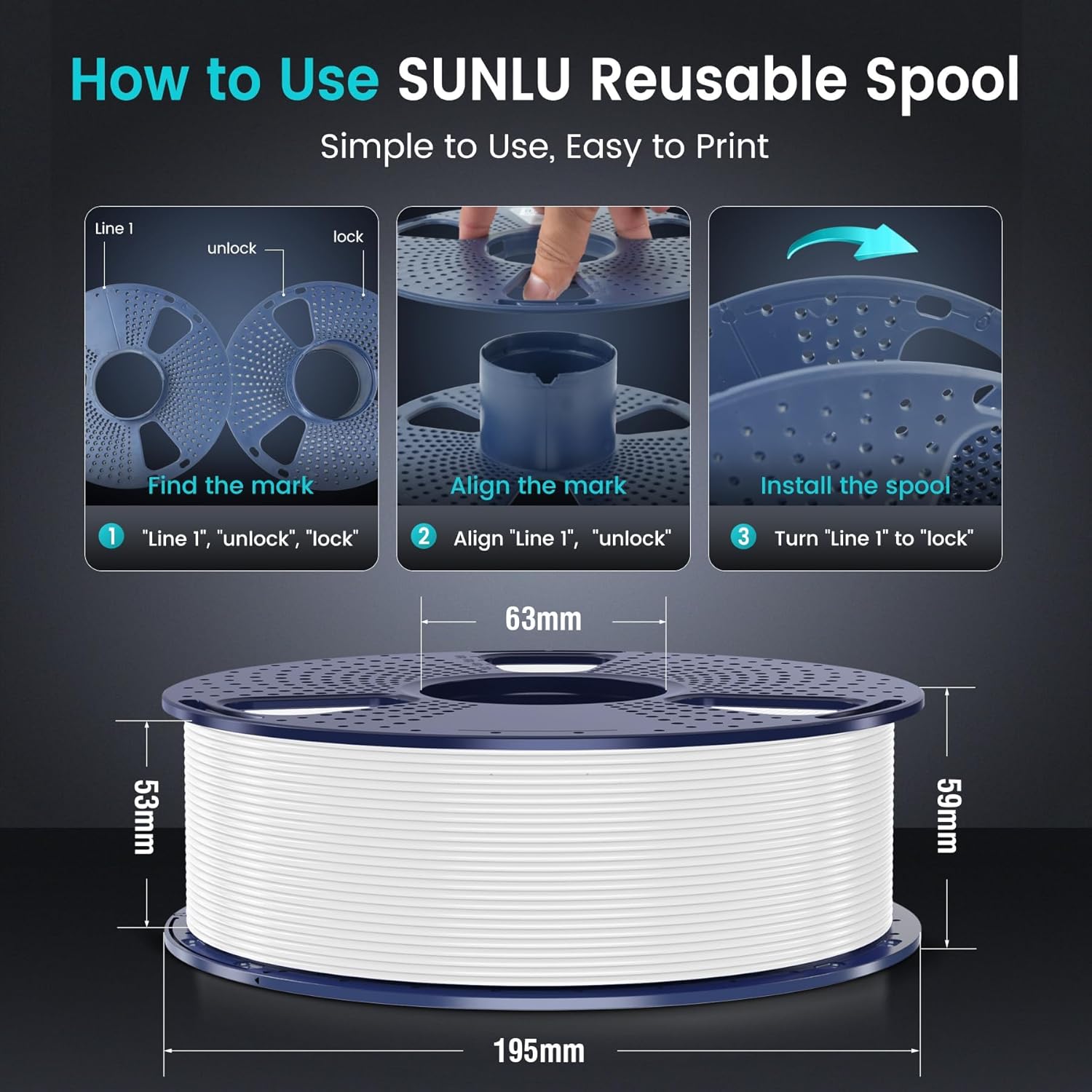
- Diameter: 1.75 mm
- Colour: Black
- Spool size: 1 kg each (4 packs total)
- Dimensional tolerance: +/- 0.02 mm
- Recommended bed temperature: 50–60°C
- Suggested nozzle temperature: 195–205°C (with 50–100 mm/s) or 205–220°C (with 100–300 mm/s)
- Packaging: Neatly wound to aid smooth feeding
Is it worth it?
It suits buyers who value a straightforward upgrade over standard PLA, with higher toughness and reliable feeding. You’ll like it if you print regularly and need consistent results without complex material handling. It may not be the best fit if you require extreme mechanical strength or heat resistance.
FAQ
- Can I print at higher speeds? The manufacturer provides speed ranges, gelling at extreme speeds may affect layer bonding, so start within the recommended limits.
- Is it brittle at low temperatures? PLA Plus generally performs well in typical room conditions, but extreme cold can affect any thermoplastic differently, print settings should still prioritise good layer adhesion.
- Do I need a heated bed? A bed temperature of 50–60°C is advised for best results with this filament.