

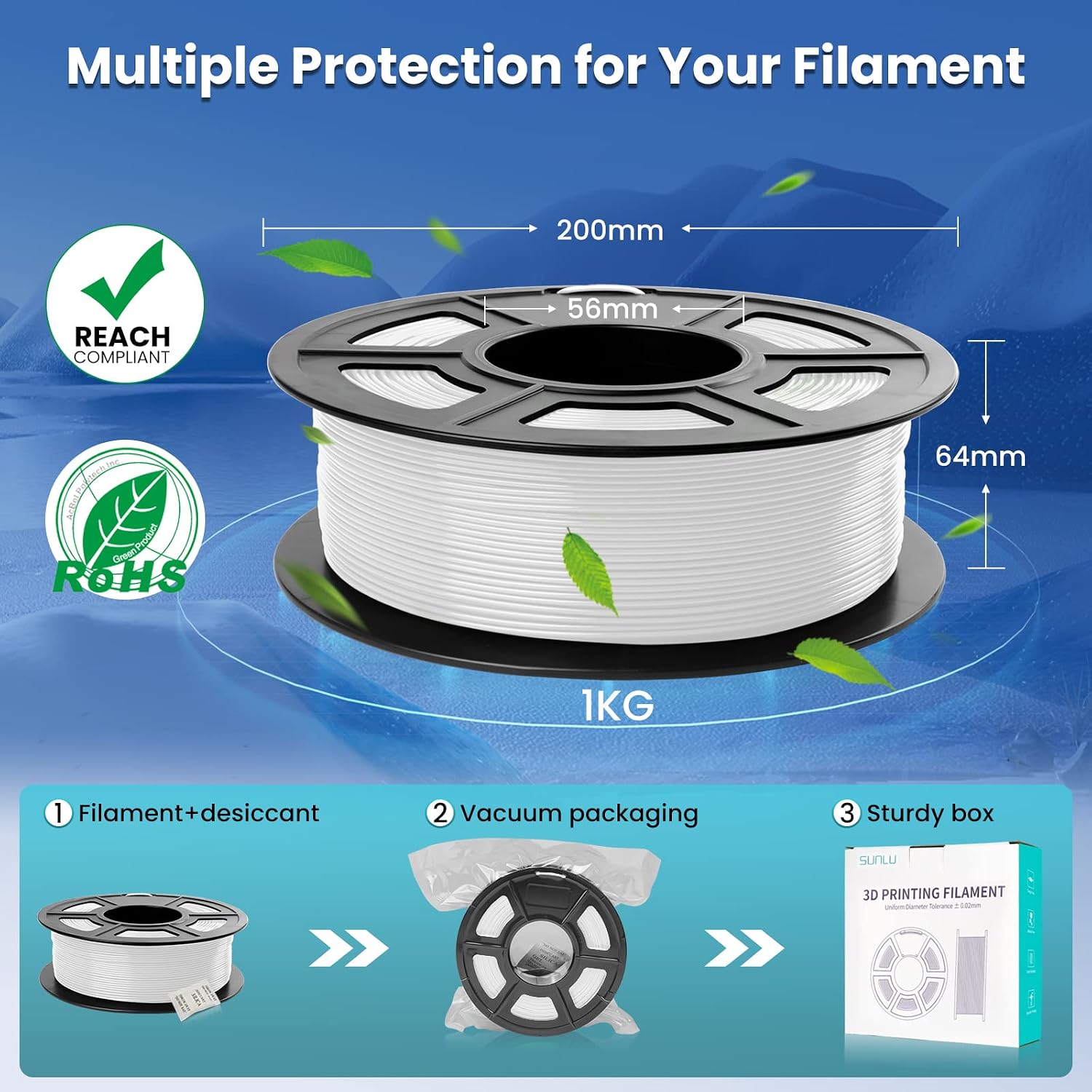
SUNLU PETG 1.75mm, 1kg White Filament – Strong PETG, Neatly Wound for Most FDM Printers
Product description
What it is
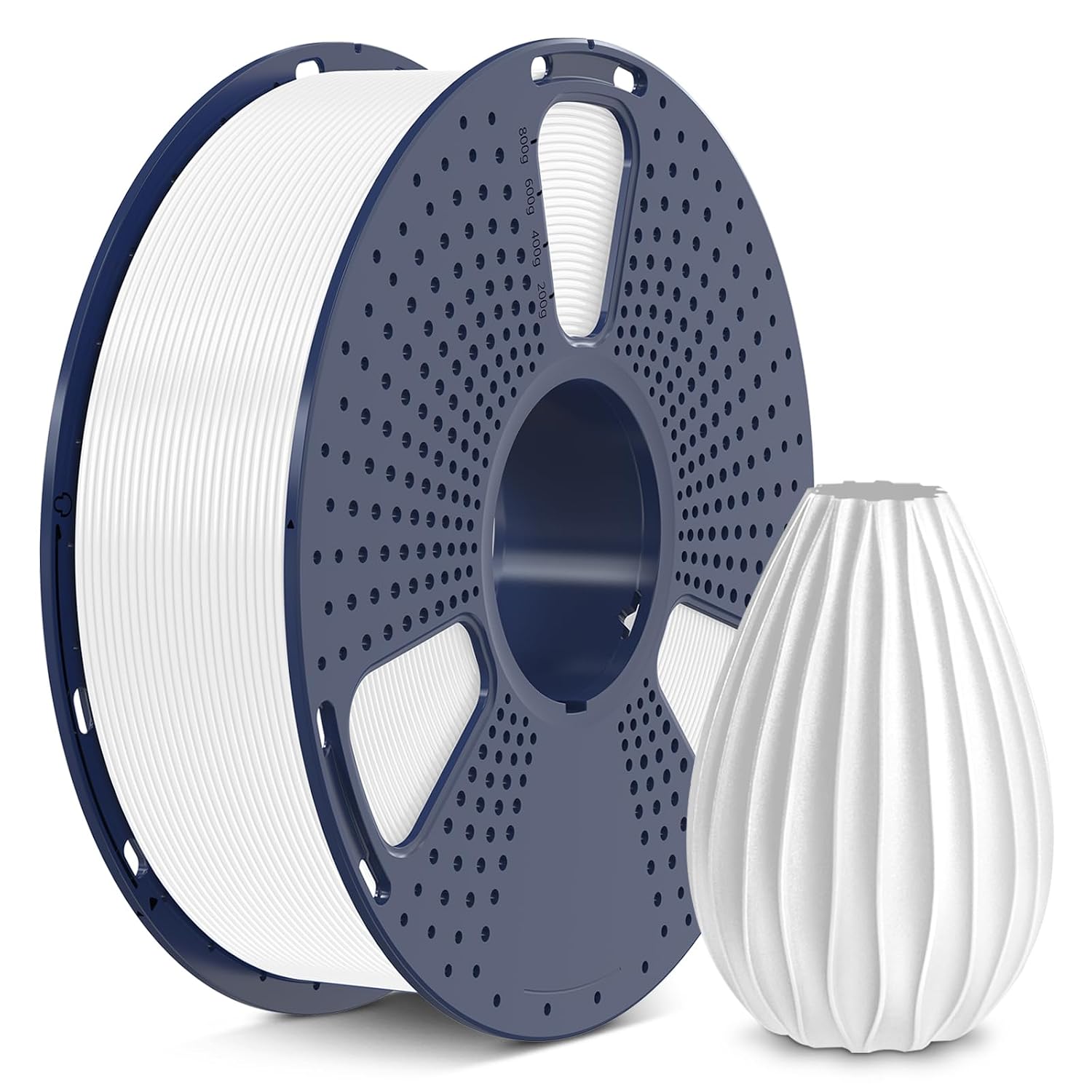
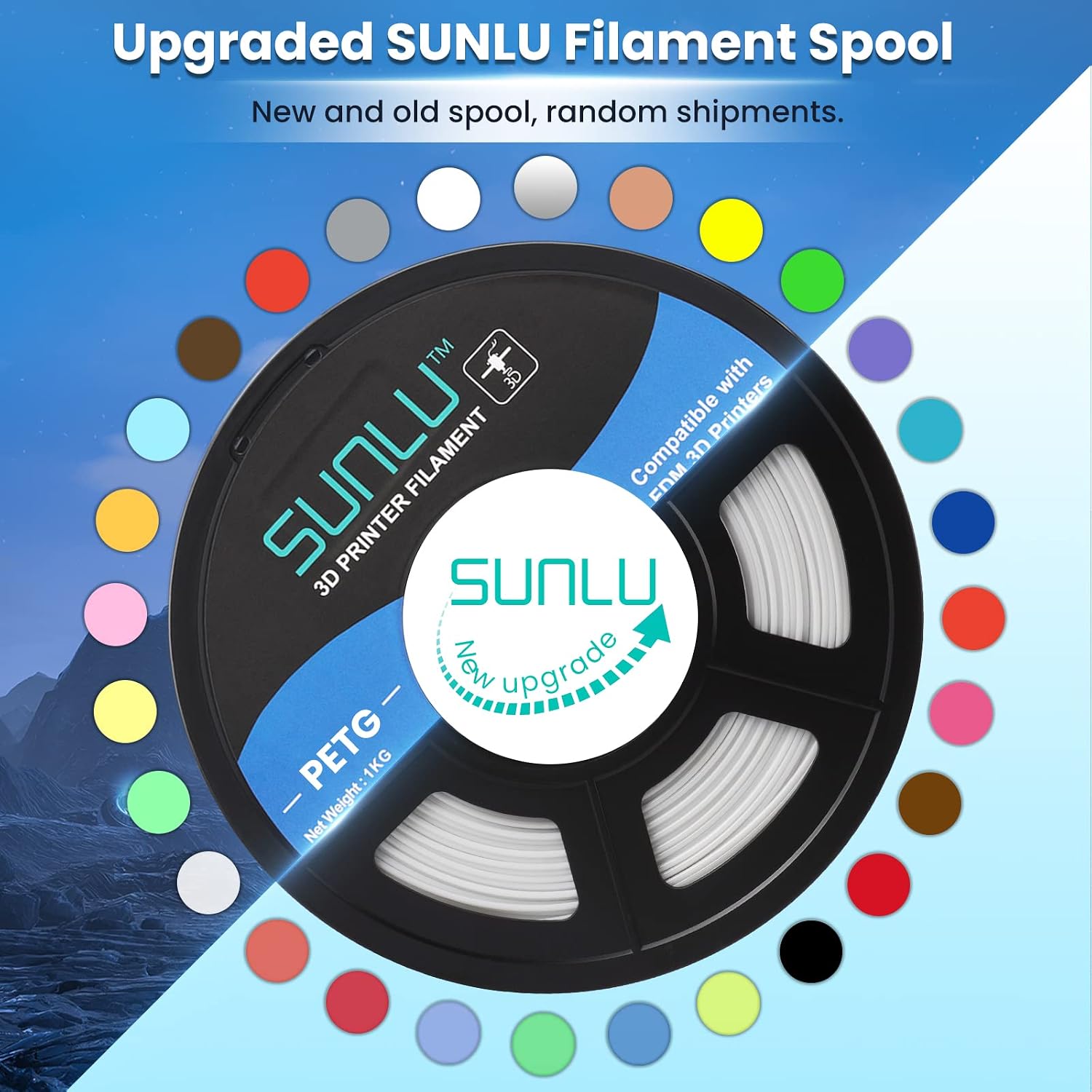
SUNLU PETG is a 1.75mm diameter PETG filament sold on a neatly wound 1kg spool, designed for a wide range of FDM 3D printers. The white colour and stable sizing aim to deliver reliable prints with good layer adhesion and dimensional accuracy.
How it performs on the bench
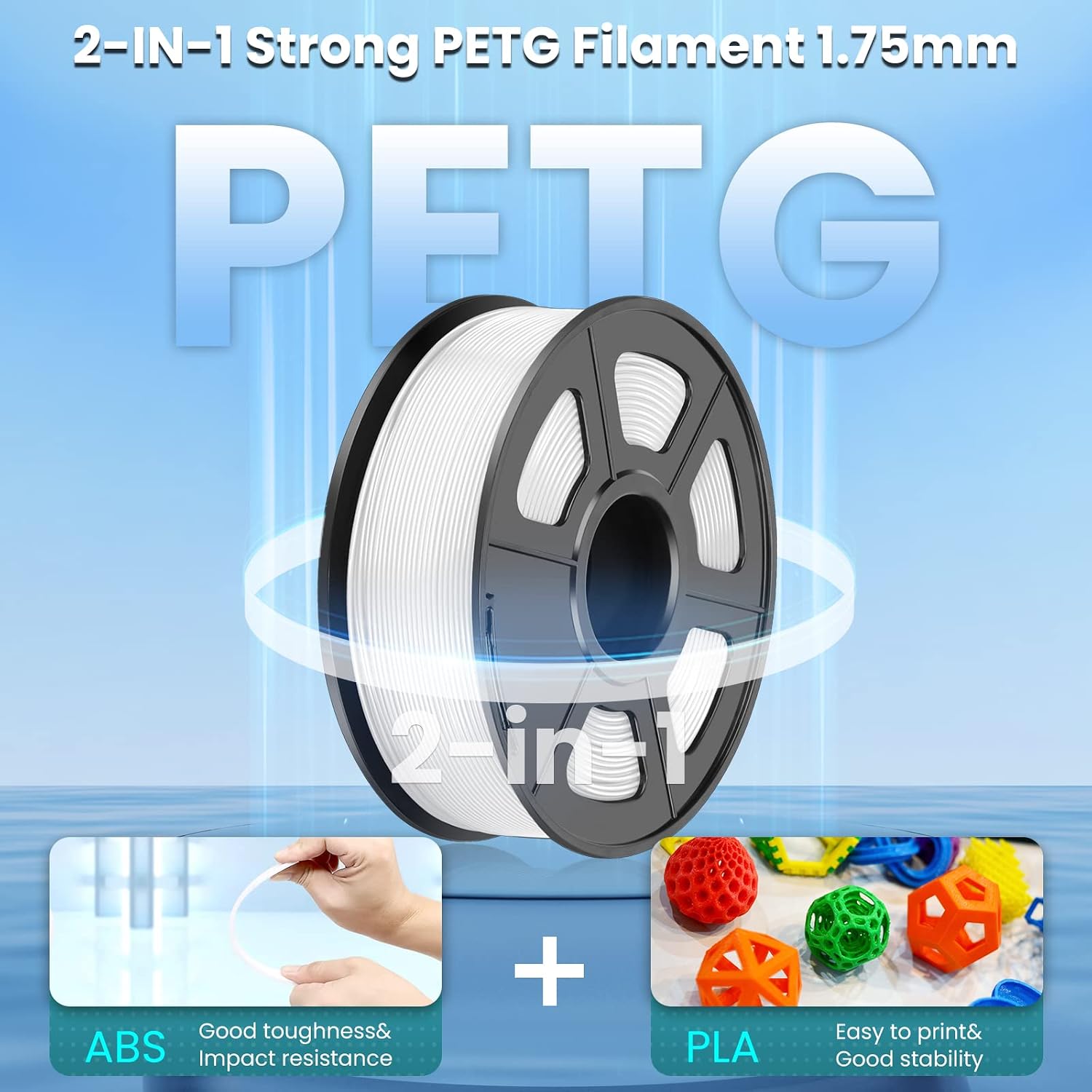
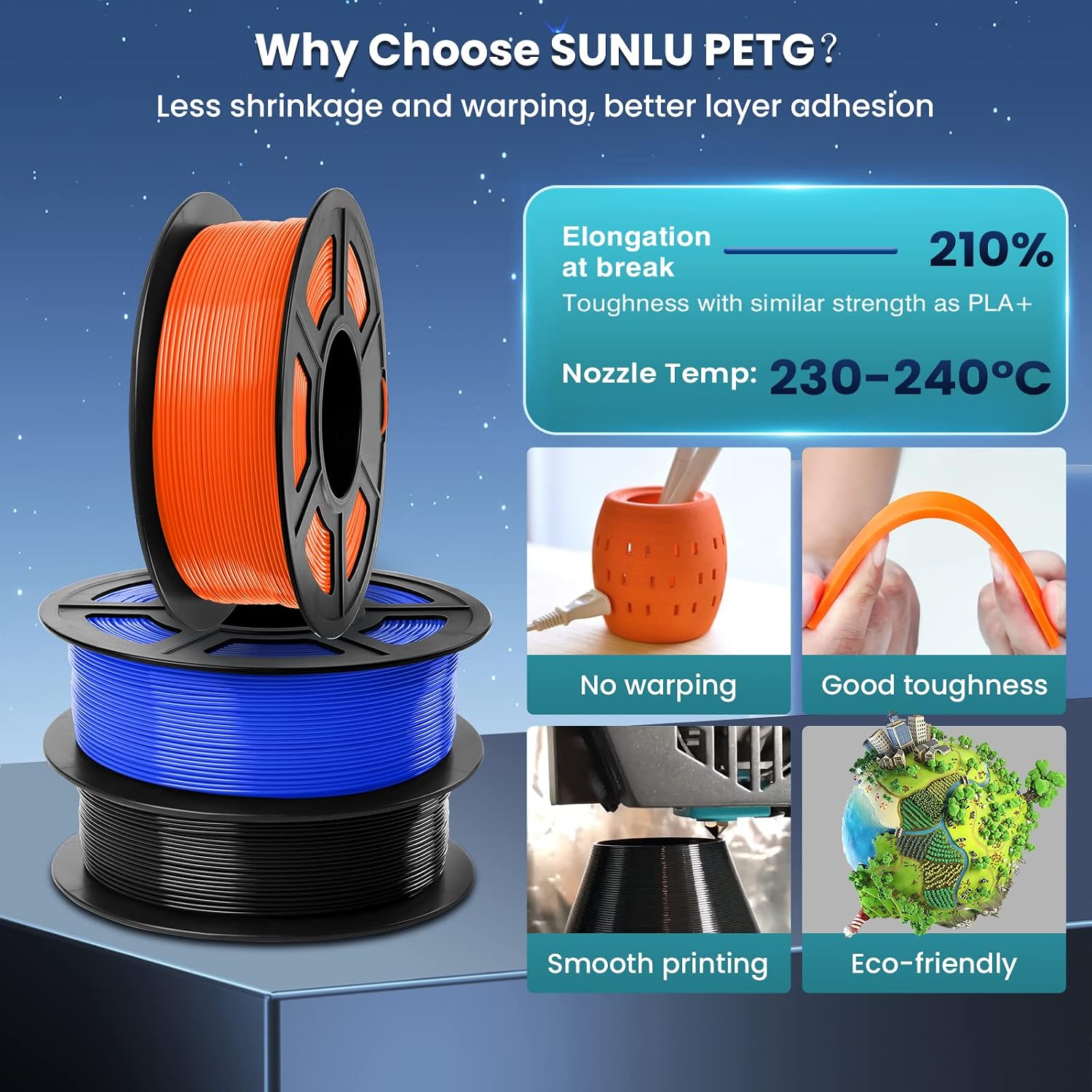
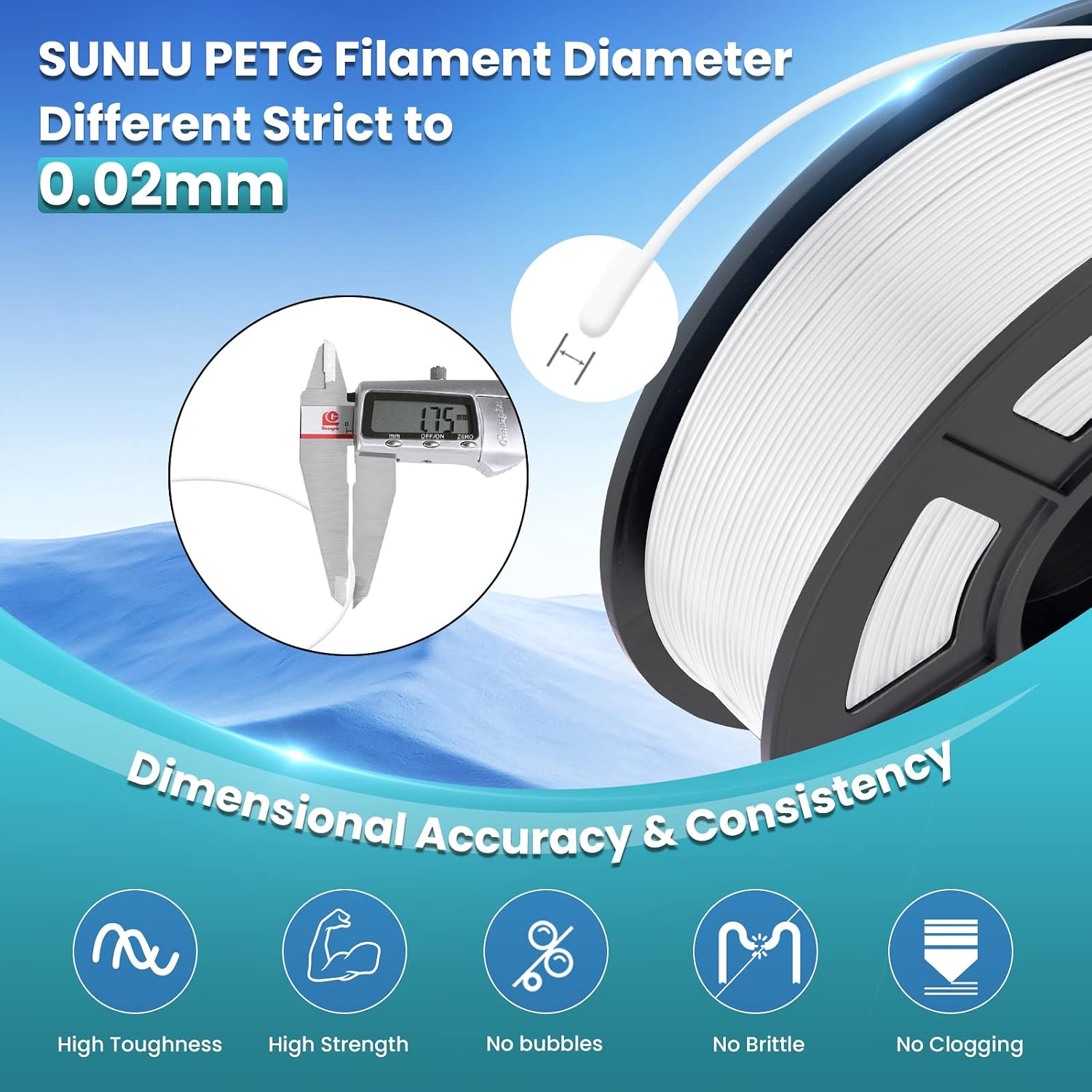
On paper, PETG combines the ease of PLA with the durability of ABS. This SUNLU variant emphasises toughness and impact resistance, aiming to reduce warping and stringing compared with some other filaments. The manufacturer notes a tolerance of +/- 0.02mm, which can help with consistent extrusion and fewer mid‑print failures due to diameter fluctuations. Practical impressions tend to be that PETG prints are more durable than PLA and less brittle than some ABS blends, making it a sensible choice for functional parts that need to take a bit of pressure or knocks.
What stands out in use
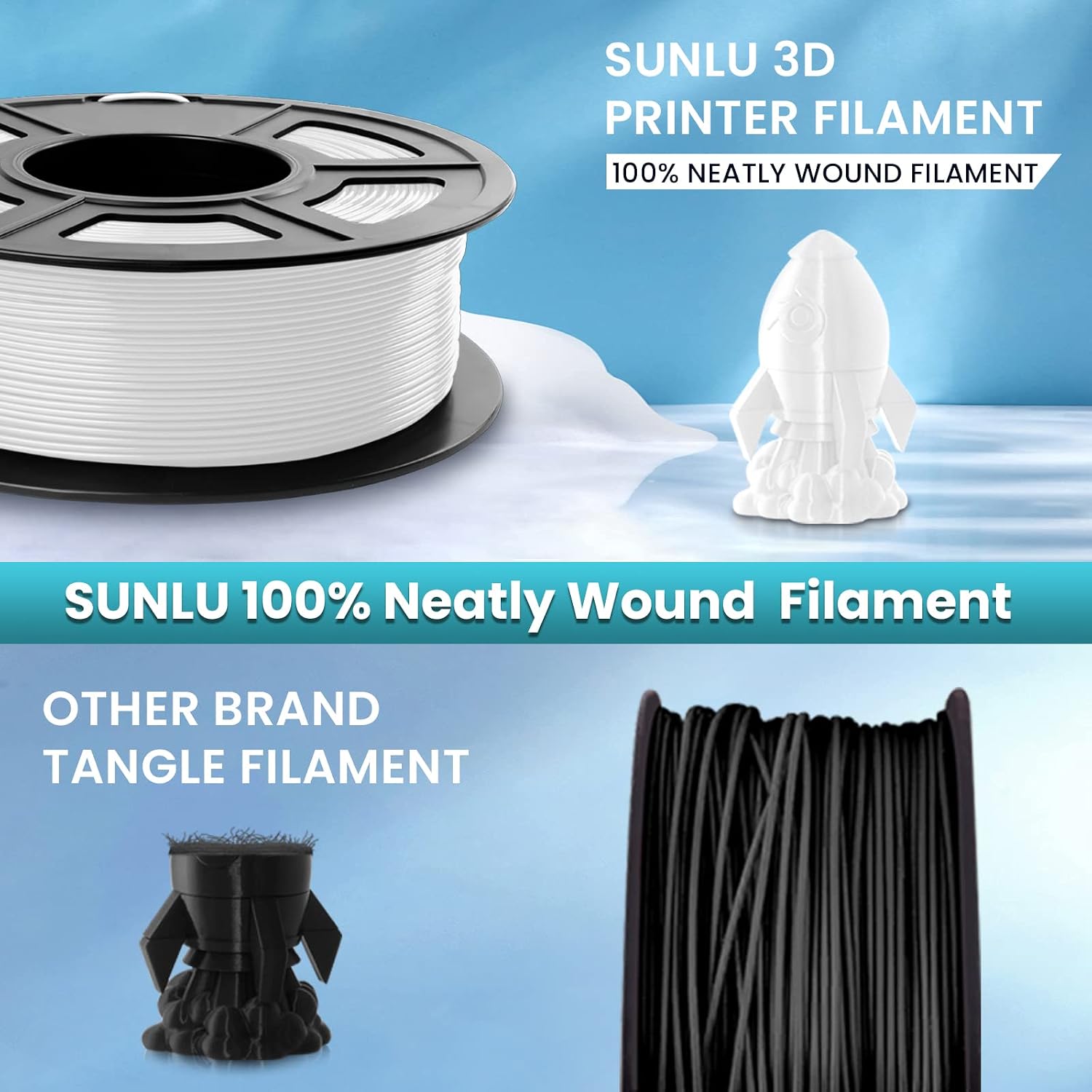
The filament is described as clog‑free, bubble‑free and tangle‑free, with a neat winding that helps avoid entanglement mid‑print. For many users, that translates into fewer failed prints and a smoother feeding experience. Recommended printing settings are 220–230°C nozzle temperature and a bed at 60–70°C, which aligns with common PETG guidelines and helps with proper first‑layer adhesion.
Strengths and potential drawbacks
- What’s good: strong overall toughness, good layer adhesion, and a filament wound to minimise tangles. Compatibility is broad given the 1.75mm diameter and tight dimensional tolerance.
- What could be better: PETG can still be prone to stringing or oozing if tuned poorly, and prints may require tuning of retraction and cooling for the best surface finish. The spec sheet doesn’t detail any additive stabilisers or colourfast properties beyond white, so consider testing for your specific colour/finish needs.
Who it’s for
If you prioritise durability for functional parts, mechanical components, or items subject to handling, SUNLU PETG offers a balanced option that sits between easy‑to‑print PLA and more heat‑resistant materials. It suits hobbyists and professionals alike who want reliable results without stepping up to more complex materials.
Who it isn’t the best option for
It may not be the ideal choice if you primarily print cosmetic parts with ultra‑smooth surfaces, as PETG can show imperfections if printer conditions aren’t optimised. If you’re after an ABS‑like heat resistance with minimal stringing, you might want to consider alternatives that emphasise surface finish over toughness.
When it makes sense to buy
Purchase makes sense if you need a robust filament that’s relatively forgiving to print and compatible with most 1.75mm FDM printers. The neat winding and stated dimensional accuracy can support more predictable results, especially for users building up practical, load‑bearing parts.
When to hold back
If your current prints demand a pristine cosmetic surface and you’re not willing to invest time in tuning temperatures and retraction, you may find PETG’s learning curve a tad steeper than some PLA variants. Also, if you require very strict colour consistency or heat resistance beyond PETG norms, consider alternatives before committing.
Before you buy: what to check
- Confirm your printer’s bed temperature capacity aligns with the 60–70°C range.
- Consider your typical print sizes, PETG benefits from good bed adhesion and perhaps a light enclosure for stable temperatures.
- Test a small part first to gauge stringing, oozing and surface finish before committing to larger prints.
Practical use example
You might print a sturdy enclosure clip or a light‑duty mechanical bracket. Expect strong impact resistance and solid layer bonding, with a somewhat glossy finish typical of PETG when printed at the higher end of the recommended temperature range.
What to know about alternatives
If you value ultra‑low warping and the smoothest surface finishes, you could compare with PLA blends or other PETG brands to see which gives you the best balance of ease of use and durability for your specific prints. In many everyday scenarios, PETG sits as a middle ground between ease of use and functional strength.
Buying decision: Is it worth it?
Is it worth it? It makes sense if you want a practical, durable filament that prints reliably on a wide range of 1.75mm FDM printers and can handle modest impacts. It may not be the best choice if your priority is ultra‑high‑definition cosmetic surfaces or maximum heat resistance. A solid pick if you value predictable results and straightforward handling in day‑to‑day printing.
FAQ
- How tough is SUNLU PETG compared to PLA? It’s generally tougher and more impact resistant, while still being easier to print than some ABS blends.
- Do I need a heated bed? Yes, the recommended bed temperature is 60–70°C to optimise adhesion.
- Will it clog easily? The manufacturer describes it as clog‑free, but a well‑tuned extruder and clean nozzle are still important for best results.