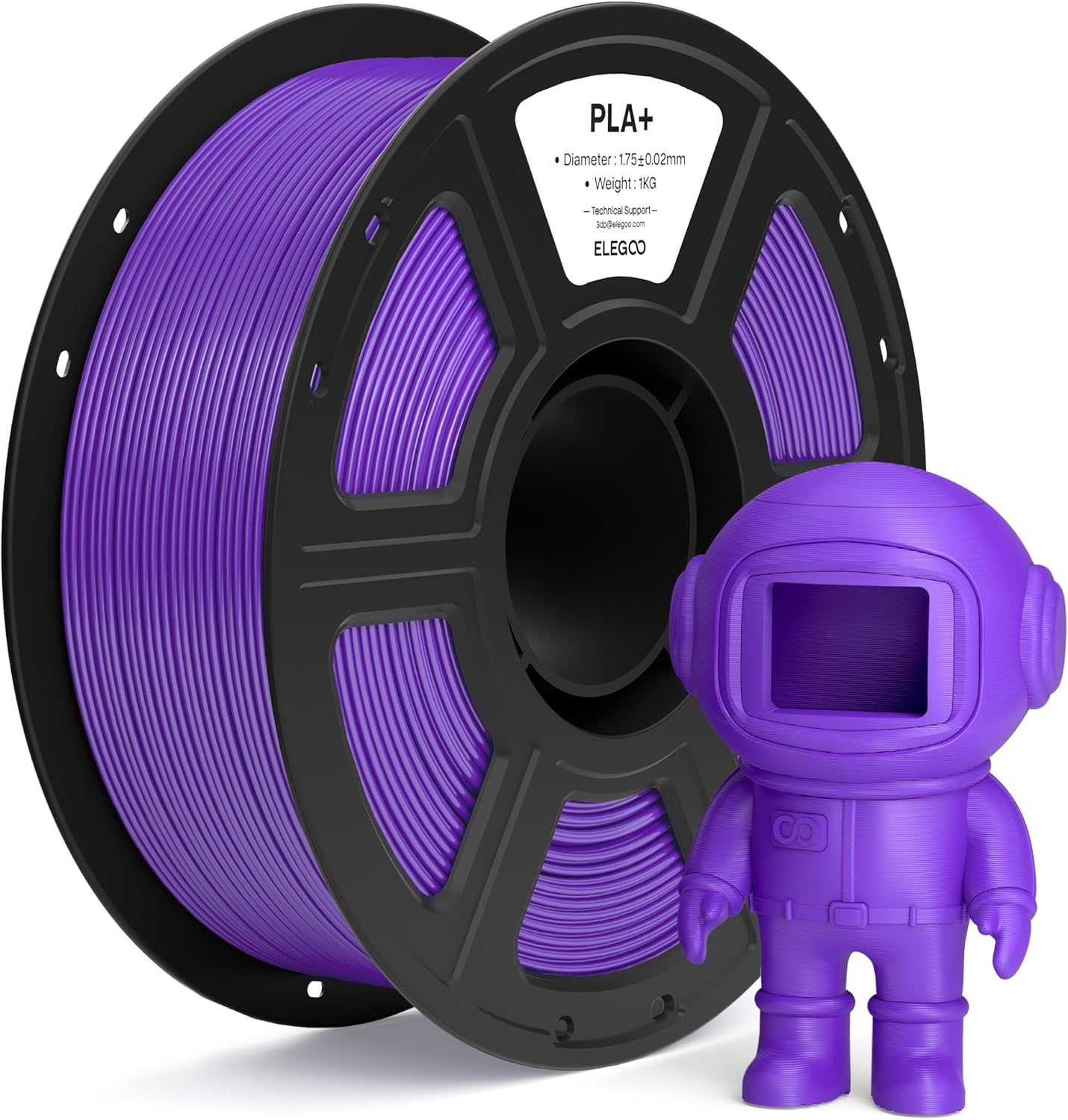
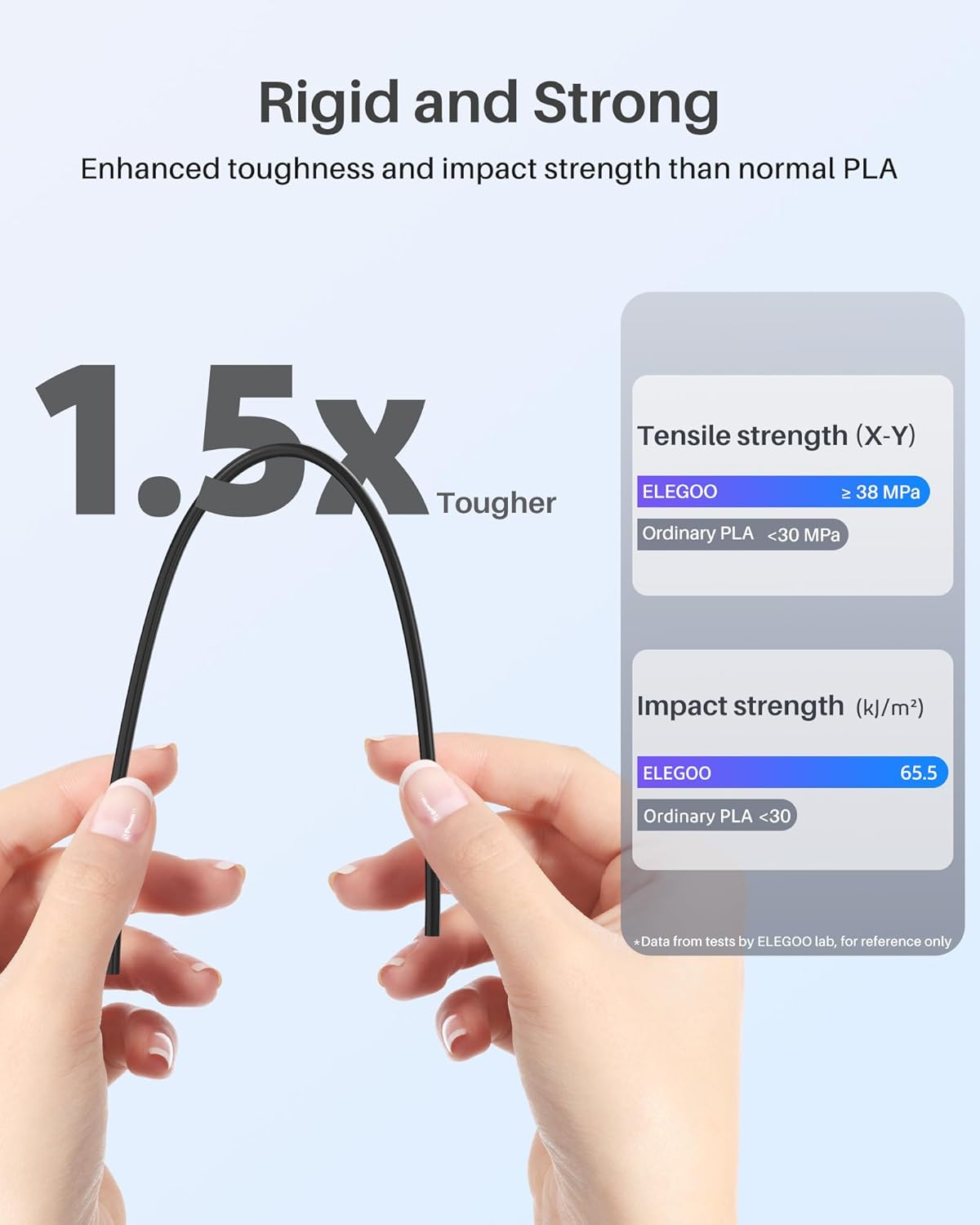
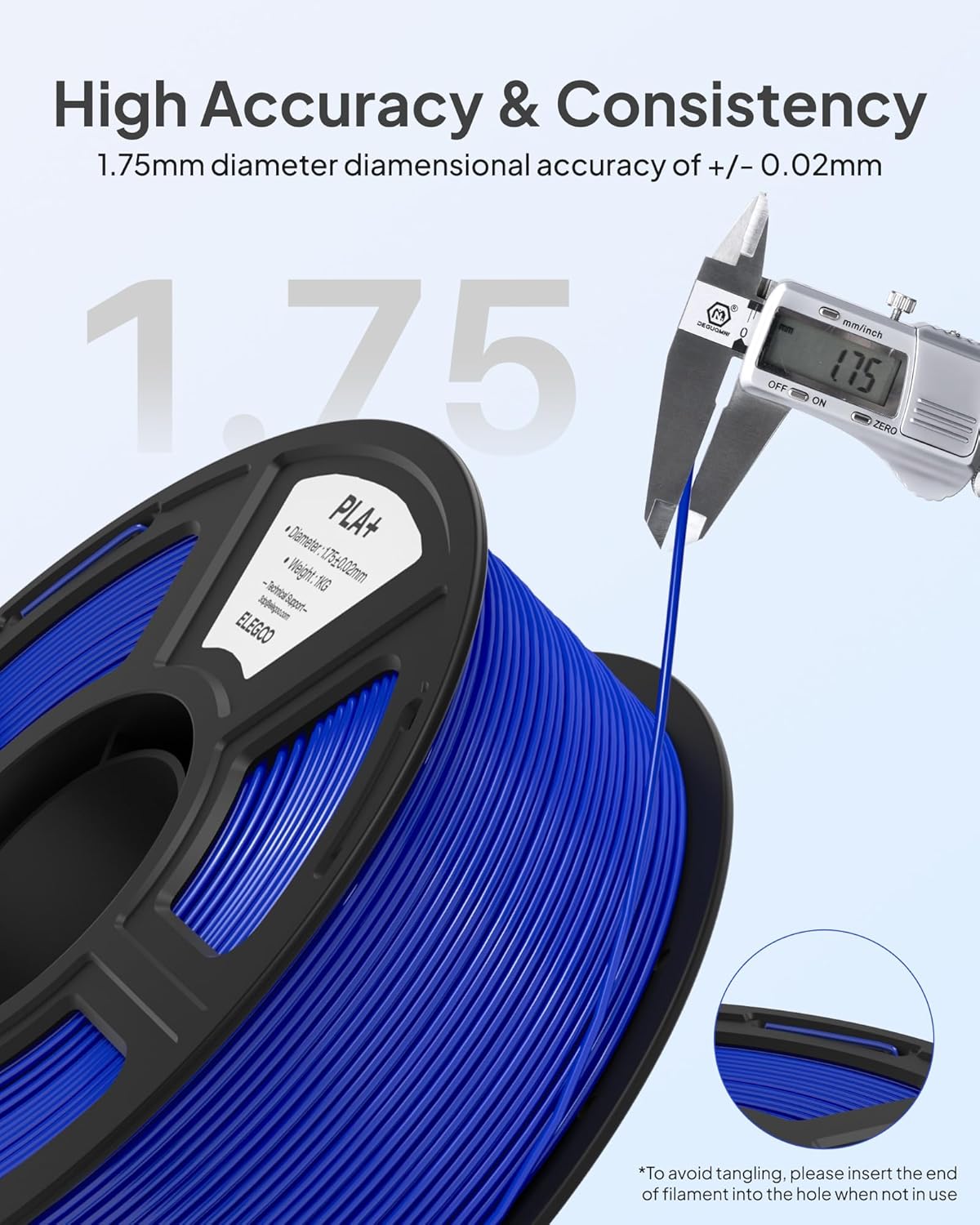
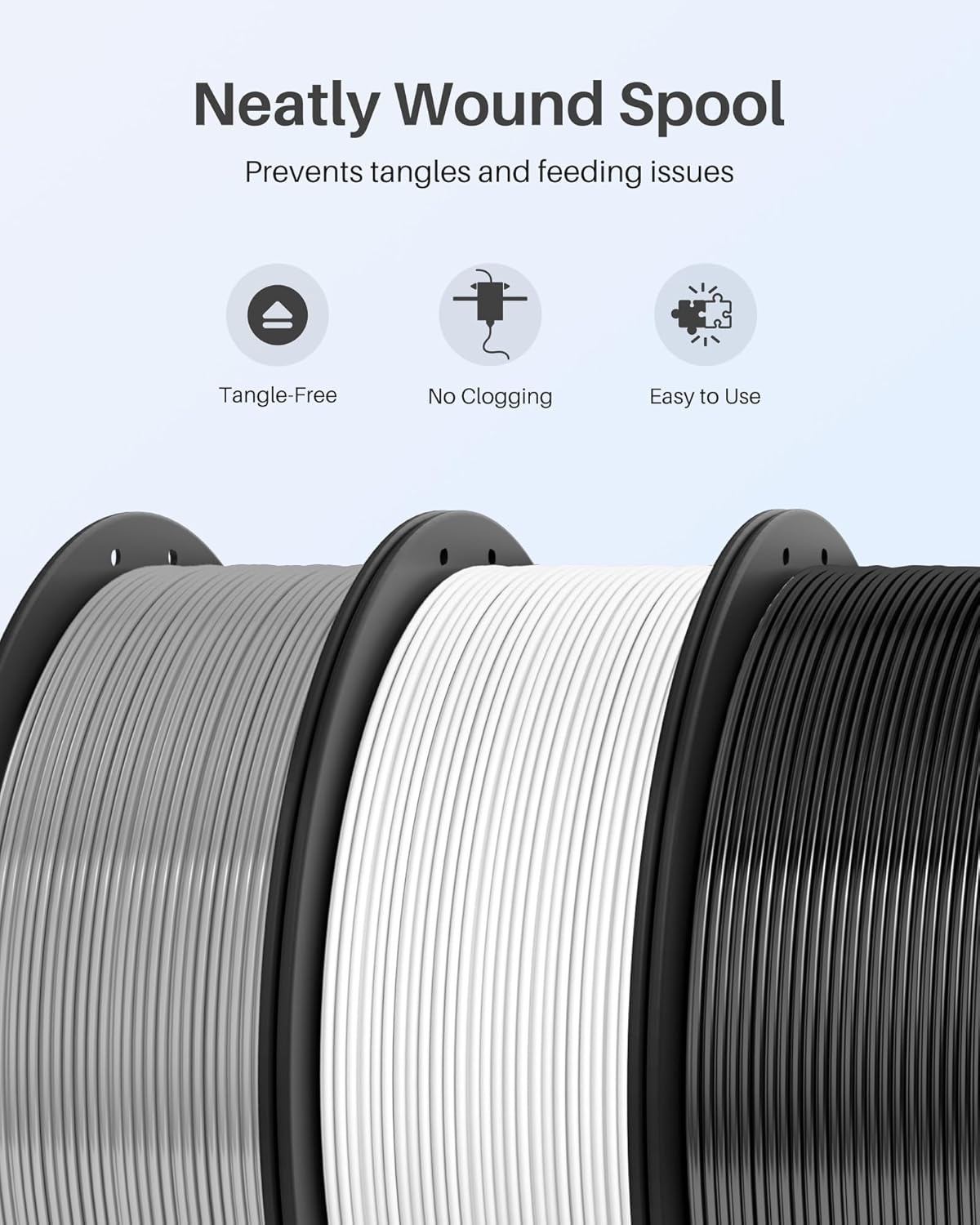
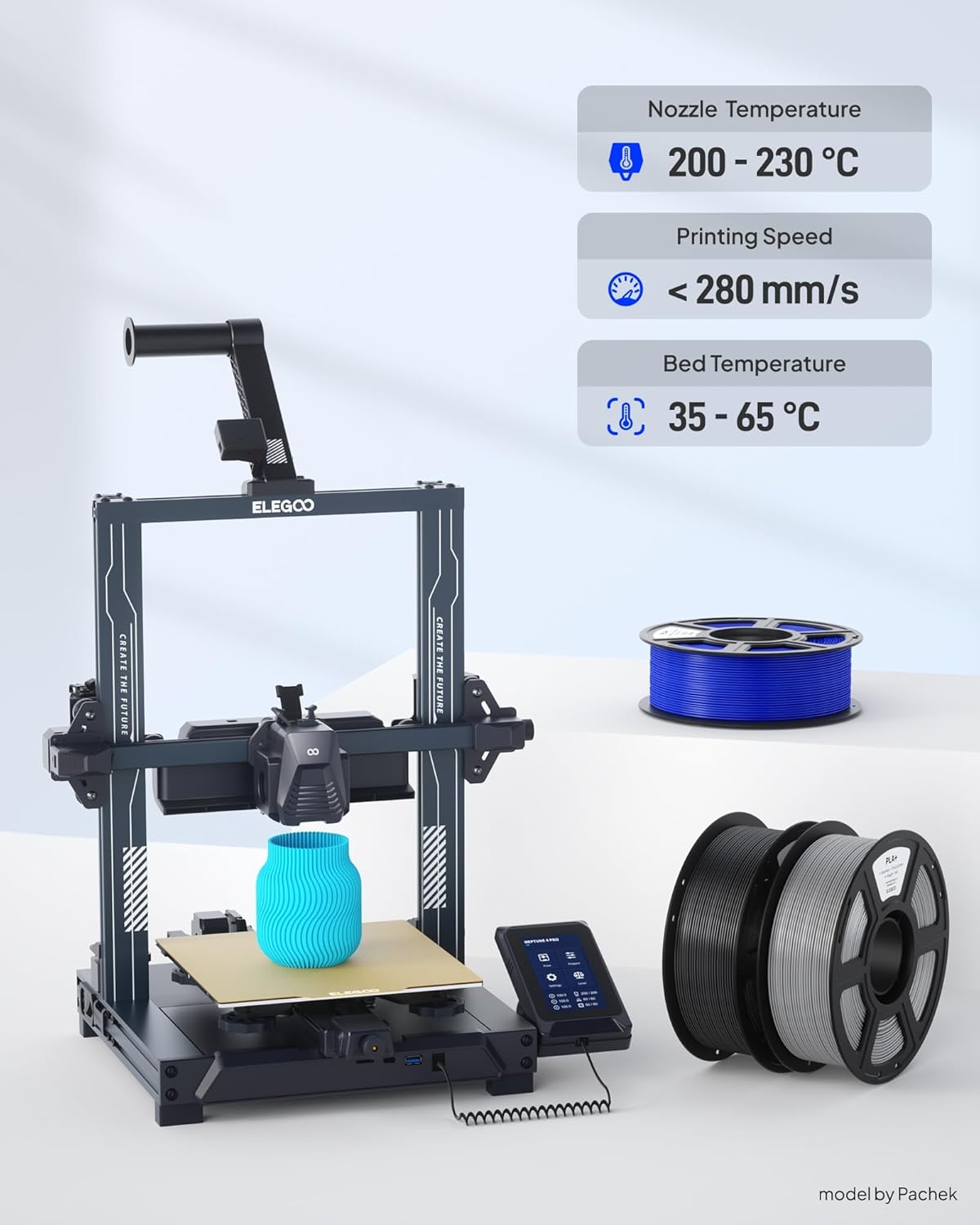
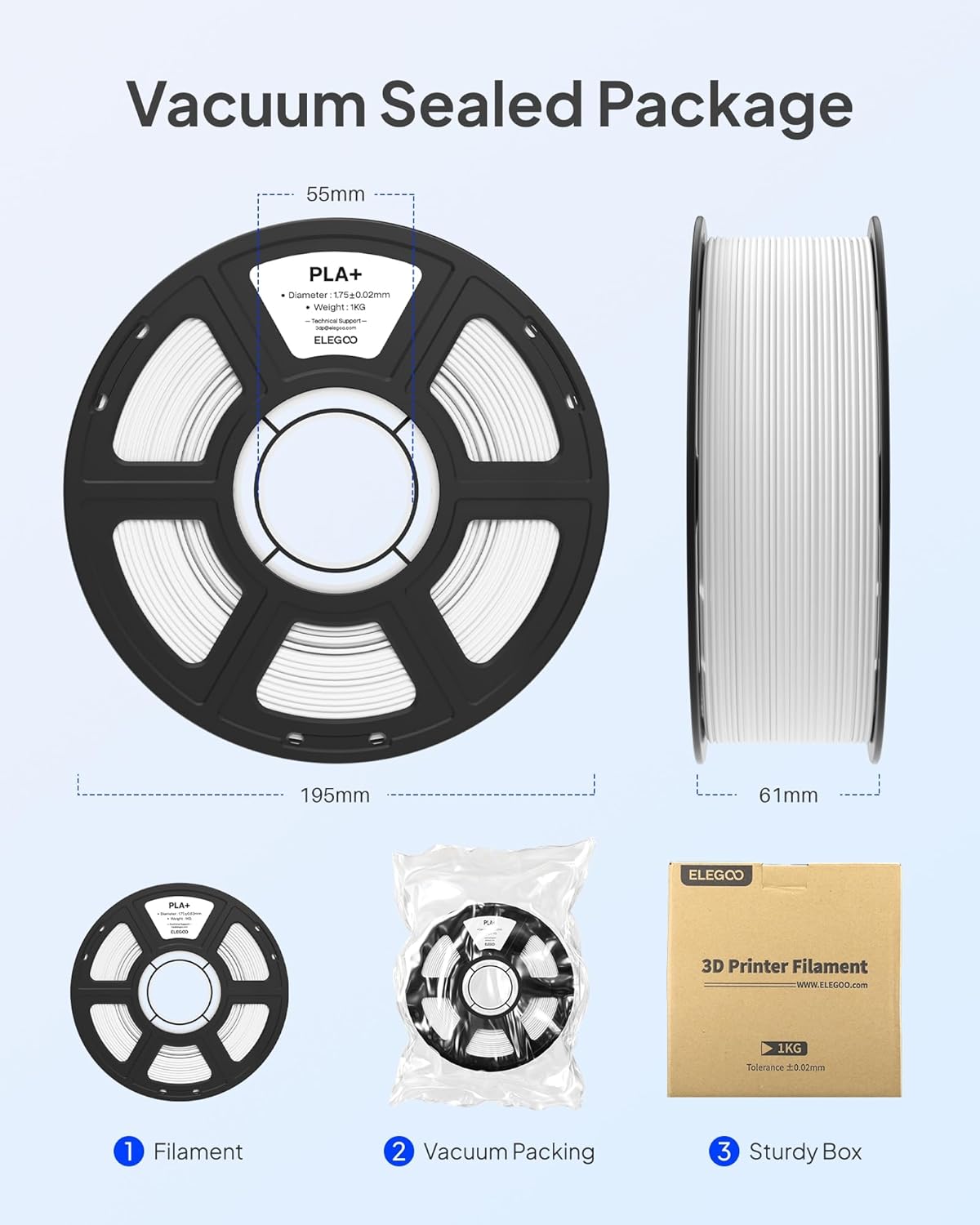
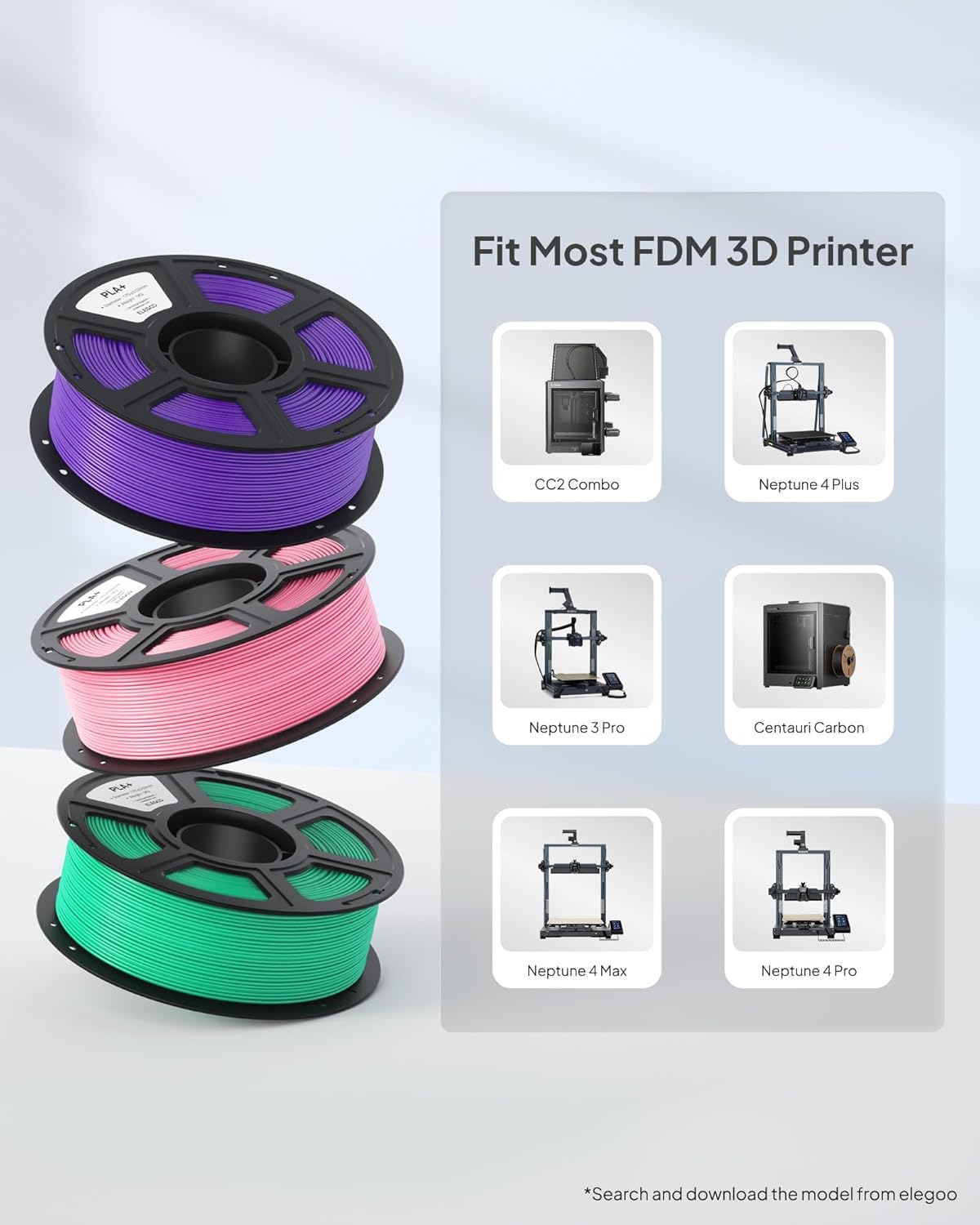
What it is and what it aims to solve\nELEGOO PLA+ Filament in purple is a 1.75mm PETG-free PLA Plus designed to deliver stronger, more impact‑resistant prints than standard PLA. It targets hobbyists and makers who want reliable results without resorting to higher‑temperature materials. The spool is sized at 1kg, a common capacity for many desktop 3D printers, making it a sensible choice for users who print small-to-medium batches or prototypes.\n\n## How it performs in practice\nOn paper, the filament is produced with tight dimensional control: +/- 0.02 mm, which helps consistent extrusion and feeding. The combination of improved toughness and strong layer adhesion reduces the likelihood of brittle prints and warping, especially on parts with moderate overhangs or minor internal voids. It also aims for a glossy surface with low shrinkage, which can translate to cleaner edges and better finish with minimal post‑processing. Practically, this means you may get smoother first layers and fewer retractions caused by inconsistent diameter.\n\n## Pros and limitations you’ll notice\nPros: better impact resistance than standard PLA, neat winding to reduce tangles, dried and vacuum‑sealed packaging intended to minimise moisture uptake, and a lower printing temperature that eases setup. Limitations: while it’s tougher than plain PLA, it isn’t a structural engineering material, performance gains depend on print settings and part design. If you push it to high‑flex or high‑temperature needs, you may still want a more specialised filament.\n\n## Ideal user and use cases\nIt suits crafters, product designers, and students who print functional parts, enclosures, or display items where a bit more durability helps. It’s a practical upgrade for prints that might endure light impacts or handling, such as tool holders, display stands, or hobby‑grade mechanicals. For those prioritising maximum rigidity, ultra‑low warp, or high‑temperature resistance, this might not be the best match.\n\n## Who it’s not the best fit for\nIf your work demands extreme heat resistance, chemical resistance, or very tight tolerances across many reels, you may look at other materials or finishes. It also helps to note that results can vary with printer model, nozzle size, and ambient conditions, a printer with a well‑calibrated extrusion path will benefit more from the dimensional stability this filament promises.\n\n## Before you buy: what to check\nEnsure your FDM printer supports 1.75mm filament and that your nozzle temperature aligns with PLA Plus recommendations. Confirm your cooling is adequate for glossy finishes and that your print bed is level to capitalise on good first‑layer adhesion. Keep in mind that even with tighter tolerances, real‑world results depend on calibration, print speed, and layer height.\n\n## Comparison in plain terms\nIf you’re weighing PLA Plus against standard PLA, the key decision point is durability versus ease of printing. PLA Plus typically offers better toughness with marginally more stringent extrusion control than basic PLA, while still remaining easier to print than many high‑performance filaments. If your project sits between casual prototypes and small functional parts, this filament provides a balanced option.\n\n## What you get\n1 x 1kg spool of ELEGOO PLA+ Filament 1.75mm in Purple, wound neatly to minimise tangles, dried thoroughly and vacuum sealed for moisture protection.\n\n## FAQ (quick practical notes)\n- Is it compatible with most FDM printers? Yes, provided your printer uses 1.75mm filament.\n- Will it require a high‑temperature extruder? It prints well at standard PLA Plus temperatures, which are generally lower than many ABS‑type materials.\n- Does it need special storage? The packaging is designed to resist moisture, but keeping unused filament in a sealed container helps maintain performance.\n\n## Final decision\nIs it worth it? Worth considering if you want a practical upgrade from standard PLA for sturdier, glossy prints without venturing into more complex materials. It’s well suited for everyday projects and hobbyist parts, offering predictable results with modest care. It may not be ideal if you require maximum heat resistance or industrial‑scale durability.\n