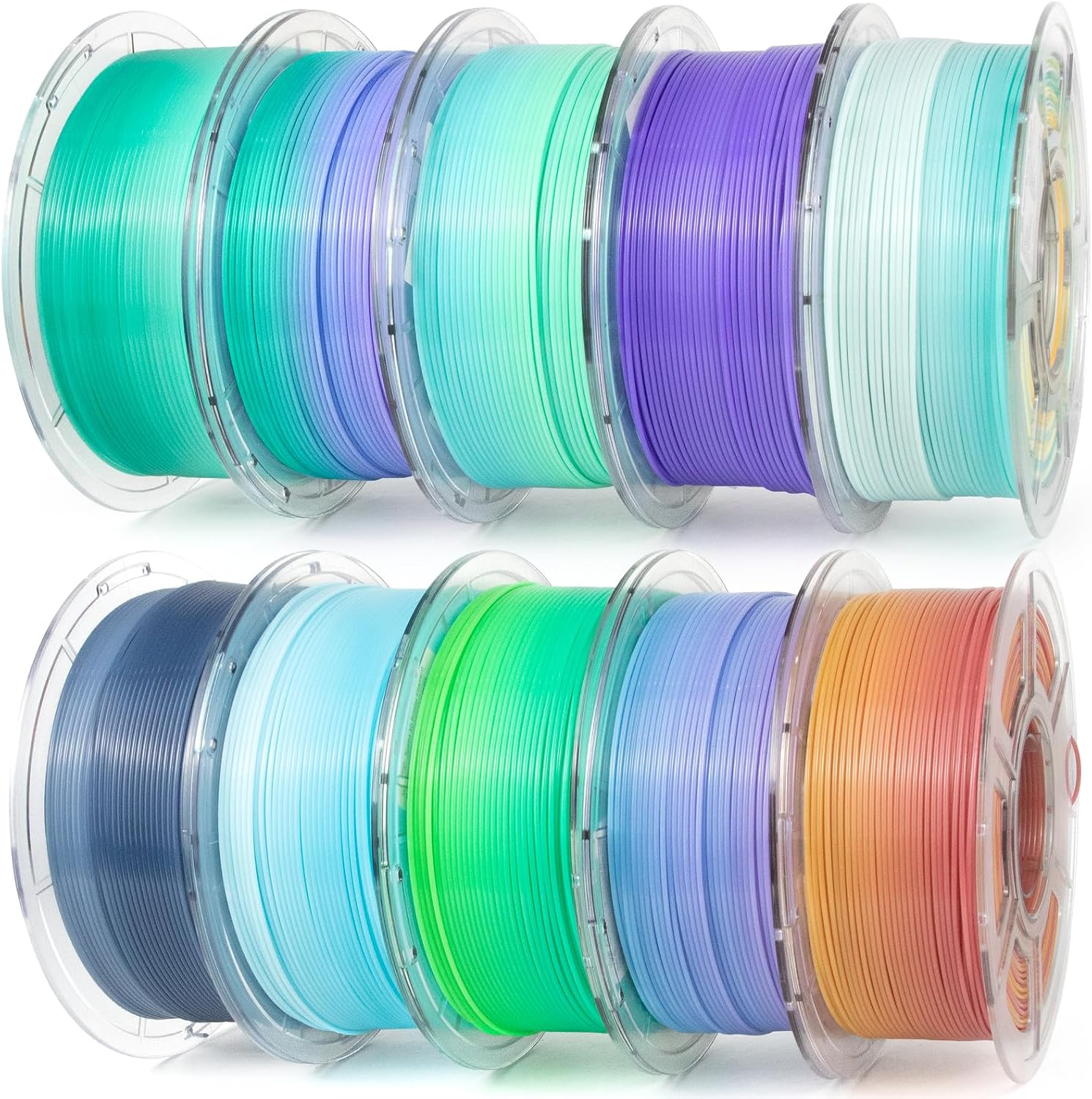
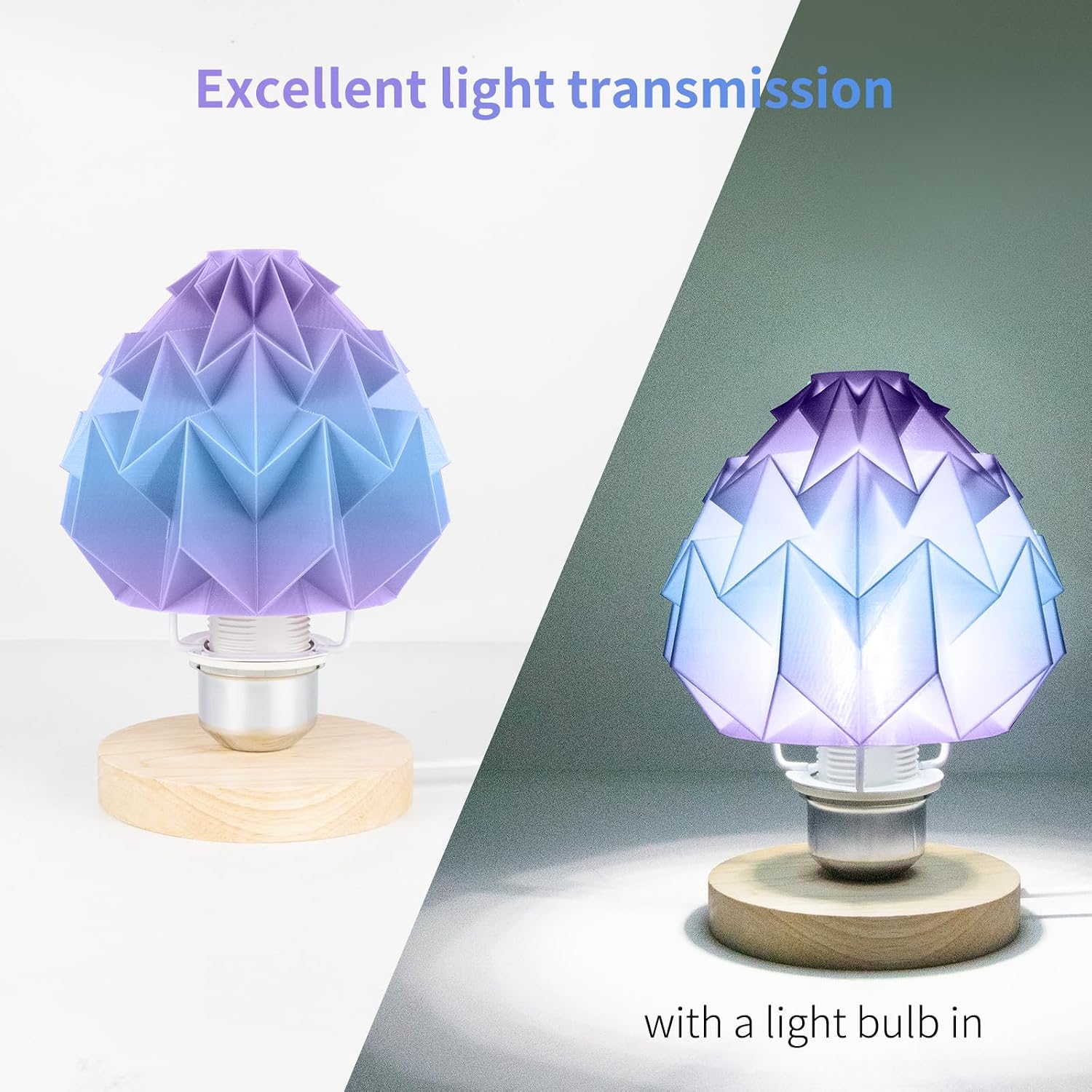
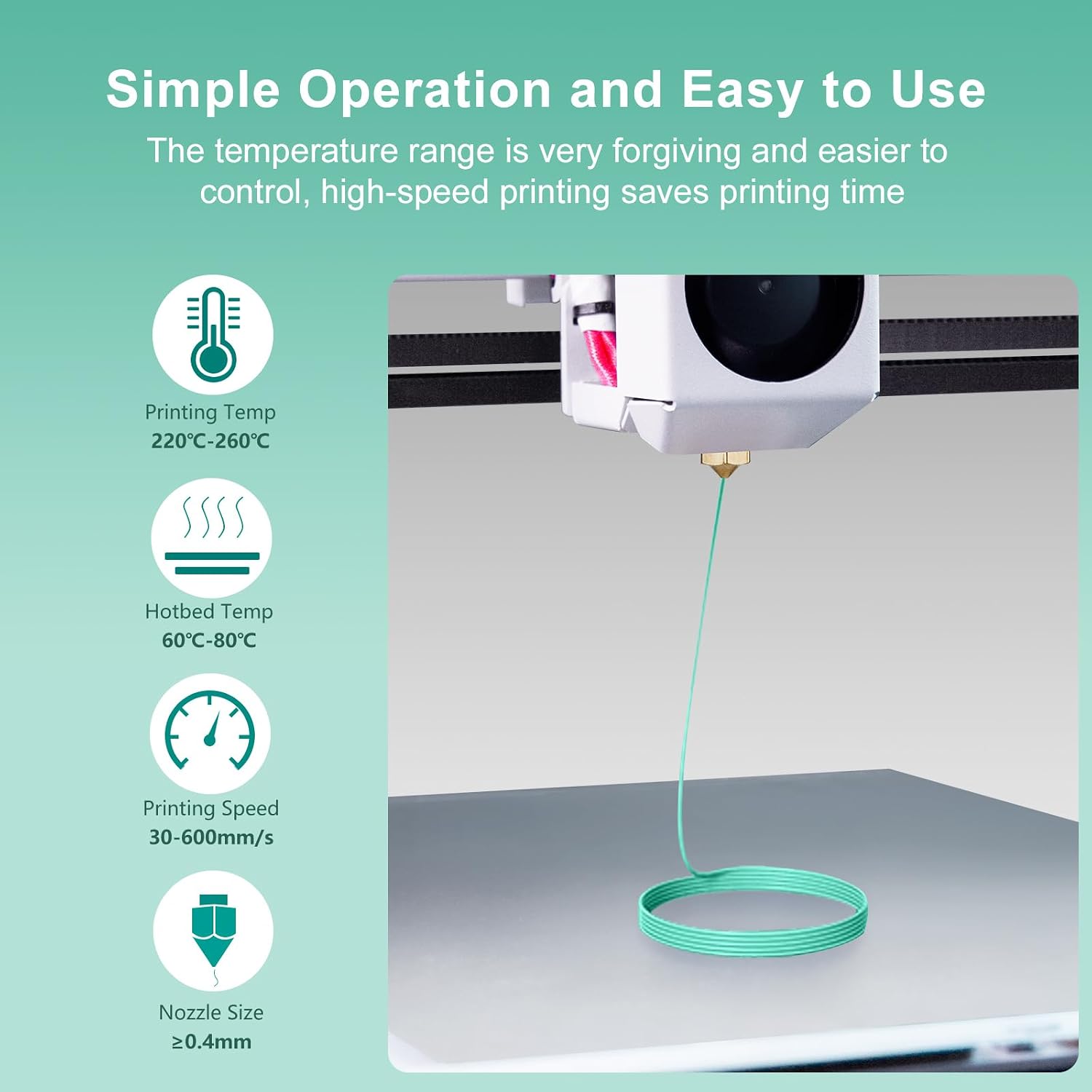
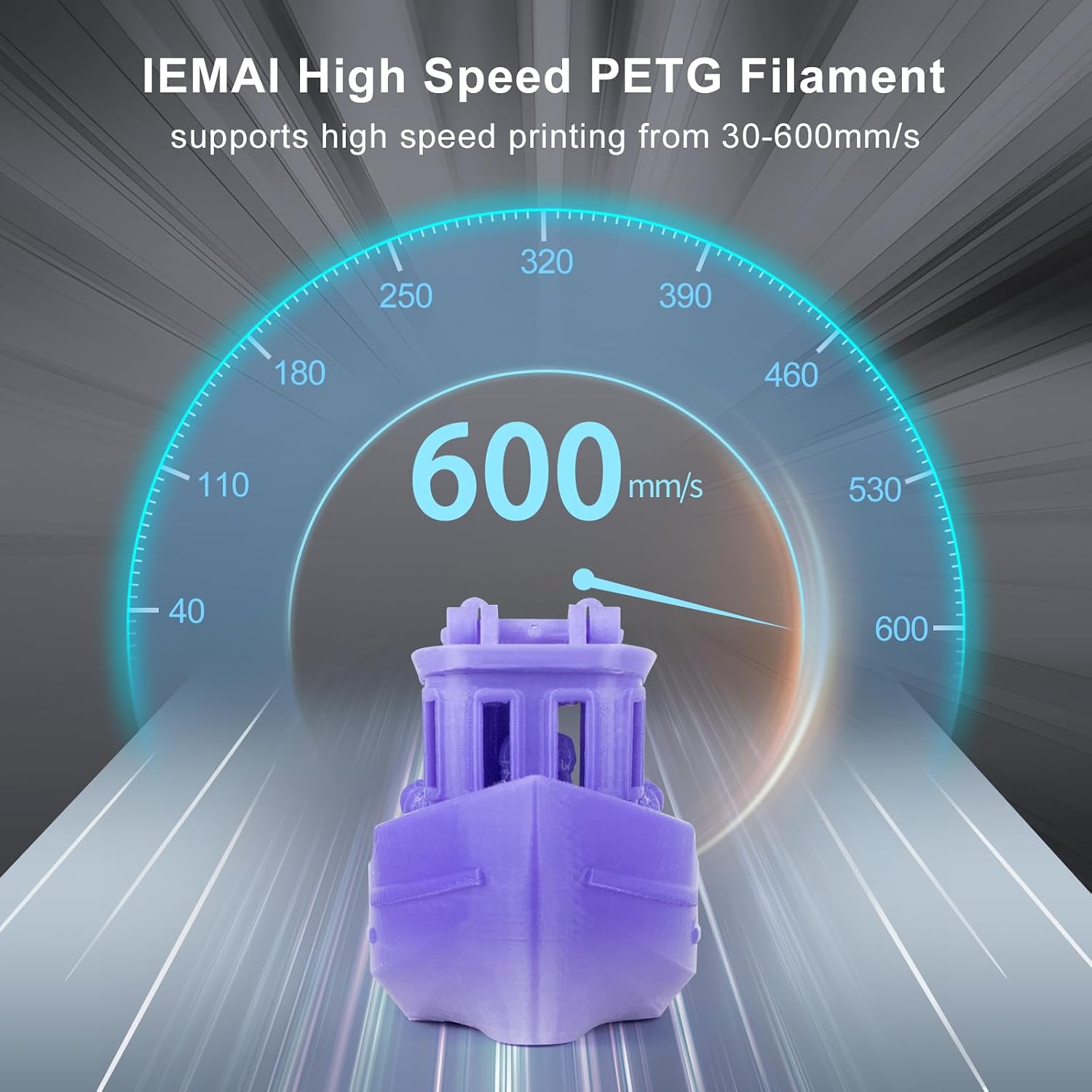
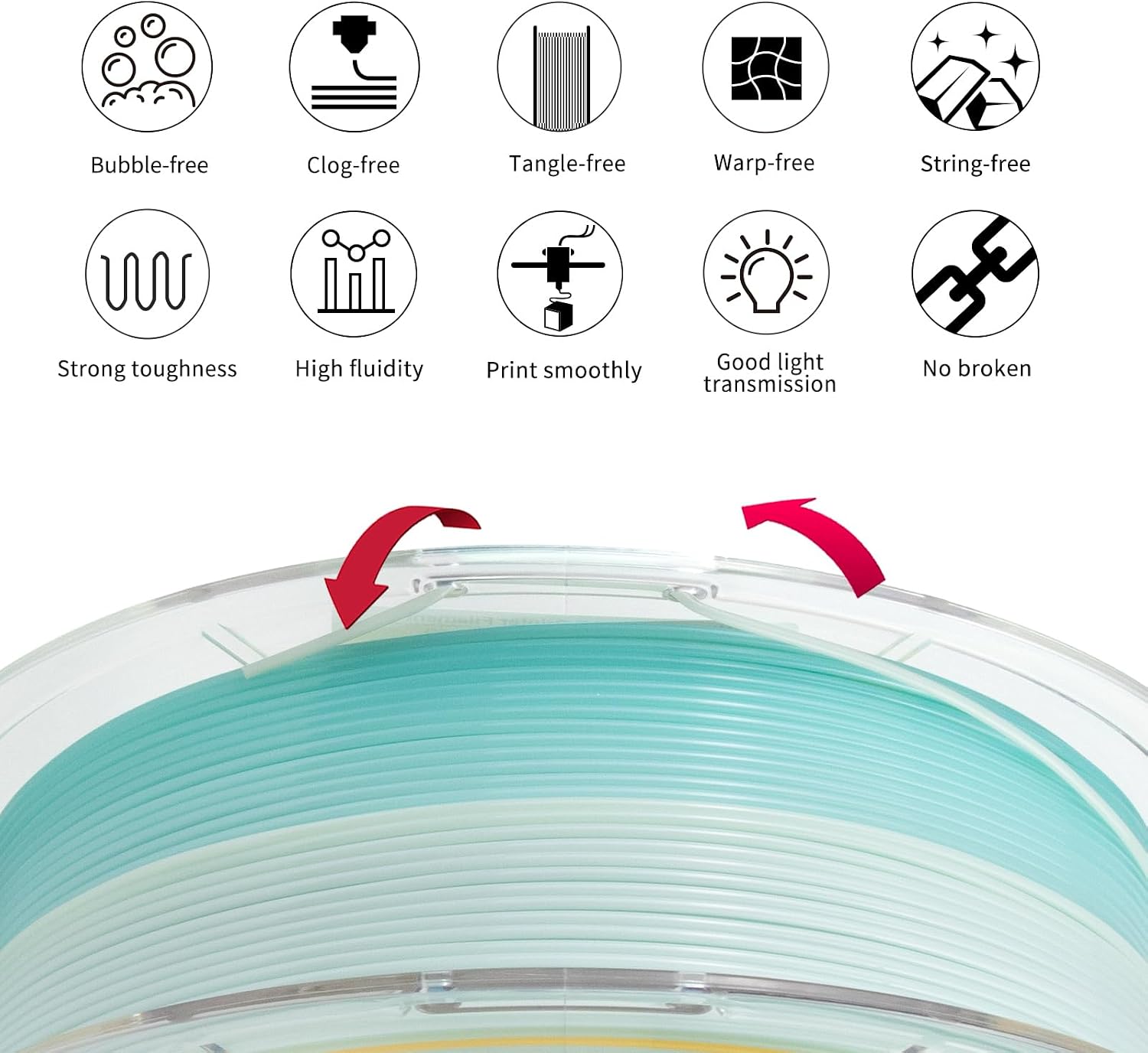
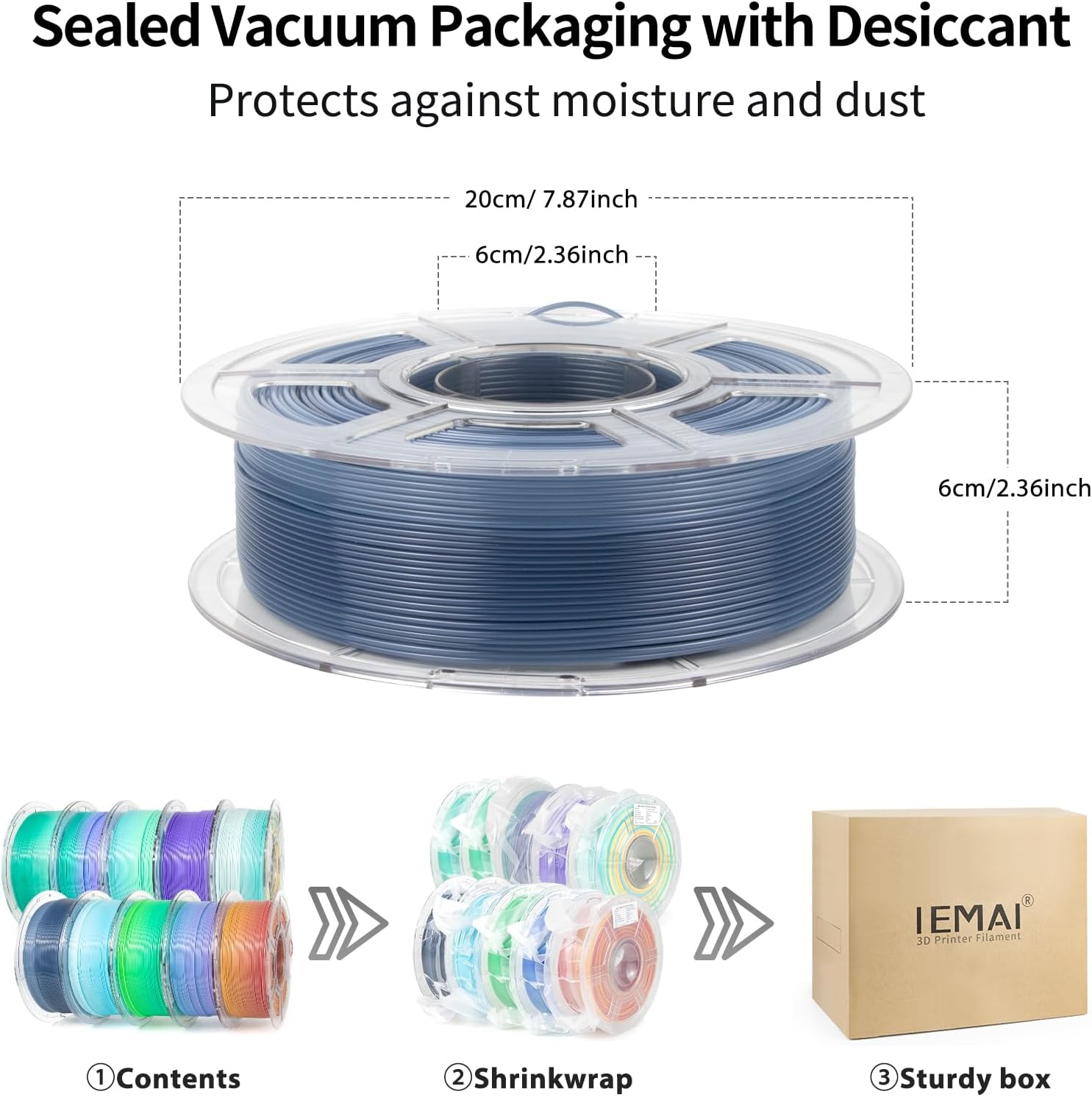
What it is and what problem it solves\nThe IEMAI PETG Filament is a 1.75 mm diameter, 10 kg spool designed for reliable, high-quality FDM 3D printing with PETG. Its translucent gradient finish allows light to pass through thinner walls, which can be visually striking for lamps, vases, and decorative items. If you’re after durable parts with good impact resistance and a clean, hassle-free print, this filament aims to deliver steady performance across a range of everyday projects.\n\n## How it performs on the page (without pretending to test)\nOn paper, PETG is known for strong layer adhesion, good toughness and chemical resistance, and the IEMAI formulation claims anti-clogging printing characteristics to help minimise bubbles and tangles during extrusion. The manufacturer notes automated winding and thorough inspection, which suggests careful packaging and a clean spool. The recommended print settings—240–260°C nozzle temperature, 60–80°C bed, and a typical speed window of 50–600 mm/s—provide a starting point that covers both slower, higher-quality prints and faster, practical builds. The diameter tolerance is stated as 1.75 mm ± 0.02 mm, aligning with common FDM requirements for consistency.\n\n## What stands out\n- Translucent gradient finish offers varying transparency with wall thickness, enabling visually interesting results for light-guiding or decorative parts.\n- The combination of durability and clear printing characteristics can appeal to hobbyists and makers who need dependable performance without frequent material changes.\n- Broad compatibility of 1.75 mm PETG with many printers, including setups like Bambu Lab, AMS, and AMSLite, is a practical plus if you own multiple machines or value transferability between workflows.\n\n## Limitations and caveats\n- While the guidance provides a wide print-speed range, real-world results will depend on your printer’s hot-end, cooling, and bed setup. PETG can warp or string if not tuned properly, so some users may need to refine retraction and cooling levels beyond the stated ranges.\n- The description does not specify heat resistance or dimensional stability under load, so if you’re printing functional parts that must endure temperature swings, testing is prudent.\n- The information focuses on general printing and compatibility, it does not compare this gradient PETG against other PETG blends or resins, so the choice may depend on your specific visual and mechanical priorities.\n\n## Who it’s for\nThis filament is likely suited to makers seeking a durable, easy-to-print PETG with a decorative translucent effect. It may appeal to beginners who want predictable results and to intermediate users who print household items, small lamps, planters, and display pieces where light transmission adds value. It also suits users who operate a single printer as well as those managing multiple devices, given the stated broad compatibility.\n\n## Who it isn’t the best option for\nIf you require maximum heat resistance, highly precise mechanical tolerances, or parts subjected to harsh chemical exposure, PETG alone may not meet those top-tier demands. For ultra-clarity without gradient shading or for prints where transparency must be uniform, a non-gradient PETG or a different material could be more appropriate.\n\n## When it makes sense to buy\nChoose this filament if you want a practical, durable material with a visually interesting translucent gradient that can enhance light-focused designs, and you’re happy to fine-tune print settings to suit your printer. It’s particularly sensible if you already print a mix of decorative and functional items and value a wide compatibility footprint.\n\n## When to hold off\nIf your priority is absolute dimensional accuracy across large parts, or if you’re chasing the highest optical clarity, you may prefer a filament tailored to those specific outcomes. Also, if your printer requires very tight tolerances beyond ±0.02 mm and you haven’t tested PETG’s performance on your setup, consider a small trial before committing the full 10 kg.\n\n## What to check before buying\n- Verify that your printer supports PETG and 1.75 mm filament with compatible hot-end temperatures and bed settings.\n- Start with conservative print speeds and appropriate cooling to minimise potential stringing or warping.\n- If you’re printing gradient or translucent pieces, test small calibration parts to gauge how wall thickness affects transparency.\n\n## Practical use case (example)\nImagine a small lamp or decorative vase where inner lighting shines through thinner sections. You can experiment with slightly varying wall thicknesses to achieve a soft glow, while the exterior keeps a sturdy PETG profile for durability. This kind of project typically benefits from PETG’s layer adhesion and impact resistance, provided you’ve dialled in the temperature and bed adhesion.\n\n## FAQ at a glance\n- Is this compatible with my 3D printer? It’s described as 1.75 mm PETG with broad printer compatibility, including popular platforms like Bambu Lab setups.\n- What temperatures should I start with? The recommended range is 240–260°C nozzle and 60–80°C bed.\n- Will it be easy to print straight from the spool? The product notes automated winding and meticulous inspection to support clean feeding.\n\n## Final verdict\nFinal verdict: If you value a durable PETG with a visually appealing gradient translucent finish and you’re prepared to tune your printer settings, this filament offers a sensible balance of practicality and aesthetics. It may not be the top pick if you need absolute optical clarity or the highest resistance-to-heat, but for everyday household and decorative projects it represents solid value and versatility.