

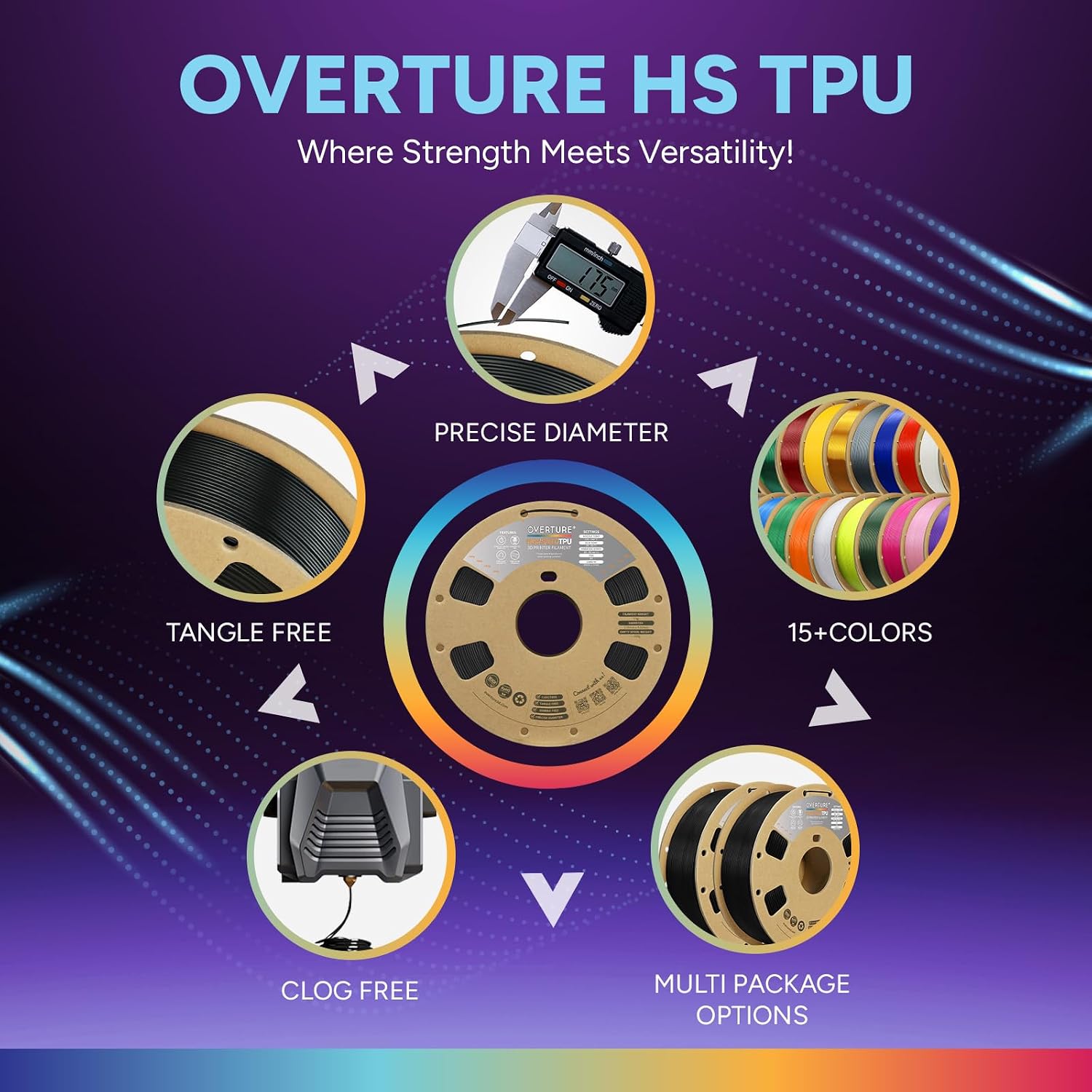
Overture High Speed TPU Filament (95A) 1.75mm Flexible, Black—clog-free, smooth prints for FDM
Reviews
Price
Product description
What it is and what problem it solves
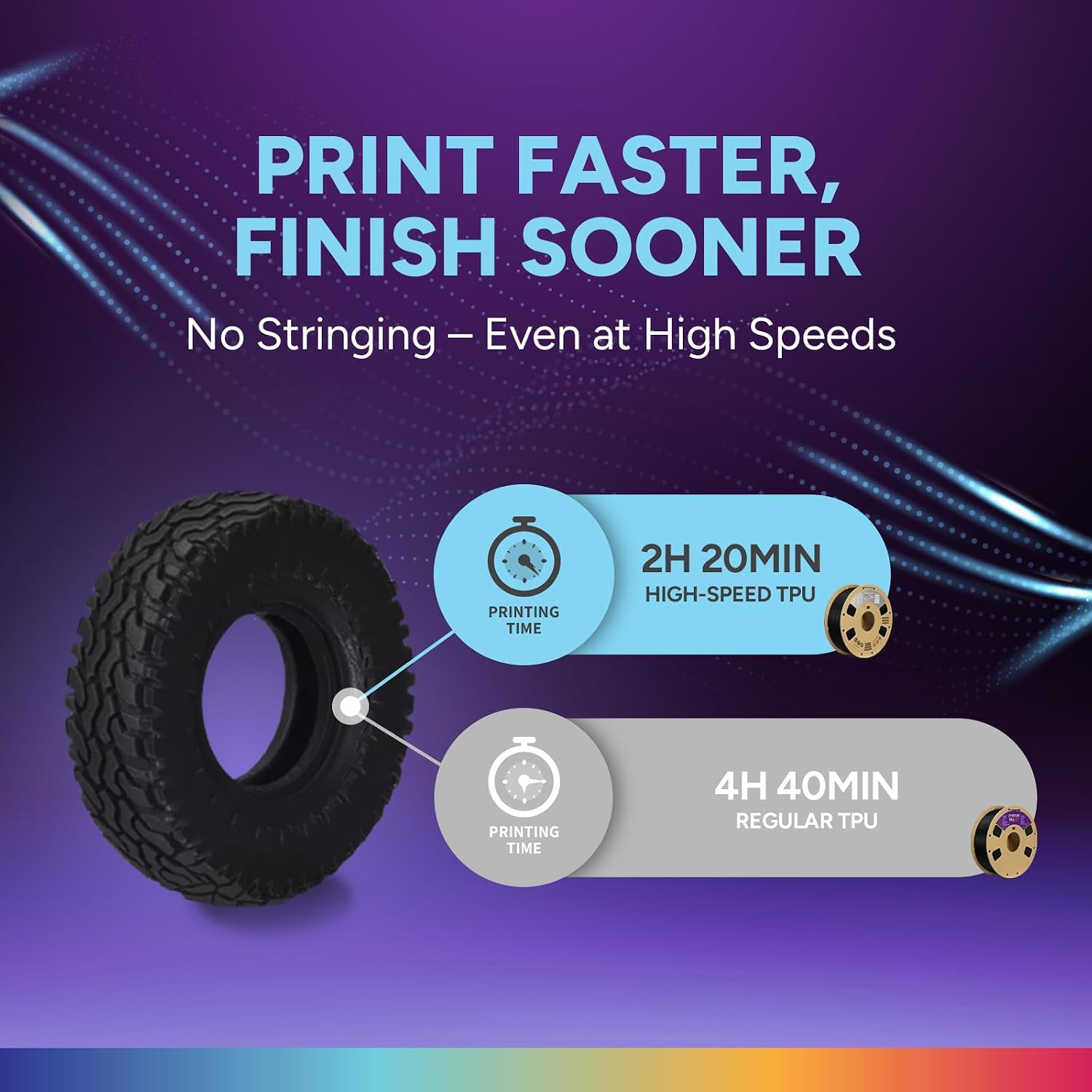
Overture High Speed TPU Filament is a flexible thermoplastic polyurethane (TPU) filament built for FDM 3D printers. The headline here is the intended speed and ease-of-printing approach: it’s described as printable up to 5 times faster than ordinary TPU filaments, while targeting that classic TPU “soft but not floppy” feel thanks to a Shore hardness of 95A.
If you’ve ever struggled with TPU—stringing, messy surfaces, or clogged nozzles—this spool is aimed at making flexible prints feel less temperamental. On paper, it’s the kind of TPU you’d choose when you want functional parts (flex, grip, impact resistance) without spending every session fighting the material.
There is also a practical production detail worth noting: the spools are dried for 24 hours before packaging, and then vacuum-sealed in resealable foil. That matters because TPU can be picky, and the filament’s usefulness is closely tied to how well it’s stored once you’ve opened it.
The essentials: flexibility, feel, and results
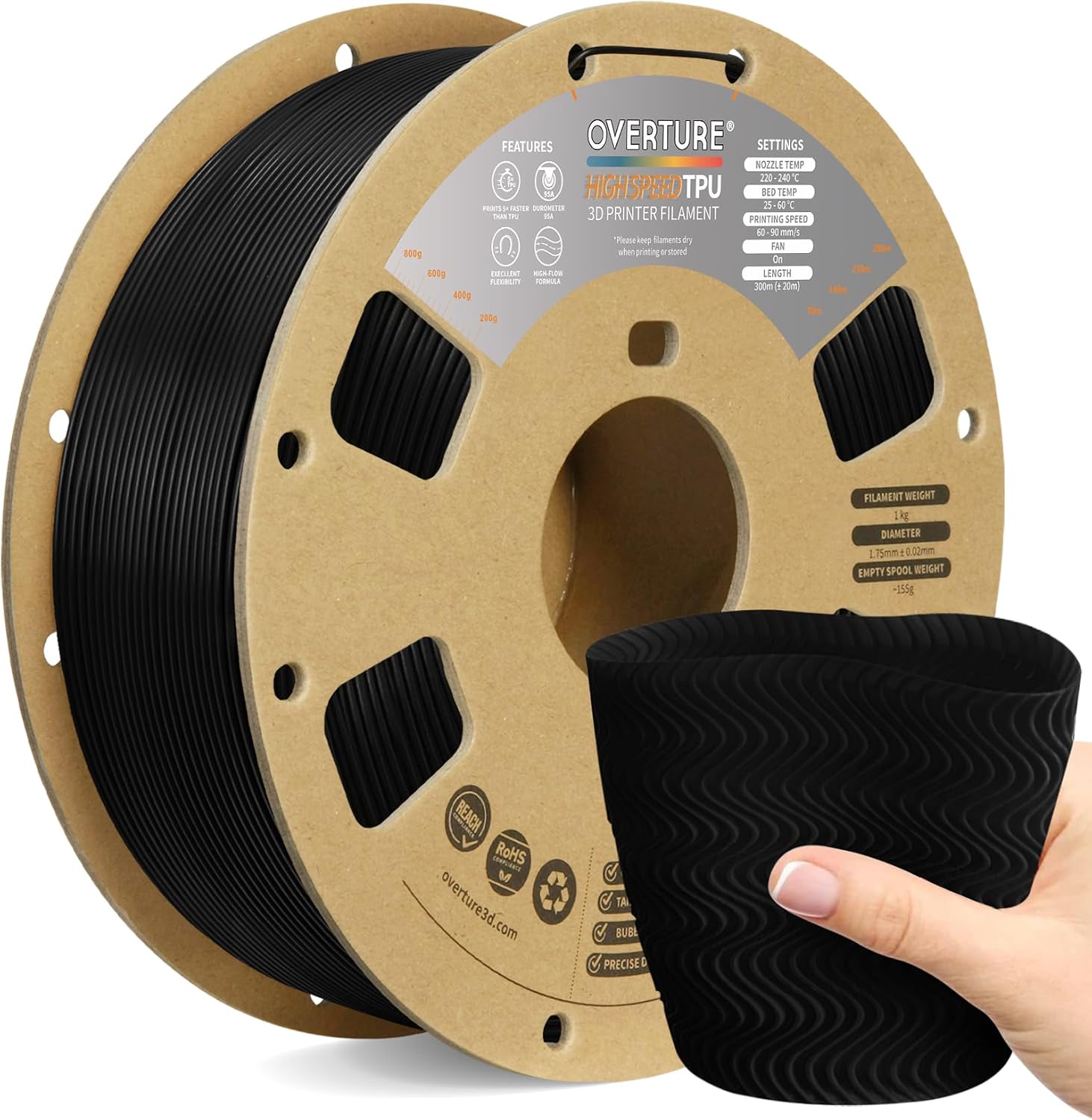
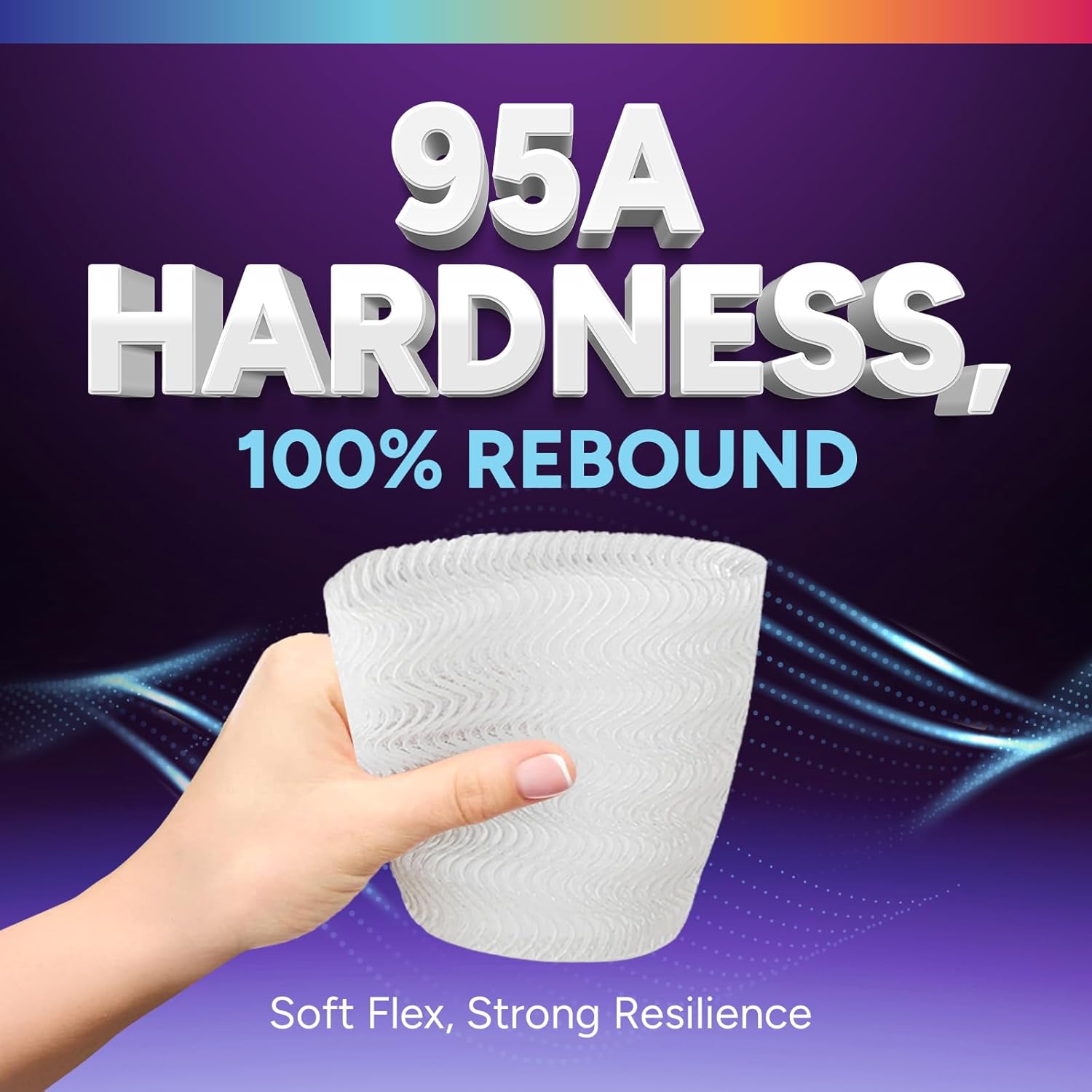
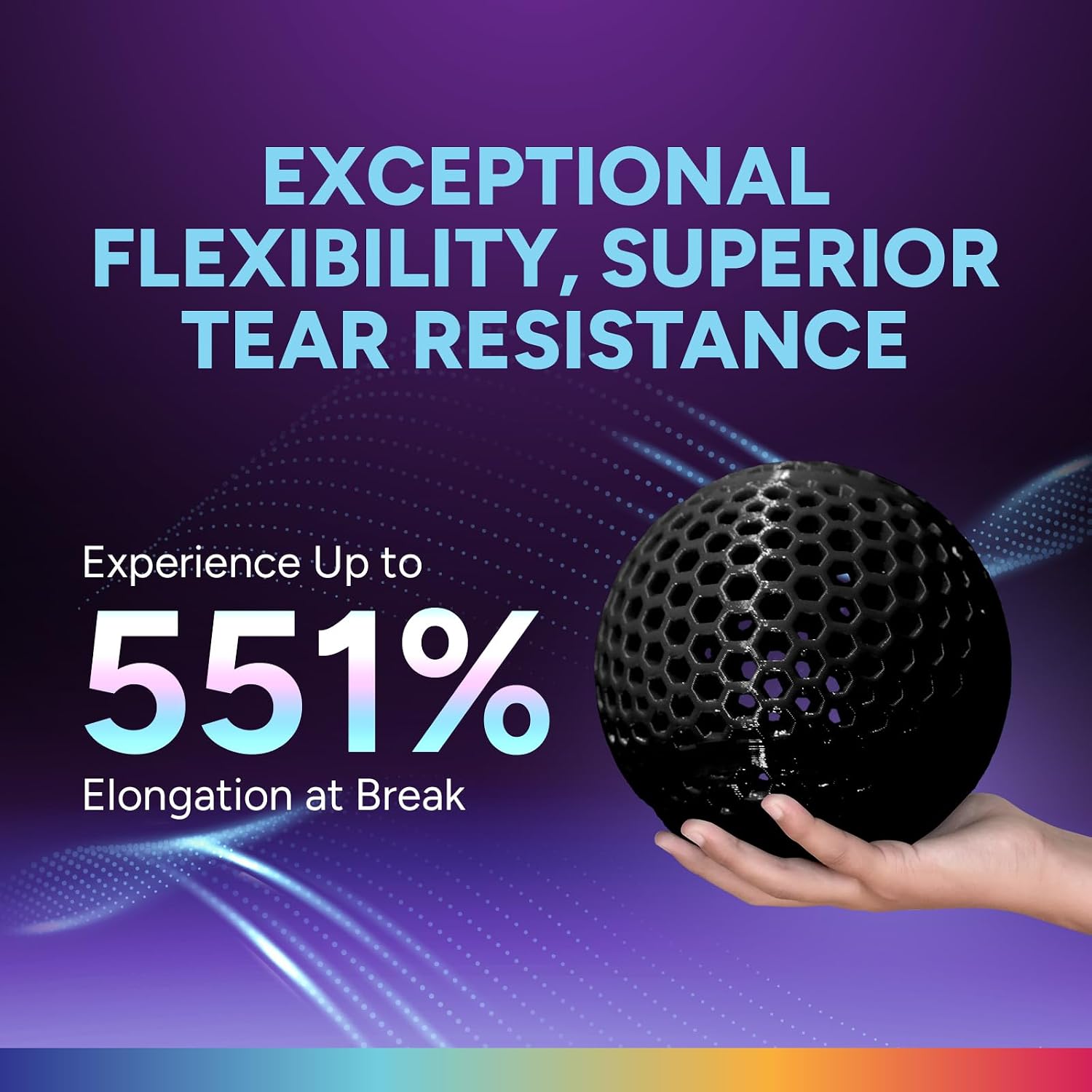
A Shore hardness of 95A places this in the “firm-flex” zone. It should be more resilient than very soft TPU grades, while still staying flexible enough for parts where a bit of give is the point. The manufacturer positions it as a balance between softness and resilience, and it’s also described as offering excellent layer adhesion.
What that means in plain terms is: you’re trying to get strong bonding between layers so the part doesn’t feel weak or peel-prone. It also claims a smooth finish, which is particularly useful with flexible materials where surface flaws can be more noticeable.
You’ll also want to consider the real-world limitation: like any flexible filament, it can still be harder to handle than rigid plastics. So if your printer setup is borderline for TPU (feeding, temperature tuning, speed control), this may still demand patience.
What stands out in use
The big differentiators listed are clog-free and bubble-free printing. The filament is described as using a patented clog-free formula intended to deliver smoother, more seamless printing.
There’s a helpful storage and readiness angle too. After unsealing, TPU generally benefits from keeping moisture under control. The guidance here is to store it sealed with desiccants (like silica gel), or dry for more than 8 hours at 65°C to maintain performance.
A micro-example: imagine printing a flexible phone stand or a clip that needs a bit of snap. With TPU, you’d typically expect some flex and an ability to absorb small impacts. If the layers bond well and you avoid clogged extrusion, you’re more likely to get a consistent wall thickness and a cleaner outer finish—so the stand feels uniform, not “patchy”.
Compatibility and how cautious you should be
The description says it fits most consumer and industrial FDM printers, but it doesn’t list specific printer models or parameters. So it’s a safe bet for people using mainstream FDM setups, yet you should still check your printer’s suitability for 1.75mm TPU and whether it supports flexible filament at all.
One more “worth knowing” point: it’s supplied with dedicated support and the brand states a 1-year shelf life for unopened spools, assuming proper storage. Once opened, your results will depend quite a lot on whether you keep it dry and sealed.
Key technical details to check before you buy
Tech specs
- Name: Overture High Speed TPU Filament
- Type: TPU (thermoplastic polyurethane), flexible filament
- Format: 1.75mm
- Shore hardness: 95A
- Colour: Black
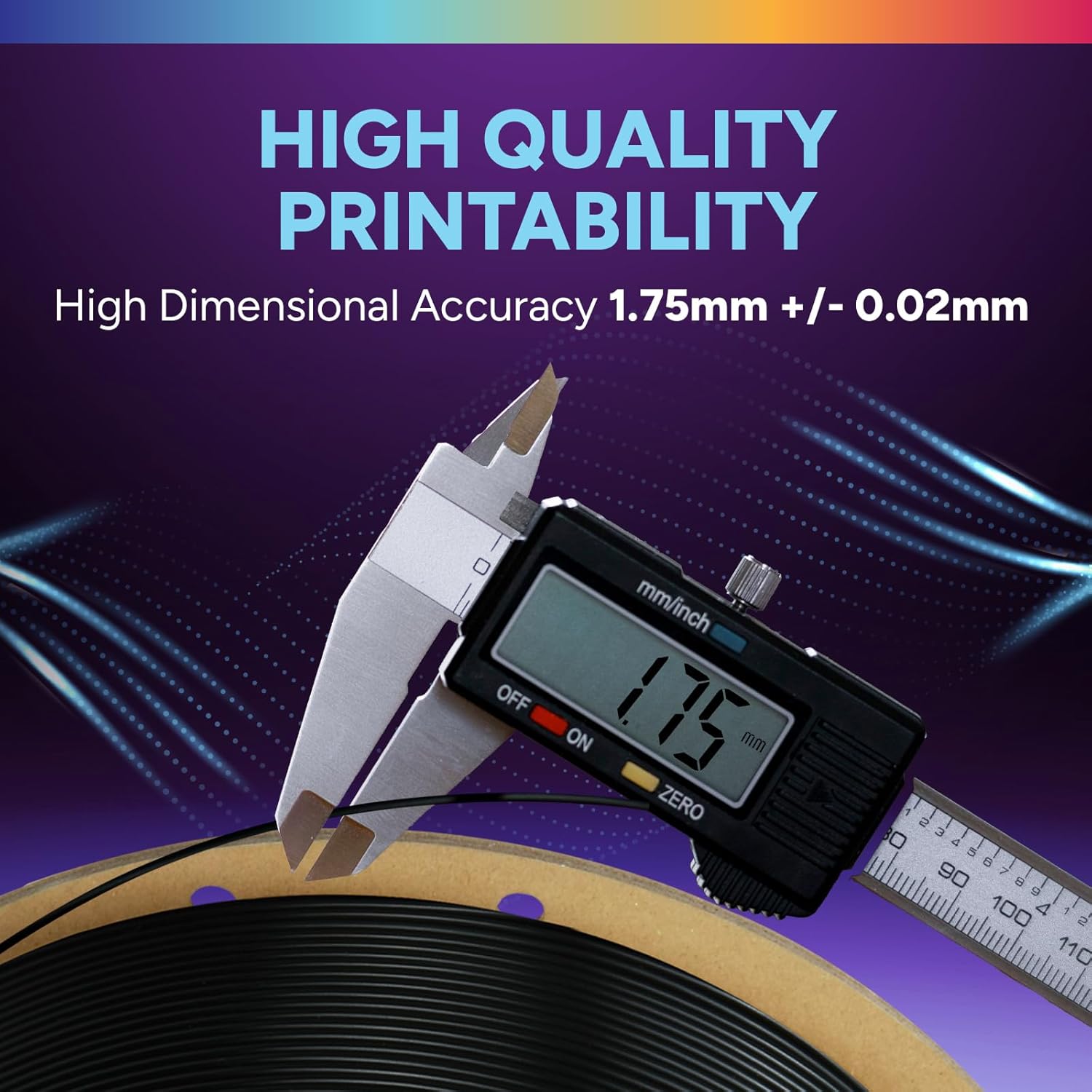
- Dimensional accuracy: +/- 0.02 mm
- Claims on print speed: up to 5 times faster than ordinary TPU filaments (as described)
- Printing goal: clog-free & bubble-free printing
Because the core specs are limited in the listing, it’s also sensible to double-check any settings you plan to use. Flexible TPU often responds better when your slicer profile and printer behaviour are dialled in, and this could be a “works well if you tune it” situation rather than a guaranteed plug-and-play.
Pros, limitations, and who it suits
Pros
- Aimed at faster TPU printing than typical flexible filaments, which is useful if you print often.
- Shore 95A suggests a practical mix of flex and resilience.
- Claims of improved layer adhesion and a smooth finish.
- Clog-free and bubble-free positioning should help reduce common TPU headaches.
- Vacuum-sealed and dried before packaging, with clear storage guidance.
Limitations to keep in mind
- The listing doesn’t provide full parameter ranges (temps/speeds), so you may need to rely on your printer’s TPU profile and adjust.
- “Most FDM printers” is broad, but compatibility still depends on your printer’s ability to feed and print flexible materials reliably.
- TPU can be more demanding than rigid filaments, so if you want the easiest possible material, this might still feel like a step up.
When it makes sense to choose this filament
It’s a solid pick if you want a flexible TPU filament for everyday functional parts and you care about cleaner extrusion (fewer clogs/bubbles) and consistent layer bonding.
It may not suit you if you’re new to TPU and hoping for a completely hands-off experience, or if your printer setup struggles with flexible 1.75mm materials.
Mini FAQ
Usage tips
Q: Is this TPU meant for 1.75mm FDM printers? A: The listing specifies 1.75mm filament and says it’s designed to fit most consumer and industrial FDM printers, so it’s intended for typical 1.75mm FDM setups.
Q: Does storage matter with this TPU? A: Yes. The guidance suggests sealing with desiccants (silica gel) or drying for more than 8 hours at 65°C to maintain performance.
Q: How long can I keep an unopened spool? A: The brand states a 1-year shelf life for unopened spools, provided proper storage is used.
Q: What’s the practical difference between this TPU and softer TPU? A: With Shore 95A, you’re likely getting more resilience than very soft TPU grades, while still retaining flexibility.
Is it worth it?
Worth considering if you’re specifically after a flexible 1.75mm TPU that leans into smoother printing and strong layer adhesion, and you want a TPU option positioned for higher printing speed than ordinary TPU.
You may want to skip it if you’re expecting fully parameter-free results, or if your printer doesn’t reliably handle flexible filament feeding and tuning. In those cases, even the “clog-free” and “bubble-free” intentions won’t remove the need for proper setup.
For buyers weighing whether a TPU filament is a safe bet, the real decision comes down to your willingness to store it dry and to tune your print settings. If you can do that, this looks like a pragmatic TPU choice rather than an experiment.