

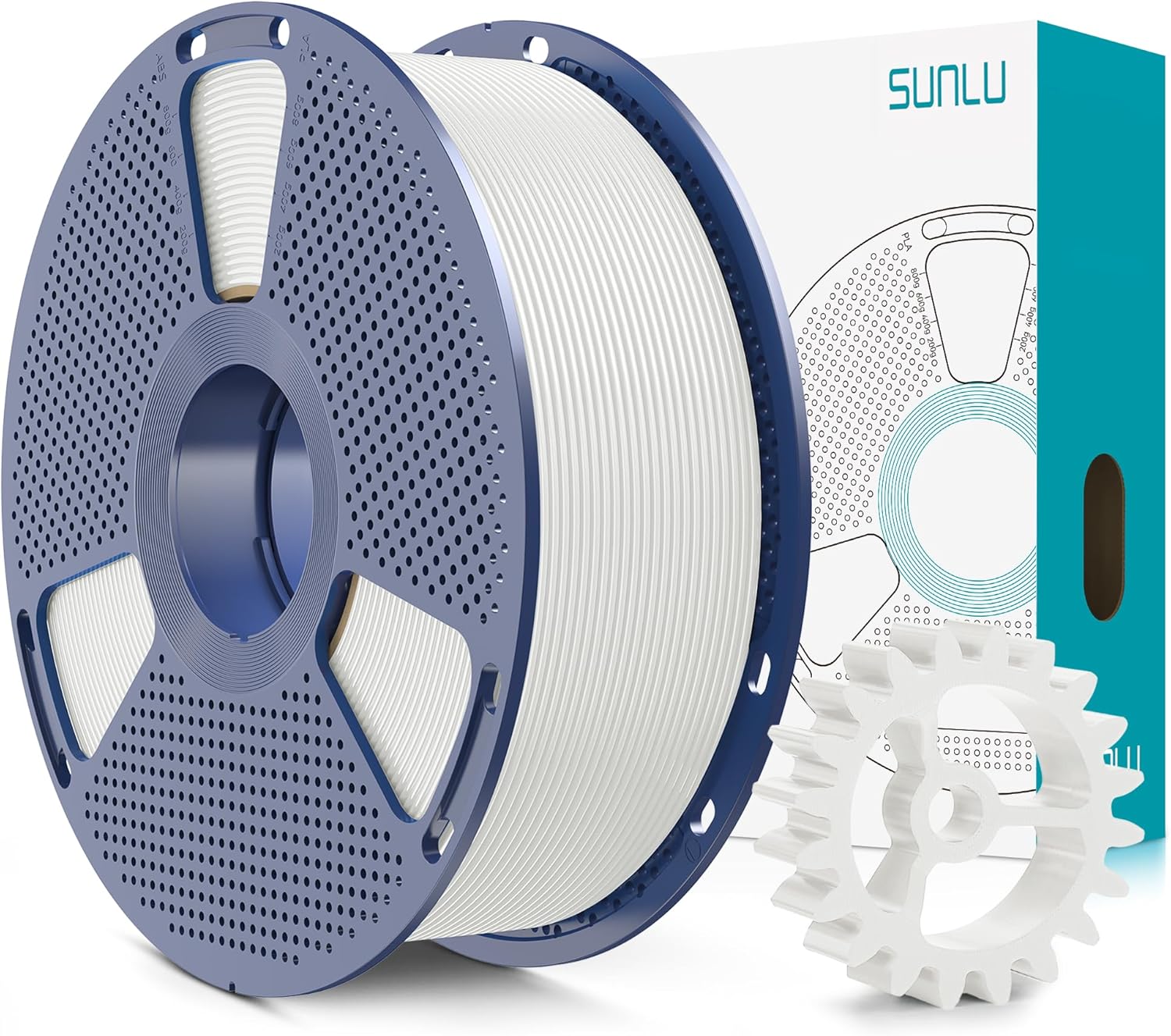
SUNLU PLA+ 2.0 1.75mm 3D Printer Filament (White) 1kg spool
Product description
What it is and why people buy PLA+ 2.0
SUNLU PLA+ 2.0 is a 1.75mm PLA+ filament for FDM 3D printers, sold as a neatly wound 1kg spool in white. If you’re moving beyond basic PLA, the pitch here is durability: compared with standard PLA+, SUNLU positions PLA+ 2.0 as more resistant to brittleness and cracking. On paper, that matters for everyday models that get handled, bumped, or need a bit more toughness than “display-only” prints.
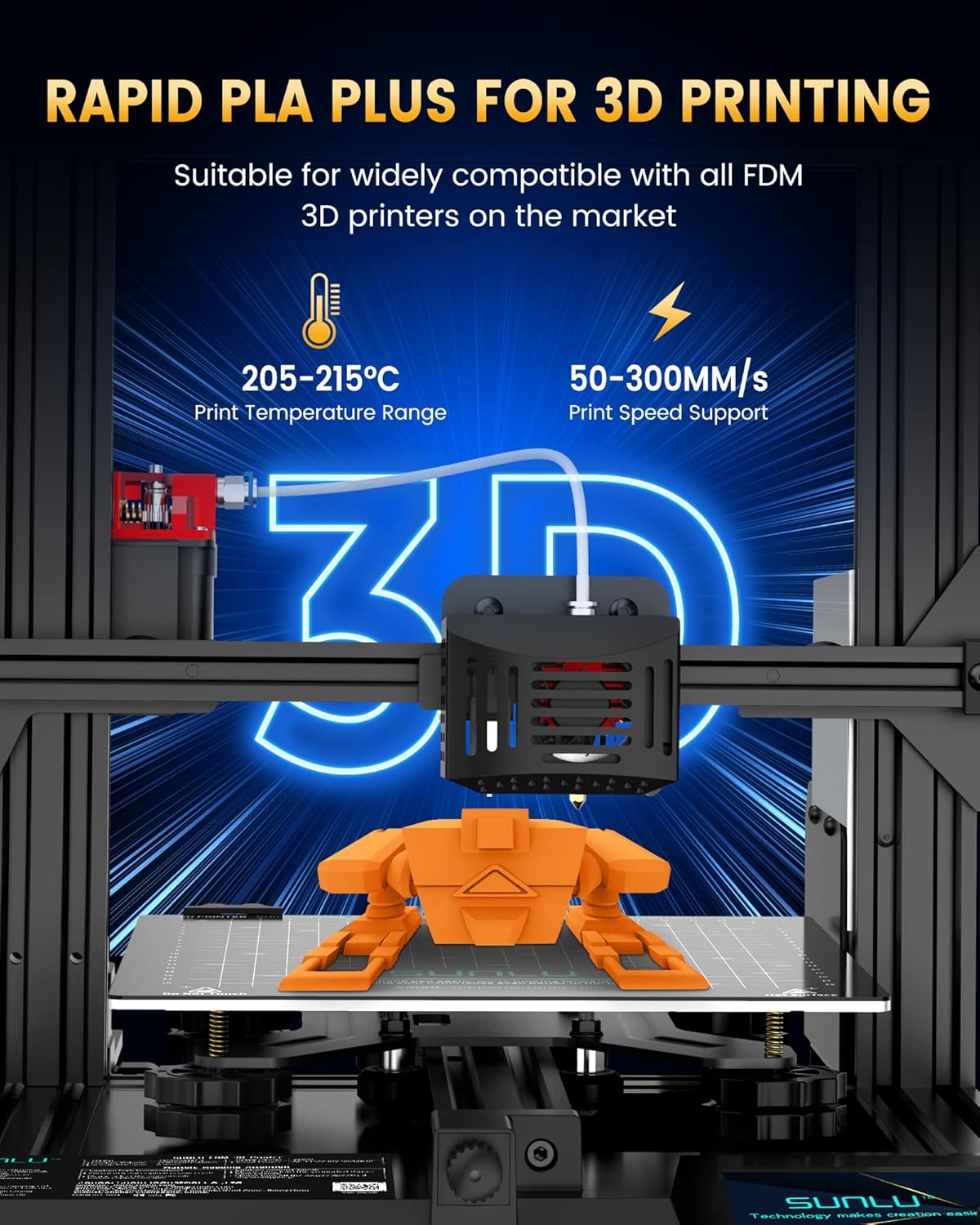
It’s also tuned for speed and smoother flow. The provided guidance suggests it melts quickly and flows smoothly, with printing speeds up to 300mm/s cited by the brand. That combination—stronger than typical PLA variants, but still intended to print neatly—targets people who want practical parts without taking on the complexity of more demanding materials.
The essentials: strength, speed, and dimensional accuracy
Where PLA+ 2.0 looks most convincing is in the balance between strength and predictability. SUNLU claims improved resistance to brittleness and cracking, which is a sensible upgrade if you’ve had your prints fail at stress points or show signs of fragility after drying, handling, or repeated use.
Accuracy is another part of the story. The filament is described with a dimensional accuracy of +/-0.02mm. That figure won’t magically guarantee perfect prints on every machine (calibration, temperature stability, and airflow still matter), but it does suggest the spool is meant for more controlled results—useful if you’re aiming at fit, seams, or tighter-tolerance models.
Speed-wise, the recommendation covers a wide operating range: the settings mention 100–300mm/s, and a nozzle temperature window of 205–220°C. If your current prints are slow because you’re waiting around for every layer to cool and settle, this filament is at least designed to support faster throughput.
What stands out in day-to-day printing
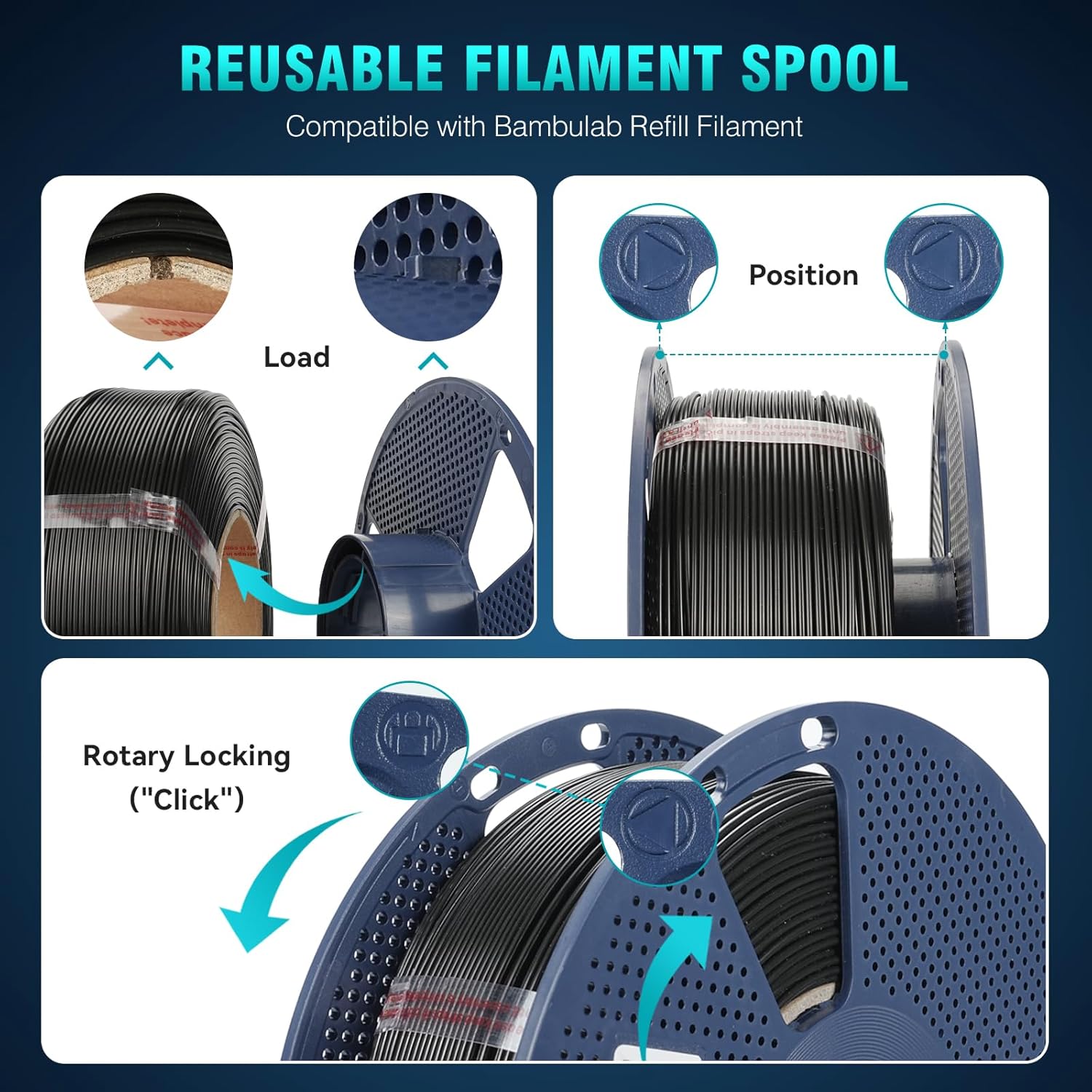
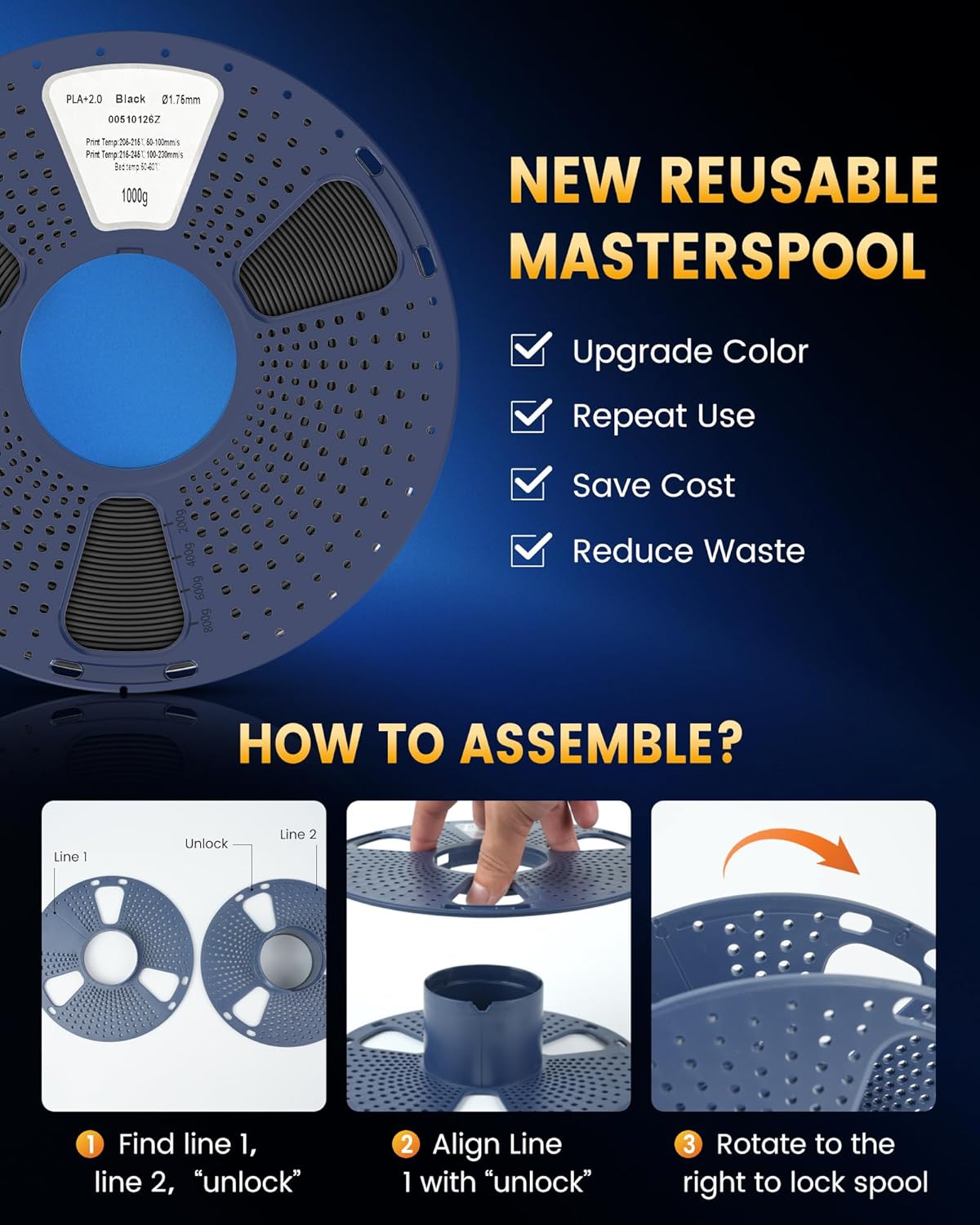
A detail many people ignore until it’s annoying: the filament is described as “neatly wound”, specifically to avoid tangling or clogging during printing. If you’ve ever had a spool unwind unpredictably, or you’ve battled minor feeding issues mid-job, that tidy winding concept is genuinely relevant. It won’t replace good printer hygiene, but it reduces one common source of frustration.
There’s also a “recommended settings” approach rather than vague advice. The suggested starting points are: - Nozzle temperature: 205–220°C - Bed temperature: 50–60°C - Print speed: 100–300mm/s
Do note a limitation: the recommended range is wide, so you’ll still need to dial in for your own setup. Different nozzles, hot-end performance, and enclosure conditions can shift what “best” looks like in practice.
Best use cases (and when it may not suit)
PLA plus 2.0 is described as suitable for high-precision models, functional parts, and decorative items. That broad claim is plausible for PLA+ in general—especially for parts that need a bit more resilience than plain PLA, such as utilitarian brackets, small enclosures, protective covers, or models that will be handled.
However, it may not be the best choice if you’re chasing parts that must survive harsh conditions or extreme stress. The filament is positioned as tougher against brittleness and cracking, but that’s not the same thing as being engineered for high-heat or high-impact environments.
It’s also worth being realistic if you prioritise “set-and-forget” results: while it’s pitched as user-friendly for beginners and experts, the final quality will still depend on tuning your printer to the material—especially within the 205–220°C and 50–60°C guidance.
Who it’s for (and who should think twice)
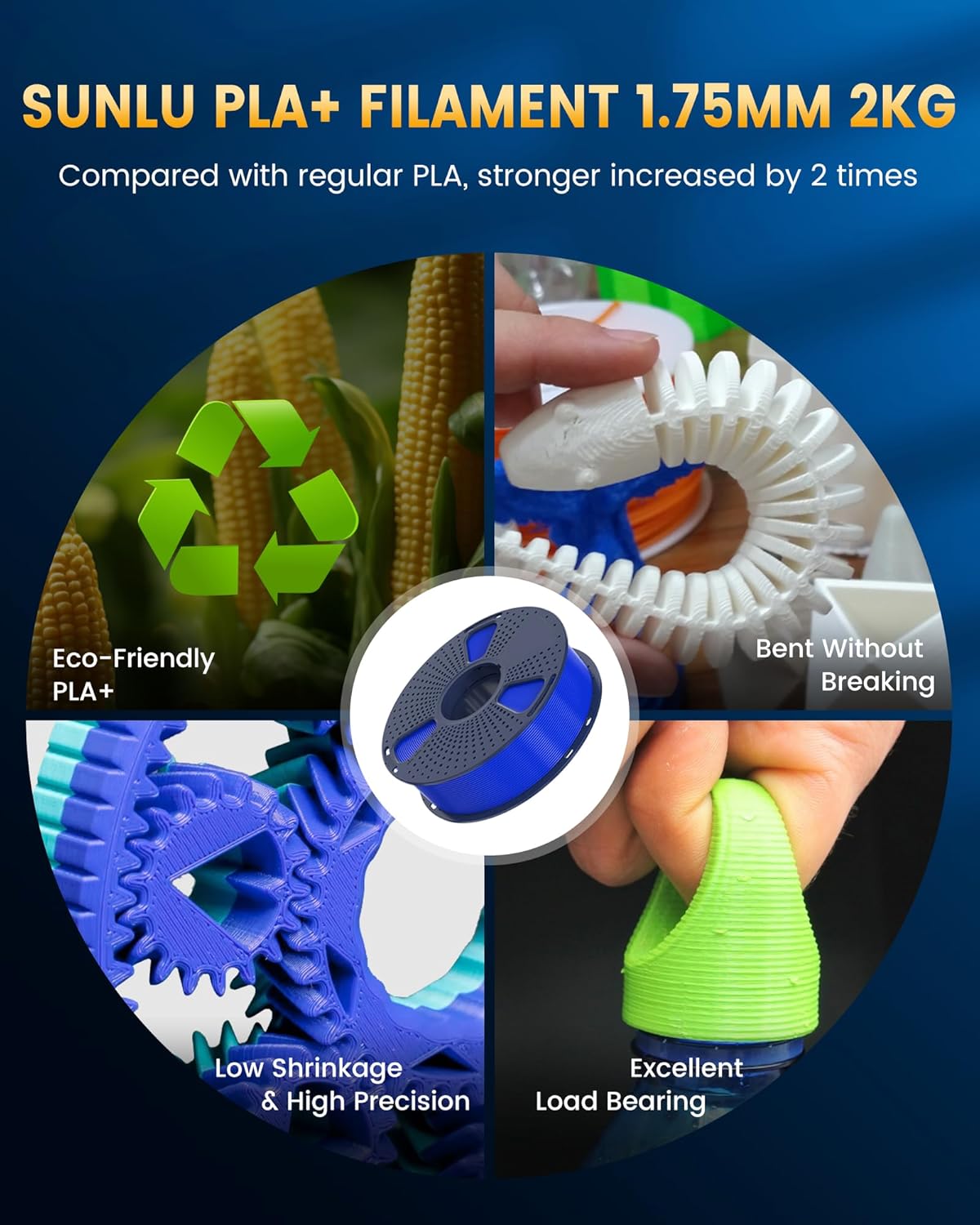
It’s a solid pick if you want a 1.75mm PLA+ filament that aims to be less fragile than standard PLA+, with a wound spool designed to keep feeds smooth. It suits people who print frequently and want reliable runs—whether you’re working on functional prototypes, shop-and-home accessories, or moderately precise models.
It might not suit you if your printer is temperamental with PLA-type materials and you can’t realistically tune temperatures and speeds. If your workflow depends on ultra-stable results without any tuning, you may find any “recommended settings” range means you’ll still need to do some small test prints.
Getting the most from it: practical tips
A straightforward way to approach this filament is to start inside the recommended ranges and make one change at a time. For example, if you’re seeing weak bonding between layers, you’d typically adjust temperature or slow down within the provided 100–300mm/s speed band. If you’re dealing with warping, the bed temperature guidance (50–60°C) gives you a place to start—though you’ll still need to consider your printer’s environment.
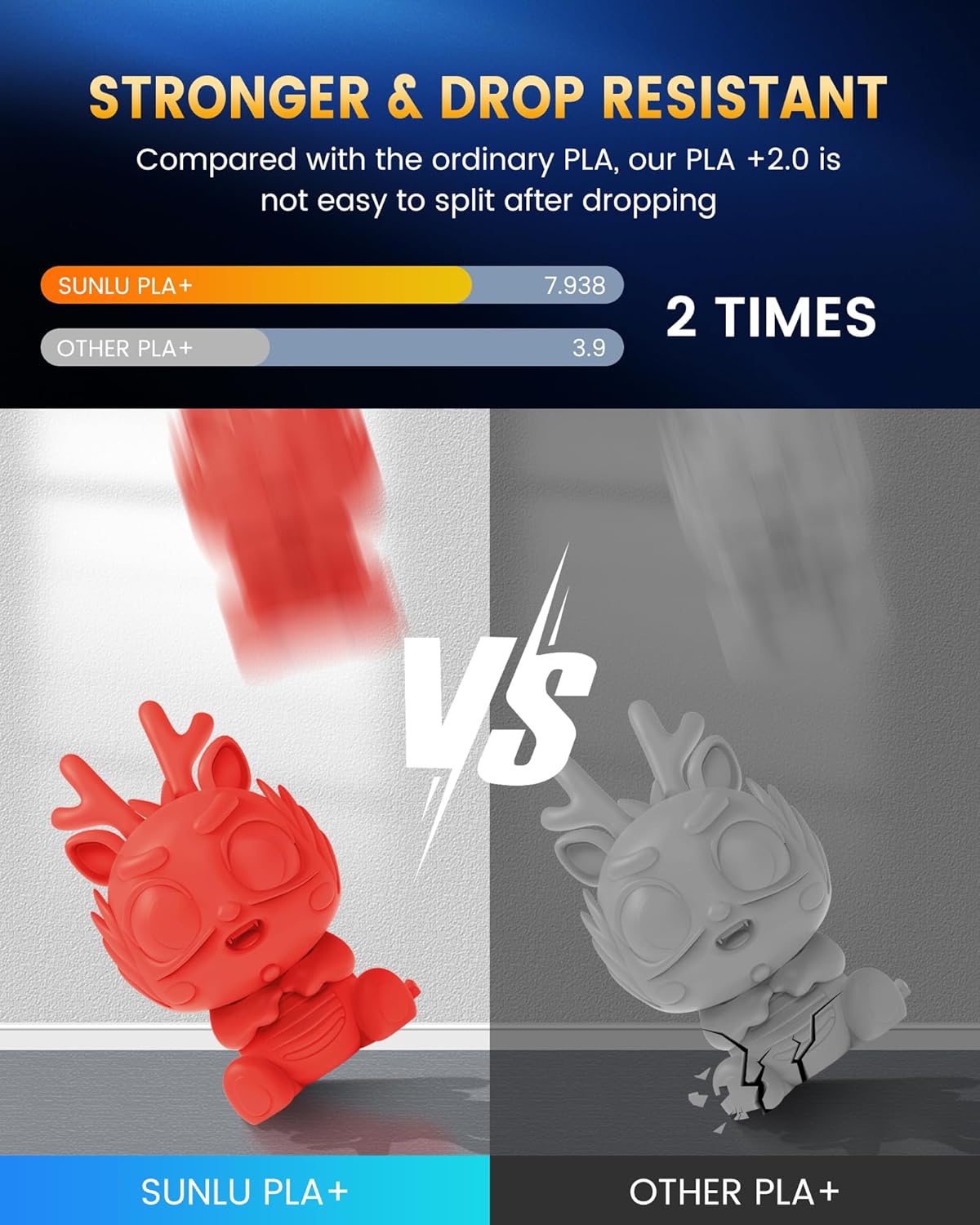
For a micro example: imagine printing a small bracket that will be screwed and handled. The “less brittle and less prone to cracking” positioning suggests it’s built for that kind of real-world stress. You’d still want to ensure your perimeters are solid and your temps are comfortable for adhesion, but the material choice is aimed at reducing the “it snapped at the thinnest point” problem.
FAQ
Is it compatible with my 1.75mm FDM printer?
The information provided says it’s compatible with nearly all 1.75mm FDM 3D printers, so if your printer uses 1.75mm filament, it should be in the right lane.
What temperatures and speed should I start with?
The recommended starting points are a nozzle temperature of 205–220°C, bed temperature 50–60°C, and print speed 100–300mm/s.
Does the filament packaging help with tangles and clogs?
SUNLU specifically highlights a neatly wound design intended to help prevent tangling or clogging during printing.
What’s the real difference versus standard PLA+?
According to the description, the difference is improved resistance to brittleness and cracking, which should help prints feel more durable when they’re handled.
Final verdict
Should you buy it?
It’s worth considering if you’re printing with 1.75mm FDM printers and you want a PLA+ filament that’s aimed at being tougher than standard PLA+ while still supporting fast print speeds. The neat winding and the dimensional accuracy claim suggest it’s designed for smoother, more consistent runs.
You may want to skip it if you’re after a material for harsh or extreme-use conditions where PLA-type filaments usually fall short, or if you know your printer struggles to hold the recommended temperature and speed ranges without tuning. In that case, the filament’s strengths won’t fully land, because your results will depend heavily on how well your machine is dialled in.