


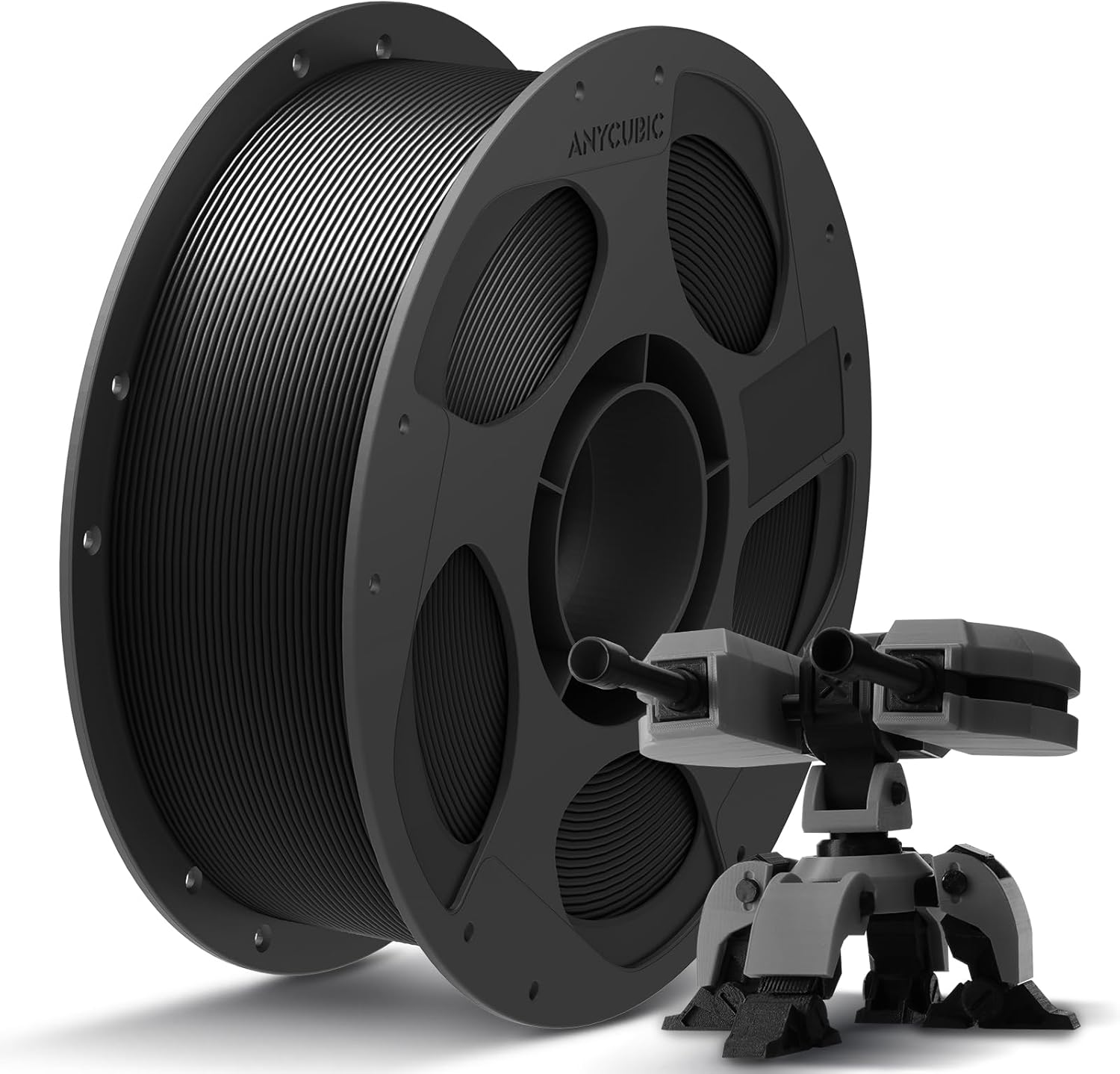
Anycubic PLA+ 1.75mm 3D Printer Filament (PLA Plus) – High Toughness, Black, 1kg spool
Reviews
Price
Product description
What you’re buying (and what it’s for)
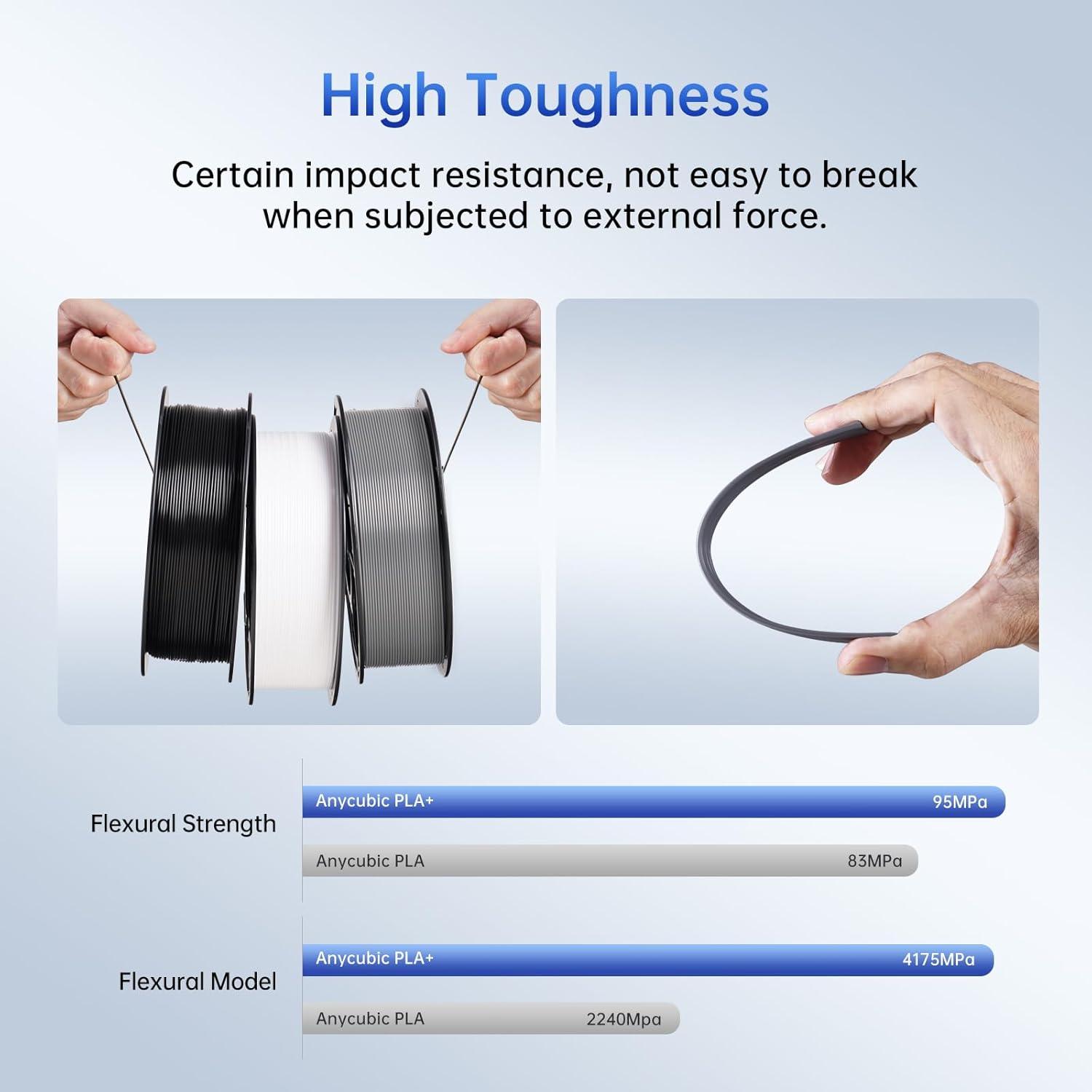
Anycubic’s PLA+ filament is a 1.75mm FDM/FFF printing material aimed at people who want smoother extrusion and a more durable PLA-style result. PLA+ sits in the “everyday but a bit tougher” category: it’s not marketed as a professional industrial engineering plastic, but the pitch here is clear—better impact resistance and less breakage risk than standard PLA when models take knocks.
On paper, that makes it a sensible choice for practical prints and display pieces that might get handled: props, craft models, artwork, and engineering-style parts that aren’t going to live in extreme conditions.
Where it stands out
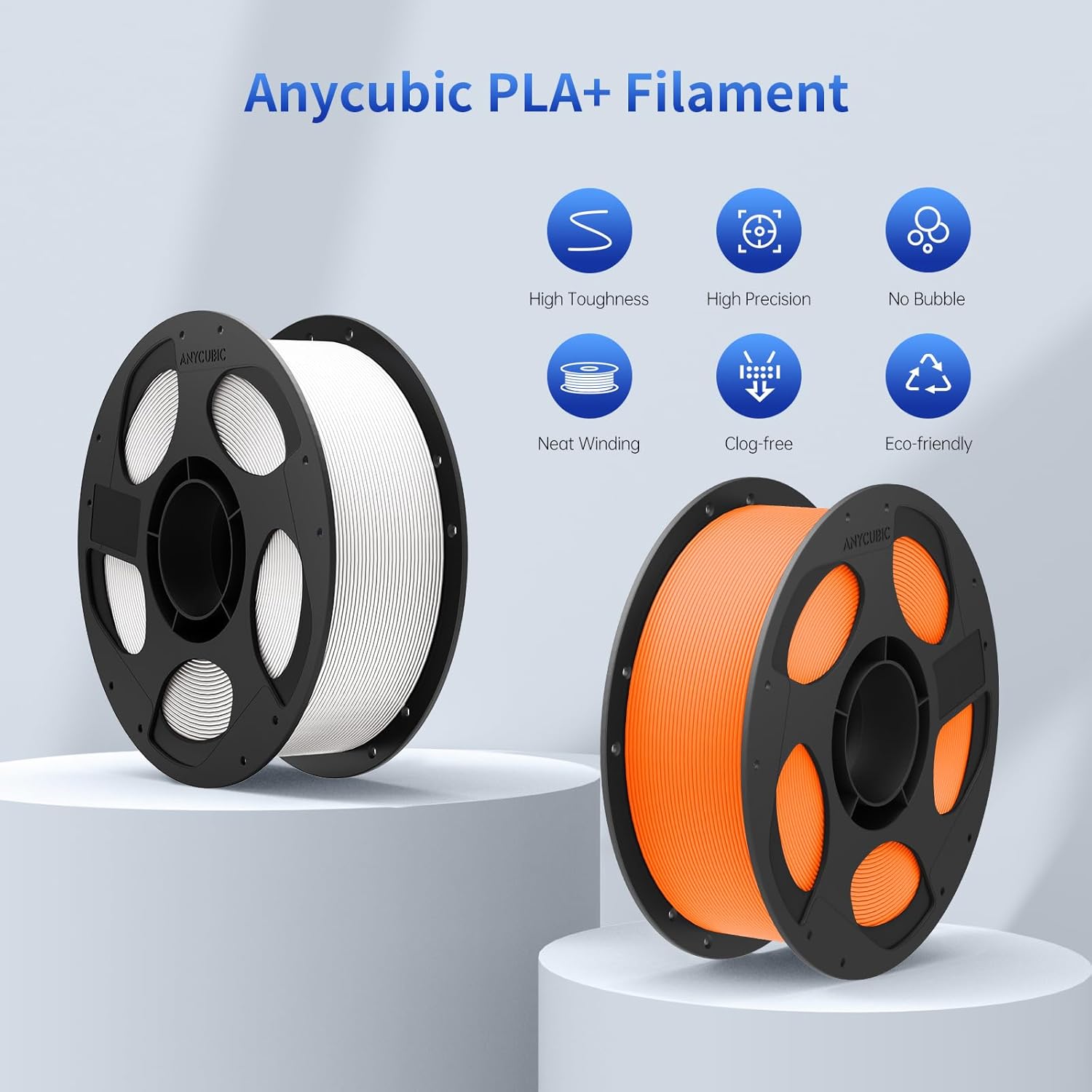
The most convincing parts of the description are the areas that directly affect print outcomes: dimensional consistency, a clean feed, and fewer typical spool annoyances.
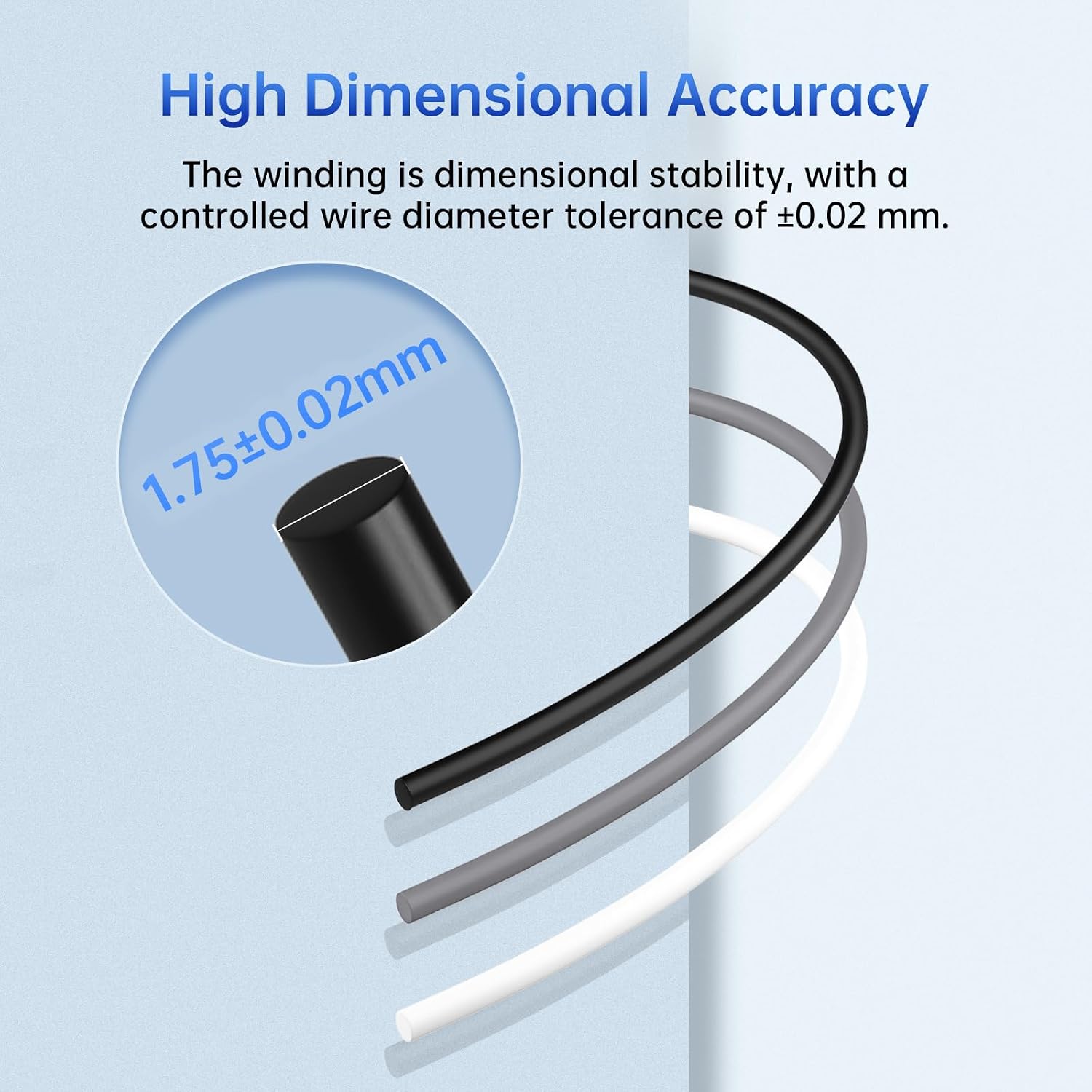
For dimensional accuracy, the controlled wire diameter tolerance is stated as +/-0.02mm. That matters because tighter consistency generally helps you hit your intended dimensions more reliably. It’s also claimed to work with minimal shrinkage to reduce cracking and warping.
For print flow, you’re told it supports smooth printing with “few layers”, plus “no clogging” and “no bubbles”. In real terms, that translates to a filament that should extrude more predictably, which is especially helpful if you’ve previously had prints with inconsistent lines or frustrating partial blockages.
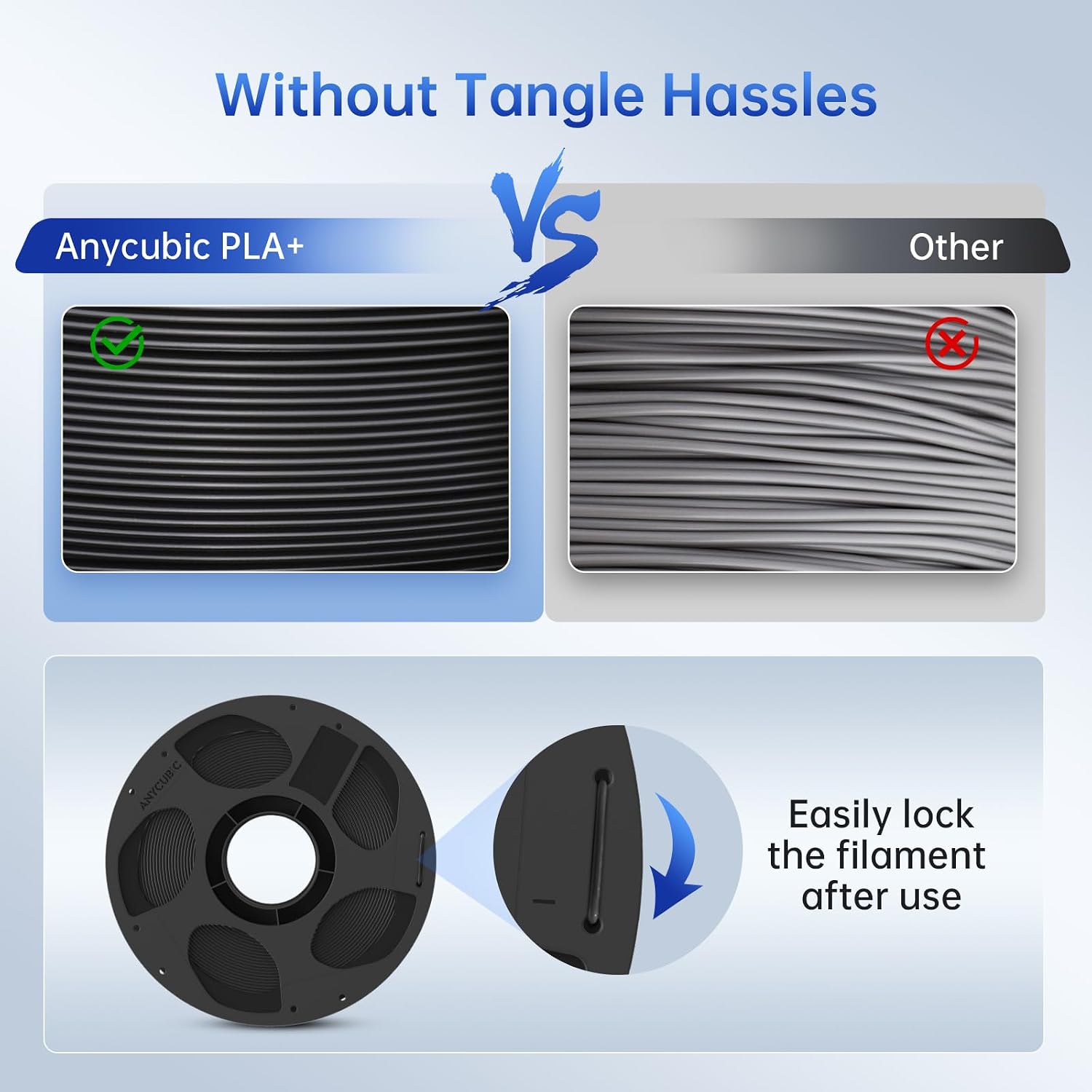
There’s also a practical anti-hassle angle: the filament is described as avoiding tangles on the roll, and being easier to leave the spool without crossing turns. That’s one of those details you only appreciate after you’ve fought a knot mid-job.
The limitations to keep in mind
PLA+ is still a PLA-family material, so you shouldn’t expect it to behave like a high-end engineering plastic. The promise here is “high toughness” and certain impact resistance, but external force can still be a lot—so if you’re planning parts that must survive heavy impacts, heat, or long-term stress, this may end up being more of a middle ground than a specialist choice.
Also, while the listing says “Print with most FDM 3D printers”, compatibility in practice depends on your printer settings (extruder type, temperature control, profile availability). If you rely on a very specific workflow, it’s worth double-checking that your printer can run standard PLA-family filaments cleanly.
Compatibility and workflow fit
This filament is positioned for “most FDM 3D printers and 3D printing pens” and comes in vacuum packaging to protect against moisture and dust. If you store filament somewhere dry and you’re trying to keep prints consistent from spool to spool, vacuum packaging is a reassuring detail.
It also mentions intelligent identification. That’s a feature you’ll only benefit from if your printer supports it, so it’s one of those “nice if you have the system for it” points rather than a guaranteed advantage for every setup.
It suits a typical make-and-improve printer owner: the kind of person who prints repeatedly, cares about finish quality, and wants fewer issues like inconsistent extrusion or tangles.
Getting the most from it (practical tips)
If you want the “refined and consistent finish” the description refers to, focus on the basics: keep your spool properly seated, avoid pulling at sharp angles, and let the filament feed smoothly before you commit to a long print.
A micro-scenario that matches the intent: you’re printing a small craft model with thin-ish features. With material that extrudes without bubbles and claims no clogging, you’re more likely to get cleaner lines and fewer gaps. The stated dimensional accuracy also helps if the model needs to look right when assembled.
If you’re coming from a spool that tangles easily, this one’s “no tangle hassles” design is the sort of improvement that saves time and reduces re-starts.
Technical notes that matter for buyers
The key technical claims provided are: - Filament diameter: 1.75mm - Dimensional accuracy: +/- 0.02mm (wire diameter tolerance) - Colour: black - Spool capacity: 1kg
Those figures are mainly about consistency—diameter stability and reduced shrinkage/warping are the main reasons you’d choose a filament like this over a more generic PLA roll when you’re aiming for repeatable results.
FAQ
Is Anycubic PLA+ 1.75mm filament suitable for beginners?
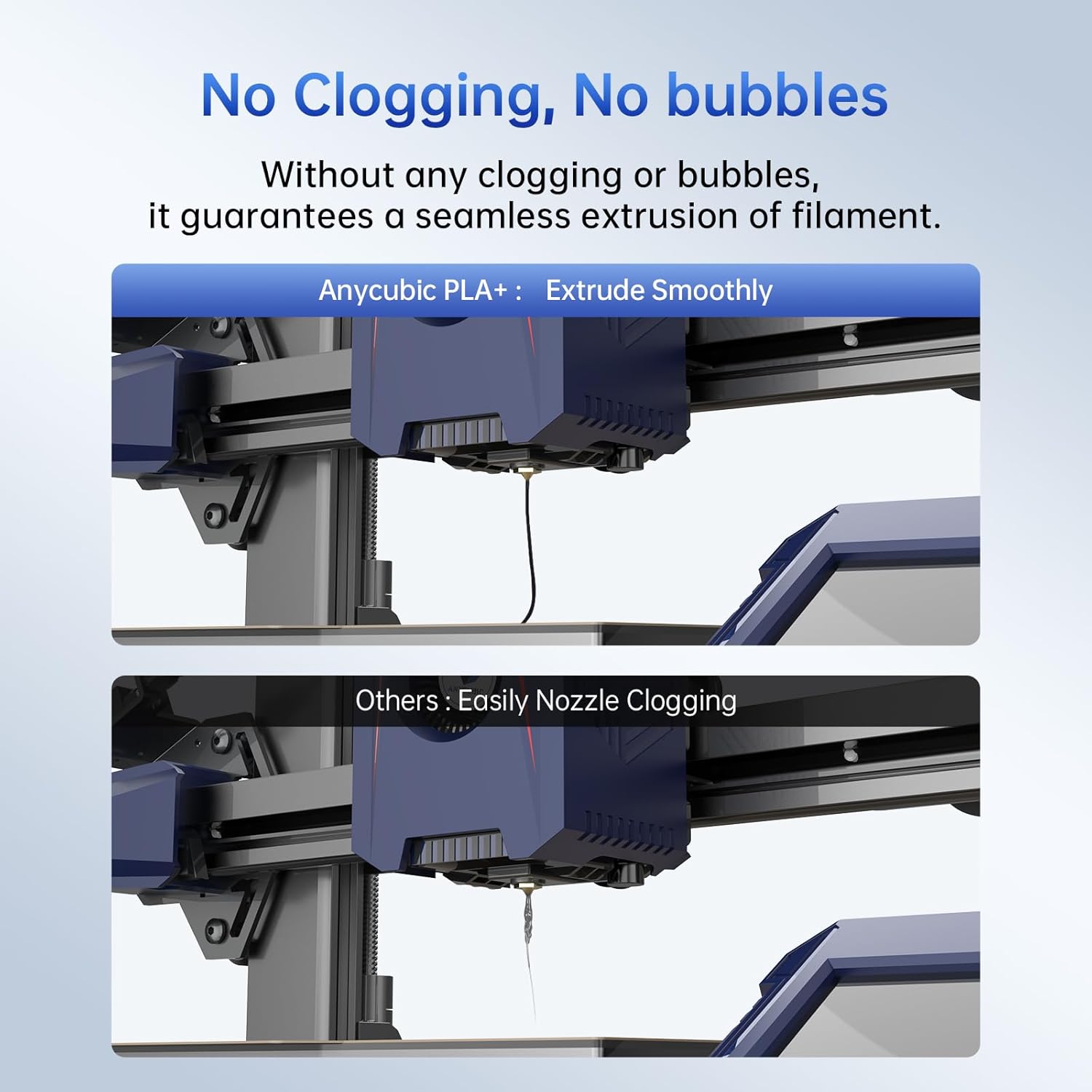
It’s designed to print smoothly and avoid common issues like clogging and bubbles, which can make it more beginner-friendly than more temperamental materials. That said, you’ll still need to use appropriate settings for PLA-family filament on your specific printer.
Will it tangle less than other PLA spools?
The listing specifically claims “without tangle hassles” and easier unspooling without crossing turns, plus the ability to lock the filament after use. If tangles are a pain point for you, this is one of the reasons it’s worth considering.
Does it help prevent warping?
The description says high precision and minimal shrinkage help prevent cracks and warping. Whether you see that benefit depends on your print size, environment, and how you manage the printer’s settings.
Is it compatible with my printer?
It states compatibility with most FDM 3D printers and 3D printing pens available on the market. If your machine uses an intelligent identification system, you may get extra convenience, but only if your printer supports it.
Final verdict
Worth considering if you want a 1.75mm PLA+ filament that leans into toughness, smoother extrusion, and dimensional consistency, especially for models that are handled or need decent accuracy.
Better avoided if you need a truly specialist engineering plastic for demanding conditions, or if your workflow depends on a narrow compatibility profile that you can’t verify for your exact printer.
If you’re shopping for a reliable “main filament” for FDM printing where you care about finish and fewer extrusion headaches, this PLA+ from Anycubic looks like a pragmatic choice—just keep expectations realistic about what PLA-family materials can handle.