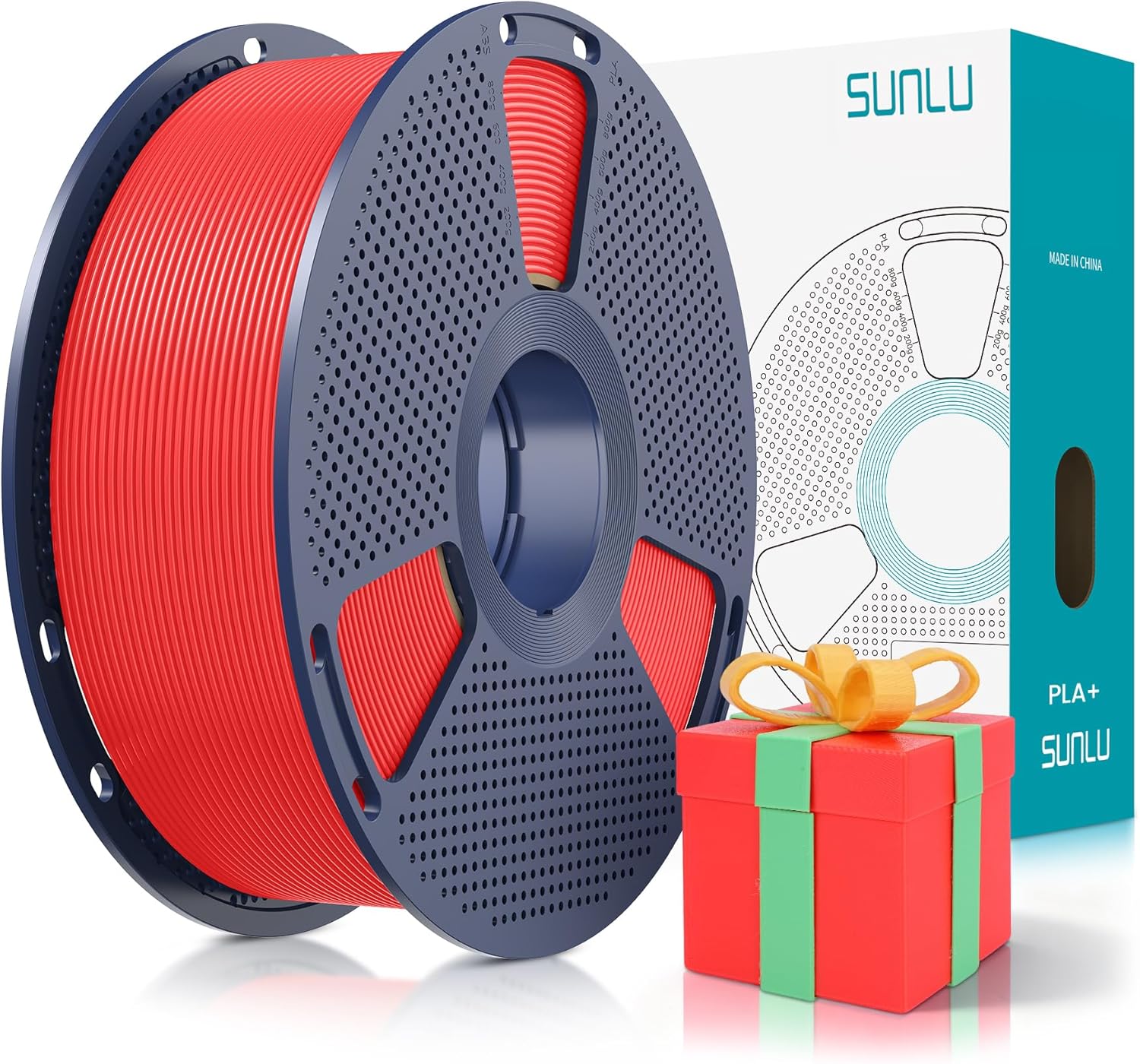
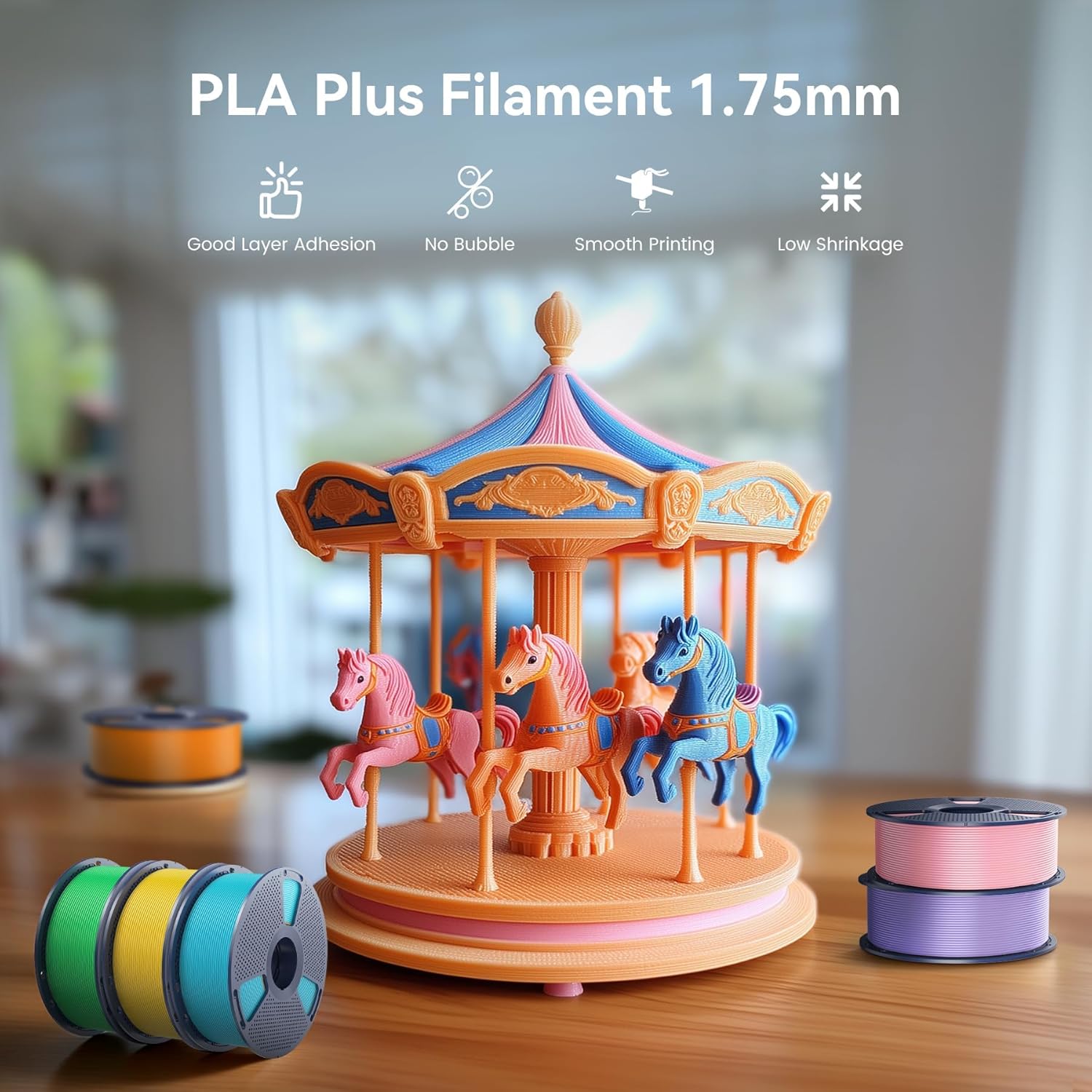
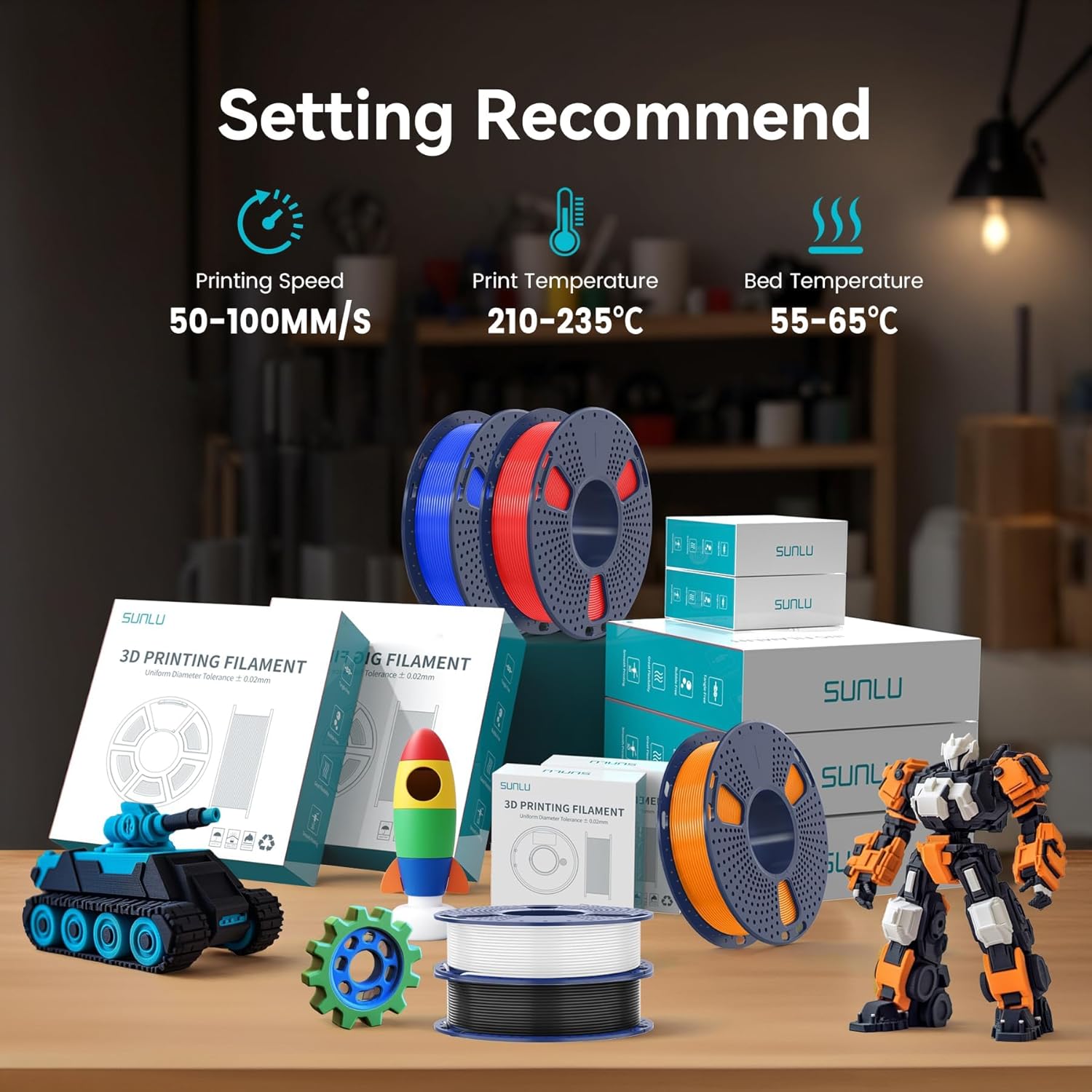
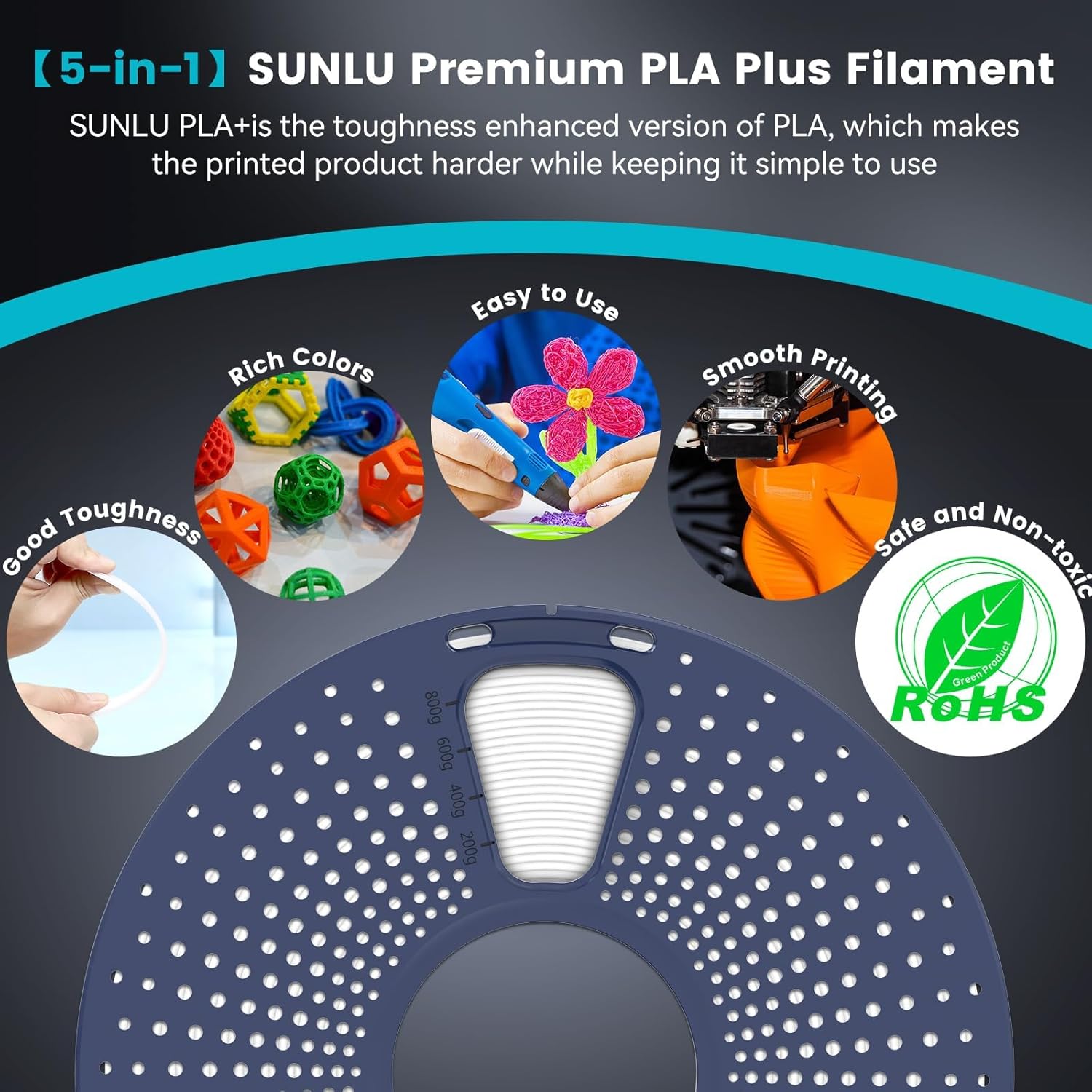
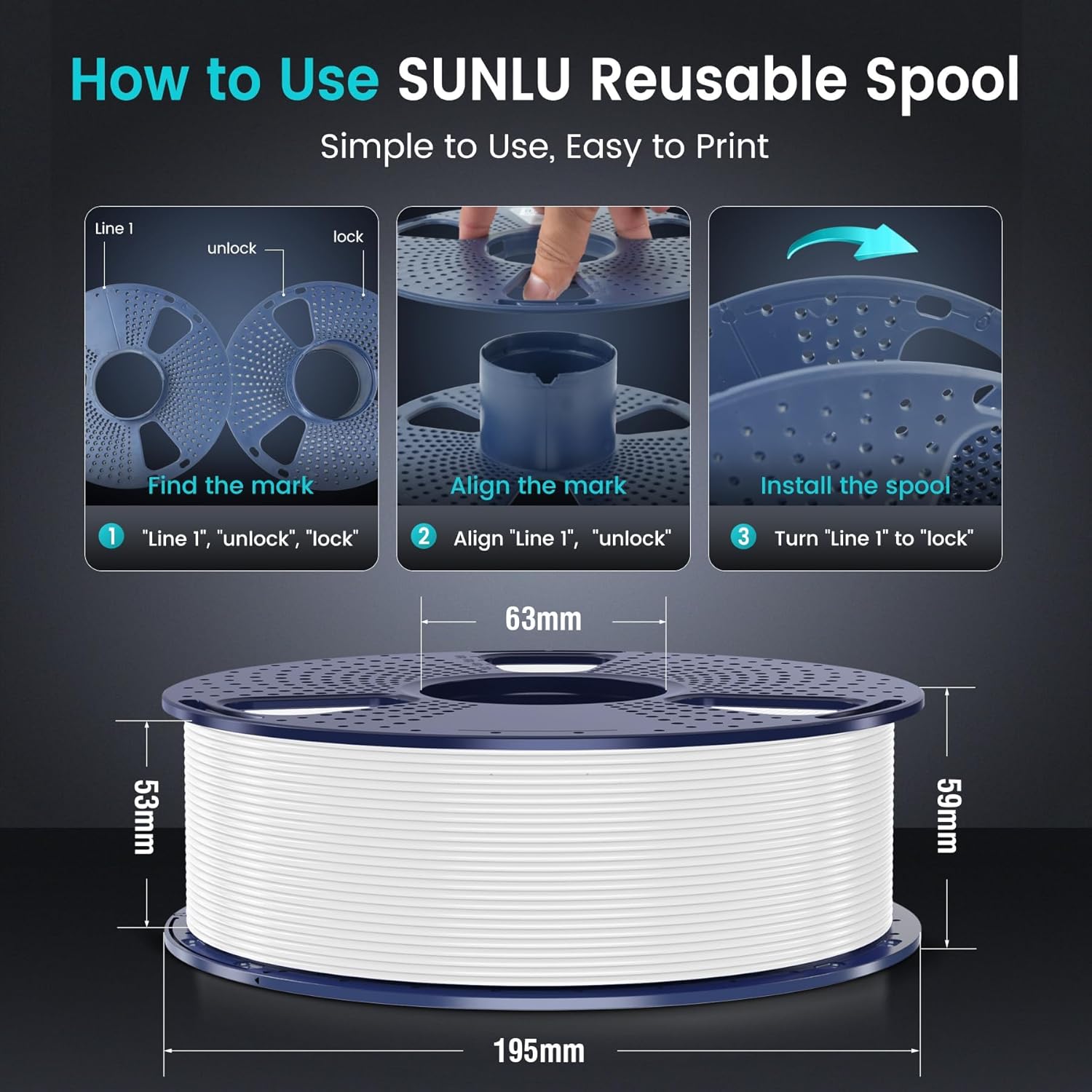
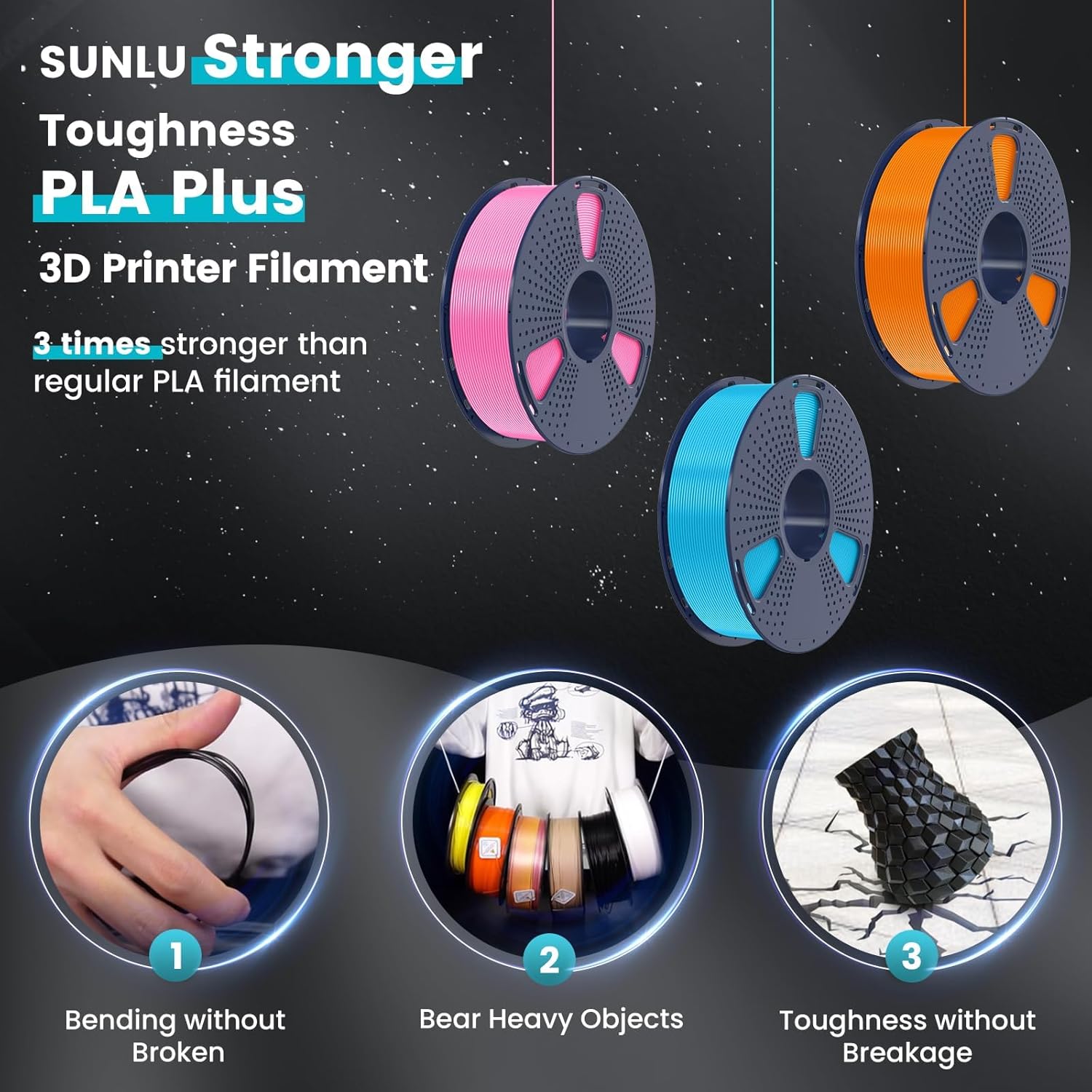
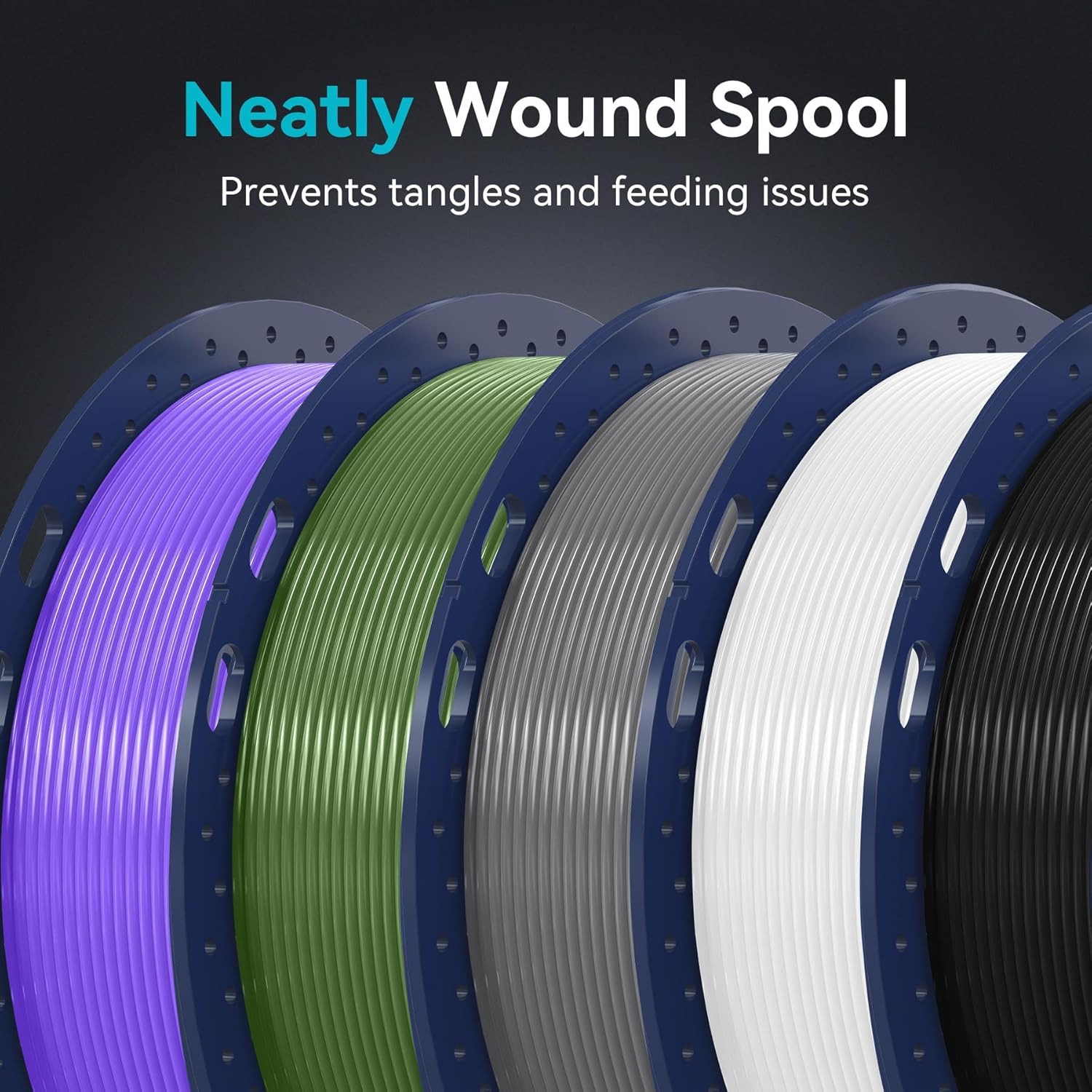
What it is and what it aims to solve\nSUNLU PLA Plus is a toughened version of standard PLA filament designed for more robust, higher-toughness prints. The upgraded PLA+ aims to combine easier printing with improved impact resistance, making it a sensible choice for functional parts, fixtures and models that may experience some stress. The 1KG spool comes neatly wound to help reduce tangles and feeding issues during printing, which is especially helpful if you’re printing larger or multi-part projects.\n\n## How it performs in practice\nOn paper, the filament claims to offer more than 11 times the toughness of regular PLA, which translates to better resilience for parts that could take knocks or need a bit more durability. The diameter is controlled with a goal of accuracy to +/- 0.02mm, contributing to consistent extrusion and layer adhesion. The combination of neat winding and strict quality checks (including drying and vacuum sealing) is intended to minimise common issues like clogging or bubble formation, so you can rely on smoother prints with fewer failed attempts.\n\n## What stands out (and where it may fall short)\nThe standout features are the toughness enhancement, precise diameter control and the emphasis on reliable feeding due to the packaging and winding process. If you prioritise print reliability for functional parts or prototypes that require some bending or impact resistance, this PLA Plus could be a practical fit. However, it remains a PLA-based material, so it won’t replace purpose-made engineering filaments for highly demanding mechanical duties.\n\n## Who it’s for\nIf you’re printing small brackets, jigs, light mechanical components or educational models where a little extra toughness helps, this filament aligns with those needs. It’s also suitable for hobbyists who appreciate cleaner feeding and fewer clog-related interruptions. Beginners may benefit from the easier handling claims, but as with any tougher PLA variant, you’ll still want to calibrate your printer to achieve the best results.\n\n## When it makes sense to buy\nConsider SUNLU PLA Plus if you want a balance between printability and durability, and you want a more forgiving material for prints that may see handling or light stress. The neat winding and proven feeding claims make it a sensible option for users who print larger parts or multiple pieces in one session, reducing downtime due to jams.\n\n## What to check before buying\nEnsure your printer is compatible with 1.75mm filament and that you have a printing setup that benefits from stable feeding and good layer adhesion. While the diameter tolerance is tight, it’s prudent to perform a standard calibration (nozzle height, extrusion multiplier) to optimise results. If your projects demand extreme mechanical strength beyond typical PLA capabilities, you might want to evaluate other materials or further toughened options.\n\n## Practical usage note\nA micro-use example: printing a small mount that needs to hold a light load. The thicker, tougher PLA Plus can help the part resist minor impacts during assembly or use, without the brittleness sometimes seen with standard PLA. Still, you should expect performance to sit between regular PLA and specialist engineering filaments, not as an ultra-high-strength solution.\n\n## What to compare with (context of choice)\nIn the broader market, this sits as a mid-to-upper tier PLA variant. If you want maximum stiffness for static parts, or specialised high-temperature resistance, you may opt for different materials. For general purpose parts with improved toughness and reliable feeding, SUNLU PLA Plus offers a credible balance.\n\n## Decision at a glance\n### Is it worth it?\nConsider it if you prioritise higher toughness and reliable feeding for everyday projects, with less risk of print failures due to winding or clogging. It may not be the best choice if you need extreme mechanical strength or high-temperature performance beyond typical PLA capabilities.\n\n## FAQ (quick answers)\n- Is this compatible with most FDM printers? Yes, it’s designed for 99% of FDM printers using 1.75mm filament.\n- Does the filament come dry and ready to print? It’s described as 24-hour drying and vacuum sealed, which suggests good moisture control out of the bag.\n- What print settings might be typical? Start with standard PLA profiles, then adjust for the tougher nature of PLA Plus if prints show minor warping or sheet adhesion concerns.\n