

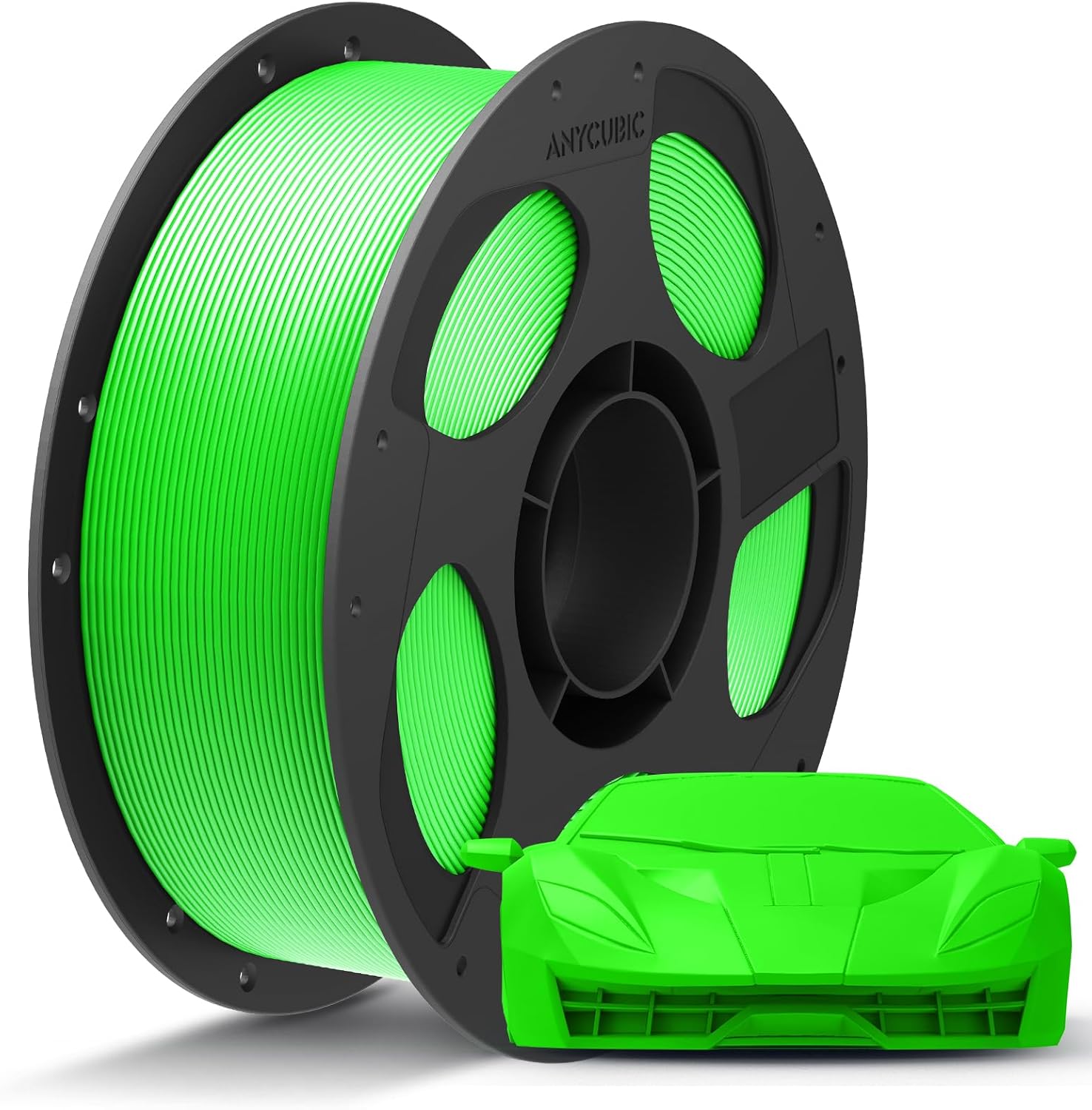
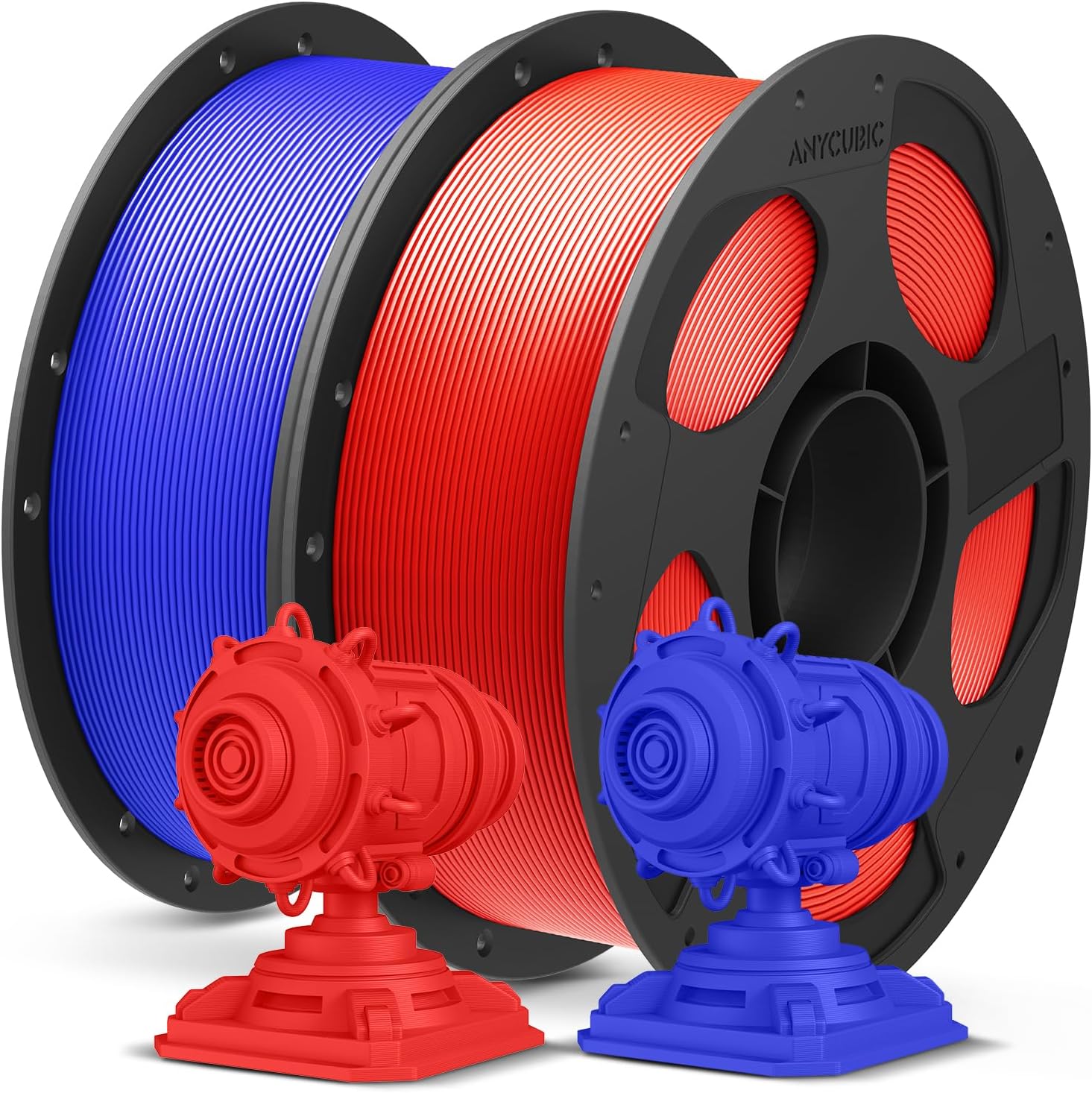
Anycubic PLA+ 1.75mm 3D Printer Filament (PLA Plus) – High Toughness, +/-0.02mm accuracy, 2 Pack 1KG, Iridescent Blue & Bright Red
Reviews
Price
Product description
At a glance
If you’re getting fed up with brittle PLA that snaps too easily or warps when you’re not being ultra-careful, PLA+ can feel like a more practical direction. This Anycubic PLA+ filament is pitched as a tougher PLA variant, with dimensional accuracy stated at +/-0.02mm and a print behaviour aimed at smooth extrusion. It’s also sold as a 2-pack with reusable spools, which matters if you want to keep running without constantly re-ordering.
That said, nothing is perfect on paper. “High toughness” and “no clogging” are claims, and real results depend on your printer setup, nozzle temperature, and how consistent your airflow is. So it’s worth thinking of this as a dependable mid-range PLA+ style filament for everyday FDM prints, rather than something that magically fixes every print problem.
Key features
The standout idea here is improved resilience. Anycubic describes this PLA+ as having high toughness with certain impact resistance, with the practical goal that parts aren’t as prone to breaking under external force. In the same breath, it’s positioned to still be relatively easy to work with: “smoothly with few layers” is how it’s framed, which generally suggests it’s meant to lay down cleanly and not turn every print into a fight.
Tech specs
- Material: PLA+
- Type: 3D printer filament for FDM printers and 3D printing pens (where compatible)
- Diameter/size: 1.75mm
- Dimensional accuracy tolerance: +/-0.02mm
- Pack size: 2 pack, 1KG
- Spools: 2 reusable spools
- Colour: Iridescent Blue & Bright Red
What stands out in everyday printing
There are a few reasons this could suit regular FDM use. First, the filament is described as having tidy winding that maintains dimensional stability. In plain terms, that’s the kind of detail that can reduce frustration when you’re printing for hours—less inconsistency usually means fewer surprises.
Second, the brand claims it’s “without clogging” and “without bubbles”. If you’ve ever dealt with spotty extrusion or rough surfaces from filament inconsistencies, a smoother extrusion expectation is genuinely relevant. On top of that, it’s said to avoid tangling “on the roll” and is described as easier to leave the spool without crossing turns. That kind of thing sounds minor until you’re halfway through a print and the feed starts getting weird.
Finally, the dimensional accuracy spec and the note about minimal shrinkage are aimed at reducing cracks and warping. You won’t get a guarantee for every design, but it gives you a sensible direction if your prints often suffer from stress as they cool.
Where it shines (and where it may fall short)
It’s likely a good fit if you want PLA+ filament mainly for functional-ish models: craft items, artwork, and “engineering parts” are mentioned, which implies parts that benefit from being a bit more impact resistant than basic PLA.
It might not be the best choice if you need a filament that’s heavily optimised for extreme temperature resistance or demanding mechanical performance. PLA+ improvements are real for many users, but it still sits in the PLA family—so if your project needs materials designed for harsher conditions, you may need to look elsewhere.
Also, keep in mind that some of the promises are about behaviour “on the roll” and during extrusion. Your results can still vary if your printer’s setup is off (for example, temperature calibration or feed settings), even when the filament itself is well behaved.
Best use cases
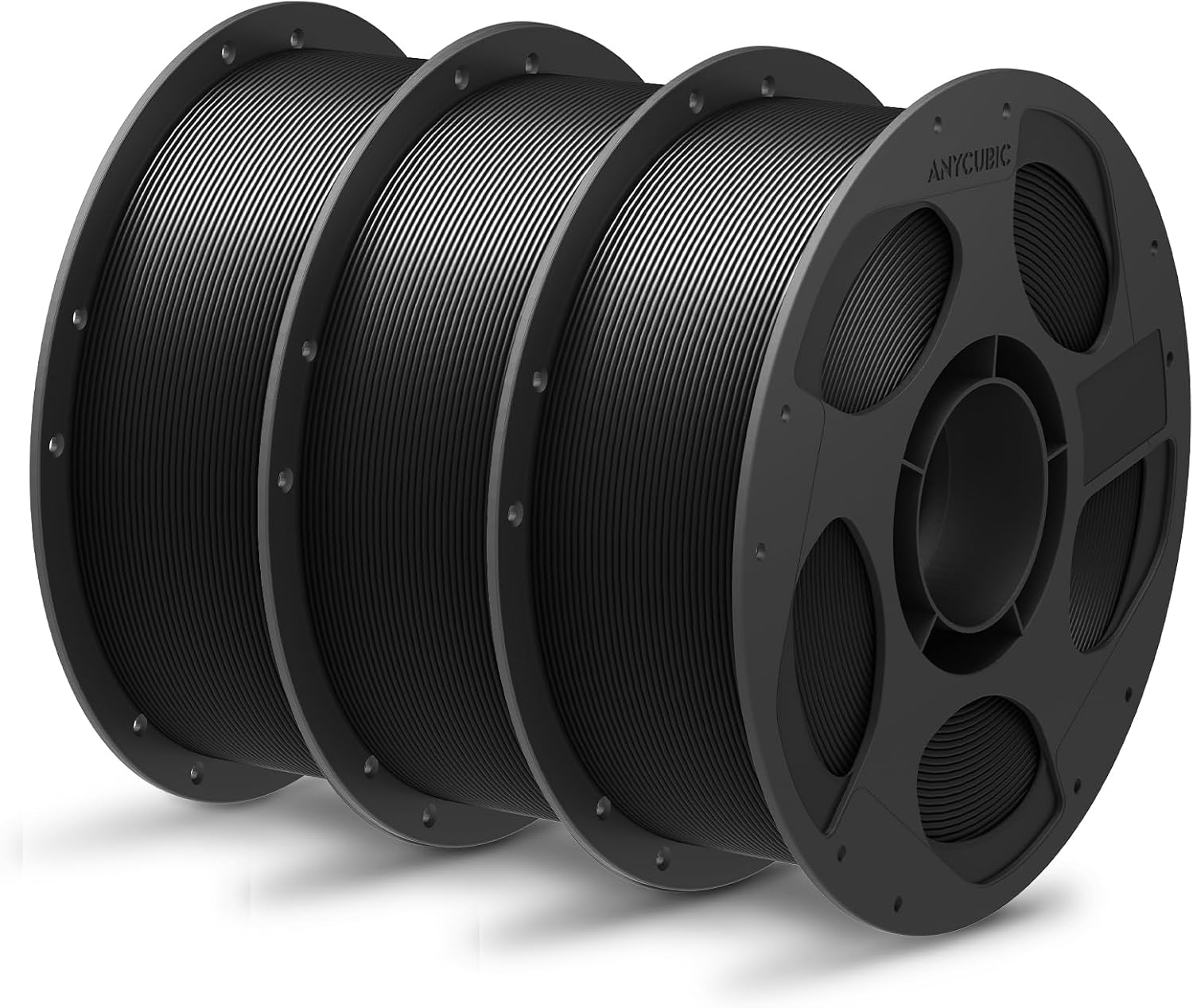
If you’re planning a batch of medium-detail prints—say, decorative components that also need to survive being handled—this is the type of filament that’s designed to be forgiving. For a micro example: you might load it for a small functional bracket, print a test piece first to check fit, then scale into the full version. The stated goals (less clogging, fewer warping issues, smoother extrusion) line up with that “prototype then produce” workflow.
It also makes sense if you prefer not to keep opening new filament bags and dealing with storage straight away. The description mentions vacuum packaging intended to shield against moisture and dust, which is exactly the sort of practical support you want if you store filament for weeks.
Compatibility & requirements
The product is described as compatible with most FDM 3D printers and also 3D printing pens available in the market. That’s helpful, but it also means you should still check your printer/pen is set up for 1.75mm PLA/PLA+ style filament and that your device expects filament of this diameter.
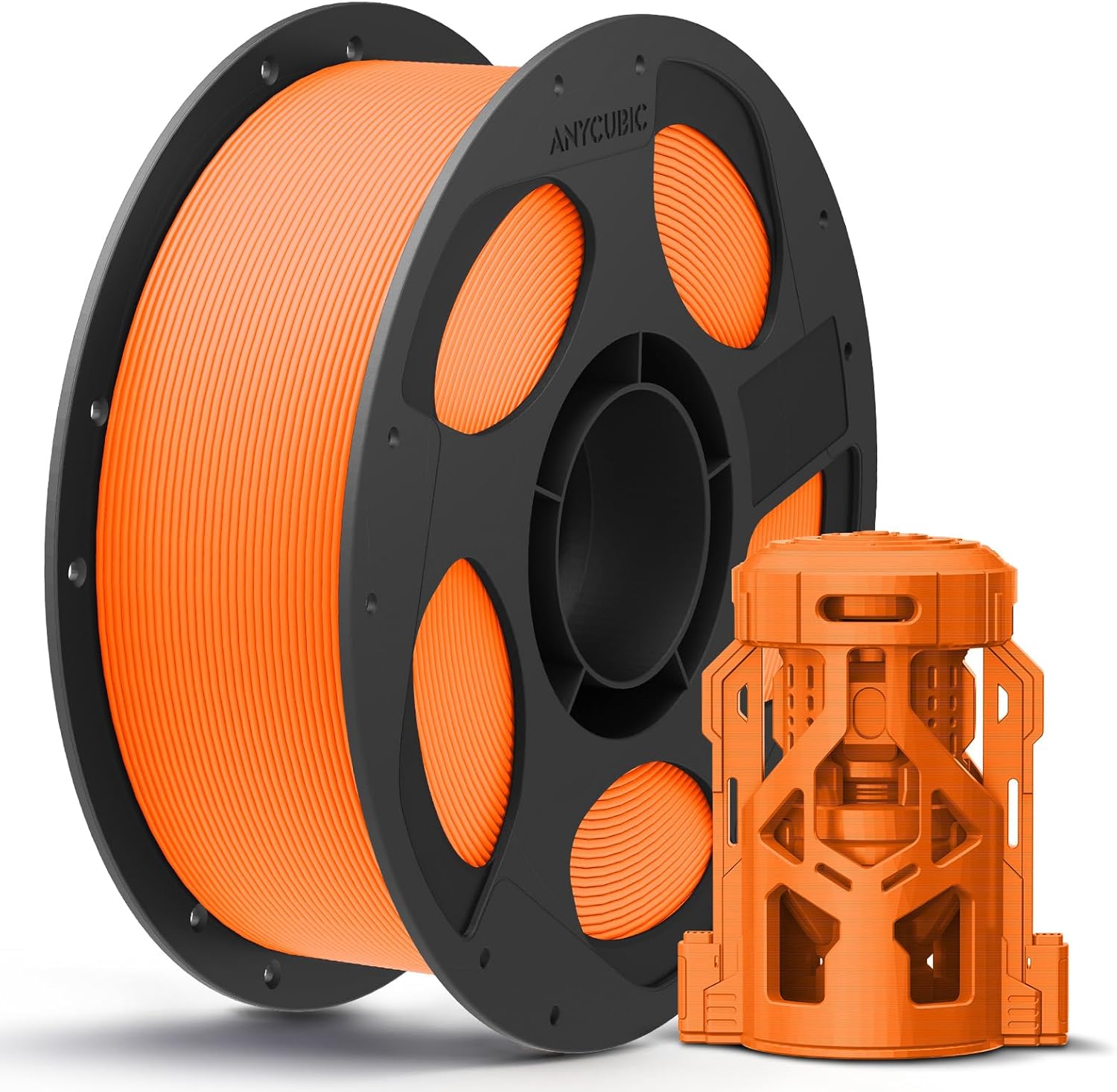
Is it worth it?
Worth considering if you want a tougher-feeling PLA+ filament in 1.75mm with a stated dimensional accuracy of +/-0.02mm, and you’d like smoother extrusion with fewer tangling hassles. The 2-pack with reusable spools also suits anyone who prints regularly enough to justify keeping two colours/rolls ready.
You may want to skip it if your project demands a material beyond the PLA family, or if you’re chasing absolute consistency with a poorly set-up printer. PLA+ can help with brittleness and warping trends, but it can’t replace correct calibration.
If you’re buying based on opinions, look for cues that match your use—clean surface finish, stable prints, and reduced warping/cracking. This filament’s positioning suggests it’s aimed at those outcomes, rather than being a “one filament does everything” solution.
FAQ
How does the dimensional accuracy help?
The stated +/-0.02mm tolerance is intended to support dimensional stability. Over time, that matters for parts where a small mismatch can cause fitting issues, and for prints where stress as it cools can lead to cracks or warping.
Is it suitable for beginners?
It’s designed to be smooth to extrude and to avoid tangles and clogging (claims made by the manufacturer). That generally makes filament easier to live with, but beginners will still benefit from basic printer calibration and sensible temperature settings.
Can I store it for longer periods?
The description mentions vacuum packaging to shield against moisture and dust. That’s a good sign for longer storage, though you’ll still want to follow whatever storage approach you normally use for filament.
Does the 2-pack mean I have two separate spools?
Yes—it's described as a 2 pack with 1KG and reusable spools, and the colours are listed as Iridescent Blue & Bright Red.