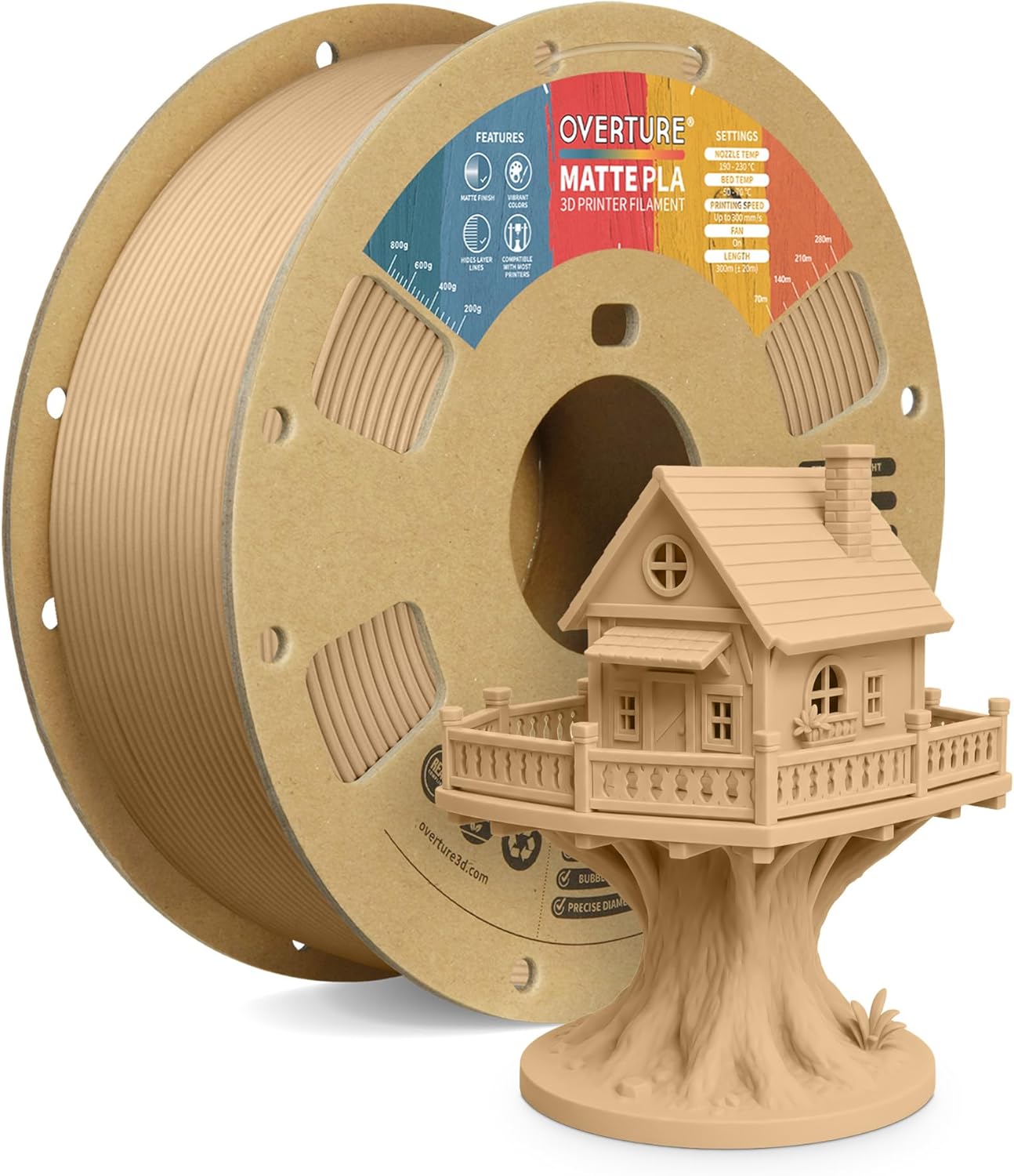
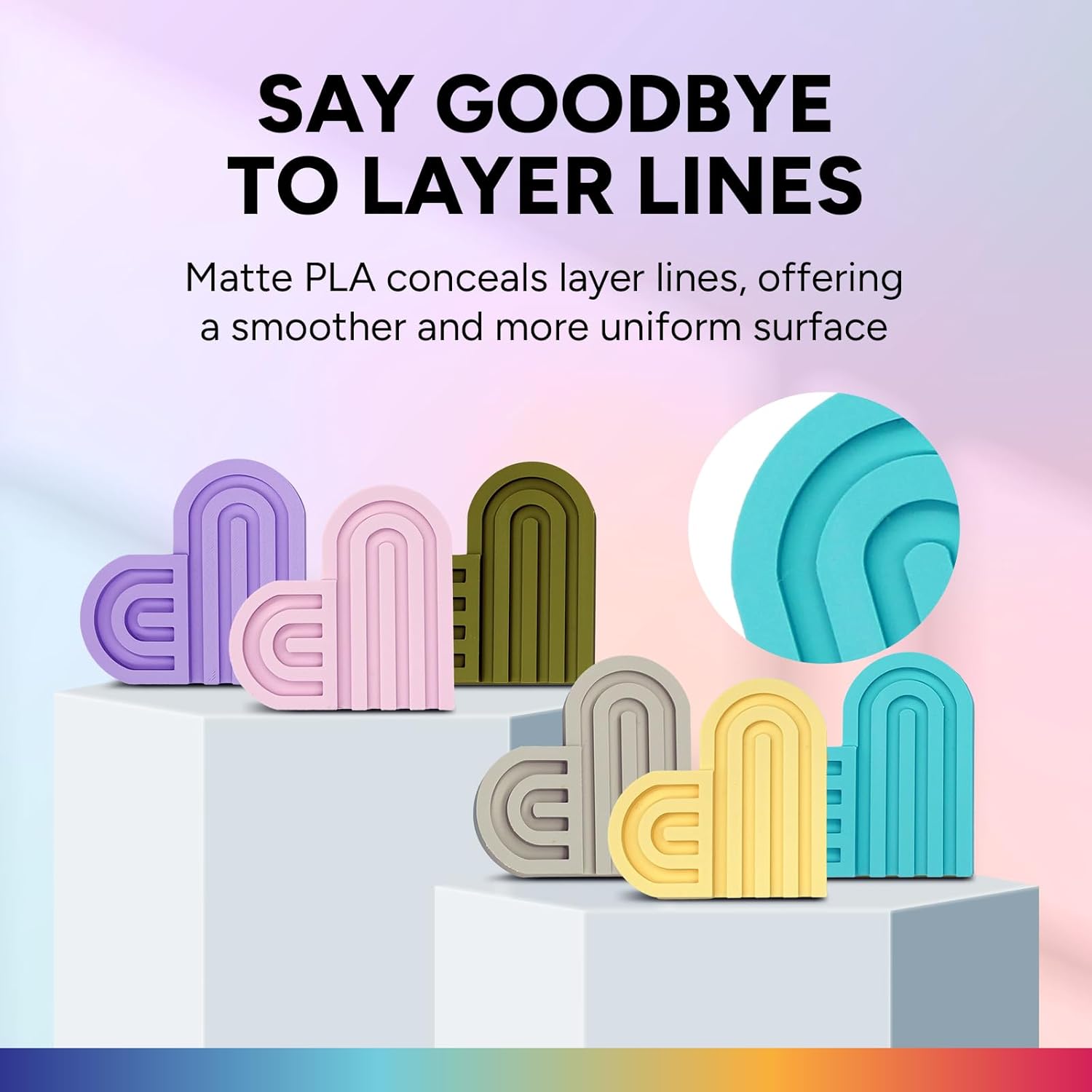
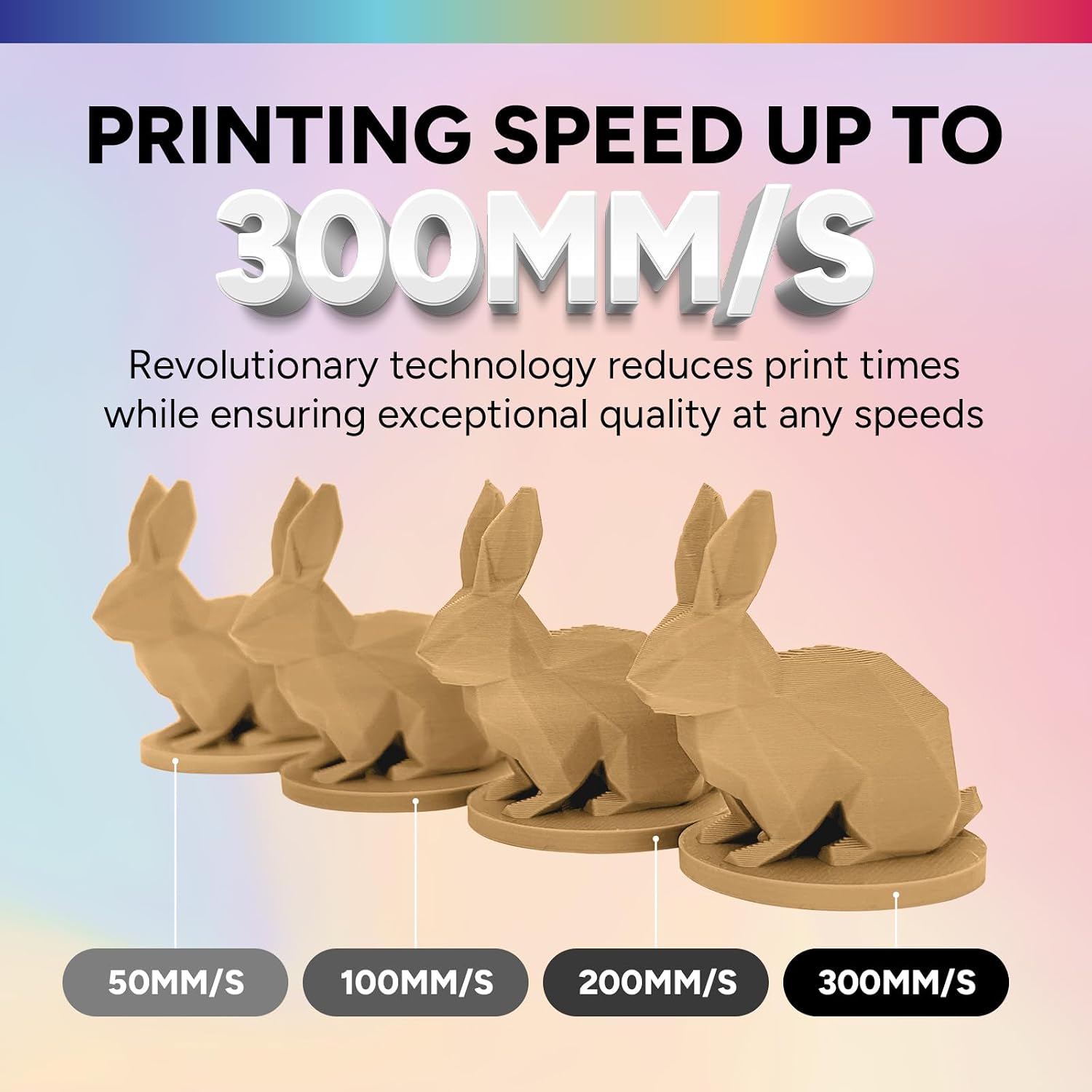
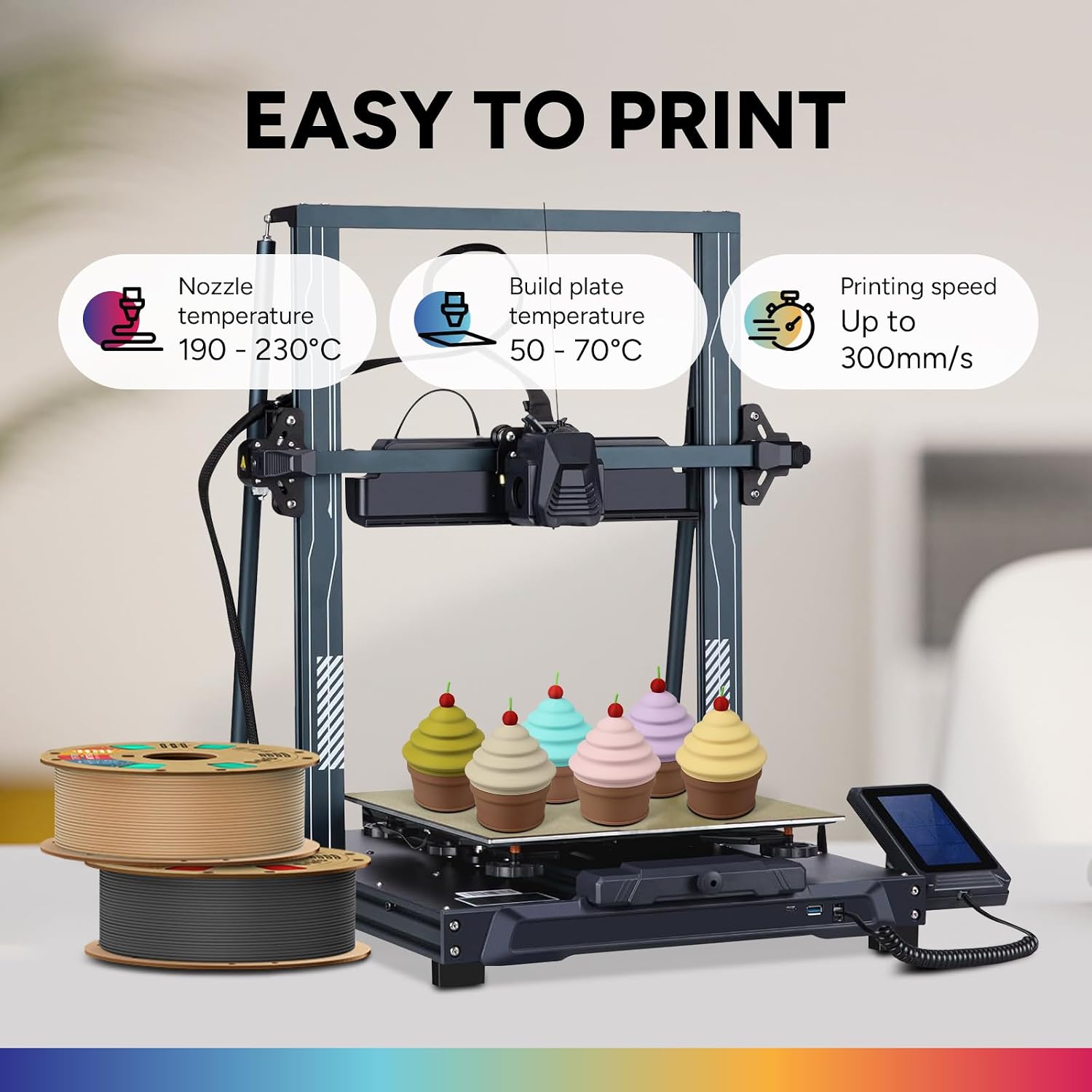
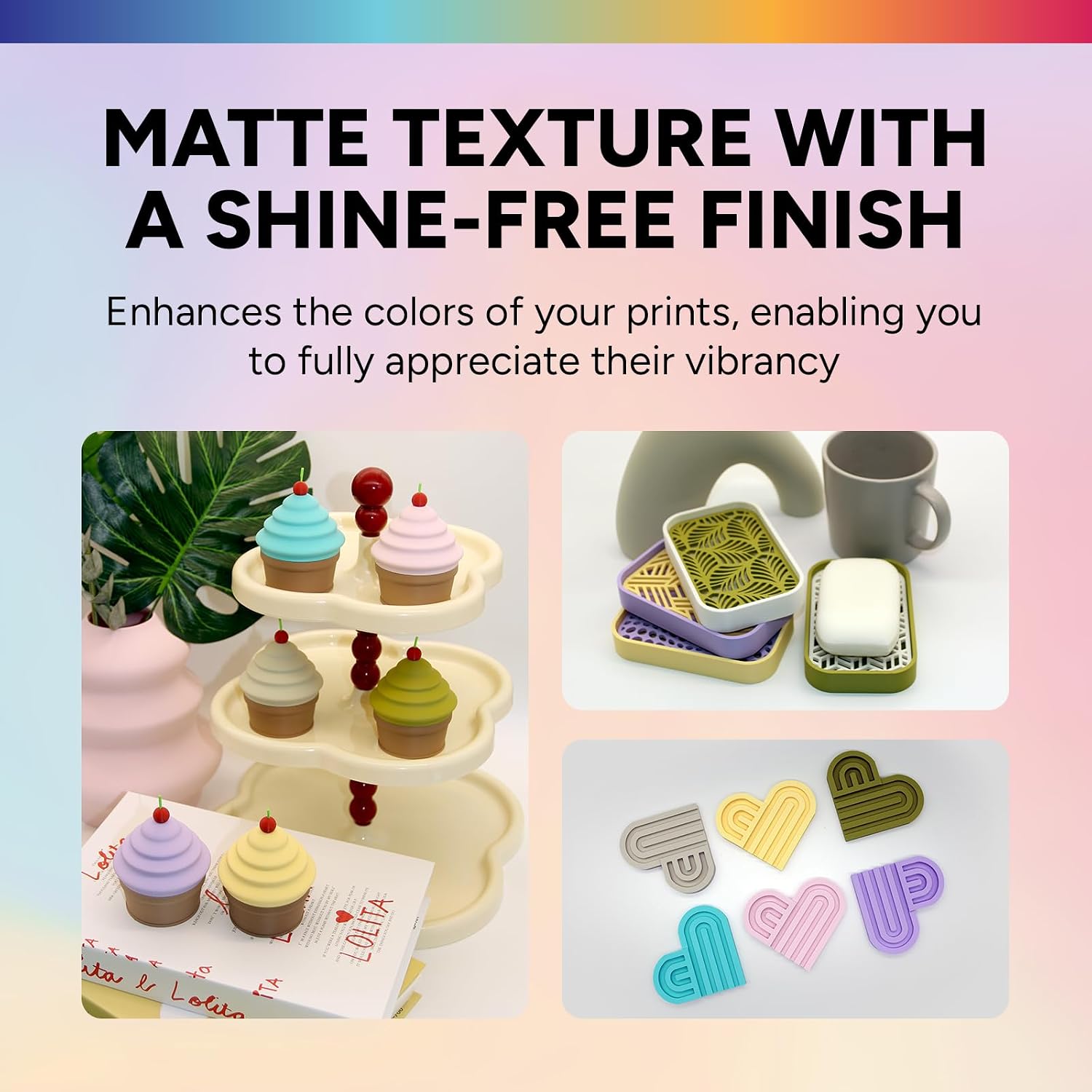
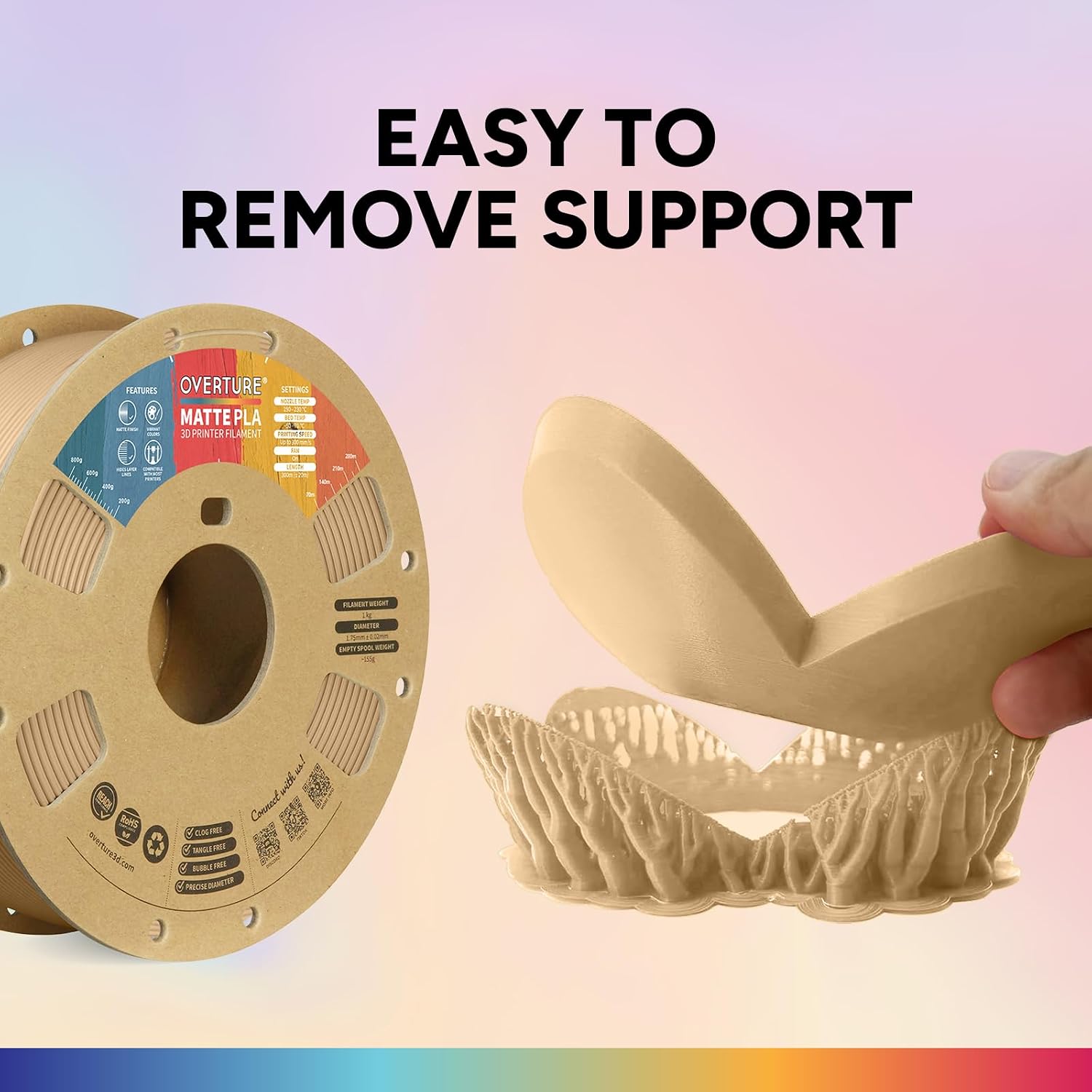
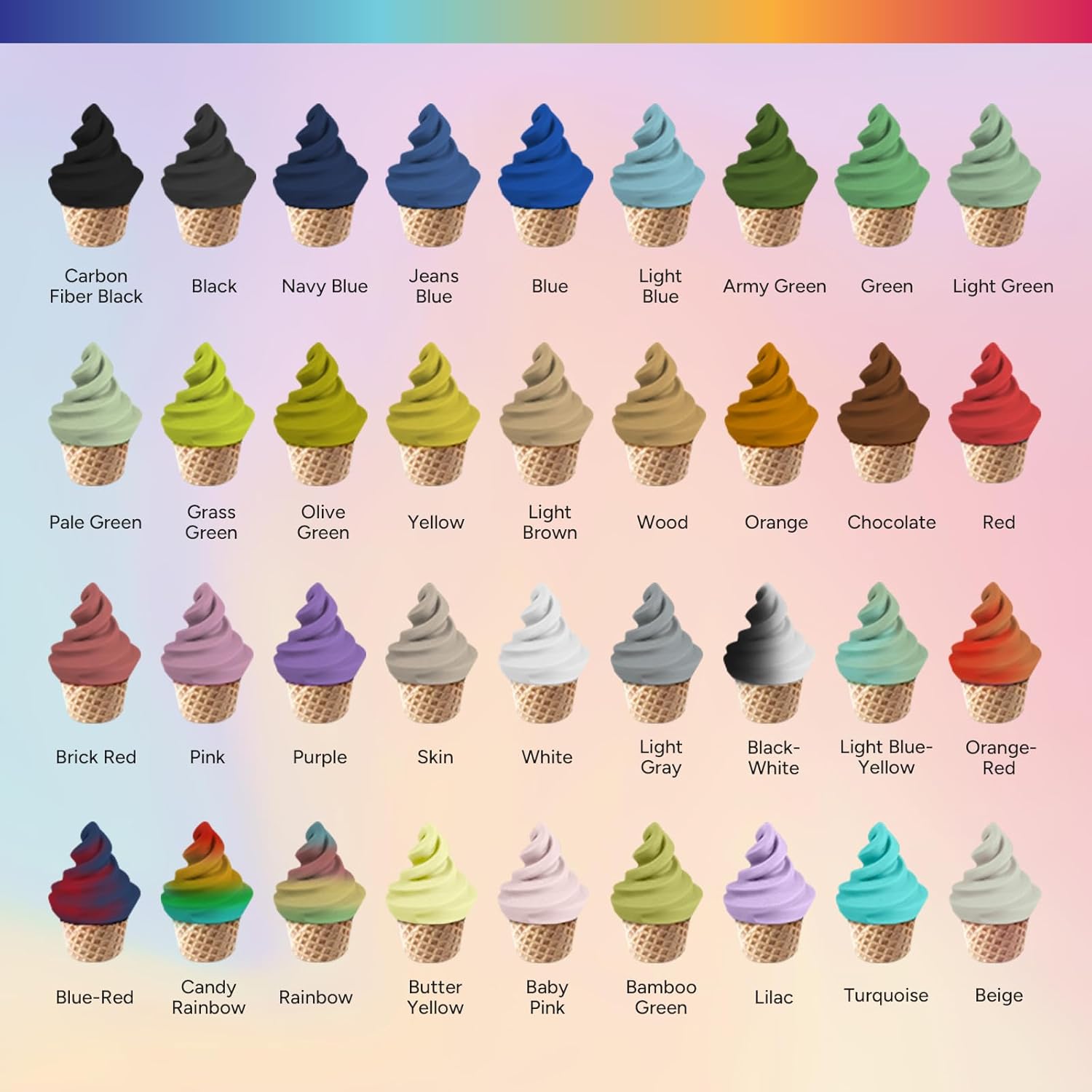
What it is and what it’s for\nOVERTURE Matte PLA is a 1.75mm, 1kg spool of filament designed for practical 3D printing with a frosted, matte finish. It’s aimed at users who want smooth surfaces and non-glossy visuals, with surfaces that help to hide layer lines on models, prototypes or parts where a matte appearance is preferred. The product is marketed as broadly compatible with most FDM printers, making it a sensible option for hobbyists or small workshops who are building items ranging from models to functional parts.\n\n## How it prints on the bench\nOn paper, this filament promises trouble-free operation: good bed adhesion, solid overhang performance, and easy removal of common aids such as rafts and brims. The manufacturer highlights low odour, low shrinkage and a reduced risk of clogging, which are helpful traits for longer print jobs or when you print multiple items in one session. The claim of dimensional accuracy ±0.02 mm comes from a CCD diameter measurement and closed-loop control, suggesting tight tolerances that help with reliable layer bonding and less warping. \n\n## What stands out\nThe key draw is the frosted matte finish that gives a smooth, non-shiny surface, which can be beneficial for functional prints that don’t require a glossy look. The matte texture can also help hide minor imperfections and improve the perceived quality of detailed surfaces. The material is positioned as easy to print with a good balance of properties for longer prints and frequent small parts.\n\n## The limitations and caveats\nNo product is perfect, and there are a few practical notes to consider. The finish, while attractive for certain uses, will not replicate the precision of a high-gloss or hybrid material, if a glossy, reflective surface is essential, this isn’t the default choice. Dimensional tolerances are specified, but real-world results can vary with printer calibration, ambient temperature and nozzle condition. Only the 1.75mm variant is described here, so if you use other diameters, compatibility and performance may differ.\n\n## Who it’s for\nThis filament suits hobbyists, educators, and makers who want a neat, non-gloss finish and dependable print reliability for models, prototypes, or small production runs. It’s particularly appealing if you value a smooth, visible matte texture and straightforward printing. It’s also a practical option for those who print in light brown tones and want to maintain a consistent look across projects.\n\n## Who it isn’t ideal for\nIf you’re chasing a high-gloss surface or ultra-precise dimensional tolerances for tight-fitting mechanical parts, you may prefer alternatives with different surface characteristics. If your printer frequently experiences clogging or requires extremely aggressive support removal strategies, you might want to validate compatibility with your specific setup first.\n\n## Before you buy, consider\n- Confirm your 1.75mm FDM printer is compatible with PLA and can handle a matte finish without warping in your usual build area.\n- Check your nozzle height and bed level to maximise layer bonding given the claimed ±0.02 mm tolerance.\n- Store unopened spools properly to maintain shelf life, the product notes a 1-year shelf life for unopened packaging.\n- Think about whether a frosted, matte finish aligns with your project’s aesthetic and functional goals.\n\n## In-context comparison to other approaches\nIf you’ve previously used glossy PLA, you’ll likely notice a subtle shift in how light interacts with a matte surface and how layer lines appear. For projects where you want a non-glossy look and easier daily handling (e.g., display models or visual prototypes), this approach can be advantageous. For parts requiring maximum surface precision or high-temperature resistance, other filaments or finishes might be more suitable.\n\n## What you’ll notice in use\nAn everyday printing experience with reliable bed adhesion and manageable overhangs, the matte texture appears consistently across prints, helping to reduce glare and improve the readability of fine details in certain lighting. Expect a straightforward post-processing routine if you want to refine texture or remove minor cosmetic imperfections.\n\n## Final decision: Is it worth it?\nIs it worth it? A practical choice if you prioritise a matte, frost-like surface and reliable, easy printing for general models and prototypes. If your project demands a high-gloss finish or ultra-tight tolerances, this may be a secondary option rather than a primary choice.\n\n## Quick FAQ\n- Does it fit most 3D printers? Yes, it’s designed for 1.75 mm printers and states broad compatibility with common FDM setups.\n- How does the matte finish affect post-processing? The frosted surface can reduce visible layer lines, which may minimise the need for heavy sanding in some cases.\n- What about odour and safety? The filament is described as having low odour and low shrinkage, which can make for a more comfortable printing experience in enclosed spaces.\n- How important is dimensional accuracy? The ±0.02 mm tolerance is aimed at consistent layer bonding, actual results depend on printer calibration and environmental factors.\n