

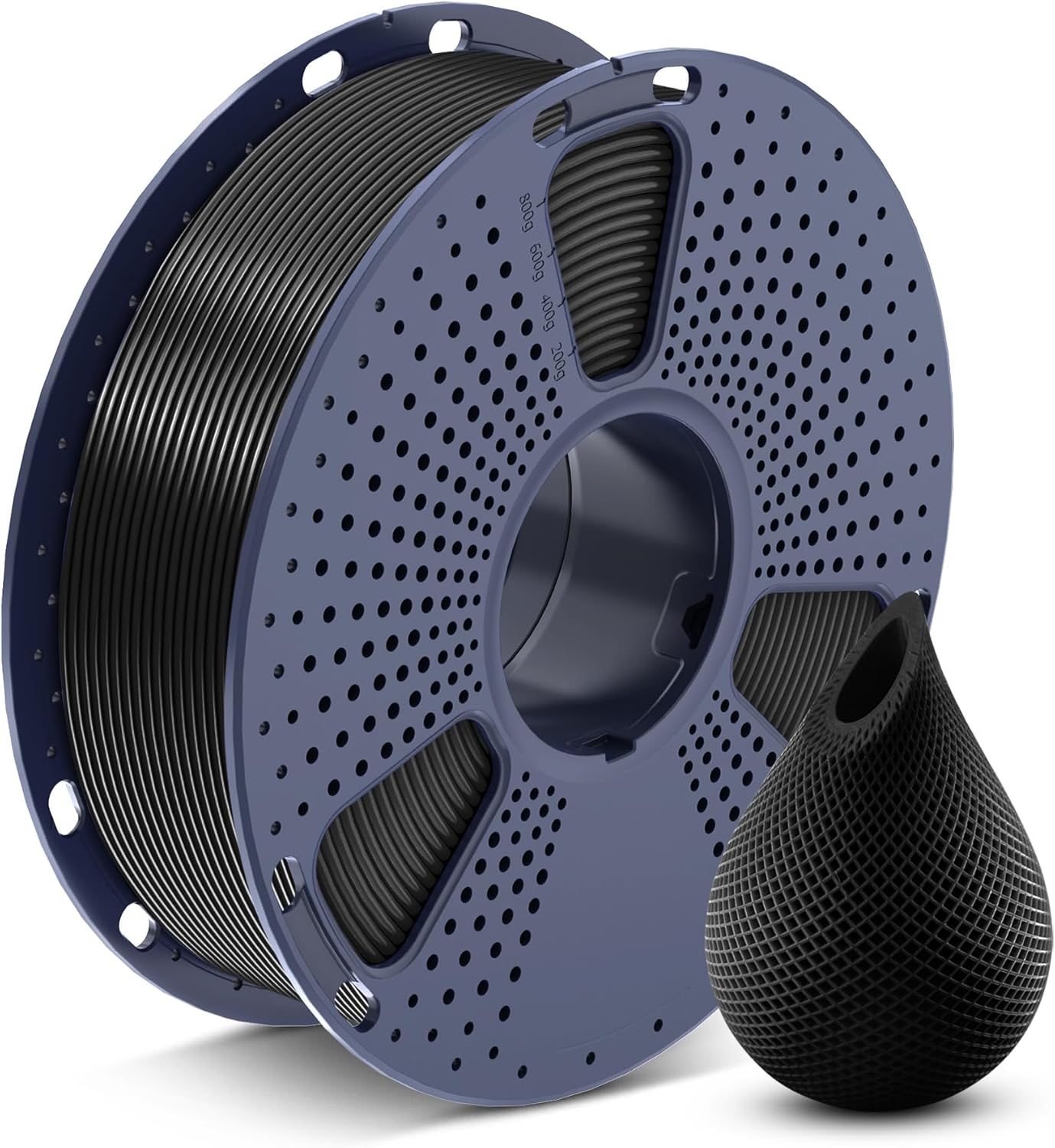
SUNLU PETG Filament 1.75mm Black (High Toughness, less stringing, 1kg spool)
Product description
What it is and why people pick PETG
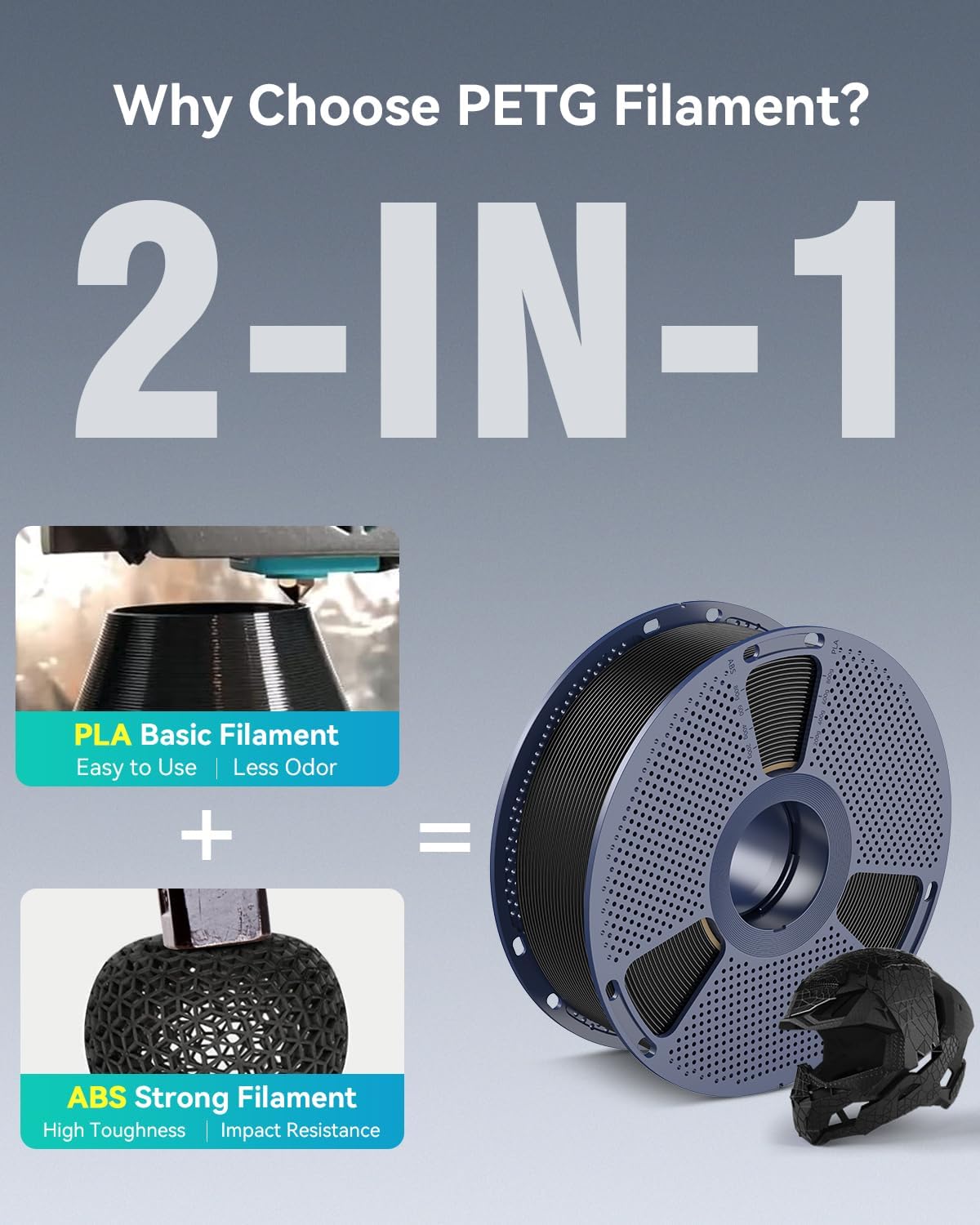
SUNLU’s PETG filament in 1.75mm black is a go-to material type for makers who want something that’s more forgiving than the truly brittle options, without jumping all the way to high-end engineering plastics. On paper, PETG is often chosen because it blends traits people associate with PLA (ease of printing for many) and ABS (more functional, durable results). This particular reel is positioned around toughness and dimensional consistency, with claims aimed at practical issues like layer bonding and stringing.
If you’re printing everyday parts that might get handled, knocked, or used in less-than-lab conditions, PETG is the sort of “workhorse” material that tends to make sense. It’s also commonly looked at when you want strong layer adhesion rather than relying on a print that only looks good on the bench.
The material focus: adhesion, toughness and impact resistance
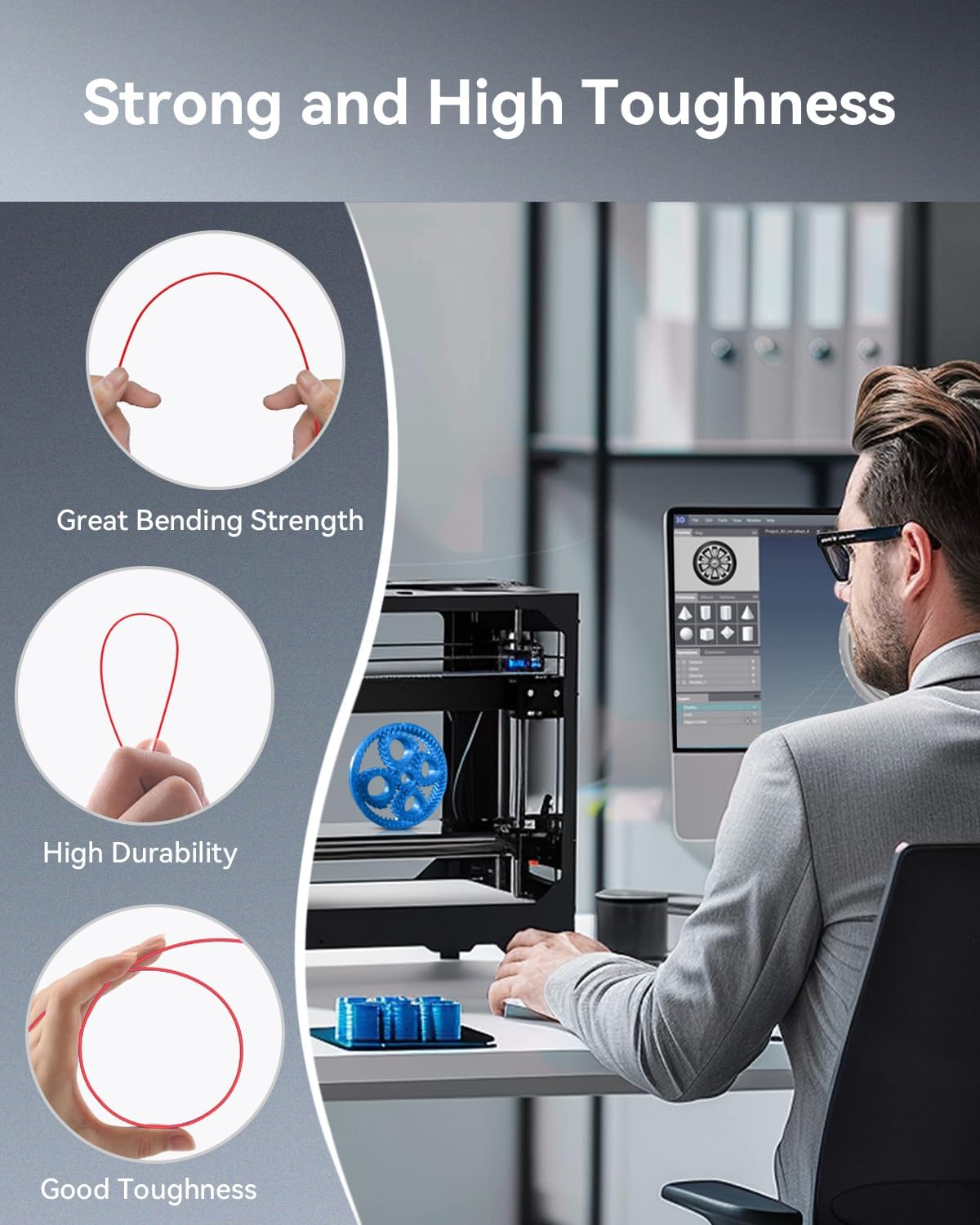
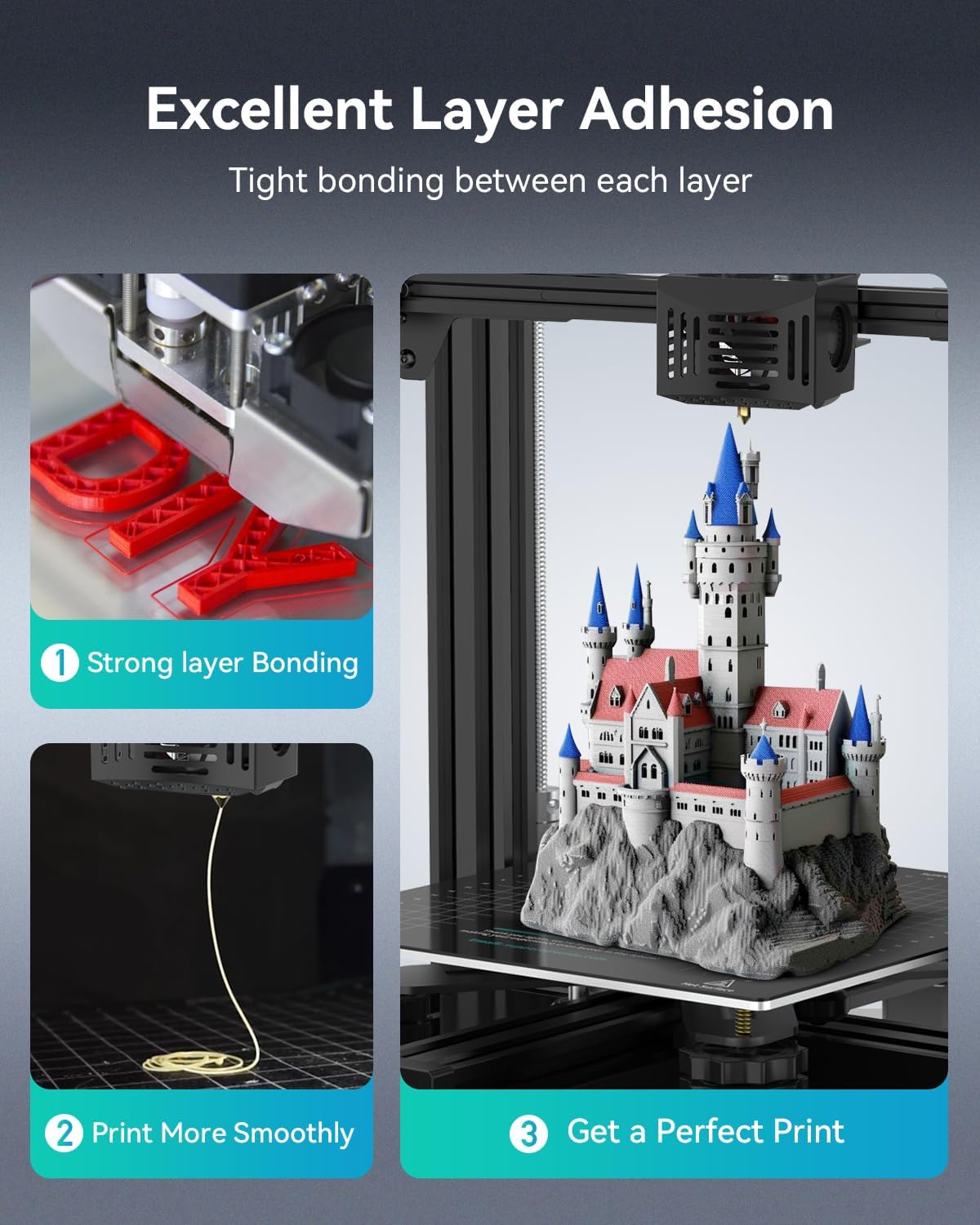
The headline themes here are straightforward: excellent layer adhesion, enhanced toughness, and high impact strength. What that means for you during real-world printing is mainly about results—prints that feel structurally sound rather than delicate. Stronger layer adhesion can also help with issues like warping, since the material is described as reducing those risks, and it should support smoother, solid finishes.
PETG’s “tough” reputation matters most when your model is meant to survive stress: repeated use, occasional drops, or bumps in storage. Think of things like brackets, utility holders, or protective covers for small setups—functional items where you’d rather have a part that flexes a bit instead of cracking immediately.
What to expect in print behaviour
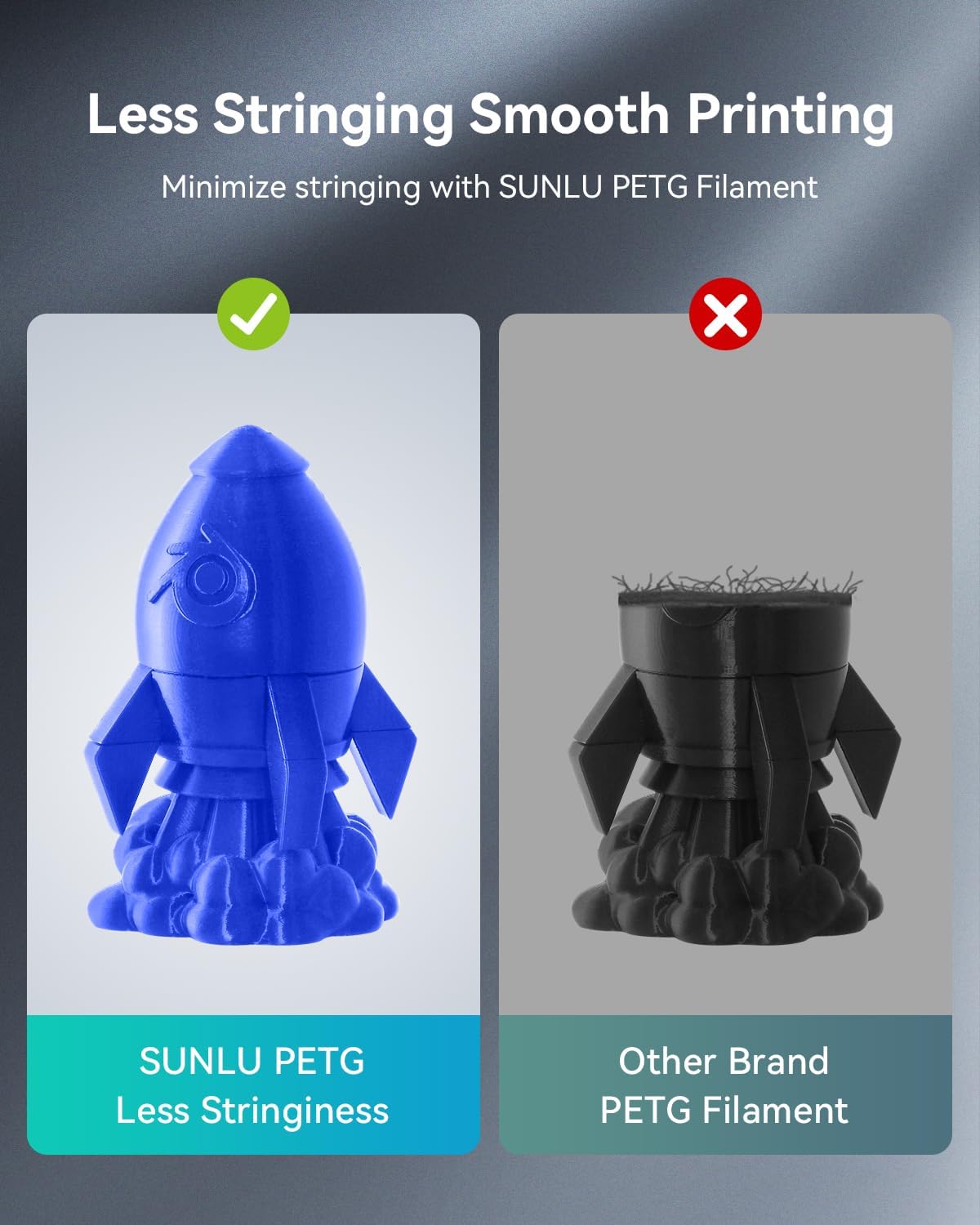
This filament is marketed as “less stringing good layer adhesion”. That’s a helpful combination because stringing is one of the most annoying cosmetic problems with FDM printing, especially on tighter details. However, it’s still not a magic eraser—stringing can depend heavily on your printer, temperature settings and cooling. So while the intent is clear, you may still need to dial in your profile.
The dimensional accuracy is listed as +/- 0.02 mm. Over the course of typical prints, that sort of consistency can support cleaner fits in models where tolerances matter. Just bear in mind that accuracy isn’t only about the filament: your slicer settings and the way your machine actually runs will influence the final outcome.
Everyday use: where it tends to fit best
PETG is described as robust and maintaining properties over time, including for indoor and outdoor use where weather resistance is a factor. That makes it a sensible material choice if you’re producing parts that may see moisture, sun exposure, or general weathering more than purely indoor décor.
A concrete example: imagine printing a small outdoor cable clip or a bracket for garden tools. You’re not after something that’s ultra-light or glass-clear, you want something that stays intact after being handled and exposed. PETG is the type of filament you’d consider first in that kind of scenario.
Where it may not be the best match
PETG can be a brilliant middle ground, but it’s not automatically the best if you need the cheapest filament or the simplest “set and forget” experience. If your priority is extremely fine surface aesthetics, you might still find other materials easier to tune for a particular look. Also, if your designs require very specific dimensional precision beyond typical home-printing tolerances, you’ll still need to compensate for your printer and calibration.
And if you’re mainly printing decorative pieces that won’t be stressed, PETG’s toughness-focused advantages may feel like overkill compared with more lightweight or faster-to-print approaches.
What to check before you buy
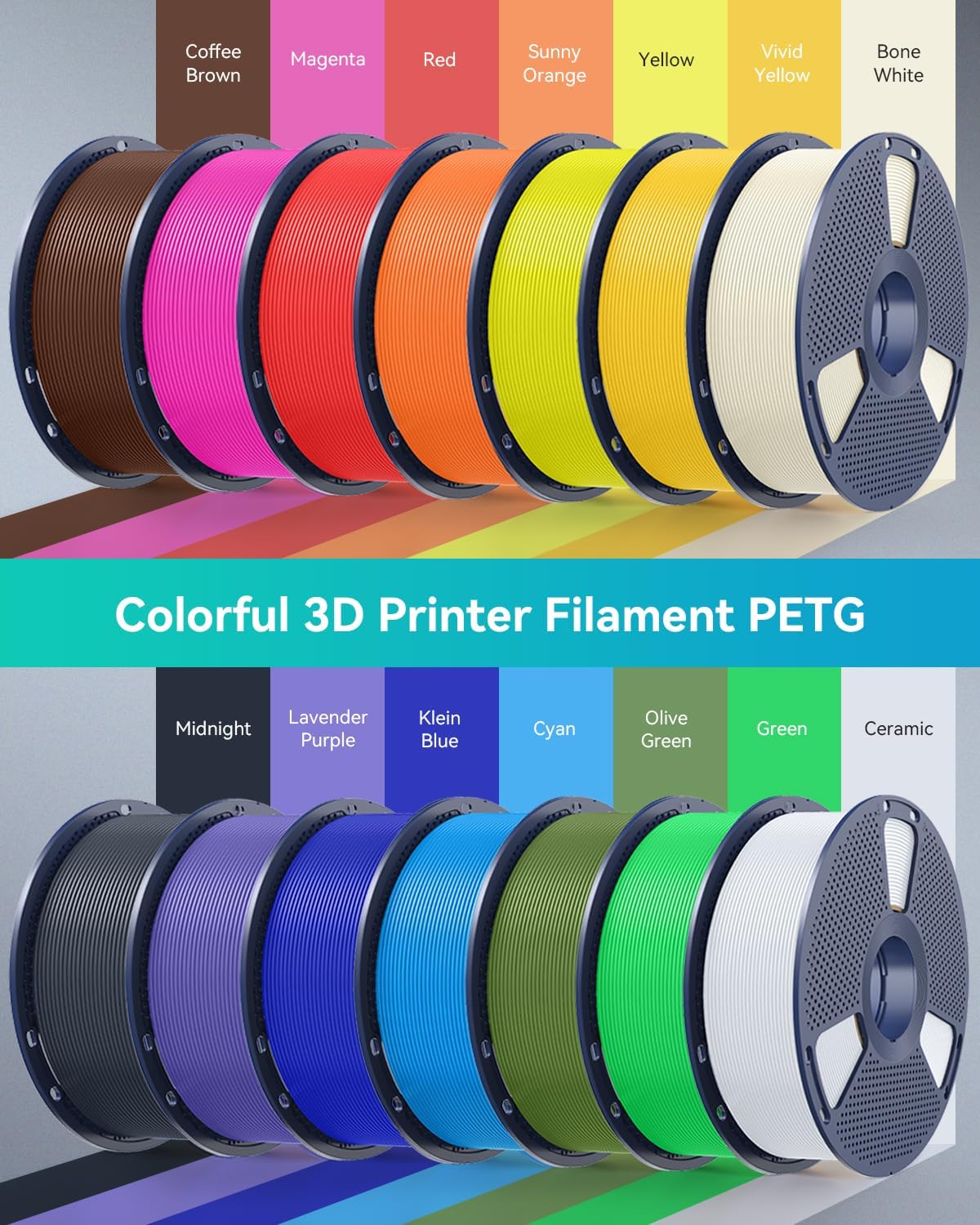
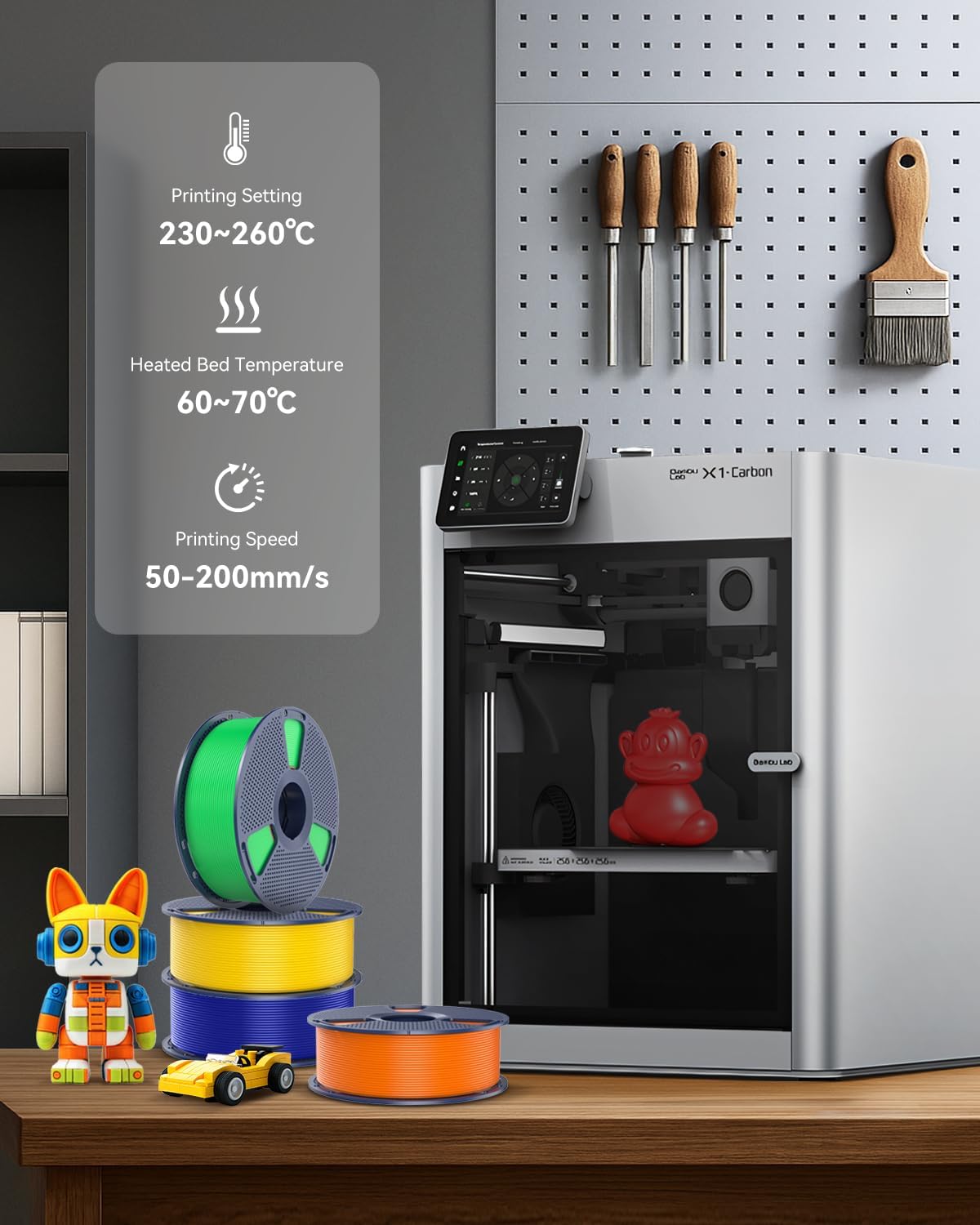
Before committing to this SUNLU 1.75mm PETG reel, it’s worth double-checking a few practical points: - Make sure your printer supports 1.75mm filament and that you’re set up for PETG-friendly temperatures and cooling. - Think about your model type: PETG shines for functional parts where layer adhesion and impact resistance matter. - Consider your tolerance needs: the stated dimensional accuracy (+/- 0.02 mm) is useful, but successful fit also depends on calibration and your slicer.
Finally, confirm whether you actually want the black material choice. Black is versatile, but colour can influence your final appearance more than you’d expect, especially for visible functional parts.
Quick FAQ
Q: Is this PETG filament aimed at reducing stringing?
The product description specifically calls out “less stringing”, so it’s designed with that annoyance in mind. That said, your results will still depend on your printer and settings.
Q: What is this filament good for?
It’s positioned for parts where you want strong layer adhesion, toughness and impact resistance, including items used indoors or outdoors where weather resistance is relevant.
Q: Will it help prevent warping?
The information suggests PETG offers excellent layer adhesion and reduces the risks of warping, which can help prints stay more stable.
Q: What does the +/- 0.02 mm dimensional accuracy mean?
It indicates filament consistency around that tolerance figure. It can help with repeatable printing, but it doesn’t replace printer calibration for tight fits.
Is it worth it?
Worth considering if you want a toughness-led PETG filament in 1.75mm that’s marketed for good layer adhesion and less stringing, especially for functional parts that may take knocks or see outdoor conditions. You’re likely to get the best value if your projects lean practical rather than purely decorative.
Skip or rethink it if you’re chasing the simplest print experience possible for low-stress décor, or if you’re expecting perfect results with no tuning at all—PETG still depends on your setup. In short: it’s a solid “workhorse” material choice on paper, but your printer settings will decide how smooth your finishes end up.