

ELEGOO Rapid PETG Filament 1.75mm Yellow & Orange (2KG) – high-speed PETG for FDM printing
Product description
If you’re trying to speed up FDM prints without giving up too much on real-world durability, this ELEGOO Rapid PETG filament is aimed at that middle ground. On paper, it’s built for fast runs (up to 600mm/s), with PETG’s usual blend of toughness and more forgiving behaviour than PLA.
That said, “fast” is only half the story: the right results still depend on how well your printer is set up, how dry the filament stays, and whether your chosen print settings match PETG’s needs. If you want a filament that’s mainly about printing quickly and producing parts that can take knocks, it’s worth a look.
The essentials
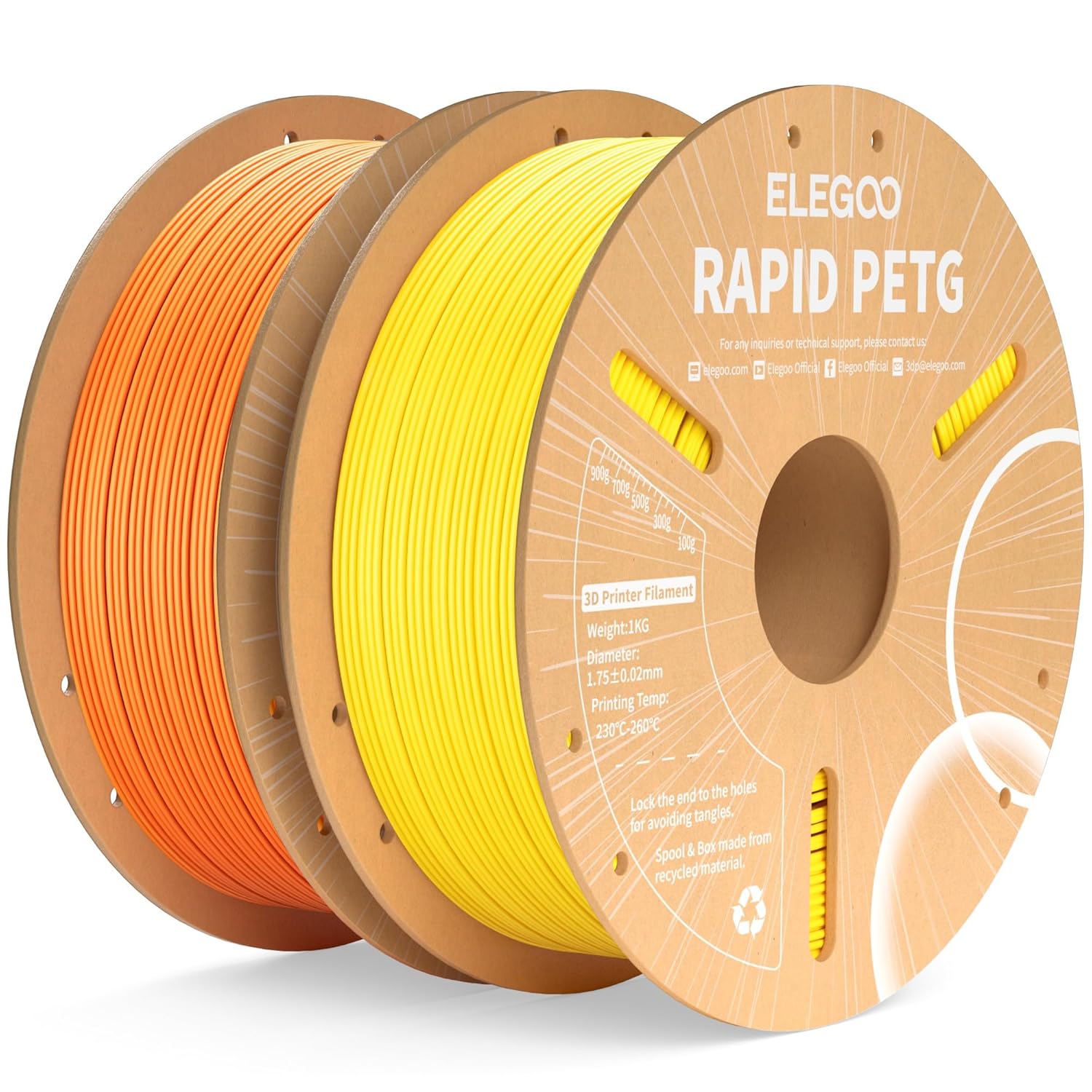
ELEGOO Rapid PETG is a 1.75mm PETG filament supplied as Yellow & Orange in a 2KG pack, wound neatly on a 1kg cardboard spool. It’s positioned as an “easy to use” PETG, aiming to combine durability (PETG’s impact resistance and toughness) with smoother, faster melting and flow.
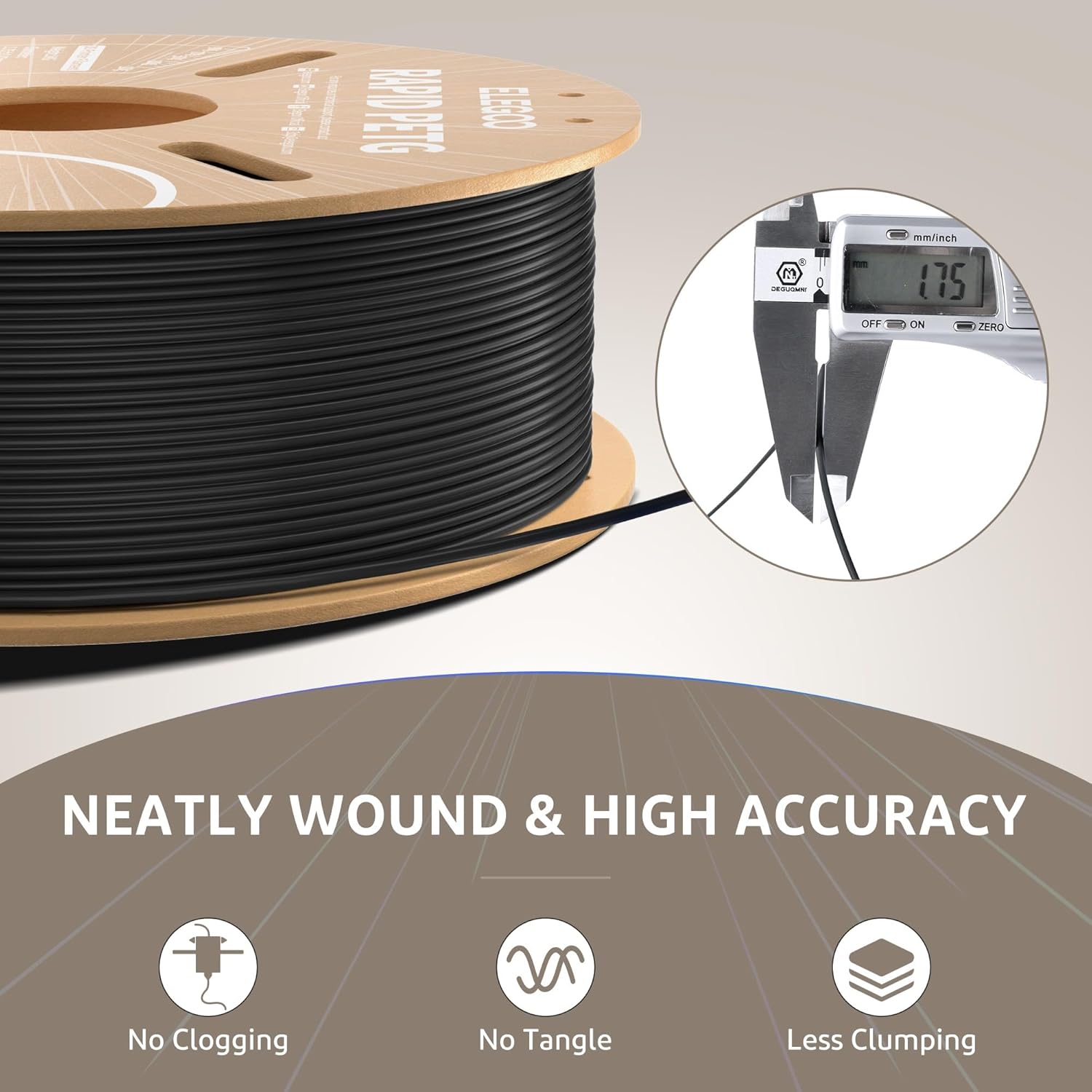
The brand highlights several practical benefits: reduced warping and low shrinkage compared with PLA, better light transmittance for parts where light diffusion matters, and less tangling thanks to full mechanical winding plus manual inspection.
What it’s like to print with
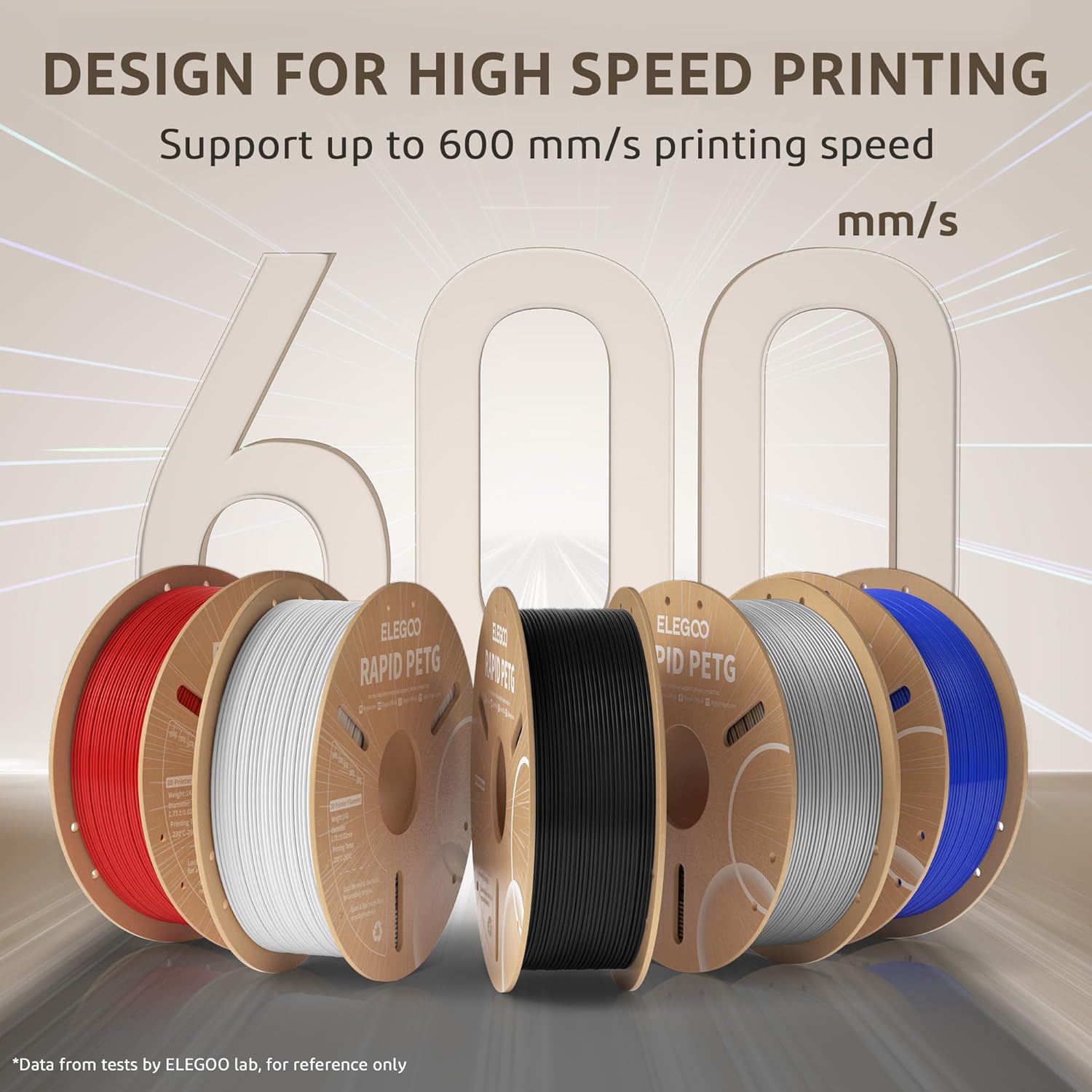
The main selling point for many buyers here is speed. The filament is described as melting rapidly and flowing smoothly, allowing for printing speeds up to 600mm/s. That’s particularly relevant if you print functional items, prototypes you want finished quickly, or batch jobs where time adds up.
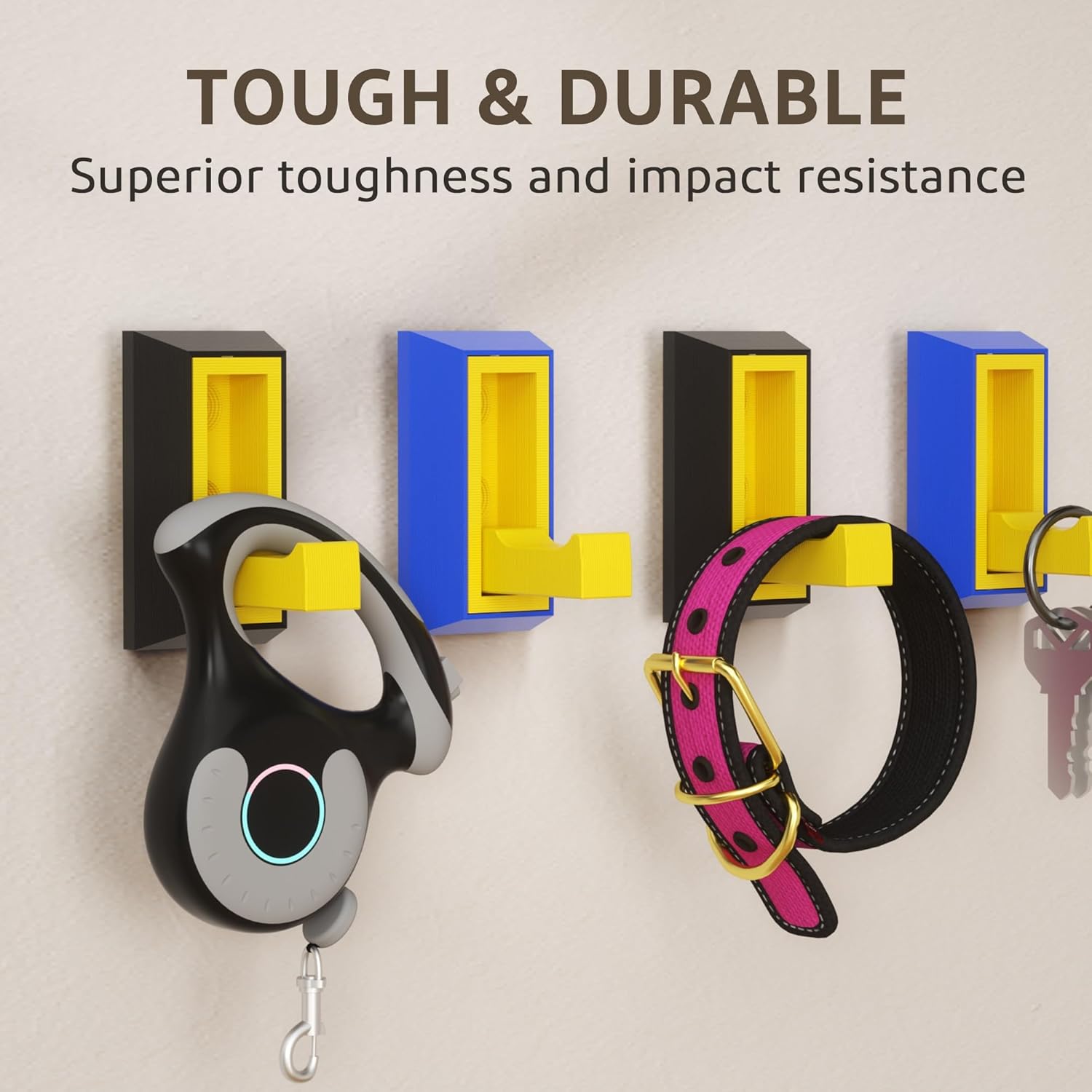
You’re also getting the typical PETG character: it’s described as offering toughness and good impact resistance, while still being “effortless” to print compared with fussier materials. In practical terms, PETG is a common go-to when you want prints that don’t feel fragile.
A small limitation to keep in mind: even though it’s less prone to warping than PLA “on paper”, fast printing can amplify the impact of poor cooling, wrong temperatures, or humidity issues. If your machine’s setup isn’t dialled in, you may find the real-world outcome is more mixed.
Key specs that matter for buying decisions
This Rapid PETG comes in 1.75mm diameter and the listing states dimensional accuracy of +/- 0.02mm. It’s designed for FDM 3D printers, including high-speed models.
It’s also explicitly aimed at parts that benefit from light diffusion. If you’re planning items like light-diffusing covers or anything where some light needs to pass through more clearly than a standard opaque plastic, PETG’s improved light transmittance is one of the reasons people choose it.
Where it shines (and where it may not)
It makes sense if you want: - Tougher, more durable everyday-use parts rather than purely aesthetic prints - Quicker production runs thanks to the up-to-600mm/s claim - Less warping and low shrinkage characteristics compared with PLA - A PETG approach for projects where light diffusion matters
It might not be the best choice if: - You’re specifically chasing the easiest, most forgiving filament experience for every machine in every scenario (PETG can be great, but it still rewards good settings) - You don’t have the habit of drying filament when needed (the listing asks you to dry it completely before reusing it) - Your priority is not speed or you mainly print very small detail parts where material choice is only one factor

Worth noting too: the listing says it fits both regular printers and high speed printers, and mentions examples like the Neptune 4 series, K1 series, Ender 3 series, Kobra series and the Adventure series. Still, “fits for most” doesn’t mean every setup will behave identically.
Quick guidance: getting the best results
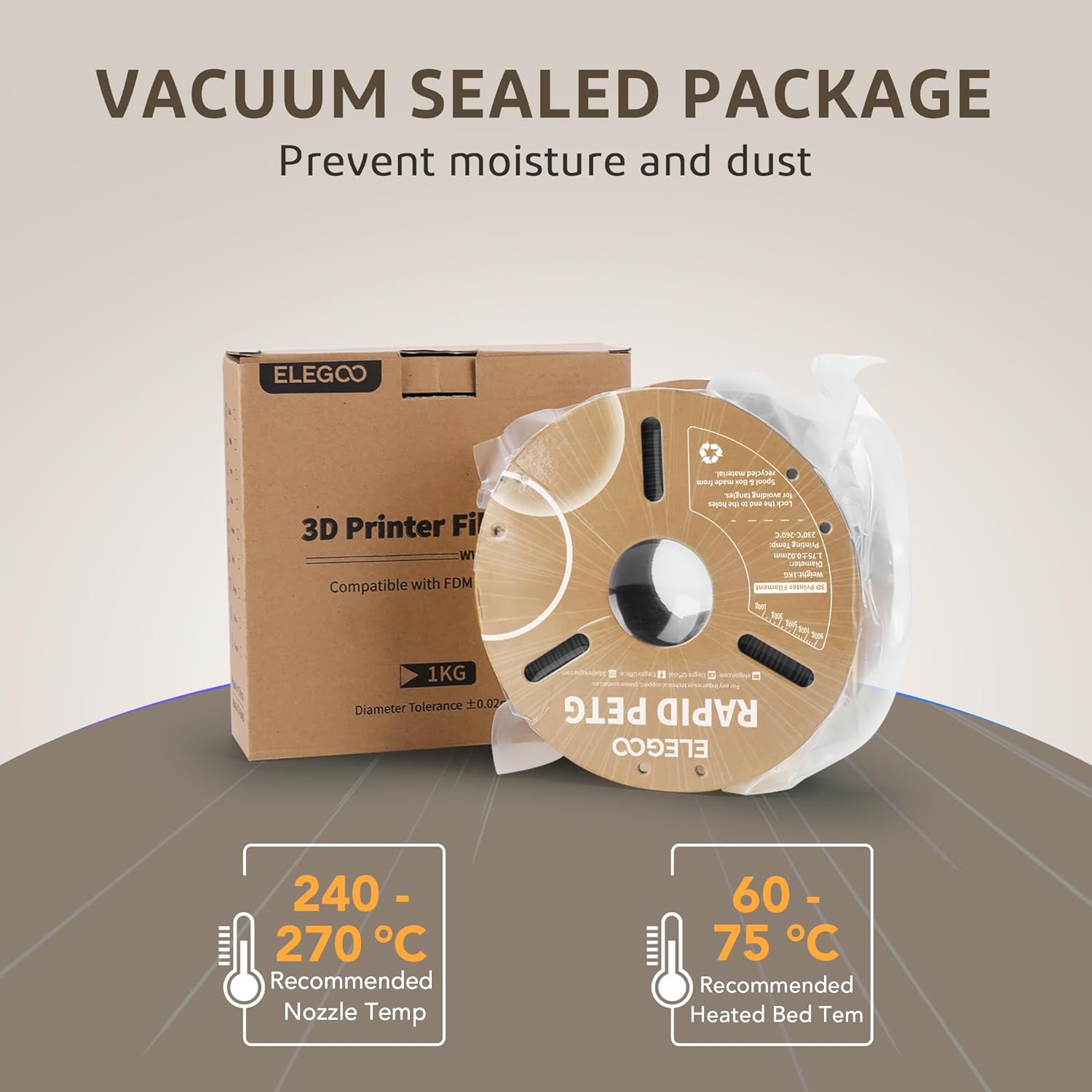
This is one of those filaments where handling matters. The listing advises using it as soon as possible after unpacking, and drying it completely before reusing it. If you live in a damp area, or you often leave filament exposed, that’s a point to take seriously.
For a practical first attempt, try this kind of approach: start with a PETG profile on your printer, set up your cooling and bed adhesion as you normally would for PETG, then run a small speed test (rather than jumping straight into full speed on a large model). If the part prints cleanly without obvious stringing or issues, you can gradually scale up.
Compatibility
It’s described as suitable for most FDM 3D printers, including both regular printers and high speed printers, and it specifically calls out high-speed models such as the Neptune 4 series, K1 series, Ender 3 series, Kobra series, and the Adventure series.
Final verdict
It’s a solid pick if you want PETG that leans into faster printing while still aiming for toughness, low shrinkage and reduced warping compared with PLA, plus decent light transmittance for diffusion-type parts. You’ll likely notice the “less tangling” benefit if you’ve dealt with messy spools before, and the cardboard spool format can be convenient if you store multiple materials.
You may want to skip it if you’re not planning to manage filament dryness, or if your printer setup isn’t ready to handle PETG and high-speed conditions. In general, it’s more “value for builders who want functional prints quickly” than “buy and forget” for every situation.
Mini FAQ
Is this suitable for high-speed 3D printers?
The listing states it fits both regular and high speed printers and mentions several high-speed series models.
Does it warp less than PLA?
It’s described as having less warping and low shrinkage compared to PLA.
Is it good for parts where light needs to pass through?
The listing says it has good light transmittance and is ideal for parts that involve light diffusion.
How should I handle it after opening?
It’s recommended to use it as soon as possible after unpacking, and to dry it completely before reusing it if needed.
Will it tangle during printing?
The filament is described as fully mechanically wound with strict manual inspection to help reduce tangles and snap issues.