

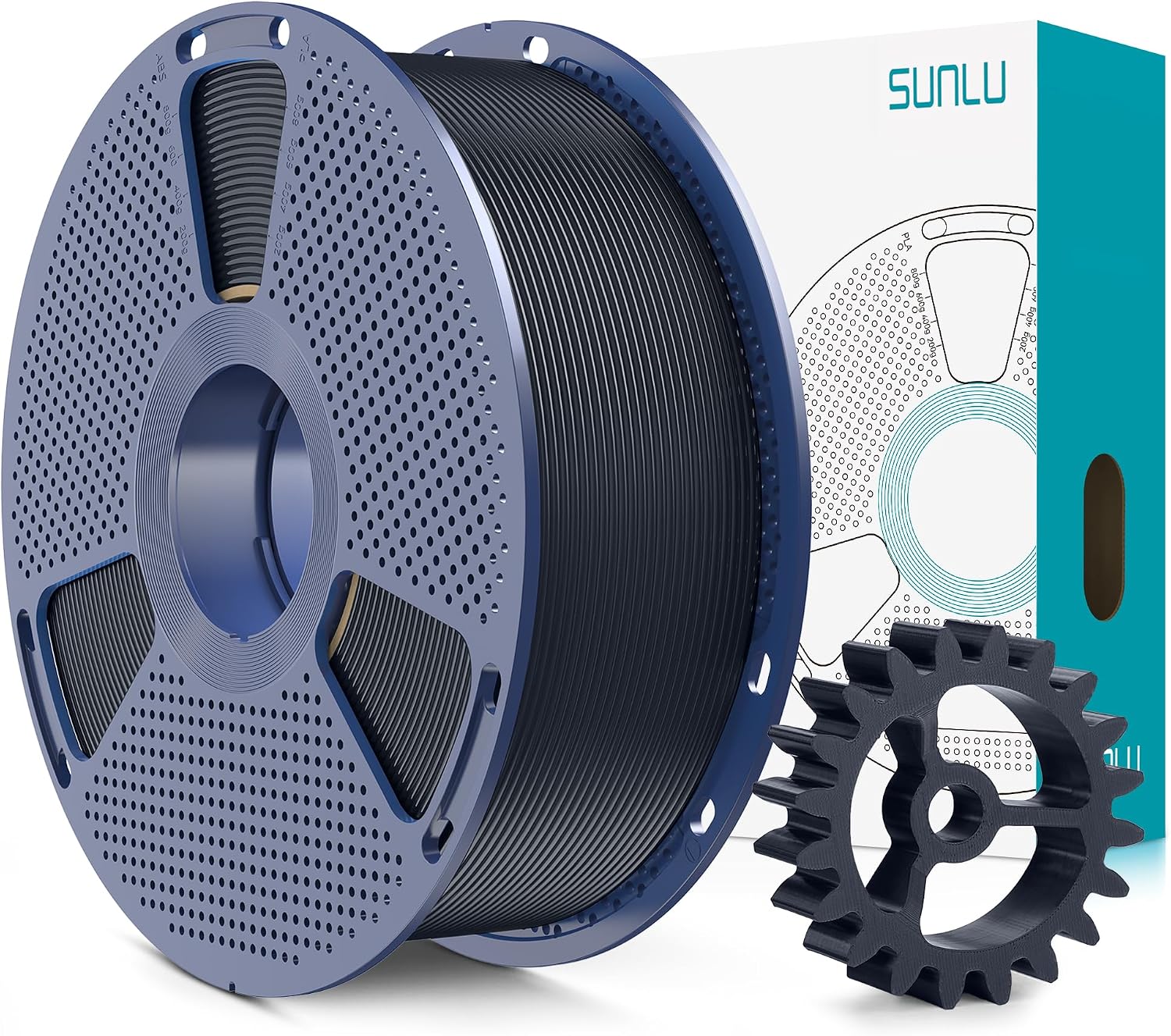
SUNLU PLA+ 2.0 Filament (1.75mm, Midnight Black) — 1kg spool with improved strength
Product description
What this filament is for
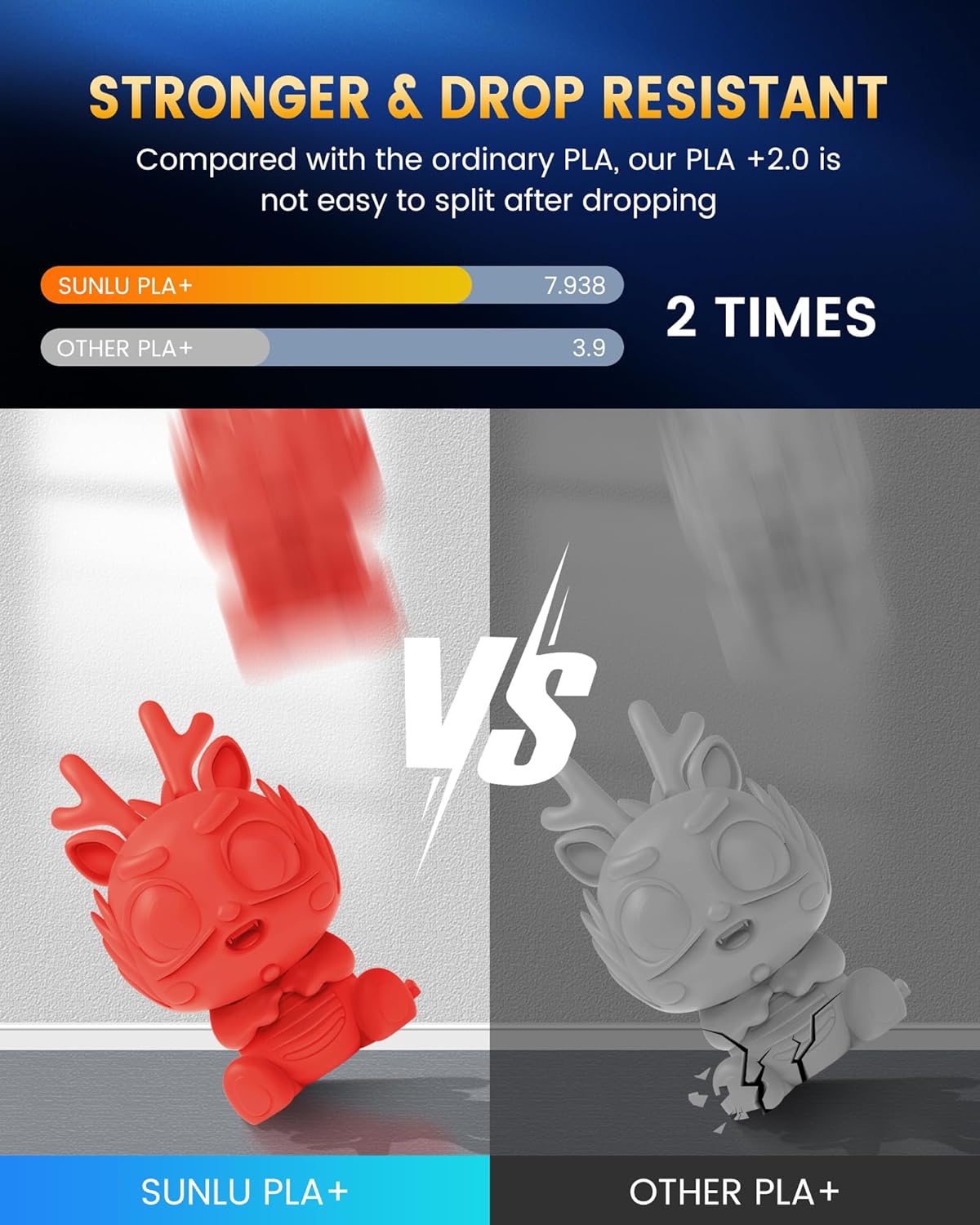
SUNLU PLA+ 2.0 is a 1.75mm FDM/FFF printer filament aimed at people who want something tougher than standard PLA+. On paper, that means fewer prints failing due to brittleness or cracking, with the added benefit of a smoother melt for consistent layers.
If you’re printing everyday functional parts, enclosures, brackets, or even detailed display models that need a bit more resilience, this type of “PLA+ but stronger” usually fits better than plain PLA. It’s also positioned as a relatively straightforward filament for both beginners and experienced makers, rather than a demanding material that needs lots of fiddling.
Key takeaways (what matters most)
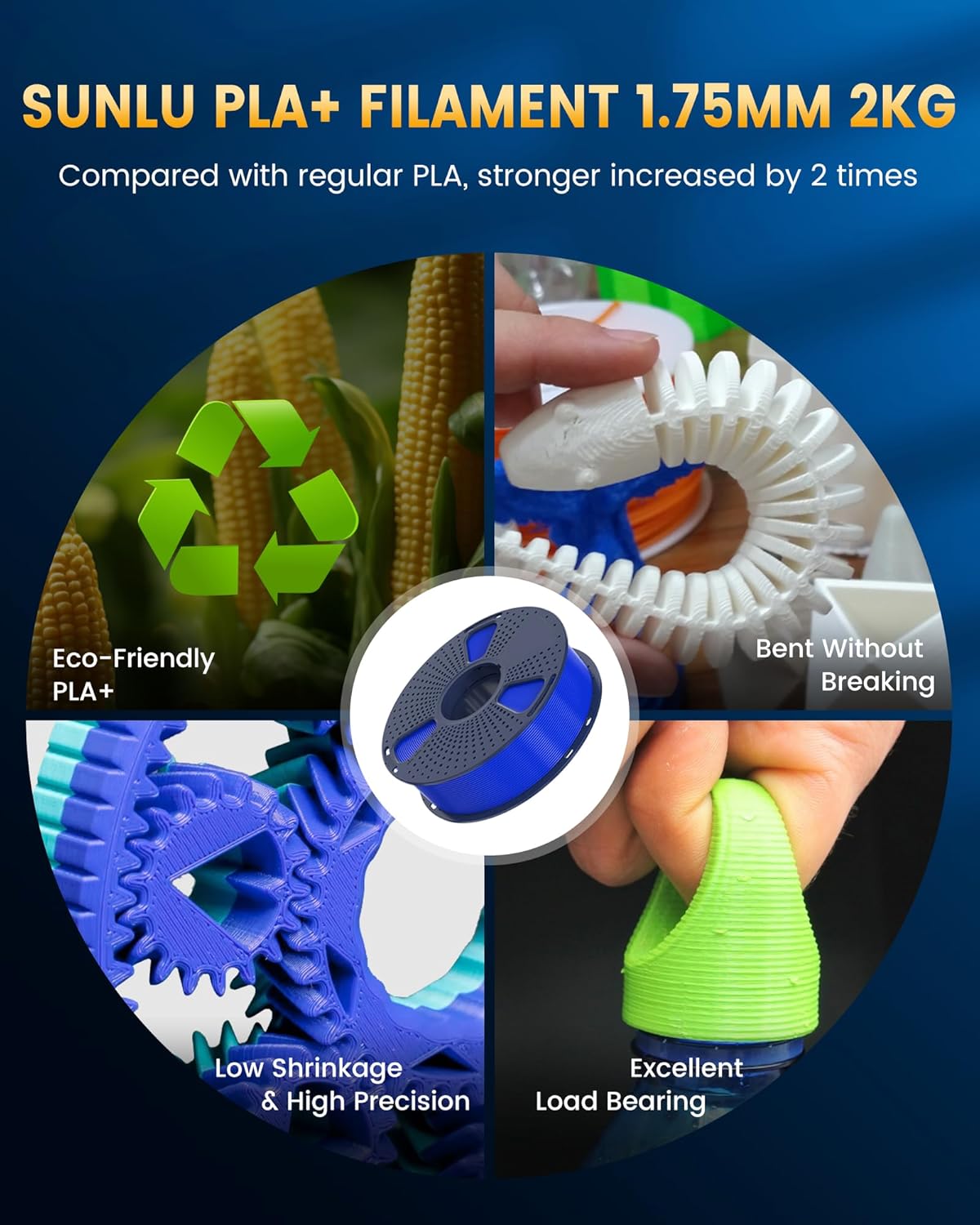
The biggest reason to consider SUNLU PLA+ 2.0 is the stated upgrade versus standard PLA+: more resistance to brittleness and cracking, which generally helps when parts get handled or need to survive minor stress. It’s also described as melting quickly and flowing smoothly, which supports faster printing.
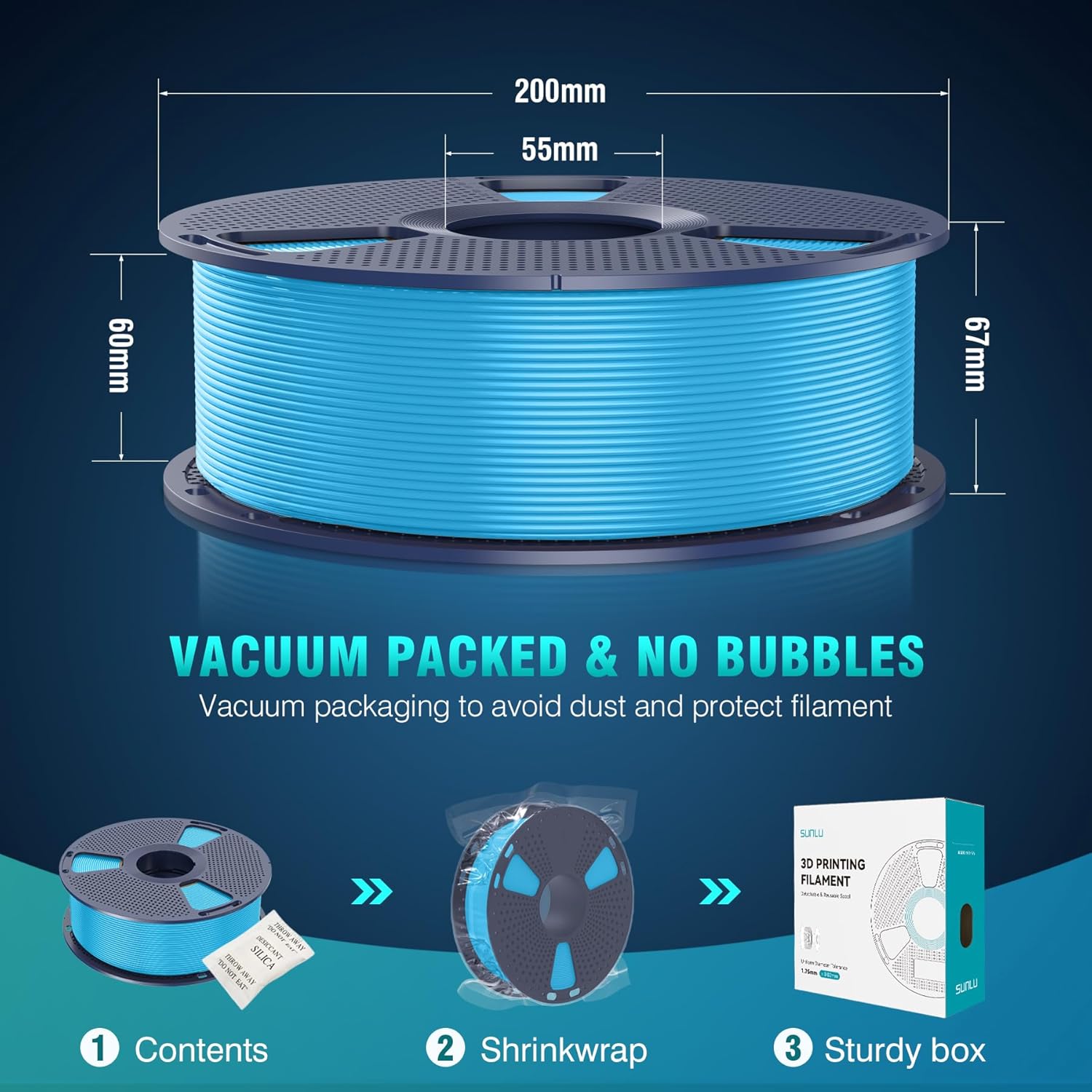
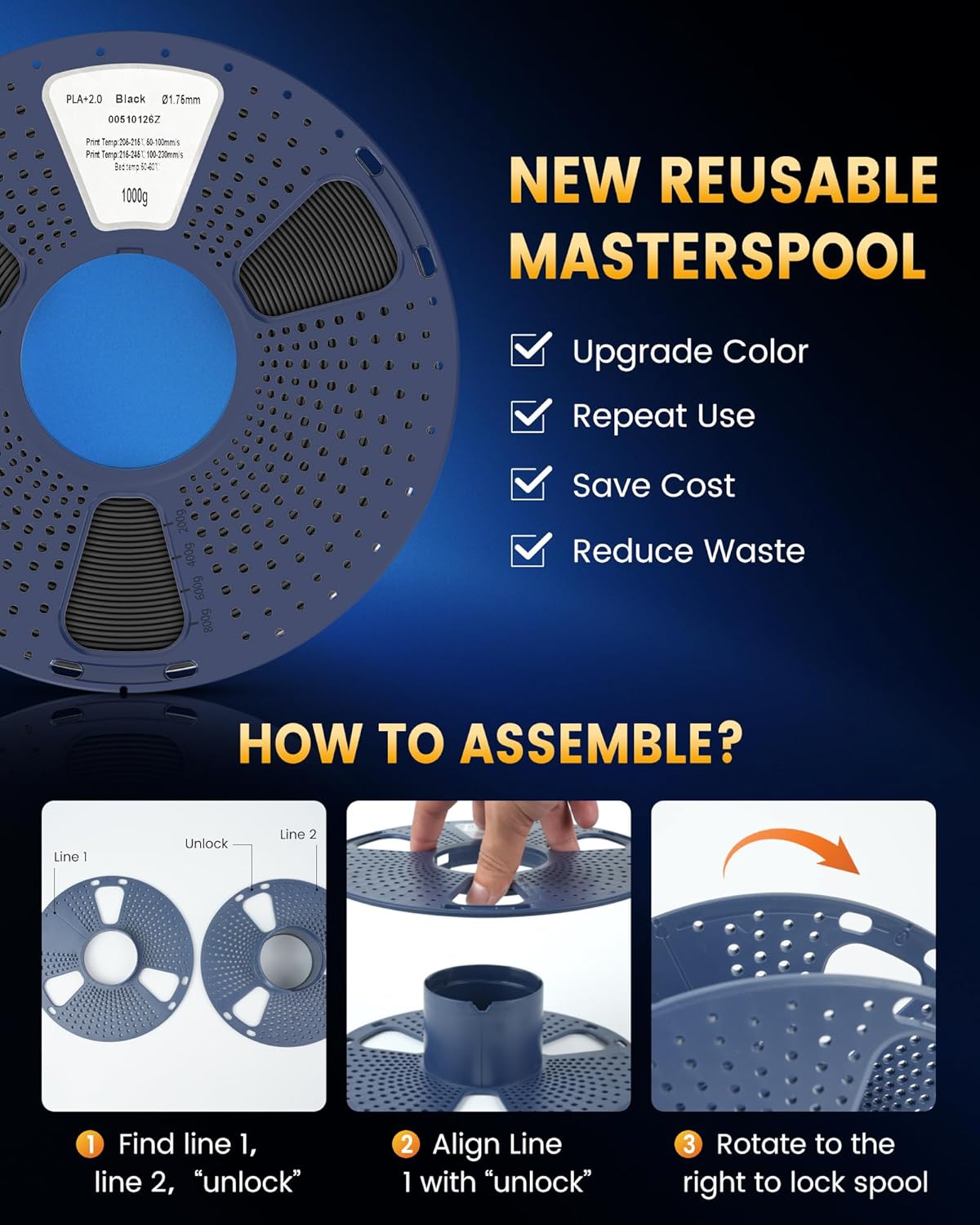
There’s a second practical detail that’s easy to overlook when you’re just choosing a colour: the filament is “neatly wound”. In normal use, that tends to reduce the chance of tangling and clogging compared with poorly wound spools—so your prints are more likely to behave from the start, not just after you’ve fixed the spool.
That said, no filament is magic. If your design relies on extreme toughness or high-heat performance, you may find PLA-family materials still have limits.
What you’ll notice in everyday printing
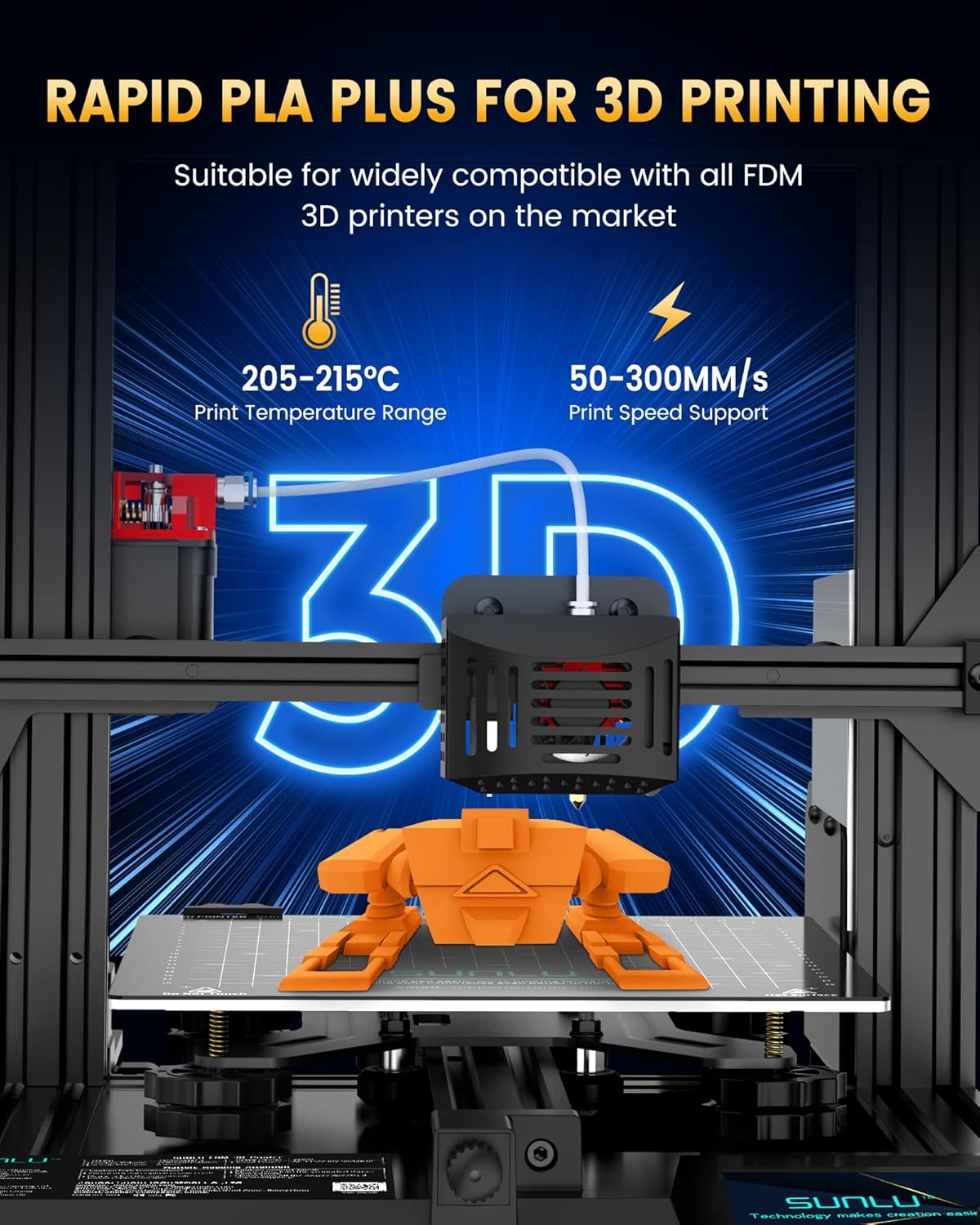
SUNLU claims improved flow and fast melting, with printing speeds up to 300mm/s. That’s useful if you’re trying to get projects done quicker—though you’ll still get the best results by using settings that match your printer and geometry.
Here’s a concrete example of when this kind of filament usually feels right: you print a small functional bracket in black, something that will be clipped into place during everyday use. Compared with brittle PLA, PLA+ 2.0 is intended to resist cracking, so small stress points are less likely to snap after a few moves.
If you’re the sort of person who likes to keep things consistent—same brand, same filament type, same spool handling—this “neatly wound” approach may be a comfort factor, especially when you’re printing for longer sessions.
Tech specs
- Name: SUNLU PLA+ 2.0 Filament
- Type: PLA+ 2.0 upgrade filament (FDM 3D printing)
- Format: Filament
- Size: 1.75mm
- Capacity: 1kg spool
- Colour: Midnight Black
- Dimensional accuracy: +/- 0.02mm
- Recommended nozzle temperature: 205-220°C
- Recommended bed temperature: 50-60°C
- Recommended print speed: 100-300mm/s
- Supports fast printing: up to 300mm/s (as stated)
- Material winding: neatly wound design to help avoid tangling/clogging
Compatibility and settings to check before you buy
This filament is described as compatible with nearly all 1.75mm FDM 3D printers, which covers most common FDM setups that accept 1.75mm filament. Still, it’s worth double-checking you’re actually running 1.75mm (not 2.85mm) and that your printer can hit the recommended temperature range.
The suggested starting settings—nozzle 205-220°C, bed 50-60°C, speed 100-300mm/s—are a good baseline. But keep in mind that speed isn’t just a number on paper, very fast speeds can be unforgiving on fine detail or small parts depending on your hotend and cooling.
If you prioritise smooth results and low hassle, start around the middle of the recommended temperature and speed ranges. If you’re chasing throughput, you can experiment towards the higher end, but expect to tune.
Pros and cons in plain terms
What stands out: - Designed to be more resistant to brittleness and cracking than standard PLA+. - Neatly wound to help reduce tangling and clogging during printing. - Tight dimensional accuracy of +/- 0.02mm (helpful for predictable prints). - Speeds up to 300mm/s are claimed, suggesting it’s built for faster jobs.
Where it may not suit perfectly: - It’s still PLA-based, so it may not match the performance you’d expect from tougher industrial alternatives if your use case is very demanding. - The “easy” label can be printer-dependent, if your machine runs hot/cold or has airflow issues, you may still need calibration.
Should you buy it?
It makes sense if you want a 1.75mm PLA+ filament that leans into durability—something that should handle everyday stress better than standard PLA+—while also being practical to run, with suggested temperatures and a speed range that can support faster printing.
You may want to skip it if your project specifically needs extreme toughness beyond what PLA-family materials can offer, or if you’re already set on a different material type that better matches high-heat or high-impact requirements.
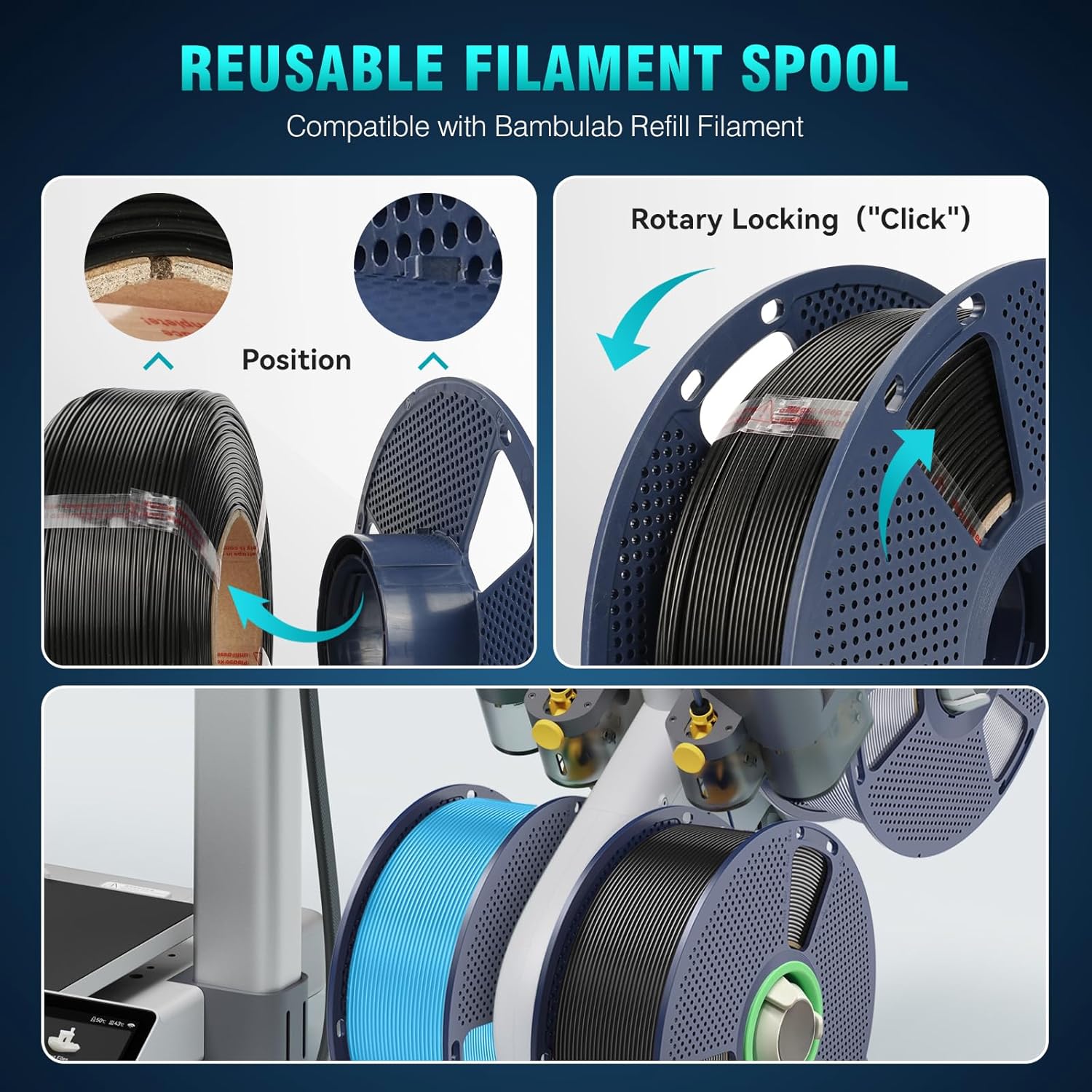
Worth considering if you print functional parts, higher-precision models, or decorative items that benefit from improved resistance to cracking, and you appreciate having a filament spool design that aims to reduce tangles.
Mini FAQ
FAQ
Is this filament only for advanced users? The description frames it as reliable and user-friendly for beginners and experienced users, so it’s not presented as a complex specialist material.
What nozzle and bed temperature should I start with? A recommended starting range is nozzle 205-220°C and bed 50-60°C, adjusting based on your printer and print quality targets.
Will it work with my 1.75mm FDM printer? It’s described as compatible with nearly all 1.75mm FDM 3D printers, so if your printer takes 1.75mm filament, it should be a sensible fit.
Does the “neatly wound” design actually help? It’s specifically intended to reduce tangling and clogging during printing, which can matter a lot if you’ve had messy spool issues in the past.
How fast can I realistically print? The stated maximum is up to 300mm/s, but the recommended speed range is 100-300mm/s—so start lower for reliability, then increase once you see stable results.