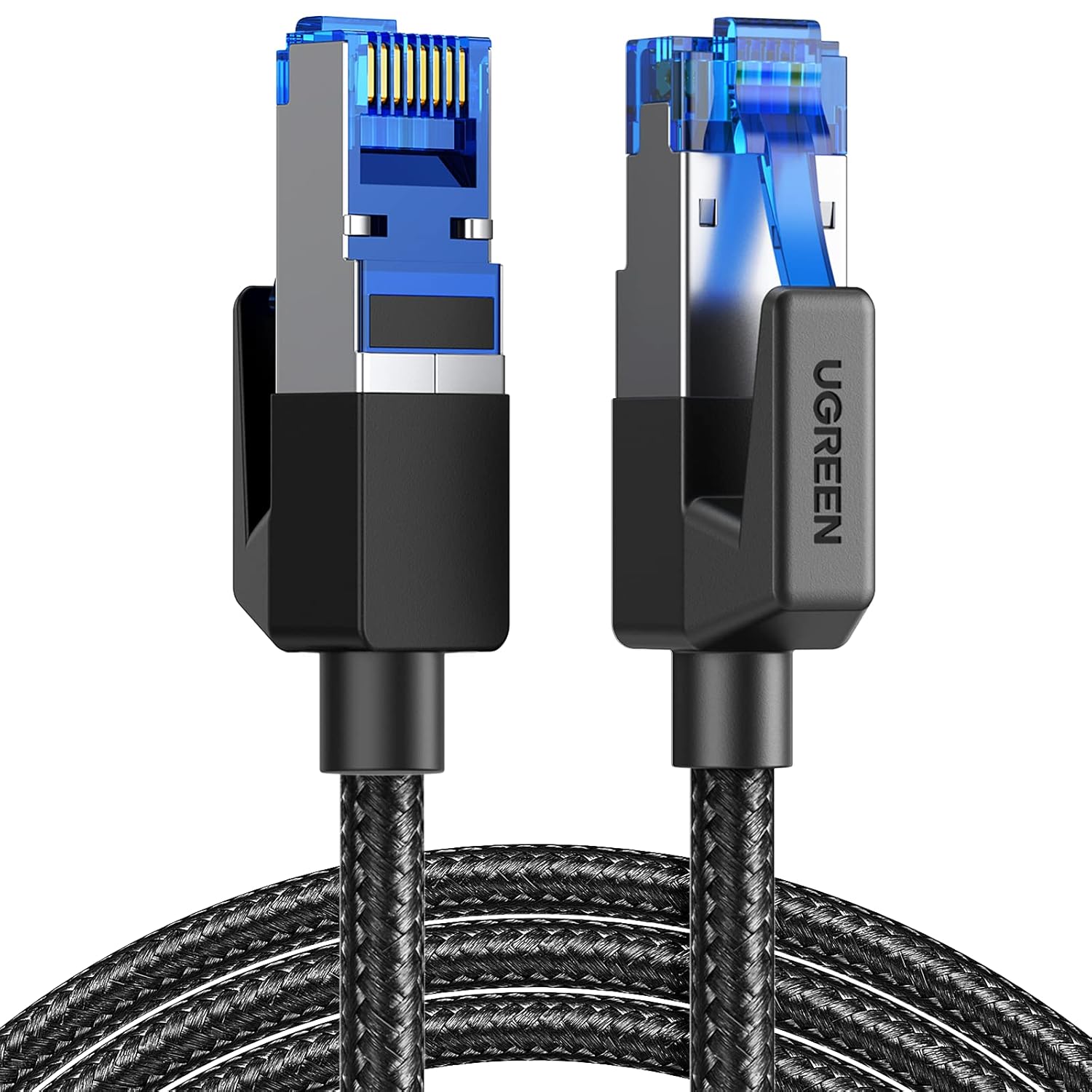
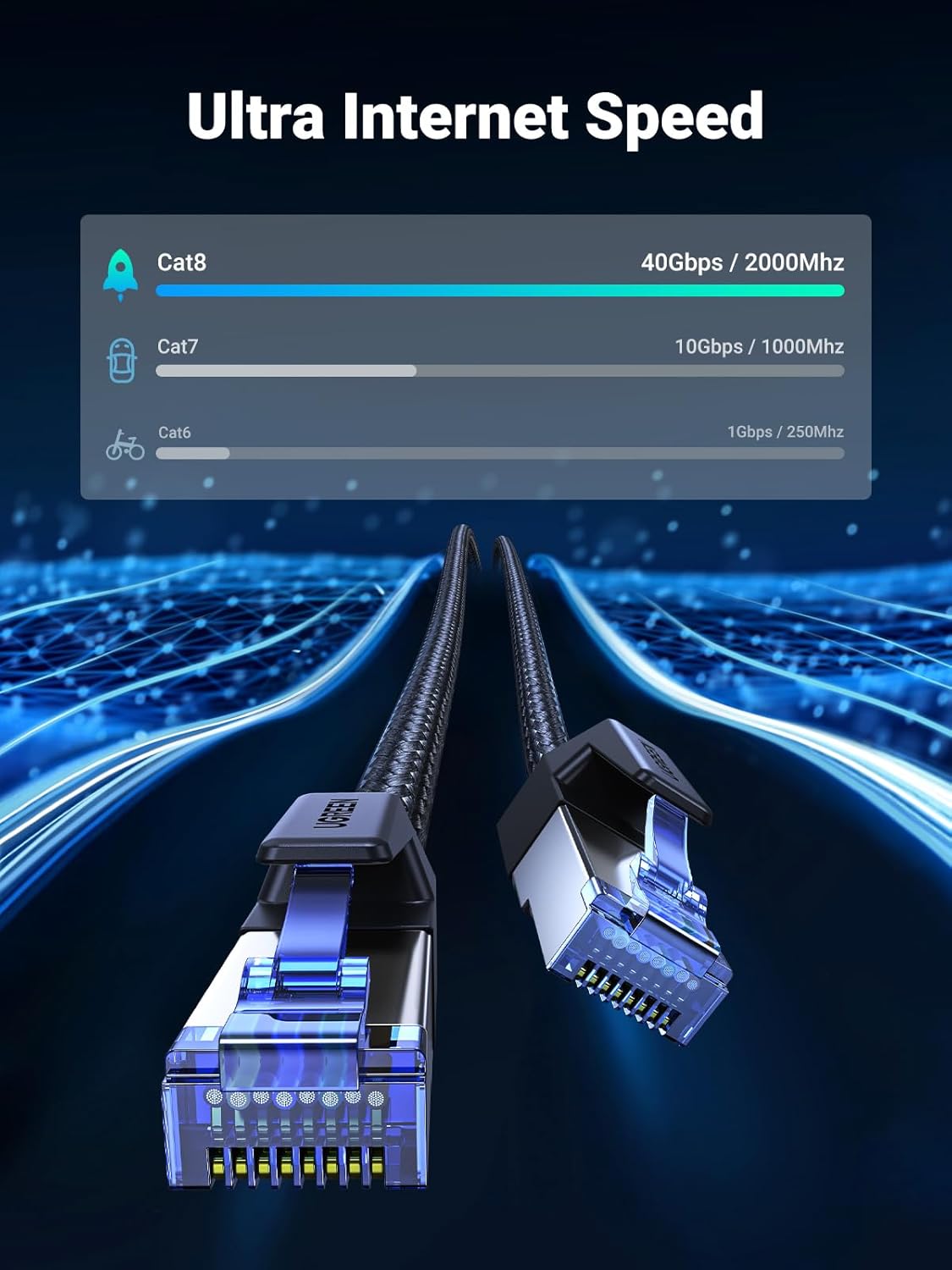
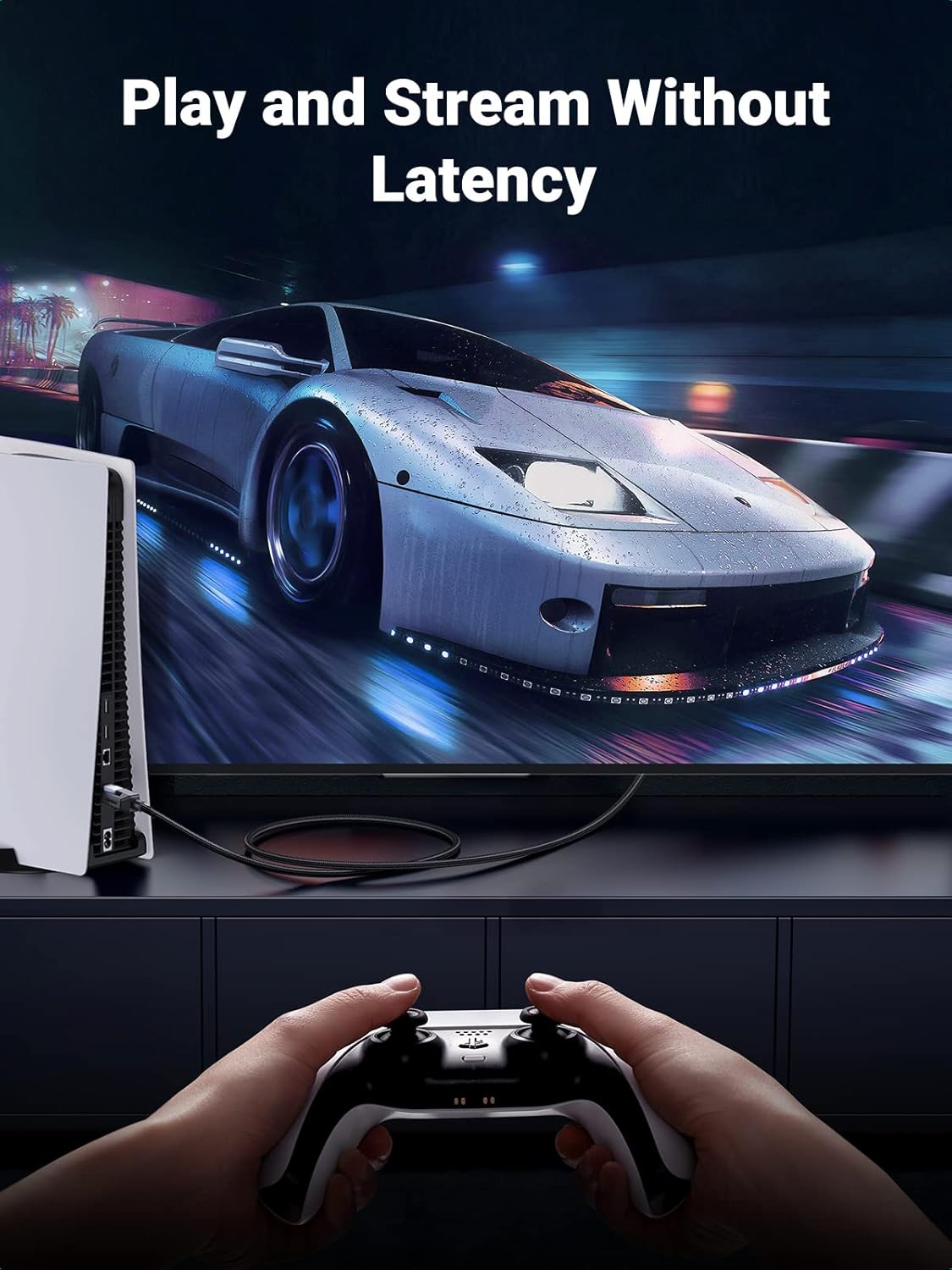
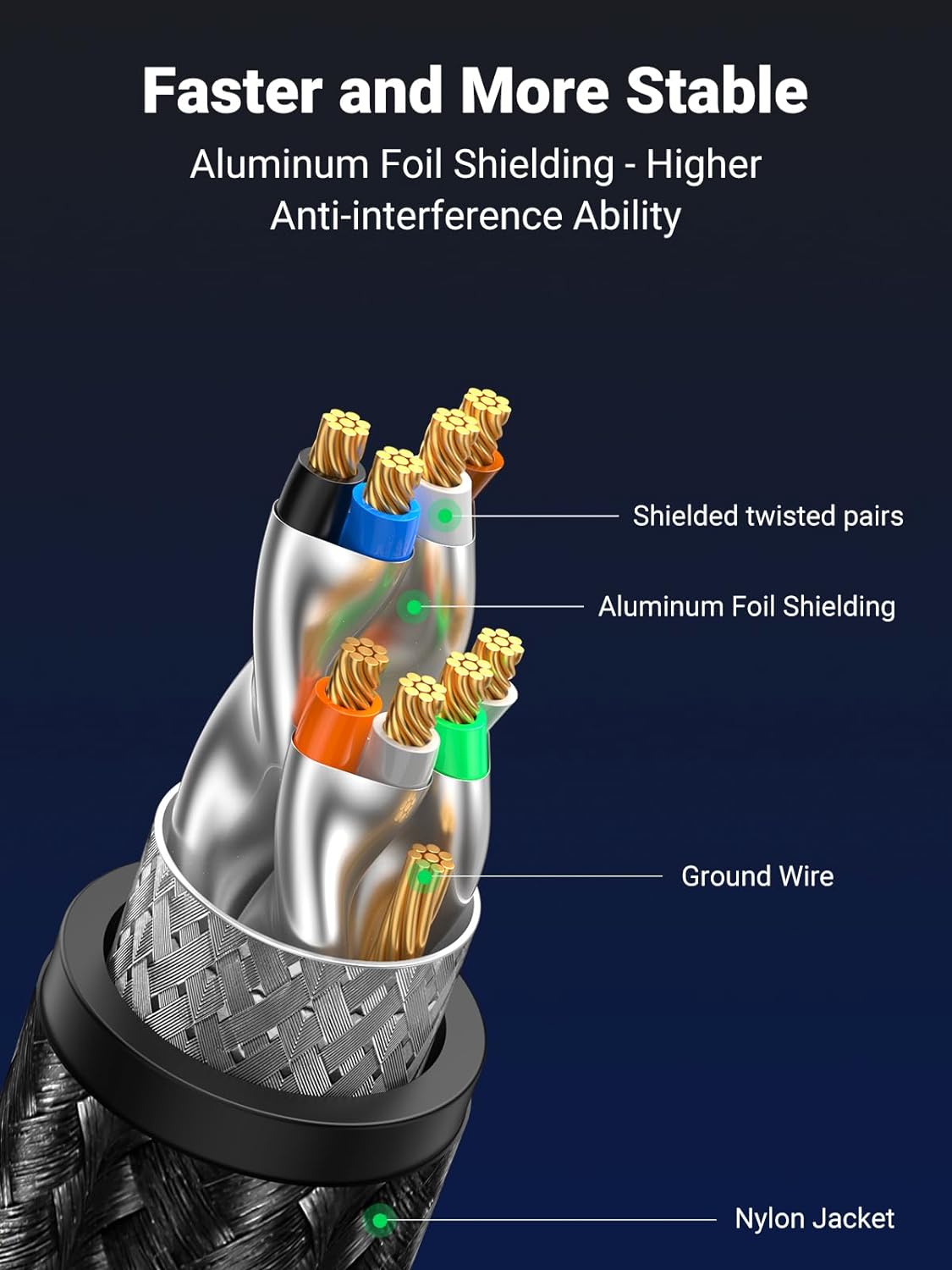
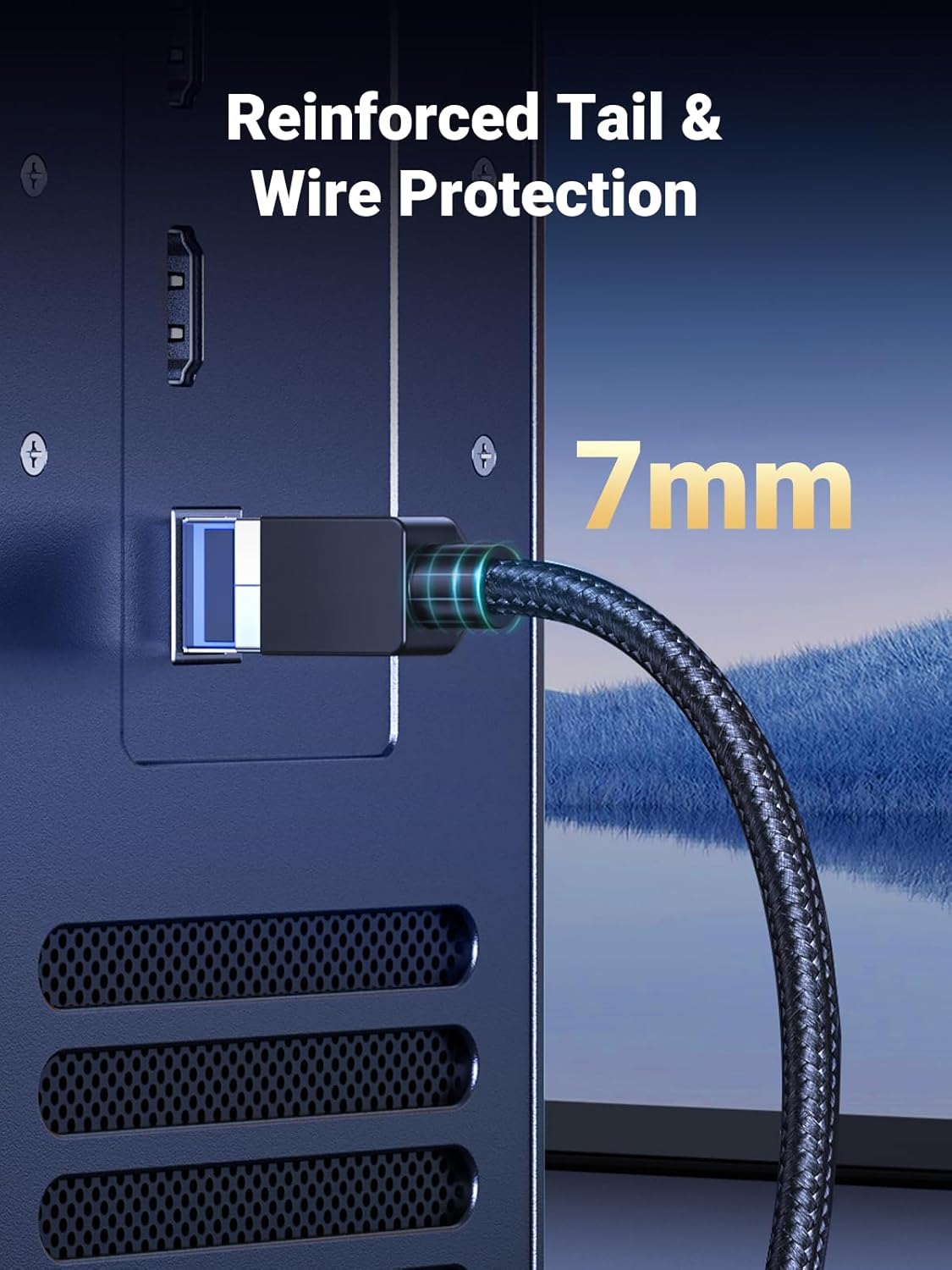
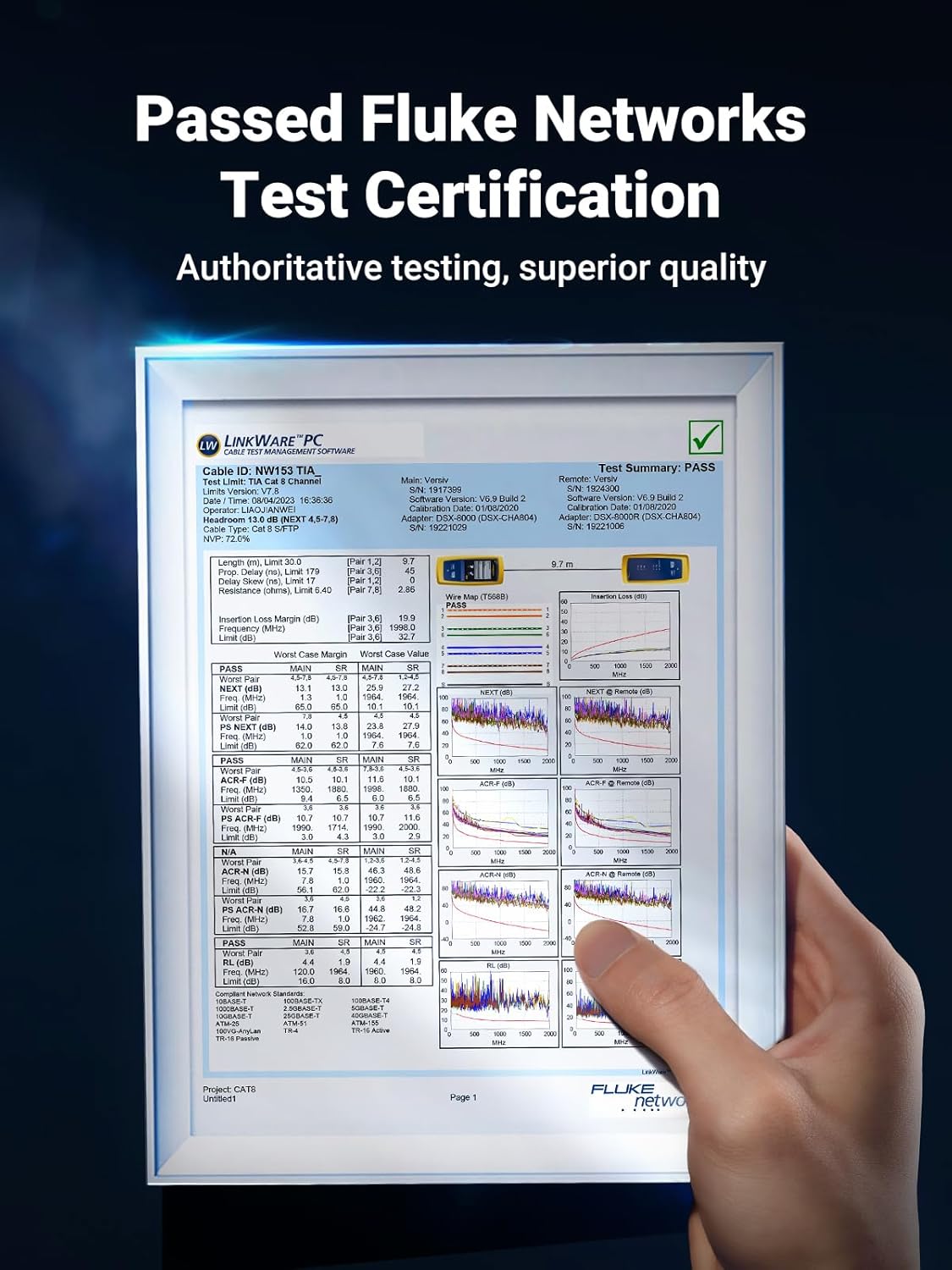
What it is and who it’s for\nThis is a Cat 8 Ethernet cable built for high-speed home networks and gaming rigs. If you’ve felt bottlenecks during online play, streaming, or large file transfers, this cable is positioned to reduce interference and stabilize connections. It’s designed for indoor use with a durable braided exterior, making it appealing for desks with tight cable management and setups that see frequent movement. Consider it if you want a single, long-lasting backbone for a gaming PC, consoles, modem, or router.\n\n## Key features and why they matter\nOn paper, the standout claims are 40 Gbps maximum data transfer and 2000 MHz bandwidth. In practical terms, that’s aimed at minimizing latency under load and ensuring smoother streams and faster uploads/downloads when your network supports parallel high-speed activity. The build uses four shielded foiled twisted pairs (F/FTP) with a copper core and a gold-plated RJ45 connector to reduce cross-talk and electromagnetic interference. If you’re upgrading from Cat5e or Cat6, you’re paying for a higher-capacity path that can better preserve signal integrity on busy networks.\n\n## Durability and build quality\nThe cable is wrapped in a cotton braided sleeve, which tends to resist kinks and wear better than plain rubber jackets. The manufacturer notes a robust bend tolerance, claiming it can bend thousands of times without breaking. That’s relevant in desks with limited space or where cables get moved around. However, real-world performance also depends on how you route it and the quality of your network gear.\n\n## PoE and compatibility\nAll lengths support PoE power delivery except the 65 ft option. If you’re wiring a PoE camera or a device that draws power over Ethernet, this is a meaningful time-saver since you may avoid extra power adapters. Compatibility is broad: it uses a standard RJ45 connector and is backward compatible with Cat7, Cat6e, Cat6, and Cat5e. This makes it a reasonable choice if you’re mixing gear across generations or want one cable that covers multiple devices.\n\n## What it does well (and where it may fall short)\n- It’s strong on signal integrity in busy networks thanks to shielded construction and copper core.\n- The braided exterior is nice for durability and neat desk aesthetics, which matters if you value organization.\n- For pure gaming, you may see marginal gains if your current path already saturates your available uplink/downlink. If your router or modem can’t push 40 Gbps, the gains won’t be “game-changing,” but you may still appreciate lower latency and steadier throughput.\n- It isn’t a magic fix for all slow networks, the actual speed depends on the rest of your setup. If your internet plan or network hardware is the bottleneck, you might not feel dramatic differences.\n\n## Practical use cases\nIdeal for a dedicated gaming PC under a crowded desk, a PS5/Xbox setup where a stable wired connection matters, or a high-traffic home office where multiple devices stream or transfer large files simultaneously. If you frequently rearrange a room or travel with equipment, the durability and bend tolerance can pay off in the long run.\n\n## Before you buy: considerations\n- Check your router and switch capabilities to ensure you’ll actually leverage 40 Gbps and 2000 MHz bandwidth.\n- If your length needs aren’t close to 10 ft, consider if a shorter or longer length better fits your space.\n- PoE support is excellent for fewer power bricks, but the 65 ft option excludes PoE, so plan accordingly.\n- While backward compatible, remember that newer Cat8 cables won’t magically upgrade devices that don’t support high-speed Ethernet.\n\n## Comparison in context\nIf you’re weighing options, this cable sits between sturdy, long-term wired upgrades and setup-specific cables. For a gamer or creator with a high-throughput local network, it’s a sensible step up from Cat6a or Cat7 in terms of shielding and potential throughput, though you’ll maximize value when your network path supports high-speed data movement. For casual browsing or standard streaming on modest hardware, a lower-category cable might suffice.\n\n## FAQ (brief)\n- Is Cat8 backward compatible with older networks? Yes, with backward compatibility to Cat7/6/5e, but you’ll only see higher speeds if other components support them.\n- Does it come with anything in the box besides the cable? The available data focuses on the cable itself, no additional accessories are listed.\n- Can I use this with a PoE camera? Yes, except on the 65 ft length where PoE is not supported.\n\n## Final decision\nIs it worth it? It makes sense if you’re building or upgrading a high-speed wired network and want durability alongside maximal bandwidth headroom. It’s a solid pick for gamers and power users who prioritize stability over cost, and who can leverage PoE-ready setups. If your current gear doesn’t support ultra-high speeds, the benefit may be more modest, and you might opt for a Cat6a or Cat7 depending on price and availability.