

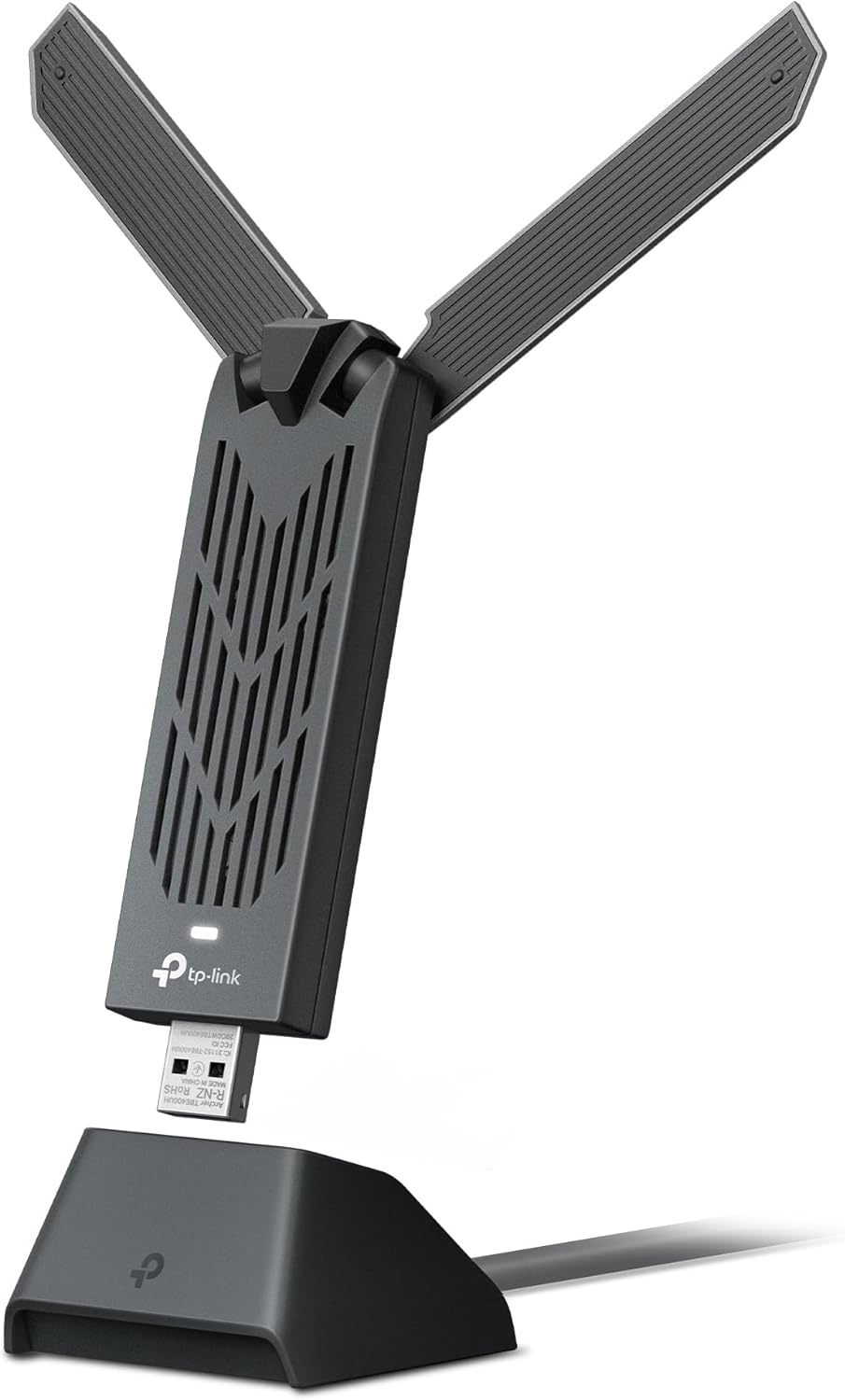
TP-Link BE6200 Wi‑Fi 7 USB Adapter 160MHz
Reviews
Price
Product description
This USB wireless adapter brings Wi‑Fi 7 speeds to desktop PCs, unlocking the 6 GHz band for higher throughput and lower latency when paired with a tri‑band Wi‑Fi 7 router. It is aimed at users who need faster downloads, smoother 4K/8K streaming and more responsive online gaming on Windows 11 or 10 PCs.
Key Points
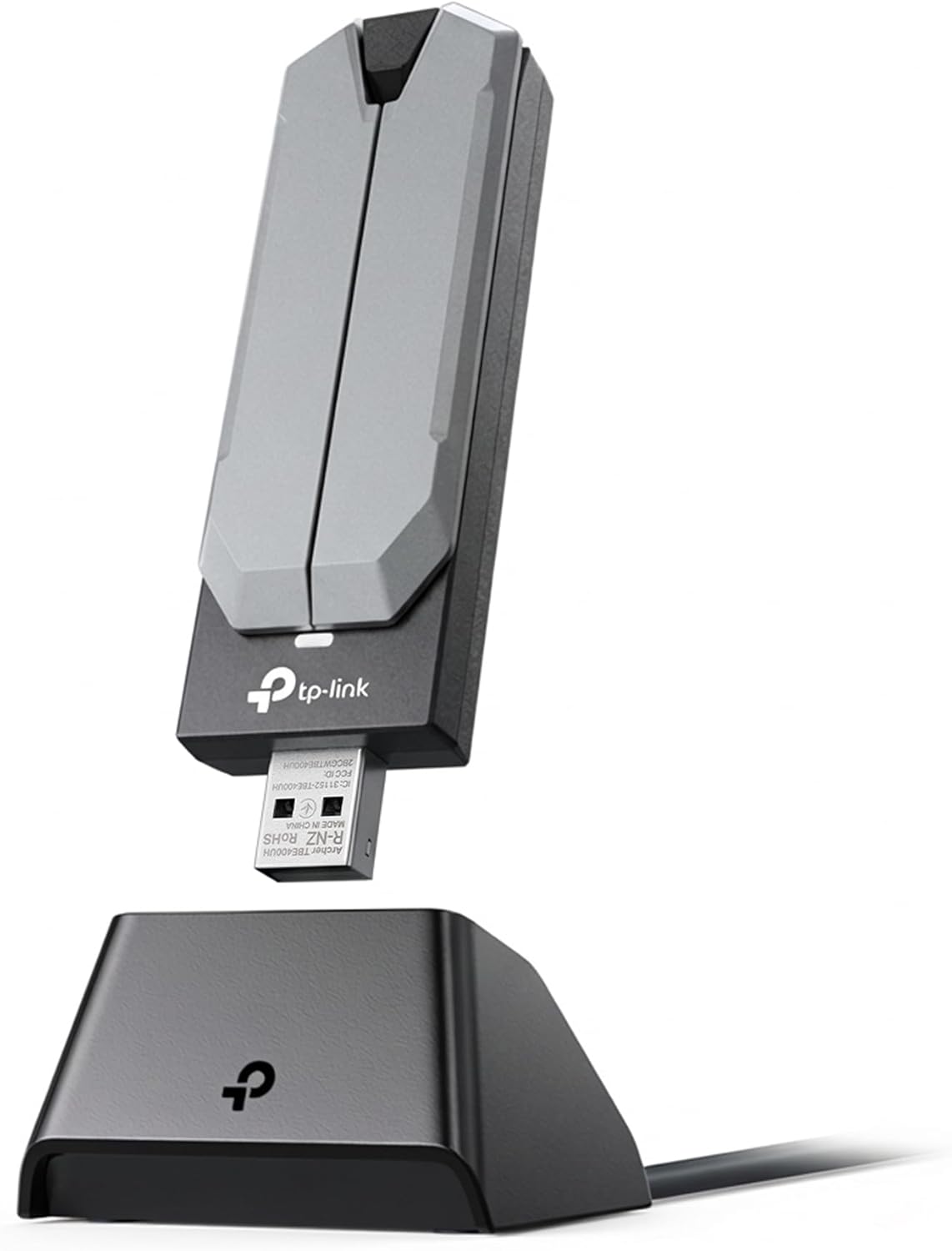
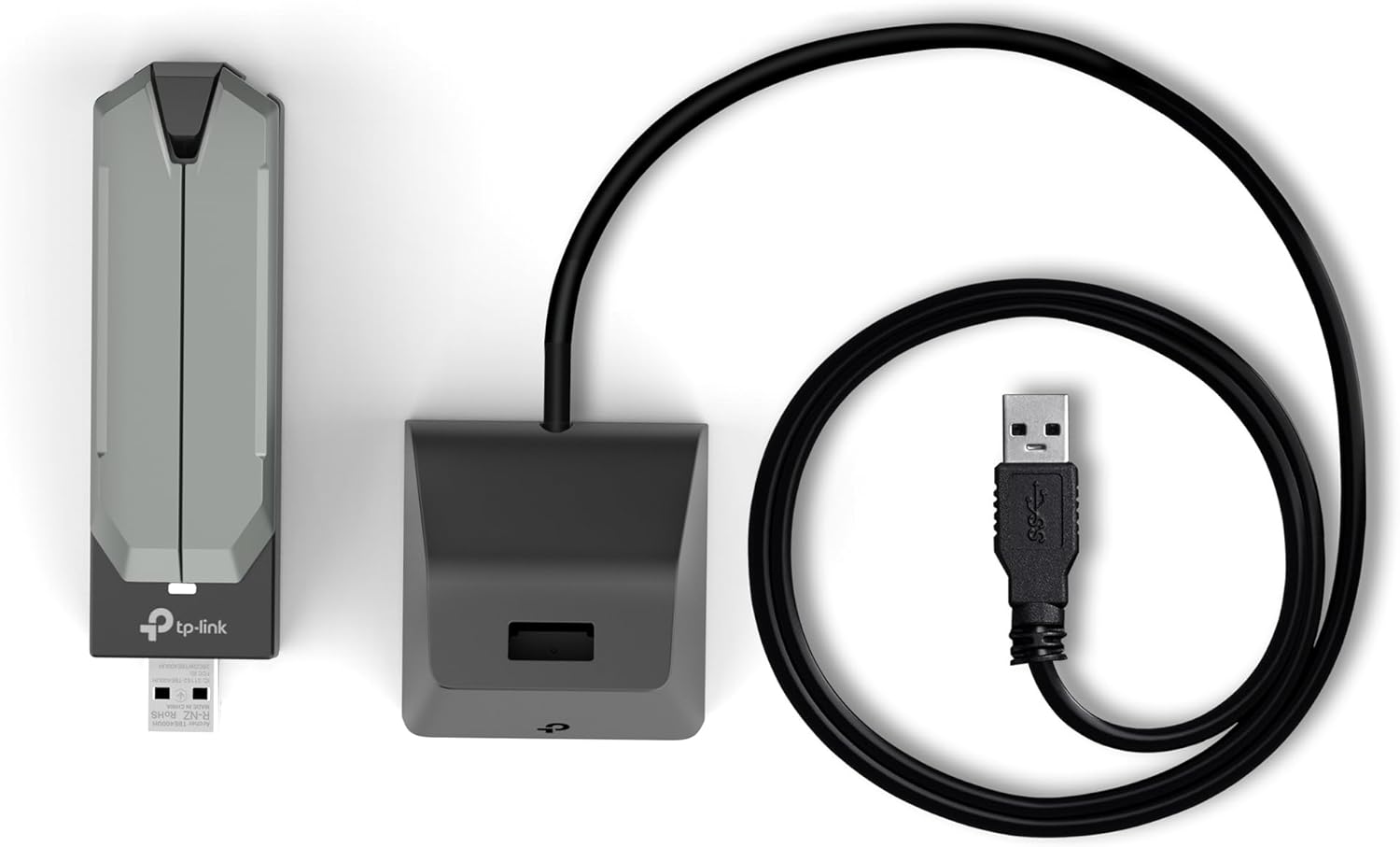
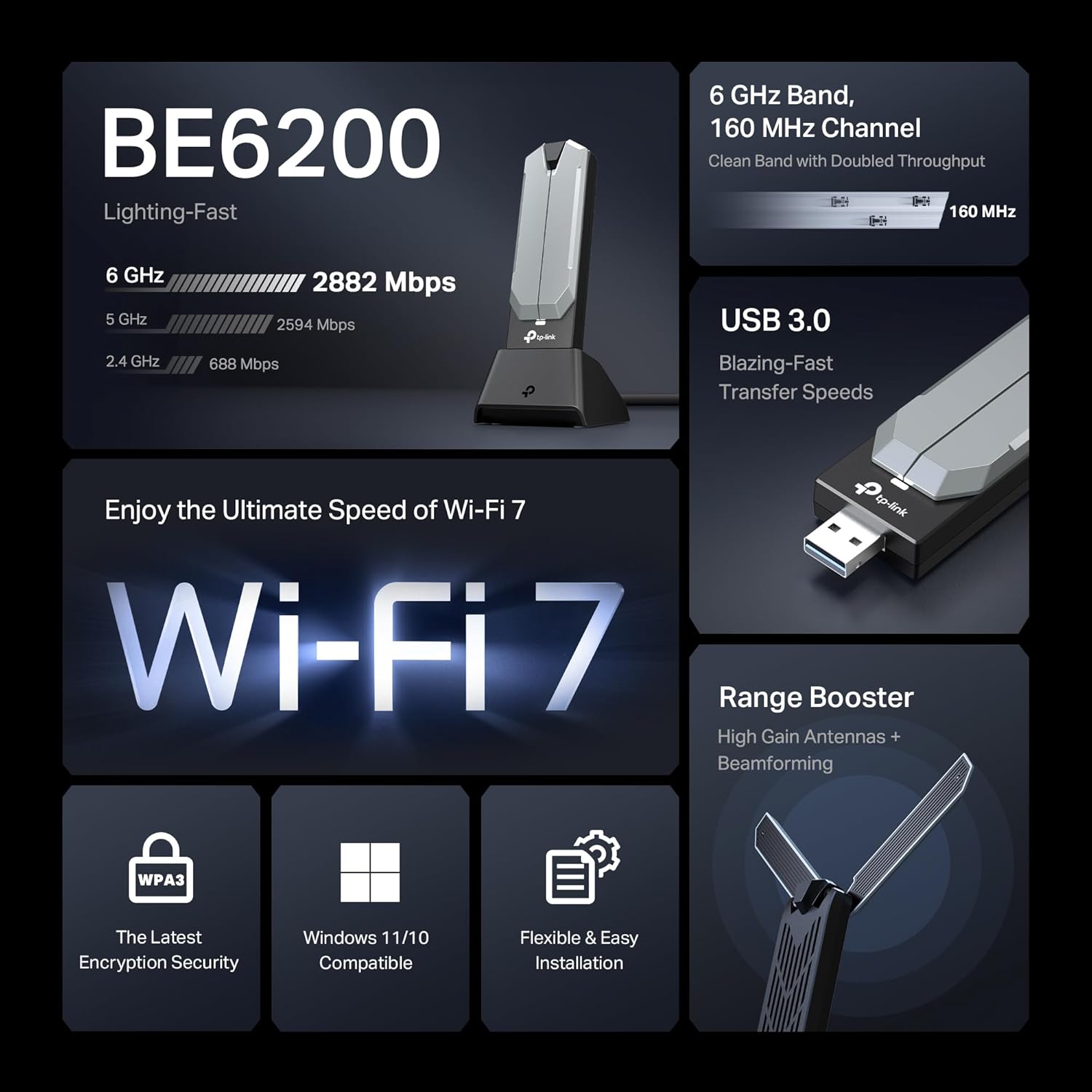
The adapter supports tri‑band Wi‑Fi 7 performance including 6 GHz operation with 160 MHz channels and 4K‑QAM, which can increase raw throughput for compatible routers and networks. Two high‑gain external antennas and a detachable desktop base with a 4 foot cable help position the antenna for better reception and improved range. According to the manufacturer, the device ships with a preloaded driver for an easier plug‑and‑play setup on Windows 11 and Windows 10. Security is emphasized, with support for WPA3 and development aligned to the CISA Secure by Design initiative.
Technical Specifications
- Name: TP‑Link Archer TBE401UH (BE6200)
- Bands: - 6 GHz, 5 GHz, 2.4 GHz
- Peak speeds (manufacturer): - 6 GHz: 2,882 Mbps, 5 GHz: 2,594 Mbps, 2.4 GHz: 688 Mbps
- USB interface: - USB 3.0 with backward compatibility to USB 2.0
- Antennas: - 2 x high gain external antennas with detachable base and 4 ft cable
Usage Recommendations
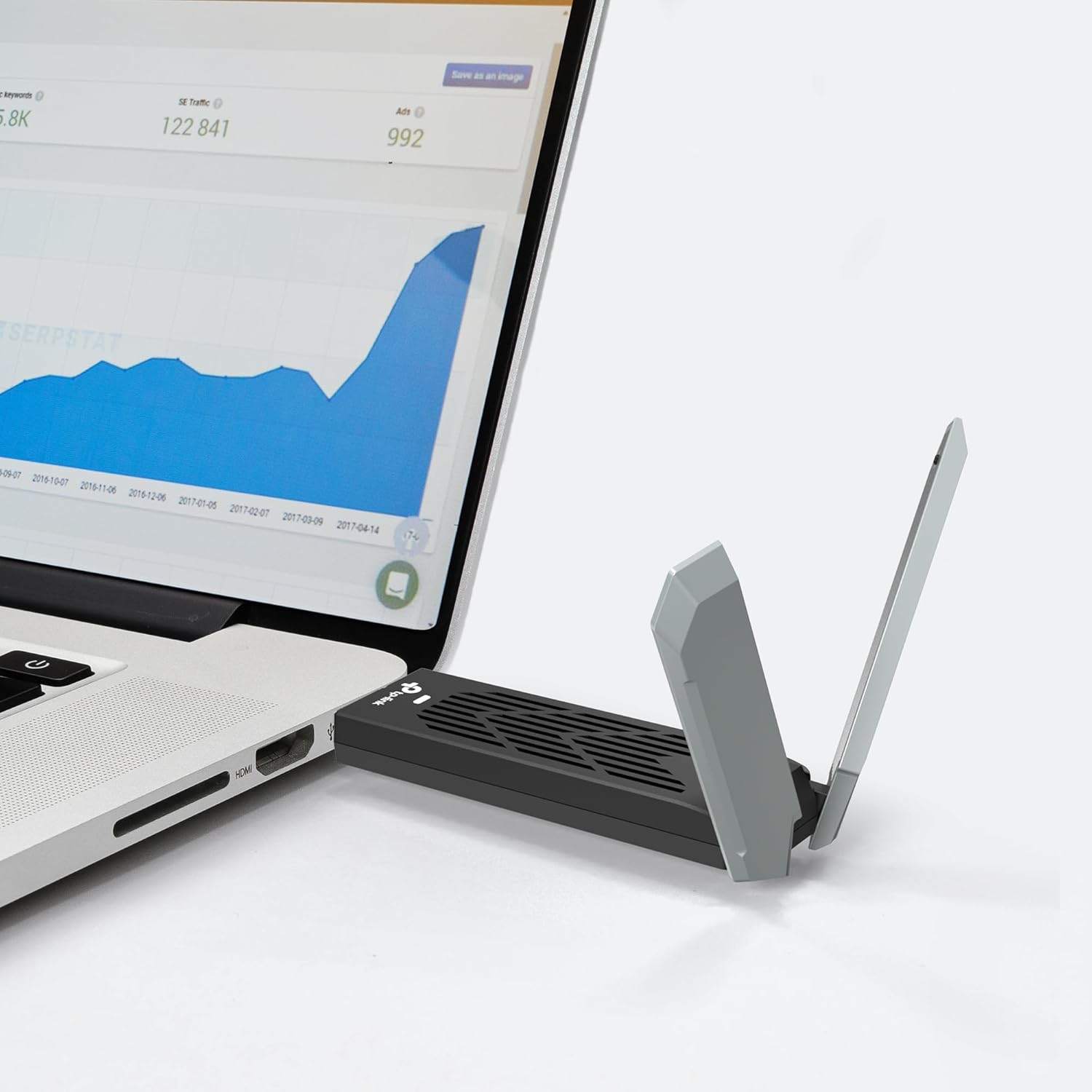
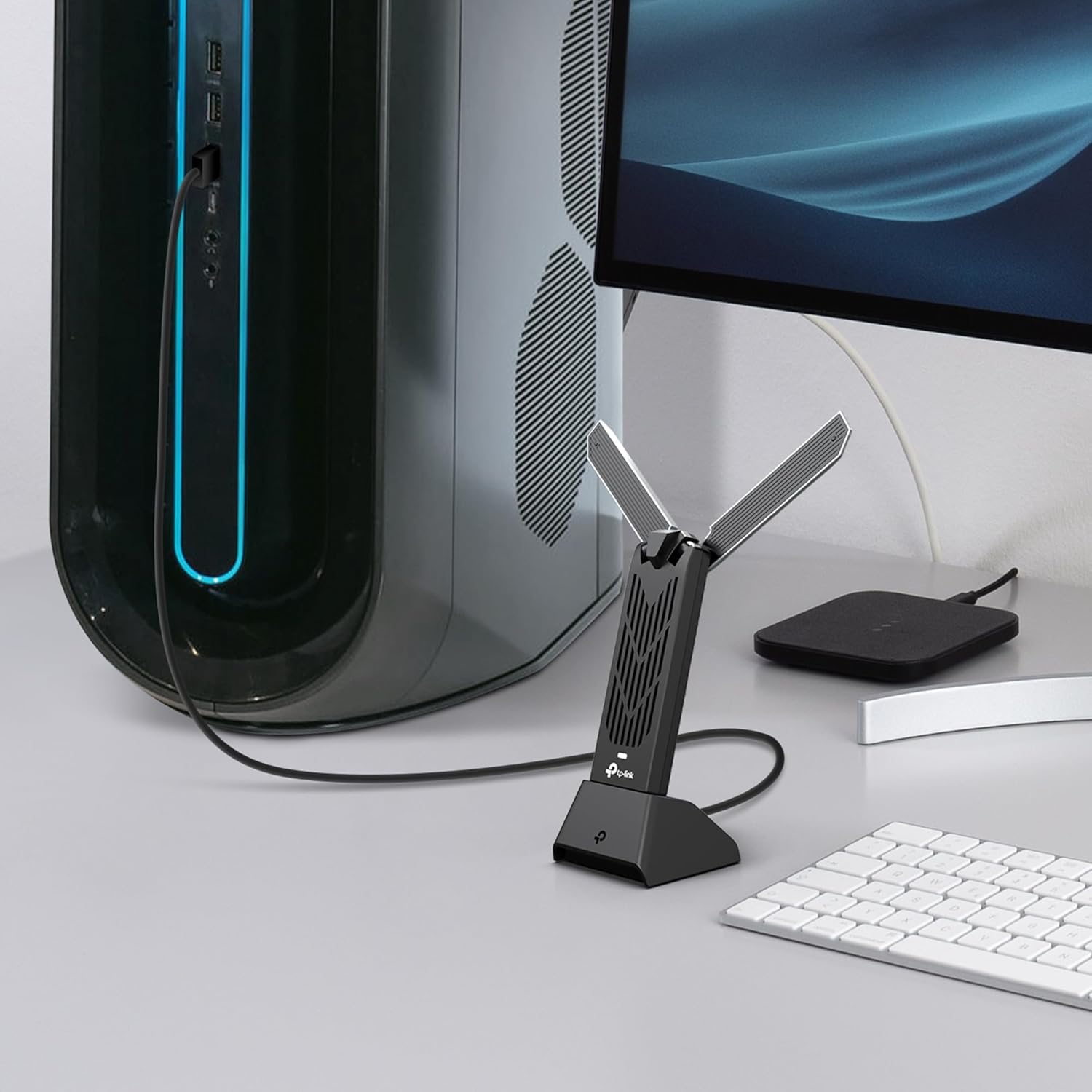
Place the detachable antenna base where it has a clear line of sight toward your router to take advantage of beamforming and the extended range those antennas provide. When using the 6 GHz band, ensure your router and local regulations support 6 GHz operation and 160 MHz channels, as real‑world speeds depend on router capability and network congestion. For best results in crowded networks, enable OFDMA and MU‑MIMO features on the router to allow multiple devices to share bandwidth more efficiently, reducing latency during simultaneous use.
Positive Aspects
The adapter offers a clear upgrade path for desktops that lack built‑in Wi‑Fi 7 support, delivering higher theoretical throughput and modern security with WPA3. It improves USB data transfer compared to USB 2.0 by using USB 3.0, which helps sustain the higher wireless rates. A minor limitation to note is that top speeds require a compatible Wi‑Fi 7 tri‑band router and favorable network conditions, so actual performance will vary according to environment and equipment.