

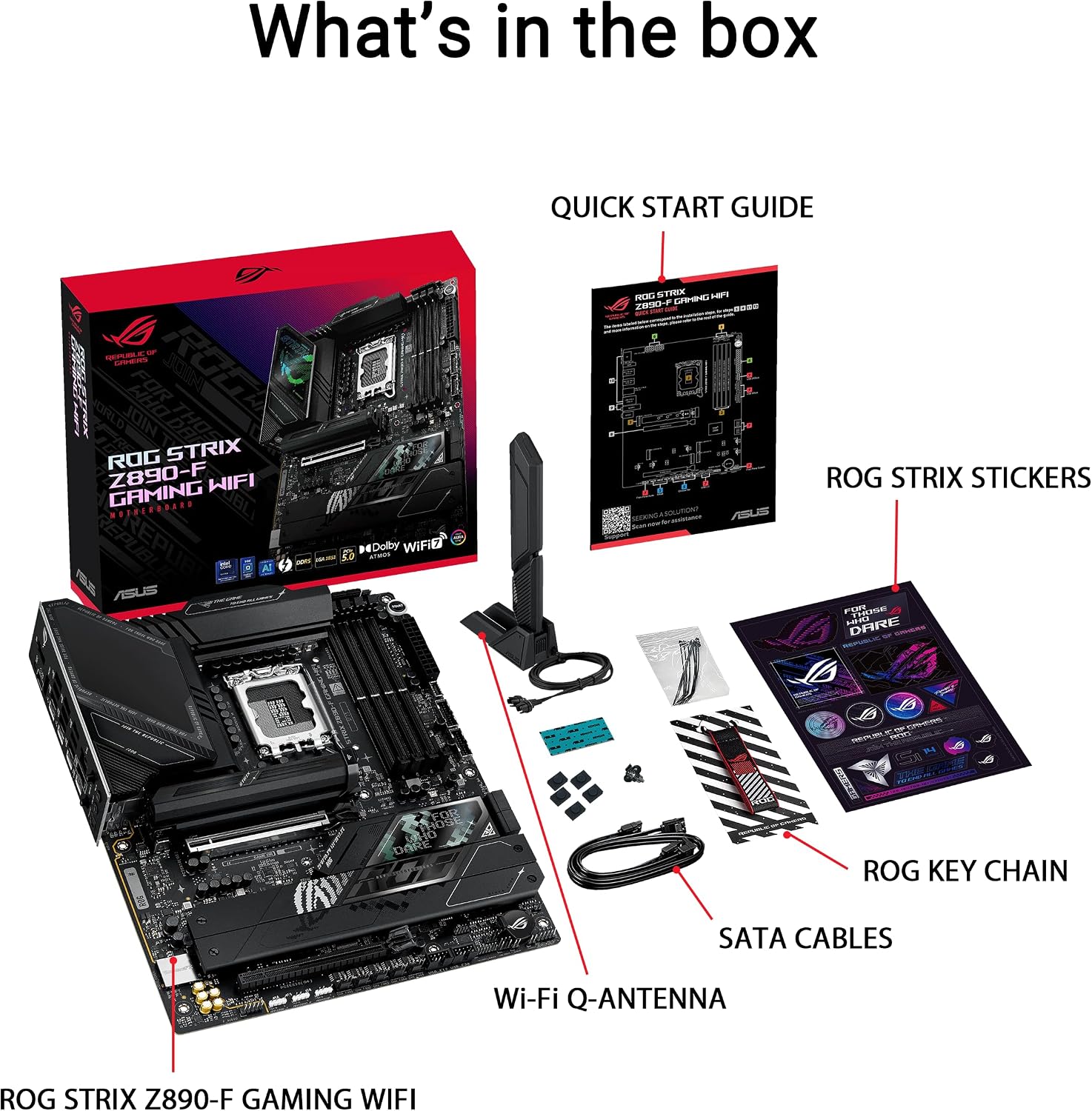
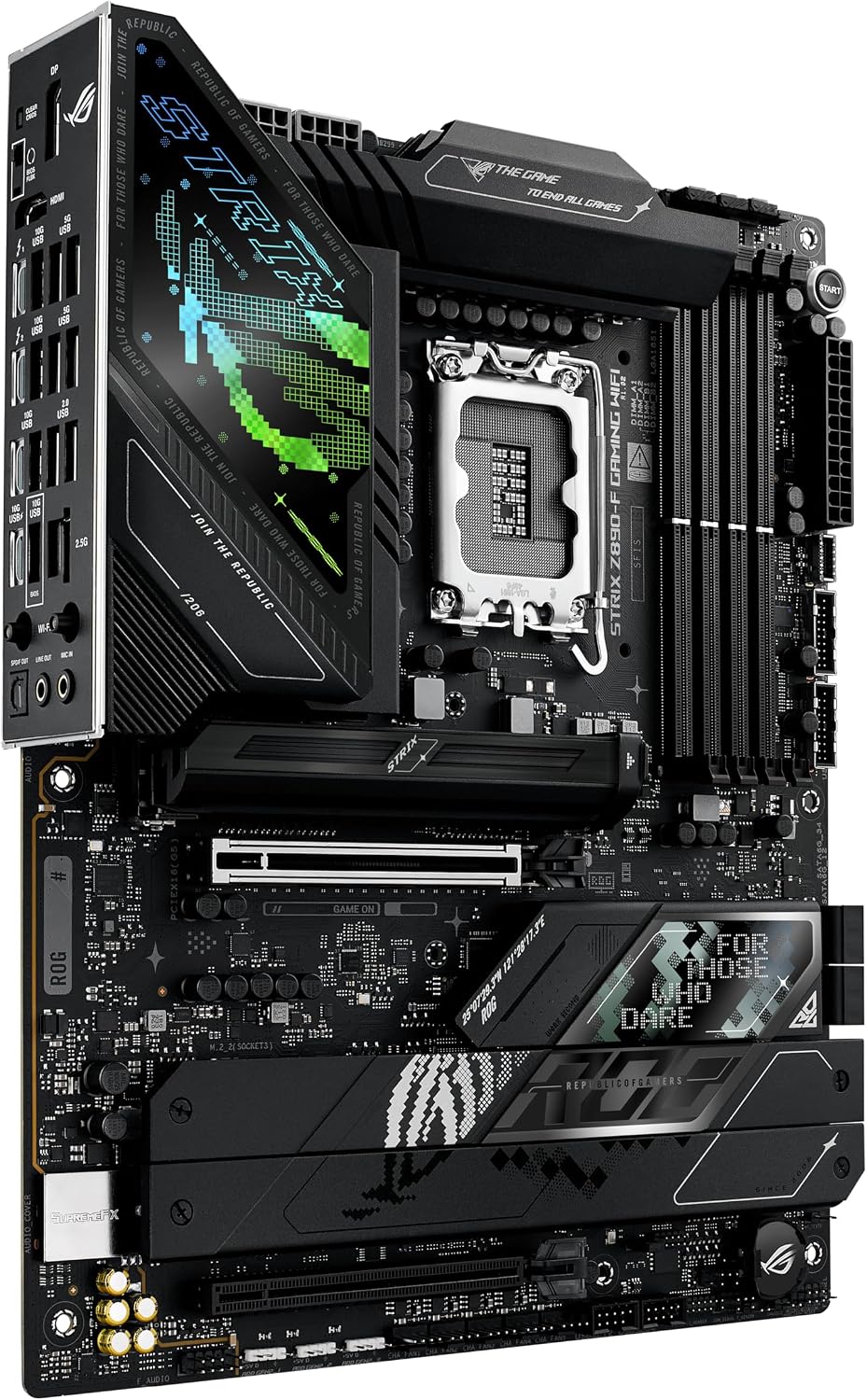
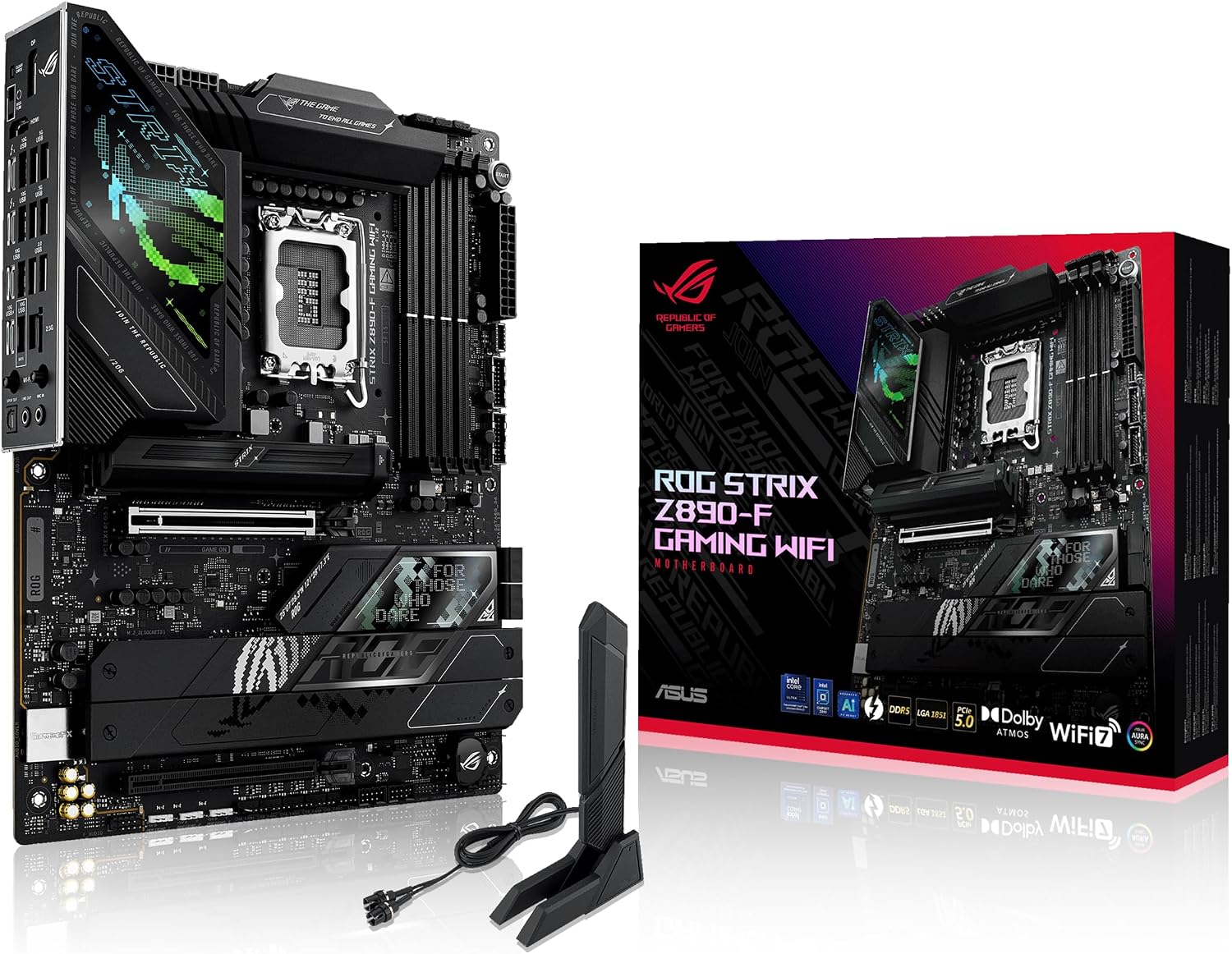
ASUS ROG Strix Z890-F Gaming Motherboard, DDR5 5X M.2
Reviews
Price
Product description
This ATX motherboard brings advanced AI-ready features and high-end connectivity for enthusiasts building a next-generation Intel system. The ASUS ROG Strix Z890-F Gaming WiFi supports LGA 1851 processors and includes a strong VRM, multiple M.2 slots and Wi-Fi 7 to handle demanding workloads and modern gaming or creative rigs.
Key Points
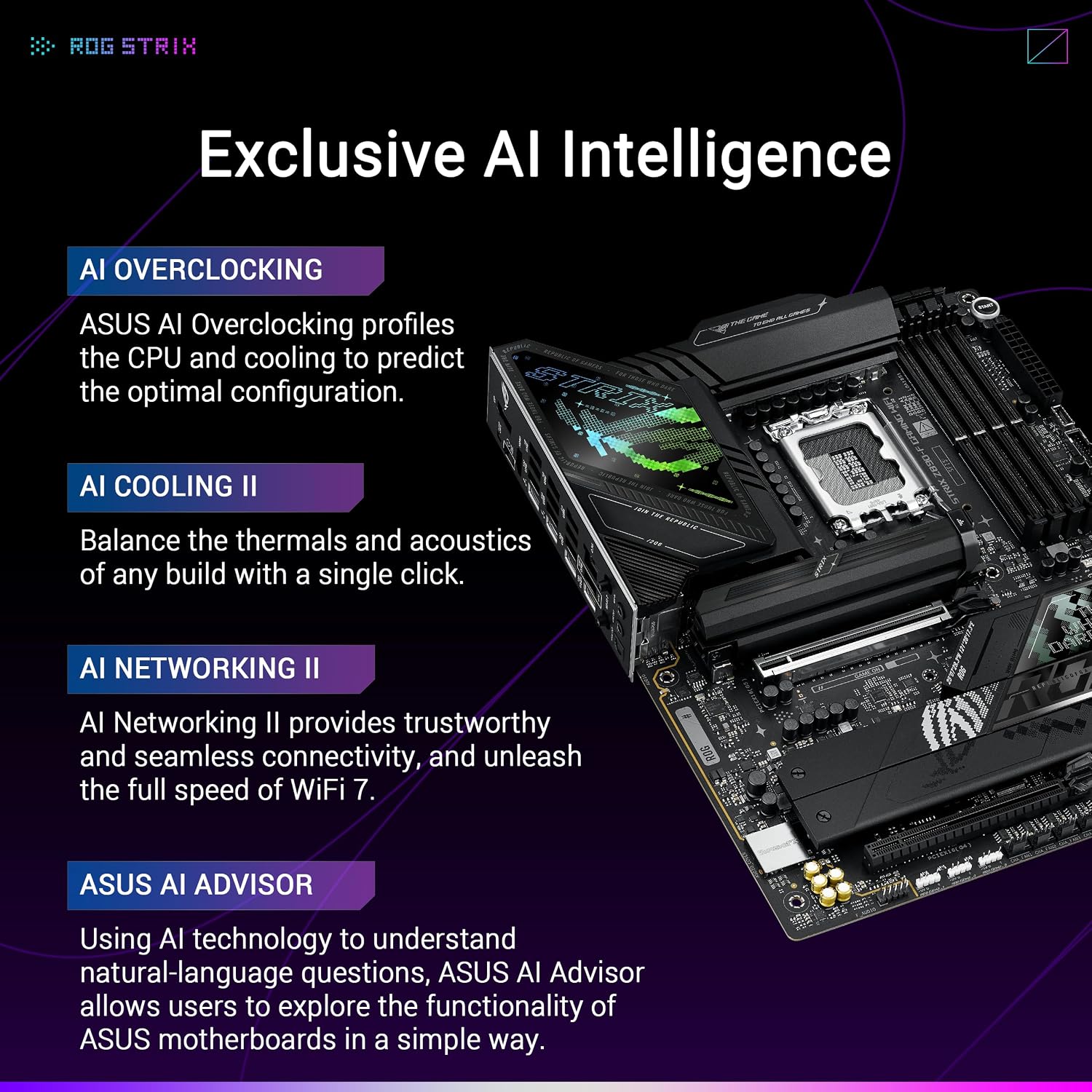
The board targets users who want a platform prepared for AI-accelerated tasks and upcoming Intel Core Ultra processors. It offers a comprehensive power delivery system and enhanced memory tools to help stabilize high-frequency DDR5 configurations, according to the manufacturer. Integrated Thunderbolt 4 support and plentiful USB Type-C options make it convenient to connect fast storage and peripherals. ⚡️
Technical Specifications
- Name: ASUS ROG Strix Z890-F Gaming WiFi
- CPU socket: LGA 1851
- Power stages: 16 (110 A) + 2 (90 A) + 1 (90 A) + 2 (80 A)
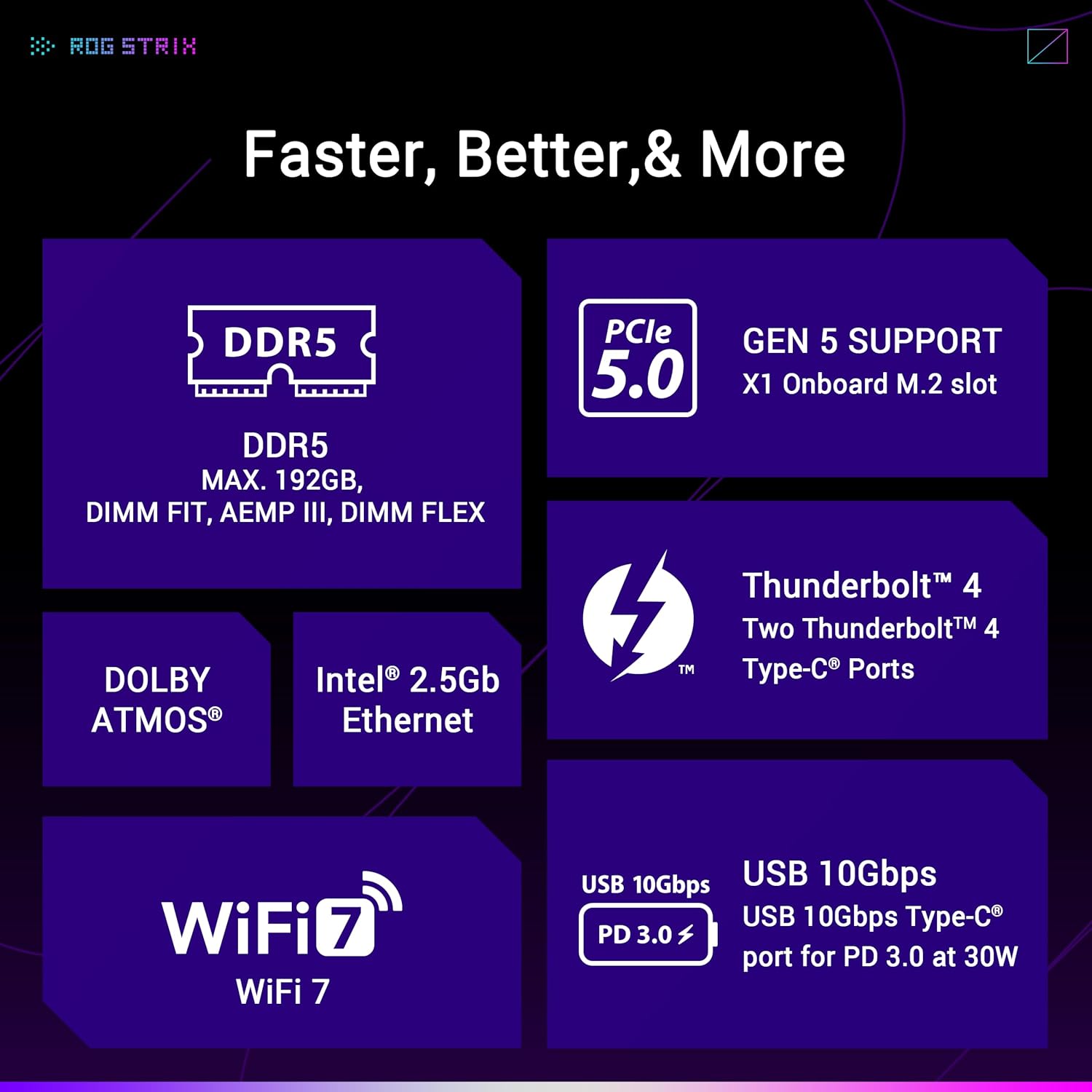
- Memory: DDR5 support with DIMM Fit, DIMM Flex and AEMP III technologies
- Storage: 1 x PCIe 5.0 M.2, 4 x PCIe 4.0 M.2
- Networking: Intel Wi‑Fi 7 (802.11be) and Intel 2.5 Gb Ethernet
Advantages
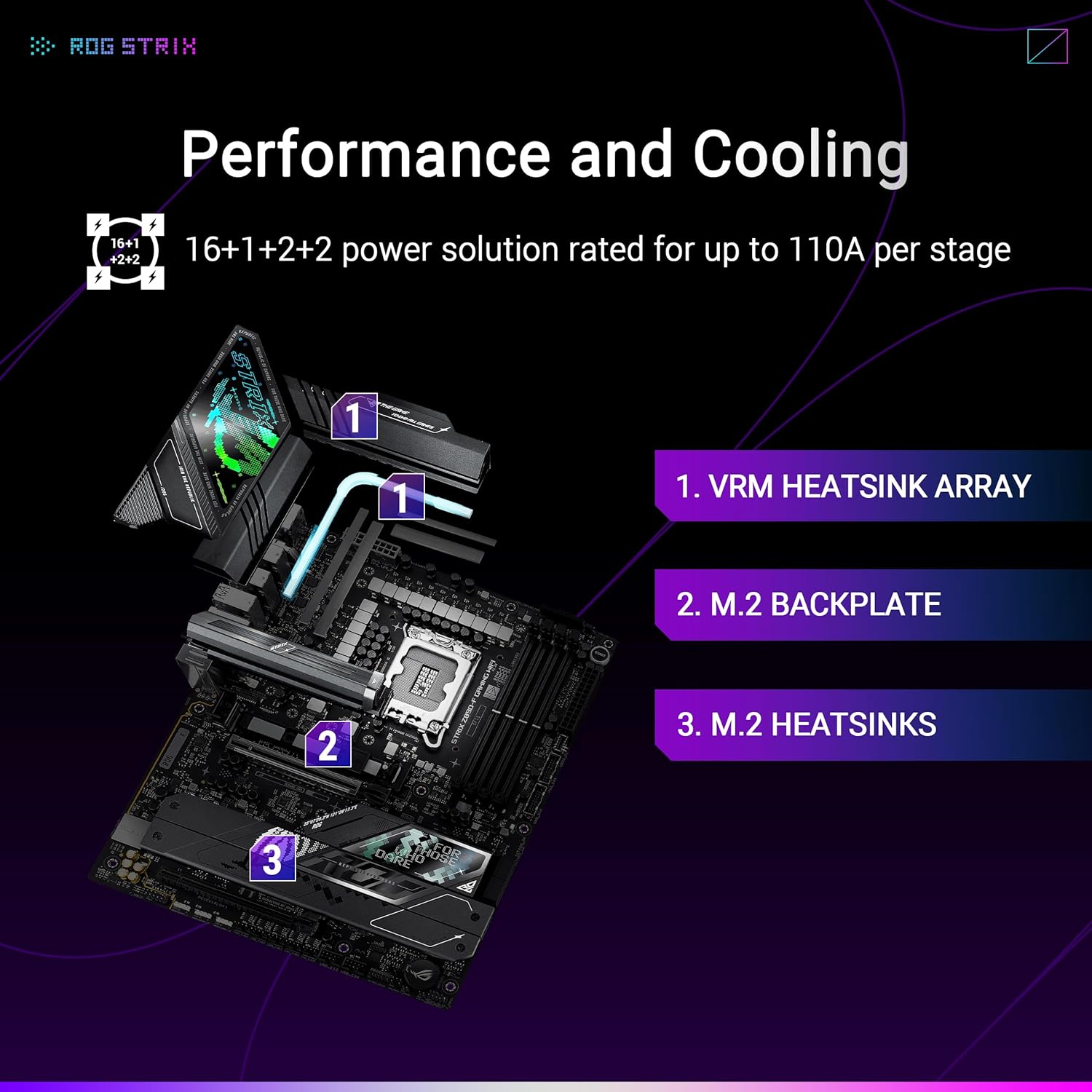
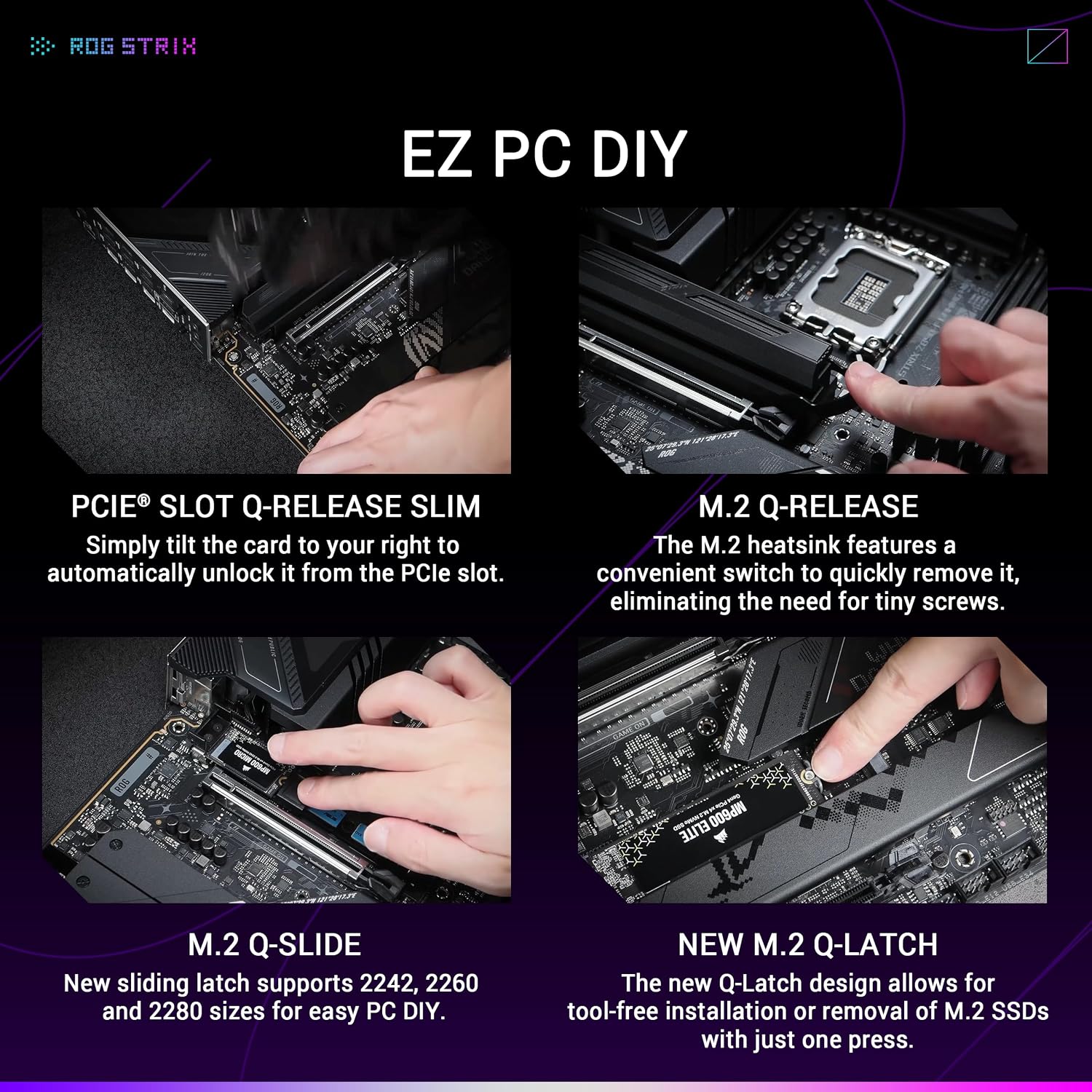
The robust multi-stage VRM is designed to deliver steady power during heavy CPU loads, which helps when pushing frequencies with AI-assisted overclocking. ASUS’s suite of AI utilities, including NPU Boost and AI Advisor, aims to simplify tuning and monitoring. Cooling is addressed with large heatsinks, high-conductivity thermal pads and an L-shaped heatpipe that connects critical areas to maintain sustained performance. Also, the board includes physical conveniences such as Q-Release mechanisms for PCIe and M.2 which make installation and maintenance easier. 🔧
Usage Recommendations
For users assembling a high-performance workstation or gaming PC, pair this board with a compatible Intel Core Ultra processor and quality DDR5 memory to take advantage of the memory tuning features. Use the PCIe 5.0 M.2 slot for a next-gen NVMe drive when seeking the highest sequential throughput. Consider that the advanced AI features depend on software support and compatible components, and some utilities may require driver or BIOS updates to function optimally.