

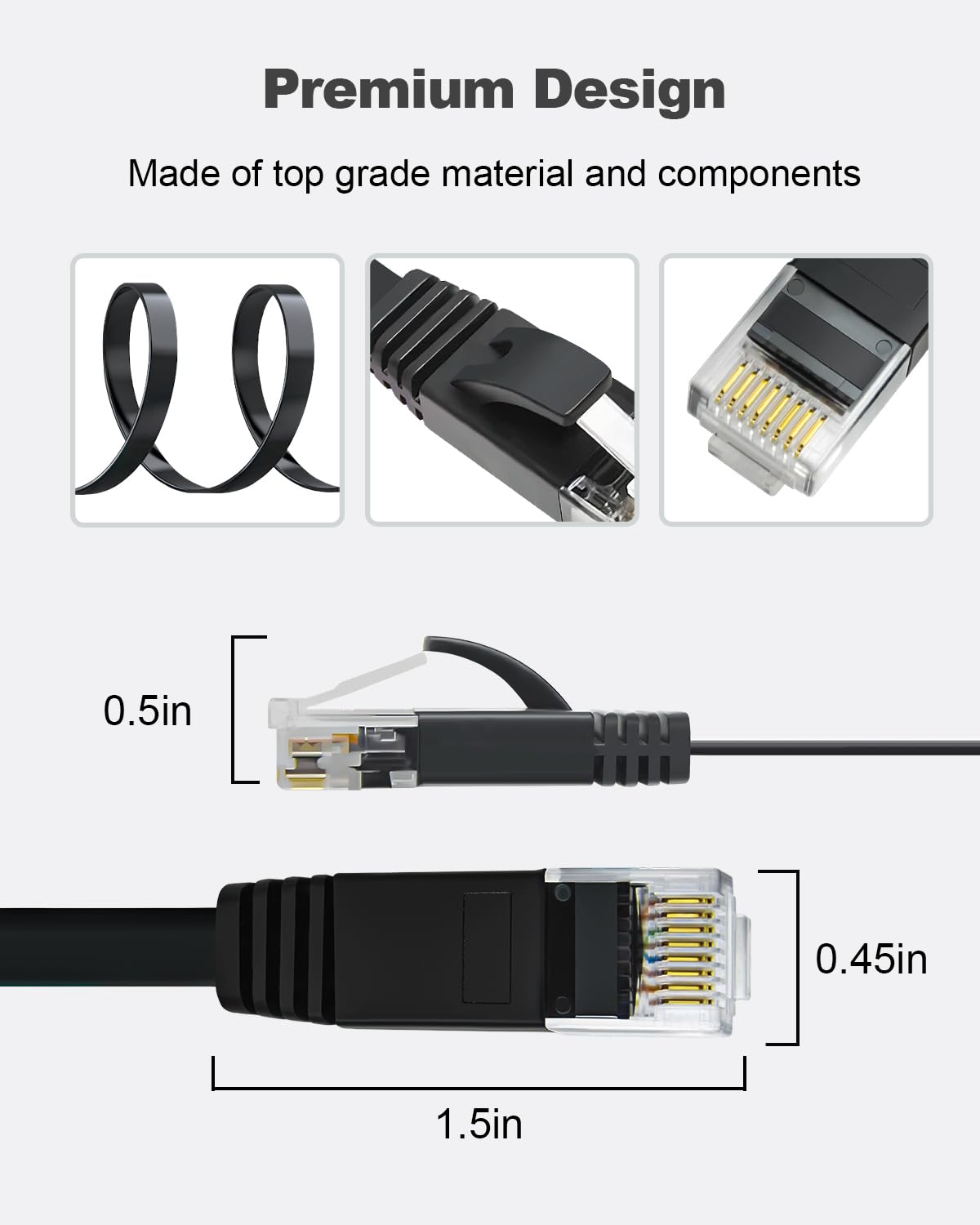
Yauhody 30m Cat 6 Ethernet Cable (250MHz, 1000Mbps) – Snagless RJ45, Shielded
Product description
What it is and what it’s for
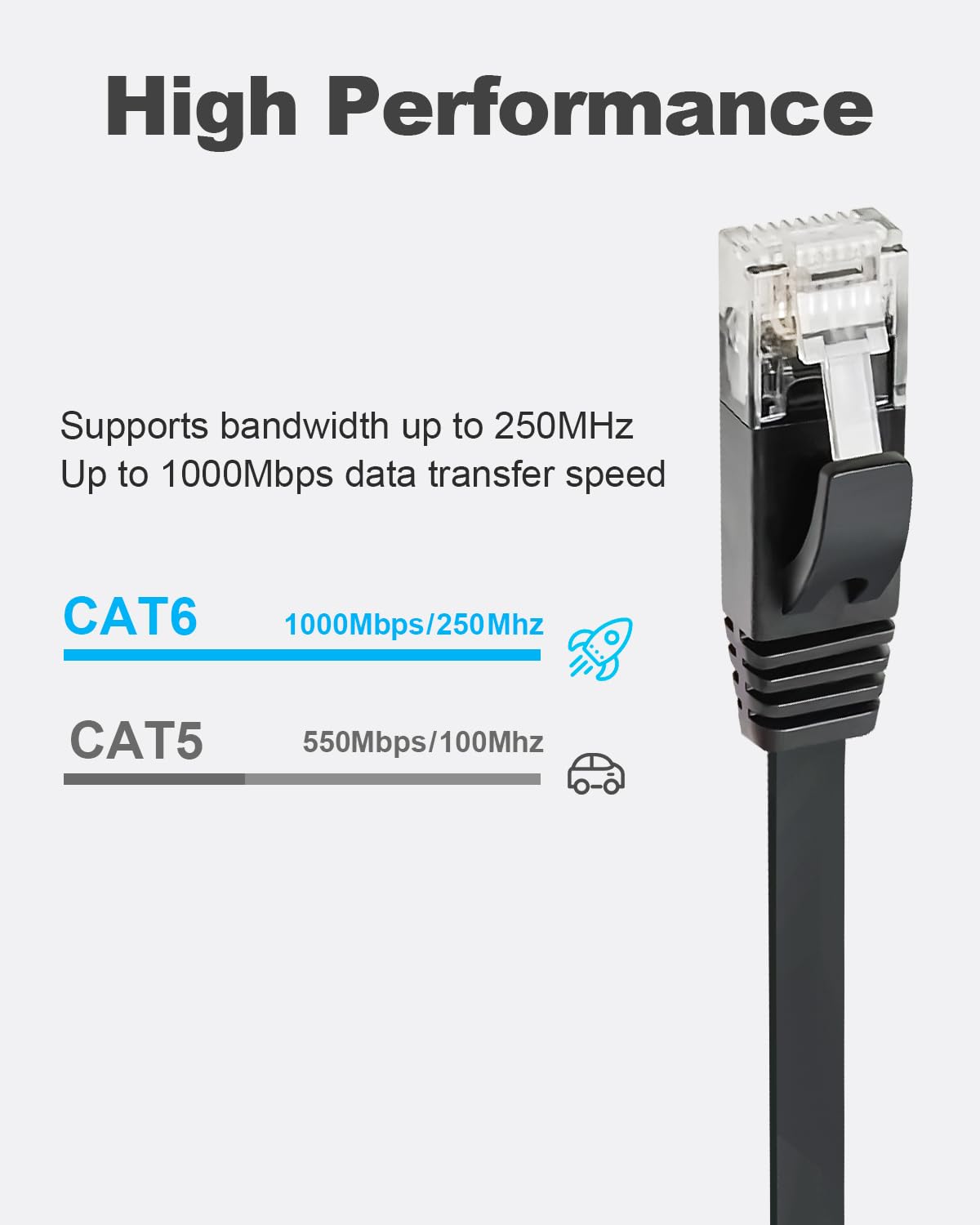
The Yauhody Ethernet Cable is a 30-metre Cat 6 network lead designed to deliver reliable wired connections for home and small office setups. It supports Gigabit Ethernet (1000BASE-T), as well as 100BASE-T and 10BASE-T, aligning with the Cat 6 performance standards defined by TIA/EIA 568-C.2. If you’re looking to stabilise streaming, cloud storage transfers or gaming traffic, this cable aims to offer the bandwidth and consistency you’d expect from a dedicated wired link, with a design that places us back in a more predictable, low-latency zone compared to wireless alternatives.
How it’s built
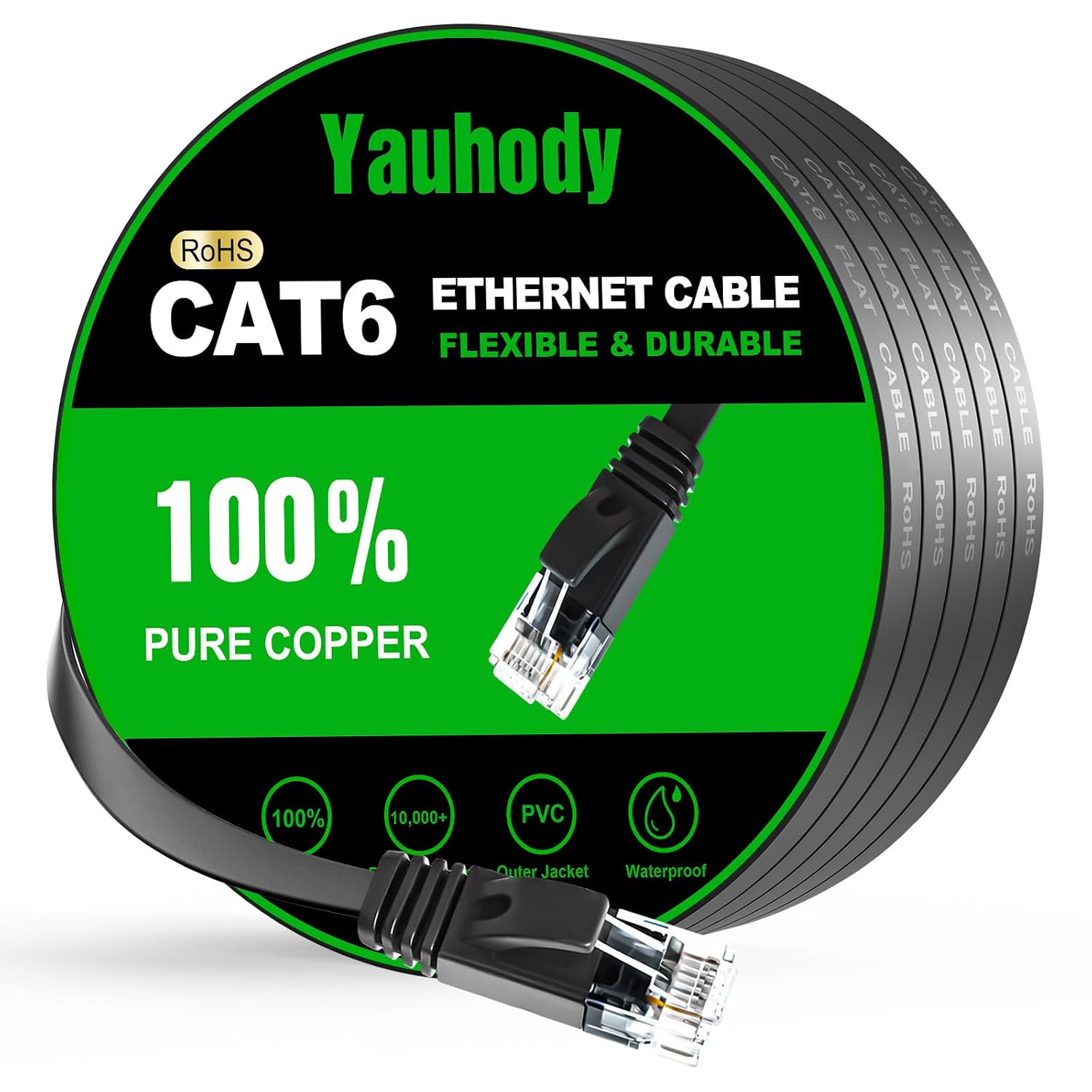
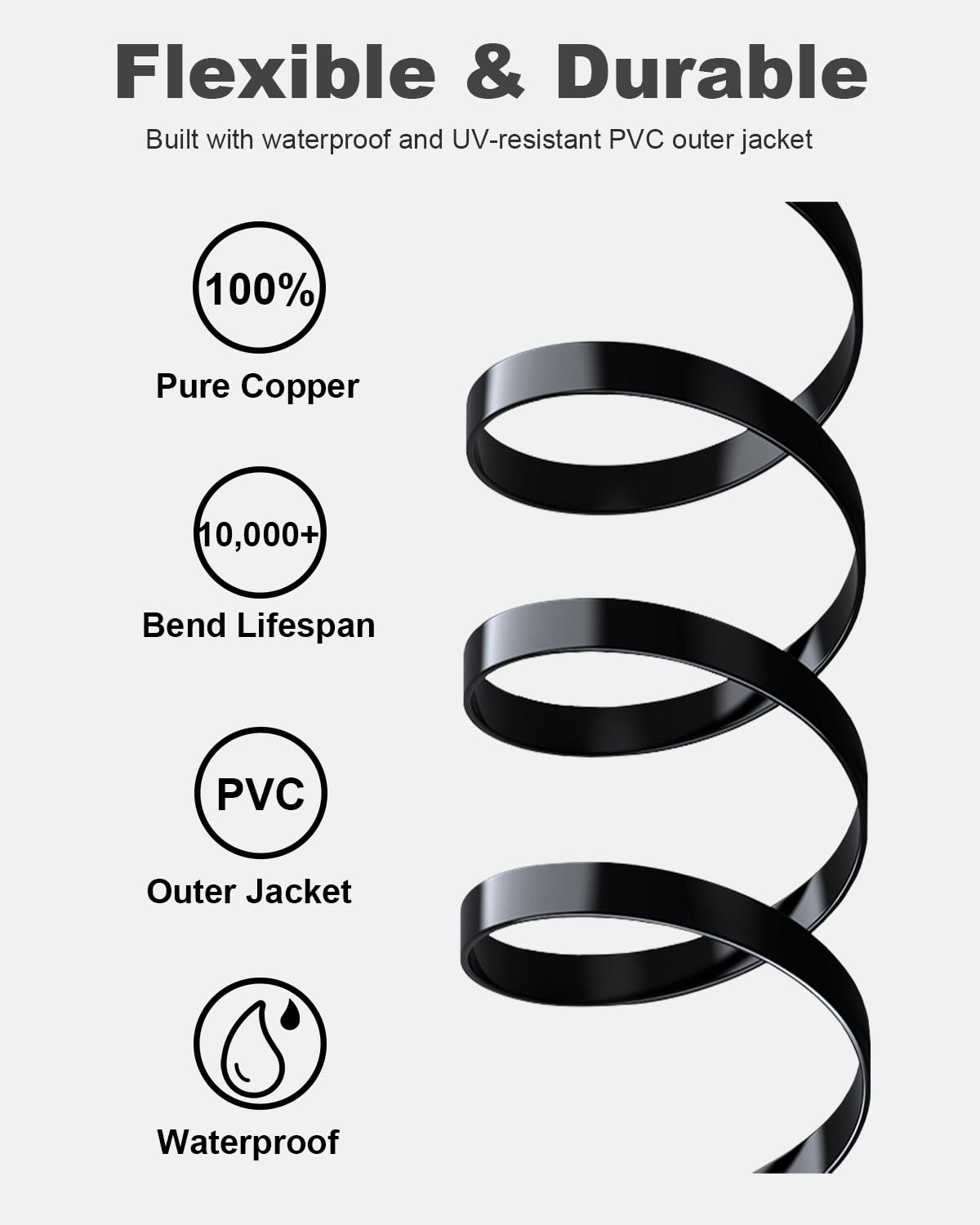
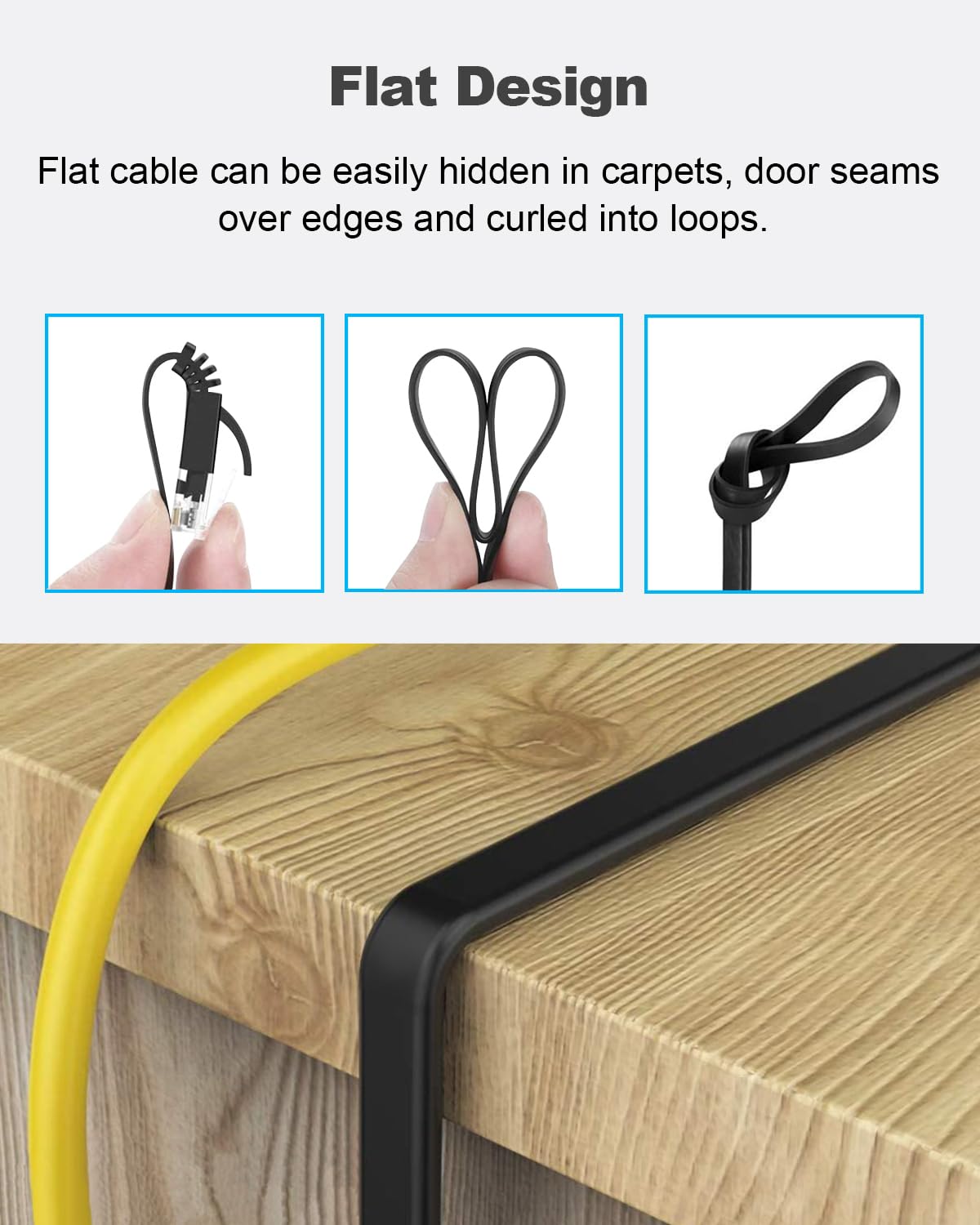
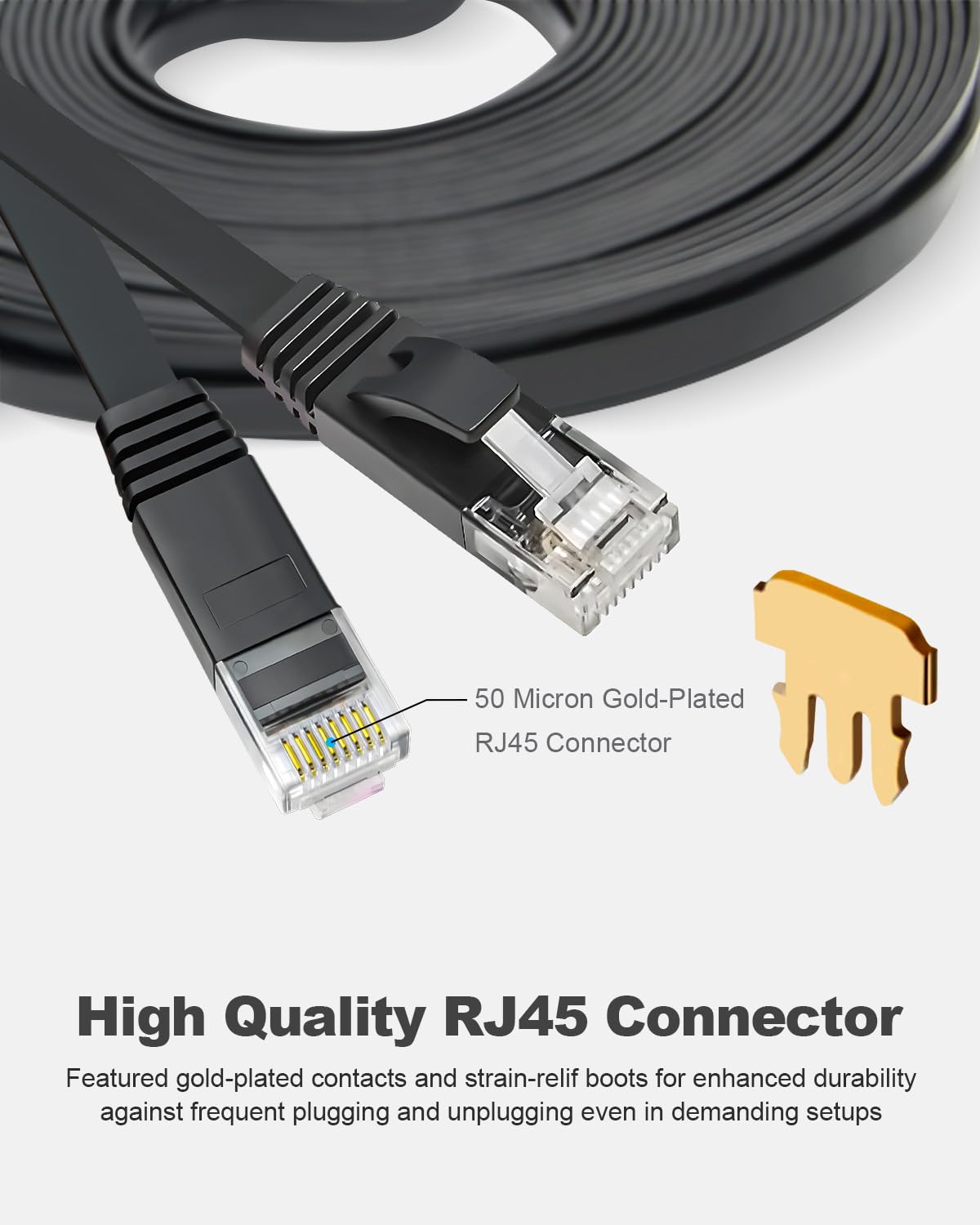
On paper, the construction matters for real-world reliability. This cable uses four 32AWG shielded twisted pairs (STP) with gold-plated RJ45 connectors on both ends. The shielding is intended to reduce crosstalk and external interference, which can be noticeable in busy environments or when cables share space with electrical gear. The flat form factor—about 1.5 mm thick—helps minimise space clutter and can be easier to tuck under carpets or along desks, though it’s not a guaranteed cure for every cable-routing challenge. The cable has been subjected to bending tests (indicating durability in daily use), but as with any long run, sharp bends and heavy handling can still affect performance over time.
Practical use and who it suits
If you’re upgrading a home network or setting up a small business workstation, this Yauhody Cat 6 lead fits a wide range of devices with RJ45 sockets: computers, printers, routers, game consoles, smart TVs, Wi‑Fi extenders, IP cameras and PoE devices. It’s particularly worthwhile when you prioritise a stable, wired connection for streaming high‑definition video, large file transfers, or latency‑sensitive activities like online gaming. For spaces where a 30 m run is necessary, the cable’s length removes the need for intermediate hubs or extenders, which can introduce additional latency or failure points.
What stands out in use
On the positive side, the stall‑level bandwidth (up to 1000 Mbps) and the shielded design address common concerns about interference and signal degradation in busy electrical environments. The accuracy of the claim aligns with Cat 6 expectations, and the robust RJ45 connectors at both ends should feel firm when plugging in devices. The flat profile is convenient for routing under carpets or along edge trim, reducing trip hazards and tangling—an often overlooked but practical benefit in home offices.
Where it may fall short
This is a cable for a reasoned, pragmatic upgrade rather than a flashy one. If your network equipment already uses higher‑category cabling or if you’re operating a network that rarely saturates a 1 Gbps link, the incremental benefit may be modest. The performance gains hinge on the rest of your network stack: the router, modem, switch, and the devices themselves. If you expect future‑proofing, remember Cat 6 is good now, but higher‑category options exist for newer hardware with multi‑gig or 2.5–10 Gbps requirements. A note of realism: long cable runs can still encounter latency constraints due to network topology and connected hardware, not just the cable grade.
Before you buy: what to check
- Confirm your main devices support Gigabit Ethernet and are not bottlenecked elsewhere in the chain (router, switch, NICs).
- Ensure the 30 m length is truly needed, if you can shorten the run, you may gain marginally lower latency and slightly less signal attenuation.
- Look at where the cable will sit, while the shield helps, power cables and fluorescent lighting lines can still influence performance in certain layouts.
- If you plan to run PoE there, verify compatibility with PoE devices and ports, as shielding and conductor layout can interact with power delivery in some setups.

Alternatives and buying context
If you’re comparing approaches, a straight Cat 6 lead like this is typically preferable to a longer but poorly shielded option, or to a wireless solution when you want a predictable baseline speed and lower jitter. In environments with heavy RF interference or lots of electrical noise, shielded cables can be worth prioritising. For ultra‑high‑speed requirements or future‑proofing beyond 1 Gbps, you might look at higher‑category options or shorter, higher‑quality runs interspersed with appropriate network equipment upgrades.
Is it worth it? Buying verdict
When it makes sense to buy
- You need a long, reliable wired connection for a router, modem, PC, smart TV or camera over a 30 m distance.
- You value shielding to reduce crosstalk and external interference in a busy electrical environment.
- You want a robust, everyday Ethernet lead that won’t complicate routing with multiple joins or adapters.
When you might skip it
- You’re future‑proofing for multi‑gigabit or 10 Gbps networks currently unsupported by your hardware.
- You have a shorter reach or a more compact layout where a shorter Cat 6 lead would suffice.
- You’re relying on a very high‑density setup with PoE considerations that require specific cable types or more advanced infrastructure.
Bottom line
It’s a sensible, value‑for‑money option for those needing a long, dependable wired link with shielding for a home or small office. It isn’t the most glamorous upgrade, but it’s the kind of practical improvement that often shows up in daily use as steadier streaming, quicker file transfers, and more stable gaming without the unpredictability of wireless connections.
Quick FAQ
- What devices work with this cable? Any device with an RJ45 Ethernet port, including PCs, laptops, printers, routers, smart TVs, IP cameras and similar gear.
- Do I need shielding? Shielding helps reduce interference in environments with a lot of electrical noise or adjacent cables.
- Is 30 m too long for Gigabit? Not typically, Cat 6 supports 1000 Mbps up to standard lengths, and 30 m is common for home/office layouts without adding repeaters.
- Will it improve gaming latency? It can reduce variability and jitter by providing a stable wired path, though latency depends on the whole network stack, not just the cable.
What to know before buying
If you value a straightforward, long‑reach wired connection and want to minimise clutter with a flat cable, this Yauhody lead offers a practical balance of performance and durability. It’s not a miracle fix for every network issue, but for many setups it helps deliver a steadier baseline bandwidth and more reliable downloads and streams.
Final decision
Is it worth it? Yes, if you need a dependable 30 m Cat 6 Ethernet lead for a mixed environment and want to reduce wireless variability without upgrading multiple network components at once.