

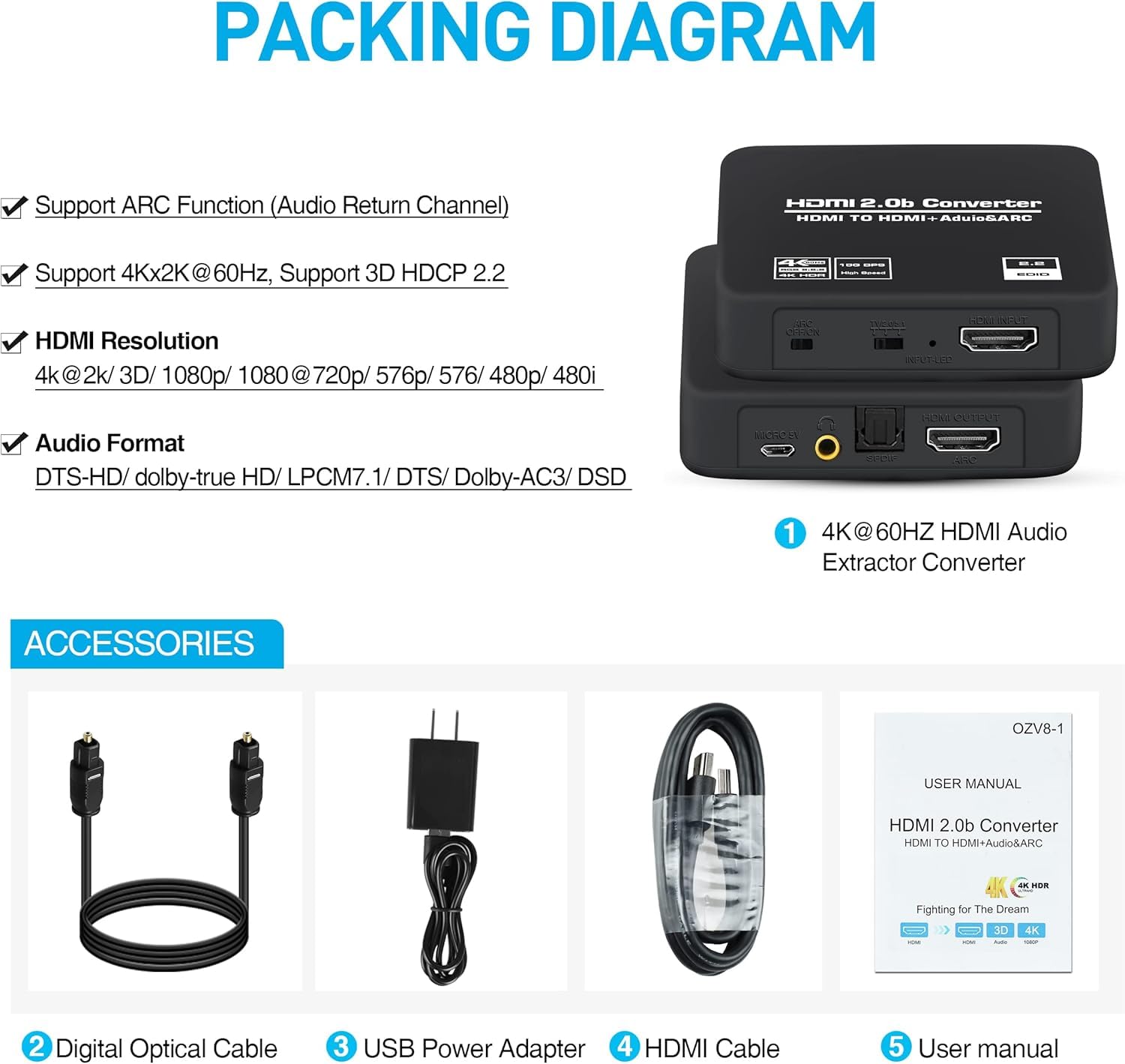
4K 60Hz HDMI Audio Extractor Splitter Converter (HDMI ARC + Optical + 3.5mm) with HDCP 2.2
Product description
What it does, in plain English
This HDMI audio extractor splitter converter is designed for one specific job: take audio out of a digital HDMI signal and send it to a separate audio setup, without needing to power on your TV/monitor just to get sound. On paper it’s a practical little box for anyone who’s using an HDMI source (like a console, streaming box, disc player, or laptop) but wants to route audio to an amplifier, soundbar, speakers, or an AV receiver.
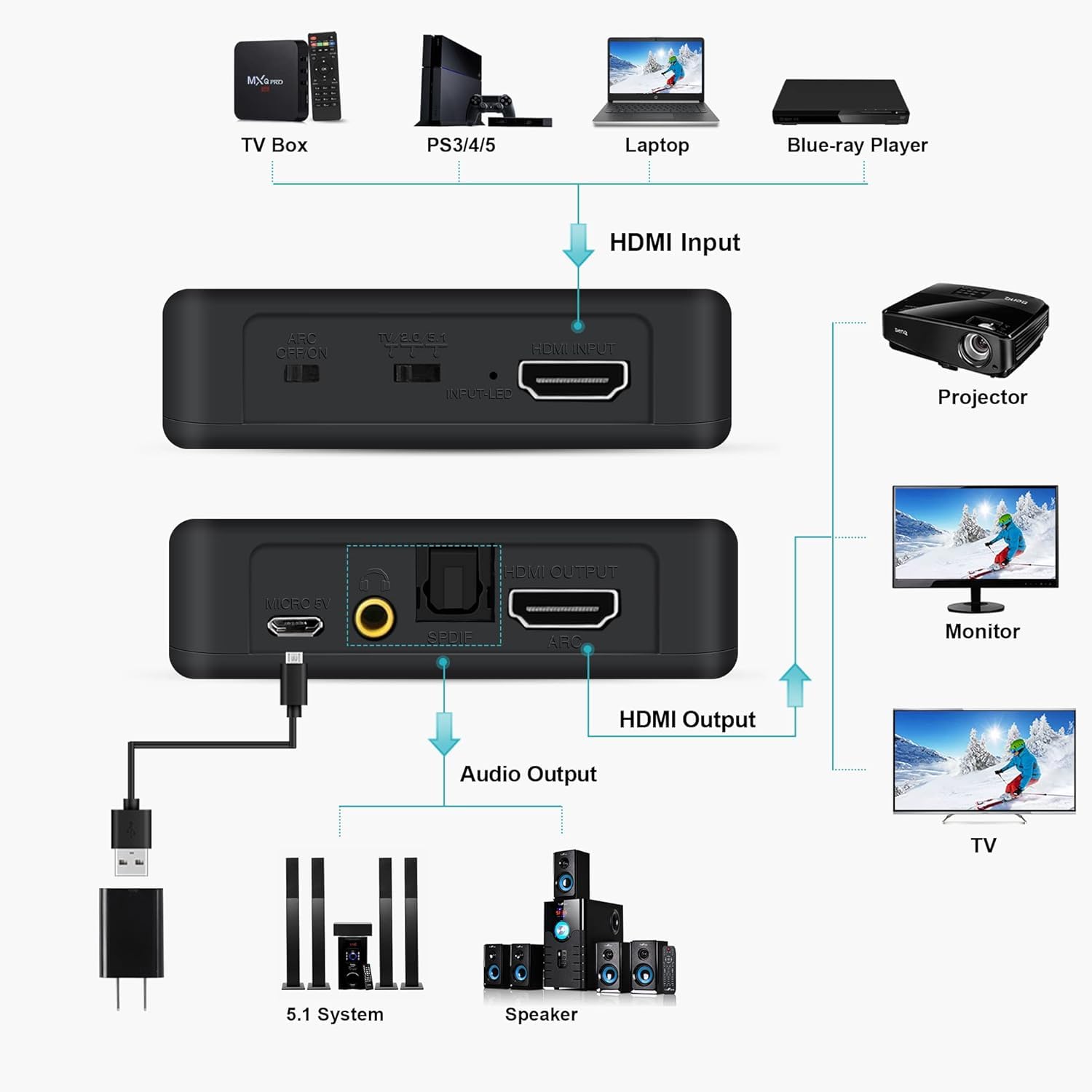
It also leans into home-cinema style routing by offering multiple audio output options. You can send audio out via HDMI ARC, optical (Toslink SPDIF), and a 3.5mm stereo output. That flexibility is the main reason people buy devices like this—because your TV and your sound system often don’t share the exact same audio connections.
Of course, it’s not perfect for every scenario. If your setup already passes audio the way you need (for example, your TV soundbar pairing is straightforward), an extractor can be more of an extra complication than a necessity. And with audio tech, the actual results can depend on what your TV and source device support—so it’s worth double-checking before you commit.
Key features that matter for buying
The headline specs are the sort of details that influence whether you’ll notice issues like handshake problems, dropouts, or limited audio modes.
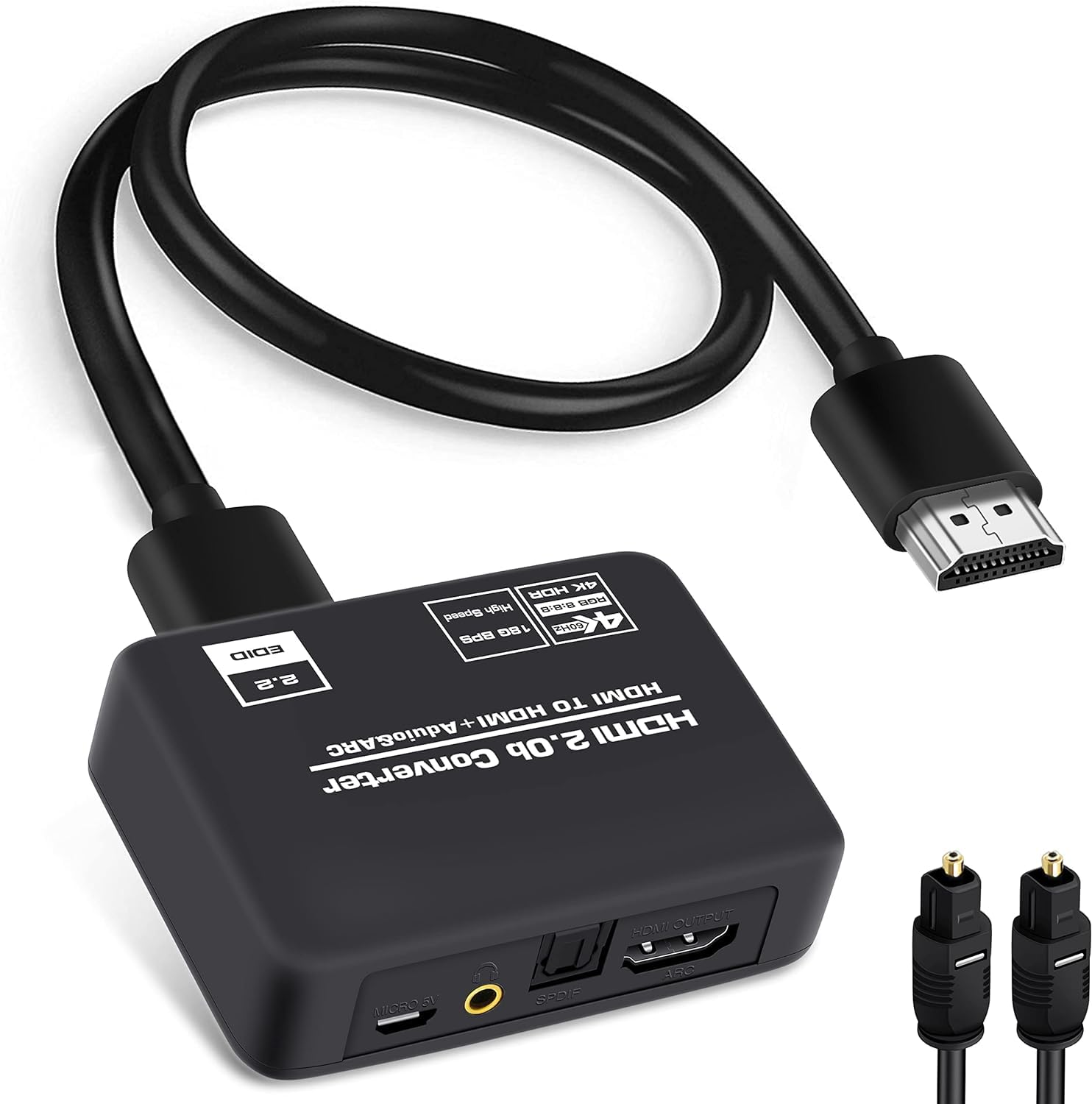
The converter supports video pass-through up to 4K x 2K at 60Hz, plus HDR10 and HDCP 2.2. It also states a maximum bandwidth of 18 Gbps and RGB 8:8:8. For most everyday viewing—sports, movies, consoles—this is the level of capability you’d look for in a current-generation HDMI audio routing device.
On the audio side, it’s built around three audio output modes tied to HDMI ARC and common channel outputs:
- HDMI-ARC audio extraction mode
- 2.0CH audio mode
- 5.1CH audio mode
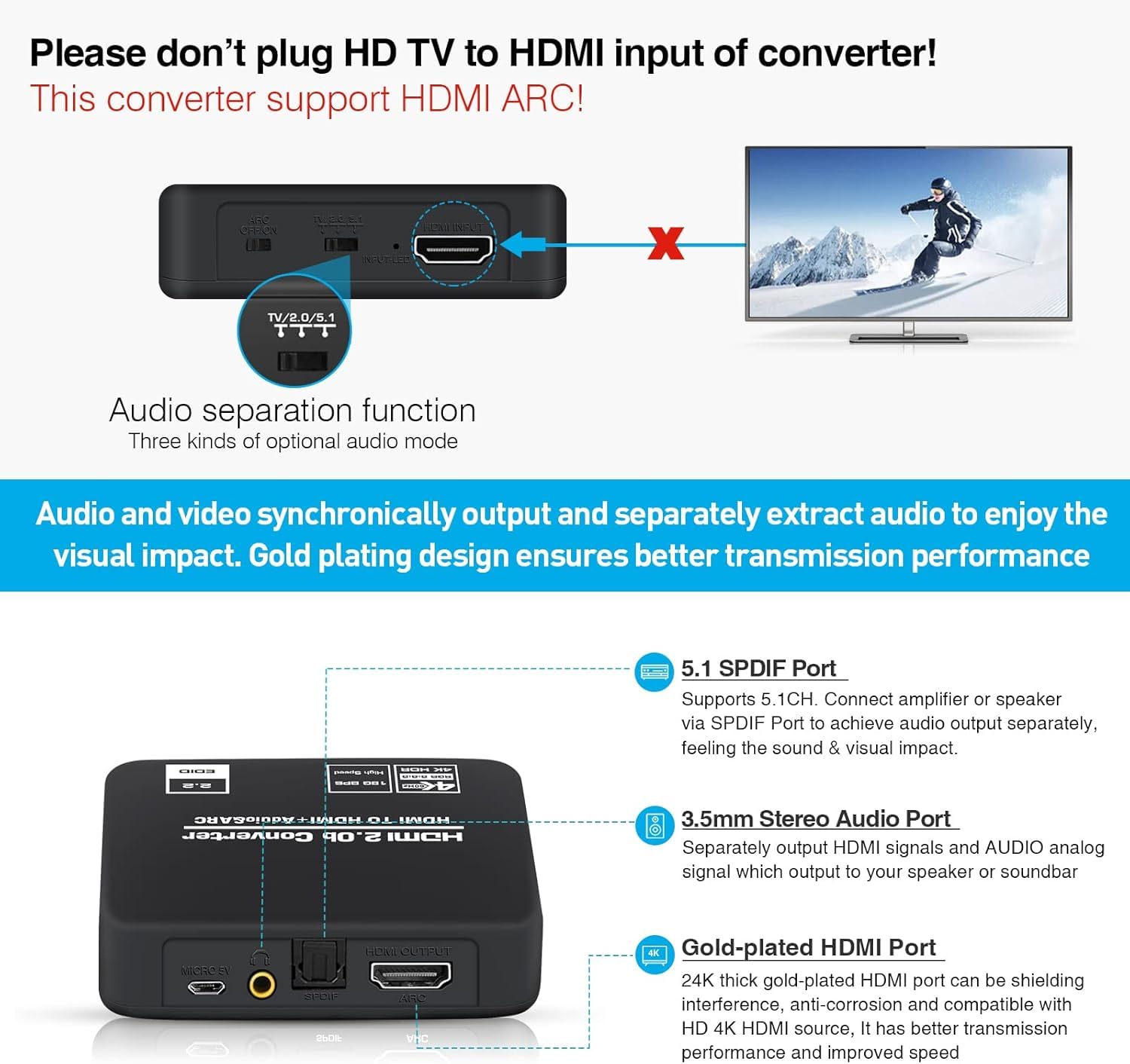
The 3.5mm output is described as supporting 2CH PCM LPCM stereo. Optical SPDIF supports 2CH PCM as well as 5.1CH formats including Dolby Digital, Dolby TrueHD, and DTS / DTS-HD (as listed). If your goal is “get surround-capable audio to my sound system”, optical is typically the safer route—while the 3.5mm option is there for basic stereo setups.
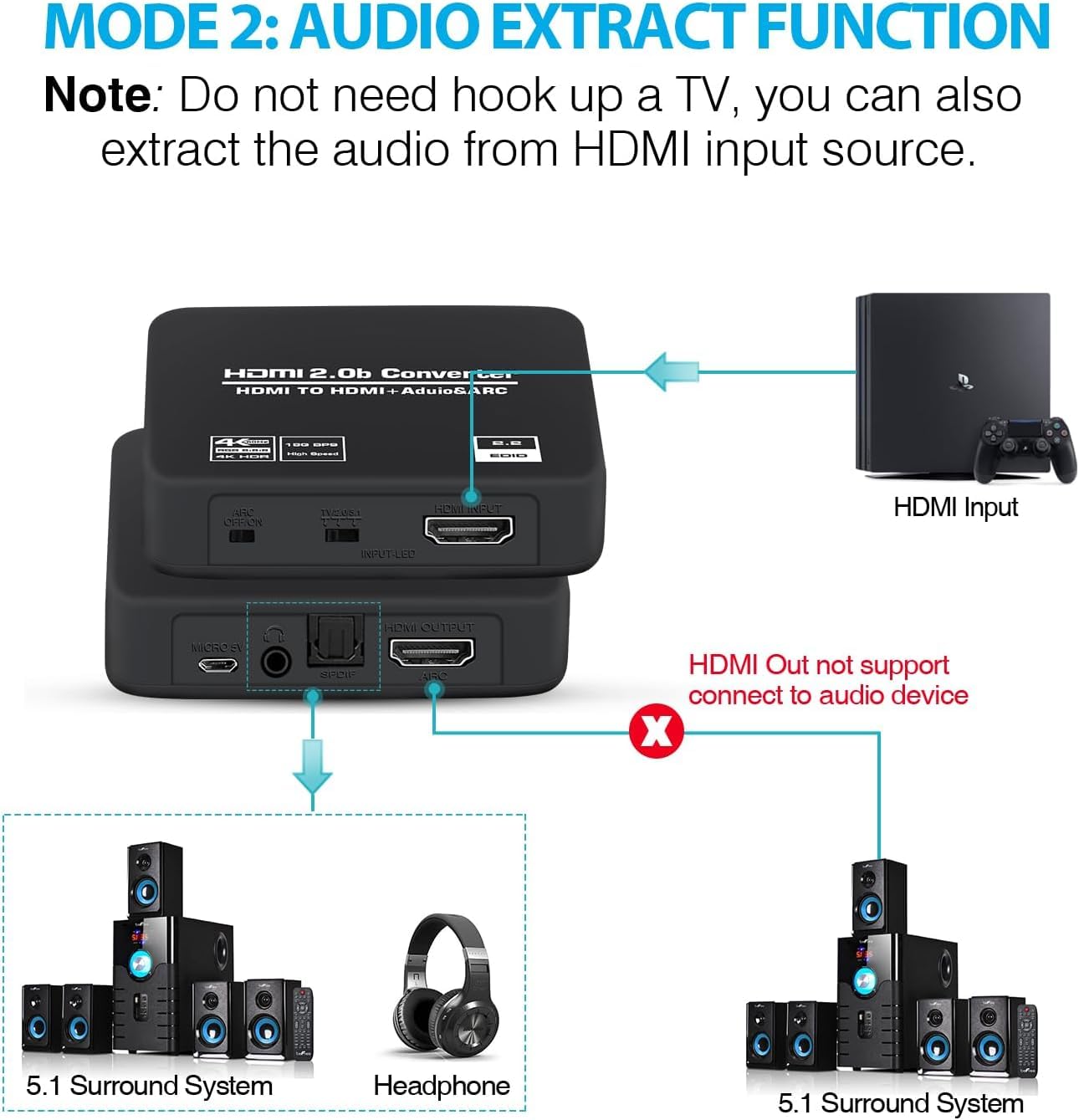
There’s also a small but meaningful use-case note in the description: the idea is to allow audio output separately to an audio receiver without powering on your HDTV/monitor. If you often switch between TV viewing and wanting speakers/amp output while the display isn’t essential, that can be genuinely useful.
The essentials: what to check before you buy
Before purchase, the biggest question is whether your specific connections match what the extractor offers.
First, decide which audio path you’ll actually use:
- If your soundbar/receiver supports HDMI ARC, you’ll likely use the HDMI ARC pathway described in the product notes.
- If it doesn’t, optical (Toslink SPDIF) is the clear alternative.
- If you only need stereo, the 3.5mm output can cover simpler speaker or amp inputs.
Second, check your source devices and what they can output. The product mentions compatibility with common HDMI sources such as Blu-ray/DVD players, cable/satellite boxes, Fire TV, PS3/PS4/PS5, Xbox, and PC/laptop. That said, not every device outputs the same audio formats, and not every TV will pass ARC/audio in the same way—so “it works” depends quite a bit on your existing HDMI handshakes.
Third, consider video too. While the audio extraction is the focus, the device also passes video (up to 4K 60Hz as stated). If you’re building a no-frills setup where you only care about stereo speakers, you may still be fine—but if you’re running HDR content, it’s worth making sure your TV and source are comfortable with HDR10 pass-through.
Where it shines (and where it may fall short)
Where this extractor makes sense is when you want to separate audio from HDMI video without reconfiguring your entire home setup each time.
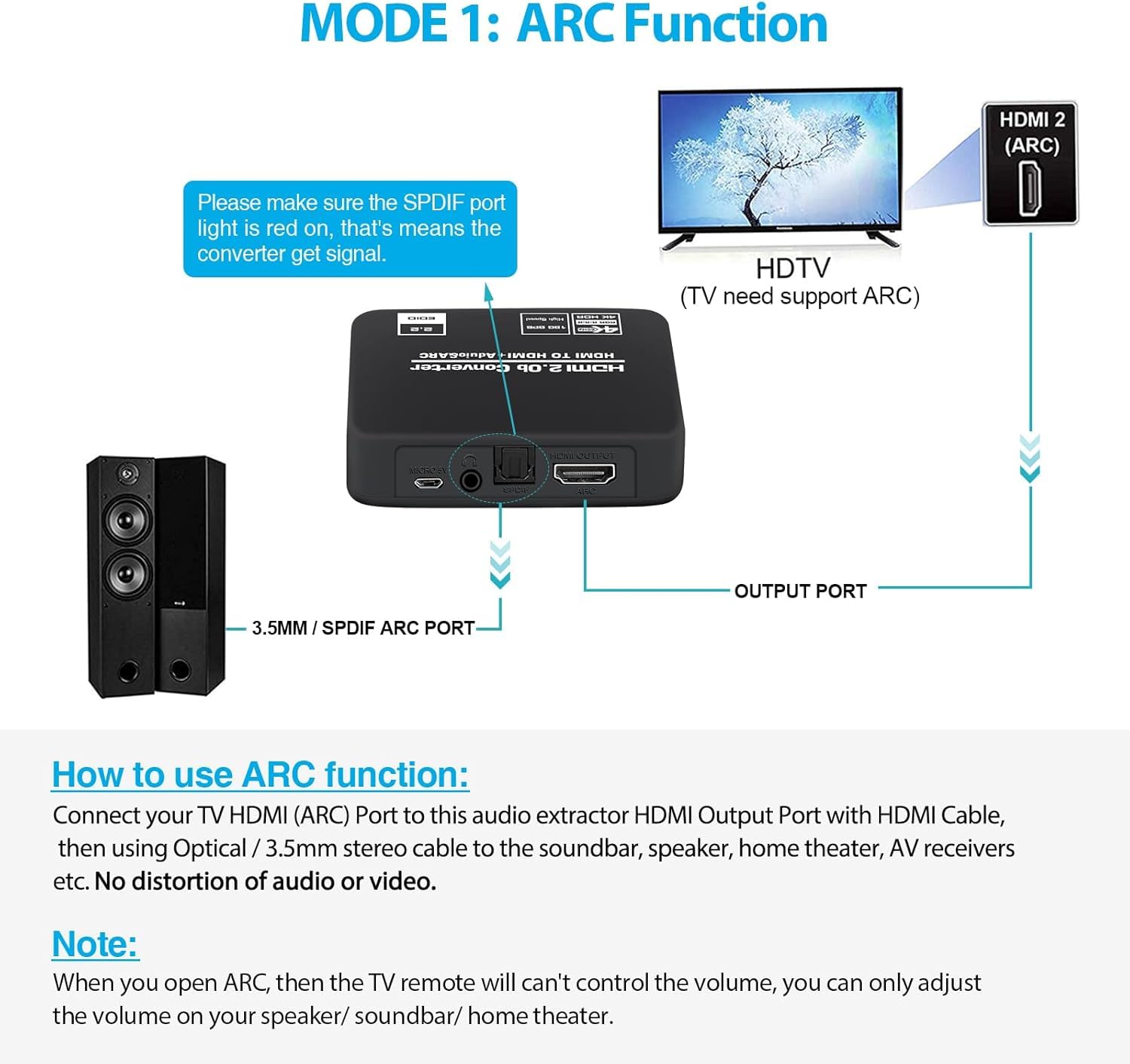
A practical example: imagine your games console feeds your TV for video, but your soundbar is connected differently. With this converter, you can route the console’s HDMI signal into the extractor for video pass-through, then send audio out to the soundbar using optical or the HDMI ARC option (depending on what your soundbar supports). It’s the kind of setup that can make your desk-to-lounge transition less annoying, because your audio stays consistent.
However, take note of a limitation: the product supports specific audio outputs and listed formats, but it can’t magically create surround audio if your source isn’t sending it, or if your receiving device can’t decode it via the chosen output. Also, if you only need basic TV audio extraction and your TV already supports ARC/eARC cleanly, you may not gain much.
In short, it feels more like a problem-solver for “messy” HDMI audio routing than a universal replacement for every soundbar/receiver pairing.

Technical overview (the useful bits)
Here are the technical details that are most relevant to real-world use:
- Supported video resolution: up to 4K x 2K at 60Hz
- HDR support: HDR10
- HDCP support: HDCP 2.2
- Video colour format: RGB 8:8:8 (as stated)
- Maximum bandwidth: 18 Gbps
- Video/audio capabilities: HDMI ARC and audio extraction from an HDMI signal
- Audio outputs: HDMI ARC, Optical Toslink SPDIF, and 3.5mm stereo audio out
- Audio channel modes: TV, 2.0CH, and 5.1CH modes (as listed)
- 3.5mm audio output: 2CH PCM LPCM stereo
- Optical SPDIF audio output: 2CH PCM and 5.1CH formats including Dolby Digital, Dolby TrueHD, DTS, DTS-HD (as listed)
Who it’s for (and who should skip it)
It’s a solid pick if you regularly use HDMI sources (consoles, set-top boxes, disc players, laptops) and you want reliable ways to route audio to an amplifier, speakers, or a soundbar using HDMI ARC, optical, or 3.5mm.
Worth considering if your TV doesn’t have the right audio outputs for your existing sound setup, or if you prefer keeping the display’s role focused on video while audio goes elsewhere.
It might not be the best choice if:
- you only ever use basic TV audio and your current setup already provides the sound routing you need
- you’re expecting it to “solve everything” without your sources and receiving devices supporting the relevant audio formats and connections
- you don’t care about 4K 60Hz/HDR10 pass-through and would prefer something simpler (because extra features can mean extra variables)
Mini FAQ
Does it support HDMI ARC?
Yes. The description states it supports HDMI ARC (Audio Return Channel) for extracting audio from a TV/projector to a speaker/soundbar/amplifier via the ARC port approach outlined.
What audio output should I use: optical or 3.5mm?
Optical (SPDIF Toslink) is the one mentioned for stereo PCM and listed 5.1CH formats. 3.5mm is described as 2CH PCM LPCM stereo, so it’s more suited to basic stereo speakers/amps.
Will it pass through 4K 60Hz video?
It states support for resolution up to 4K x 2K at 60Hz, with HDR10 mentioned as well.
Is HDCP 2.2 supported?
The product description states HDCP 2.2 support.
Included cables
The description says optical/HDmi cables are included, which is useful if you’re setting up quickly.
Final verdict
If your priority is separating HDMI video from audio and you want multiple output options (HDMI ARC plus optical plus 3.5mm), this 4K 60Hz HDMI audio extractor splitter converter is the sort of device that can make a home entertainment setup feel less fiddly. It’s especially relevant when you’re trying to feed audio into an amp or soundbar that doesn’t share the same audio connections as your TV.
Buy it if your sources and sound system can use the output you plan to rely on (HDMI ARC or optical for more than basic stereo). Skip it if you already have straightforward audio routing through your TV/soundbar and you’re not chasing surround-capable audio formats—then the extra box may not add much.