

ELEGOO PLA Filament Yellow 1.75mm 1kg (Cardboard Spool) for FDM 3D Printers
Reviews
Price
Product description
If you’re printing with an FDM machine, PLA is the default choice for a reason: it’s generally easier to live with and tends to produce a clean surface without the drama you can get with some other plastics. This ELEGOO PLA filament sits in that “reliable everyday” lane, and what matters here is how consistent it is in practice—especially if you care about repeatability across prints.
On paper, the standout features are dimensional accuracy and feedability. But it’s still PLA, so it’s not meant for every real-world use case (heat and some outdoor conditions can be a weak spot). If your goal is dependable prints for models, prototypes, and general makes, this looks like a straightforward option worth considering.
The essentials
ELEGOO’s PLA filament comes in a 1.75mm diameter format on a 1kg cardboard spool. It’s designed for use with most FDM 3D printers that take 1.75mm filament, and the pitch is simple: smooth extrusion, fewer tangles, and consistent output.
PLA is often chosen because it’s a common thermoplastic with a lower fusion temperature, which usually makes it more beginner-friendly than higher-temperature materials. The filament is also described as odourless during printing, and it aims for a glossy surface finish.
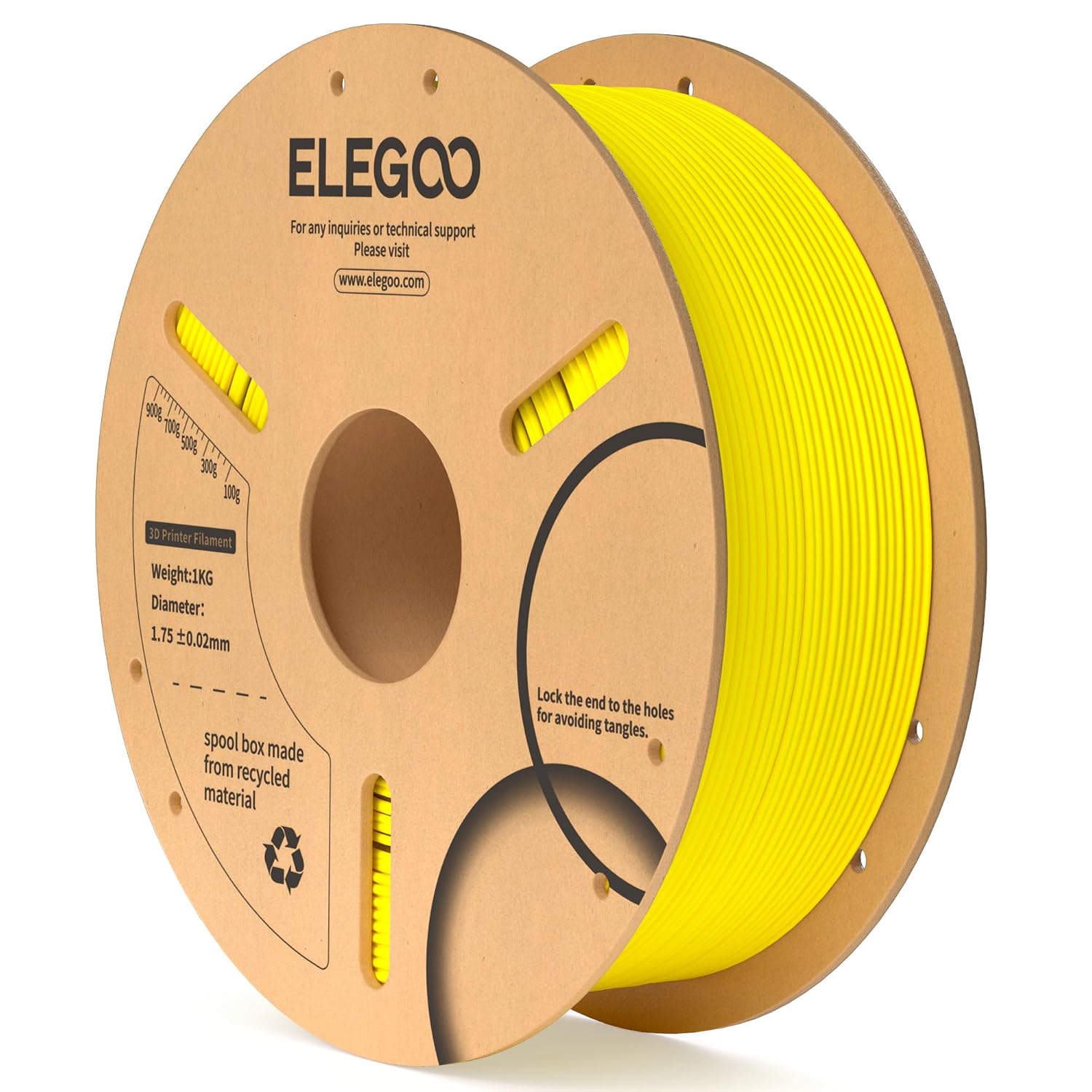
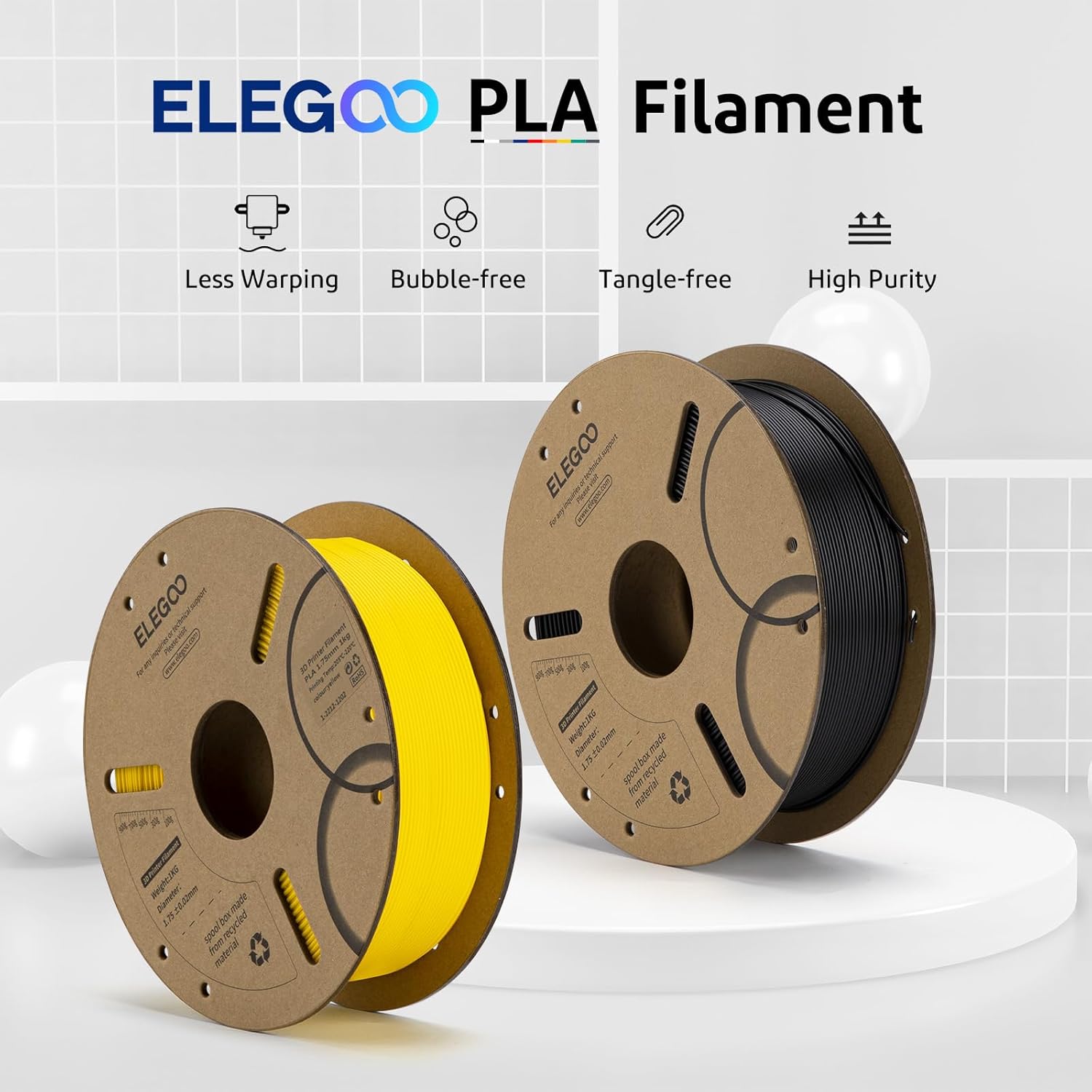
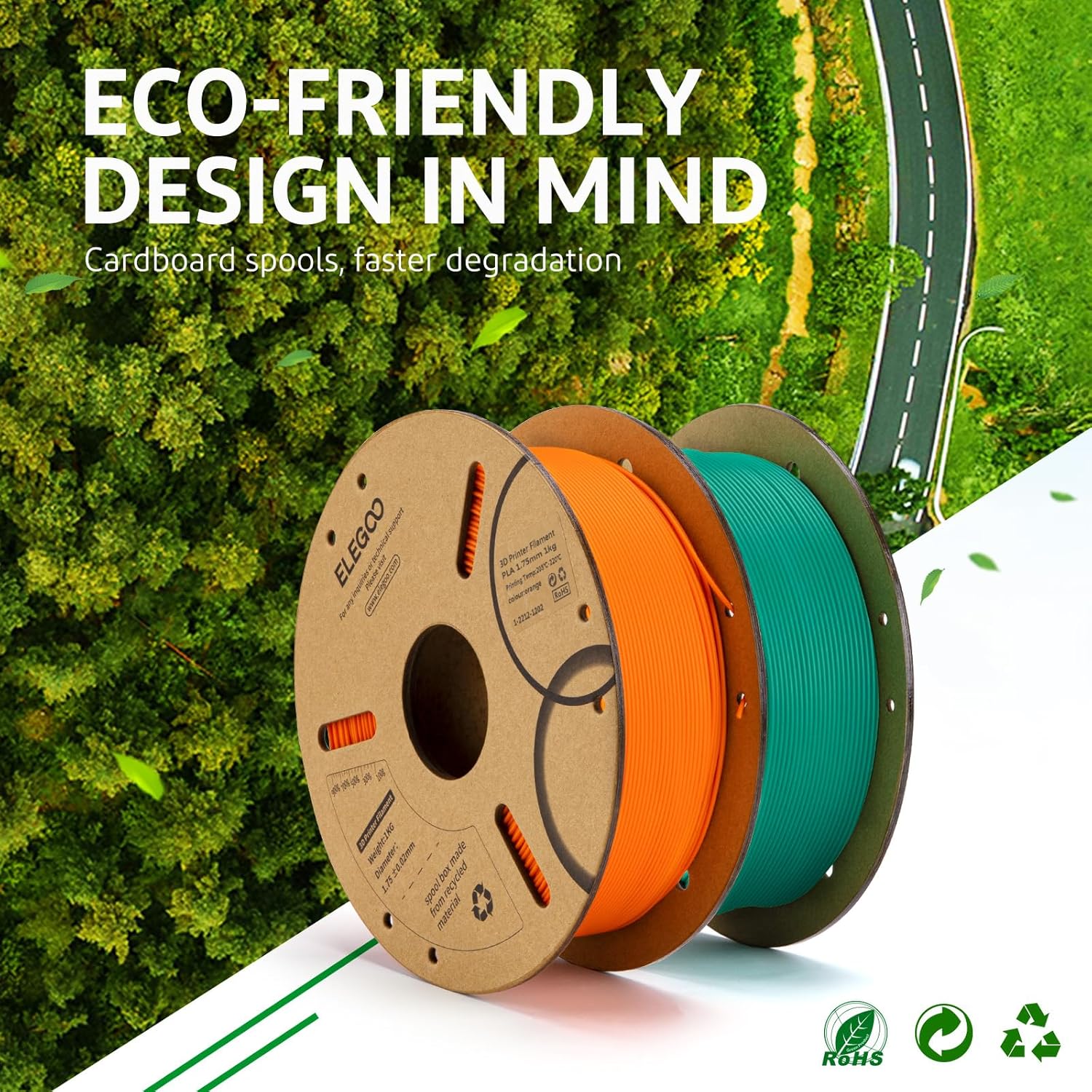
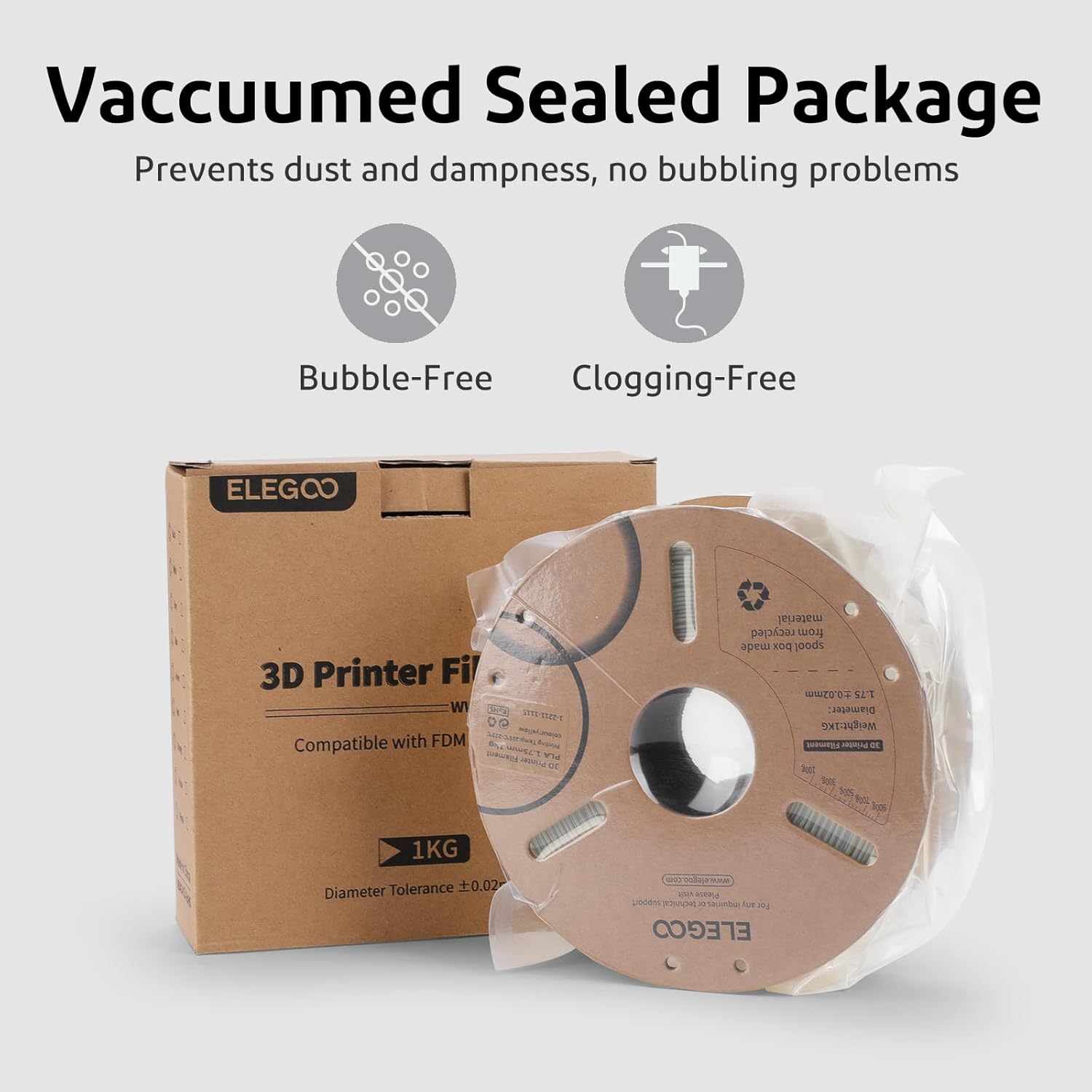
A small but meaningful detail is the spool design: it has a larger inner diameter to help feeding. And the filament is described as “fully dried for 24 hours” before packing, then sealed to protect it from moisture and dust. That’s not a glamorous spec, but it can help avoid common “why is my print bubbling or clogging?” headaches.
What it’s like to print with
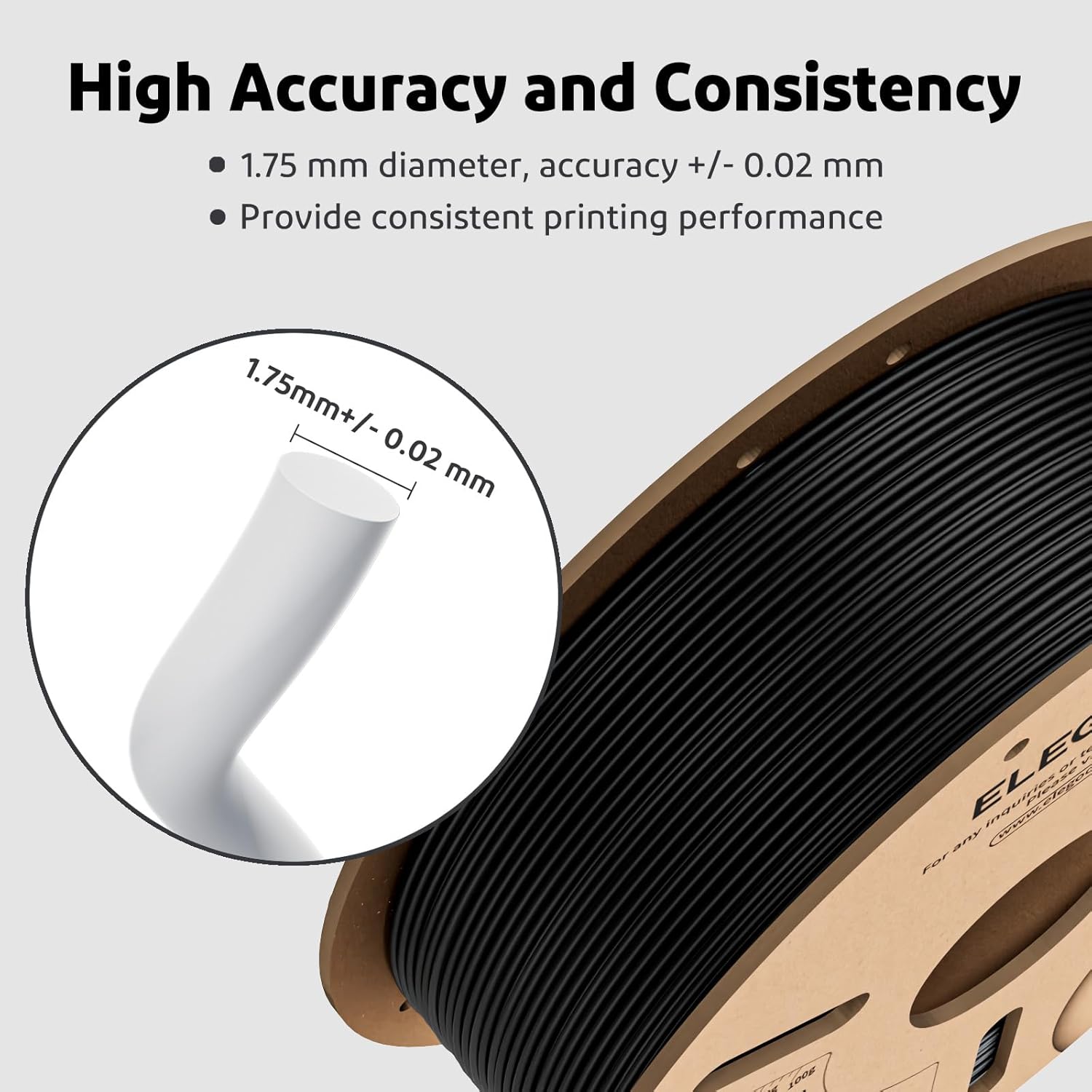
The manufacturer positions this PLA as consistent and stable, with dimensional accuracy of +/- 0.02mm. Over time, that kind of tolerance matters if you print the same job repeatedly, run larger batches, or simply want fewer minor flow inconsistencies.
They also mention strong layer bonding and good layer flow without obstructions, aiming to reduce skipping, snags, or extrusion problems.
In day-to-day terms, you can think of it like this: when filament feeds neatly and extrudes smoothly, your prints are less likely to suffer from uneven lines or sudden interruptions mid-job. For example, if you’re printing a batch of small brackets or a decorative panel, consistent diameter and steady extrusion can make the difference between “pretty good” and “consistently good” across the batch.
Where it stands out
What you’ll notice day to day is largely about process friction:
- Less tangling: it’s described as being tightly wound with manual checks to help keep the line orderly, and to reduce the chance of snapping or breakage.
- Easier feeding: the spool’s internal diameter is bigger to support smooth filament pull-off.
- More predictable results: dimensional accuracy is stated as +/- 0.02mm, which is aimed at stable printing and a smoother run.
- Print comfort and finish: PLA is described as odourless during printing and giving a shiny surface finish.
Worth noting: the description leans heavily on intended outcomes (“smooth”, “stable”, “without obstructions”). Actual results still depend on your printer settings, nozzle condition, and how you store filament after opening. Still, as a PLA spool for general use, it ticks the right boxes.
Things to watch before you buy
There are a couple of limitations to keep in mind.
First, this is PLA. If you need parts that will experience higher temperatures, direct sunlight for long periods, or tough mechanical stress, PLA may not be your best long-term choice. It’s more of an “easy-to-print, great-looking for many indoor and display uses” material.
Second, the stated accuracy and performance claims are “on paper” and rely on consistency in manufacturing. If your printer is finicky with certain PLA types, you may still find you need to tweak temperatures, cooling, or speed.
Third, while it’s said to be dried and sealed to protect against moisture and dust, once you open the pack you still need to store it sensibly if you want to keep those benefits.
Who it suits (and who should skip it)
It makes sense if you want PLA for everyday FDM printing—things like model prototypes, general parts, fixtures for short-term use, or anything where you value smooth extrusion and a glossy surface.
It might not be a great match if you’re chasing a material for harsh environments, or if you specifically need a higher-performance plastic where heat resistance or durability is a priority. In those cases, PLA can feel a bit too “gamed for comfort” rather than built for demanding conditions.
It’s also not the best pick if you’re looking for a filament type outside the usual PLA profile and you have strong material-specific requirements that aren’t addressed in the provided details.
Final verdict
If you’re buying PLA for 1.75mm FDM printing and you care about repeatability, ELEGOO PLA checks a lot of the practical boxes: dimensional accuracy of +/- 0.02mm, a focus on smooth feeding and reduced tangles, and a moisture-protection approach via drying and vacuum sealing.
You should buy it if you want a sensible, consistent PLA spool for routine printing on most compatible FDM machines. You may want to skip it if you need a filament for heat-heavy or outdoor-ready applications, or if your project demands a more specialised material performance than PLA typically offers.
FAQs
Is this PLA compatible with most FDM printers?
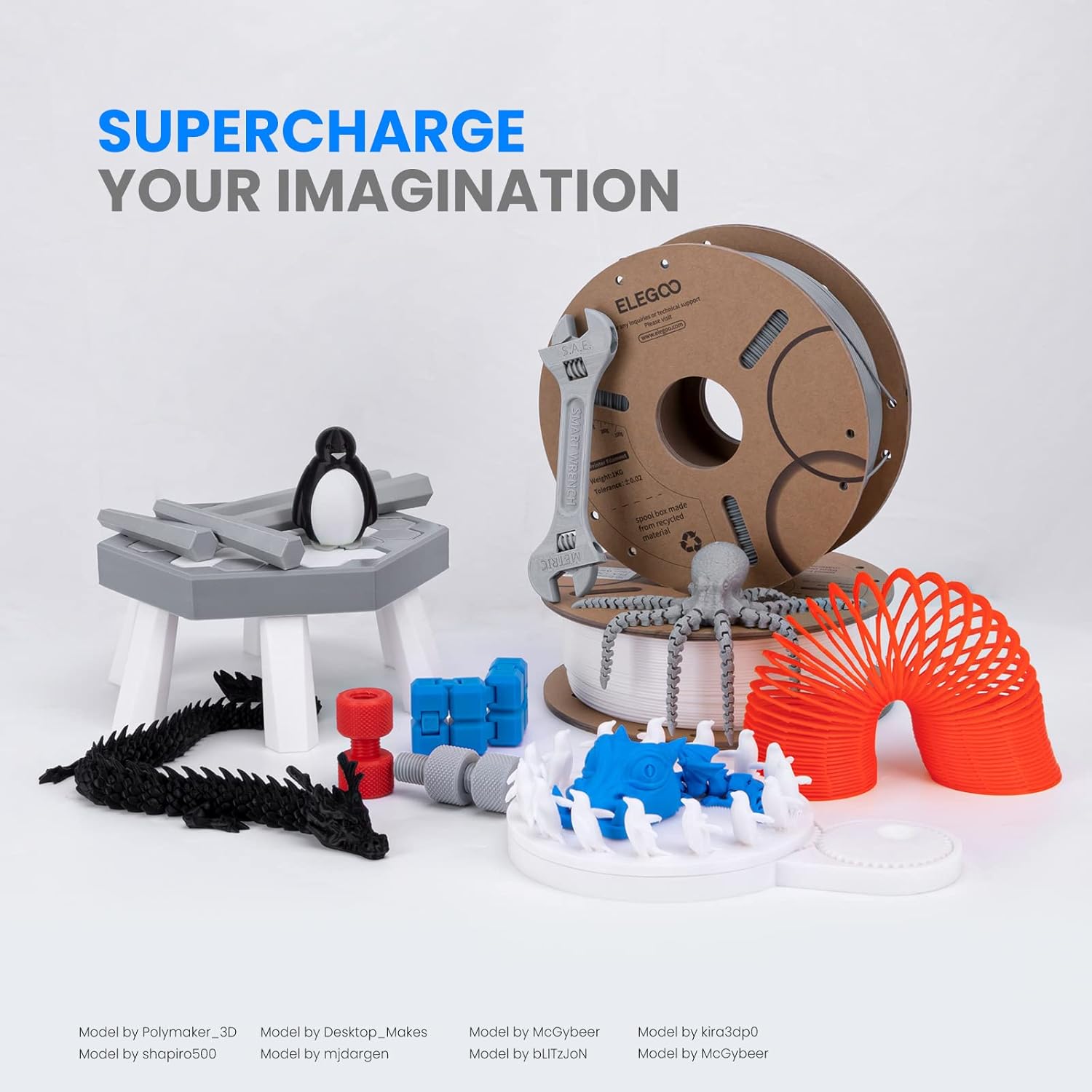
It’s described as fitting most FDM 3D printers that use 1.75mm filament, based on universal compatibility.
Is it dried before it’s packed?
Yes. The filament is described as fully dried for 24 hours before packaging.
Will it smell during printing?
The description says it’s odourless during printing.
Does it help reduce tangles and breakages?
The packaging description mentions complete mechanical winding, manual inspection, and steps aimed at keeping the line orderly and reducing the chance of snapping or breaks.
What finish should I expect?
It’s described as providing a glossy surface finish.