

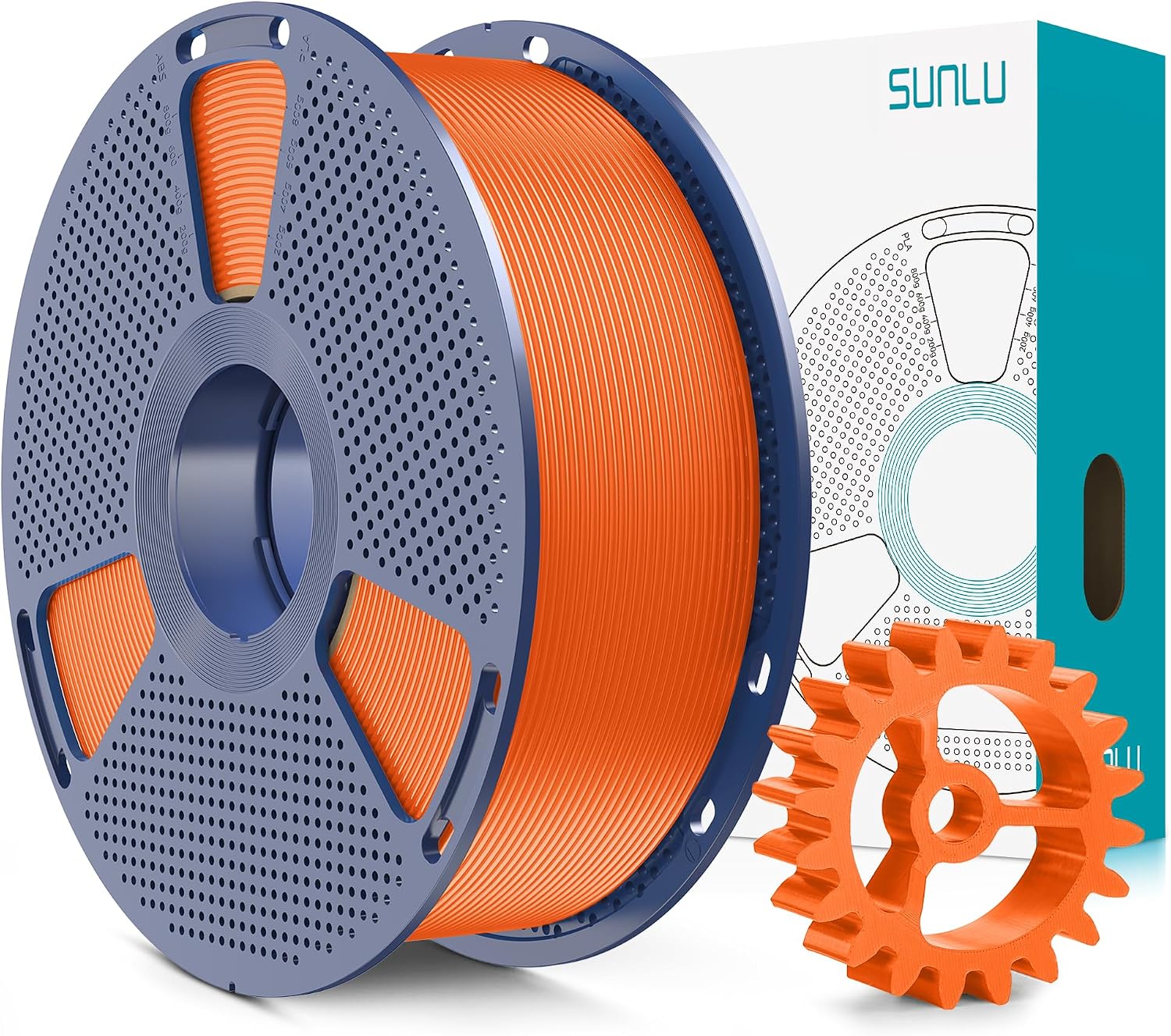
SUNLU PLA+ 2.0 Filament (1.75mm) in Sunny Orange – tougher PLA+ for stronger FDM prints
Reviews
Price
Product description
What it is and why you’d buy it
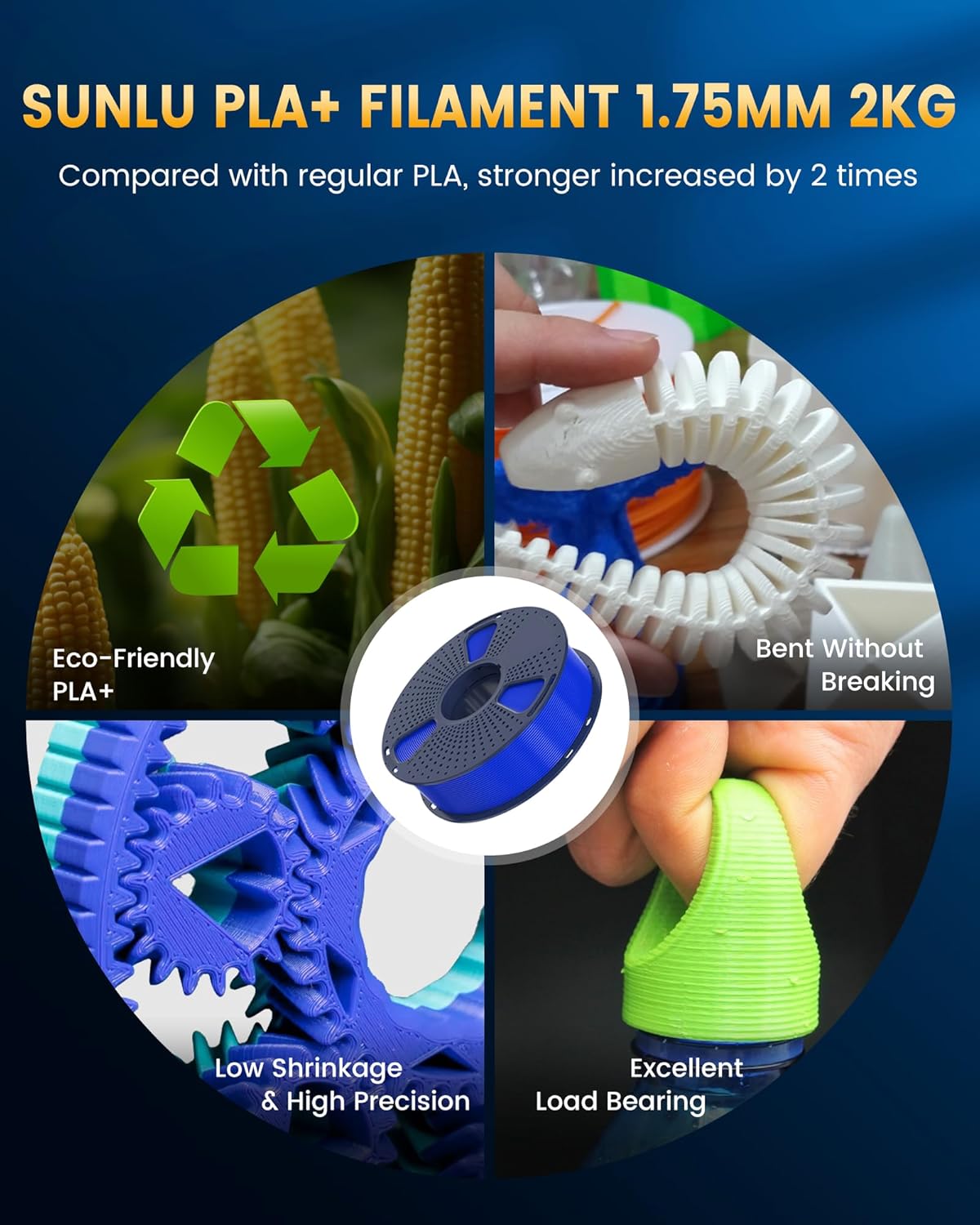
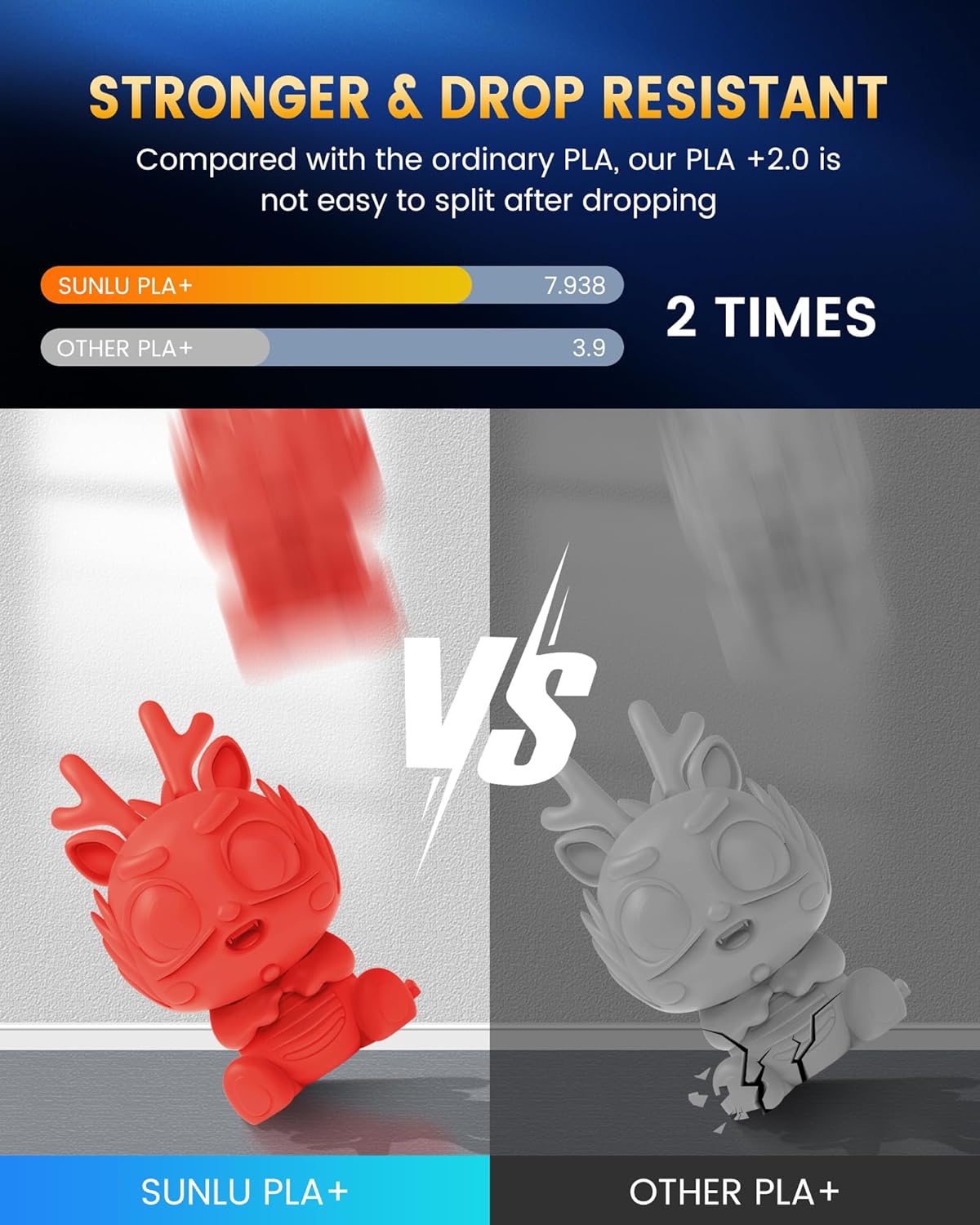
SUNLU PLA+ 2.0 is an FDM 3D printer filament aimed at people who like PLA but want a bit more “bite” in the finished parts. The key idea here is improved PLA+ performance: compared with standard PLA+, it’s described as tougher and less prone to brittleness and cracking. That’s exactly the sort of upgrade that matters if your prints are meant to be handled, fitted, or used beyond just display.
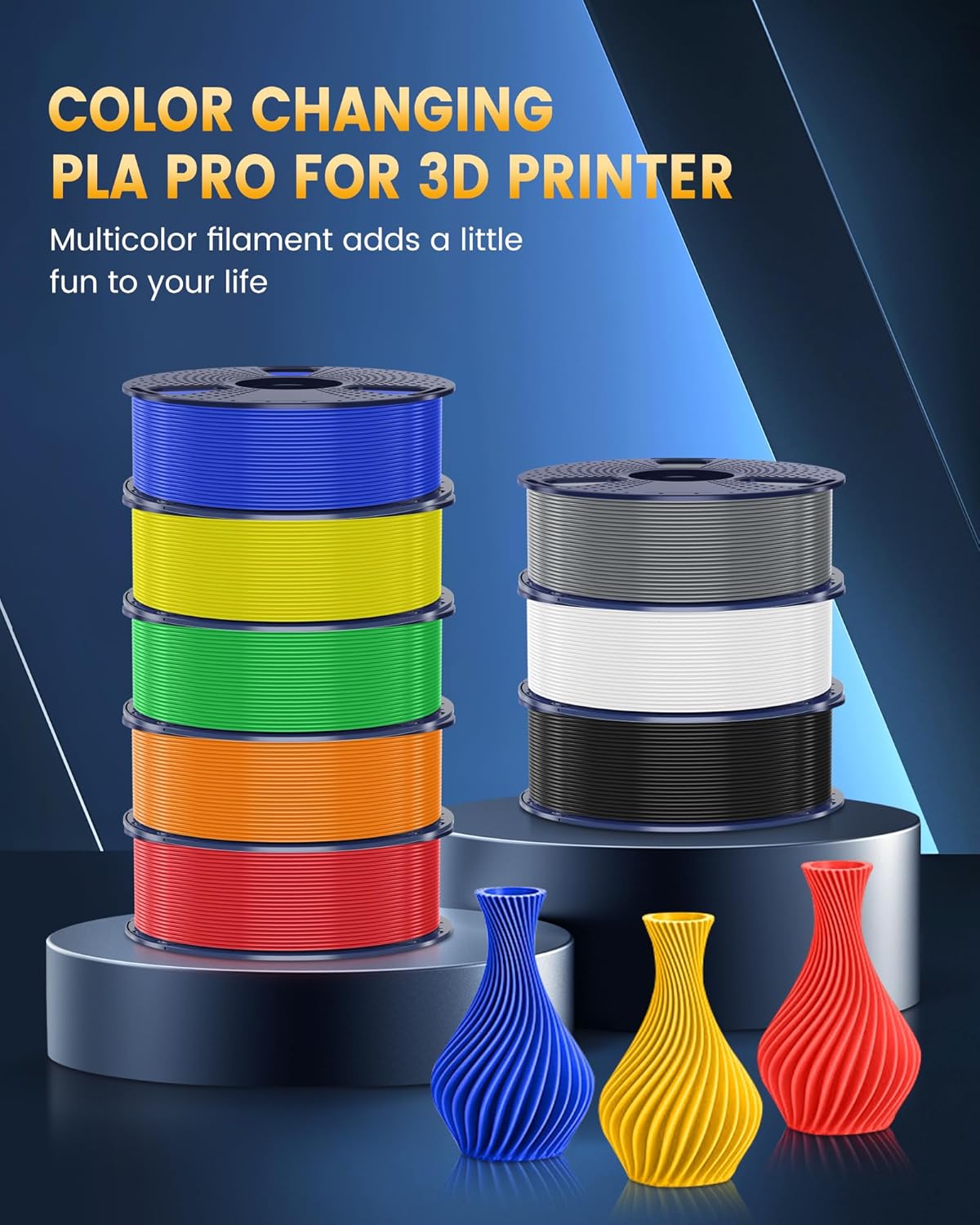
The Sunny Orange colour is a practical bonus if you’re matching themes or want parts that stand out without painting. It’s not a specialty engineering filament, though—on paper, it sits in the PLA+ family where you’re trading off extremes for easier printing and good layer adhesion.
The essentials: what matters in day-to-day printing
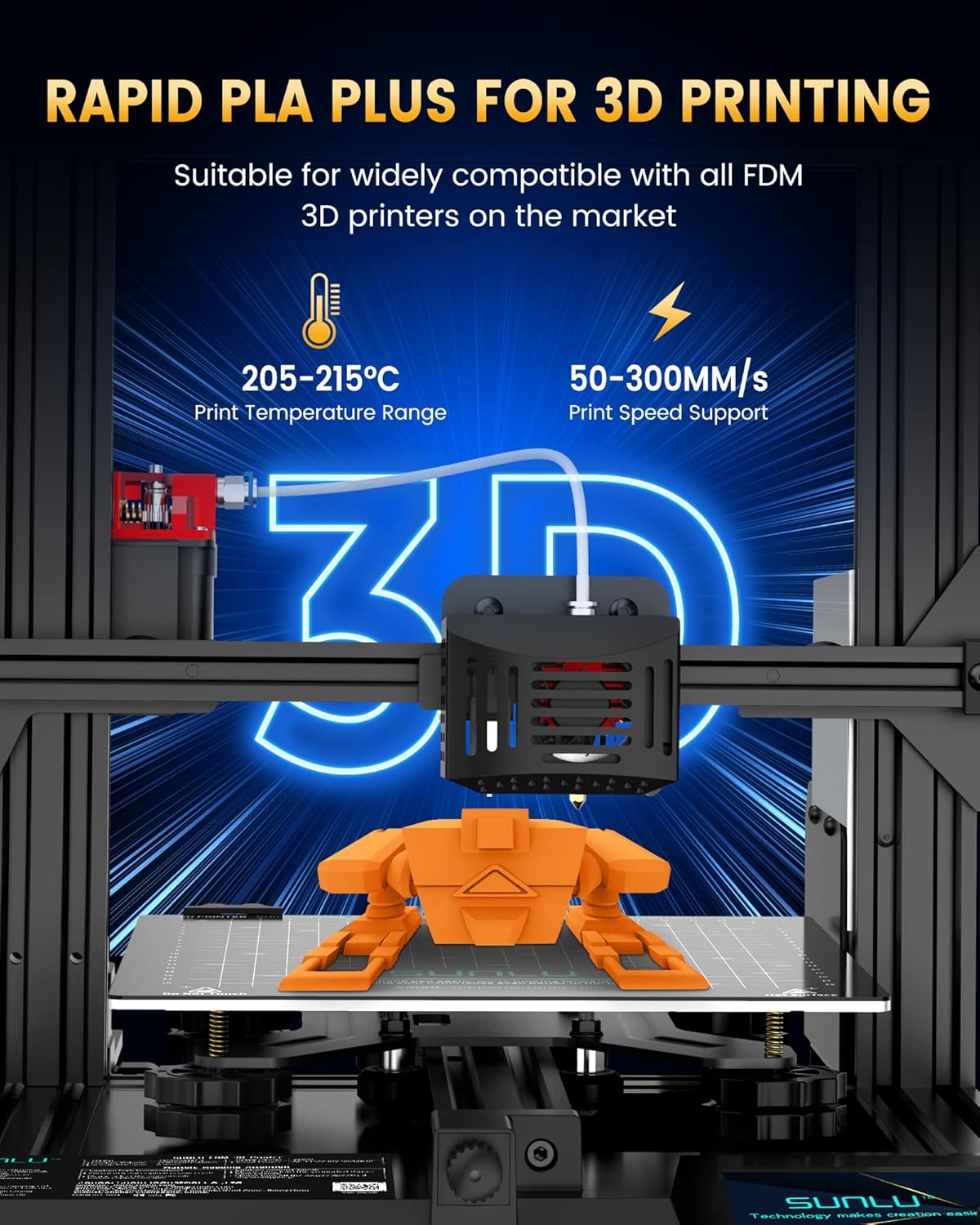
A few details in the spec talk directly to what you’ll notice while printing. First, it’s positioned as suitable for faster printing: the filament “supports” printing speeds from 0 to 300 mm/s, which suggests it’s been designed to cope when you’re pushing throughput.
Second, layer bonding is a big deal with PLA-type materials, and SUNLU highlights reliable adhesion with a smooth surface and reduced risk of delamination. If you’ve ever had layers separate because a filament was a bit temperamental, this is the type of claim you’d want to read carefully.
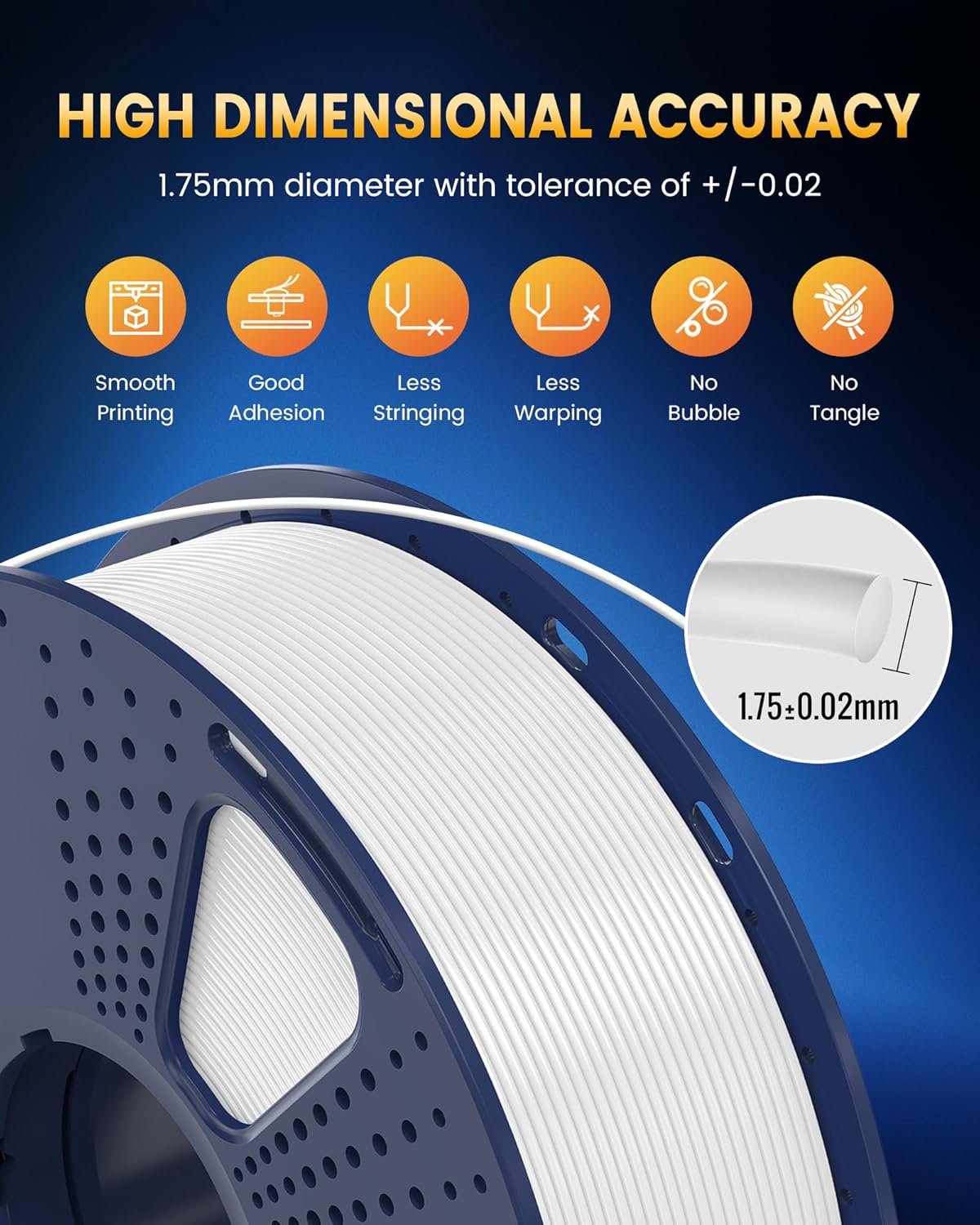
Finally, it’s marketed as neatly wound and consistent, with the goal of reducing tangles, stringing, and blockages during the print. That’s one of those things you might not think about until you’re halfway through a long job and the spool starts misbehaving.
Is it perfect? Not necessarily—PLA+ filaments still depend heavily on your printer setup and temperature tuning, so results can vary if your machine runs hotter/colder than expected.
Key takeaways you should verify before committing
The most useful “decision” info is the recommended settings. For best results, SUNLU recommends a nozzle temperature of 205–220 °C, a bed temperature of 50–60 °C, and a print speed of 100–300 mm/s.
Those ranges are helpful because they tell you how the filament is intended to behave. If your printer’s usual PLA profile is far away from these temperatures, you may need to adjust—otherwise you risk the usual issues: weak adhesion, rough surfaces, or instability.
Also worth noting: the stated dimensional accuracy is ±0.02 mm. That’s good on paper, but accuracy in real prints still depends on calibration, cooling, and whether your slicer settings and machine mechanics are in good shape.
Tech specs
- Name: SUNLU PLA+ 2.0 Filament
- Type: PLA+ / FDM 3D printer filament
- Format: 1.75mm filament
- Material: PLA+
- Colour: Sunny Orange
- Dimensional accuracy: ±0.02mm
- Recommended nozzle temperature: 205–220 °C
- Recommended bed temperature: 50–60 °C
- Recommended print speed: 100–300 mm/s
- Supported print speed range: 0–300 mm/s
- Compatibility note: stated as suitable for the 99% of other FDM 3D printer brands
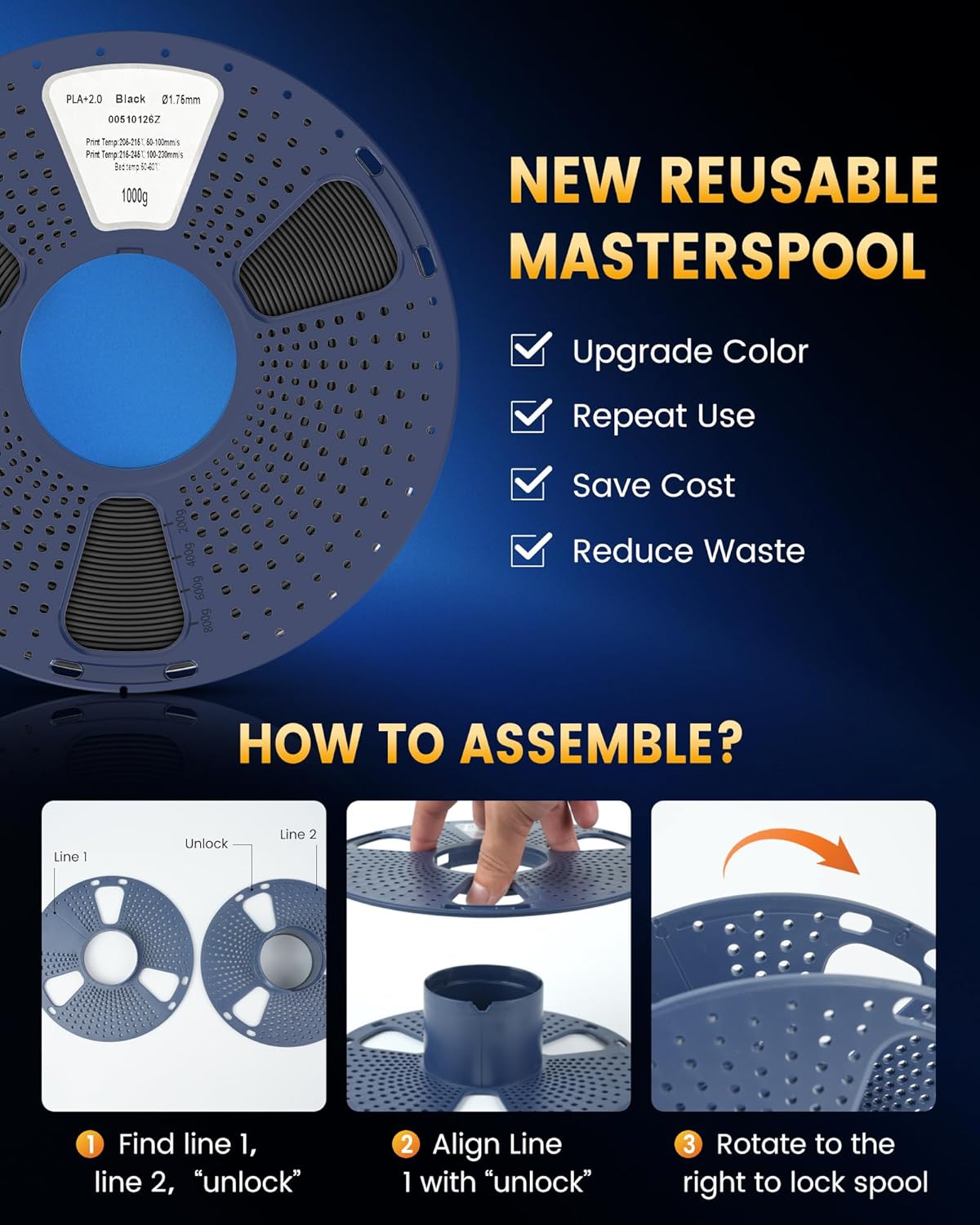
- Spool details (1kg): outer spool diameter 195 mm, spool width 57 mm, spindle hole diameter 63 mm
Where it shines (and where it may feel limited)
This filament is a sensible pick if you want PLA-like ease with improved toughness—think functional-ish models, parts that are handled, and prints where brittle failures would be annoying. The “tougher and stronger” positioning also fits projects like mechanical-looking covers, enclosures, brackets, and everyday accessories that need to resist snapping.
Where it may not be the best match is if you’re chasing performance in harsh heat or extreme stress environments. PLA+ is still PLA-based, and while it’s pitched as tougher than typical options, it’s unlikely to behave like a true high-performance engineering material. If your end goal is something that must survive very high temperatures or constant impact, you may want to look beyond the PLA+ class.
Practical example: a faster print without sacrificing layer quality
Imagine you’re printing a custom clip or a small housing in Sunny Orange. You’d likely start with the recommended nozzle/bed range (205–220 °C nozzle and 50–60 °C bed) and keep your speed within the suggested 100–300 mm/s bracket. The selling points here—better resistance to cracking, strong layer adhesion, and a smooth surface that helps reduce delamination—are exactly what you want when the part will flex slightly or be removed and refitted.
If you keep an eye on your first-layer results and don’t ignore cooling and calibration, this filament’s “fast printing” angle should translate into smoother workflow rather than just faster failures.
Should you buy it?
It makes sense if you’re using an FDM printer and want an upgraded PLA+ that’s designed to be tougher than standard PLA-type prints, while still being relatively straightforward to run. If you plan to print at moderate-to-faster speeds and care about reliable layer bonding, SUNLU PLA+ 2.0 is aligned with that use.
You may want to skip it if you already have a filament that consistently prints cleanly with your current temperatures and speeds, and you’re only after a colour change. And if your project demands high heat resistance or extreme mechanical performance, this material’s PLA+ positioning suggests it could feel like a compromise.
In short: for everyday functional prints where brittleness is the problem, it’s a credible upgrade. For demanding engineering use, it may not be the direction you want.
Mini FAQ
How fast can you print with SUNLU PLA+ 2.0?
SUNLU states it supports printing speeds up to 300 mm/s, with recommended settings falling within 100–300 mm/s.
What temperatures does SUNLU recommend?
The guidance given is 205–220 °C for the nozzle and 50–60 °C for the bed.
Is it suitable for most FDM printers?
The listing claims broad compatibility: suitable for the 99% of other FDM 3D printer brands. Still, your printer type and hotend/bed behaviour can affect results.
Does the filament reduce tangles and print interruptions?
SUNLU describes the filament as neatly wound with consistent winding, aiming to reduce entanglement, stringing, and blockages.