

ELEGOO PLA+ Filament 1.75mm Brown, 1kg spool (High Toughness PLA Plus)
Reviews
Price
Product description
What it is and why people buy it
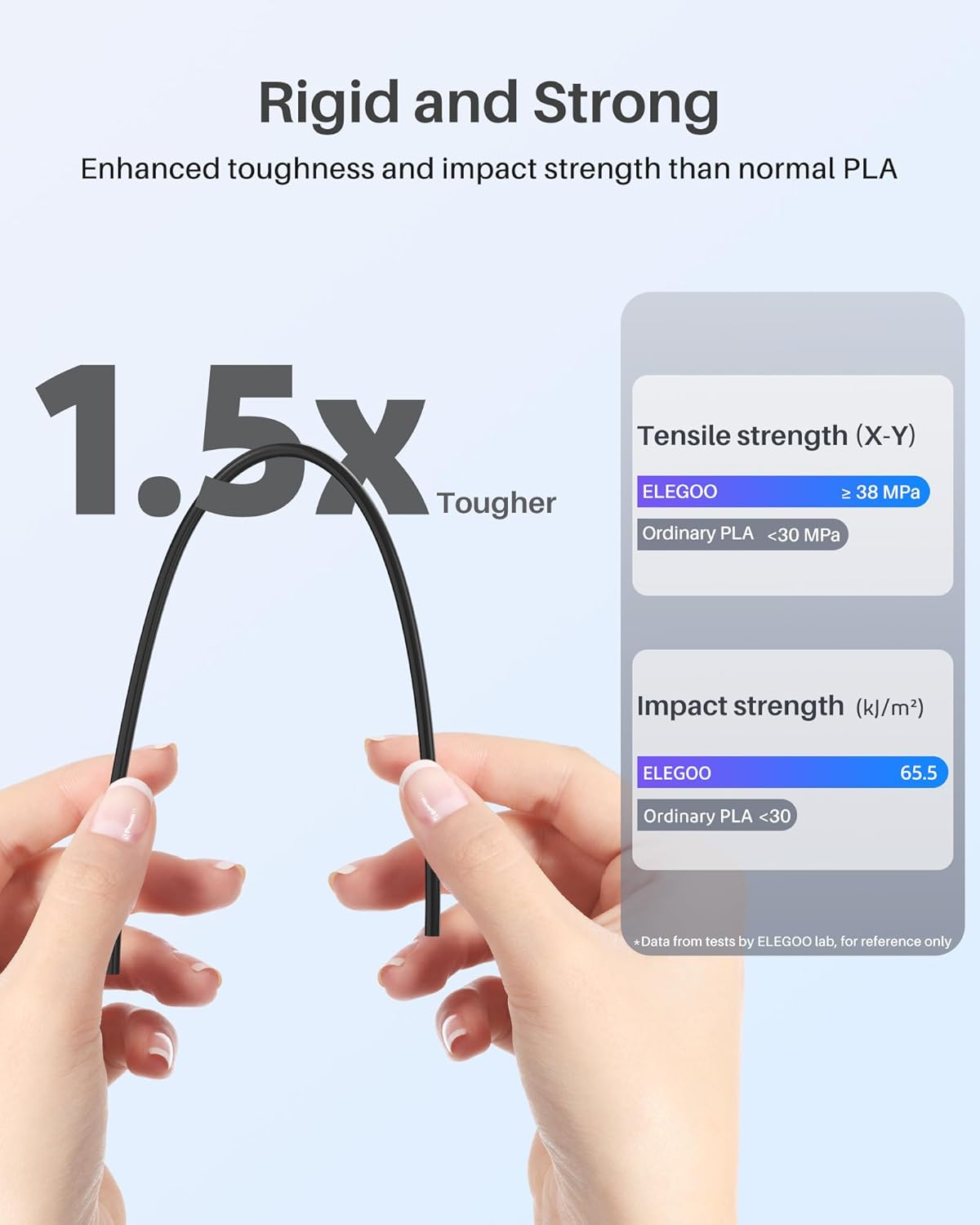
ELEGOO’s PLA+ filament is a 1.75mm brown spool aimed at everyday FDM printing when you want something a bit more forgiving and capable than “basic” PLA. On paper, the pitch is simple: PLA+ is designed for improved mechanical properties versus standard PLA, so parts should handle knocks and everyday handling better.
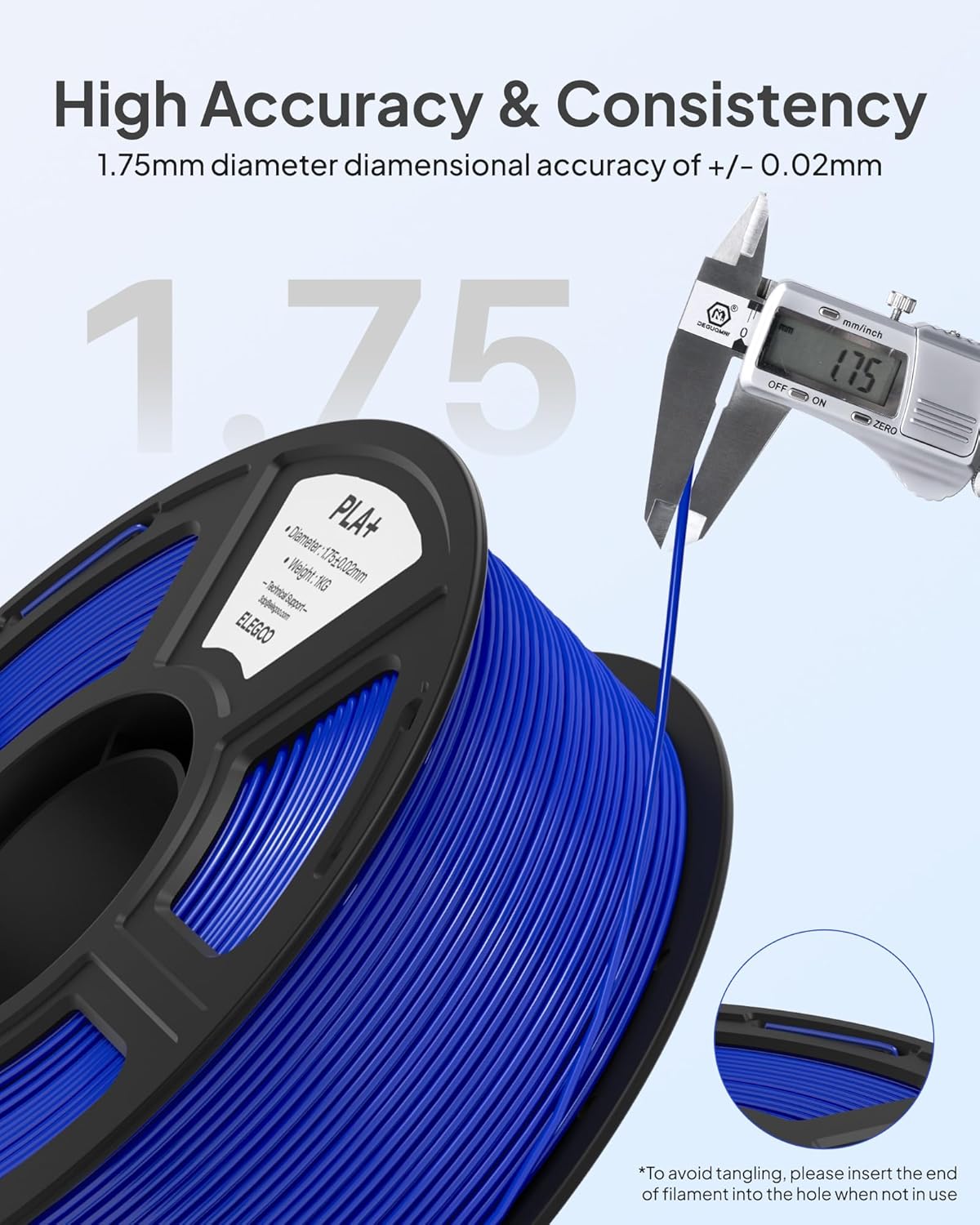
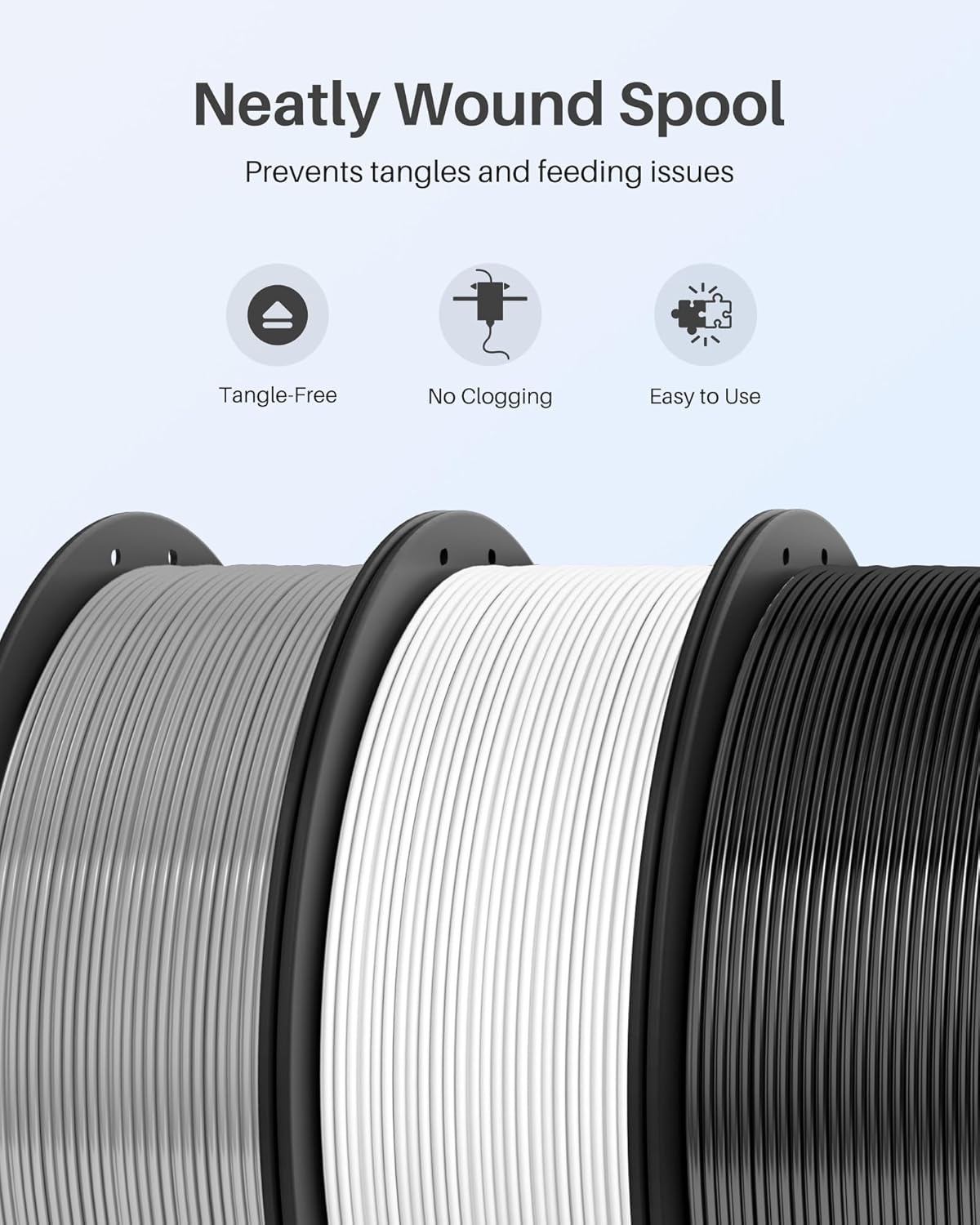
It’s also built around practical usability. The filament is described as more consistent in diameter (with stated dimensional accuracy of ±0.02mm), and the spool is wound in a more orderly way to help reduce the annoying extras like tangles, filament breakage, and “quiebre” type issues that can ruin a long print.
That combination—strengthier PLA+ feel, consistent feeding, and a spool that’s meant to stay tidy—makes it the sort of roll you’d consider when you’re moving beyond test prints and starting to make functional pieces (still not industrial, but useful around the home or workshop).
Key takeaways (the parts that matter)
What stands out with this ELEGOO PLA+ is the balance between “printability” and “performance”. The base description flags strong layer adhesion and lower deformation/shrinkage, which is exactly what you want if your prints have a habit of warping or you’re trying to keep walls looking clean.
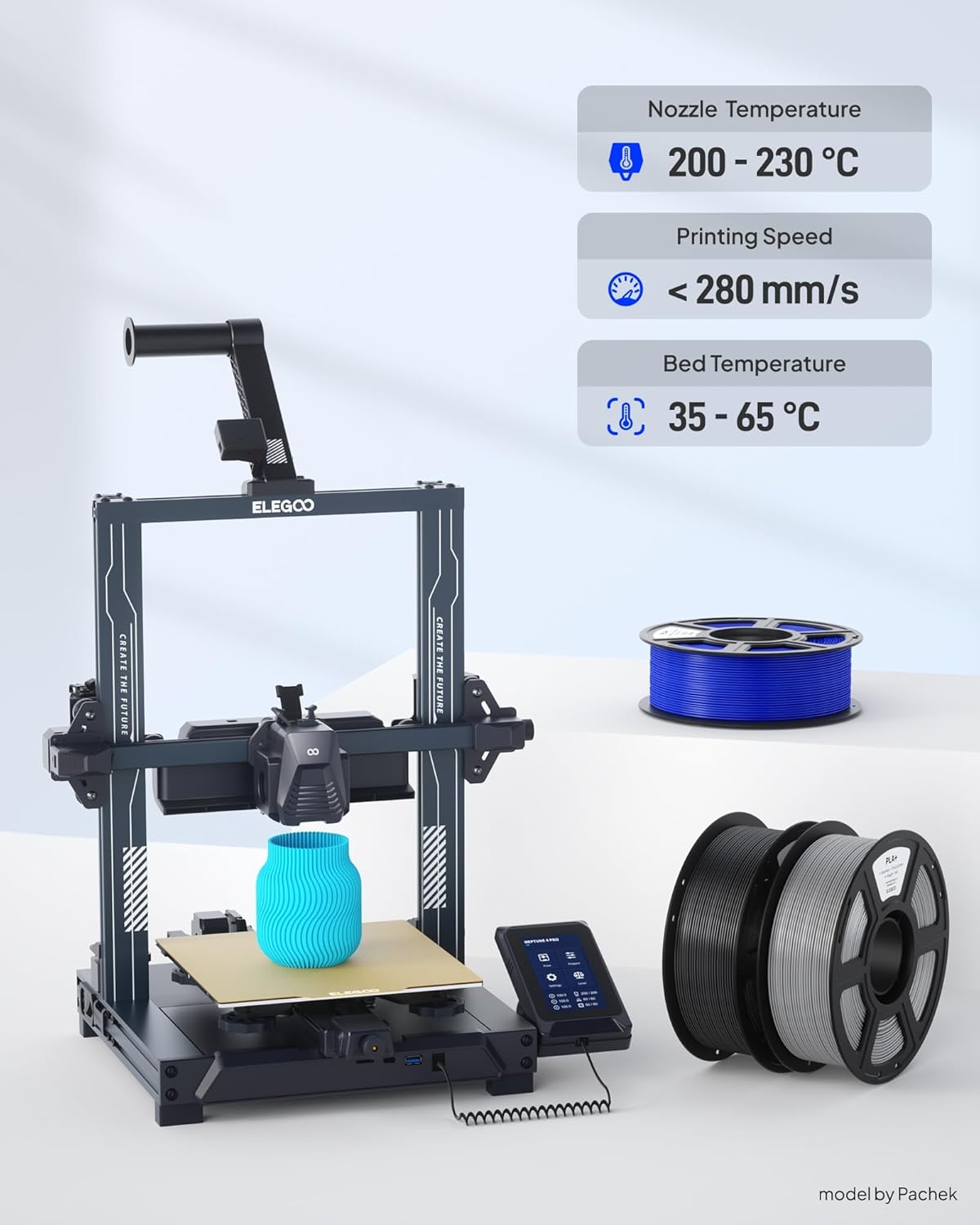
There’s also a temperature advantage mentioned: it’s claimed to print at a lower temperature than you’d expect for tougher materials. Lower printing temperature can make setup easier and reduce the risk of heat-related headaches—though of course, your actual best results still depend on your specific printer and hotend.
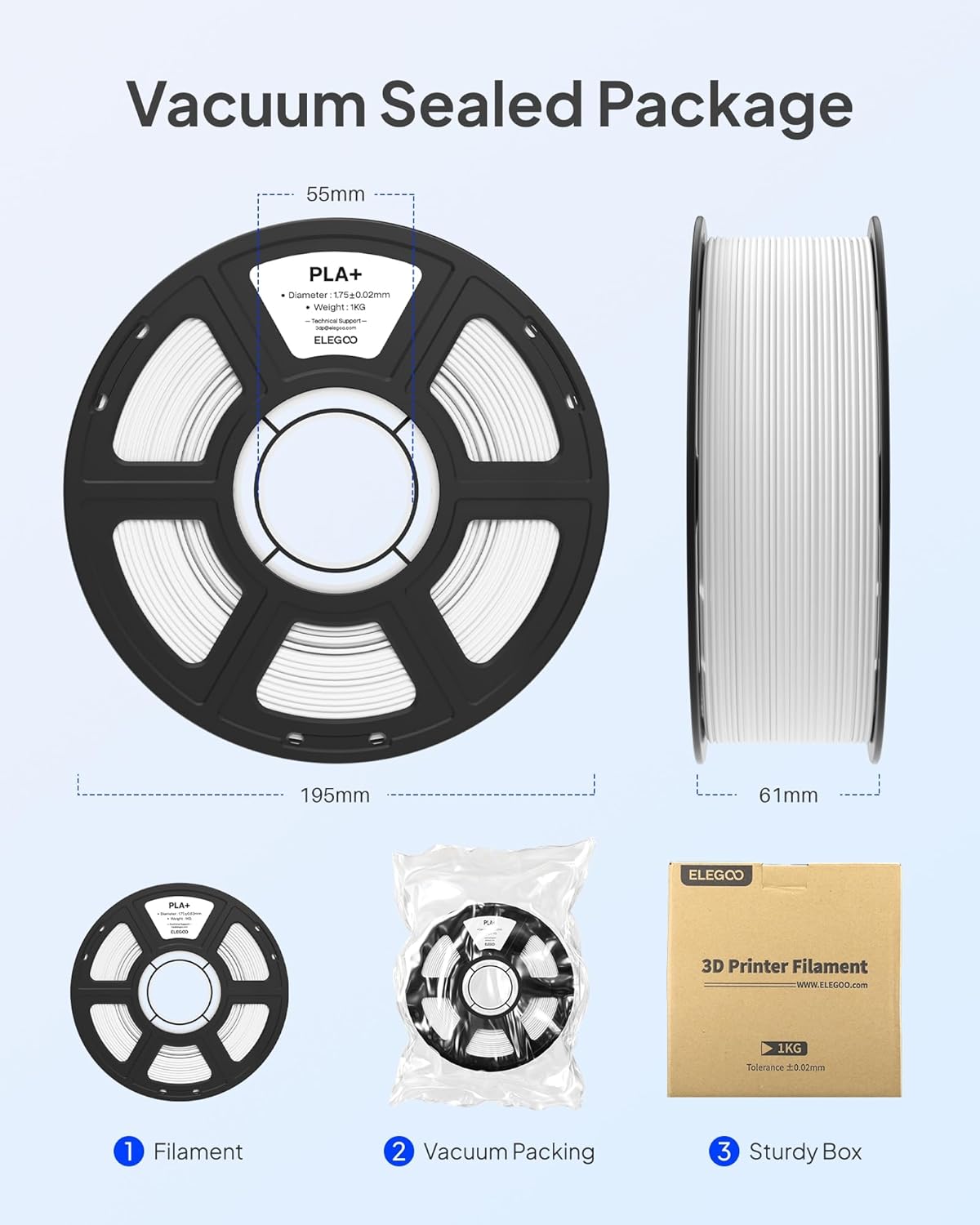
A final point worth noting: it’s described as fully dried before packaging and sealed in vacuum packaging to protect against moisture. Moisture problems are one of the most common reasons for popping, stringing, and inconsistent extrusion, so this is the kind of “boring” detail that often matters more than people expect.
What you’ll notice during printing
The story here isn’t about flashy features, it’s about day-to-day reliability.
If your current filament feels uneven or has given you feeding problems, the stated dimensional accuracy of ±0.02mm and focus on consistent diameter are meant to translate into steadier extrusion. In real terms, that usually means fewer surprises mid-print—less under-extrusion from inconsistent diameter, and fewer jams caused by friction or irregular feeding.
The spool angle is also a real-world concern. Even when filament quality is good, a poorly wound spool can lead to tangles or uneven unwinding. ELEGOO’s description talks about fully mechanised winding and inspection to keep the spool neat, which can help keep prints running when you’re away from the printer.
One small limitation to keep in mind: PLA+ isn’t a magic upgrade. If you’re expecting the stiffness, heat resistance, or impact performance of engineering-grade polymers, you may find PLA+ sits more in the “upper PLA comfort zone” than the “serious engineering material” category.
Tech specs
- Name: ELEGOO PLA+ Filament
- Type: PLA Plus
- Format: 1.75mm
- Capacity: 1kg spool
- Dimensional accuracy: ±0.02mm
- Colour: Brown
Pros and potential downsides
Why it makes sense to consider it - Better mechanical properties on paper: PLA+ is positioned for increased impact resistance and hardness versus standard PLA. - Consistent feeding: the stated ±0.02mm accuracy is aimed at stable extrusion. - Less likely to tangle: orderly winding plus inspection is designed to reduce filament entanglement and breaks. - Moisture protection: dried then vacuum sealed to help prevent humidity-related printing issues. - Easy usability: lower printing temperature and layer adhesion claims suggest it’s approachable.
Where it might fall short - If your goal is very high temperature performance or truly engineering-level durability, PLA+ may feel like a middle step rather than a final destination. - “Lower temperature” helps, but it doesn’t remove the need to dial in settings for your printer. You may still need to tweak speeds, cooling, and extrusion parameters.
It’s not a bad roll for the price category implied by a 1kg spool, but it’s best seen as a practical upgrade from standard PLA when you want sturdier prints without making life harder.
Who it’s for (and who should skip it)
It’s a good fit if you print on a typical FDM setup and you want a PLA+ roll that focuses on consistent diameter, tidy spooling, and a moisture-aware packaging approach. It suits makers who want functional parts—brackets, housings, organisers, fixtures, and general-use prototypes—where impact resistance and layer bonding matter more than “pretty aesthetic PLA” alone.
You may want to skip it if you’re chasing the limits of material performance—especially heat resistance—or you know you prefer a different filament type designed for harsher environments. Also, if you already have excellent standard PLA results with no moisture issues, you might not feel the extra toughness as clearly.
In practice: a quick example of use
Imagine printing a small enclosure or cable guide for everyday use. With PLA+, the hope is that stronger layer bonding and improved hardness help it survive repeated handling. If you’ve had brittle PLA parts snapping during assembly, this kind of filament upgrade is aimed at smoothing that rough edge—while still relying on a PLA-family approach that’s usually easier to print than more demanding materials.
That said, results still depend on your model design (wall thickness, infill, orientation) and your chosen print settings.
Is it worth it?
Worth buying if you want a 1.75mm PLA+ filament that’s meant to be consistent (±0.02mm), less hassle to unwind, and better protected from moisture. It also makes sense if “tougher PLA” is what you’re after, not a radical material change.
You might want to pass if your project needs engineering-level thermal performance or if you’re specifically chasing a filament category beyond PLA+’s comfort zone. In most everyday FDM use, though, this looks like a sensible, pragmatic step up from basic PLA.
Mini FAQ
Is ELEGOO PLA+ suitable for most FDM 3D printers?
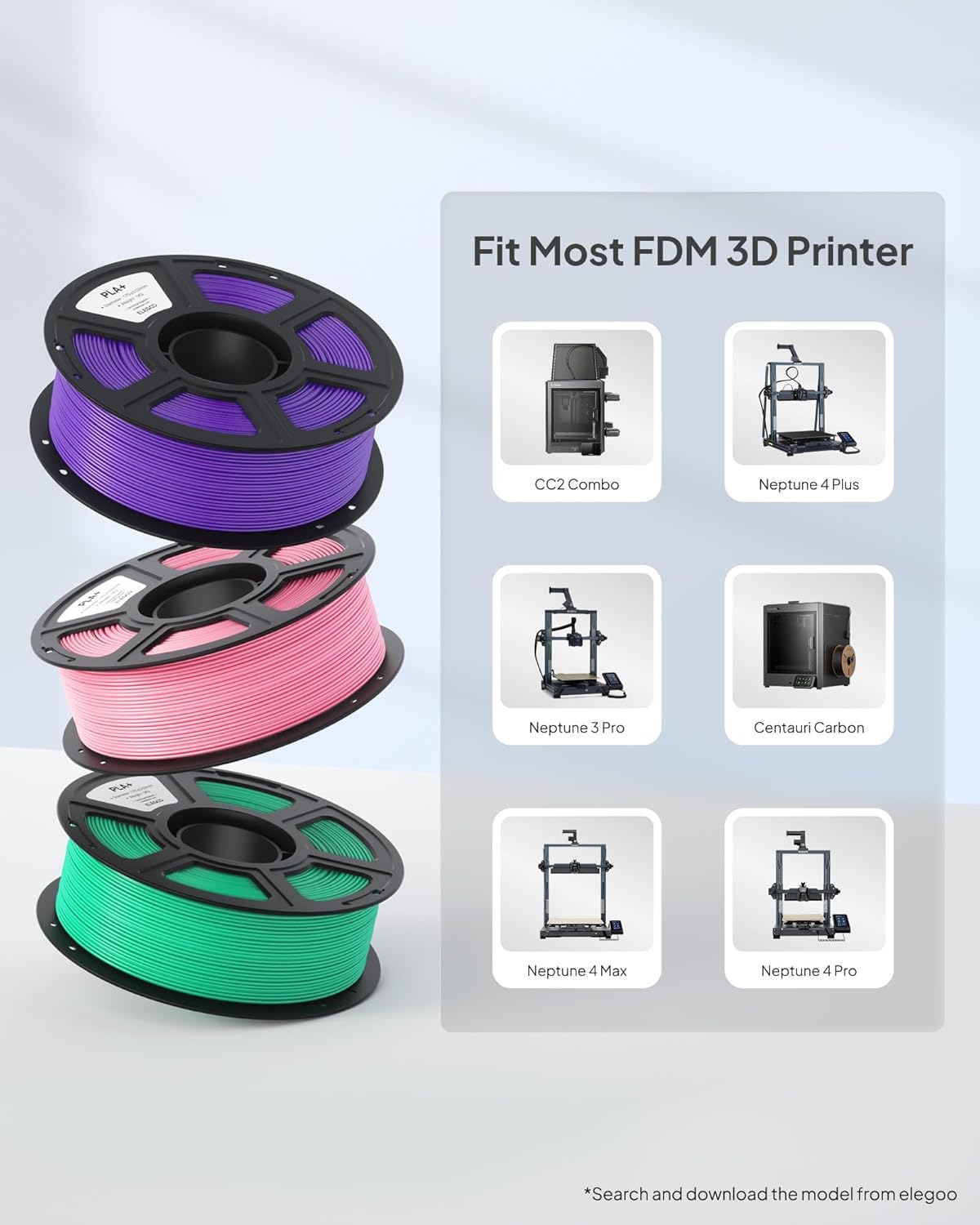
The description says it fits for most FDM 3D printers, but you should still check your printer’s requirements and your usual filament compatibility.
Does the vacuum-sealed packaging actually help?
Based on the information provided, it’s designed to protect the filament from moisture by being dried and sealed before packing. If you print in a damp environment, that detail is often worth paying attention to.
Will the ±0.02mm accuracy improve print results?
It’s intended to support dimensional consistency, which can help maintain steady feeding. While it can make a difference, your slicer settings and printer tuning still matter.
What if I still get stringing or clogs?
The filament is described as fully dried and vacuum sealed to reduce moisture-related issues, but if problems happen, it may come down to your printer settings, nozzle condition, or airflow tuning.
Does “lower printing temperature” remove the need to dial in settings?
Not entirely. Lower temperature can make setup easier, but you’ll likely still need to adjust temperatures, speed, and cooling for your specific machine and part design.