

TECBEARS PETG Filament 1.75mm White 1kg (high strength, good layer adhesion) for FDM 3D printers
Reviews
Price
Product description
The essentials
TECBEARS PETG filament in White is a 1.75mm PETG spool aimed at people who want something that’s relatively straightforward to print with, but also a bit tougher than the more “basic” plastics. On paper, it blends the more forgiving printing feel often associated with PLA, with the sort of durability you’d normally expect from more robust materials.
It’s also positioned as a filament with good layer adhesion and stable feeding, which matters in real use: you don’t just want it to look fine in a preview model, you want it to hold together during printing.
What it’s best for (and why)
PETG tends to suit everyday functional parts, so this TECBEARS option makes sense if you’re printing practical items that may get handled, bumped, or need some resilience. The description highlights durability, flexibility and impact resistance, which points toward use cases like brackets, holders, covers, and other “keep it around” bits.
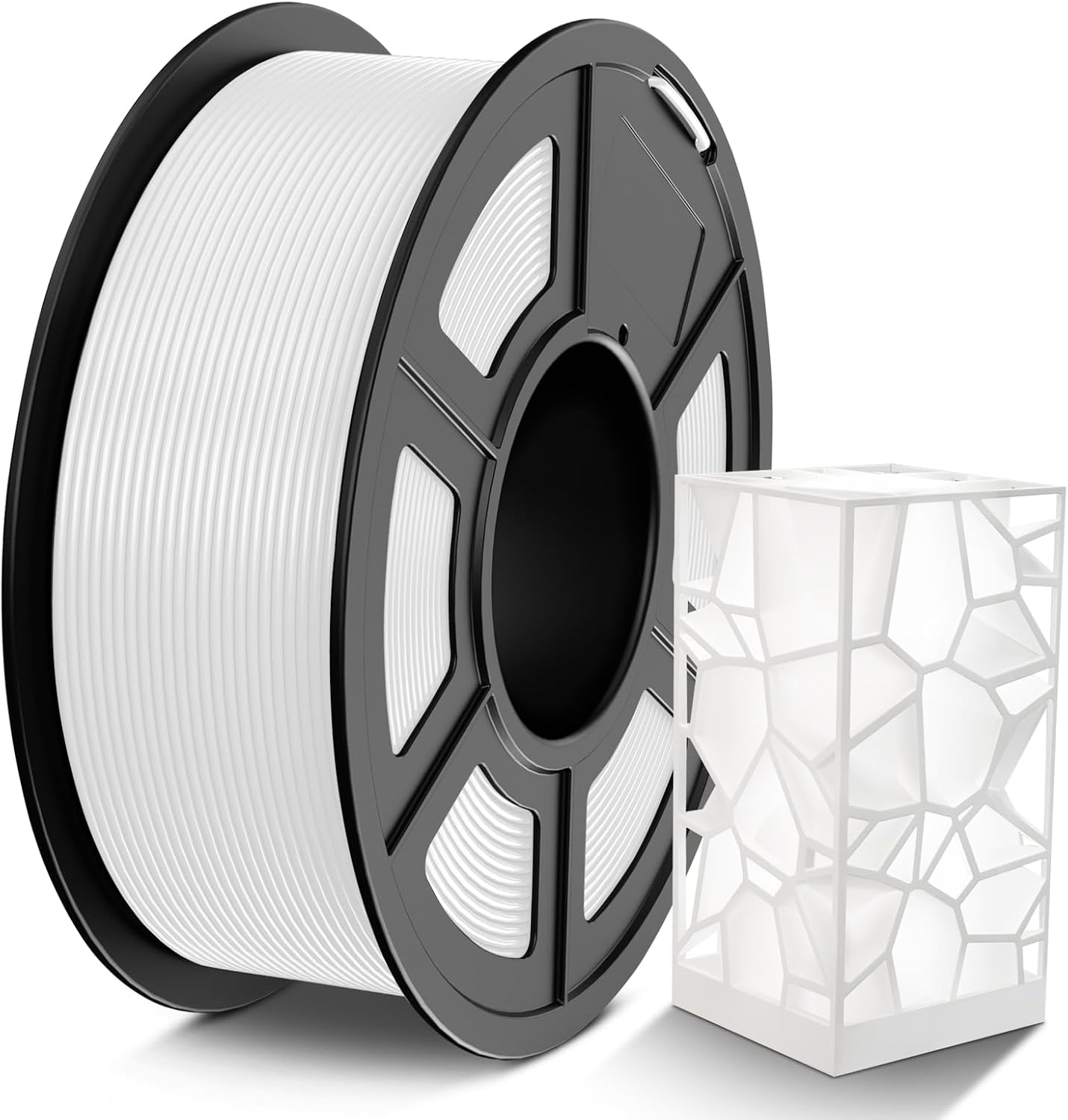
It also claims improved light transmission compared with PLA, with minimal warping and shrinkage. That’s relevant if you’re doing projects where you want a more glassy/diffused look, rather than purely opaque surfaces. Still, bear in mind that light-diffusion results can be quite sensitive to your wall count, print orientation and post-processing, so it’s not a magic switch—more of a promising direction.
Key features that affect your print
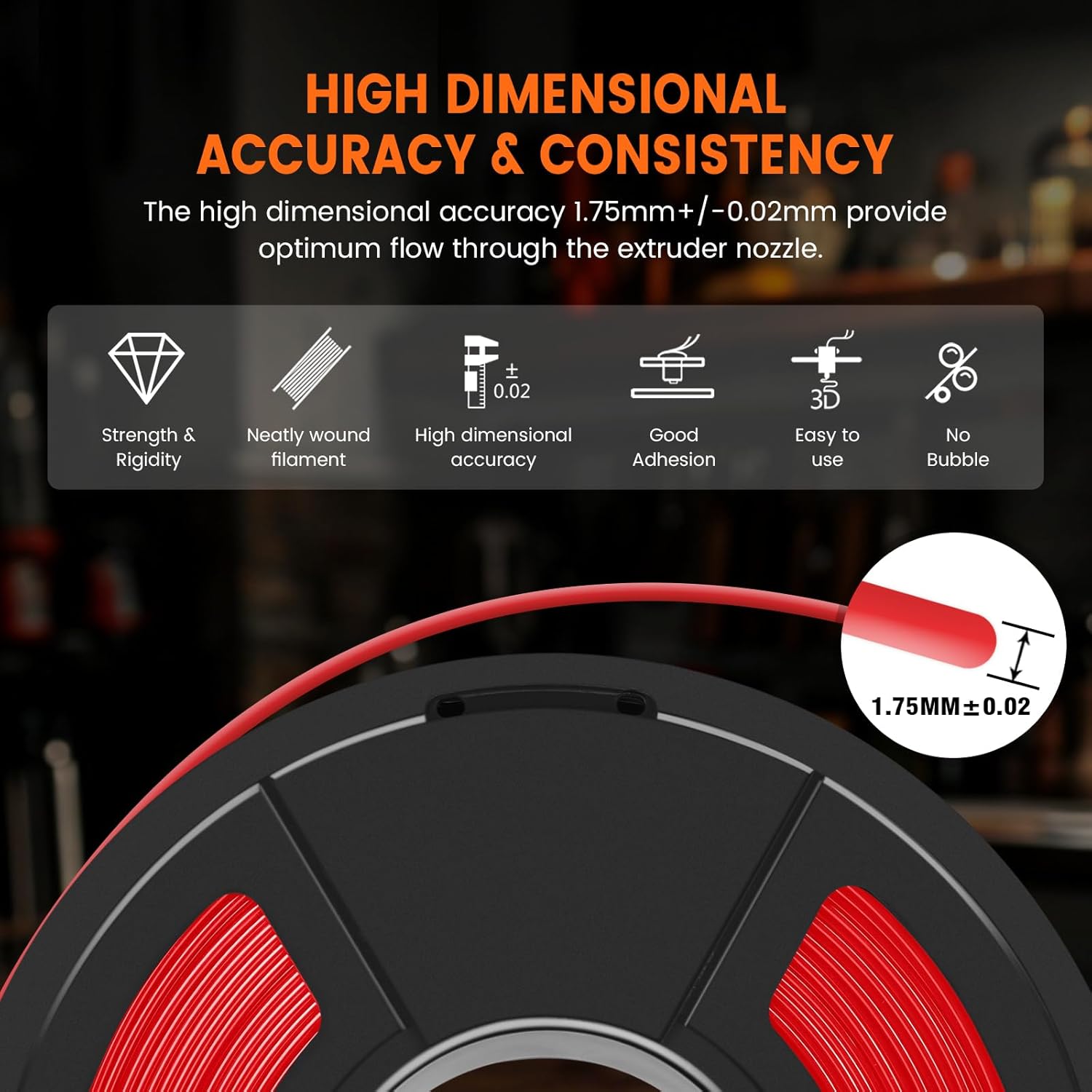
A big part of buying filament is how reliably it feeds and behaves during extrusion. This spool is described as having dimensional accuracy of +/-0.02mm, designed to support consistent feeding and smooth extrusion, helping reduce nozzle clogs.

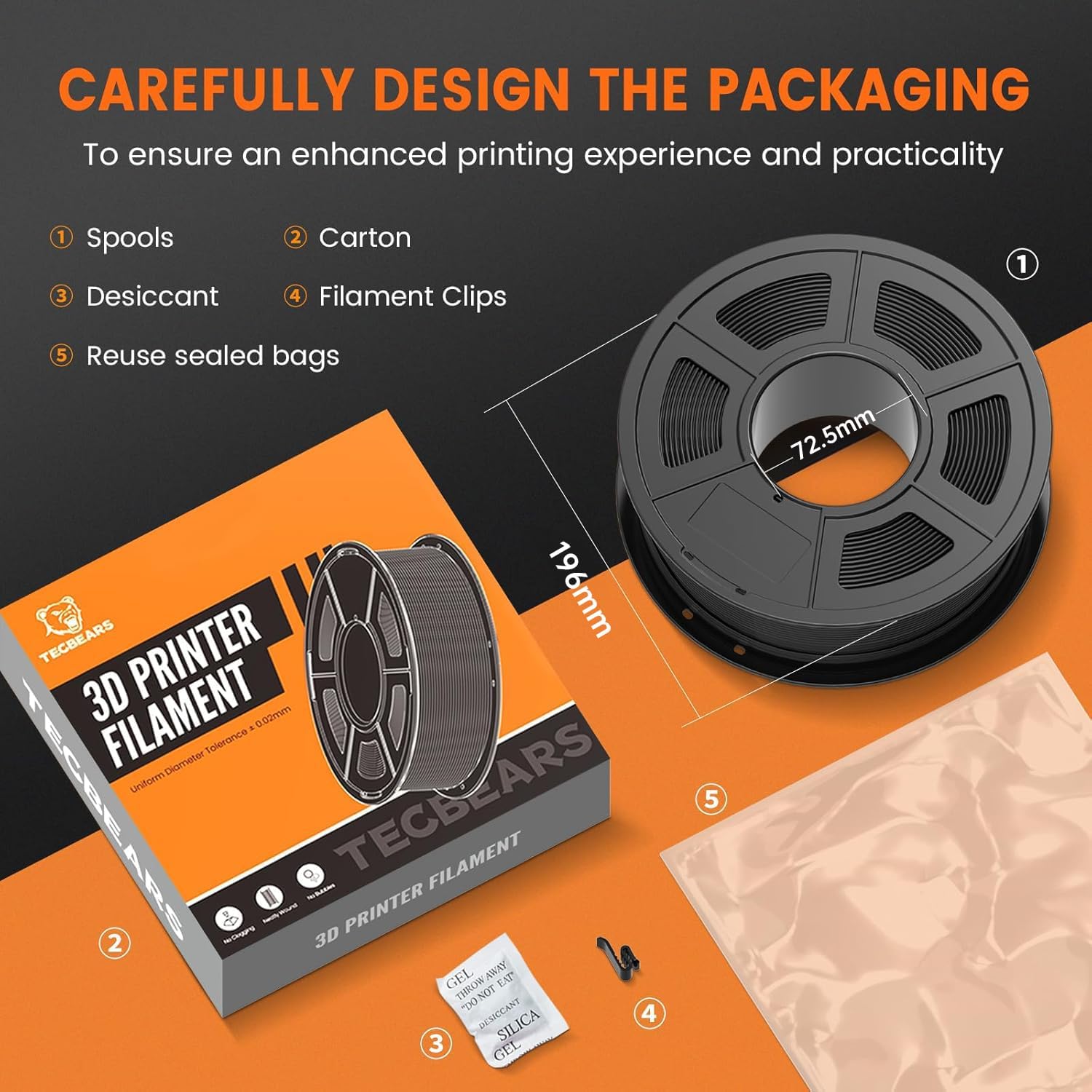
It also mentions a 24-hour drying process and vacuum sealing in a resealable pack. That’s a practical detail: PETG can be a bit fussy if it’s been sitting around damp, so having it arrive properly packaged is genuinely useful.
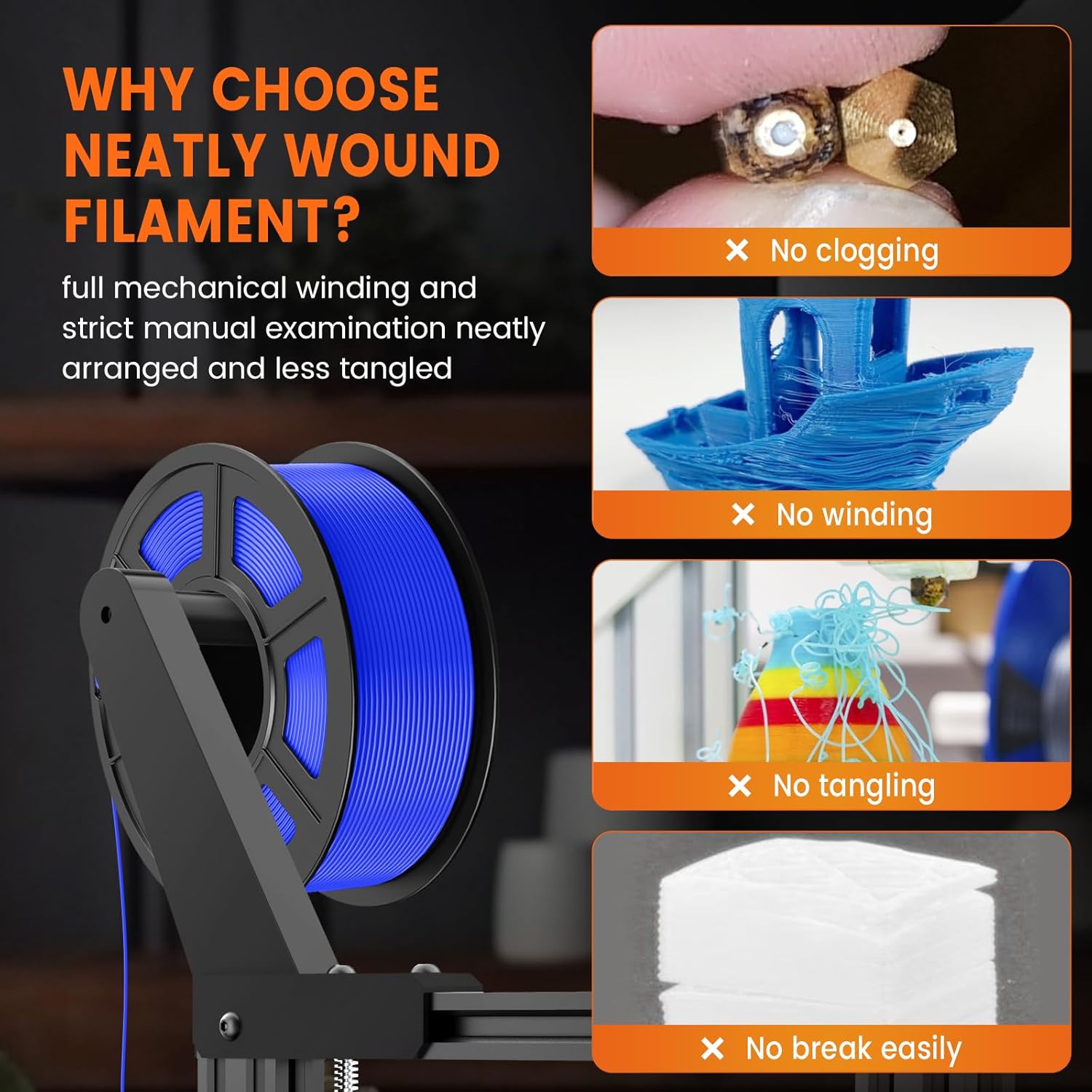
On top of that, the winding method is meant to keep the spool tidy, reducing tangles and line breaks. There are even filament string clips included, which is one of those small things that can save time during setup.
Settings you’ll likely need to match
For this PETG filament, the recommended extrusion/nozzle temperature is 220-230°C, with a heated bed at 60-70°C.
It’s worth noting that these are starting points, not a guarantee that every printer will behave the same. If your machine runs hot/cold, or your nozzle type differs, you may need to dial in a little. PETG can also respond differently depending on fan settings, speed and layer height—so if you’re chasing a specific finish or strength, you’ll probably end up tweaking.
Quick micro-scenario: if you’re printing a small functional bracket, you’d typically start at the lower end of the nozzle range (near 220°C), keep the bed on, and run a simple test piece first to check adhesion and whether the edges stay flat.
Compatibility and limitations to consider

This filament is described as fitting most FDM 3D printers (and also 3D pens), with compatibility claimed for 99% of FDM printers. That’s encouraging, but “fits most” still leaves room for exceptions—especially if your printer struggles with PETG’s specific temperature or extrusion requirements.
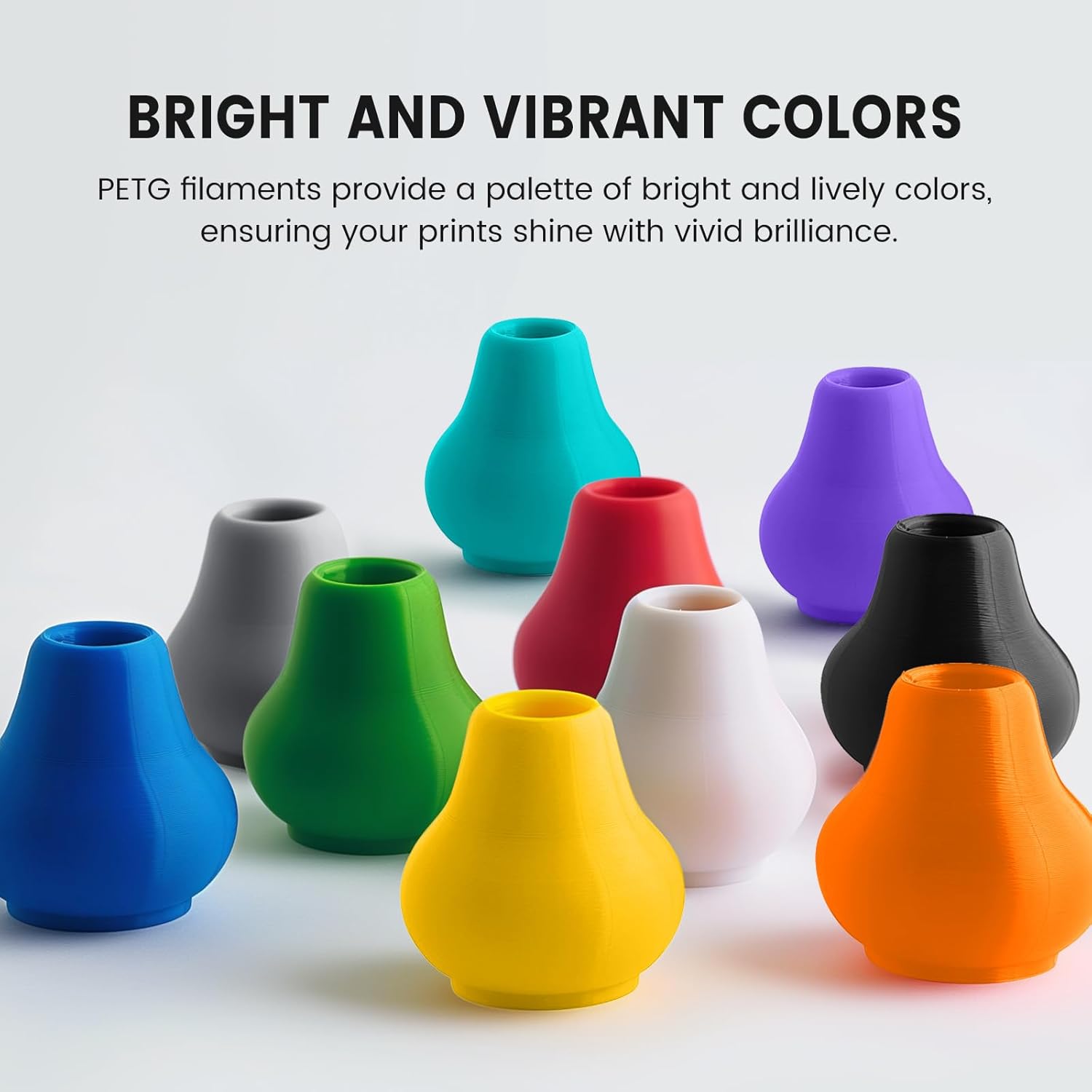
Also, the product claims “no jams, no bubbles” and improved dimensional accuracy. Realistically, you’ll still get best results if your printer is set up correctly (clean nozzle, correct temps, and good retraction/flow settings for your model). In other words, it’s not perfect, but it’s built with the right assumptions for hassle-free printing.
Pros and cons (the honest take)
What stands out - Designed for strong layer adhesion and smoother extrusion (helpful for functional prints). - Dimensional accuracy of +/-0.02mm aims to improve consistency. - 24-hour drying and vacuum sealing in a resealable pack. - Neater winding and included string clips to reduce tangles.
Where it may not be the best match - If you mainly want ultra-easy, “set-and-forget” printing for purely decorative models, PLA-style simplicity may still feel easier on many setups. - For the “light diffusion” claim, results can vary based on how thick your print walls are and how you finish the part.
Is it worth it?
Buy it if you want a PETG spool that’s geared toward consistent feeding, good layer bonding, and practical durability—especially for everyday functional items, plus the option of more diffused, light-transmitting looks. It also makes sense if you care about print reliability and want a filament that arrives well dried and properly packaged.
Skip it if your printer setup (or your usual workflow) struggles with PETG temperatures and tuning, or if you’re mostly printing low-stress decorative pieces where you’d rather stick to a simpler, more forgiving material.
Finally, do a quick reality check before committing: confirm your printer can run the stated nozzle (220-230°C) and bed (60-70°C) range, and consider starting with a small test print to verify your adhesion and surface finish.
Mini FAQ
How many metres are on the spool?
The listing states the PETG filament total is 330m.
Is this suitable for FDM printers?
Yes—it's described as fitting most FDM 3D printers (and 3D pens), with claimed compatibility for 99% of FDM printers.
What temperatures should I start with?
The recommended extrusion/nozzle temperature is 220-230°C, and the bed temperature is 60-70°C.
Does it help reduce nozzle clogs?
The description ties smoother extrusion and fewer clogs to the +/-0.02mm dimensional accuracy and consistent feeding, but your printer settings still play a role.
What kind of prints will benefit most?
The filament is presented as a good match for durable, flexible, impact-resistant everyday essentials, and for projects where improved light transmission or diffusion matters.