

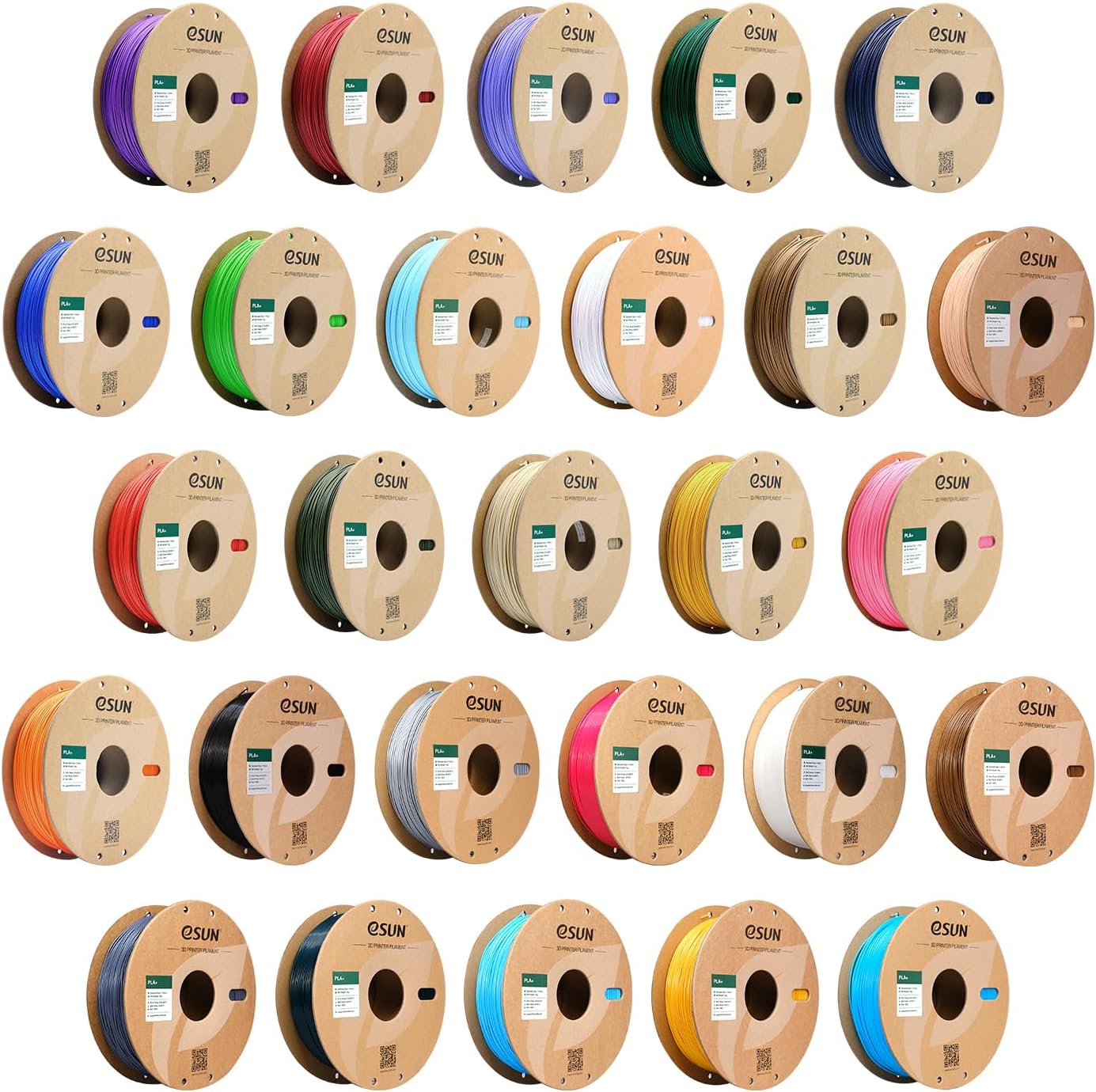
eSUN PLA+ Filament 1.75mm (White) – Enhanced Toughness 3D Printer PLA Plus, 1kg spool
Reviews
Price
Product description
What it is and why people buy it
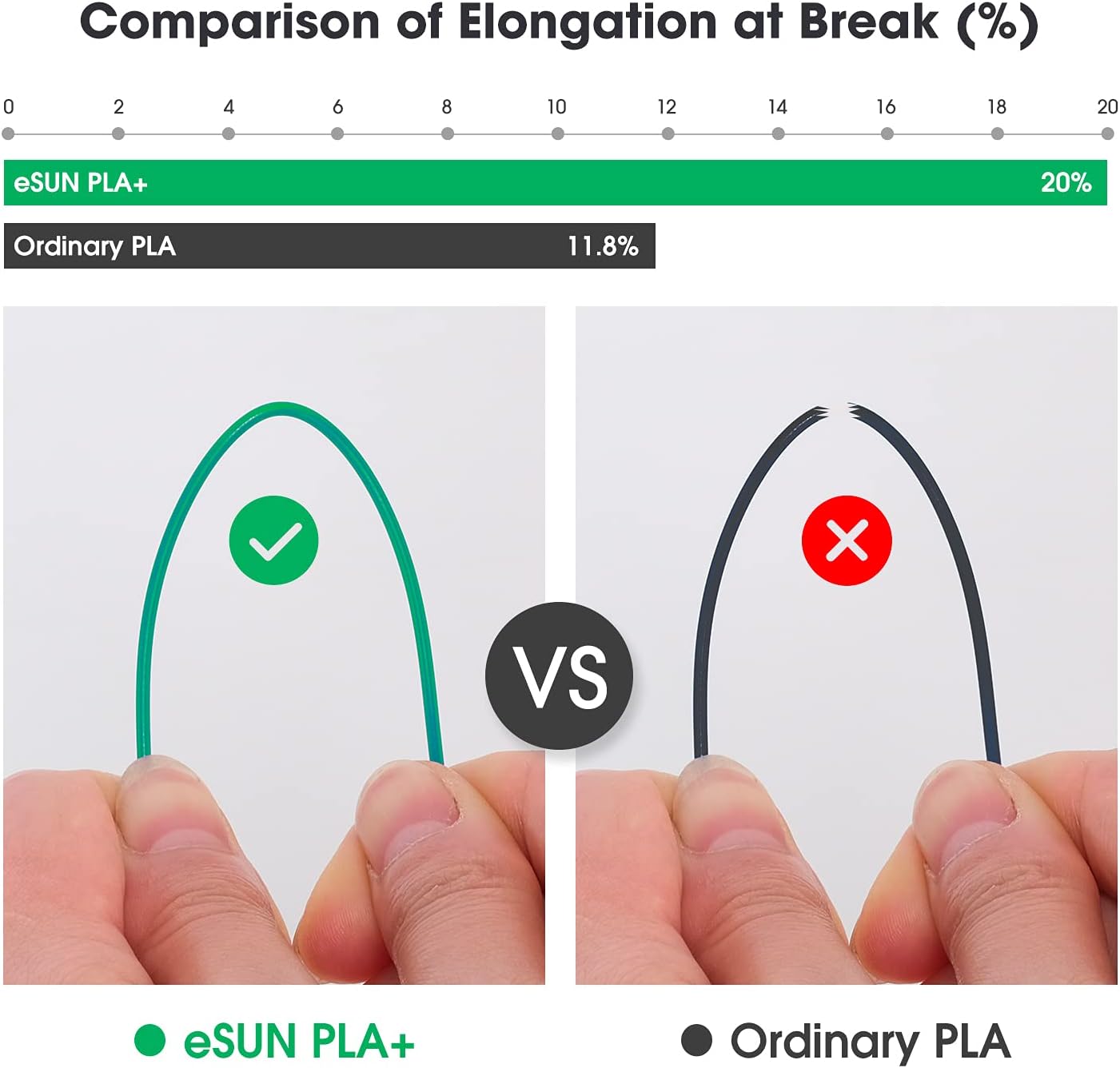
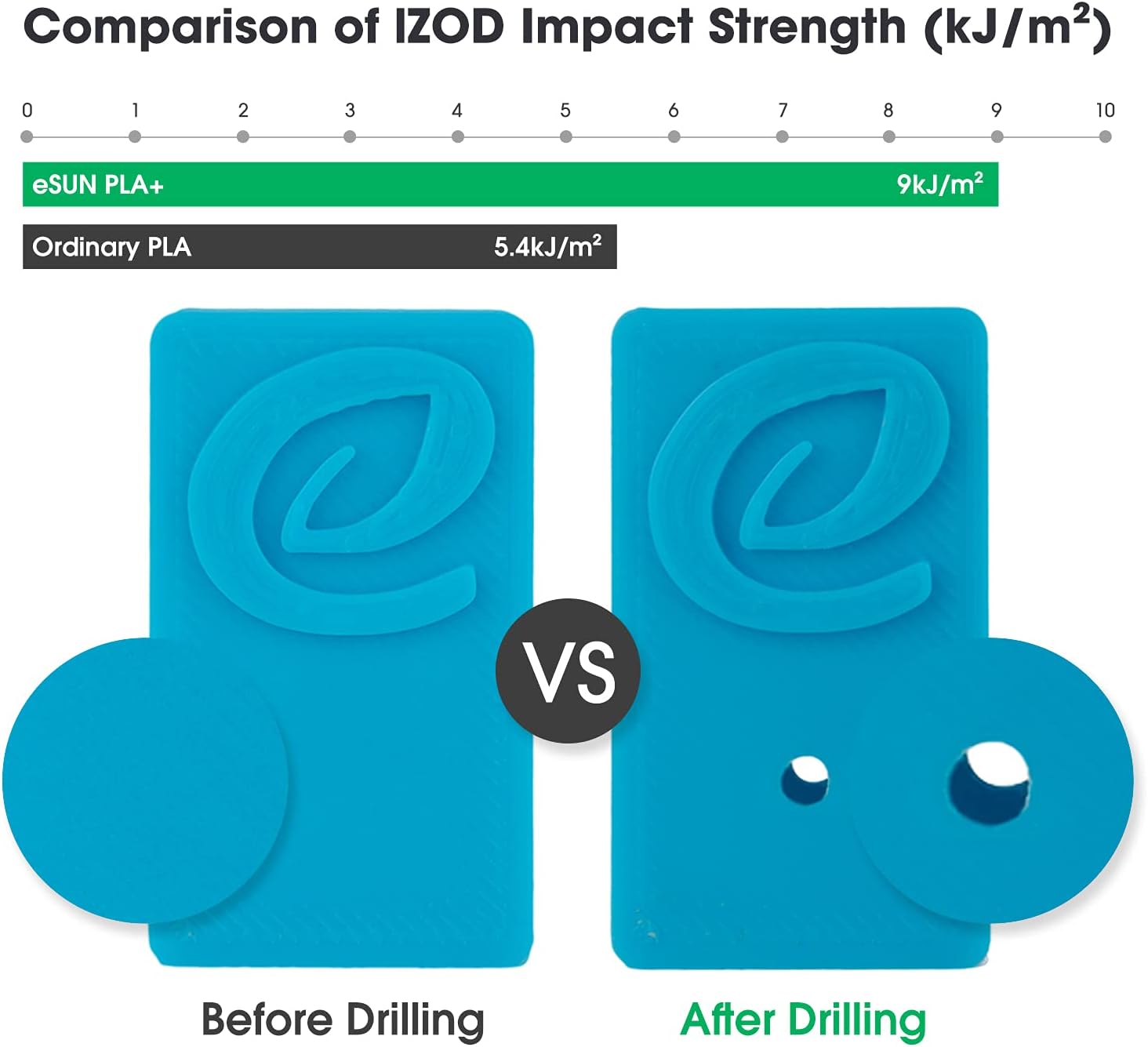
eSUN PLA+ filament is a 1.75mm PLA Plus material aimed at tackling one of PLA’s usual complaints: parts that can feel a bit brittle. On paper, PLA+ keeps the “friendly” side of PLA (generally easy to print) but shifts the focus towards improved toughness and layer bonding, so your functional prints are less likely to crack straight away.
It’s also positioned as a filament for faster printing setups. If you’re running a speed-capable FDM printer or you simply want consistent results without constantly fighting warped prints, this one is designed to be stable.
That said, PLA+ isn’t magically bulletproof and it won’t suit every kind of engineering stress. If you’re expecting extreme heat resistance or “no-brittleness ever” performance, you may be setting your expectations too high.
Where it shines in everyday printing
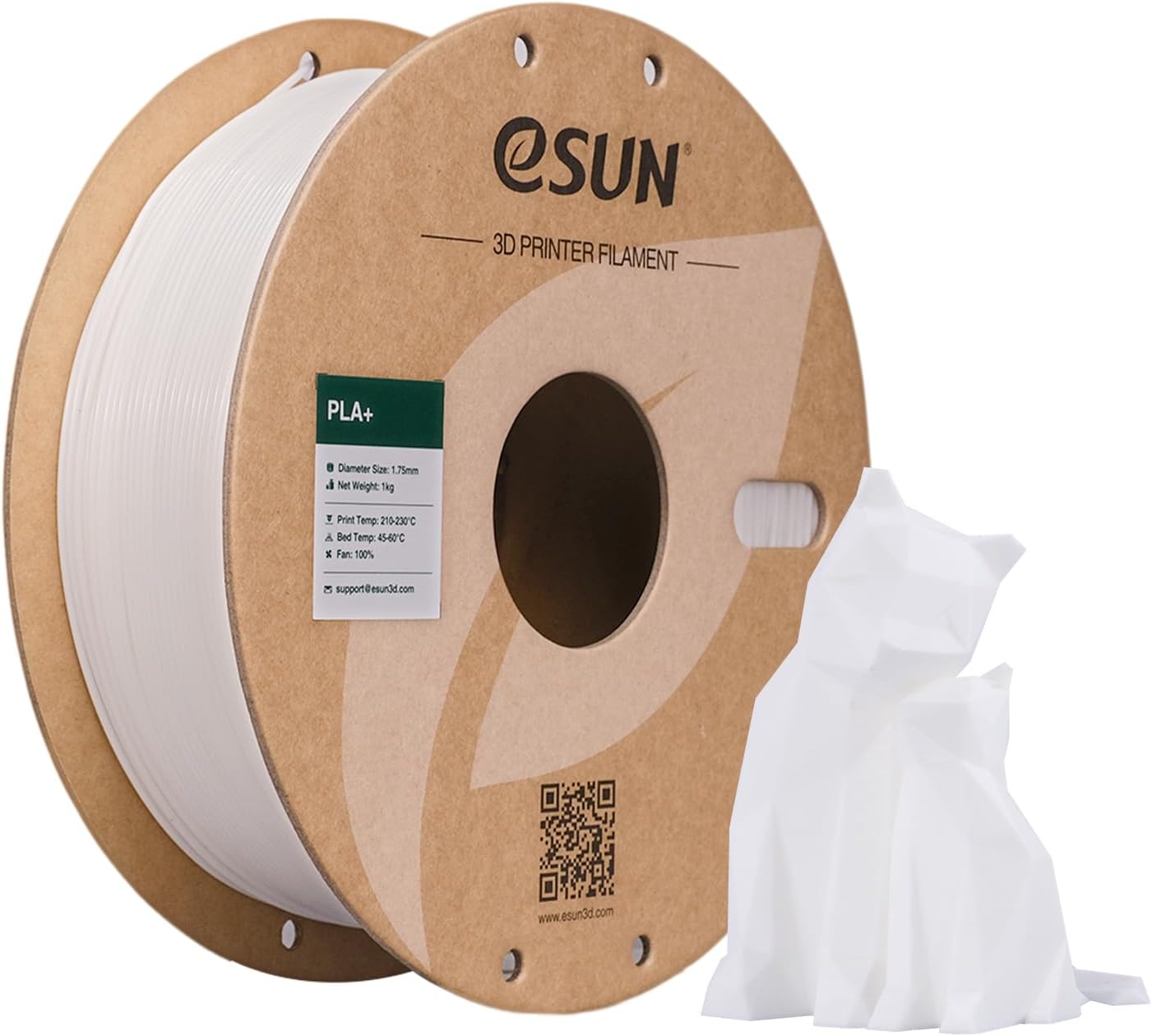
The pitch here is practical: better resistance and toughness versus standard PLA, while staying aimed at precise, stable printing.
You might notice the benefits most when you print items that get handled—think brackets, housings, clips, or cosplay components that are meant to survive a bit of rough treatment. The description also mentions a stronger layer union, which is the sort of detail that matters when strength depends on interlayer adhesion rather than just the outer walls.
A simple micro example: if you’re printing a small cable clip that normally would snap during insertion or removal, PLA+ is the kind of change that can mean it flexes more and breaks less often. It won’t replace all stronger engineering plastics, but it can be a meaningful upgrade within the PLA family.
Tech that matters (without getting lost in jargon)
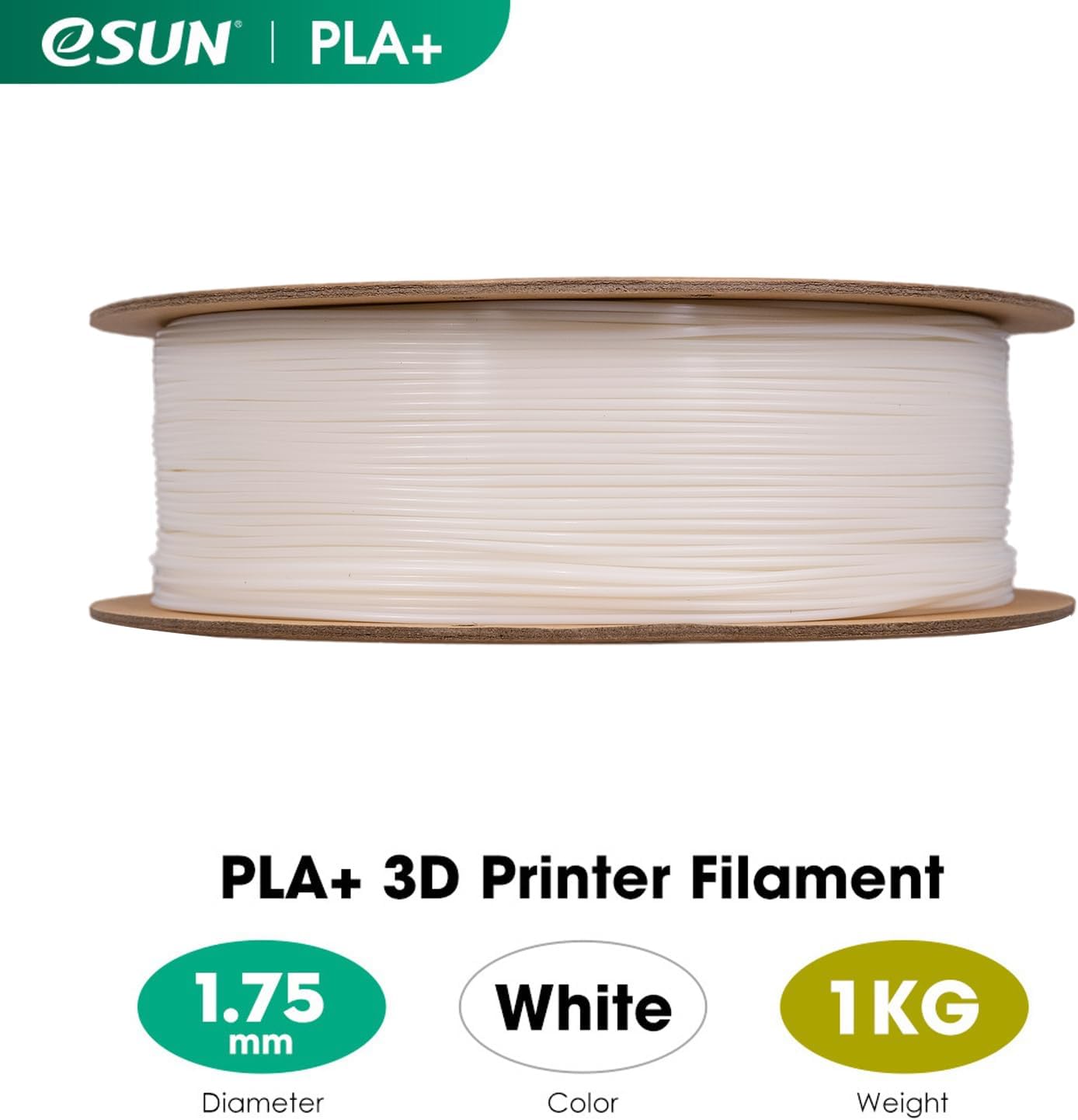
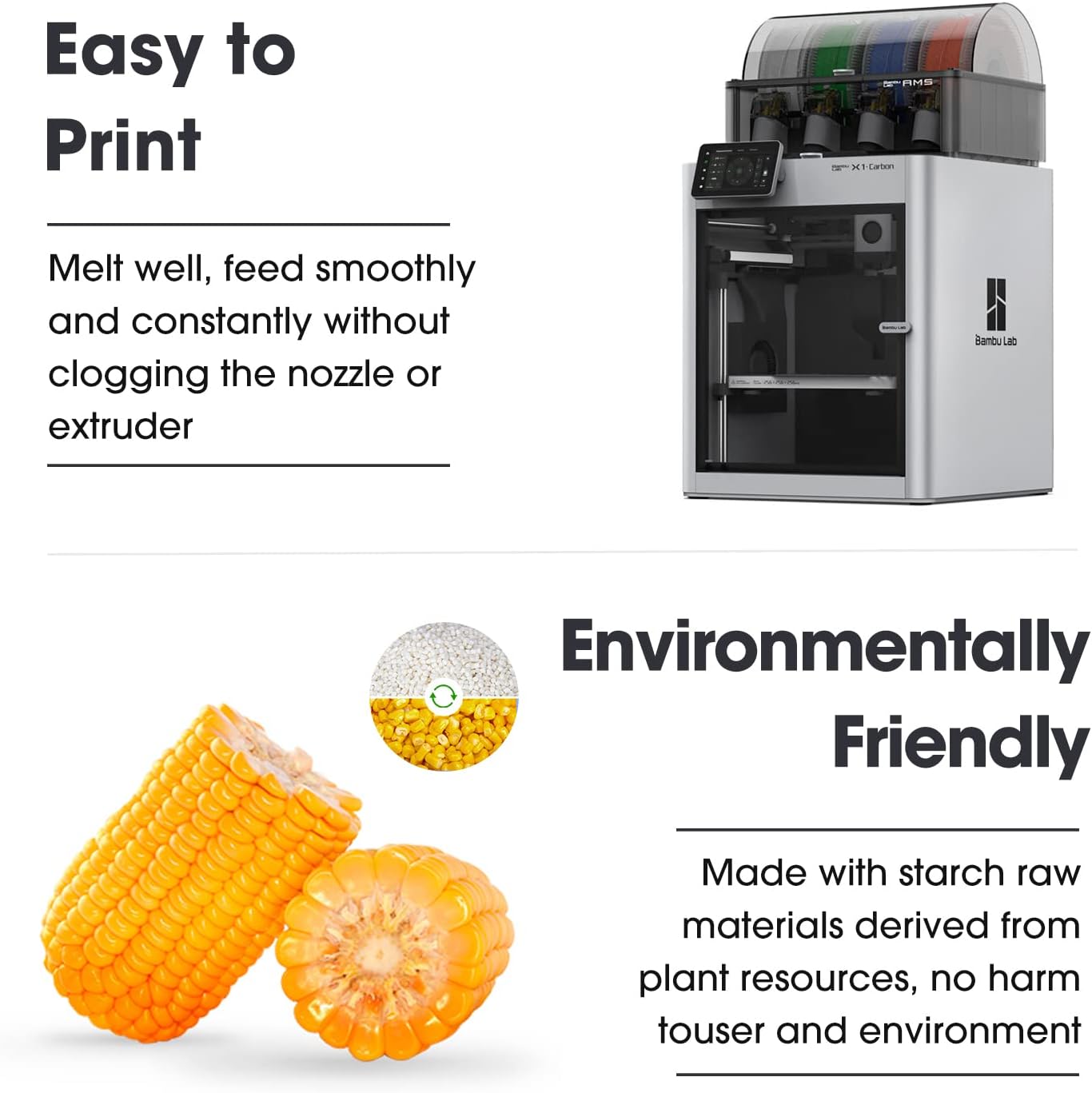
This filament is specified as 1.75mm and comes with a stated dimensional tolerance of +/- 0.03mm. Consistency like that matters because it can help maintain stable feeding through the extruder—especially if your printer is sensitive to variations.
The pack also claims lower issues such as bubbles and less stringing, plus “no obstruction” behaviour through smoother feeding and a solid winding. Another practical point for many buyers is the reel storage: it’s delivered in a vacuum-sealed bag with a desiccant, which helps keep moisture and dust under control.
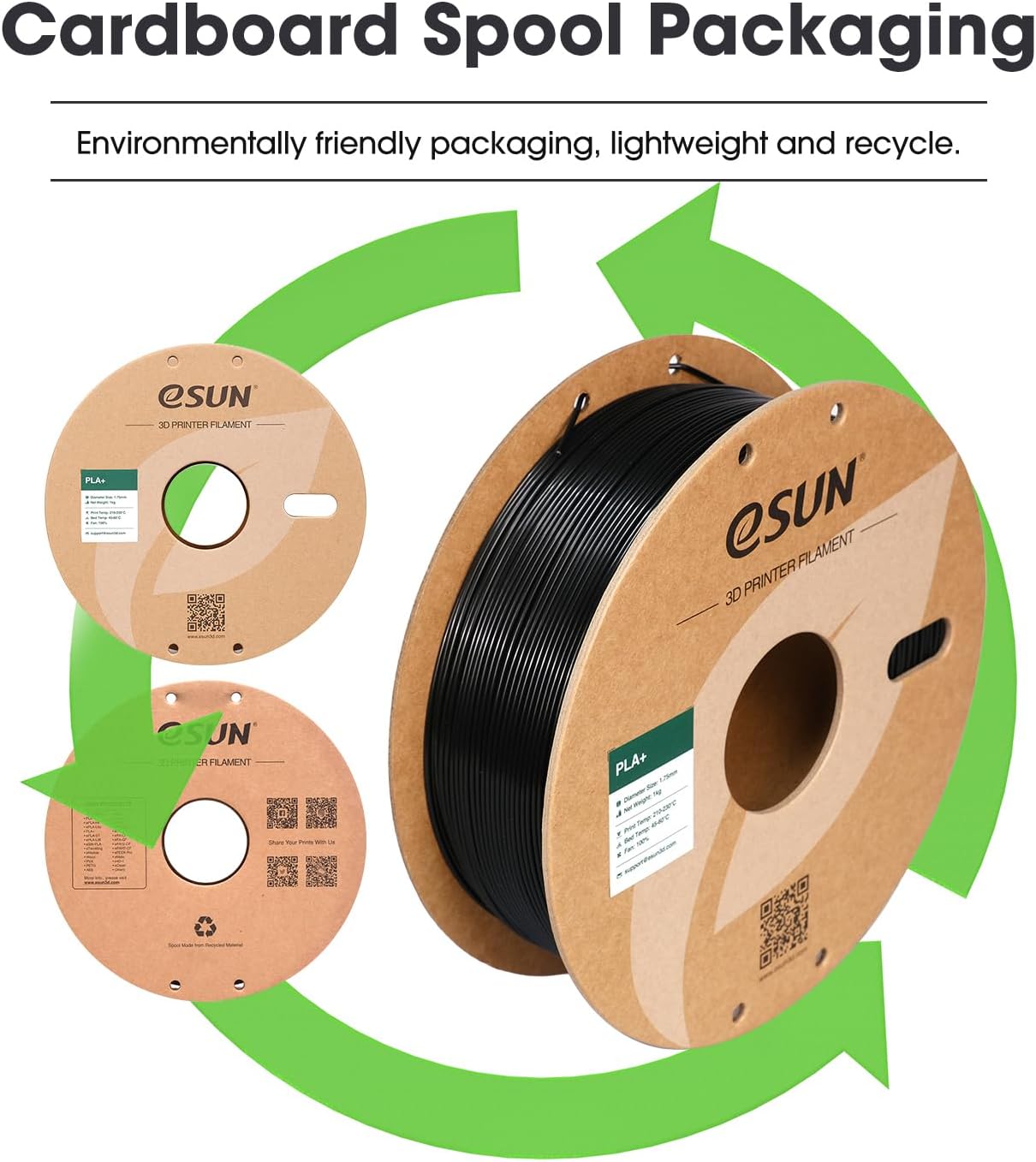
Worth noting: the listing says the PLA+ series may change from one reel type to a cardboard reel in shipping, and that the reel type can be random. If you care about packaging consistency, keep that in mind.
Print speed, stability and what to expect
The description explicitly calls out high-speed printing, suggesting it is made to meet the demands of faster printers while maintaining performance at higher speeds. It also mentions advantages commonly associated with PLA-type materials: low shrinkage, less warping, and reduced cracking.
In real terms, that usually means you’re buying into a filament that’s meant to keep things calm rather than throw up surprises mid-print. If you’ve ever had a spool that feeds fine at low speeds but becomes temperamental when you push print time down, this is designed for the “push” end of the spectrum.
However, you should still treat results as printer- and setup-dependent. Bed temperature, cooling, and calibration all influence dimensional accuracy and layer adhesion, so don’t assume the filament alone removes every variable.
Compatibility and limitations
The filament is described as compatible with “the majority” of FDM 3D printers, with a list of models included (including Bambu Lab X1/X1C, Creality K1/K1 MAX, AnkerMake M5, Prusa, MakerBot, UltiMaker, MK3, Ender 3, Flashforge, Raise3D, FLSUN V400, Voron 2.4).
It’s also positioned for uses like machinery parts, electronics-related components, automotive-related projects, decoration, and cosplay.
It may not be the best fit if your priority is maximum heat tolerance or you need a material that behaves like true engineering polymers under high temperatures. PLA+ can be a step up from PLA, but it’s still in the PLA family.
The essentials you should double-check before buying
Before you commit, it’s worth checking a few buying basics:
- Nozzle size and filament path: this is 1.75mm filament, so it needs a compatible feeder/extruder setup.
- Storage and moisture habits: it arrives sealed with desiccant, but you’ll still want to store it sensibly once opened.
- Expectations for strength: “enhanced toughness” and better layer bonding help, but it’s not automatically equivalent to specialised high-performance materials.
- Length per spool: the listing provides a total filament length range (340–350m). If you plan long runs, that range is good to factor into your estimate.
Is it worth it?
Choose eSUN PLA+ if you want PLA-plus performance that leans towards tougher prints, more confidence in layer adhesion, and stable feeding—particularly if you’re printing at higher speeds or you’ve had standard PLA feel too fragile.
You may want to skip it if your project relies on very high heat resistance, or if you’re chasing the strongest possible performance for demanding engineering loads. Also, if you’re very particular about spool packaging type, note the listing’s warning about random reel packaging changes.
FAQ
Is eSUN PLA+ good for functional parts?
On paper, the improved toughness and “good performance of layer bonding” are aimed at functional prints that need more durability than standard PLA, so it’s a sensible choice for many handled parts. Just remember it’s still PLA+ rather than a dedicated engineering plastic.
Does it string or clog the nozzle?
The description claims smoother feeding with fewer stringing concerns and no obstruction through the nozzle or extruder. Real-world results still depend on your printer settings.
What storage does it come with?
It’s delivered in a vacuum-sealed bag with desiccant, designed to keep the filament in better condition to reduce moisture and contamination.
What printers is it compatible with?
The listing states compatibility with most FDM printers and specifically mentions several popular models. If your printer uses standard 1.75mm FDM filament feeding, it should be in the intended group.
Is the reel type guaranteed?
Not fully—there’s a note that the PLA+ series may switch to a cardboard spool and the versions may be sent randomly.