

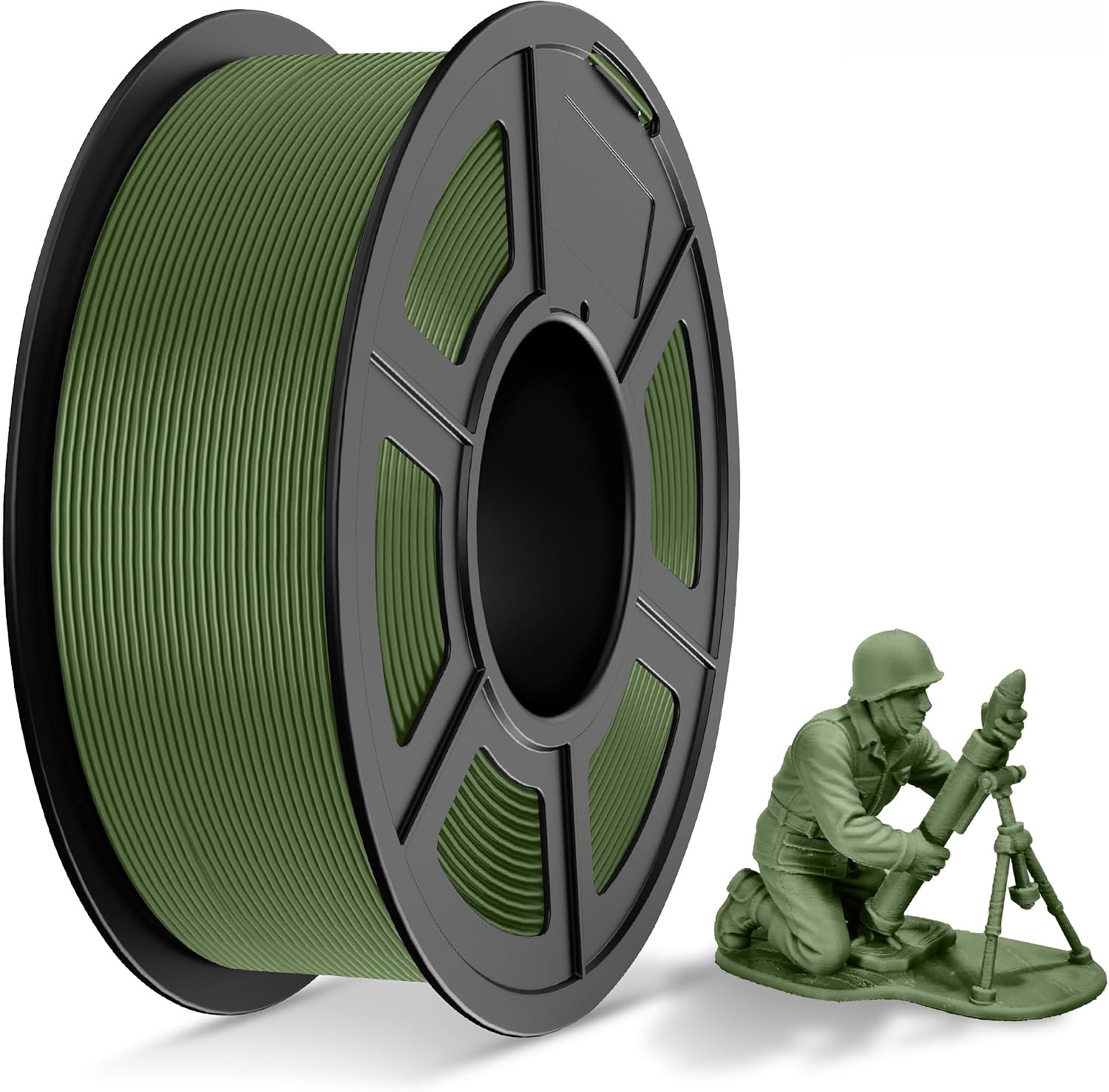
TECBEARS PLA Plus Filament 1.75mm (PLA+), 1kg Spool – Olive Green, +/-0.02mm tolerance
Reviews
Price
Product description
What it is and why people buy it
TECBEARS PLA Plus Filament is a 1.75mm PLA+ style material aimed at everyday 3D printing where you want a little more strength and less “brittle” behaviour than basic PLA. On paper, PLA+ is the compromise many hobbyists land on for functional parts: it’s still PLA-friendly to print, but the improved toughness and rigidity are meant to help with pieces that see handling rather than just display.
This particular spool comes in an olive green colour and is sold as a 1kg reel. The pitch is fairly clear: more robust prints, reliable layer adhesion, and filament that’s made to feed smoothly without the usual drama.
Key takeaways
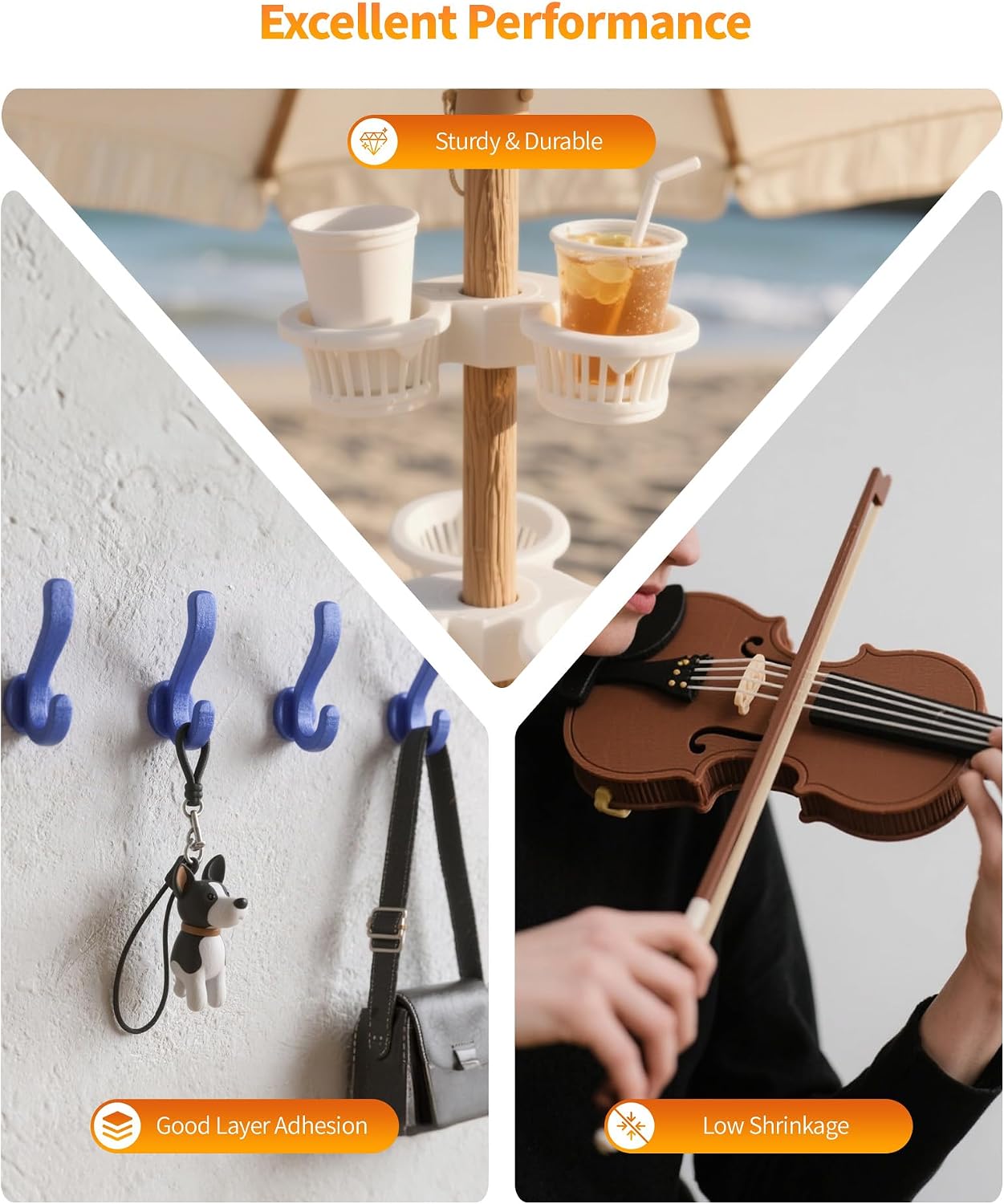
If you’re working on functional prints like brackets, holders, simple enclosures, or parts that need to hold their shape, PLA+ can be a sensible move. The more confident bits here are the stated layer bonding, the low shrinkage (so less warping and lifting concerns on the bed), and the tighter diameter tolerance.
That said, PLA+ still isn’t magic. It’s not the same as engineering-grade plastics, and it may not be the route you choose if your part needs real heat resistance, outdoor durability, or extreme impact performance.
What you’ll notice in use
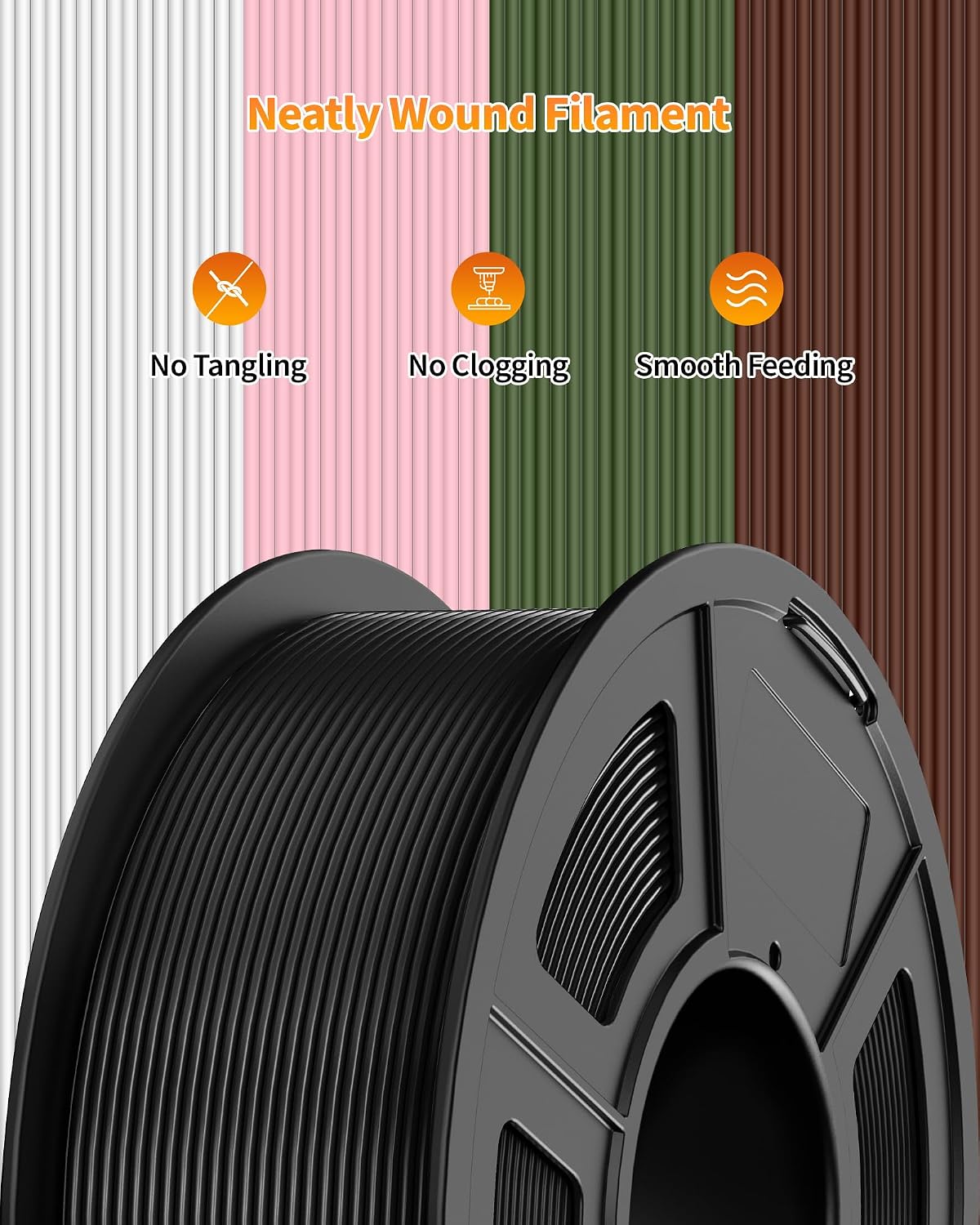
A big part of whether a filament “works” day-to-day is how consistently it feeds. This reel is described as having a diameter tolerance of +/- 0.02 mm, with a focus on smooth extrusion and reducing clogs or feeding issues. If you’ve ever had a spool that’s just slightly off-diameter and starts creating gaps, under-extrusion, or inconsistent lines, you’ll understand why that matters.
Layer adhesion is also called out: the PLA+ is said to provide a reliable bond between layers for a smoother, shinier surface and to help avoid delamination. In practice, you’d typically see that in the way top surfaces look and in whether you can peel layers apart with your fingernail after printing (not a scientific test, but a common frustration check).
Speed and print expectations
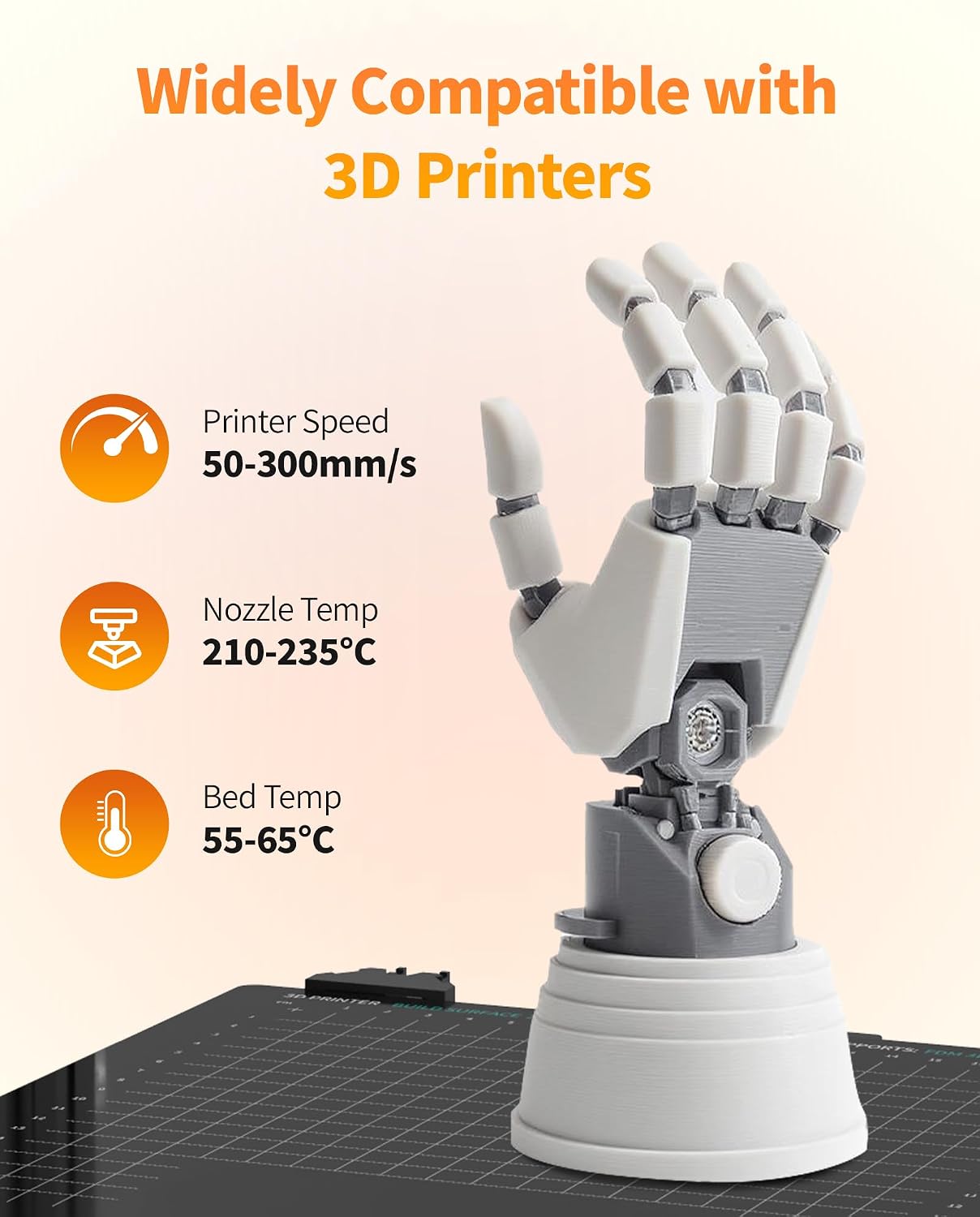
The filament is stated as suitable for printing speeds from 0 up to 300 mm/s. That’s a wide range, and whether you actually benefit from the high end depends heavily on your printer, cooling, and setup. If your machine is more conservative, it’s still fine to run within your usual settings, the important bit is that this PLA+ is positioned as compatible with both regular and high-speed printers.
One limitation to keep in mind: if you push speed without matching retraction and cooling, even good filament can end up looking rough. Speed is only half the story.
Fit for functional prints (and where it may fall short)
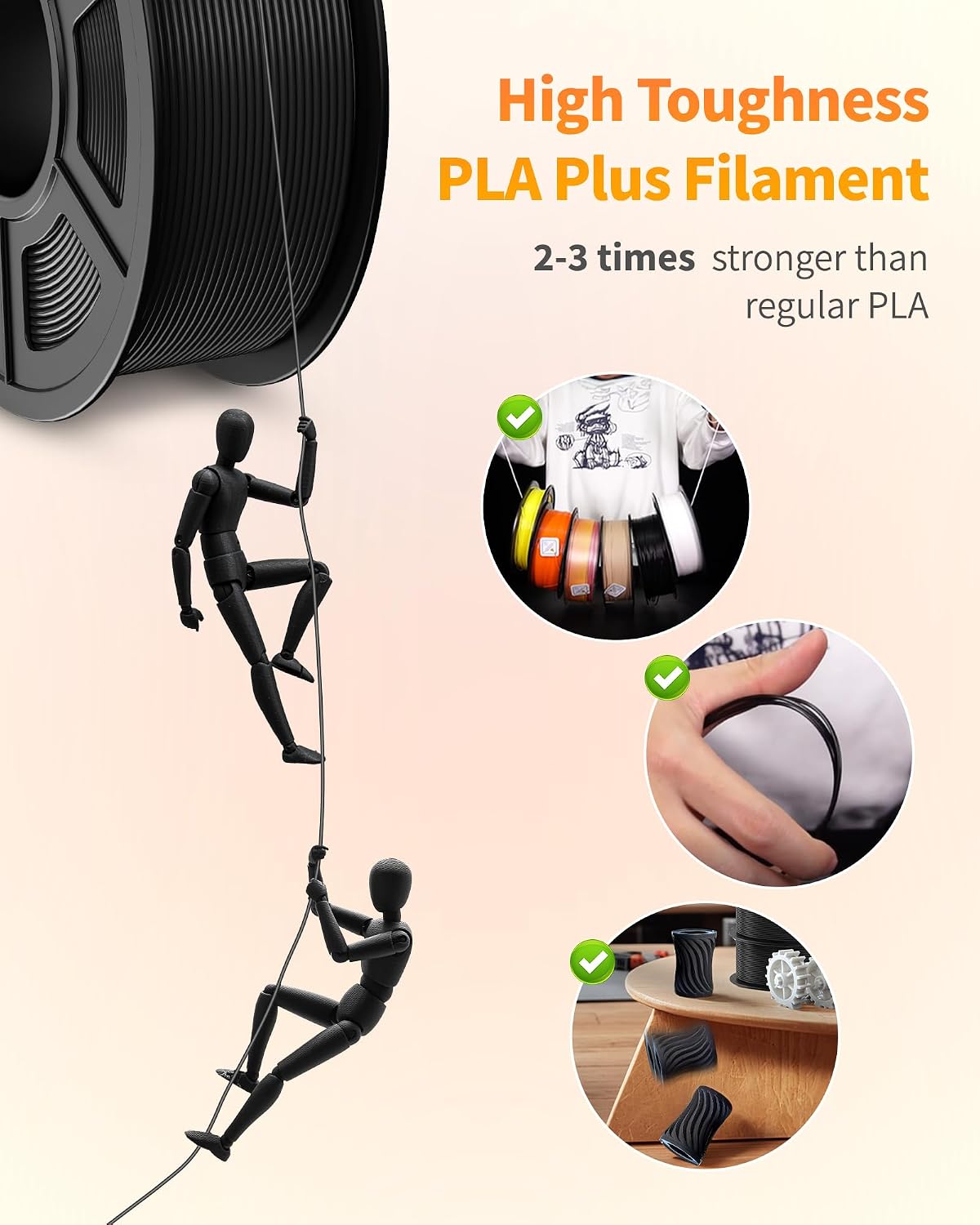
The description leans hard on improved resistance to fragility, reduced risk of cracking, and better rigidity compared with PLA+. That makes it a reasonable candidate for functional parts—things that get picked up, mounted, or used often.
It’s not perfect for every scenario though. If your parts are going to experience high heat, heavy UV exposure, or repeated flexing under loads, PLA+ may still be less suitable than materials designed specifically for those demands.
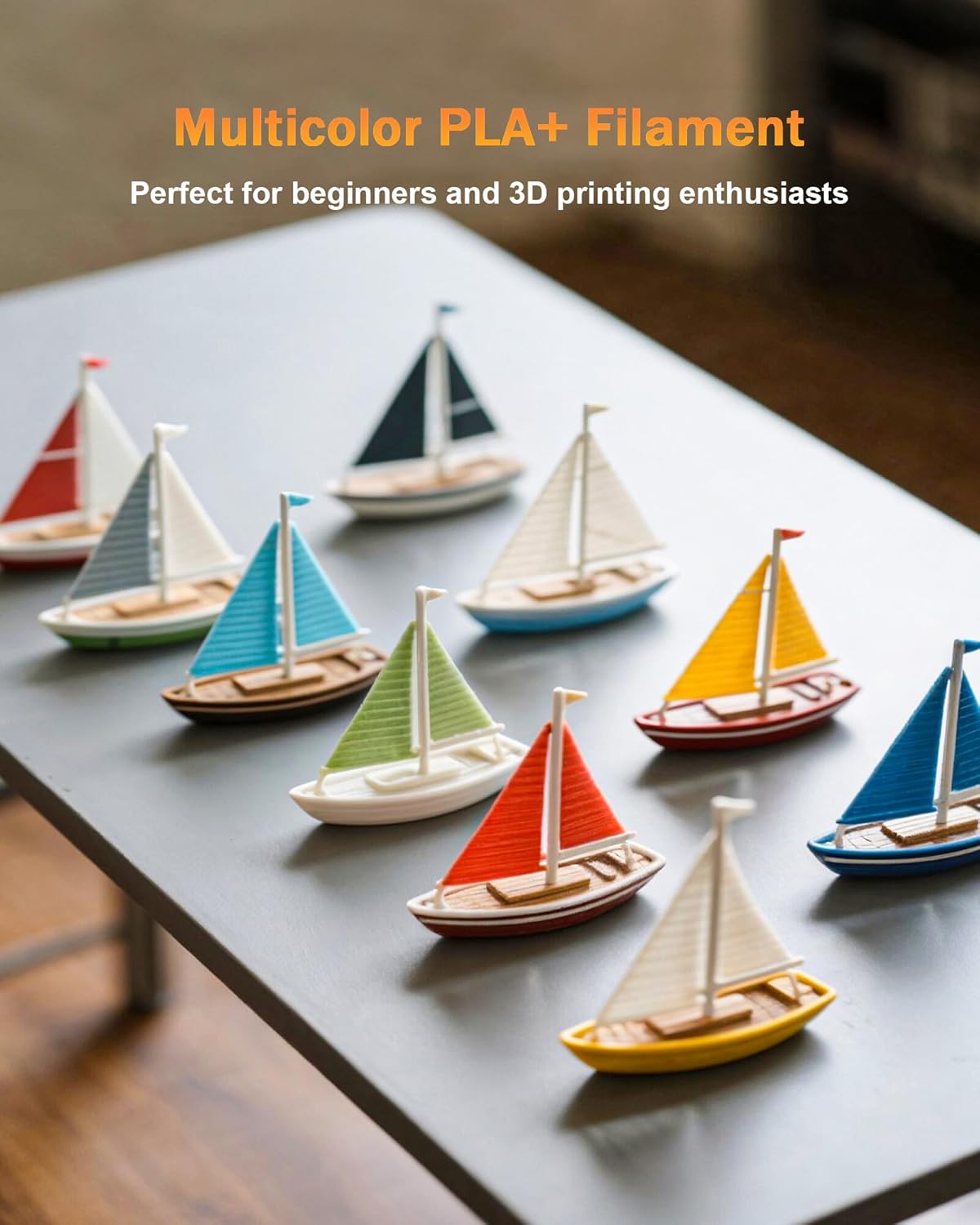
It’s a solid fit if you’re mainly printing practical models and want a noticeable step up from basic PLA performance, without switching materials completely.
Key specifications (from the listing)
- Material: PLA+
- Diameter: 1.75 mm
- Spool size/weight: 1kg spool
- Colour: Olive Green
- Stated print speed range: 0 to 300 mm/s
- Dimensional accuracy/tolerance: +/- 0.02 mm
- Total filament length: 330 m
- Packaging: vacuum-sealed, includes a resealable package and is described as dried for 24 hours
- Accessories: includes filament spool cable clips (to help keep the filament secure and reduce tangles)
What to check before you buy
Before committing, it’s worth double-checking a few practical things. First, confirm your printer is set up for 1.75mm filament and that your hotend can handle typical PLA/PLA+ temperatures (you’ll usually know this already, but it’s easy to overlook when swapping materials). Second, consider your bed adhesion approach—low shrinkage is helpful, but bed cleanliness and settings still matter.
Also think about colour and expectations. Olive green is great if you want a specific look, but if you mostly care about strength per se, the colour won’t change the physics.
Mini FAQ
Is PLA+ stronger than regular PLA?
The listing positions PLA+ as more resistant to fragility and cracking, with improved rigidity. It’s not positioned as an engineering plastic, so for high-stress or high-heat jobs you may still need a different material.

Will the filament print smoothly at high speed?
It’s described as suitable up to 300 mm/s, but your results will depend on your printer tuning and cooling. If you tend to print slowly, that’s fine—this filament is also meant to work within lower speed settings.
Does it help with warping or bed adhesion?
Low shrinkage is mentioned to support strong bed adhesion and reduce deformation or lifting. You’ll still want to follow good bed prep and use appropriate settings.
Is the diameter tolerance tight enough to matter?
A tolerance of +/- 0.02 mm is fairly specific, and the intent is consistent feeding and extrusion. If you’ve had feeding issues before, this tighter tolerance is one of the more reassuring details.
What are the biggest downsides?
The main uncertainty is suitability: PLA+ may not be the best route for parts needing extreme heat resistance or long-term harsh conditions. Also, “up to” speed figures don’t guarantee quality at maximum speed without tuning.
Final verdict
It’s worth buying TECBEARS PLA Plus Filament 1.75mm if you want a practical, functional PLA+ that prioritises smoother feeding (tight diameter tolerance), reliable layer bonding, and improved resistance to cracking compared with more standard PLA options. The packaging details—vacuum-sealed and described as dried—also make it easier to keep the filament in good shape.
You may want to skip it if you’re chasing the most heat-resistant or fully outdoor-proof material, or if your project needs a specialist plastic for demanding loads. For most standard tinkering, parts-for-use printing, and everyday functional models, this one fits the “step up from basic PLA” category, without getting overly complicated.