

Anycubic PLA Filament 1.75mm (RFID) 1kg spool for smart printing
Product description
The essentials
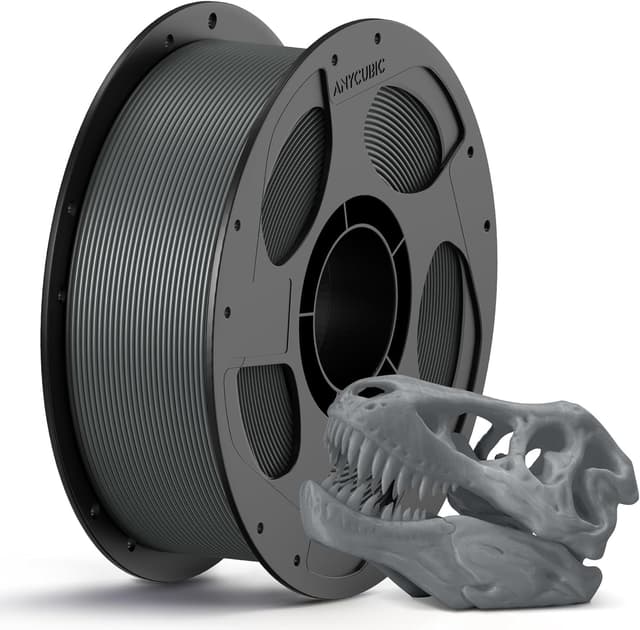
This Anycubic PLA filament is a 1.75mm spool aimed at everyday FDM printing where you want consistent results without constant fiddling. On paper, it ticks the boxes you usually look for in PLA: low shrinkage, stable dimensions and a smooth extrusion experience.
The bit that makes this one different is the RFID “smart printing” angle. The idea is that the printer can detect RFID filaments and automatically adjust settings for better output, which should reduce the time spent experimenting. That said, it’s only applicable to the Anycubic Kobra 3 Combo 3D Printer, so if you don’t have that printer, the RFID feature won’t do anything for you.
What the RFID feature actually does
If you’re using the specific Anycubic Kobra 3 Combo 3D Printer, the RFID Enhanced Smart Printing is designed to remove complicated setup steps. Instead of manually tuning printer settings for each filament batch, the printer detects the RFID filament and optimises the configuration for the best results.
It’s a practical convenience feature more than a performance miracle. It can also help reduce waste caused by “wrong settings” prints—though of course, you still need to follow basic good practice for your model and slicing profile.
Worth noting: if you’re on another printer, you’ll be buying this as a standard 1.75mm PLA spool. In that scenario, you should expect the normal benefits of good filament consistency, not the smart auto-detection.
How it behaves in real printing terms
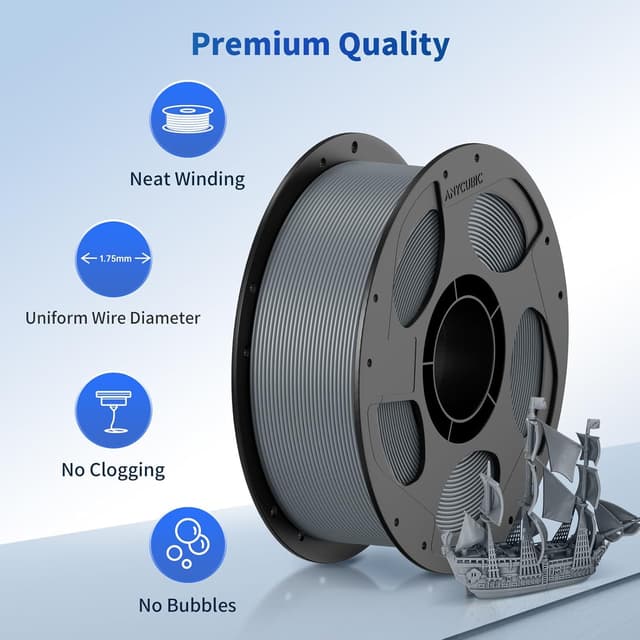
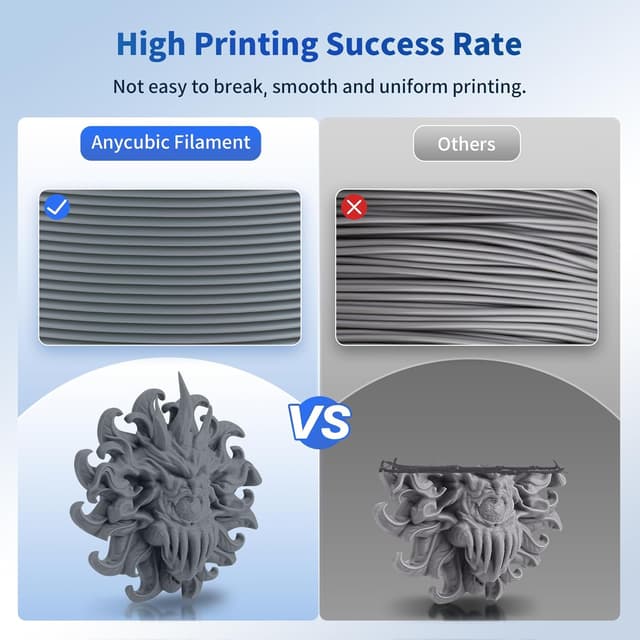
Anycubic positions this PLA as being designed for smooth flow and homogeneous output, with dimensional tolerance listed as +/- 0.02mm. That kind of consistency can matter, because less variation in filament diameter usually means steadier feeding and more predictable extrusion.
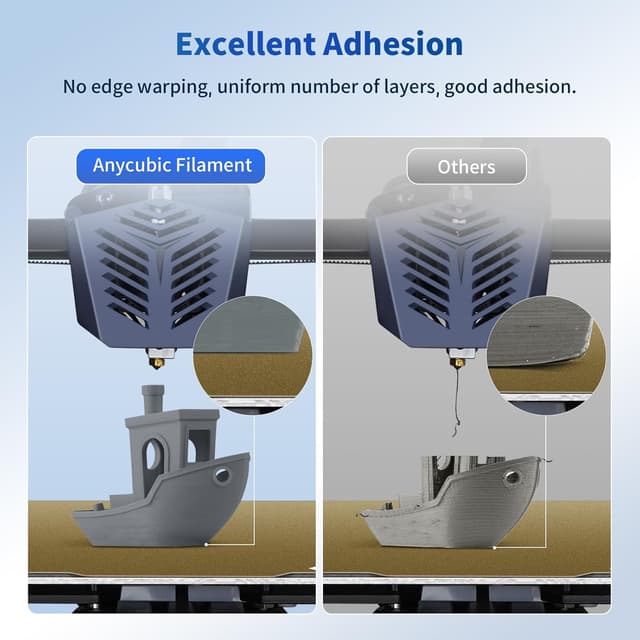
They also mention low shrinkage and stable printing dimensions, which is the sort of thing that typically helps layers fuse well. The brand claims good bridging results and improved layer adhesion, which you’ll notice most on practical prints like simple brackets, small enclosures, or test pieces that need decent layer-to-layer strength.
One sensible limitation to keep in mind: even with “accurate” filament on paper, results still depend quite a lot on your printer, nozzle condition and your slice settings. If your setup is already struggling, filament alone won’t magically fix it.
Clog-free and packaging notes
This filament is described as “clog-free” with smooth and stable printing, and they also state it was dried for 24 hours before packaging and vacuum sealed with desiccants in nylon re-bags. In plain terms, that’s aimed at keeping the PLA from absorbing moisture before it reaches you.
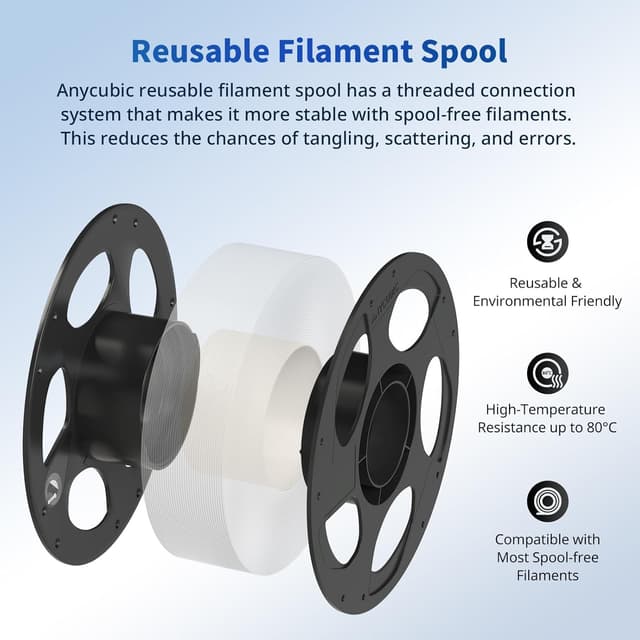
They also highlight a spool design with a larger inner diameter to support smoother feeding. Those details are the kind that don’t always sound exciting, but can reduce the little annoyances—like inconsistent feeding, or unnecessary stringing—over multiple sessions.
Compatibility and where it makes sense
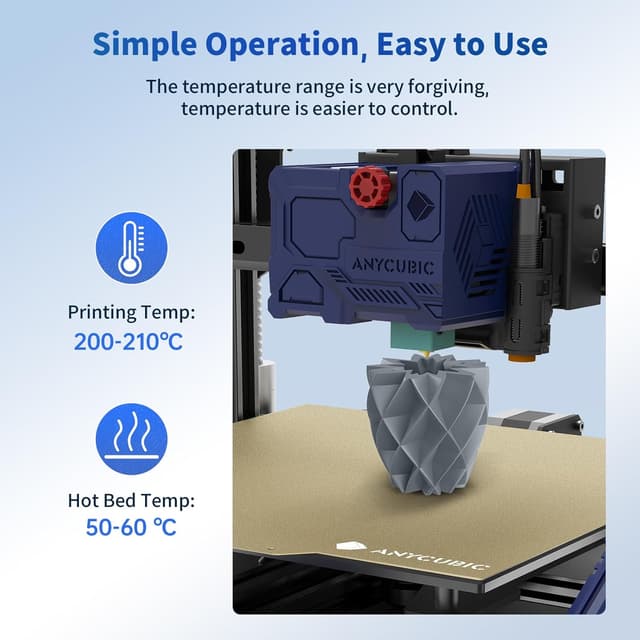
Anycubic says this offers compatibility with most 3D printers in terms of temperature/speed range, but that’s still a broad statement. The one clearly defined compatibility dependency is the RFID smart feature, limited to the Kobra 3 Combo.
So, it makes sense if: - you’re running the Anycubic Kobra 3 Combo and want RFID-driven auto-optimisation to reduce tuning - you want a mainstream PLA filament that’s positioned for consistent extrusion and less stringing - you care about repeatability across prints, especially when producing small functional parts
It may not be the best choice if: - you don’t have that specific Anycubic printer and you were expecting RFID benefits on another model - your main goal is extreme speciality materials or high-performance non-PLA properties (this is still PLA, and you’ll get PLA’s typical behaviour)
What to check before buying
Before you commit, double-check two things: filament diameter (this is 1.75mm, so it should match your printer’s setup) and whether you actually have the Kobra 3 Combo if you want the RFID auto-detection feature.
Also, consider your usual printing style. This is aimed at the “load and print” mindset, but you’ll still get the best outcome when your slicing profile and temperatures are reasonably aligned with PLA.
Key takeaways
For owners of the Anycubic Kobra 3 Combo, the RFID side of this filament can be a genuine time-saver by removing tedious setup changes. For everyone else, you’re essentially looking at a well-specified PLA spool focused on dimensional accuracy, low shrinkage and a smooth, clog-free style of printing.
It’s a solid bet for everyday PLA work, but it won’t suit you if you were specifically shopping for RFID-driven benefits on a different printer.
Is it worth it?
Buying this makes sense if you’re using the Anycubic Kobra 3 Combo and like the idea of RFID-enhanced smart printing to avoid constant calibration. It’s also worth considering if you prioritise consistent extrusion and cleaner output from a 1.75mm PLA spool.
Skip it if you need RFID compatibility on a different printer model, or if you’re after something beyond typical PLA use cases. In those situations, you may be better served by a filament option that aligns more directly with your printer and the material properties you’re chasing.