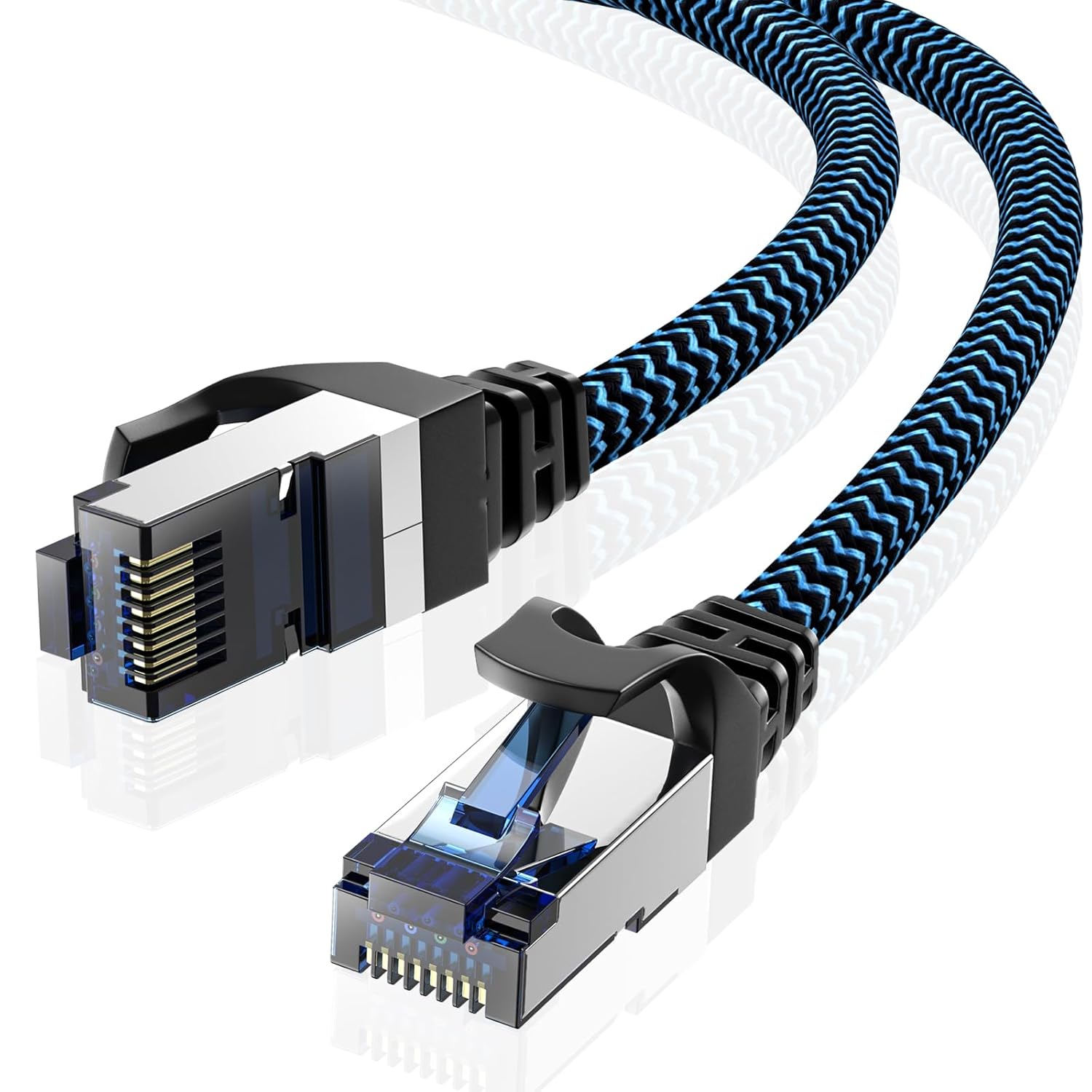
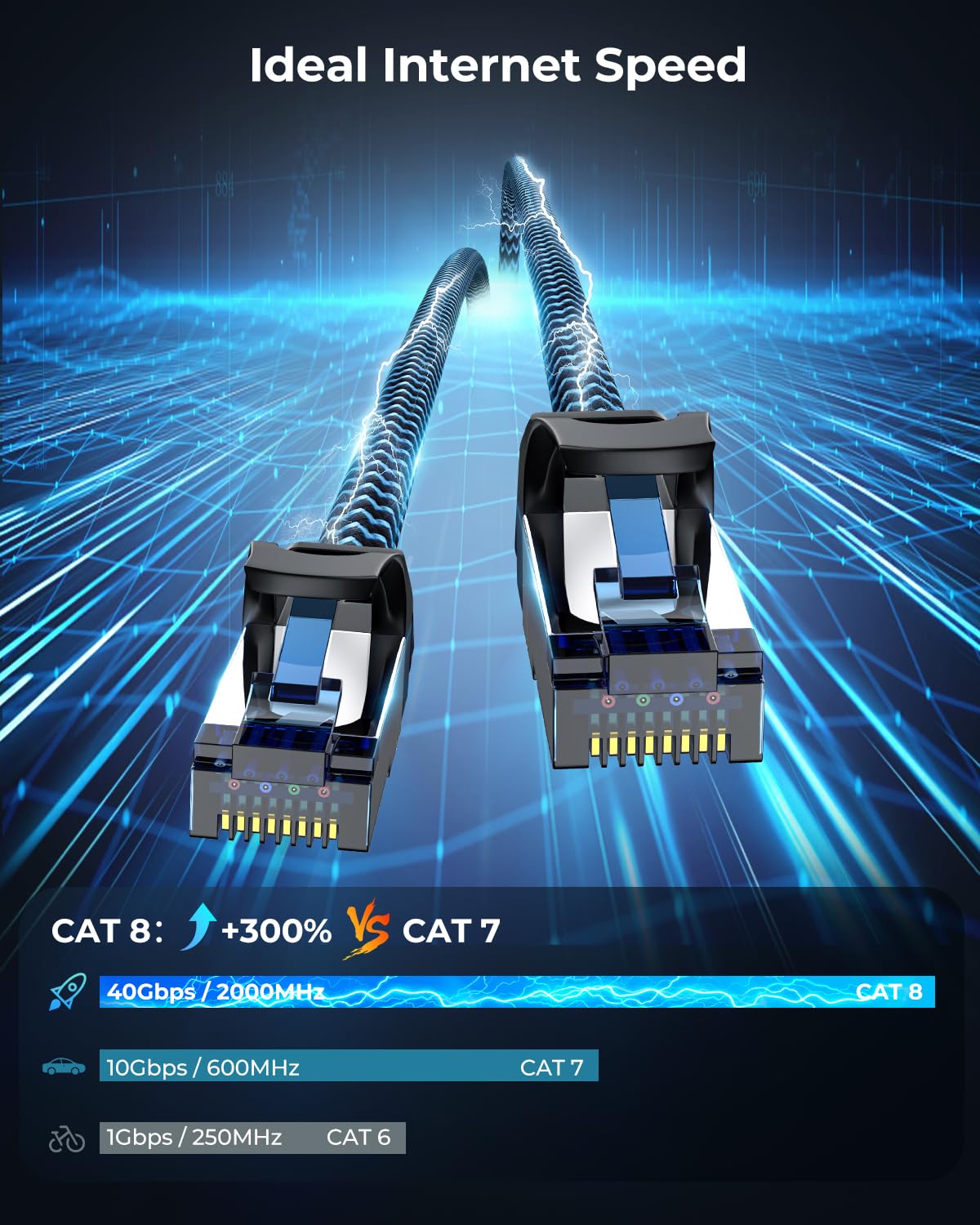
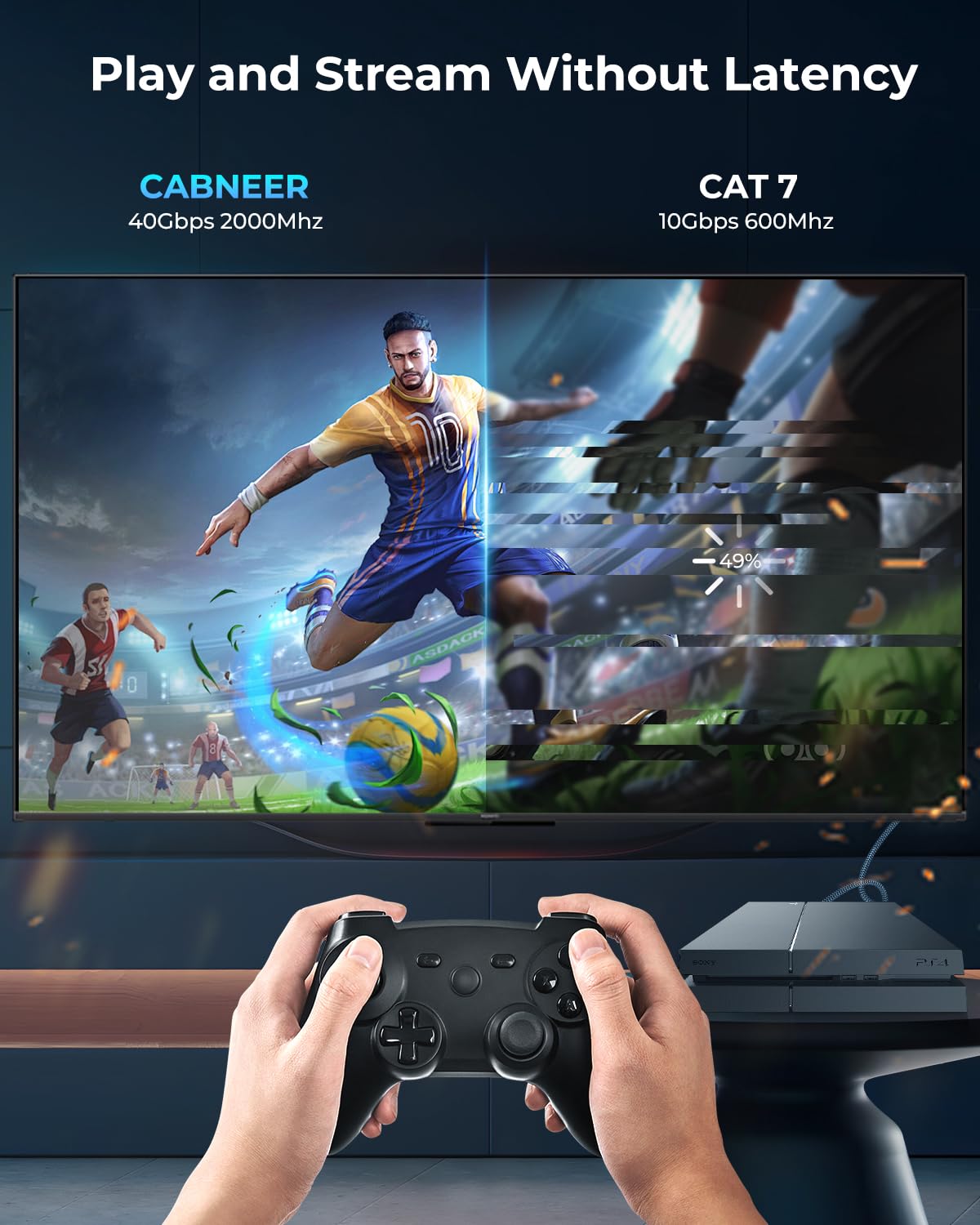
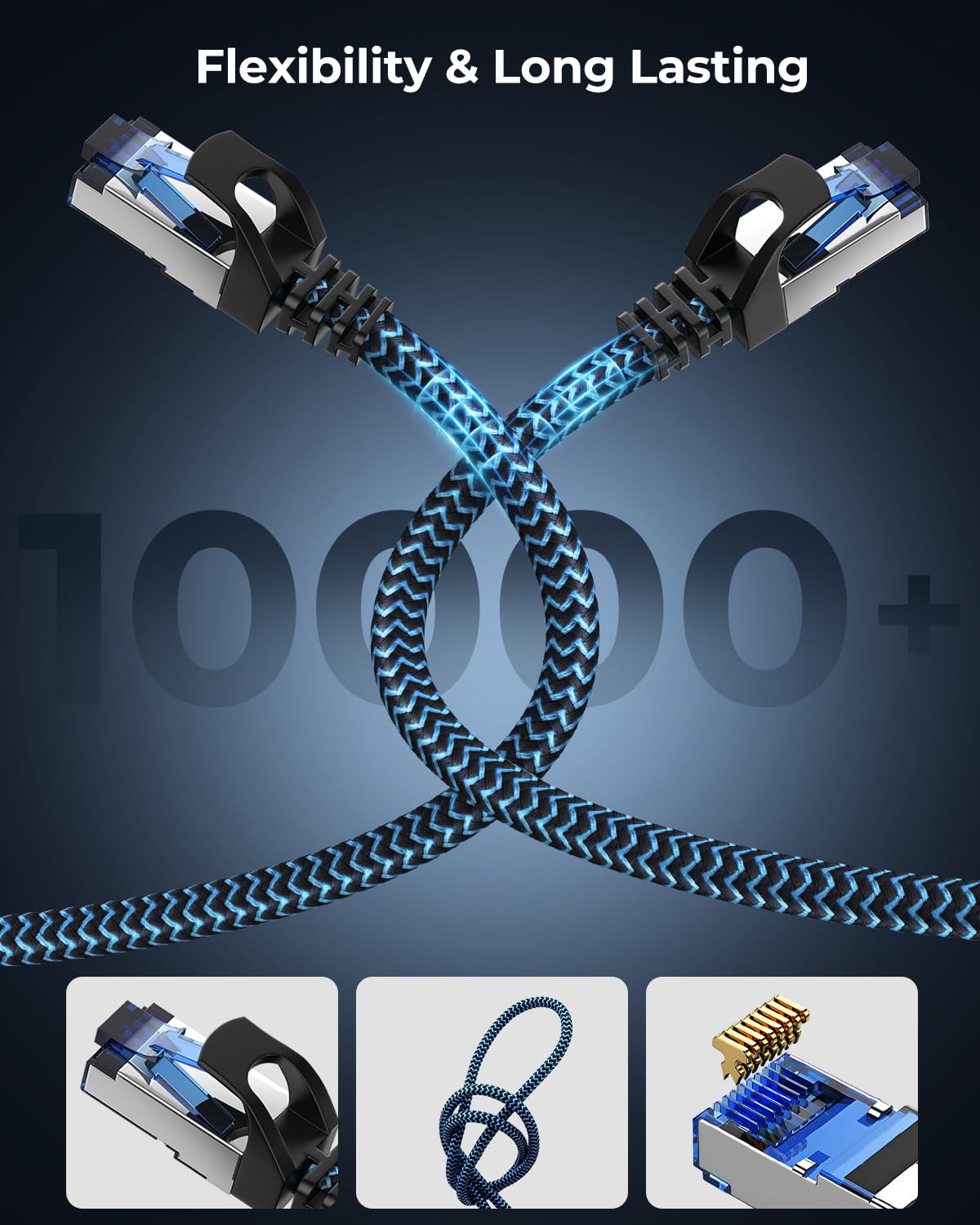
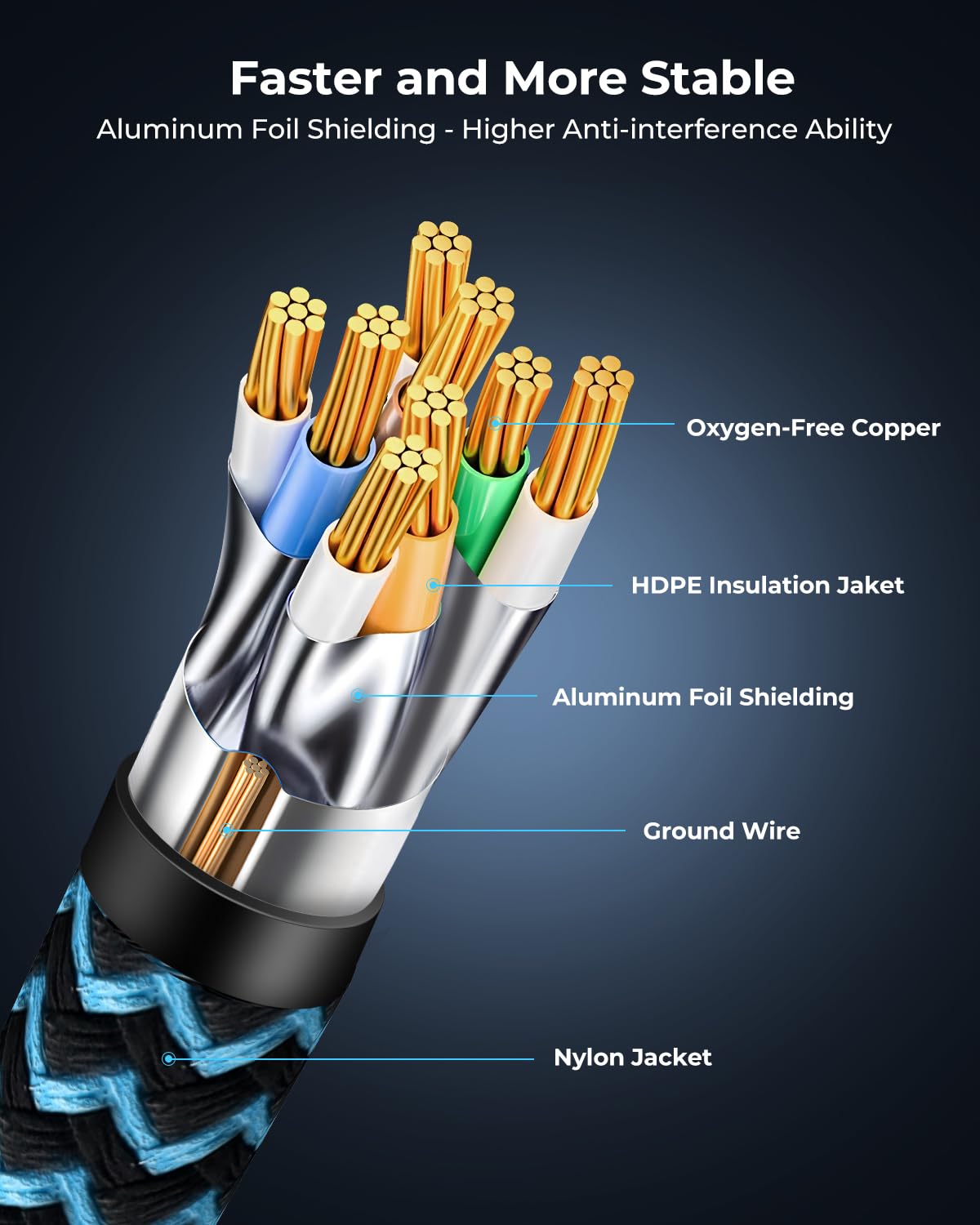
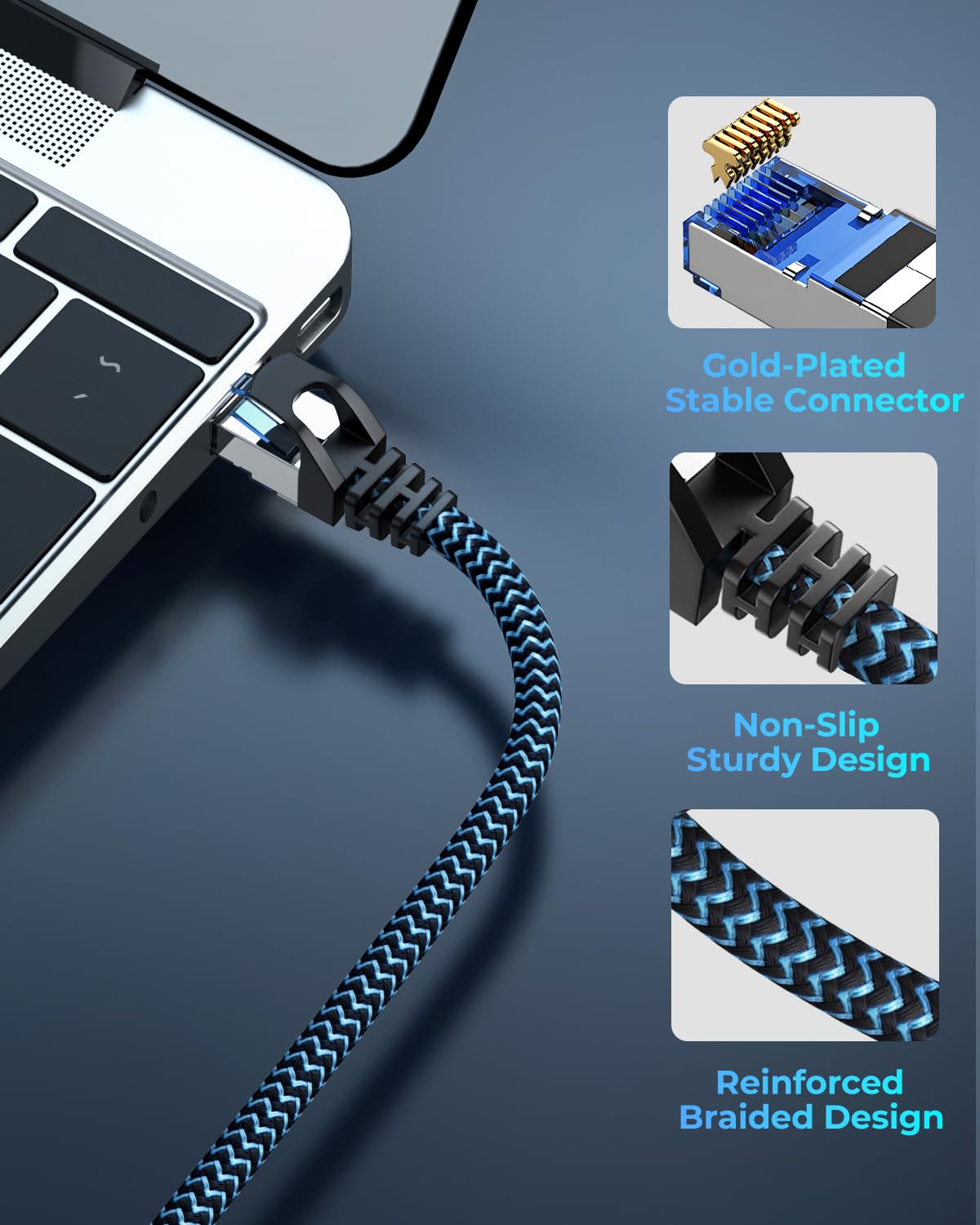
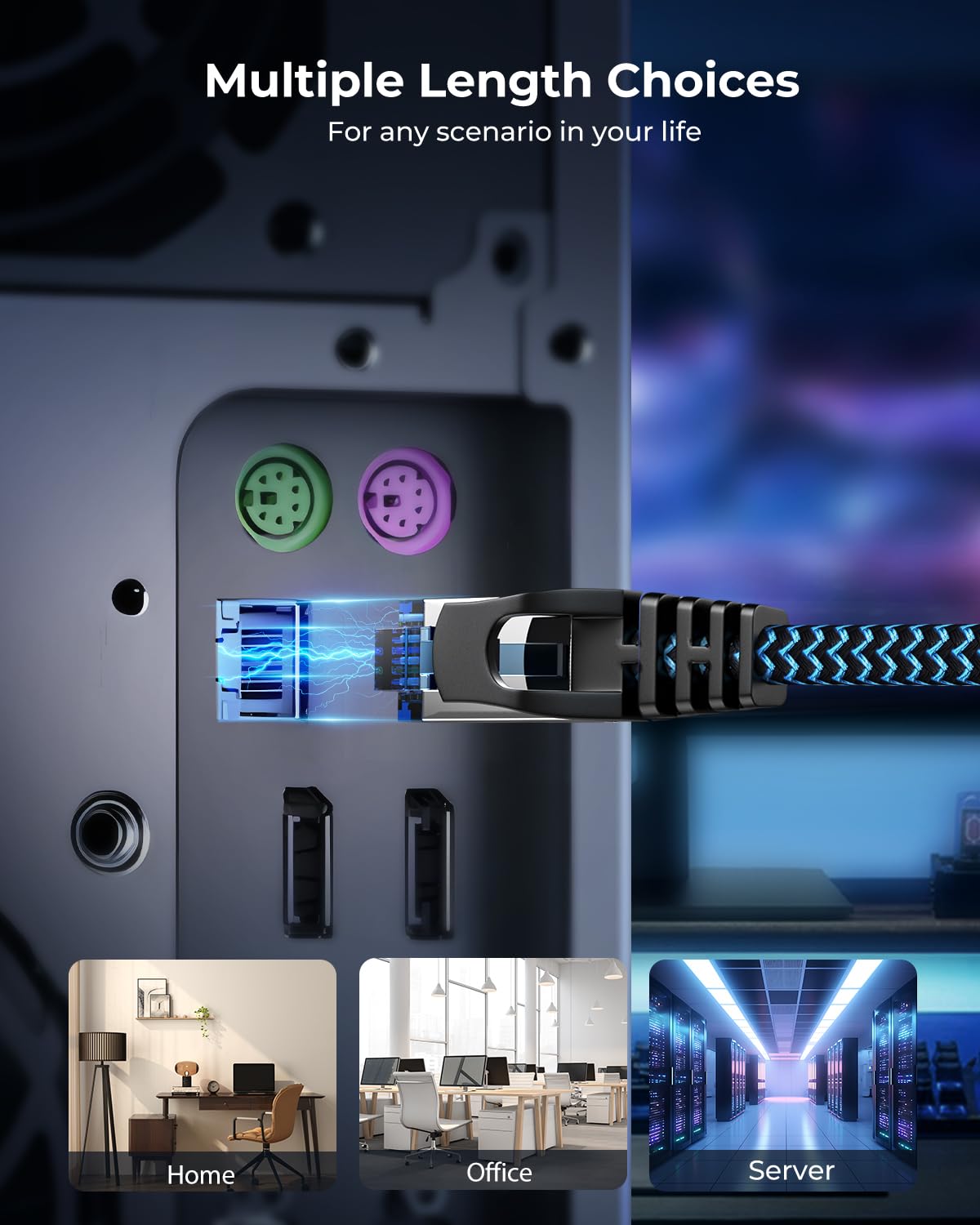
What it is and what it’s for\nCABNEER’s Cat 8 Ethernet Cable is a braided RJ45 network cord designed for high-speed wired connections. At 1 metre in length, it targets clean desktop setups, server racks or home networks where a fast, stable link matters. If you’re looking to connect a modem, router, NAS, or PC with a direct Ethernet line, this cable promises enhanced bandwidth and reduced interference compared with older Cat 7/Cat 6a options. On paper, Cat 8 supports up to 40 Gbps and 2000 MHz bandwidth, which translates to lower potential latency and capacity to handle data-heavy tasks such as local backups, cloud syncing, video calls, and high‑resolution streaming.\n\n## How it’s built and what that means\nThe cable uses a braided two‑colour nylon and PVC outer layer. The twist‑pair construction and shielded design are intended to resist external interference, with 50‑micron RJ45 connectors aimed at solid connectivity. The braiding also helps with flexibility, making it easier to route around corners or along door frames and carpets. The product notes that the mesh tails and protective plug covers contribute to durability, while the overall construction has been tested for many bends. All of that adds up to a cord you can route in more demanding environments, not just a tidy desk.\n\n## Performance on the page vs real life\nCat 8 is optimised for short to medium runs, where the hardware on both ends can push high data rates. For everyday use—web browsing, video streaming, or casual gaming—the difference vs Cat 7 can be subtle on typical consumer devices. If you’re wiring a home server or local data transfer workstation, the potential benefits become more tangible. However, you may not notice a dramatic improvement unless your network gear and devices can sustain higher speeds. It’s sensible to check whether your devices, drivers and switches can support the higher bandwidth and are well‑matched to Cat 8.\n\n## Compatibility and practical fit\nThis is a standard RJ45‑terminated cable, so it should slot into most modems, routers, hubs, network printers and PCs that have an RJ45 socket. The claim of “wide compatibility” is typical for Cat 8 cables, as long as the other end of the link can support the higher bandwidth. If you’re upgrading a legacy setup that already suffers from bottlenecks elsewhere (old switches, wireless backhauls, or slow NAS), the benefits of a Cat 8 link may be limited by the weakest component in the chain.\n\n## Pros and cons in real use\nWhat stands out is the emphasis on durability and flexibility: braided outer sheath, reinforced connector protection and a cable that’s designed for many bends. That makes it practical for more permanent installations in server rooms or under desks where routing is tricky. On the flip side, Cat 8 is a premium specification. If your current network isn’t pushing speeds beyond 2–10 Gbps or your router and NICs aren’t capable of sustaining higher throughput, the incremental gain may be marginal. There’s also the consideration of cost versus benefit within your specific setup.\n\n## Who it’s for\nIf you’re building a wired backbone for a small home server, a dedicated gaming PC, or a media server that benefits from fast, stable transfers, this cable is worth considering. It can be a sensible upgrade when paired with compatible networking gear that can exploit higher bandwidth and lower latency.\n\n## Who it isn’t ideal for\nFor casual users who mainly rely on Wi‑Fi or who don’t have devices that can sustain multi‑Gbps transfers, this Cat 8 cable may be overkill. If you operate within a budget constraint or if your existing Cat 6a/Cat 7 cables already meet your needs for streaming and everyday tasks, the practical gains could be modest.\n\n## What to check before you buy\n- Ensure your router, switch or NAS can support higher bandwidth for a noticeable improvement.\n- Confirm you’re using devices with compatible NICs and that cables are run in a way that minimises interference sources.\n- Consider the 1 m length, if you need longer runs, compare attenuation and shielding specs for other lengths to maintain signal integrity.\n\n## Practical usage example\nA typical setup might be a gaming PC connected directly to a high‑performance router via this Cat 8 cable. In this scenario, you’d expect robust performance during large file transfers or online gaming where a stable wired link matters and where wireless contention could otherwise impact latency.\n\n## Quick FAQ\n- Do I need Cat 8 to improve streaming? Not necessarily, it helps when your network and devices can push higher speeds.\n- Will this cable work with a Cat 7 or Cat 6a device? Yes, it’s described as compatible with Cat 7/6a gear.\n- Is 1 m enough for a desktop setup? For most desk‑based configurations aiming at a clean, short‑run connection, yes.\n\n## Final decision: Should you buy it?\nWorth considering if you require a robust, shorter‑run wired backbone and your network gear supports higher bandwidth. If your current setup already delivers the speeds you need or you don’t anticipate upgrading multiple components soon, the immediate gain may be limited.\n