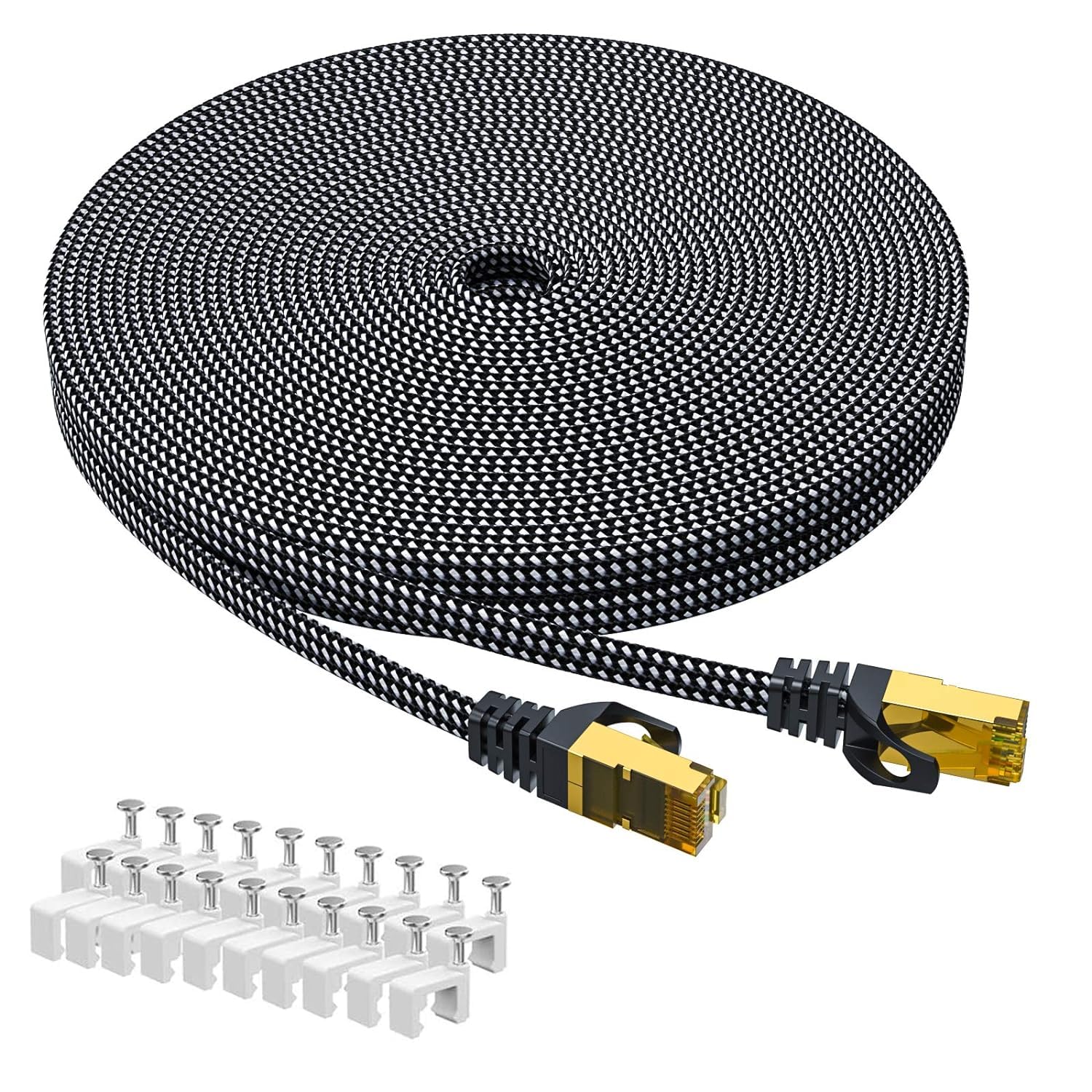
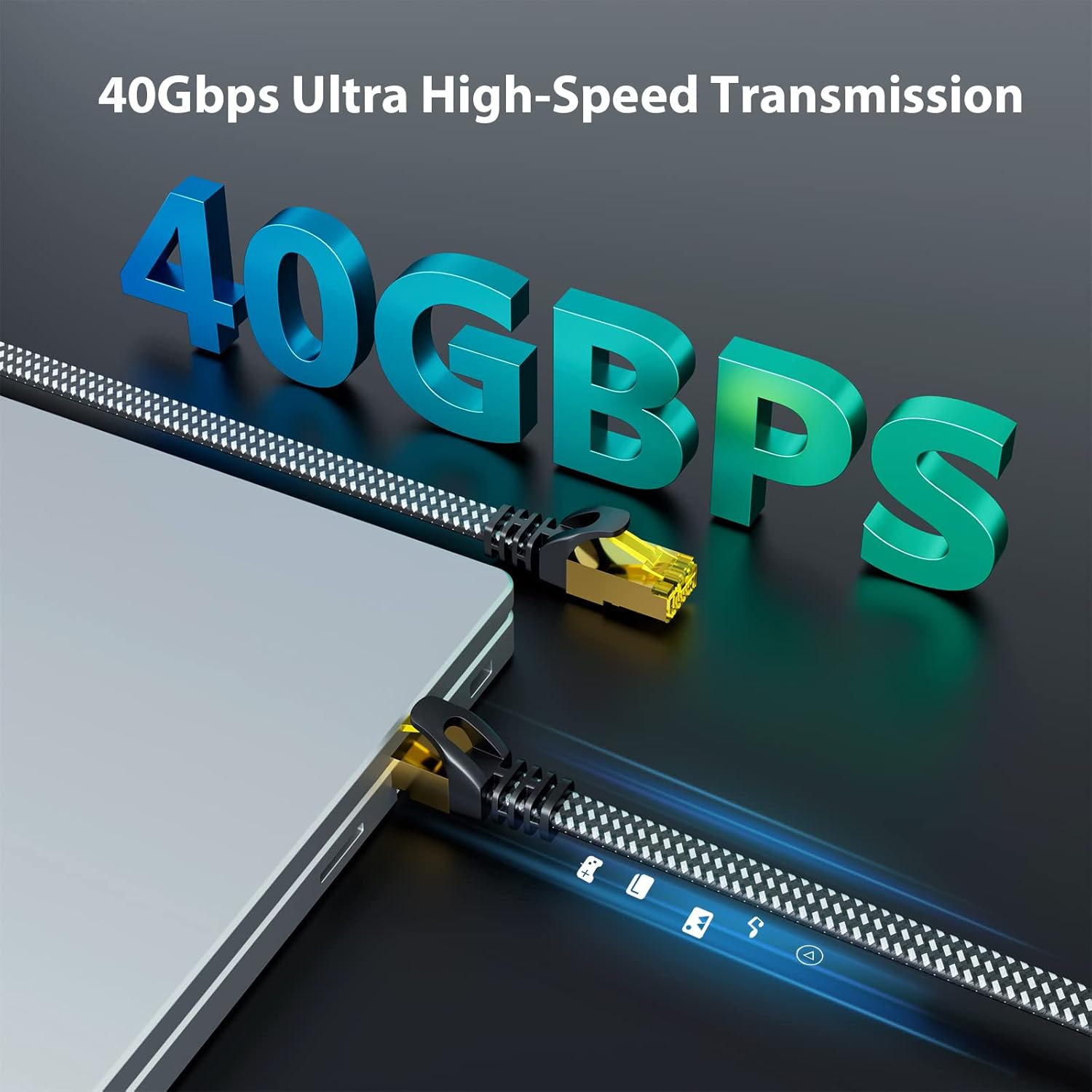
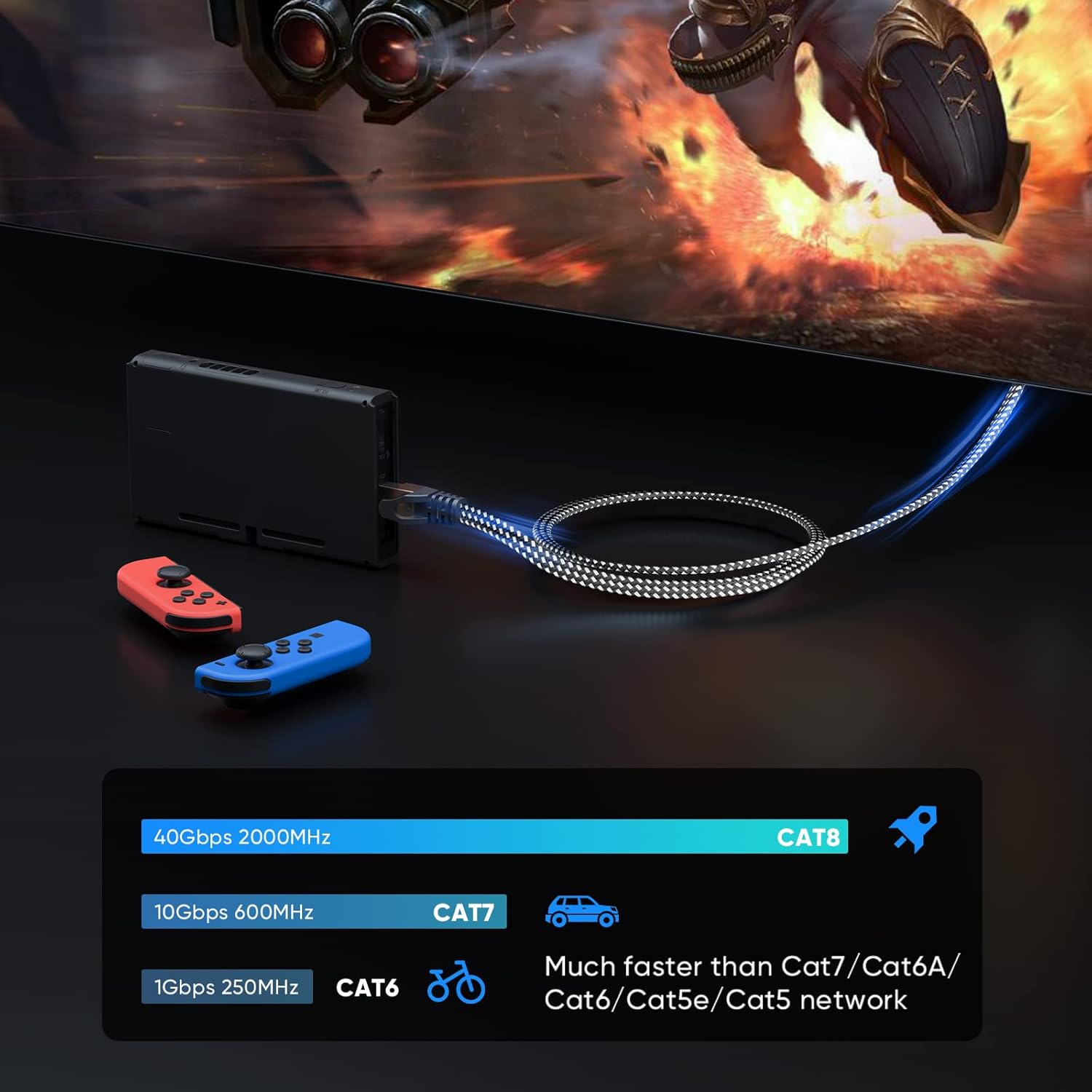
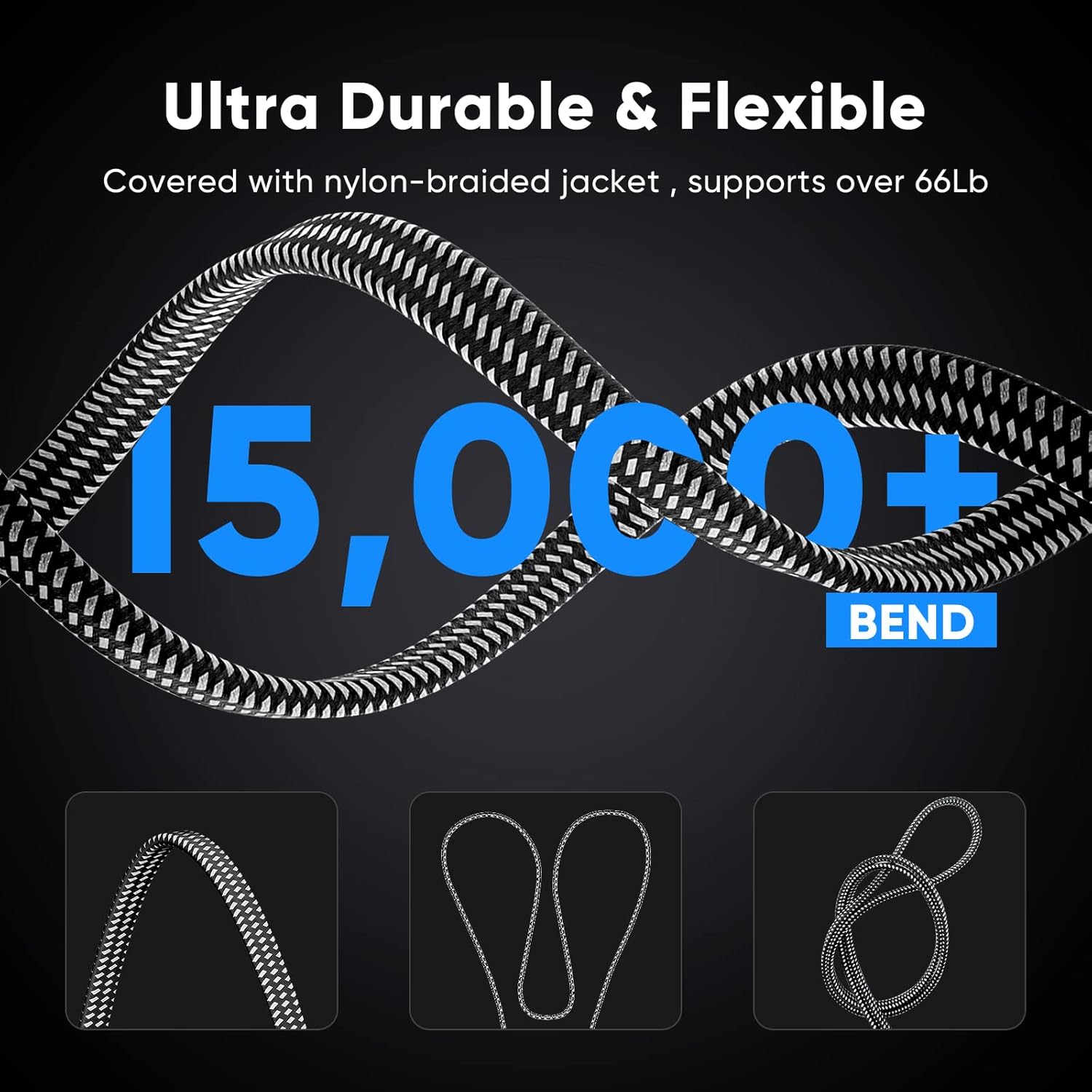
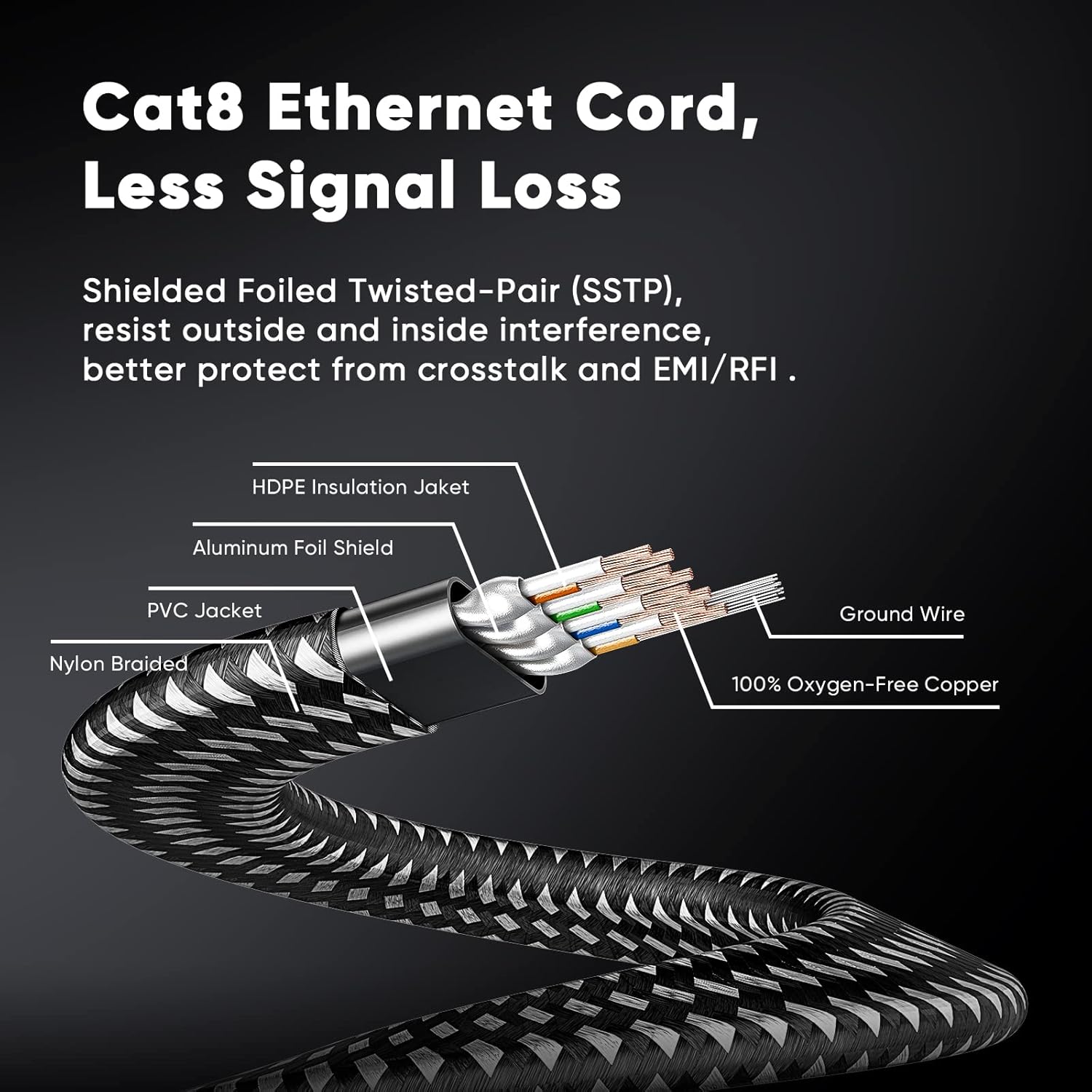
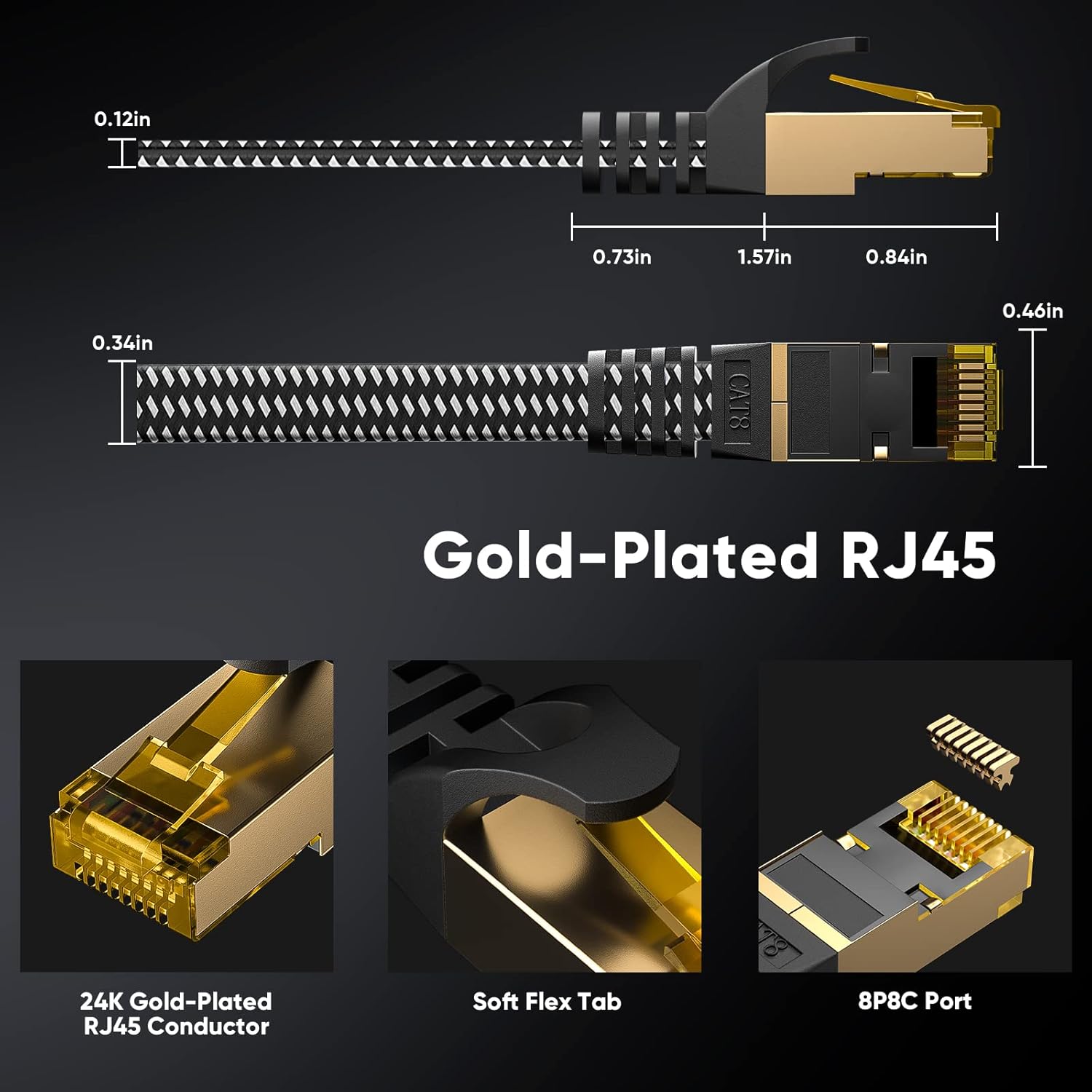
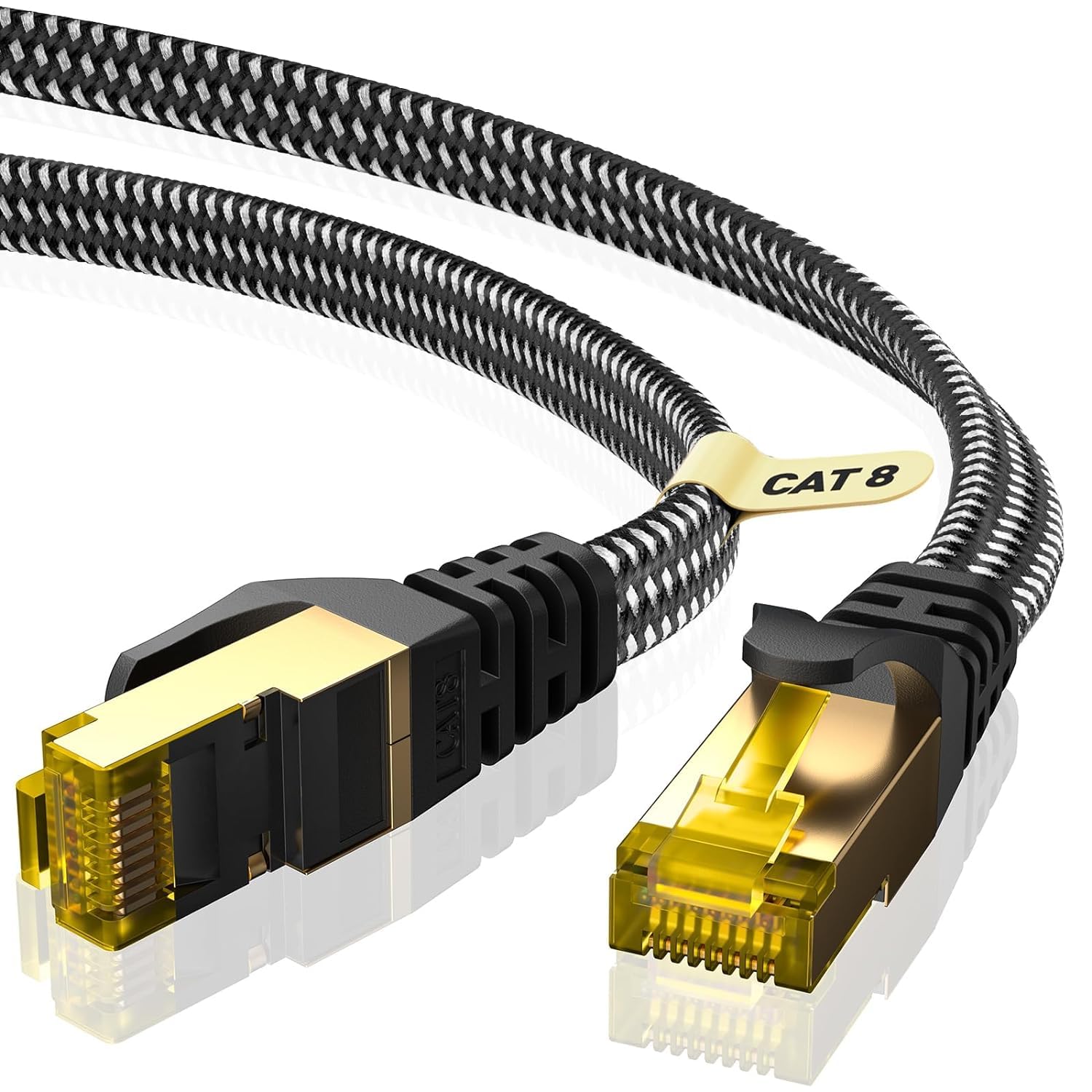
What this is and what it aims to solve\nARISKEEN’s Cat 8 Ethernet cable is a high‑performance network cord designed to maximise data transfer speed and reliability for demanding setups. With a length of 40 metres, it targets users who need a robust, shielded connection between modem, router, servers or gaming gear without sacrificing space or aesthetics. On the paper, it promises up to 40Gbps and 2000MHz bandwidth, which translates to lower latency and reduced buffering for data-heavy tasks.\n\n## Design and build quality\nThe cable uses four shielded twisted pairs (STP) of copper wires, with 50 micron gold‑plated contact pins in each RJ45 connector. This shielding is intended to mitigate crosstalk, noise and interference—helpful in home offices or server rooms where different cables coexist. The jacket is nylon braided and the cable is flat, which makes it less prone to tangling and easier to route through walls, under carpets or along door frames. A bundle of 50 cable clips is included, which can assist with tidier installations.\n\n## Performance claims and what to expect\nCat 8 is positioned as a top‑tier standard, and the stated figures—40Gbps and 2000MHz—reflect peak theoretical bandwidth. Real‑world speeds depend on several factors outside the cable itself, including your modem, router, network hardware, and the capabilities of connected devices. For many households, the practical benefit lies in stabilised performance during simultaneous transfers, ultra‑short ping in gaming scenarios, and smoother HD or 4K streaming when running multiple devices.\n\n## Compatibility and scope of use\nThe ARISKEEN cable is backwards compatible with Cat7, Cat6a, Cat6 and Cat5, and designed to work with RJ45‑enabled devices such as PCs, game consoles, network printers, modems, routers and smart TVs. Its flexibility means you can upgrade certain segments of your network while retaining existing cables elsewhere.\n\n## What stands out in use\n- Flat design helps with neat installations and reduces bulk in tight spaces.\n- STP shielding and gold‑plated contacts are aimed at improving signal integrity and reducing interference in real‑world environments.\n- The braided nylon sheath adds durability and helps protect the cable from nicks and kinks, which is useful for longer runs or active setups.\n- The 40‑metre length covers typical living spaces and small offices, but may be less convenient for very large rooms or data centres.\n\n## What doesn’t convince so quickly\nIf your network gear or internet plan does not exceed higher‑tier gigabit speeds or your devices aren’t capable of beyond‑Cat6 performance, the incremental benefit may be modest. Also, the 40‑metre length is fixed, if you’re aiming for a much longer run, you’d need to verify loss characteristics and connectors at extended distances.\n\n## Who this is for\n- Users who want a sturdy, shielded, long‑reach Ethernet cable for a mid‑to‑high performance home or small office network.\n- Setups that prioritise tidy installations and protection from interference, such as living rooms with many wireless neighbours or dense networking gear.\n- Those willing to invest in durability (nylon braid) and a flat form factor for cleaner routing.\n\n## When it makes sense to buy\n- You require stable transfers across multiple devices or a server/PC setup that benefits from reduced interference.\n- You want a long, flat cable that installs neatly under carpets or along skirting boards without becoming a bunched mess.\n- You value shielding and connector quality for longevity and lower wear in busy environments.\n\n## Before you buy: quick checks\n- Confirm your devices support RJ45 Ethernet at the speeds you expect, the cable’s 40Gbps claim is a ceiling figure and actual throughput depends on the entire chain.\n- Consider the route and potential physical wear points, the flat, braided design helps but check where it must bend or pass through walls.\n- If you already have Cat6/6a cables, assess whether upgrading the whole path is necessary or if this single run delivers the practical gains you’re after.\n\n## Practical use case and comparison at a glance\nIn a typical home office with a high‑speed internet plan and a gaming PC, this cable could help stabilise data transfer during large file moves or simultaneous streaming. It sits between basic Cat5/Cat6 options and premium, multi‑hundred‑pound builds aimed at data centres, it’s a pragmatic middle‑ground for those who want tangible gains without jumping to enterprise‑grade gear.\n\n## Final decision: Is it worth it?\nWorth considering if you prioritise shielding, a long flat run and a tidy installation for a higher‑end home network. It may not be the best fit if your setup already saturates lower category cables or if you don’t need more than gigabit speeds in practice.\n\n## FAQ\n- Q: Is 40Gbps real‑world speeds typical for Cat 8? A: The 40Gbps is the labelled maximum throughput, real speeds depend on the entire network path.\n- Q: Will this cable improve Wi‑Fi performance? A: No, Ethernet cables affect wired connections, Wi‑Fi performance is separate.\n- Q: Can I run it under carpet? A: Yes, the flat design helps with undercarpet routing, though ensure gentle bends to avoid damage.\n- Q: Is it compatible with my router? A: It should work with any RJ45‑enabled devices, subject to matching the port speeds of your equipment.