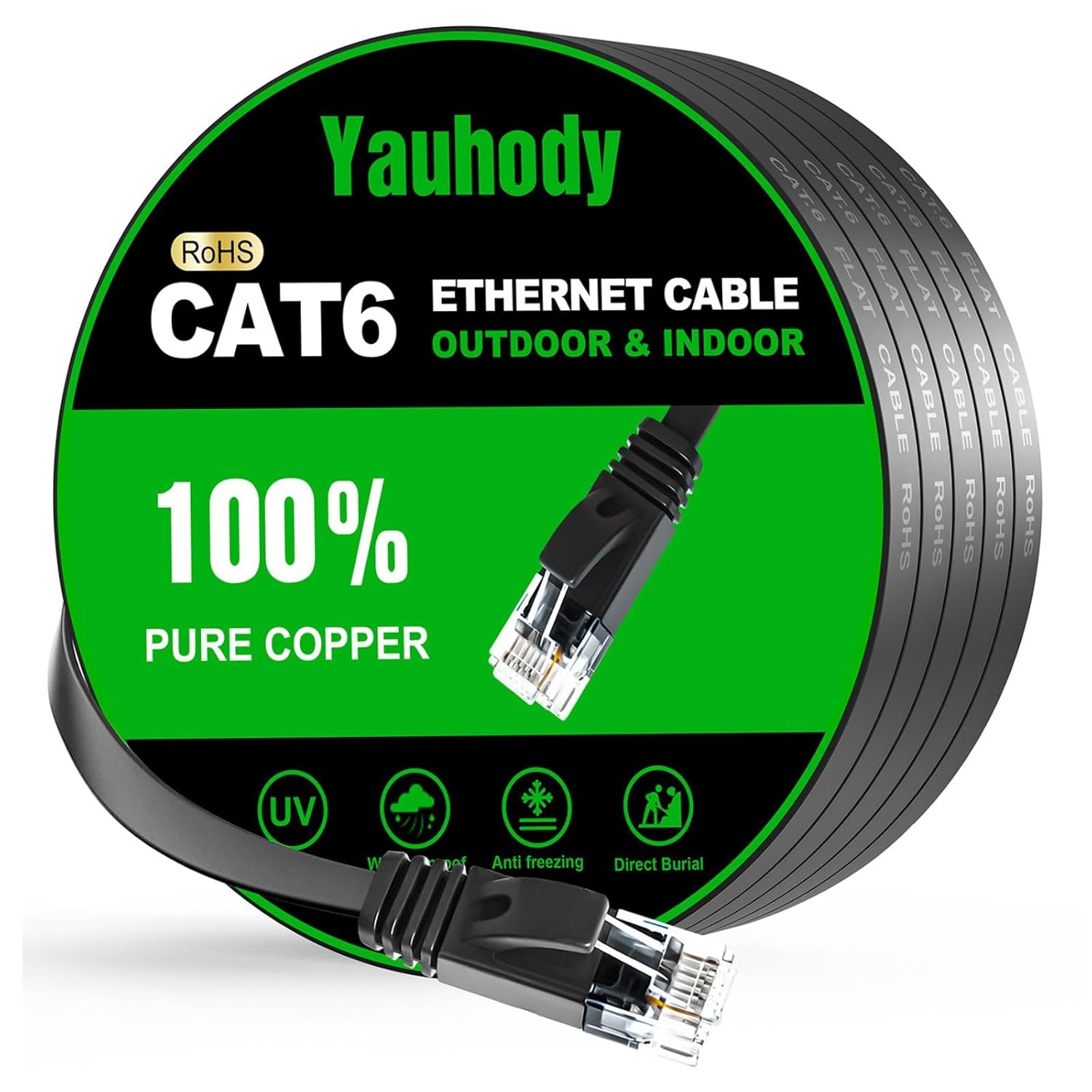
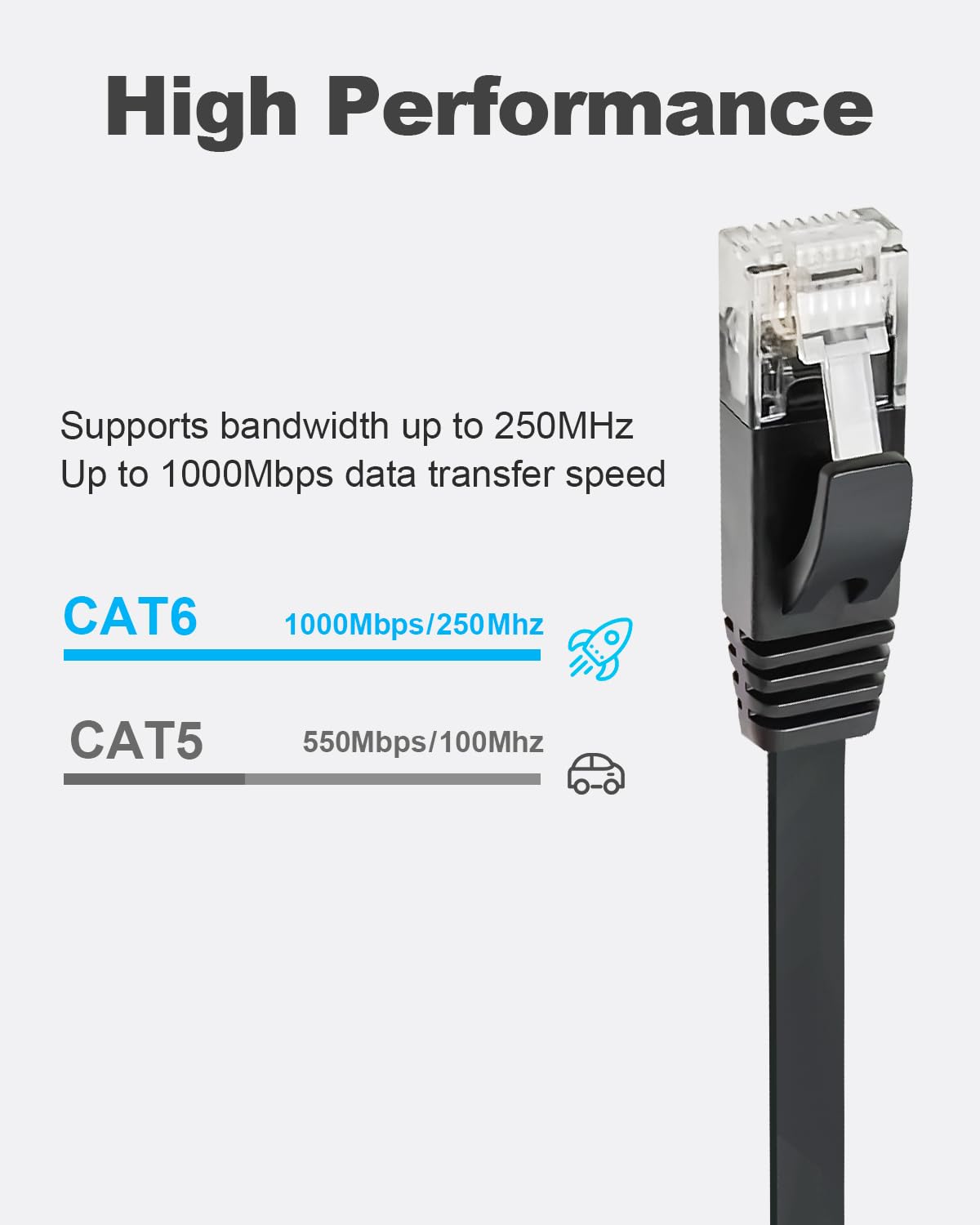
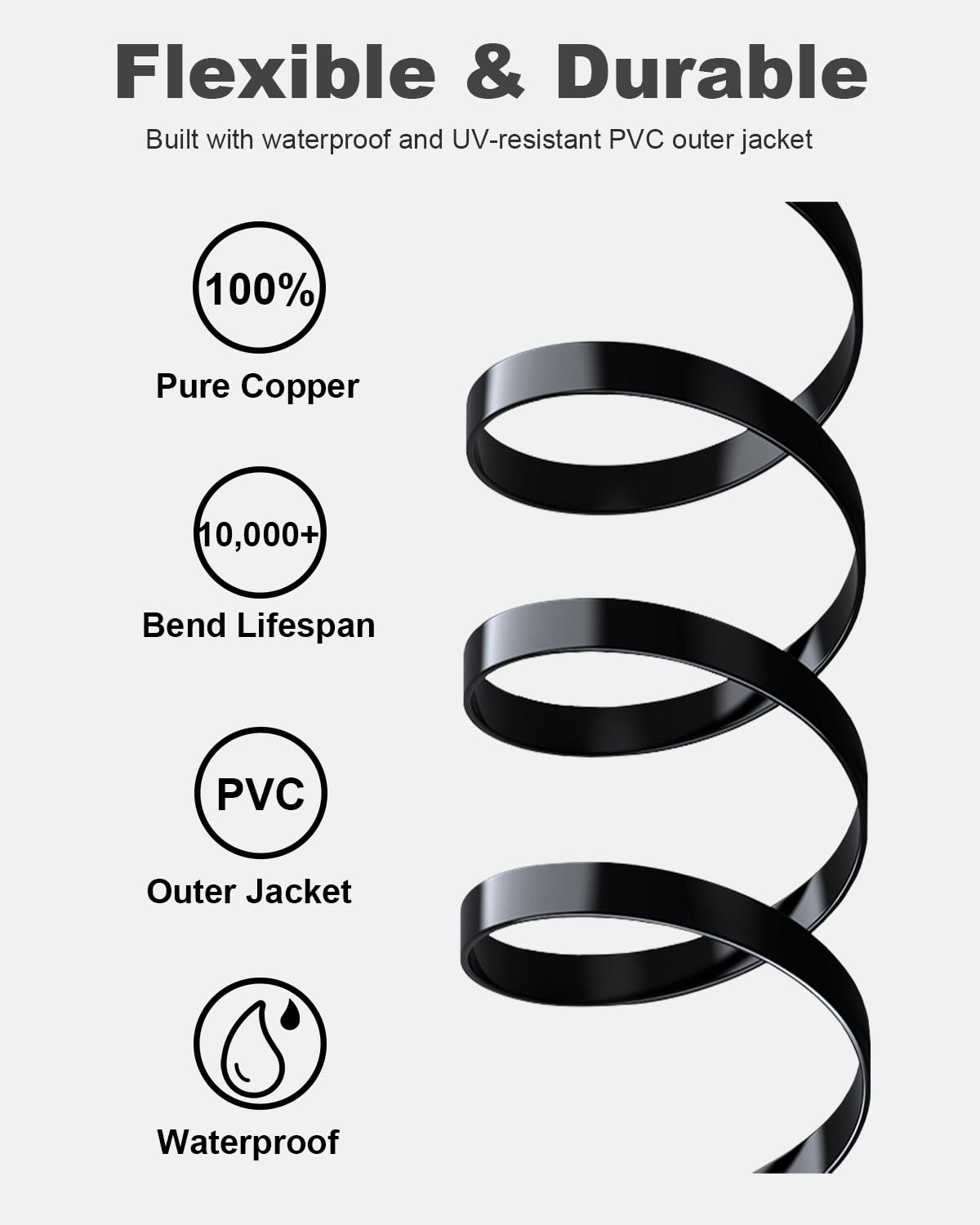
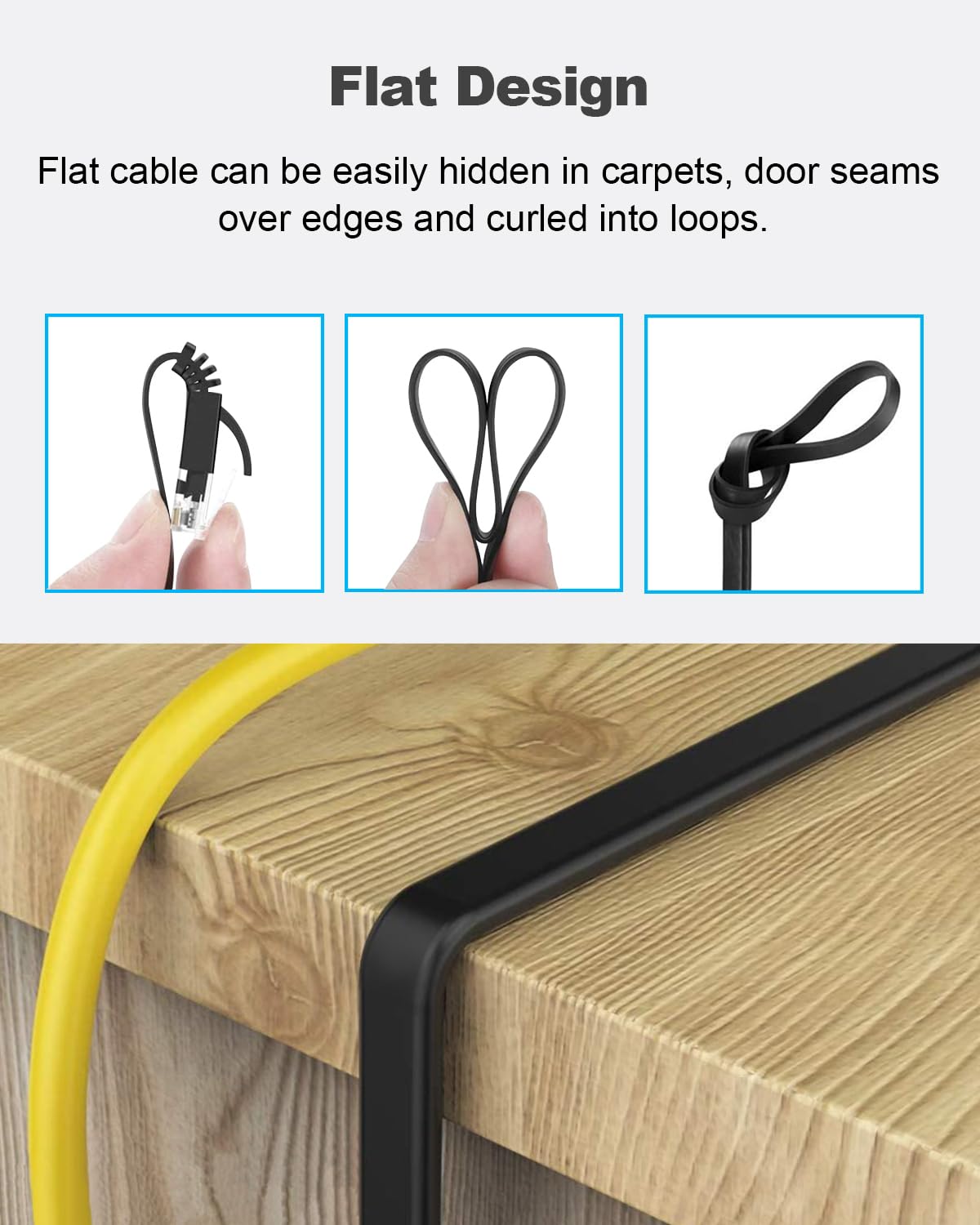
What it is and what it solves\nThe Yauhody Cat6 Ethernet Cable is a longer 8 m network lead designed for both outdoor and indoor use. It aims to deliver reliable wired internet for a modem, router, PC, laptop or other RJ45-equipped devices. On paper, it supports up to 1000 Mbps and a 250 MHz bandwidth, which is presented as solid performance for streaming, cloud storage, gaming and small networks. If you prefer a simple, stable wired connection over Wi‑Fi, this kind of cable is the classic, dependable option.\n\n## How it’s built and why that matters\nThis cable uses four shielded twisted pairs (STP) with pure copper conductors and gold-plated RJ45 plugs on both ends. The shielding and copper conductors are supposed to mitigate crosstalk and external interference, which can help when runs cross other cables or pass near electrical gear. The flat 1.5 mm profile is a practical touch: it’s easier to route under carpets, along baseboards or through tight spaces, and it’s designed to survive repeated bending. However, real-world results depend on the rest of your network and the length of the run.\n\n## Durability and everyday use\nThe design is pitched as sturdy enough for everyday home use and for environments that might see a bit more wear—think home office corners, or even light industrial or healthcare settings where a reliable connection matters. It’s not a guarantee against all physical abuse, but it’s described as capable of handling repeated bending and daily handling. If you routinely pull cables through tight gaps or under furniture, the 8 m length can be convenient, though you’ll want to avoid sharp kinks.\n\n## Compatibility and practical reach\nA standard RJ45 cat6 lead like this is broadly compatible with modems, routers, printers, gaming consoles and PCs, plus devices such as smart TVs or IP cameras that still rely on wired Ethernet. If your setup involves PoE devices or network gear at various distances, this cable can cover mid-range needs. It’s important to note that achieving the full 1000 Mbps depends on the rest of the network stack—your router, switch, and the connected device’s capabilities all play a part.\n\n## Pros and potential drawbacks\n- Pros: steady, wired speeds, good shielding for reduced interference, flat design eases routing, robust connectors.\n- Cons: real-world speed depends on the entire network path, shielded cables can be stiffer to manage in very tight spaces, it’s a fixed 8 m length, so you’ll need to plan the exact routing.\nIt’s reasonable to expect reliable performance for typical home or small office tasks, but it may not unlock gigabit performance if other links in the chain are bottlenecked.\n\n## Who it’s for and when to buy\nThis cable suits households or small offices needing a dependable wired connection for gaming, video calls, or streaming where Wi‑Fi can be inconsistent. It’s a sensible upgrade if you’ve noticed buffering or latency on wireless connections and you want a straightforward, plug‑and‑play cable. If your internet plan or network hardware already saturates your capacity, upgrading the cable alone won’t magically boost speeds.\n\n## What to check before buying\n- Confirm the 8 m length fits your space and routes cleanly without sharp bends.\n- Ensure your router or switch supports Gigabit Ethernet and that the devices you intend to connect can utilise 1000BASE-T.\n- Consider whether you need shielding for your environment, shielding helps in areas with more electrical noise but adds stiffness.\n- Plan for practical storage or management of cables to avoid trip hazards or accidental damage.\n\n## Practical use example\nImagine you’re streaming 4K and gaming on a PC while someone else uses a streaming device in another room. A single, well‑placed 8 m Cat6 cable from router to PC can stabilise latency and reduce jitter compared with relying on Wi‑Fi, particularly if walls or distance degrade the wireless signal.\n\n## Quick FAQ\n- Q: Can it handle gaming traffic effectively? A: It’s designed for up to 1000 Mbps, which is suitable for many gaming setups, provided the network path supports Gigabit speeds.\n- Q: Is the cable suitable for outdoor use? A: It’s marketed as outdoor/indoor, but check for any weather protection or installation guidance for exposed runs.\n- Q: Will it improve my Wi‑Fi coverage? A: It won’t extend Wi‑Fi itself, but it gives a stable wired alternative for devices.\n\n## Final considerations\nIf you value a straightforward, durable wired connection and the 8 m route suits your space, this Yauhody Cat6 lead offers solid practical value. It’s not the cheapest option, but the shielded construction and flat profile can make daily use more convenient than bulkier cables. If your setup requires different lengths or a non-shielded cable, you may want to compare a few alternatives to balance cost, flexibility and performance.\n\n## Decision to buy\nIt makes sense if you prioritise a stable Gigabit wired link for mid‑range home or small office use and you can work with an 8 m length. It may not be the best pick if you need shorter runs, a non‑shielded option for a very tight space, or if your network path isn’t capable of Gigabit speeds.