

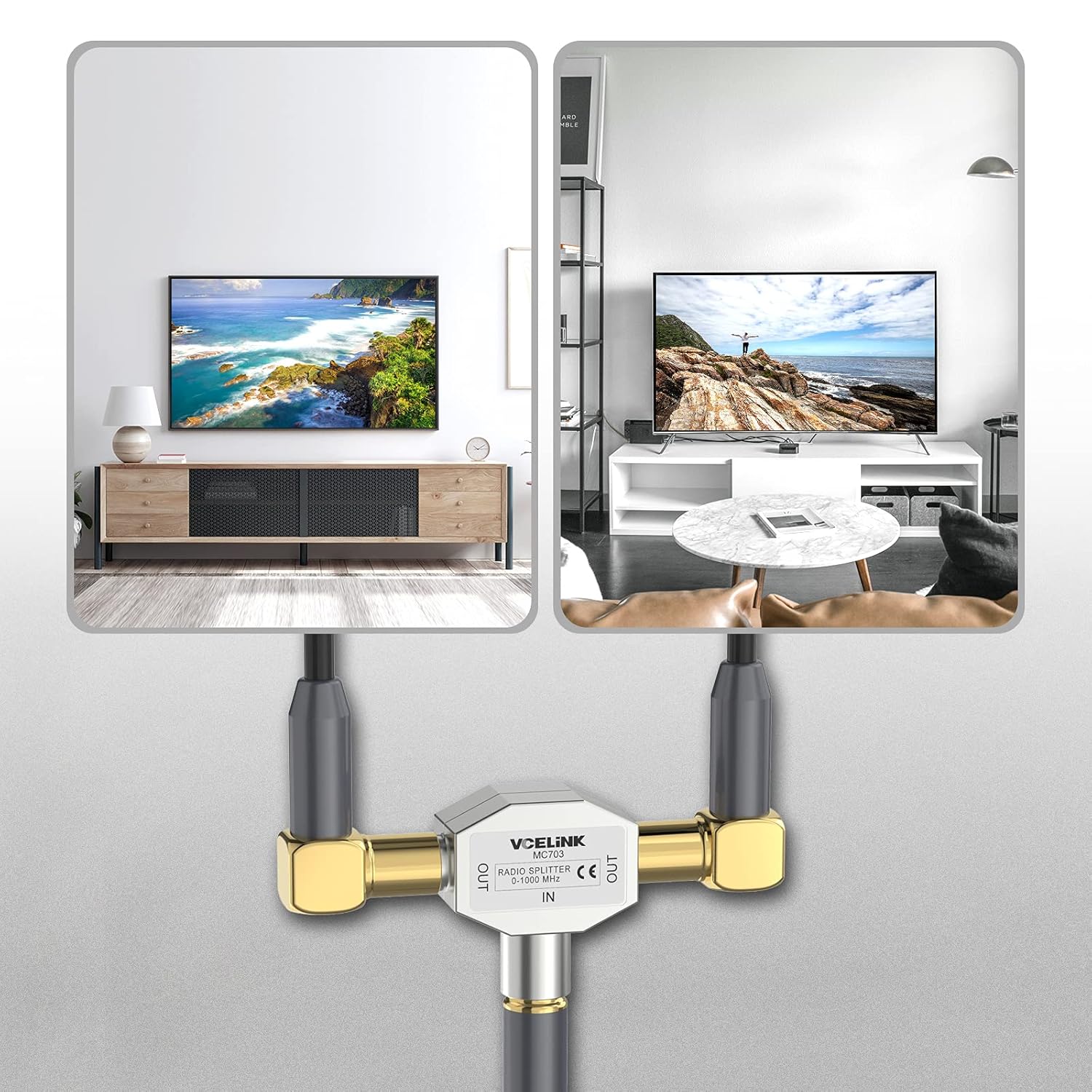
VCELINK TV Aerial Coax Splitter (2-Way) 0–1000MHz – 1x IEC In to 2x IEC Out
Reviews
Product description
What it is and what it’s for
A TV aerial coax splitter is one of those simple accessories that can quietly save a lot of faff. The VCELINK TV Aerial Coax Splitter is a 2-way adapter designed to take one incoming UHF coax signal and split it so you can feed two different TV points from a single cable connection.
On paper, that makes it useful if you only have one aerial/cable outlet available but you want to connect two TVs (or two devices that take coax). It’s also positioned as a way to separate or manage TV aerial feed when you’ve got multiple components involved, such as a TV plus a PVR/DVR, VCR, DVD player, or even a games console that expects an aerial-style coax feed.
That said, it’s not a magic “boost” device. Splitting generally involves sharing a signal, so if you’re working with very weak reception, you may still need to look at your overall aerial setup rather than blaming the splitter.
Key features that matter in everyday use
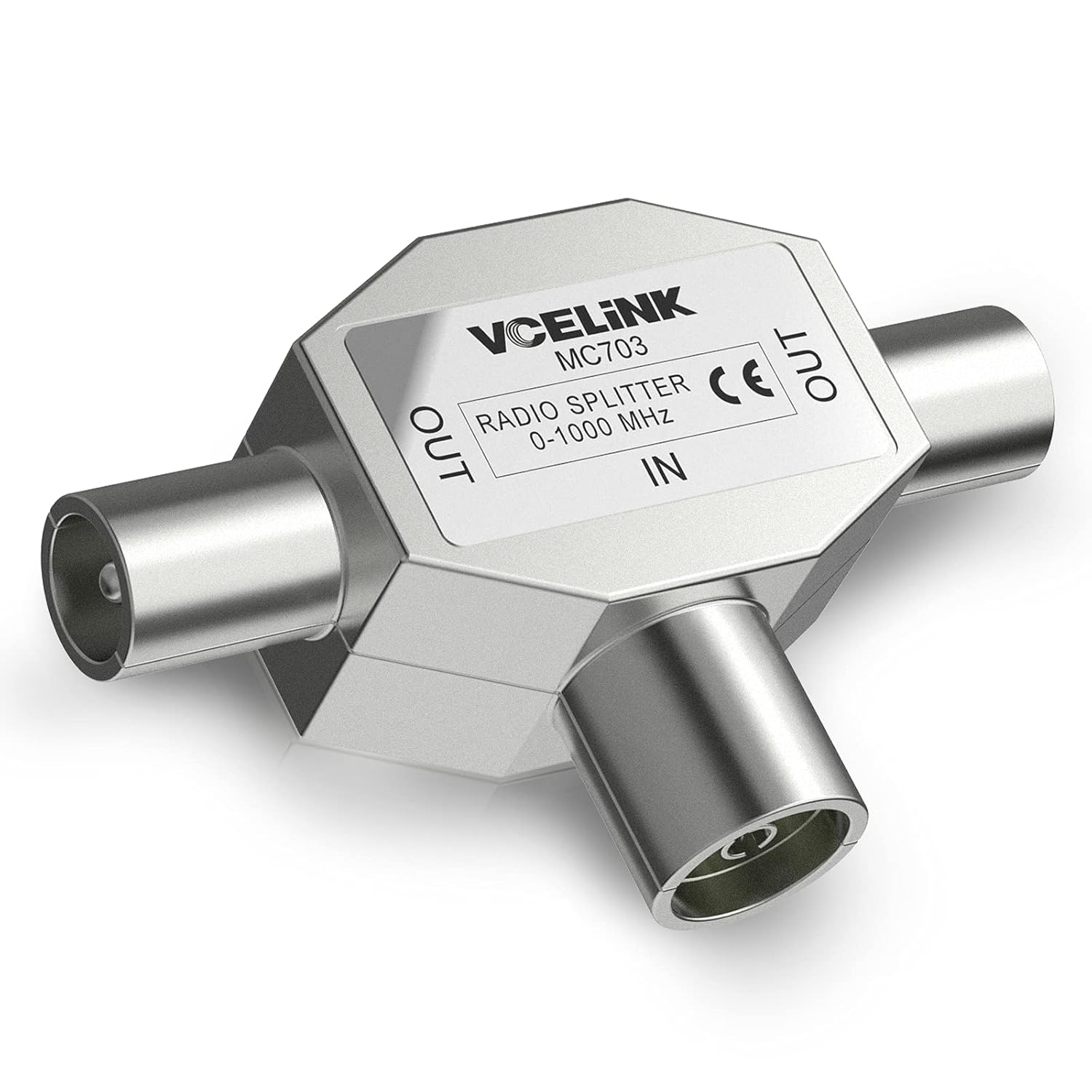
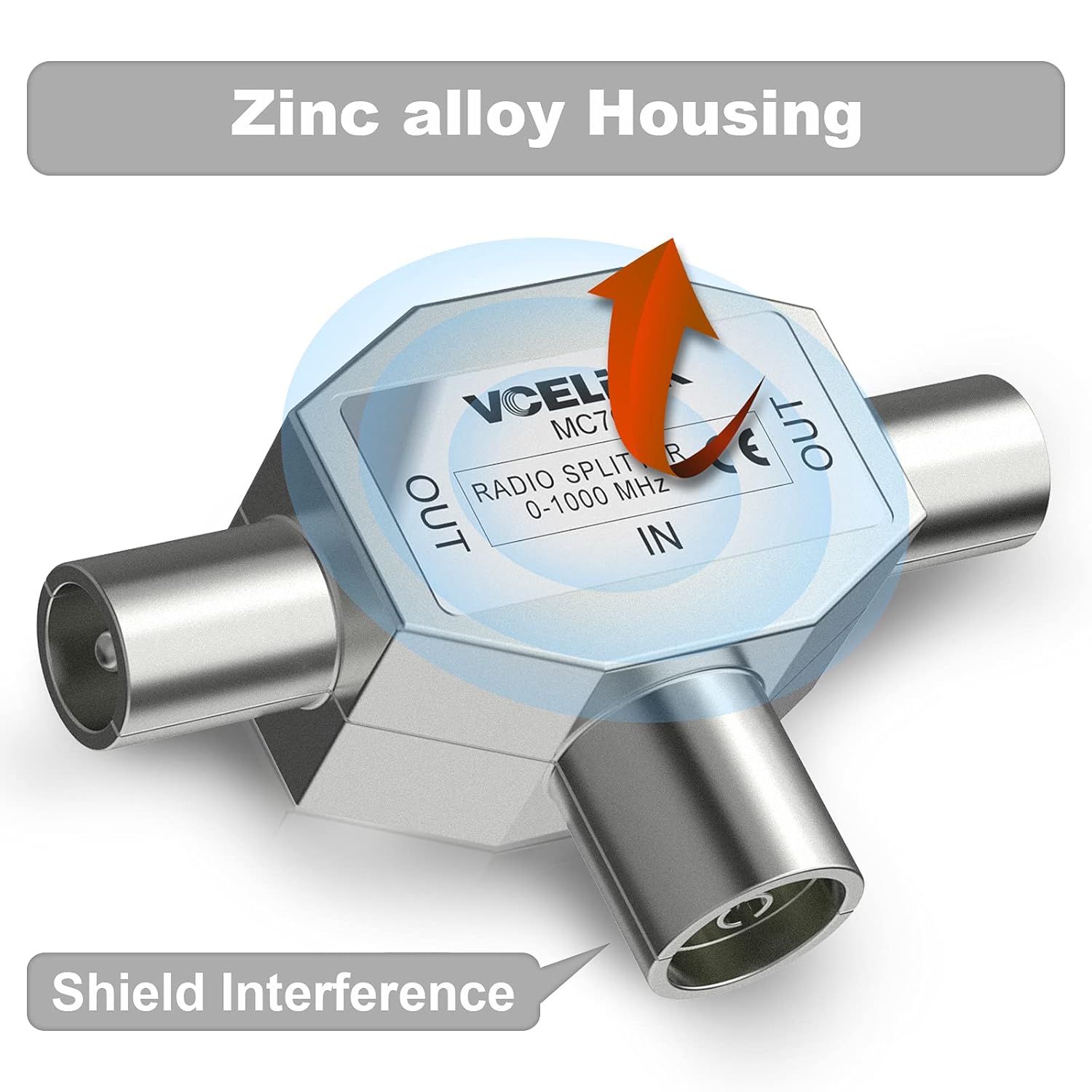
What stands out with this model is the build approach. Unlike some cheaper plastic splitters, the adapter body is described as made from durable zinc alloy, with shielding intended to help reduce signal interference. In real household setups, that’s the kind of detail that can make a difference when the coax run is near other cables or when you’re plugging/unplugging often.
The frequency range is listed as 0–1000MHz, which covers typical TV broadcast coax ranges and should suit most standard aerial/coax distribution jobs in the home. The stated output is 3.5 dB, which is consistent with the idea of a 2-way split: you’re distributing the same signal to two outputs, not creating a stronger one.
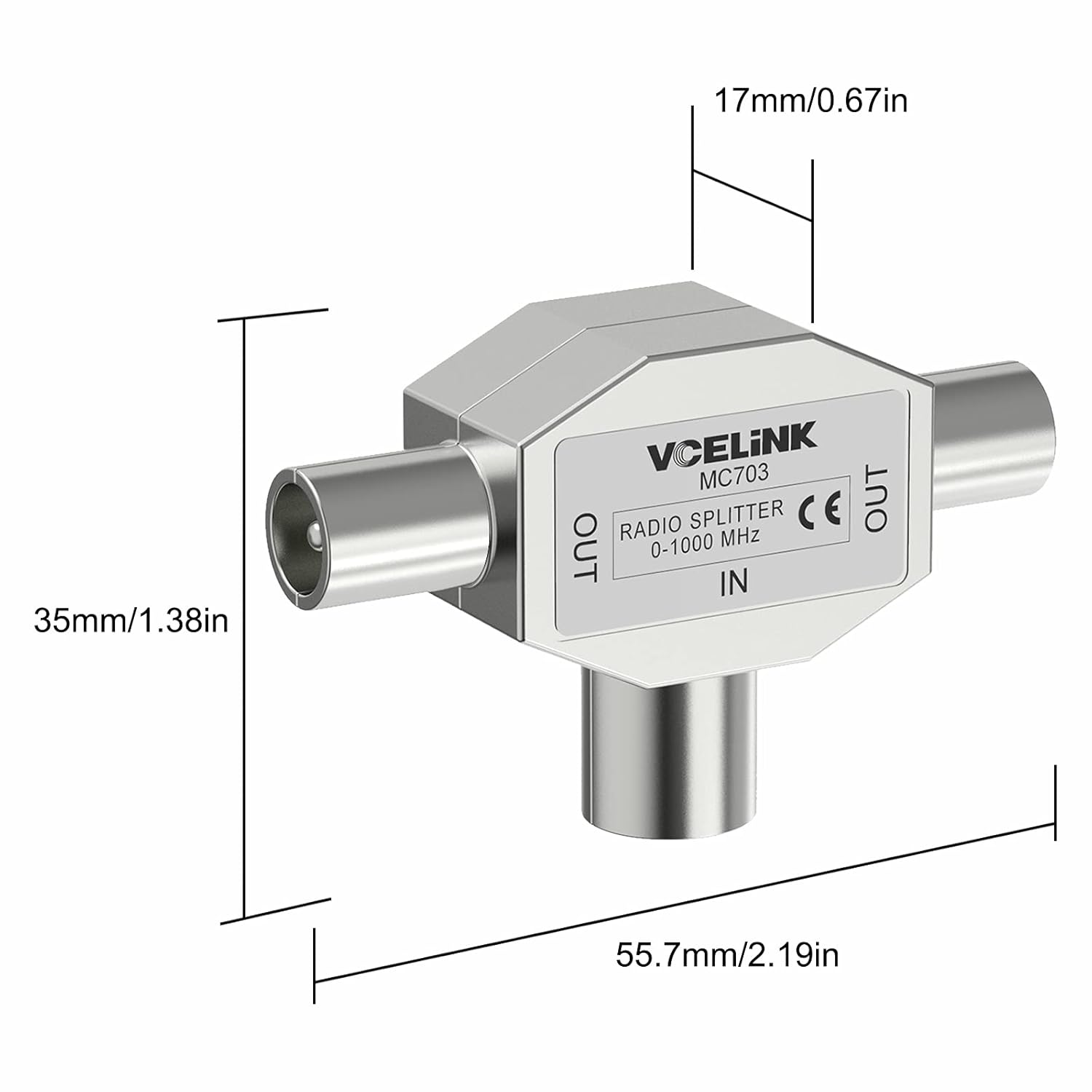
There’s also a practical angle in the connector format: it uses one IEC coax input and provides two IEC coax outputs. If your current TV aerial cabling is IEC-style, this should slot in without needing odd adapters.
The essentials (specs you should sanity-check)
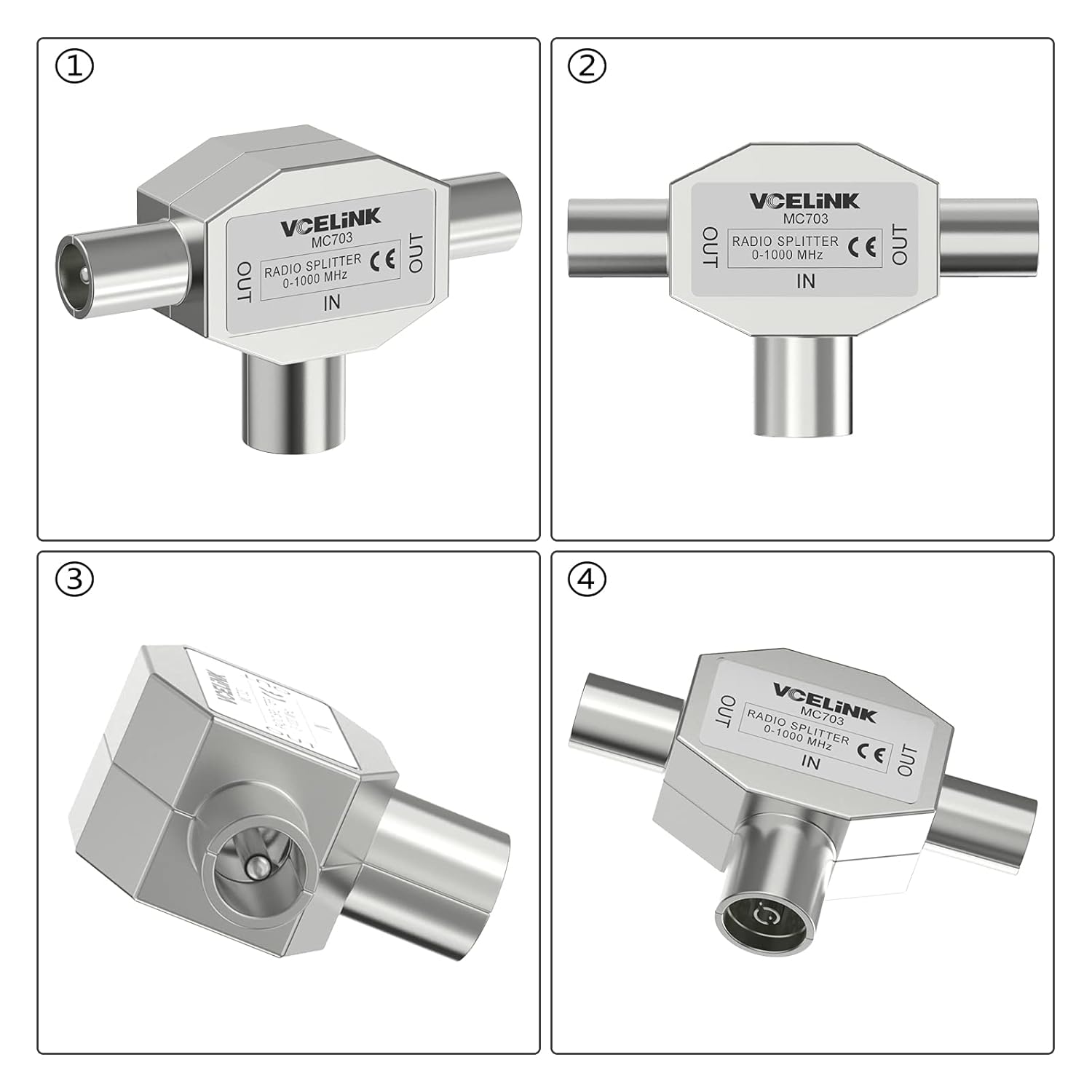
- Type: 2-way TV aerial coax splitter / adapter
- Input (IN): 1x Coaxial (IEC) connector
- Outputs (Out): 2x Coaxial (IEC) connector
- Output level: 3.5 dB
- Frequency range: 0–1000 MHz
- Housing: shielded metal housing (zinc alloy described)
One thing to keep in mind: the entry mentions “HD” and that it won’t affect digital signal entry when connected. That’s helpful, but it still doesn’t remove the reality that reception quality depends heavily on your aerial, cabling quality, and signal strength at your property.
Where it shines (and when it feels a bit limited)
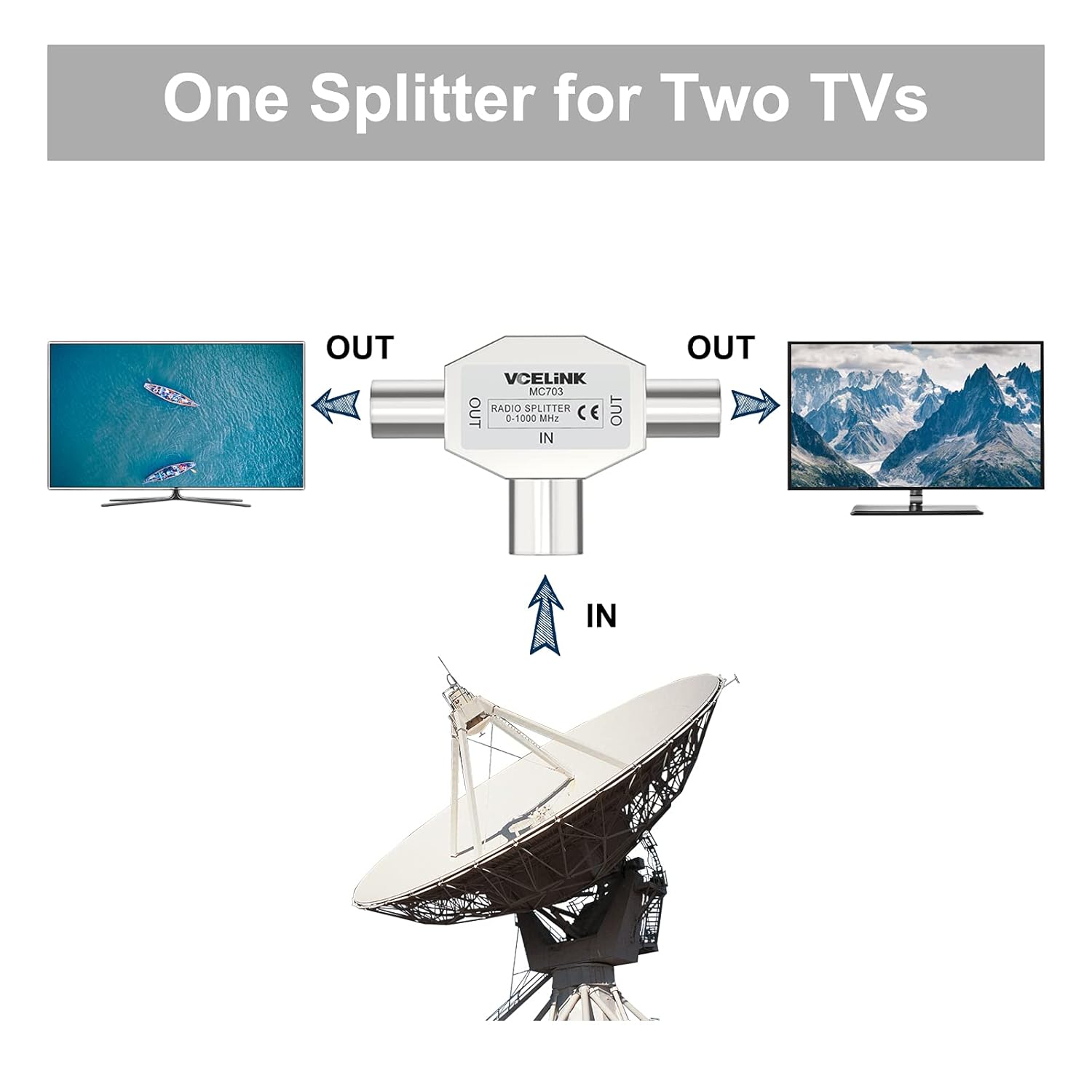
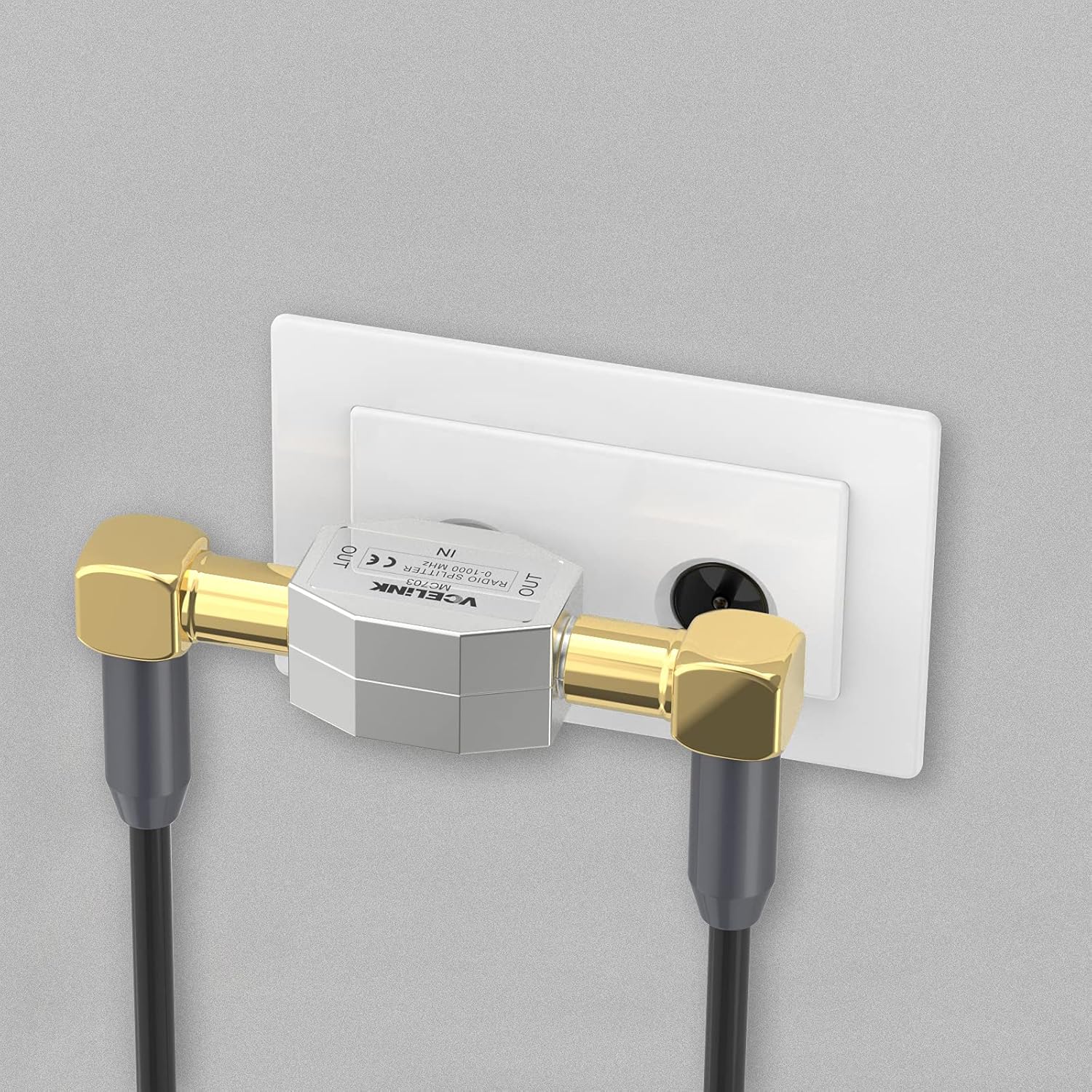
This splitter is at its best when you need straightforward distribution. For example: you have one coax wall outlet feeding the living room TV, but you also want to run coax to a second TV in another room using the same incoming feed. With a 2-way splitter, you can usually tidy up the wiring so both TVs get their own coax connection.
It may also suit basic multi-device setups where you need coax input options without re-running new aerial cabling. The “shielded metal housing” and zinc alloy construction are a sensible choice if you want something that feels sturdier than budget plastic.
However, it may not be the best choice if: - your signal is already borderline (a split can make weak reception more noticeable) - you’re trying to cover long cable runs or complex distribution where attenuation becomes the bigger issue - you expect it to improve picture quality on a struggling feed (this is a splitter, not an amplifier)
If you prioritise durability and clean, shielded construction over gimmicks, it’s a straightforward fit.
Compatibility & setup points to check before buying
Before you commit, it’s worth double-checking three basics:
First, look at your existing connectors. This item is specified as 1x IEC input and 2x IEC outputs. If your wall sockets or TV/coax leads use a different coax connector type, you may need extra adapters.
Second, confirm your use case. It’s designed to split a TV aerial/coax signal to two points. If your setup needs more than two outputs, or requires a specific distribution topology, you’ll need to plan differently.
Third, think about signal strength and location. If the second TV is far away or you’re running through additional splitters already, reception can drop. In those cases, the splitter might be working exactly as intended, but the end result can still be disappointing.
What’s included, warranty and support
The listing specifies that the pack includes 1 x TV cable television splitter.
It also comes with an 18-month product warranty, which is a decent safety net for a small accessory you’ll likely leave installed.
Mini FAQ
Is it suitable for connecting two TVs to one coax socket?
Yes, that’s the core use case described: distributing a UHF/coax signal to two different TV points from a single input.
What frequency range does it support?
It’s listed as 0–1000 MHz, which should cover the typical TV aerial coax range used for broadcast signals.
Will it affect digital or “HD” picture quality?
The description claims it won’t affect digital signal input when connected. Still, real-world picture quality will depend on your aerial strength and cable conditions.
What connectors does it use?
It uses IEC coax: one IEC input and two IEC outputs.
Is it the right choice if my reception is weak?
It may help for distribution, but it can also make weaknesses more noticeable because it splits the signal. If you’re starting from very weak reception, you may need to address the aerial/cabling situation first.
Final verdict
It’s worth considering if you need a simple 2-way coax split using IEC-style connections, and you prefer the sturdier, shielded zinc alloy approach rather than a fully plastic body. It suits everyday home setups where one incoming aerial/cable feed needs to be shared between two coax inputs.
Buy it if your primary concern is practical distribution and you expect decent signal strength to begin with. Skip it (or at least rethink the wider setup) if you’re chasing better reception from a weak aerial signal, or if you’re dealing with long runs and multiple distribution points where attenuation is already a problem.