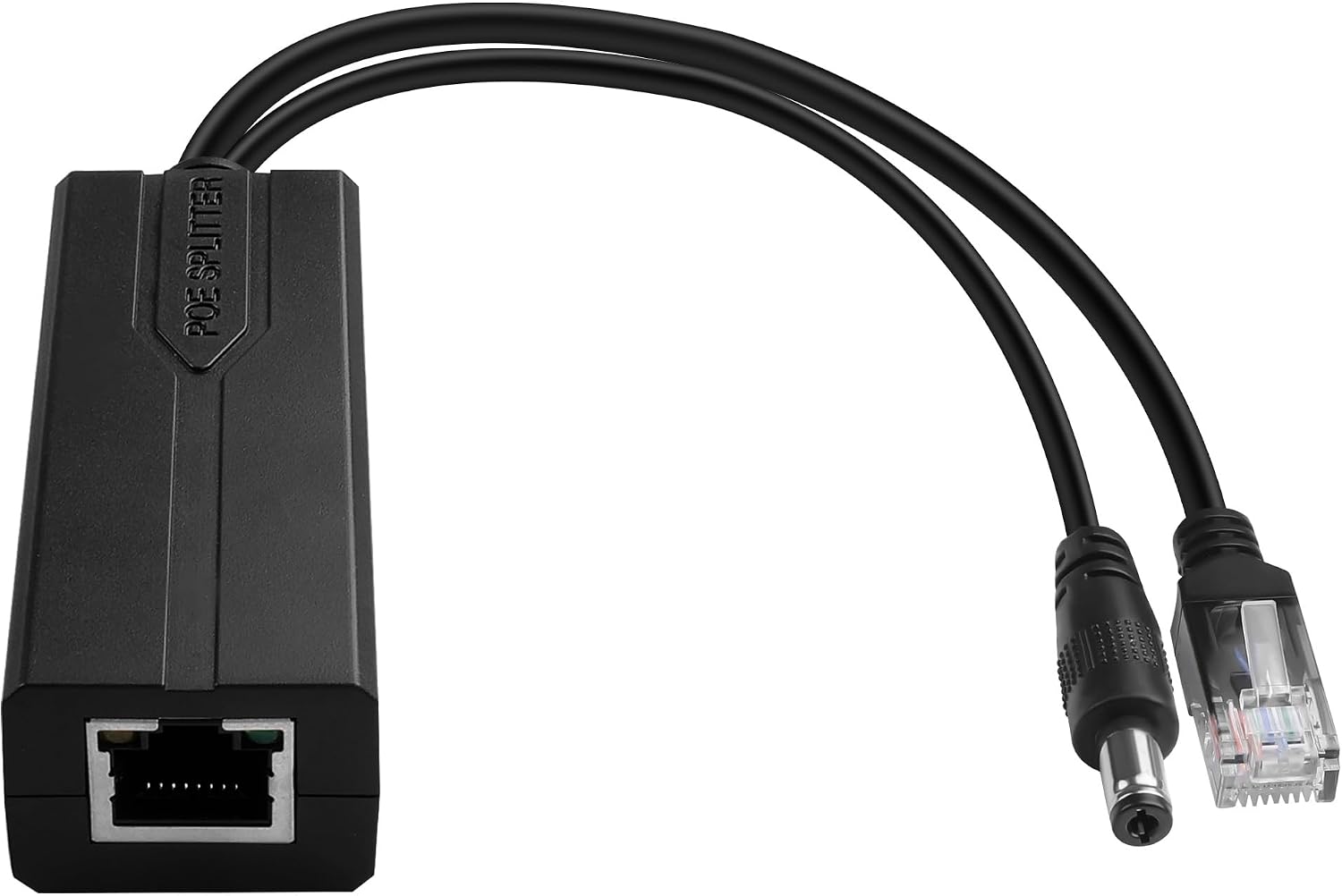
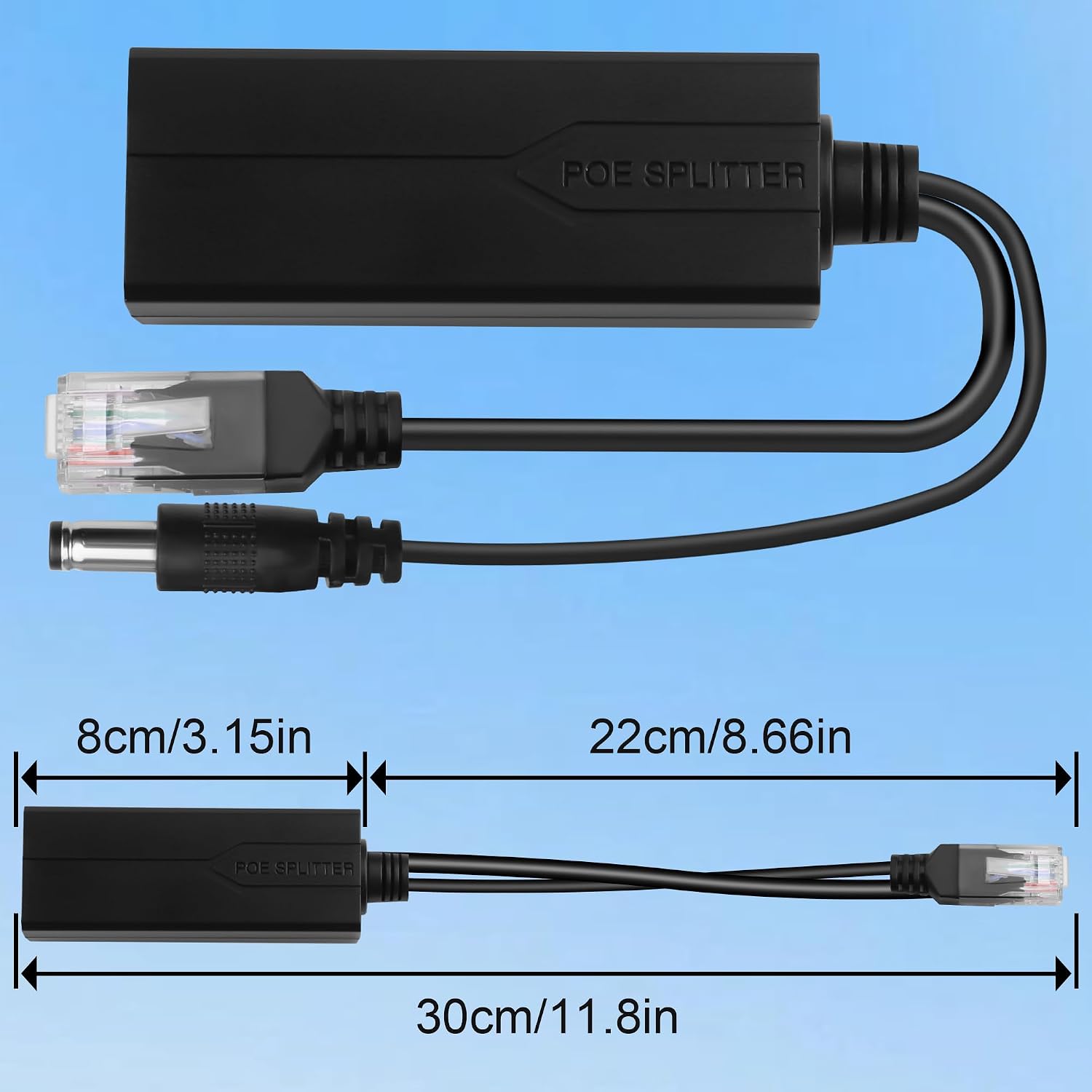
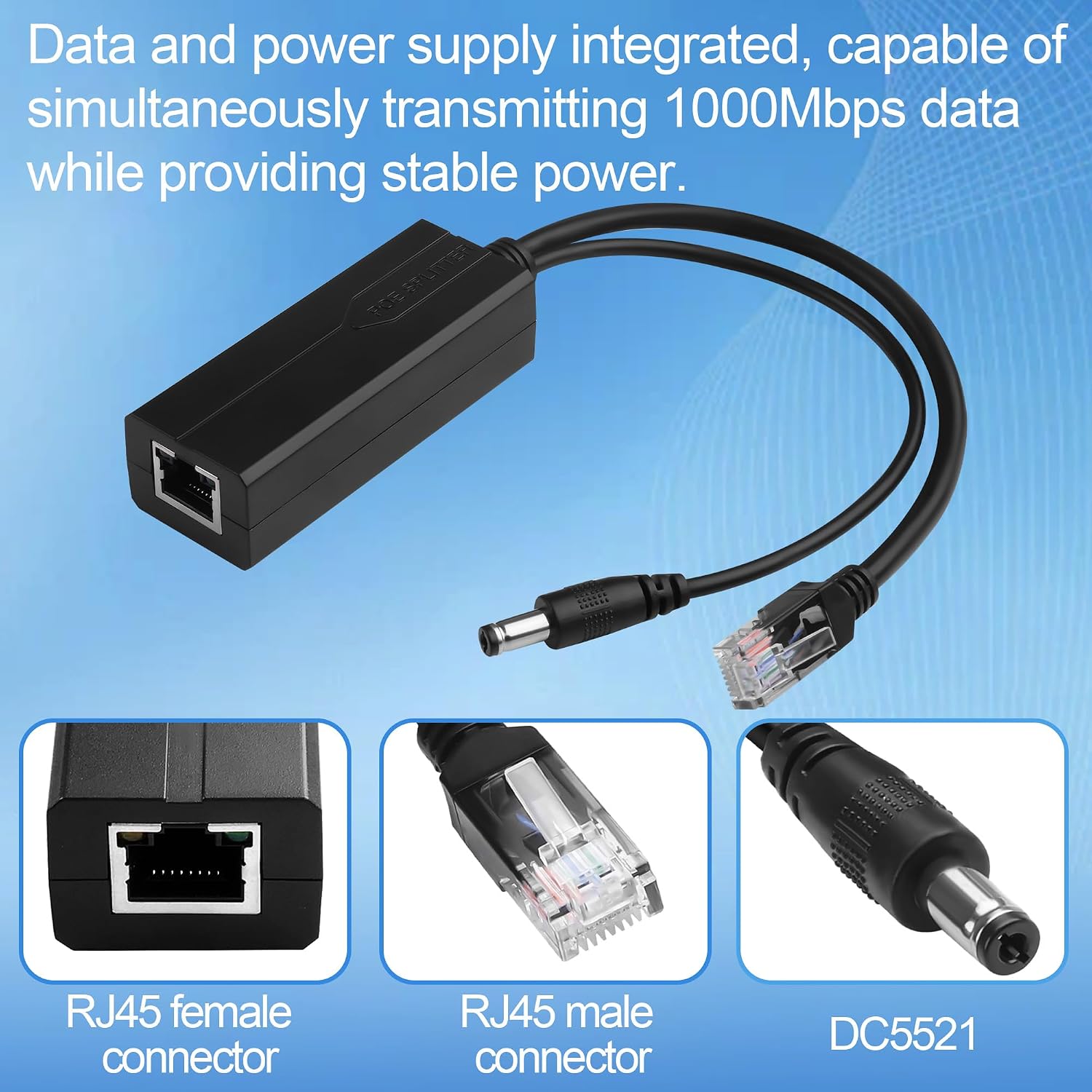
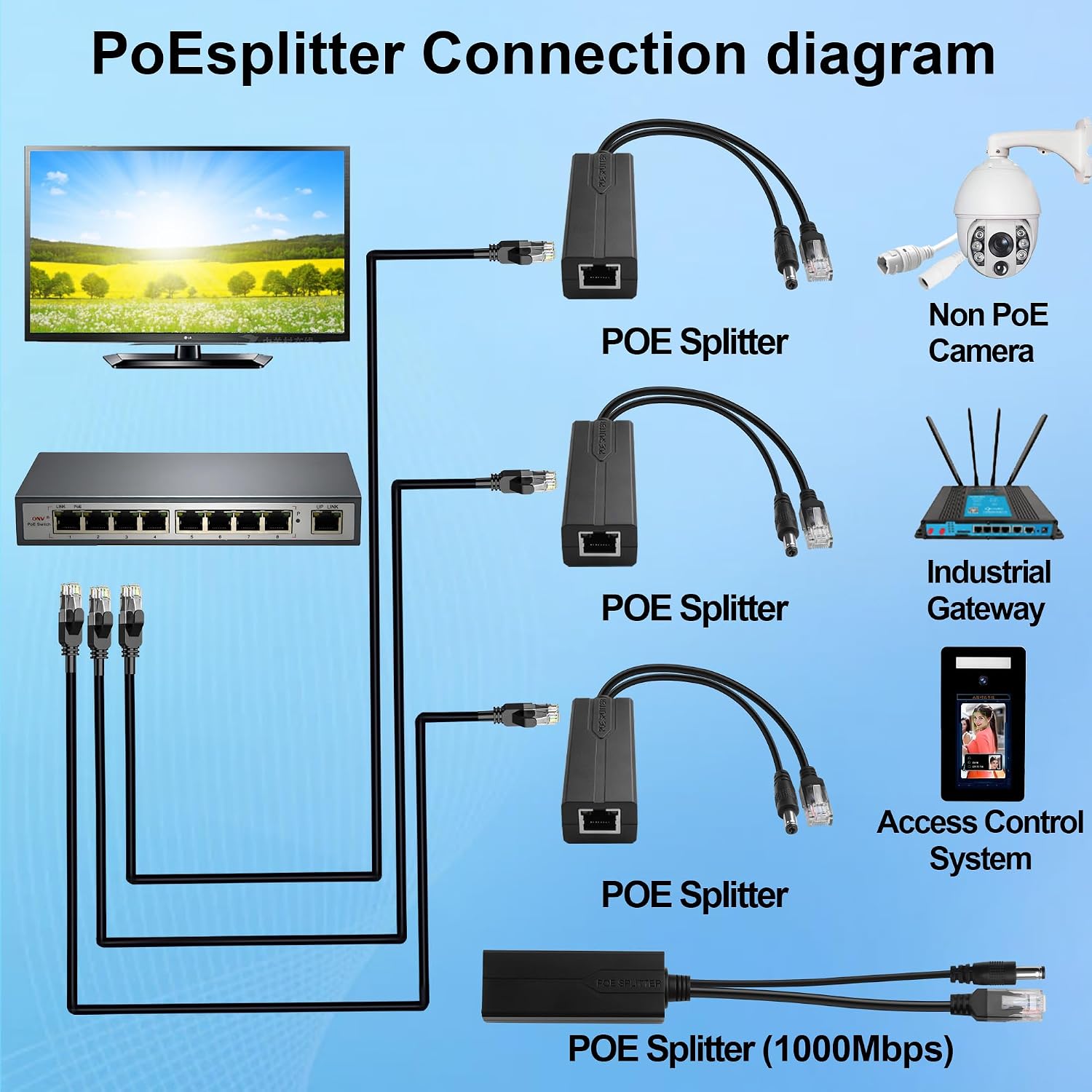
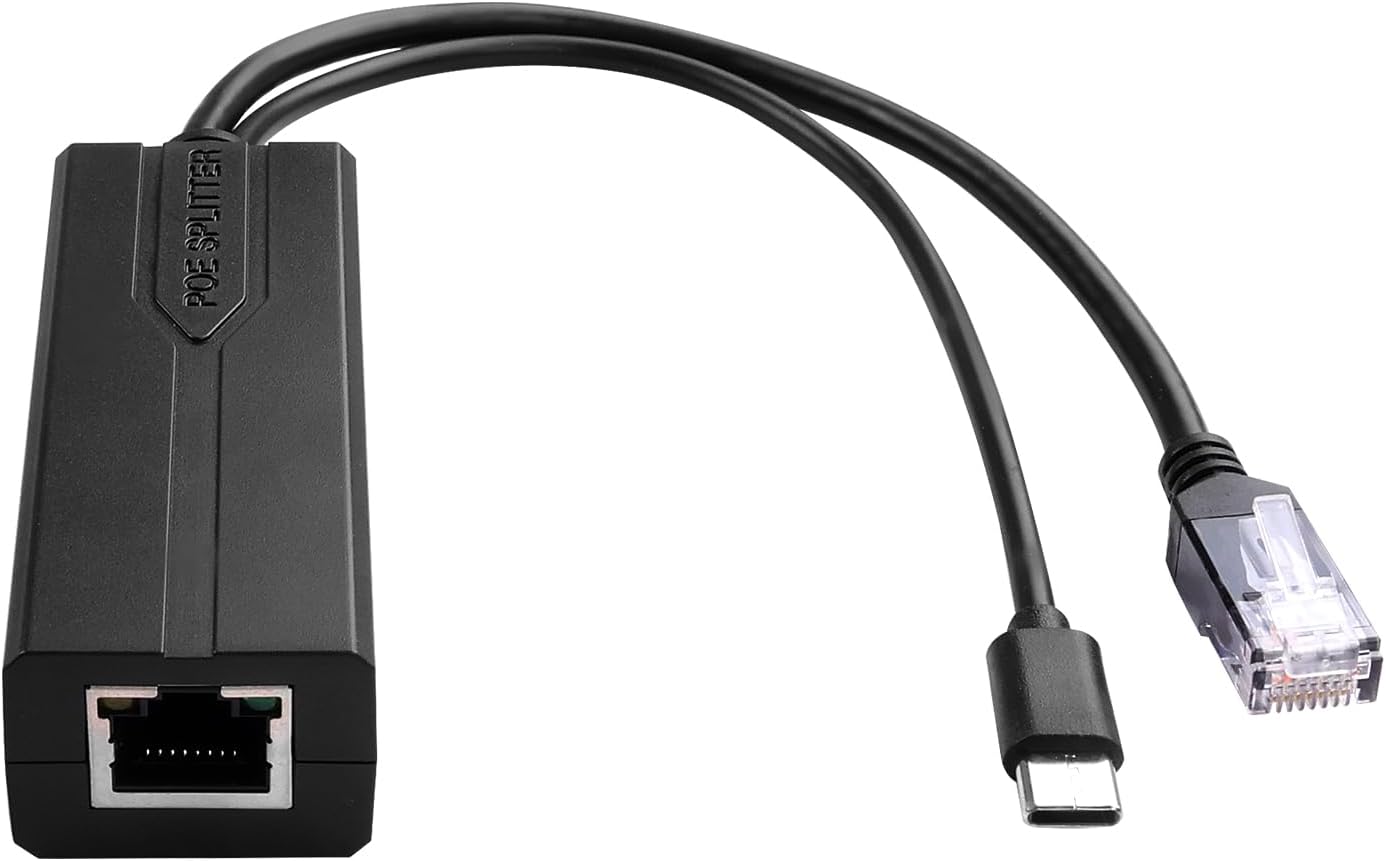
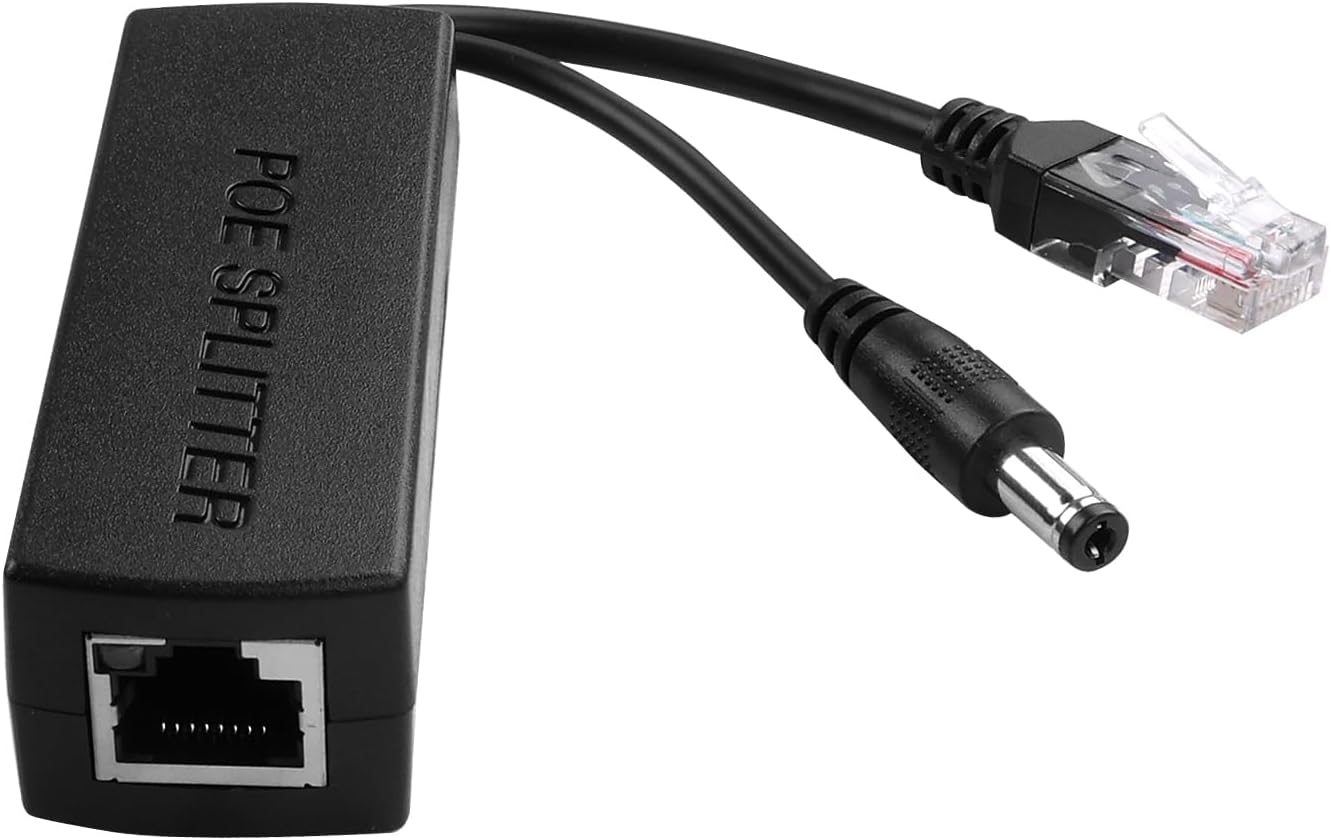
What it is and what it does\nThe TIENFOKOTA PoE Splitter is a dedicated power injector companion for Ethernet devices. It sits on the data line of a PoE-enabled switch or injector and separates data from power, delivering a regulated 5V DC output at up to 2.4A (about 15W) through a DC5521 connector. On paper, this makes it suitable for powering devices like IP cameras and wireless access points without requiring a separate power source at each unit.\n\n## How it handles data transmission\nDesigned to support 10/100/1000Mbps networks, the splitter uses robust copper conductors to help keep signal integrity intact. In environments where video streams or real-time data transfer matter, such as surveillance or remote monitoring, this setup aims to minimise lag and intermittent drops. The Gigabit Ethernet interface paired with the PoE extraction means you should get both data and power over a single cable where allowed.\n\n## Power conversion and safety features\nThe unit converts standard PoE input (commonly 44–57V) to a stable 5V output at 2.4A, with up to 15W of full power available to the connected device. A metal connector shell and gold-plated RJ45 jacks are chosen for durability and reliable contact through repeated plugging. Importantly, multiple protective circuits guard against overvoltage, overload and short circuits to help safeguard connected equipment.\n\n## Who this is for\nIf you’re wiring a small to medium CCTV setup or expanding a wireless network where devices sit away from mains outlets, this splitter can simplify the power layout by letting you use existing Ethernet runs for power too. It’s particularly positioned for scenarios where a single cable run can carry both data and power to cameras or access points, reducing clutter and installation costs.\n\n## What to consider before buying\n- Check compatibility with your PoE switch and ensure the device you intend to power supports 5V at up to 2.4A.\n- Confirm the physical fitting: the DC5521 output must match your device’s power input.\n- If you require higher power for a future device, note the 15W limit and plan accordingly.\n- While it handles gigabit data, expect performance to align with your network design, poor cabling or long runs can still affect throughput.\n\n## How it compares to other approaches\nFor installations that prioritise simplicity over amplitude of power, using a PoE splitter like this can be preferable to running separate power lines. If you need more headroom or PoE compatibility across a wider range of devices, you might consider alternatives that offer higher wattage or different voltage outputs.\n\n## What you’ll notice in everyday use\nIn practical terms, you’ll typically see one Ethernet cable delivering both data and power to compatible devices, with a tidy wiring footprint. It’s not a magic fix for every device—if your camera or access point demands more than 15W, you’ll need a different solution.\n\n## Final decision\nFinal verdict: Worth considering if your setup involves IP cameras or wireless access points that can run on 5V/2.4A and you want to minimise cabling. It’s a pragmatic option for straightforward PoE deployments, but it may not suit equipment requiring higher power or non-standard voltages. You’ll want to verify input compatibility and ensure the power budget aligns with the device’s needs.\n\n## Frequently asked questions\n- What voltage does the splitter output? 5V DC up to 2.4A.\n- What data speeds does it support? 10/100/1000Mbps.\n- Is it safe for continuous operation? It includes protection against overvoltage, overload and short circuits, but real-world reliability depends on overall system design.\n- Can it power multiple devices? No, it delivers up to 15W to a single connected device.