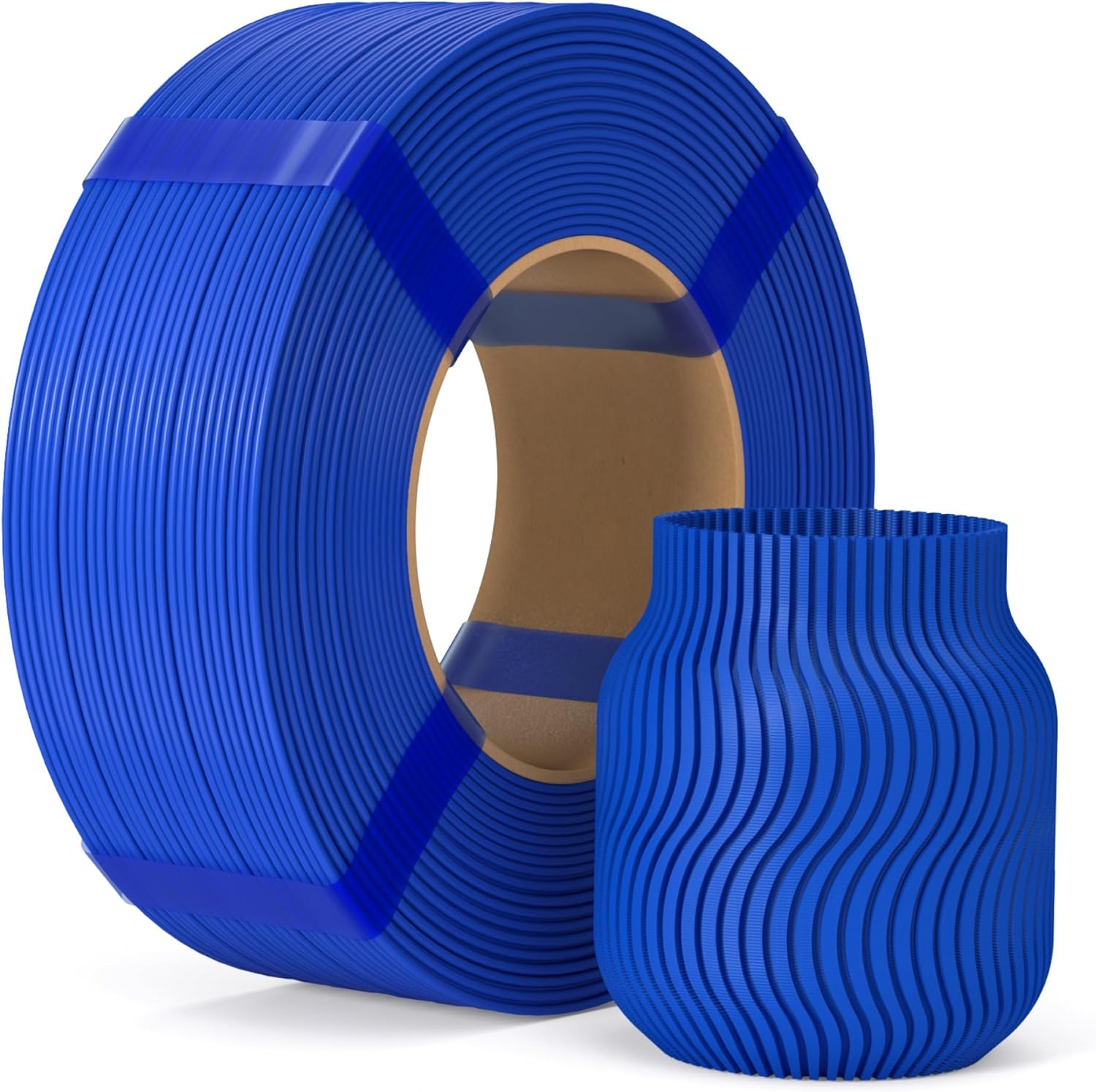
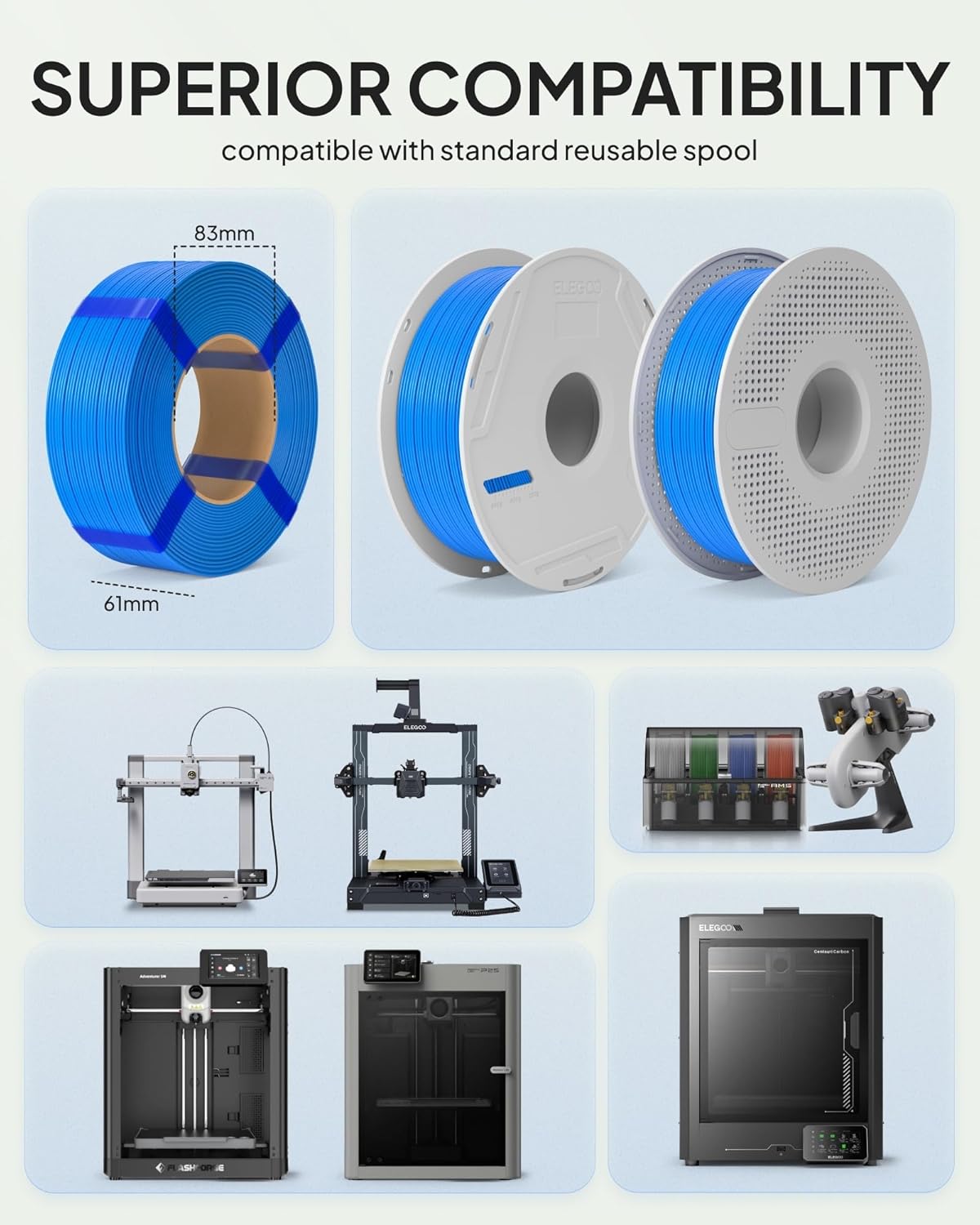
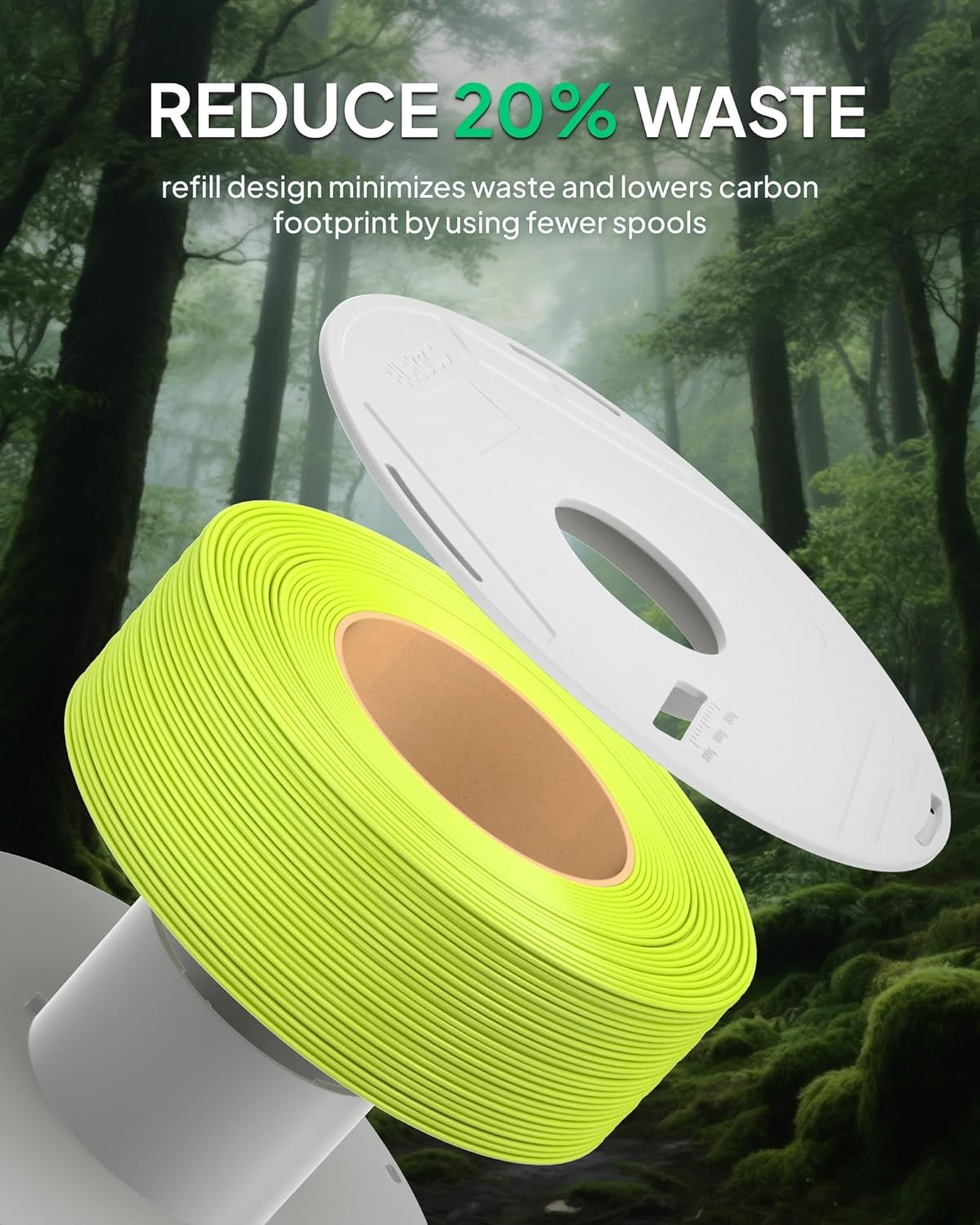
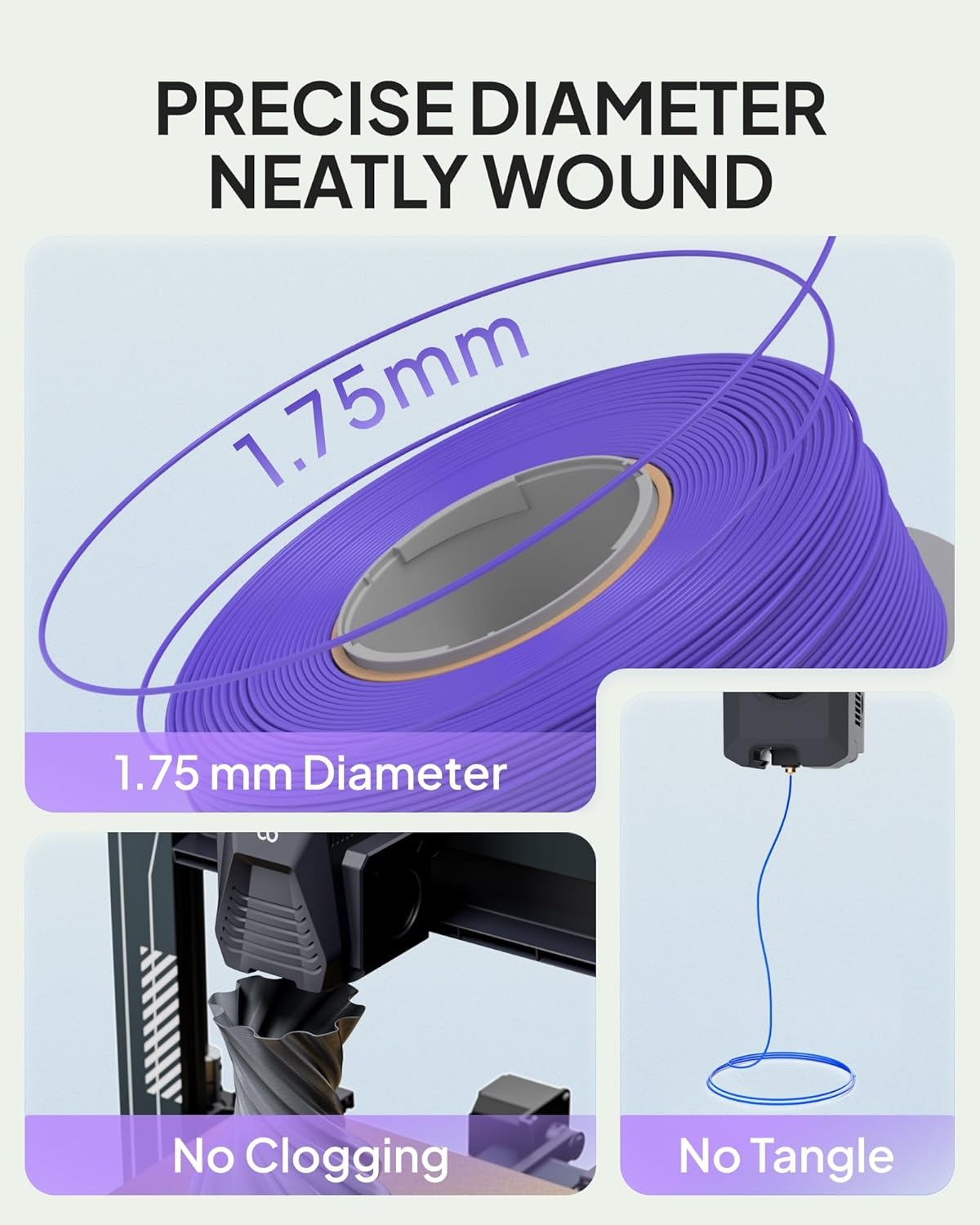
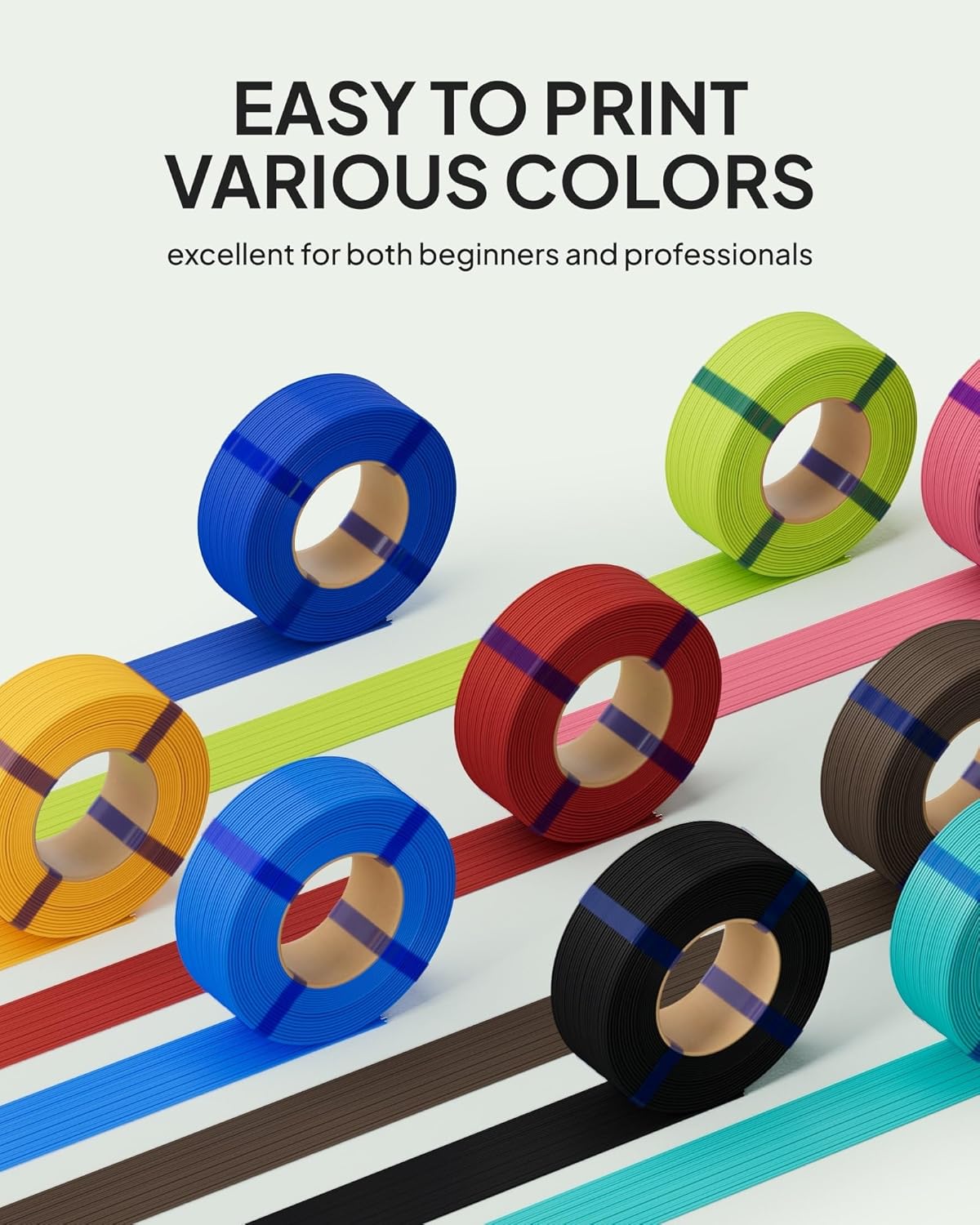
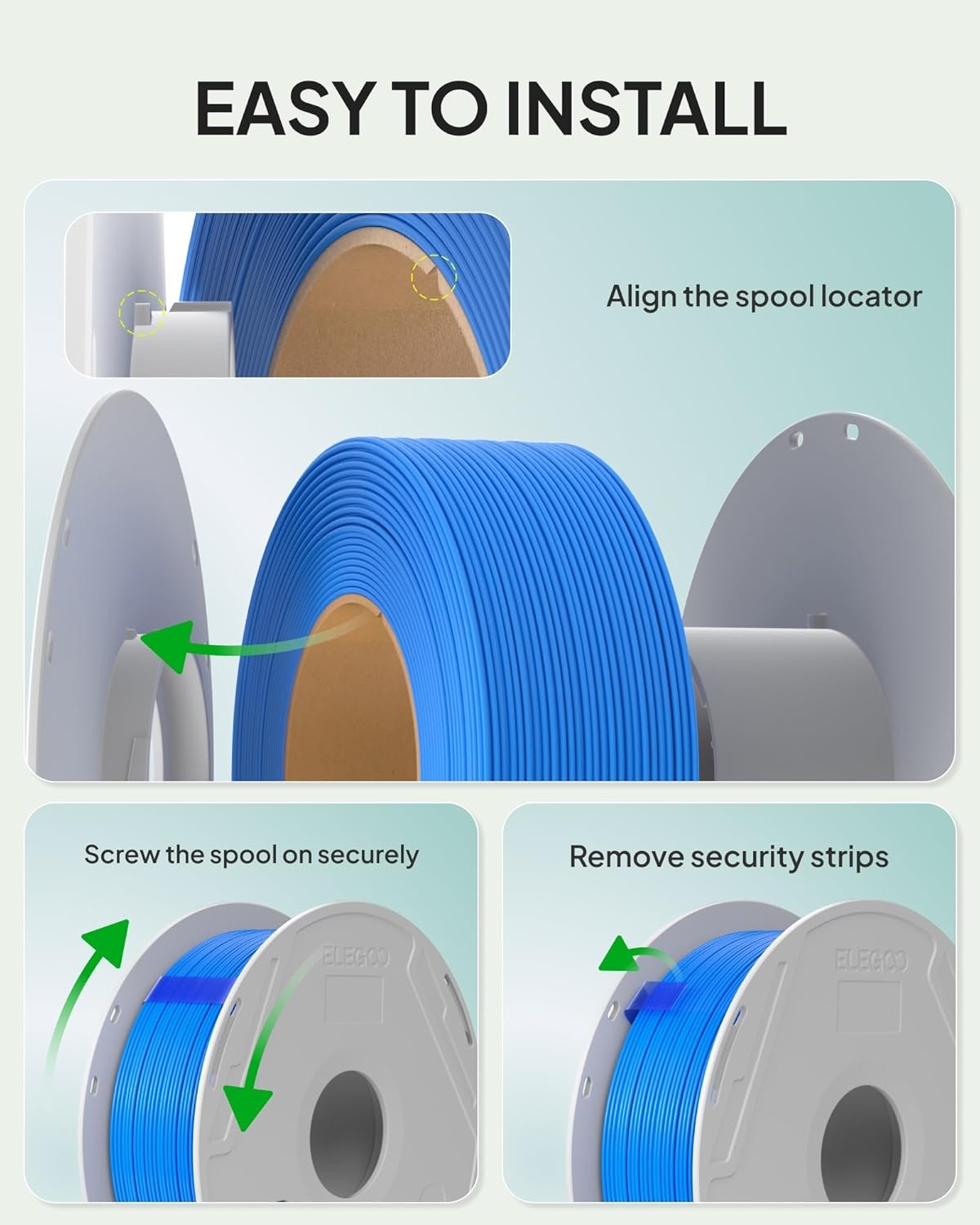
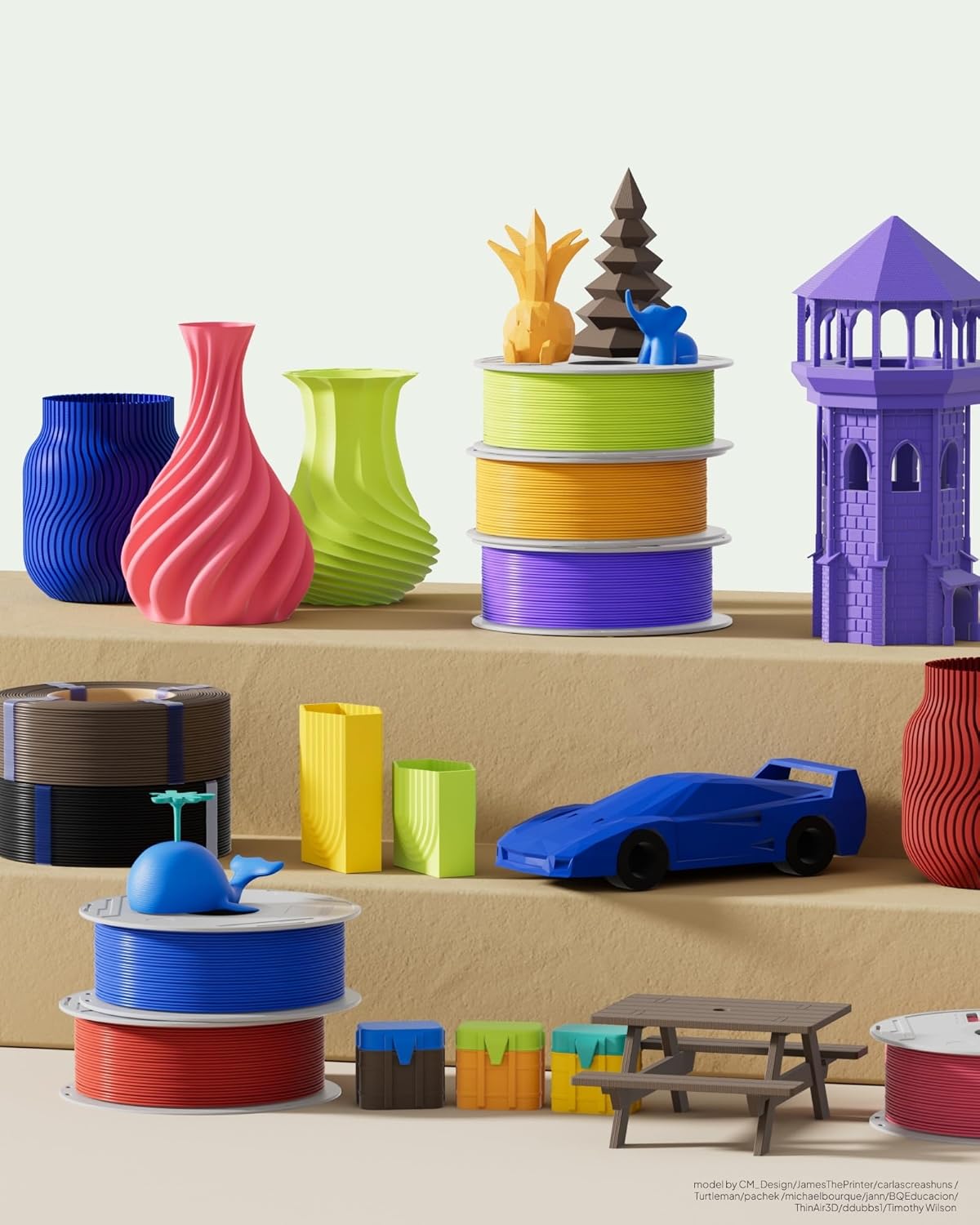
What it is and what it solves\nThe ELEGOO PLA Basic Refill is a 1.75 mm PLA filament sold in a no-spool format, designed to reduce waste by removing the traditional plastic spool. It comes in a cardboard-core design that works with reusable spools from ELEGOO, Bambu Lab or eSun, or you can print your own spool. It’s aimed at printers that support standard 1.75 mm PLA and want a more sustainable workflow without compromising print quality. On the page you’ll find that this refill is fully dried before packing and vacuum sealed to minimise moisture, an important factor for consistent extrusion and fewer print defects.\n\n## Who it’s for\nIf you’re environmentally conscious or simply want to cut down on plastic waste, this refill offers a practical path. It’s pitched as beginner-friendly due to its lower melting temperature, minimal warping, and reliable layer adhesion, yet it’s equally suitable for professionals who want dependable results with reduced post-processing. If you’re already using a reusable spool system, the compatibility with ELEGOO, Bambu Lab and eSun spools adds real convenience.\n\n## Printing experience and performance\nThe PLA Basic refill is made from premium PLA, designed for smooth feeding and stable prints. The key practical benefit is more predictable extrusion thanks to tight diameter tolerance: 1.75 mm with ±0.02 mm accuracy. This translates into fewer tangles and less risk of clogging, especially when working with longer prints or intricate layers. The filament is cleaned and dried prior to packing, contributing to fewer bubbles and stringing in the finished piece. In practice, you’ll typically experience straightforward prints with good grip between layers and robust adhesion to most build surfaces when used with standard print settings.\n\n## What’s good about it\n- No spool means less waste and a clearer recycling cycle for your setup.\n- Cardboard core compatible with common reusable spool systems, offering flexibility in how you manage material.\n- Tight diameter tolerance and well-wound filament reduce feeding issues and tangling, improving reliability.\n- Proper drying and vacuum sealing help minimise moisture-related defects like bubbles.\n- Beginner-friendly with forgiving printing characteristics for PLA.\n\n## What might not convince everyone\n- Being a refill without a spool, it requires a compatible reusable spool or a printed alternative, so it isn’t completely plug-and-play if you don’t already use a spool system.\n- The benefits hinge on your current workflow, if you’re accustomed to standard spooled filaments and your printer handles moisture well, the advantage is more about waste reduction than raw performance gains.\n- Colour options are fixed to cobalt blue in this variant, which may not suit every project.\n\n## Who should consider this and when it’s worth buying\nIf you’re aiming to reduce landfill waste and you already operate a compatible spool system, this refill can be a cost-effective, practical choice. It’s sensible when you’re printing multiple objects from PLA and want predictable results without frequent retraction or warping issues. It’s less compelling if your printer or workflow relies on rigidly integrated spools or if you require high-temperature or specialised materials beyond standard PLA.\n\n## What to check before purchasing\n- Confirm compatibility with your spool system (ELEGOO, Bambu Lab, eSun or your own printed spool).\n- Ensure your printer is set to typical PLA parameters (bed temperature around common PLA values, light fan cooling, etc.).\n- Verify that your printing environment minimizes humidity exposure prior to use, even though the product is dried and sealed.\n- Consider whether you want a single-colour run, if you need varied colours, you’ll need to source multiple refills or switch between colours carefully to avoid colour contamination.\n\n## Practical use and realistic comparison\nCompared with traditional spooled PLA, this refill approach suits a workflow focused on waste reduction and space savings. If you value a predictable feeding path and easier storage, the no-spool design helps. If you prefer maximum turnkey convenience with a fully integrated spool, a standard spooled PLA might still feel simpler in some setups. For certain users, printing a customised spool or using a printed alternative can further optimise compatibility with their printer’s feeder geometry.\n\n## FAQ (based on available information)\n- Is it compatible with all 1.75 mm printers? It is designed for 1.75 mm PLA and is compatible where a compatible spool system is used.\n- Does it require special curing or drying steps before first use? The product notes it is dried before packing and vacuum sealed, which supports stable performance.\n- Can I reuse the spool with other filaments? The cardboard core is designed for use with reusable spools, but cross-compatibility depends on the spool design.\n\n## Is it worth it?\nFinal verdict: Worth considering if you prioritise reducing waste and you already use or are happy to adopt a compatible reusable spool. If you mainly need plug-and-play simplicity with no extra setup, this may feel like a more deliberate choice rather than the easiest option.