

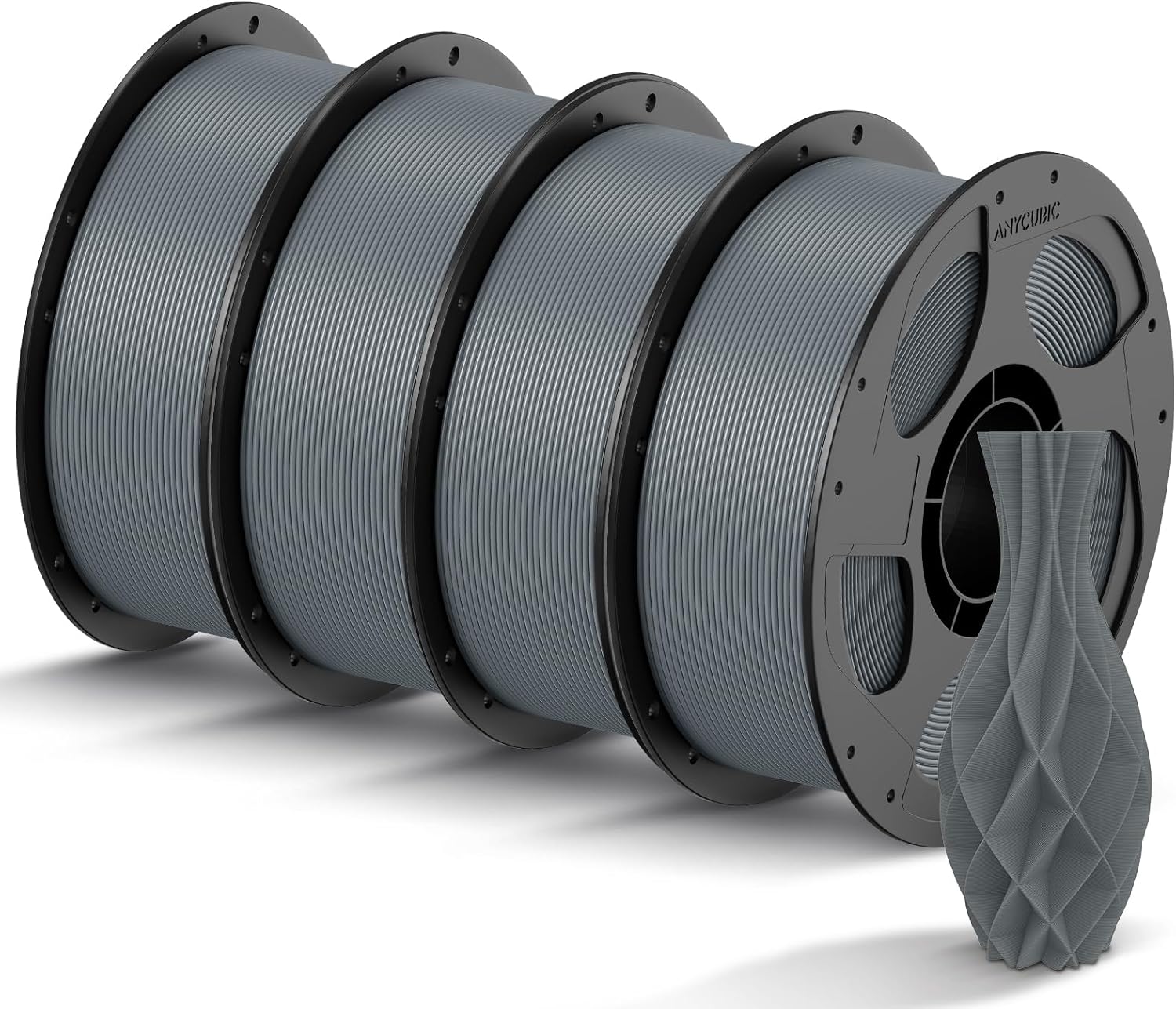
Anycubic PLA Filament 1.75mm (Intelligent Identification) – 4 Pack 1KG Reusable Spools, Grey
Product description
If you print with FDM/FFF a lot, PLA is often the “daily driver” filament. This Anycubic PLA Filament 1.75mm is aimed at keeping things steady: consistent diameter, low shrinkage, and a spool setup designed to feed smoothly.
That said, PLA won’t fix every printing problem by itself. If your nozzle is worn, your slicer settings are wildly off, or you expect it to behave like high-performance materials, you may still end up fighting the usual FDM issues.
The essentials
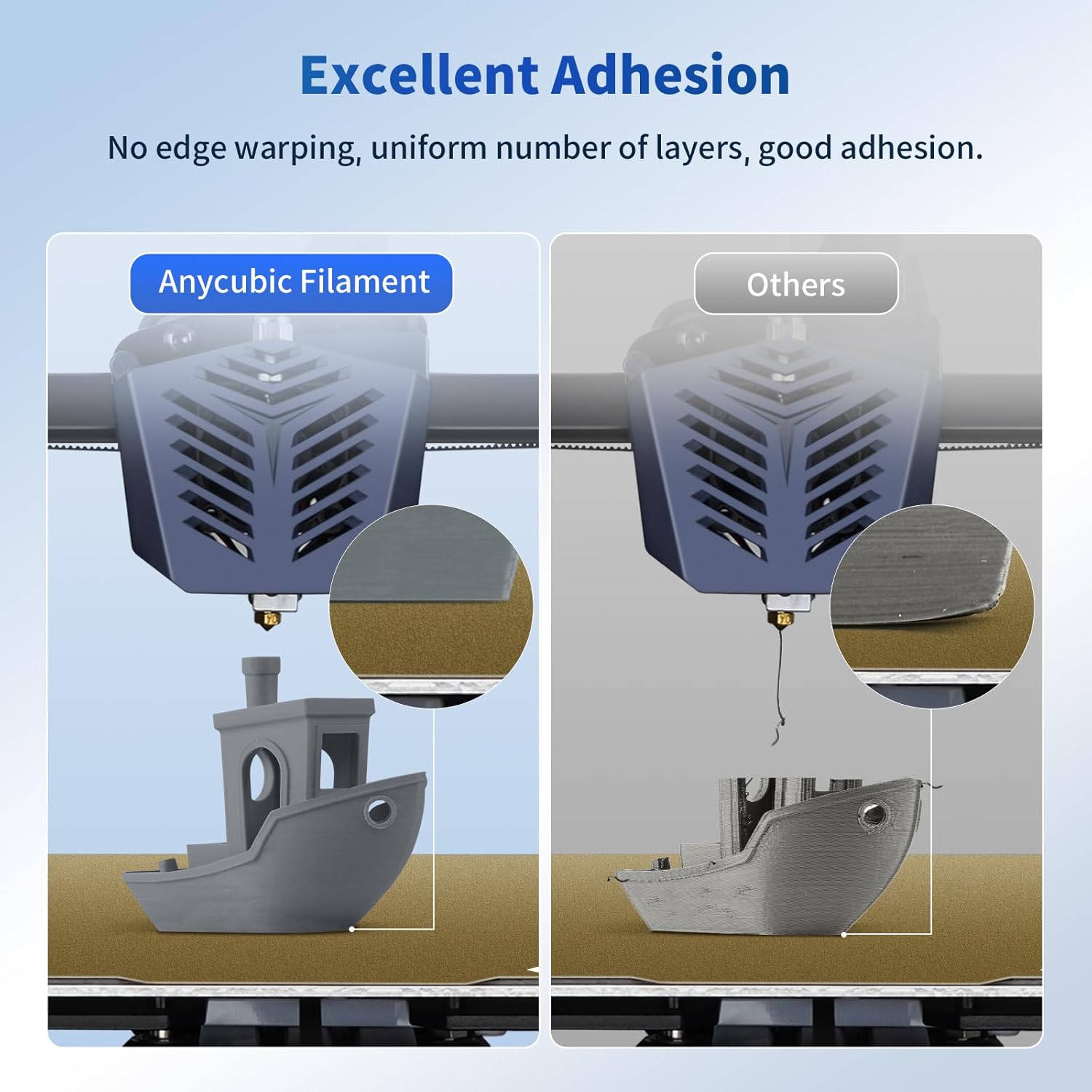
This is a 1.75mm PLA filament pack for 3D printers and 3D pens that take 1.75mm filament. The brand also talks about intelligent identification and a focus on print consistency, particularly around smoother outflow and steadier layer bonding thanks to low shrinkage.
On paper, the appeal is pretty straightforward: fewer diameter swings mean more predictable extrusion, and that can translate into cleaner surfaces and better bridging between layers. It’s also presented as dried before packaging and vacuum sealed with desiccants, which matters because PLA is one of those filaments that can become fussier if it absorbs moisture over time.
What matters most for everyday printing
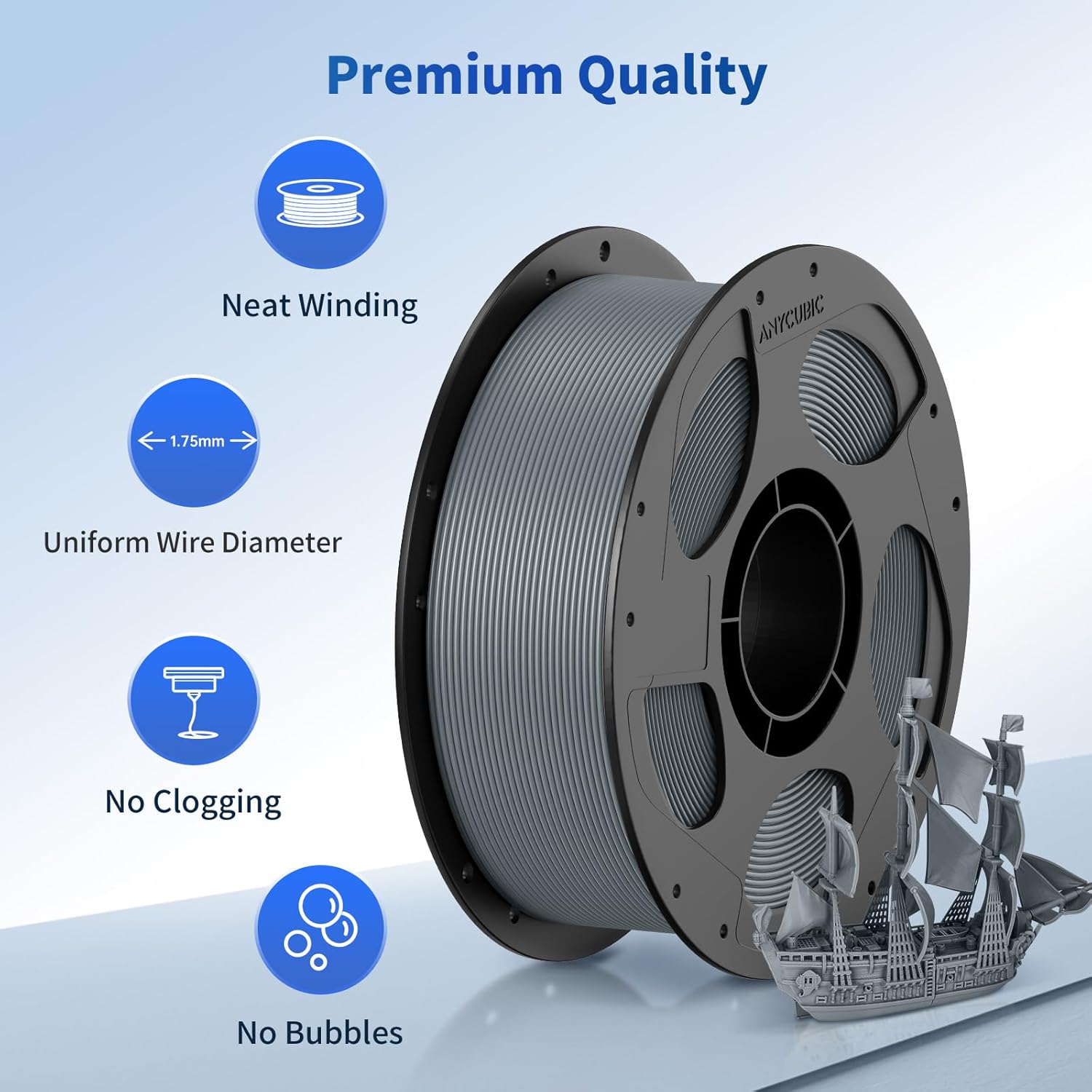
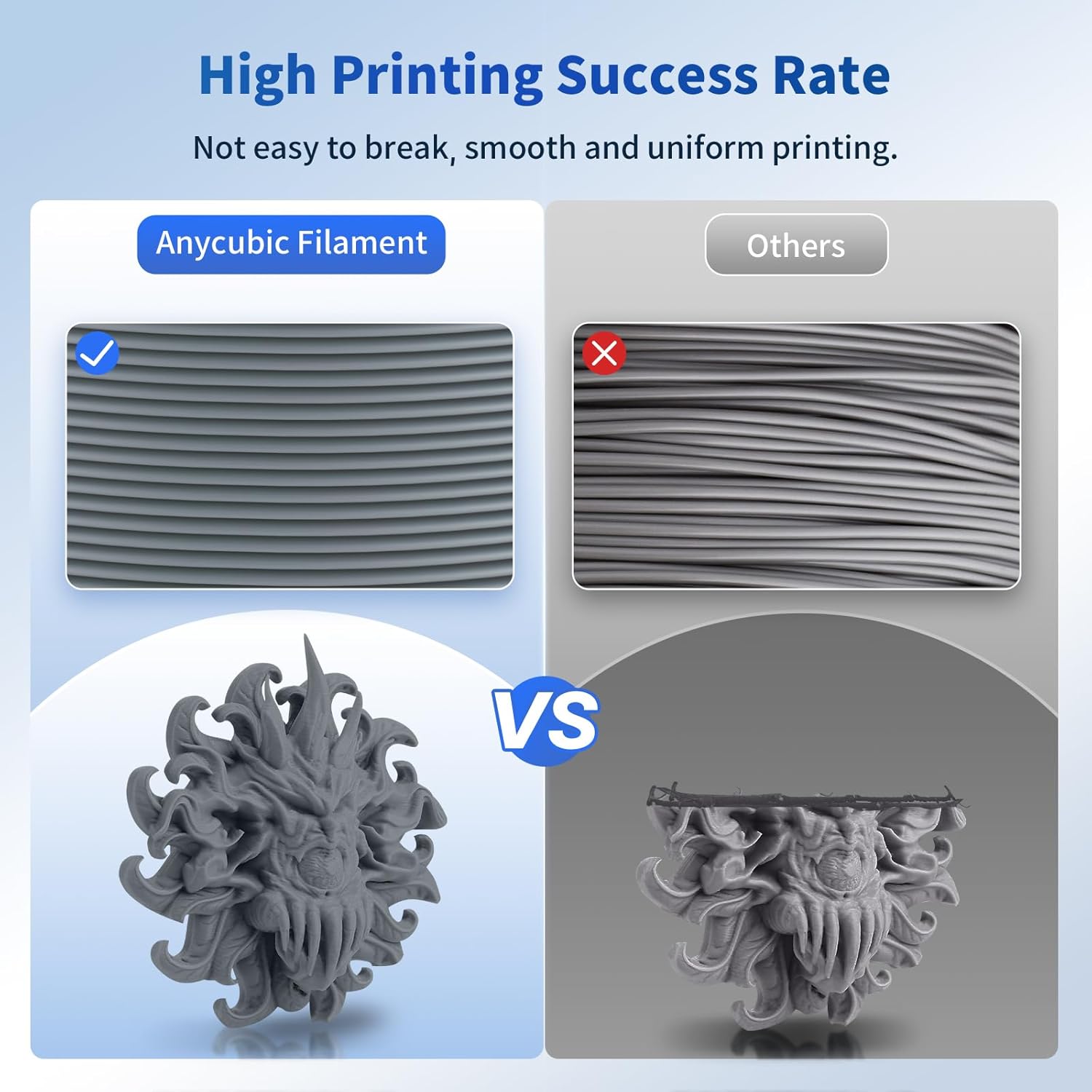
Where this filament could make a noticeable difference is in how “boring” the print process feels. Anycubic highlights a dimensional tolerance of +/- 0.02mm and a homogeneous build, with the goal of smoother flow and fewer interruptions.
They also claim low shrinkage and stable printing dimensions, which is relevant if you care about layer-to-layer fusion and getting more even results when your model includes bridges, ramps, or thin spans.
In a practical sense: imagine printing a small functional bracket with a few overhangs. If the filament feeds consistently, you’re less likely to see the classic symptoms of under-extrusion or messy strings. If you’re the type of maker who wants predictable outcomes more than experimentation, this kind of consistency-first approach is the right direction.
Clog-free and bubble-free claims: how to interpret them
The listing positions the filament as “clog-free” and “bubble-free”, supported by being dried for 24 hours before packaging and vacuum sealed in a nylon re-bag with desiccants.
It’s worth being a bit cautious: marketing terms aside, real-world results can still depend on your printer, temperature stability, and how you store filament after you open it. Dry storage helps, but once the bag is opened, keeping it in good conditions still matters.
Also, any time you change filament or reload the extruder, there’s a higher chance of a temporary hiccup. The provided installation note recommends preheating the nozzle first to reduce the risk of a nozzle block when installing/changing.
Spool quality and reusability
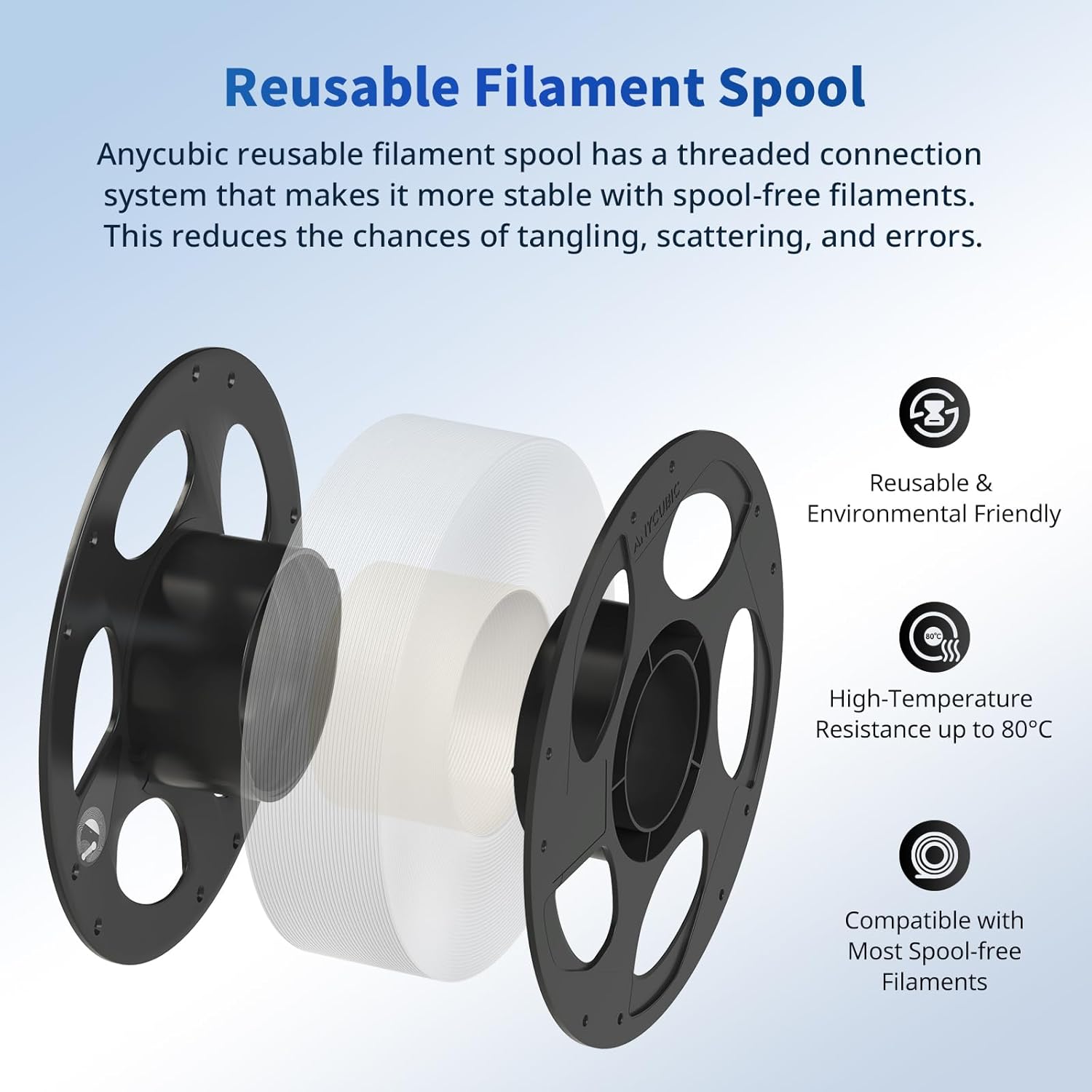
This pack includes 4 spools, described as neat on the roll and designed to feed without crossing turns. That’s a small detail, but it can save time on setup—especially if you’ve had to untangle filament mid-job.
They also mention a larger spool inner diameter intended to make feeding smoother, plus the idea of “reusable spools”. If you’re building a routine around multiple colours or projects, reusability is the sort of thing that usually pays off over time.
Compatibility and requirements
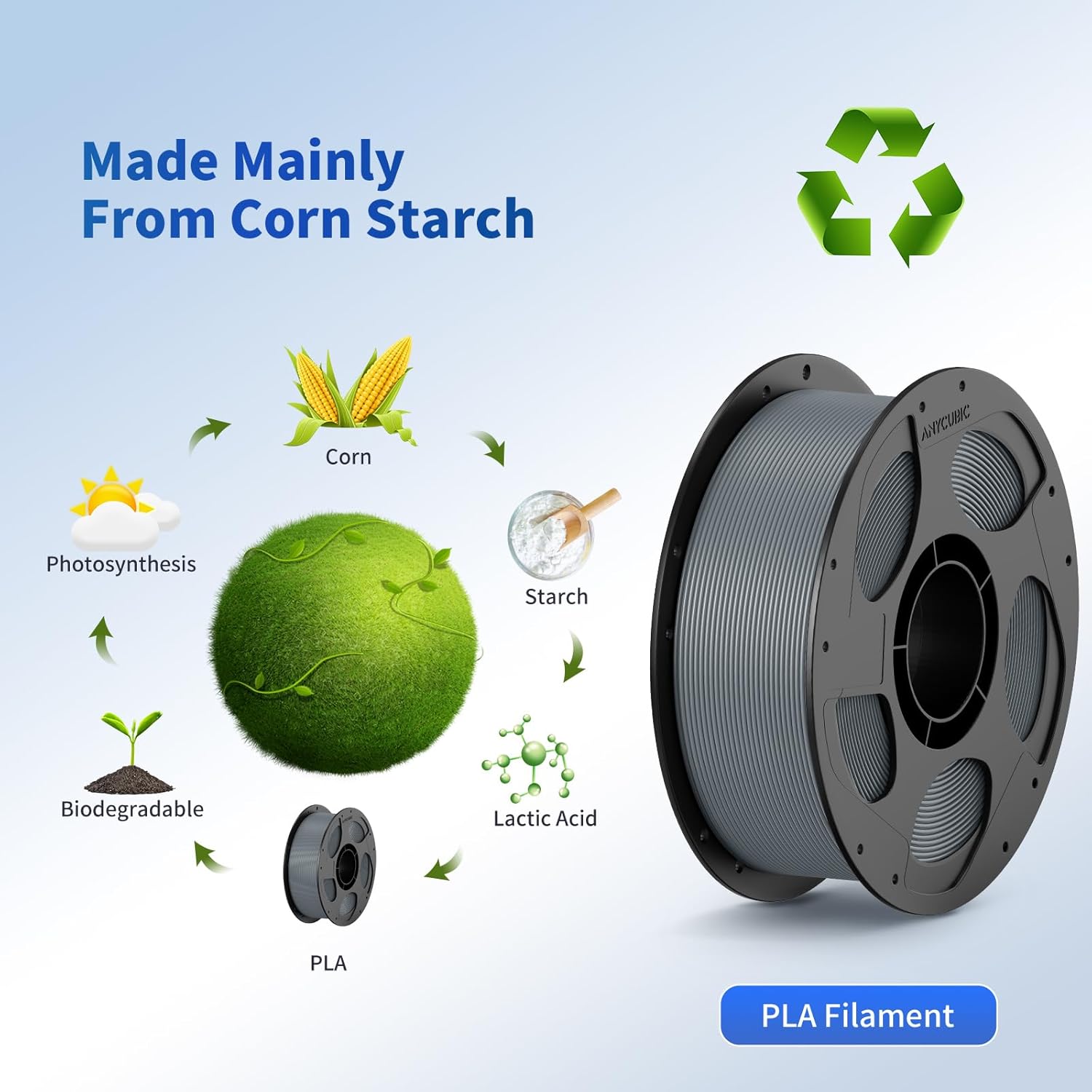
Anycubic states compatibility with most FDM 3D printers and 3D pens that use 1.75mm filament. The material is described as made from starch raw materials derived from renewable plant resources.
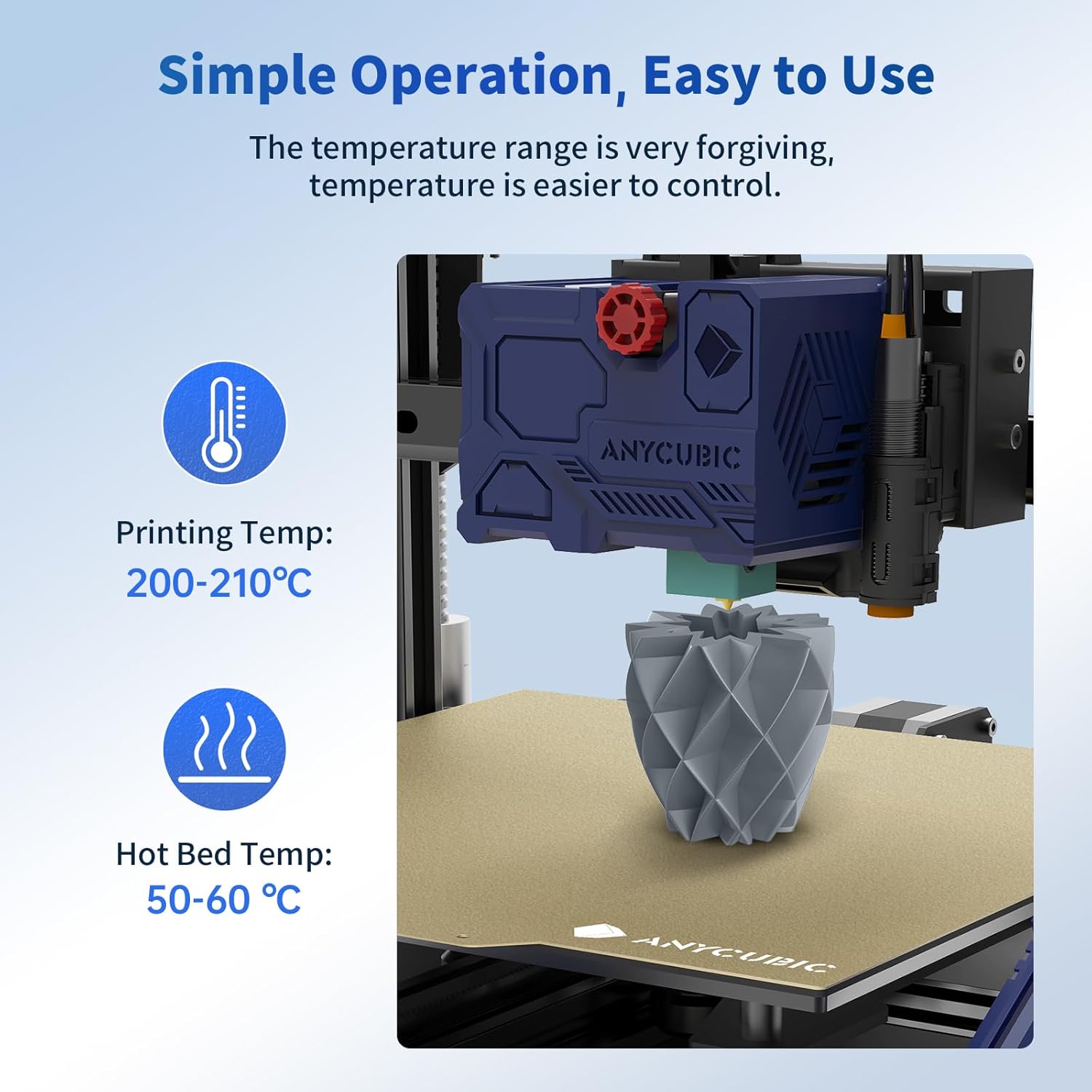
One practical benefit noted is that PLA has a lower melting temperature and, per the listing, may not need a heated bed. However, whether you personally need a heated bed can depend on your printer, enclosure, and the model geometry—so it’s sensible to treat that as a “often” rather than a promise for every print.
Tech specs
- Name: Anycubic PLA Filament 1.75mm
- Type: 3D printer filament (PLA), for FDM/FFF use
- Format: Filament
- Size: 1.75mm diameter
- Capacity: 4 Pack 1KG
- Dimensions: Dimensional accuracy tolerance +/- 0.02mm
- Material: PLA (starch raw materials derived from renewable plant resources)
- Colour: Grey
- Compatibility: Most FDM 3D printers and 3D pens that use 1.75mm filament
Is it worth it?
Worth buying if you want a consistency-led PLA that’s intended to feed smoothly, print steadily, and reduce the “small annoyances” like stringing and under-extrusion symptoms—especially for everyday functional parts, prototypes, and models where clean surfaces matter.
It’s not the best choice if you’re looking for a filament that behaves like higher-end engineering materials, or if your priority is tuning for demanding performance (temperature resistance, extreme flex, etc.), because PLA is still PLA.
You may want to skip it if you only print occasionally and don’t have a plan for storage after opening, the benefits of drying and vacuum sealing can be lost over time if filament isn’t kept dry.
When buying, it’s smart to check that your printer (and any 3D pen) truly expects 1.75mm filament, and to follow the installation approach mentioned (preheating the nozzle, cutting the tip diagonally, then guiding filament through the extruder/tube). That little bit of care can make a bigger difference than people expect.
Mini FAQ
Does it need a heated bed?
The listing says PLA has a lower melting temperature and may not need a heated bed. That said, your printer and the model can still make a heated bed useful.
Is the diameter consistent?
Anycubic quotes a minimum dimensional tolerance of +/- 0.02mm for the 1.75mm filament, aimed at smoother outflow.
What’s the point of “vacuum sealed” in the pack?
They mention it’s dried for 24 hours and vacuum sealed with desiccants in a nylon re-bag to help keep printing stable.
Is it suitable for 3D pens?
Yes, according to the listing, it’s compatible with 3D pens that use 1.75mm filament.
How should I install it when changing filament?
The guidance is to preheat the nozzle, cut the filament tip diagonally, guide it through the extruder and feeding tube, then push manually until it melts through the nozzle.