

WLERIR Lever Wire Connectors, SPL-2
Product description
What to know
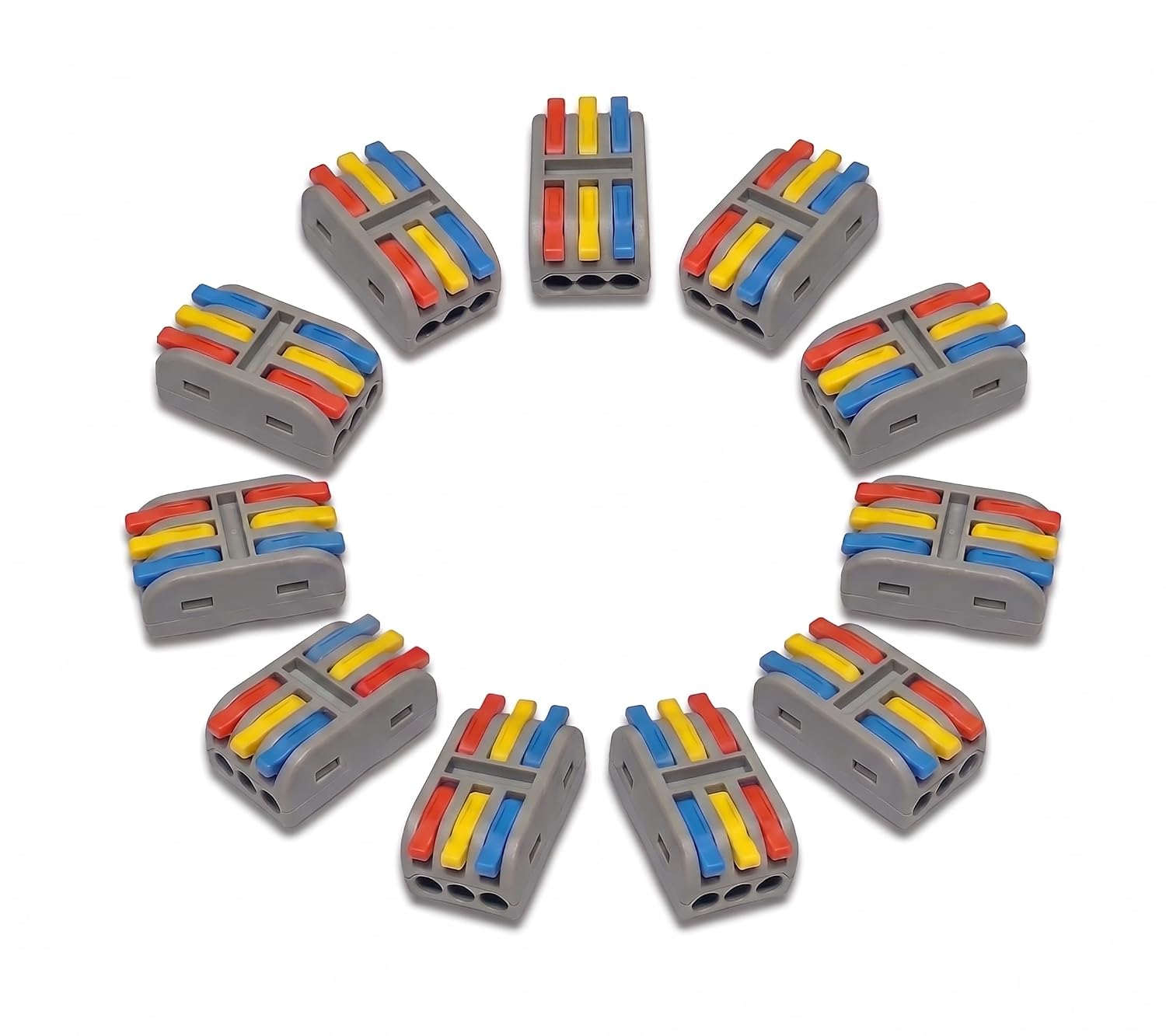
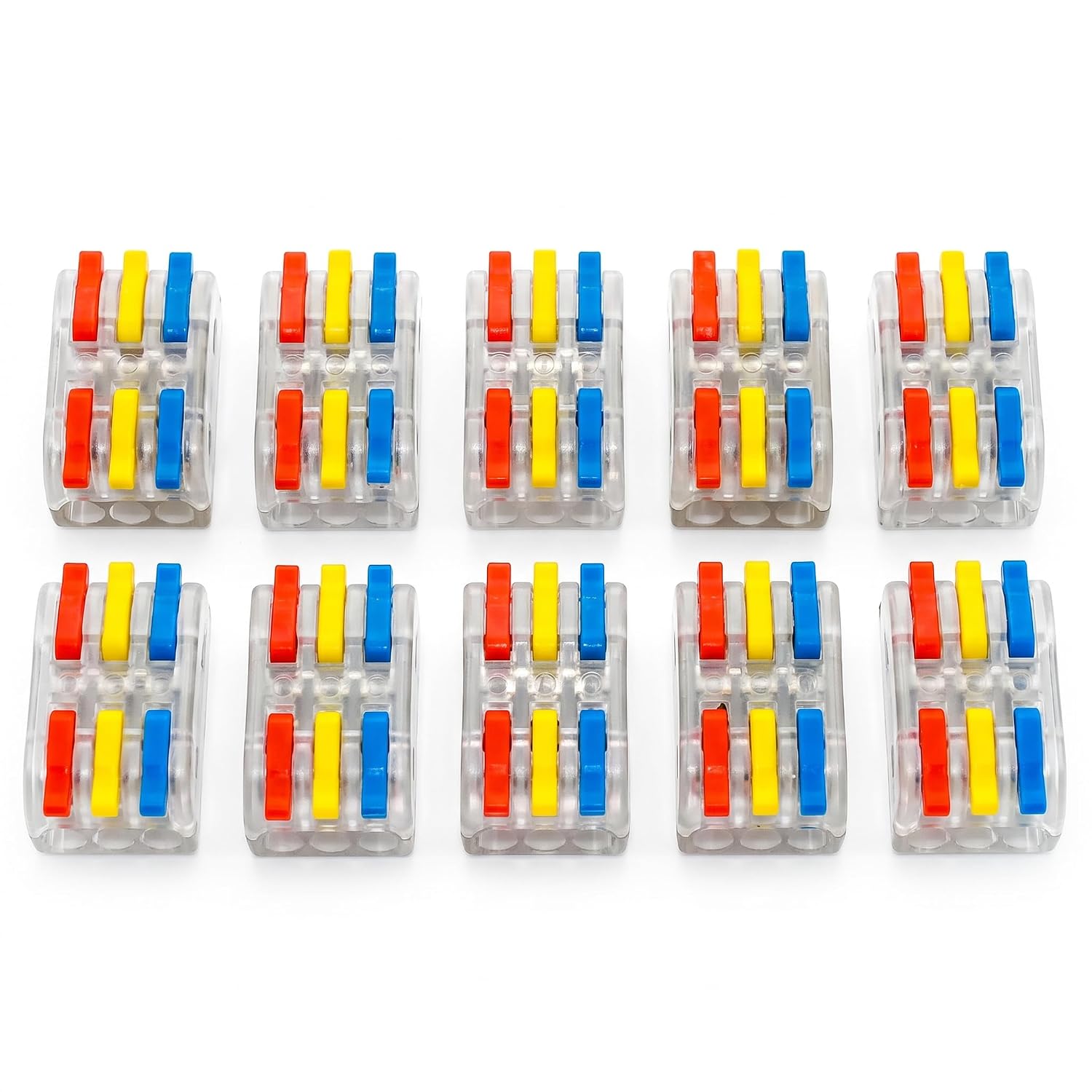
If you want a wire splice that can be opened again, rather than a twist-and-tape connection, WLERIR’s lever connectors are designed for that kind of job. They connect two wires to two wires in a compact inline format.
The SPL-2 set includes 10 connectors. The housing is described as flame-retardant and heat-resistant, with tinned copper inside for conductivity and resistance to rust and corrosion. Those materials are useful details, but they don’t replace checking that a connector suits the specific electrical job.
Wire compatibility depends on the type of conductor: the stated range is 28–12 AWG for solid wire and 28–14 AWG for stranded or flexible copper wire. Keep in mind that these are copper-wire connectors, so they aren’t presented as a fit for every wire material or connection layout.
How to use it
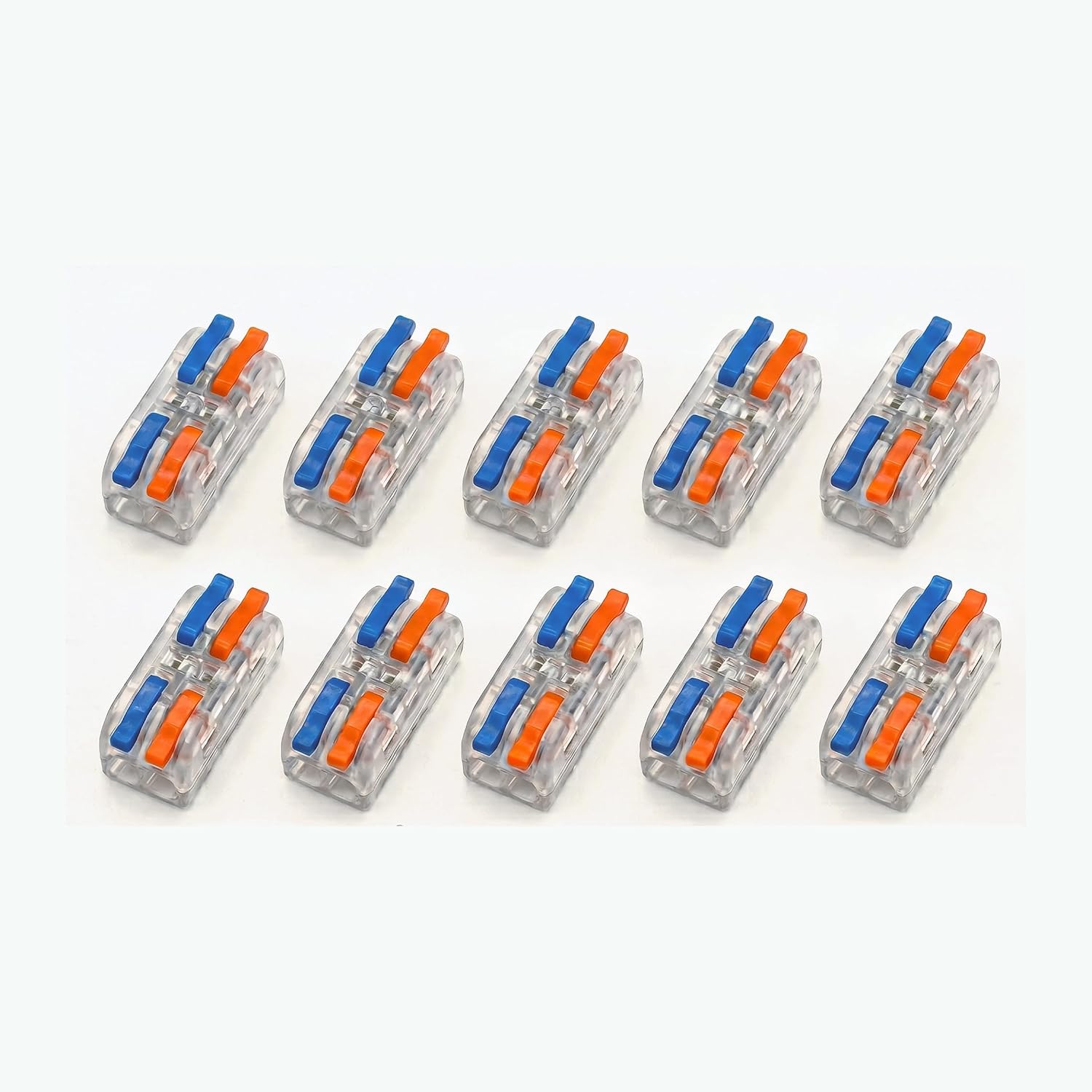
The connection process is straightforward: strip 9–10 mm of insulation, lift the lever to 90 degrees, insert the wire fully, then press the lever down. To change a wire or disconnect it for temporary testing, lift the lever again and pull the conductor out. There’s no need to twist the wires together or wrap this connection in electrical tape.
For a practical example, a lamp or switch project may involve joining conductors inside a wiring box. The levers make it easier to release a wire later if the connection needs to be changed. Follow the electrical requirements for your particular setup, the product description doesn’t specify ratings or approvals for particular circuits or environments.
Practical tips
Match the wire type and gauge to the stated range before inserting it, and strip only the specified length so the conductor can seat as intended. A lever that closes easily is not, by itself, confirmation that the wire is correctly inserted, so take a moment to check the connection before putting the wiring back in place.
These connectors suit jobs where access for later changes matters more than making a permanent-looking splice. Compared with a basic twist-and-tape approach, the lever format offers a removable connection, compared with a more specialized connector, this one is described for a two-in, two-out splice rather than a broader set of layouts. It makes sense if you expect to adjust or replace copper wires and want a compact connector that avoids twisting. It might not be a great match if your wiring falls outside the listed gauges, uses non-copper conductors, or needs a different connection arrangement.
Before you decide
Can it connect solid and stranded wire? The listed compatibility includes solid, stranded, and flexible copper wire, within different gauge ranges: 28–12 AWG for solid and 28–14 AWG for stranded or flexible.
Can you remove a wire after installing it? Yes. Lift the lever and pull the wire out, the connector is described as reusable.
How much insulation should be stripped? The instructions specify 9–10 mm before inserting the wire and closing the lever.
Buying verdict
This WLERIR set is worth considering for small copper-wire splices where a removable connection is useful, such as when you may need to change a wire during a project. Its clearest advantage over twisted connections is the lever-operated release, while its main constraint is the defined wire range and two-in, two-out layout. Choose it when those details match your wiring task, look for a different connector if you need another conductor material, gauge range, or splice configuration.