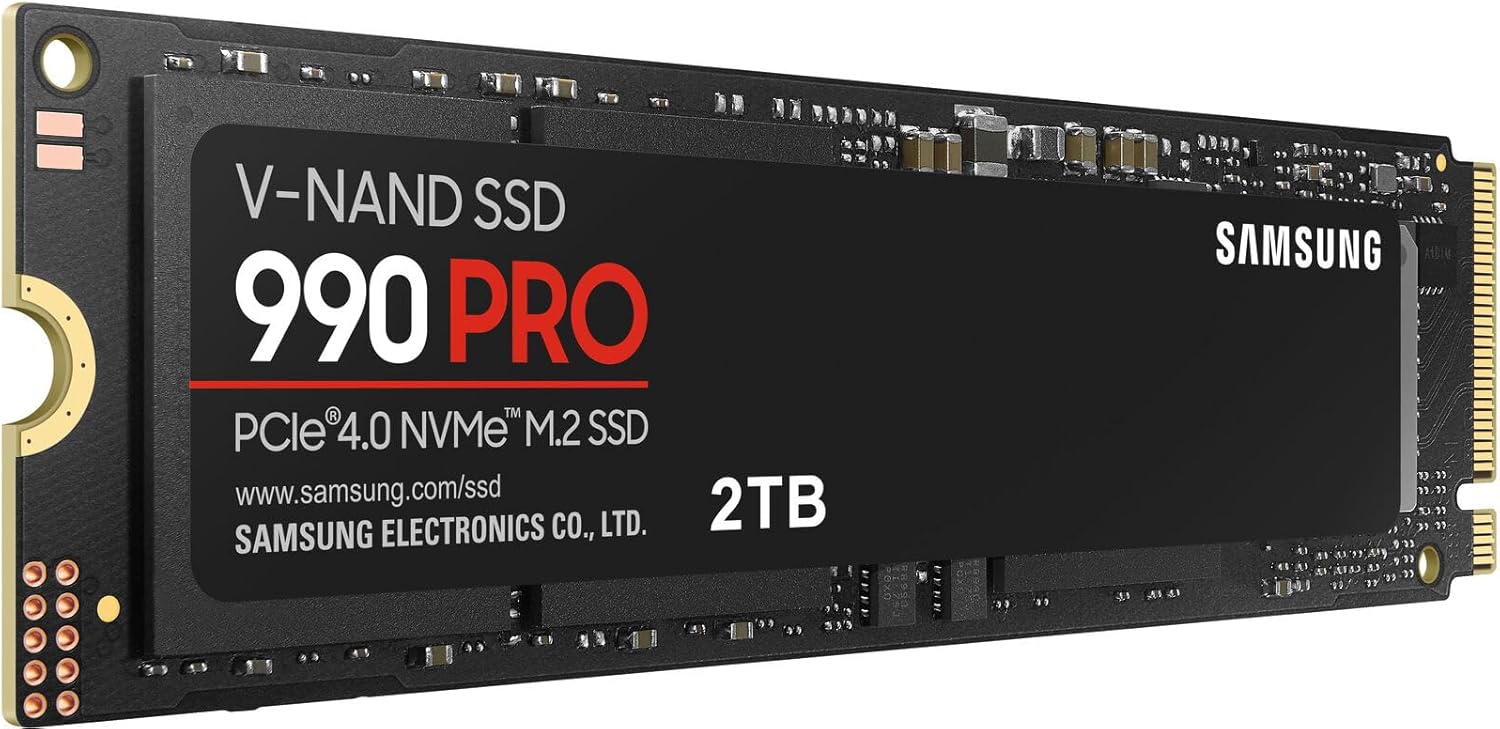
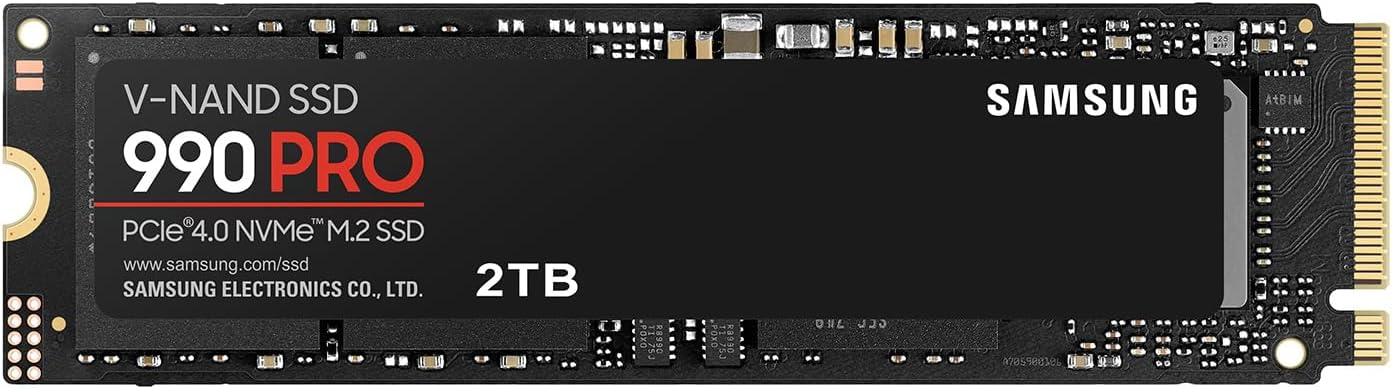
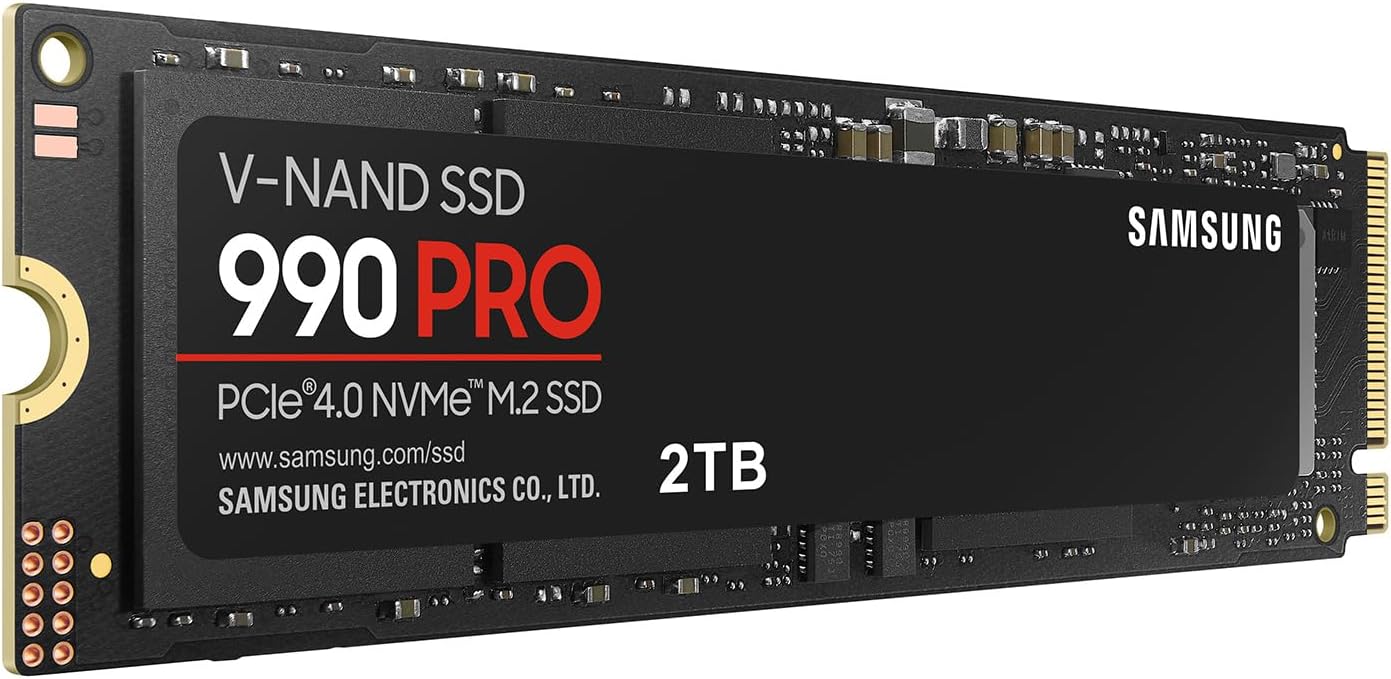
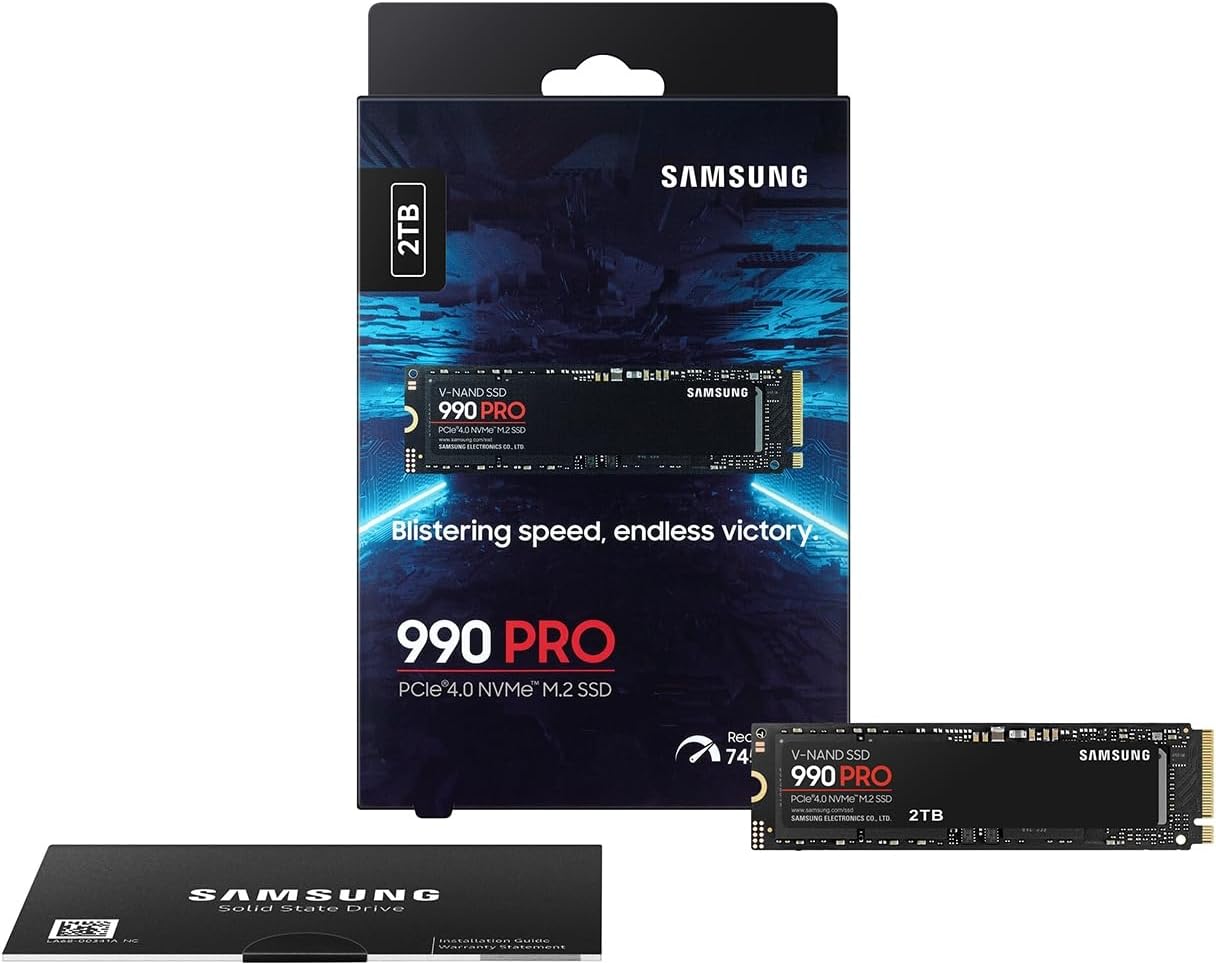
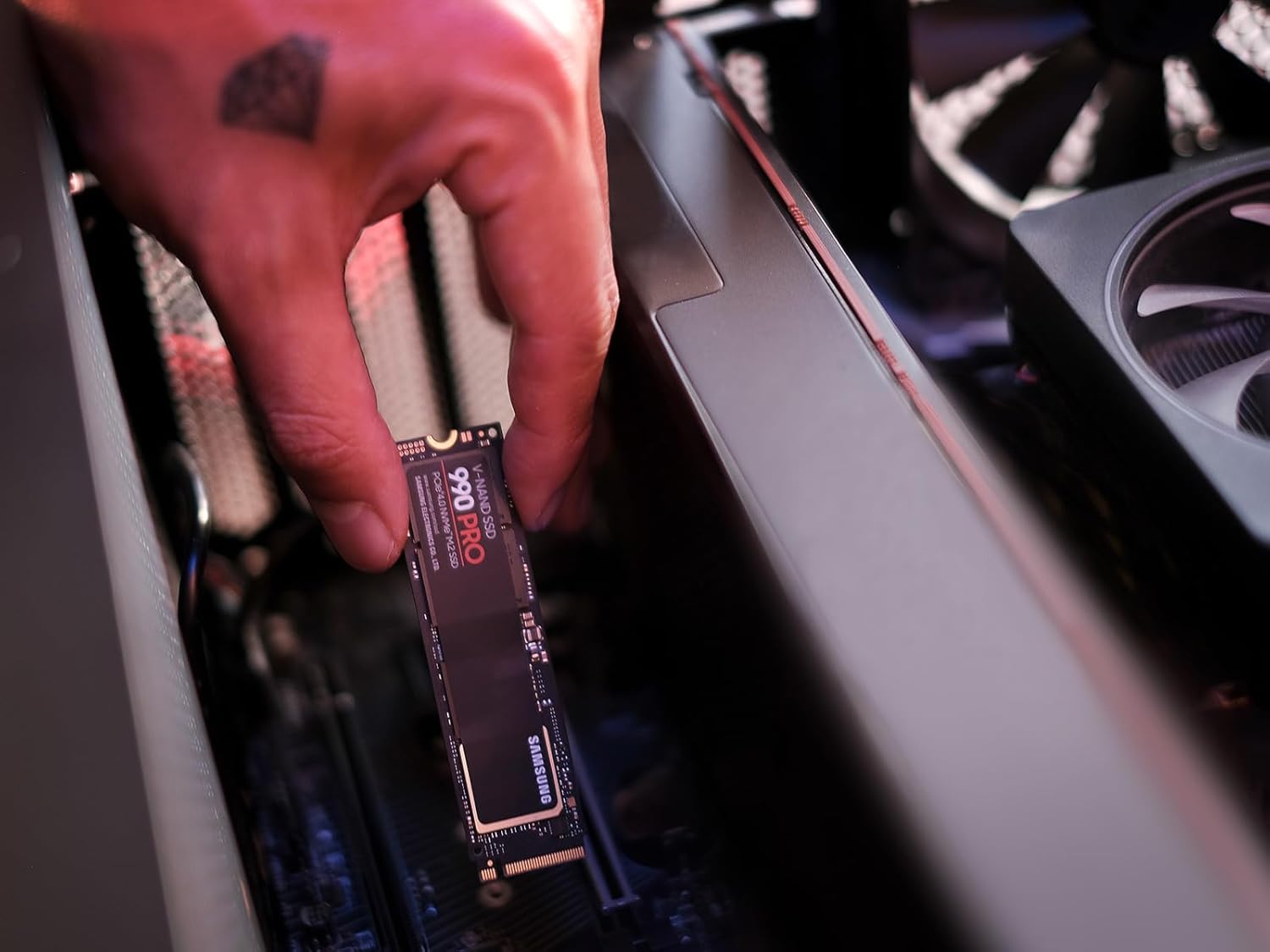
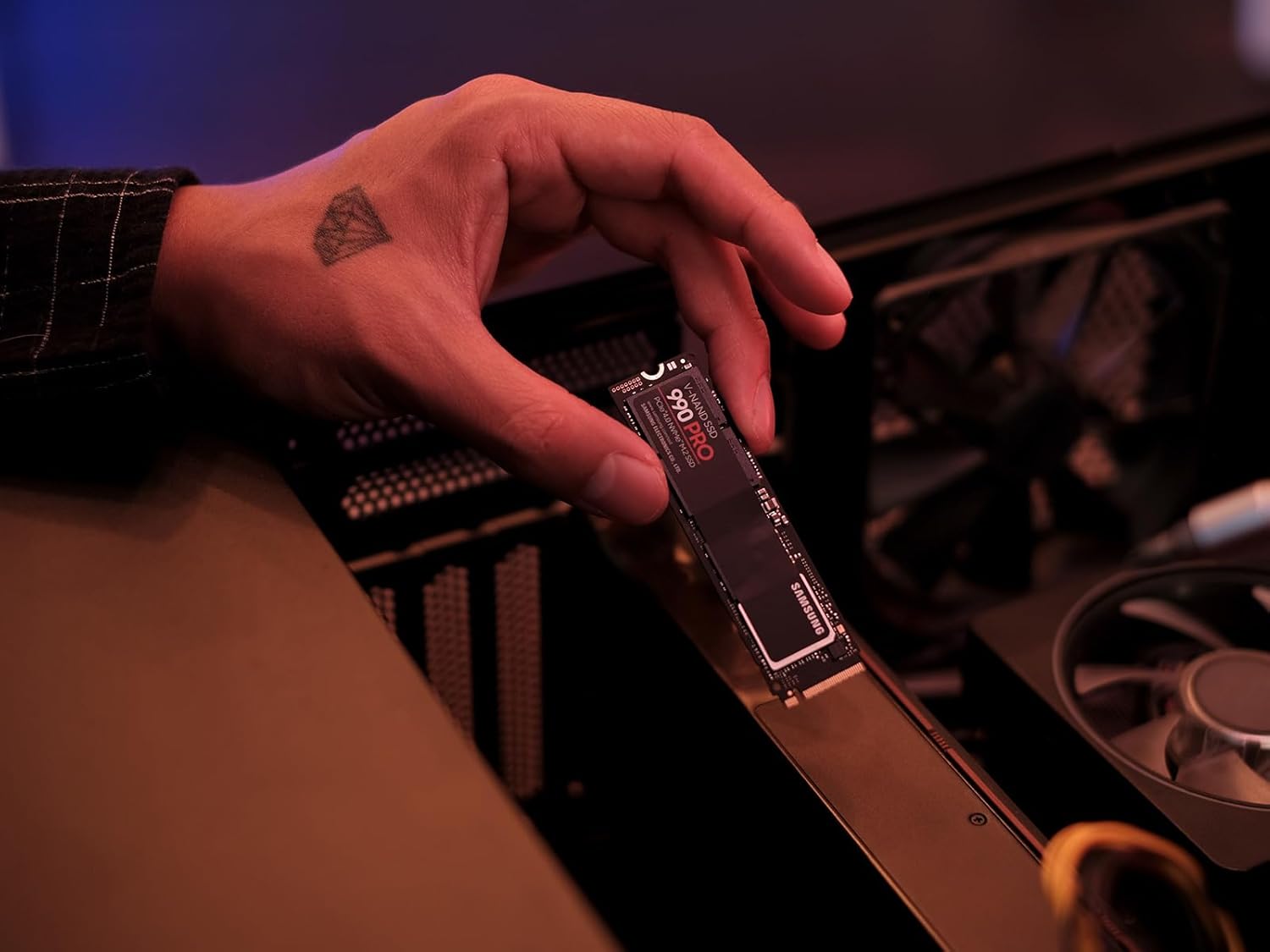
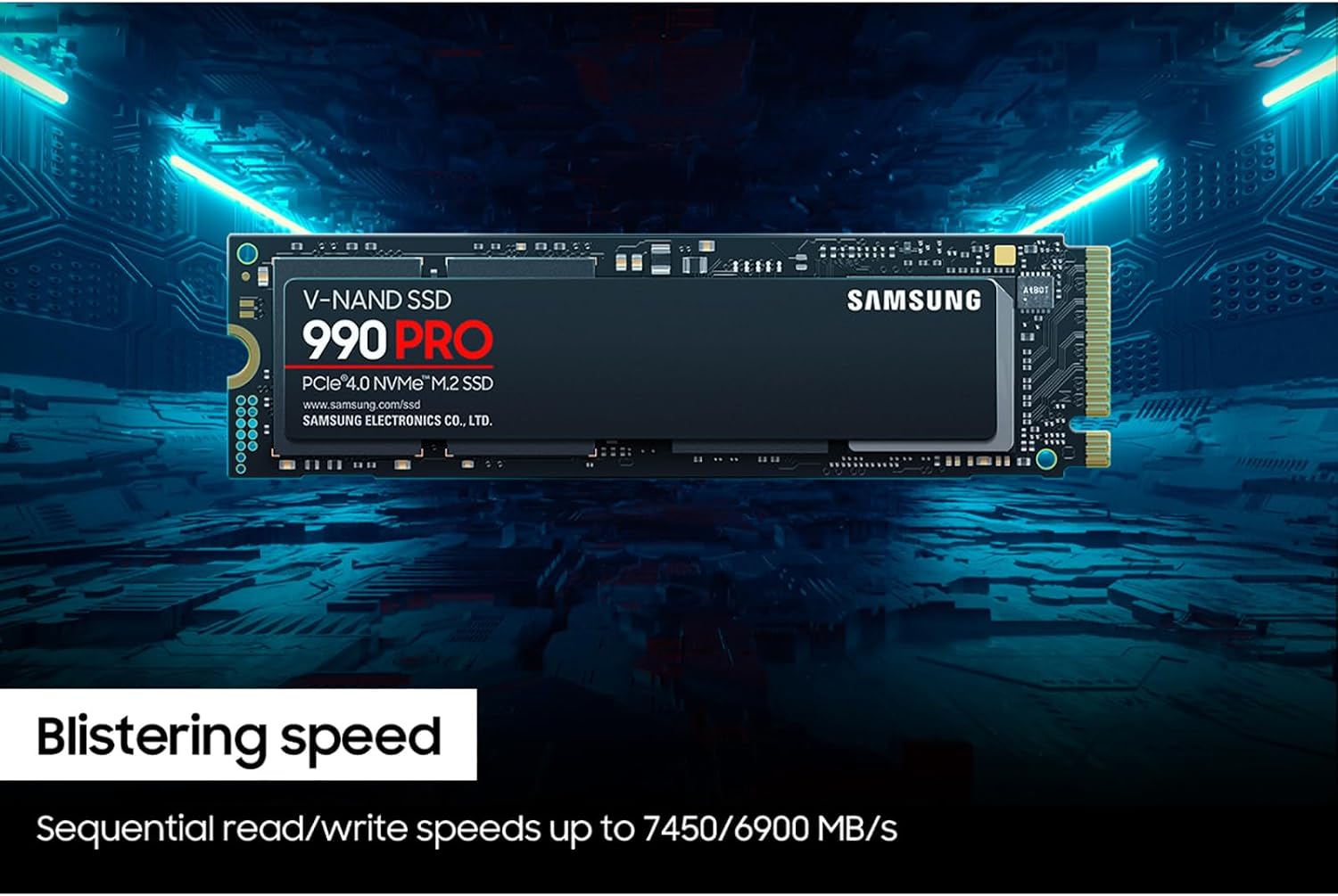
What it is and what it solves\nThe Samsung 990 PRO 2TB NVMe SSD is an internal M.2 PCIe Gen4 solid-state drive designed to boost load times, game bootups, and data-heavy workflows. On paper, it’s built to push near-maximum PCIe 4.0 bandwidth, with sequential read speeds up to 7,450 MB/s and write speeds up to 6,900 MB/s. For builders and power users, that translates to snappier game launches, faster texture streaming, and smoother editing timelines. It’s not just about raw speed, the drive also emphasizes power efficiency, claiming up to 50% better performance per watt versus a previous generation. In practice, this means you can push performance without a heavy hit to thermals and battery life in laptops or constrained thermals in desktops.\n\n## Why it stands out\nGen4 brings noticeably higher bandwidth, and Samsung highlights more than a 55% improvement in random performance compared to the 980 PRO. That matters in heavy computing tasks, big game worlds, and multi-app workflows where random reads/writes can bottleneck drives with slower interfaces. The 2TB capacity offers ample headroom for modern games, large media libraries, and professional projects, aligned with the broader range from 1TB to 4TB for different needs. Power efficiency is a highlighted benefit, which can translate into cooler operation and longer sustained performance under load.\n\n## Pros\n- High sequential speeds (up to 7450 MB/s read, 6900 MB/s write) that support fast game loading and quick data transfers.\n- Gen4 bandwidth with improved random performance versus prior generation.\n- Competitive efficiency for sustained workloads and potential energy savings.\n- Solid capacity choice (2TB) balancing price and space for games and projects.\n\n## Cons\n- Like many high-end NVMe drives, temperatures can rise under sustained heavy use unless adequately cooled.\n- The performance advantage depends on a PCIe 4.0 platform and a compatible motherboard or laptop, on slower interfaces the gains won’t fully materialize.\n- Not a one-size-fits-all upgrade for older systems that struggle with NVMe support or PCIe 3.0.\n\n## Who it’s for\nIf you’re building or upgrading a gaming rig, content-creation workstation, or data-analysis setup and you value fast load times and smooth large-file workflows, this drive fits the “high-end performance” niche. It’s especially appealing to users who want significant speed gains without stepping up to enterprise-grade storage.\n\n## When it makes sense to buy\nChoose the 990 PRO 2TB when your motherboard and system can exploit PCIe Gen4 bandwidth and you need ample space with top-tier read/write performance. It’s a strong fit for gaming with rapid load times, video editing timelines, and large-scale data tasks where faster random access improves responsiveness.\n\n## What to check before buying\n- Ensure your system supports PCIe Gen4 and M.2 2280 form factor.\n- Consider cooling solutions if your workload includes long sustained transfers or heavy gaming sessions.\n- Verify that you have sufficient PCIe bandwidth available on your motherboard to realize the stated speeds.\n\n## The comparison in practice\nIn real-world use, you’ll notice the difference most when loading large games, starting projects with big asset libraries, or editing high-resolution footage. If you’re currently on Gen3 or a smaller capacity drive, the jump to Gen4 with 2TB can feel substantial. If your tasks are casual gaming or light editing, you might still benefit, but the upgrade’s value rises with heavy multi-tasking and long-term storage needs.\n\n## Final verdict\nIt’s a solid pick if you prioritize high-end Gen4 performance and ample capacity for demanding workflows. It may not be the best option if your system is PCIe 3.0-based or if you’re optimizing strictly for budget, but for power users who can leverage the bandwidth and efficiency, the 990 PRO 2TB stands out as a practical upgrade.\n\n## FAQ\n- How hard is it to install? It’s a standard M.2 2280 NVMe drive, your motherboard must support PCIe Gen4.\n- Will it help with gaming load times? Yes, especially for large open-world titles with streaming textures.\n- Is it cooler than Gen3 drives? It can run warmer under sustained heavy use, so a good cooling solution is advisable.\n- Is 2TB enough for most games today? For many users, 2TB balances space and performance well, but if you store large media libraries, consider higher capacity if available.