

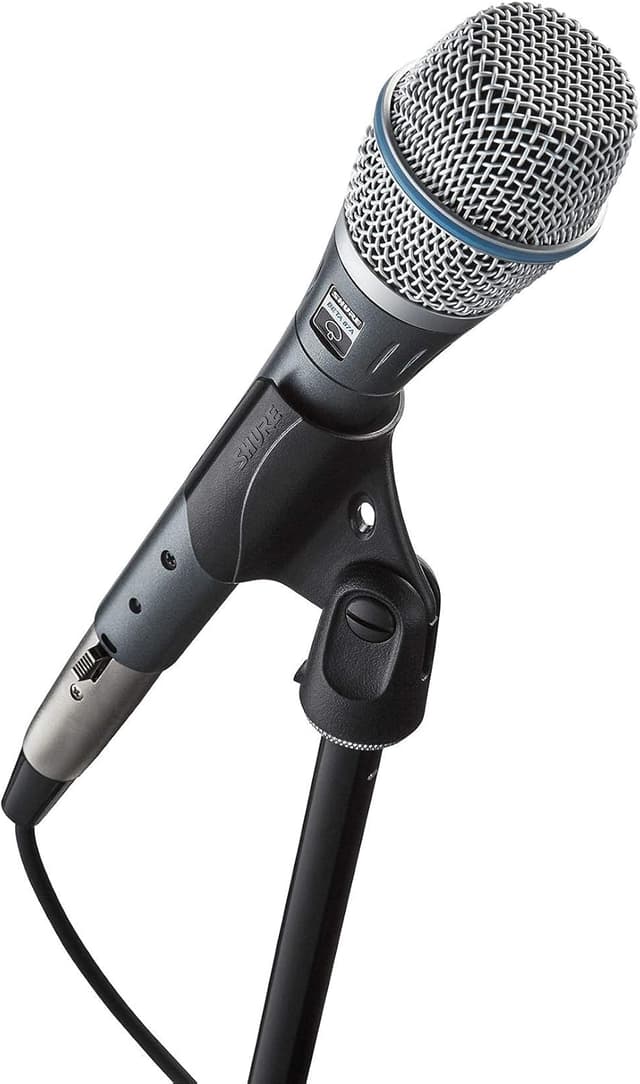
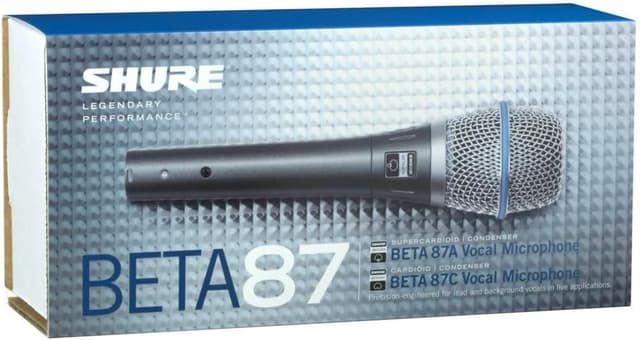
Shure BETA 87A Studio Vocal Microphone (Supercardioid Condenser) with Built-In Pop Filter
Product description
What you’re really buying here
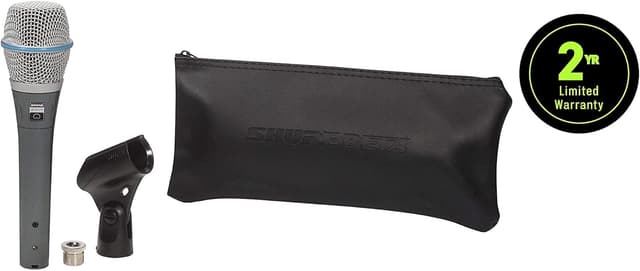
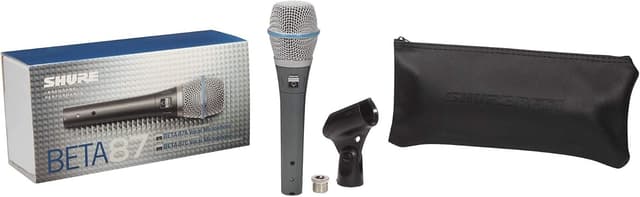
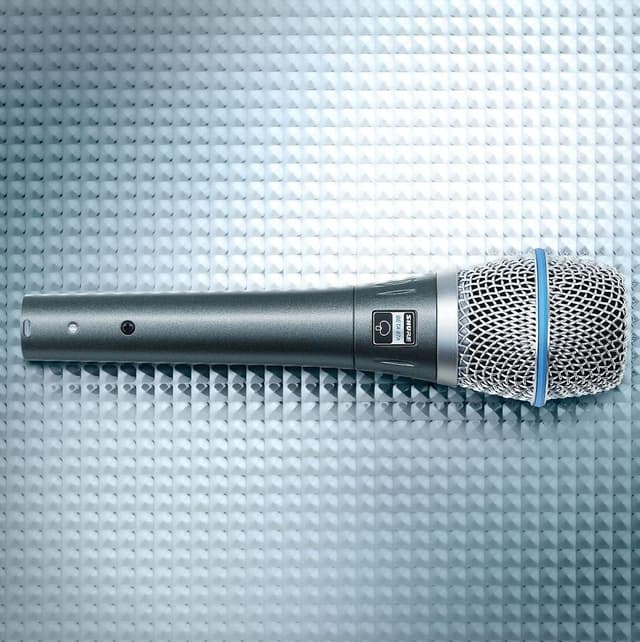
The Shure BETA 87A is a studio-grade vocal microphone built for singers who want a controlled pickup pattern and a sound that stays smooth when you sing close. It’s described as a single-element supercardioid condenser mic with a built-in pop filter, plus an A25D mic clip and a storage bag.
On paper, that combo aims at two common headaches: harsh “P” and “B” breath sounds, and inconsistent level from mic-to-mouth distance. The supercardioid approach is also meant to give you better gain-before-feedback than more open patterns—so it can make sense not only for recording, but also for live use where stage noise and monitor bleed are real.
That said, no mic is magic. If your technique is all over the place (distance, angle, volume changes), you may still hear it in the track. This mic helps, but it won’t replace good performance habits.
The essentials: the sound and behavior
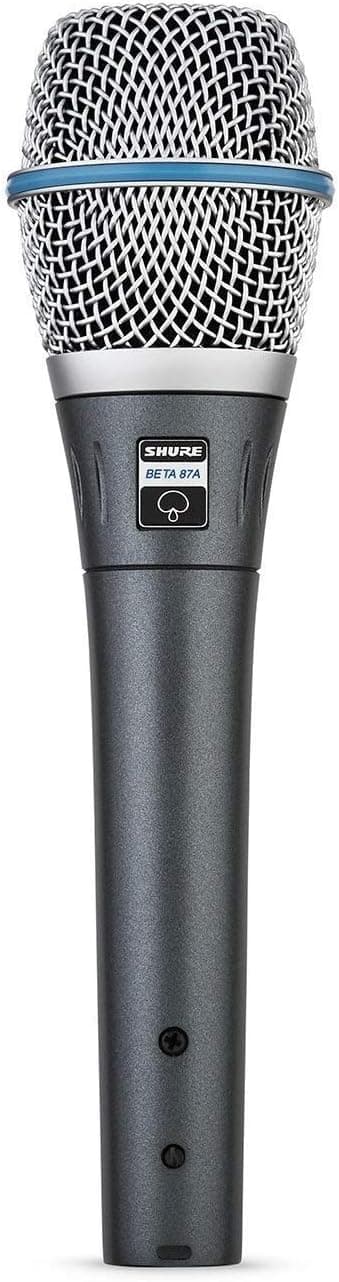
Several of the listed traits point to how it behaves day to day. The frequency response is described as smooth, with a gradual presence rise. In plain terms, that’s the kind of shaping that can make vocals feel more forward and intelligible without turning everything into harshness.
It also uses a highly consistent supercardioid polar pattern, described as delivering superior gain-before-feedback. That matters if you perform in rooms where monitors can get a little too close to the edge.
Another notable detail in the provided information is the electronic low-frequency roll-off, which is meant to compensate for proximity effect. Proximity effect is the bass boost you often get when you sing close to the mic. If you like to move in and out slightly while performing, this roll-off compensation can help keep the low end from getting boomy.
For dynamic control, the description claims a wide dynamic range (117 dB) and low distortion characteristics. Whether you’re going for a gentle take in the studio or a louder live chorus, that’s the kind of spec language that suggests it’s designed to stay stable.
What stands out in recording and live use
Where the BETA 87A leans hardest is vocal clarity with reduced unwanted noise.
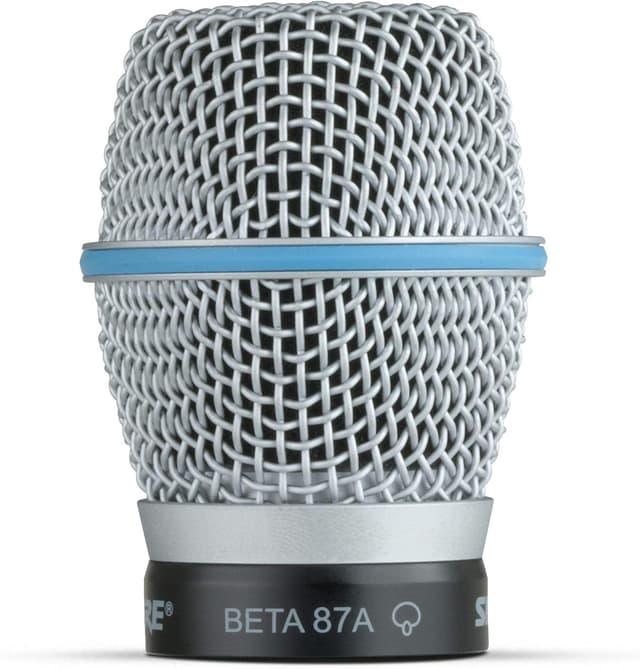
The built-in pop filter is a practical feature, not a marketing line. It’s there specifically to reduce undesirable wind and breath sounds—so you can spend less time scrubbing plosives and more time dialing performance and mix.
The low susceptibility to RFI and electromagnetic hum also matters, especially in real-world setups. Some microphones are more sensitive to interference from lighting, power supplies, and other gear. Here, the intent is that the mic stays cleaner in those environments.
And the cartridge shock-mount system is described as absorbing mechanical shocks and reducing handling noise. If you’ll be using the mic in live situations or you tend to move with the mic, this is the sort of design detail that can prevent small physical disturbances from becoming audible.
Quick “should I buy it?” fit check
Worth considering if you want a supercardioid condenser vocal mic meant for studio recording and live performance, and you like the idea of a built-in pop filter to tame plosives without extra accessories.
It makes sense if you also care about consistent pickup directionality (supercardioid), so you can focus on the voice and reduce off-axis spill.
You may want to skip it if you’re expecting this to completely eliminate issues caused by poor technique—distance and angle still matter a lot for how close-up vocals land. Also, if your setup is extremely sensitive to interference, you’ll still want to verify your own cabling and environment, the mic helps with RFI/hum susceptibility, but it doesn’t control everything in your room.
Tech specs that influence decisions (from the info provided)
The description highlights several technical behaviors that are directly tied to how it sounds and performs:
- Wide dynamic range: 117 dB, with low distortion characteristics
- Polar pattern: highly consistent supercardioid
- Low-end behavior: electronic low-frequency roll-off designed to compensate for proximity effect
- Noise/interference: very low susceptibility to RFI and electromagnetic hum
- Stability: advanced cartridge shock-mount system to absorb mechanical shocks and reduce handling noise
- Voice protection: built-in pop filter for wind and breath sounds
Where it shines, and the one limitation to keep in mind
The big strength is that the mic is positioned as vocal-focused and technique-friendly: supercardioid aiming, built-in pop filtering, and a low-end design intended to manage proximity effect.
But here’s the limitation to keep in mind: because it’s a condenser (per the “supercardioid condenser” description), it will generally be more sensitive to source changes and room sound than some dynamic approaches. If your room is very untreated or you can’t control reflections, you might still need to address the recording environment.
In other words: the BETA 87A can be forgiving in some ways (proximity compensation, shock-mount, built-in pop filter), but it can’t turn a loud, boomy room into a studio.
Final verdict
If you’re looking for a studio and live vocal microphone that’s specifically described as supercardioid condenser with a built-in pop filter—and you want smoother response, reduced breath/wind issues, and better gain-before-feedback—the Shure BETA 87A is the kind of purchase that tends to pay off for vocalists who take performance seriously.
Skip it if your priority is a “set it and forget it” mic that ignores technique and room problems, or if you’re not ready to use basic mic discipline (consistent distance and orientation).
Mini FAQ
FAQ
Is the built-in pop filter enough for plosives? It’s designed to reduce undesirable wind and breath sounds, so it should help. Whether it fully solves your plosives depends on your singing style and mic technique.
Is this mic meant for live performance or only studio recording? The product description calls out studio recording and live performances, and it highlights supercardioid behavior and gain-before-feedback characteristics.
Does it handle proximity effect? The description states there’s an electronic low-frequency roll-off intended to compensate for proximity effect.
Will it pick up interference from other electronics? It’s described as very low susceptibility to RFI and electromagnetic hum, but your overall setup (cables and environment) still matters.
What’s included with the mic? The listing information says it includes an A25D mic clip and a storage bag.