

Shure BETA 98H/C Wired Miniature Instrument Microphone (Cardioid Condenser, XLR)
Reviews
Price
Product description
If you record or amplify “hot” instruments, you usually end up fighting feedback, harsh spill, and handling noise. The Shure BETA 98H/C is built for exactly that kind of reality: a wired, miniature clip-on condenser designed to sit close to the source—like the sax/brass area or the rim of percussion—so you capture more of the instrument and less of the room.
It’s not the kind of mic that disappears behind the scenes. On paper, it’s meant to give you high gain before feedback and strong unwanted-noise rejection, plus the headroom to deal with demanding sound pressure levels from brass, woodwinds, and percussion. The result is a mic choice that tends to make setup feel less fragile—especially when you need a stable sound night after night.
What it is and what problem it solves
The BETA 98H/C is a miniature instrument microphone with a wired XLR connector. It’s intended for wind instruments (sax and brass, and also woodwinds by design intent) and for percussion, where placement accuracy matters.
Instead of relying on a mic stand far away, this style of mic lets you bring the microphone right to the action. That closer placement is the whole point: it helps keep the capture focused and gives you more control over what the PA or recording chain “hears.”
Key points
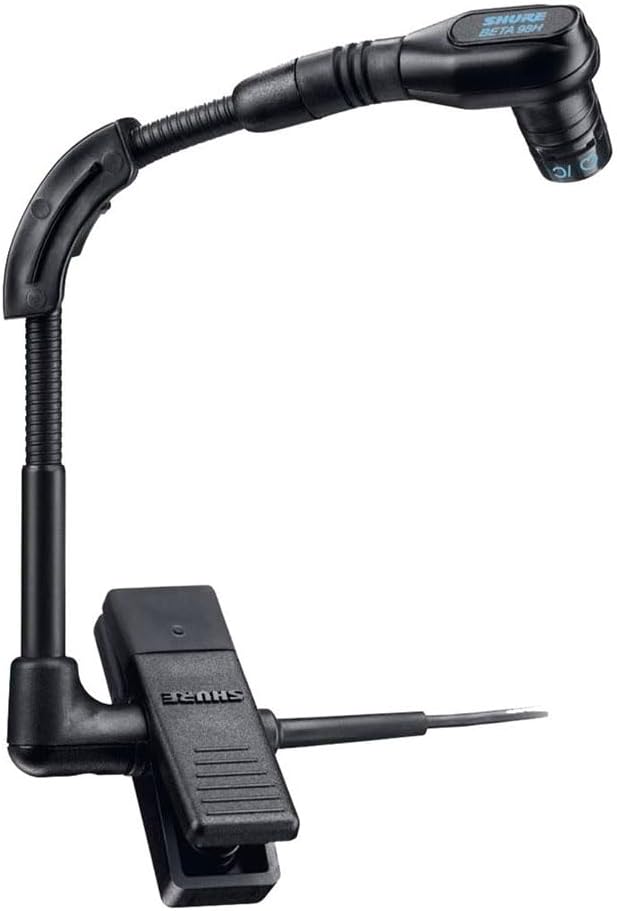
What stands out first is the approach to the electronics. Shure states that the BETA 98H/C uses a preamplifier circuit with no transformer, aimed at improving linearity across the full frequency range. In practical terms, that’s a good sign when you want the instrument tone to stay natural rather than compressing or changing character as the sound gets louder.
The second big theme is feedback resistance and noise control. The specified pickup pattern is designed to deliver high gain before realimentation (feedback) and excellent rejection of unwanted noise. If you’ve ever had a “great on the first minute” mic setup turn into a ringy mess after someone shifts position, you’ll appreciate why this matters.
The essentials (how it’s positioned)
This mic uses a clip-on design with a gooseneck, which is the kind of mechanical flexibility that makes placement easier. You can aim the capsule where it matters without needing a full stand rig.
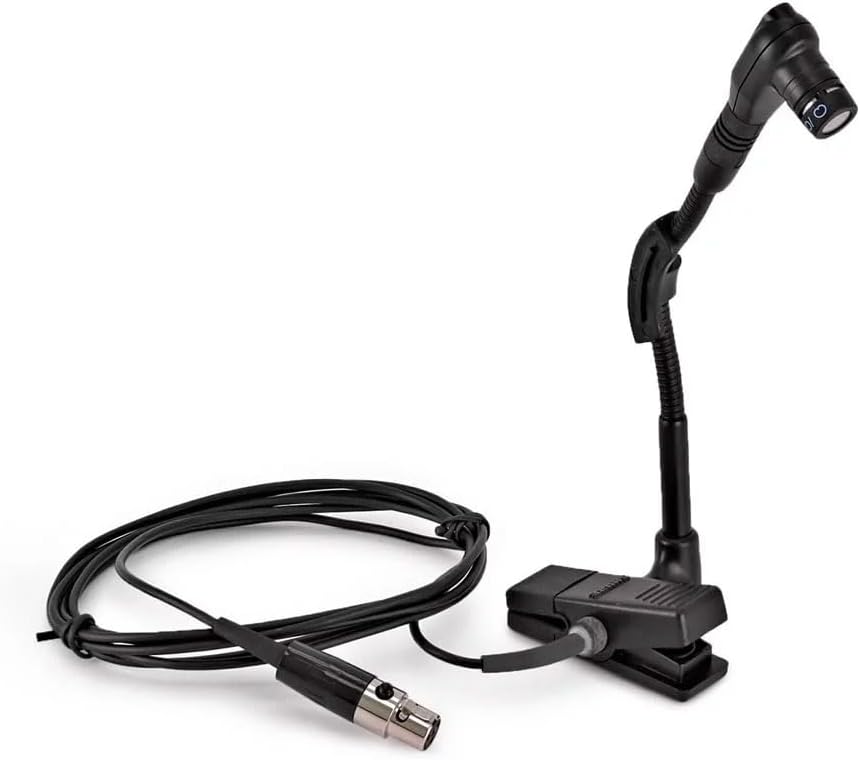
A simple micro-scenario: you’re prepping a sax player and you want consistent tone across soundchecks. With a clip-on gooseneck mic, you can place it near the intended area of the instrument, then fine-tune its angle so it faces the sound source instead of pointing “somewhere nearby.” That kind of repeatable placement often matters more than people expect.
Tech summary
- Transformerless preamplifier circuit for improved linearity across the frequency range
- Cardioid condenser pickup (stated pickup pattern)
- High gain before feedback and excellent rejection of unwanted noise
- Optimized frequency response for open, natural sound reproduction
- Designed to handle high maximum sound pressure level (SPL) demands from wind instruments and percussion
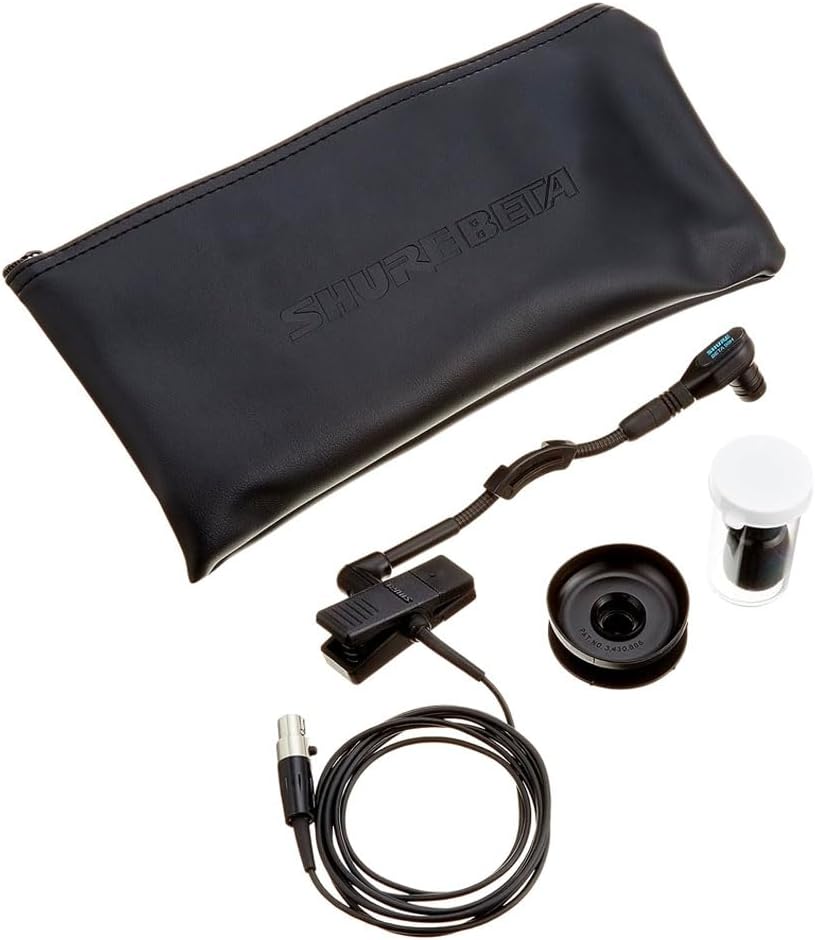
- Wired XLR connection with a flexible 3 m (10 ft) cable and preamplifier connected
Where it shines, and where you should be cautious
This is a strong fit if you need a dedicated instrument mic—especially for brass/woodwinds and percussion—where placement and sound isolation are part of the goal. It also makes sense if you’re working with sources that can get loud and you want headroom rather than constantly riding gain.
That said, it may not suit you if your priority is a single all-purpose microphone for general vocals or wide, room-based capture. A miniature clip-on instrument mic is very source-focused, and in some setups that can be exactly what you want—or it can feel limiting if you need one mic to cover everything.
Also, keep in mind that “cardioid” and the placement close to the instrument help rejection, but no mic magically removes every noise problem. If the environment is noisy or feedback-prone, you’ll still need sensible gain staging and placement.
Who it’s for
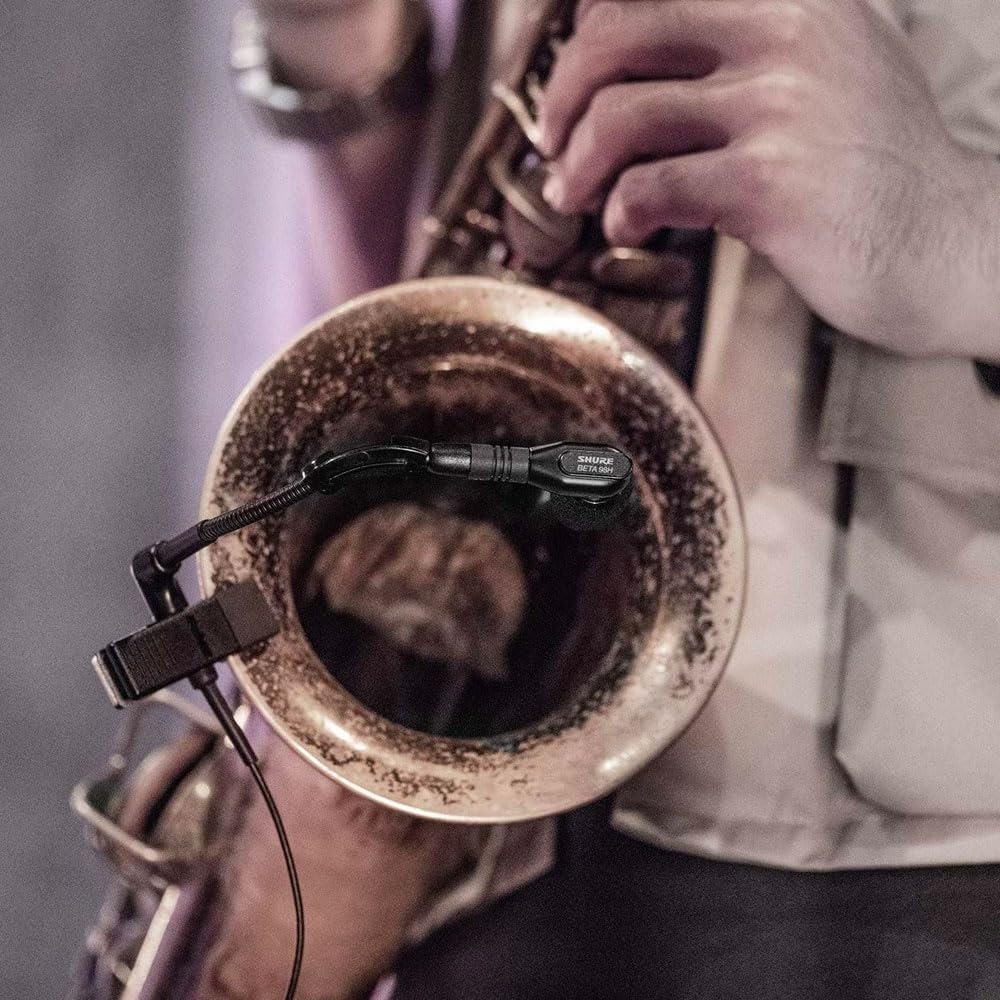
This mic is tailored to musicians and engineers who like control: live sound reinforcement, stage miking for wind and percussion, and recording scenarios where you want natural tone with less unwanted spill.
If you’re building a small, focused instrument-mic setup, the BETA 98H/C makes practical sense. If you’re starting out and only need one mic for everything, you may want to think twice and match the mic to the job rather than the other way around.
Is it worth it?
Buy the Shure BETA 98H/C if you’re looking for a wired, clip-on miniature condenser mic that’s designed to stay stable around loud wind instruments and percussion—where high gain before feedback, noise rejection, and natural frequency response are the real decision drivers.
Skip it or reconsider if you don’t have a specific instrument-miking need. It’s a specialized tool, and the value comes from placing it close to the sound source where its pickup design and SPL handling can actually do their job.
Mini FAQ
Is the Shure BETA 98H/C a wired microphone?
Yes. It’s described as a wired microphone with a wired XLR connector.
What instruments is it intended for?
Shure describes it for wind instruments like brass and woodwinds, and for percussion. It’s also referenced as suitable for sax/brass or the rim of percussion via its clip-on gooseneck use.
Does it have preamplification?
Yes. The description states it has a preamplifier connected.
Why does feedback matter for this mic?
The specified pickup pattern is designed to provide high gain before realimentation and to reject unwanted noise, which can help reduce feedback risk in challenging live setups.