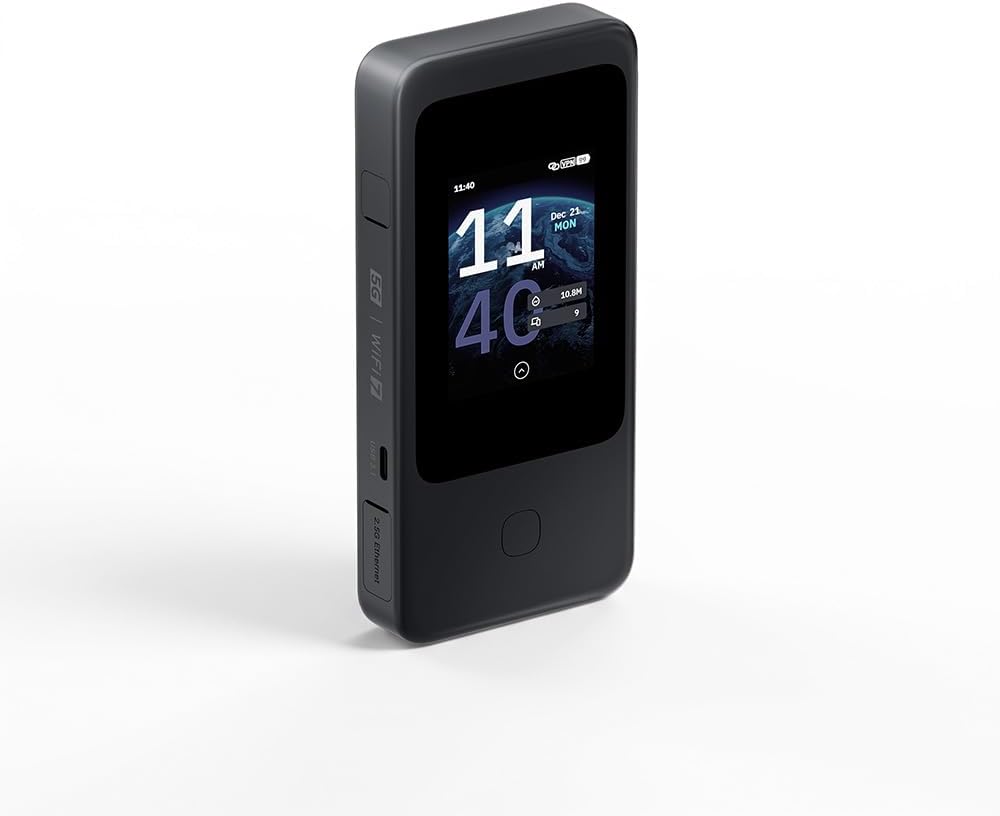
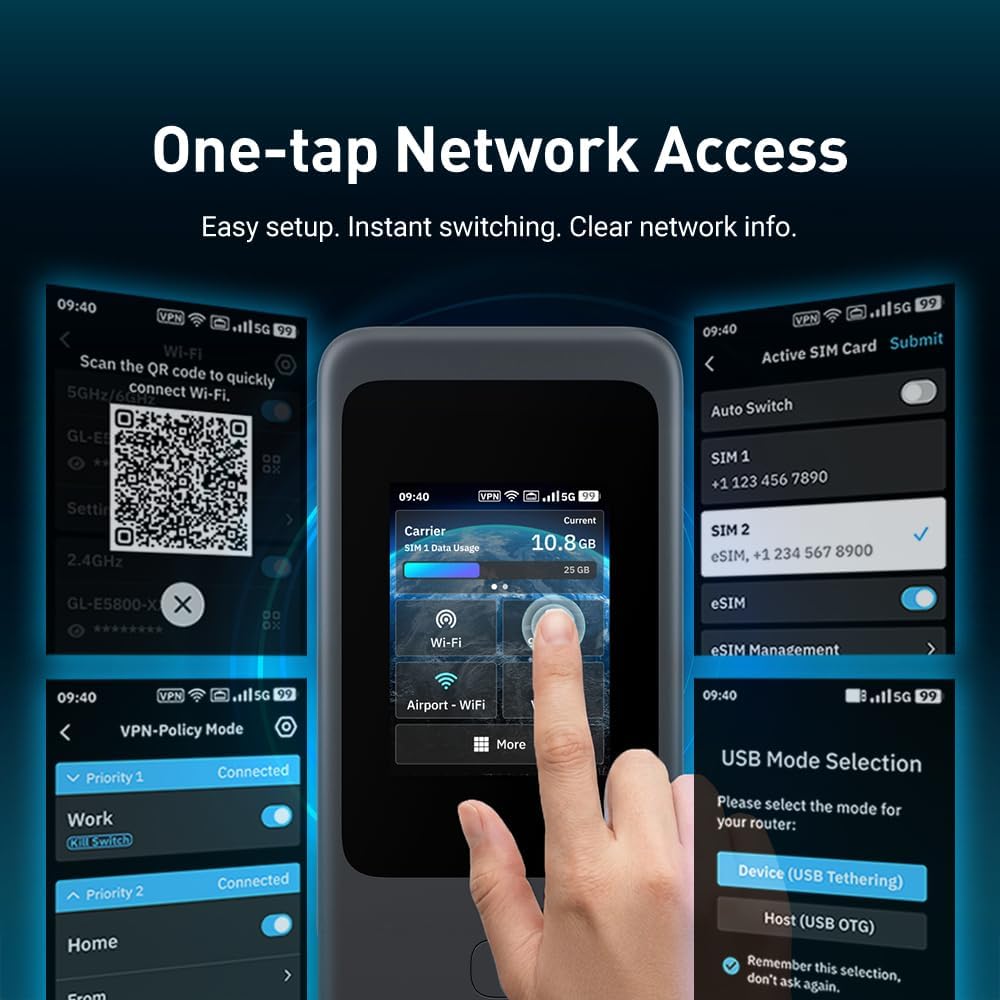
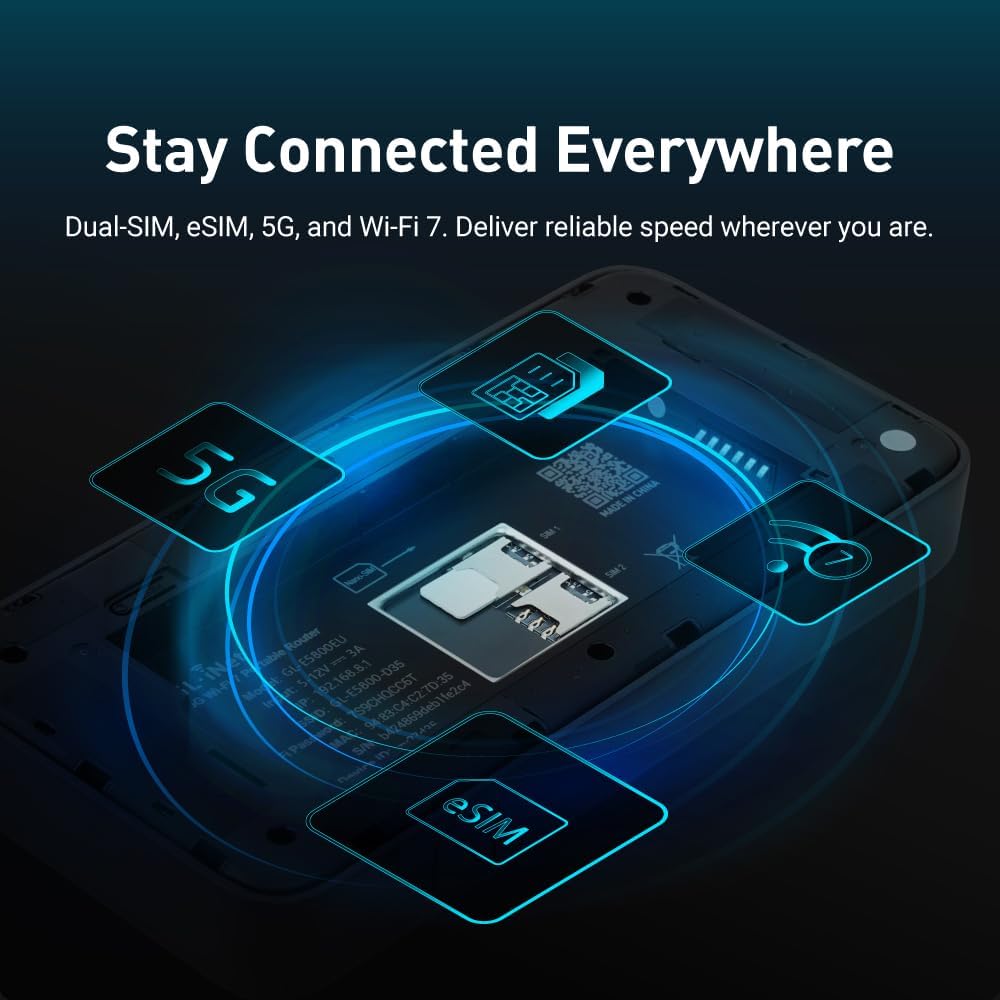
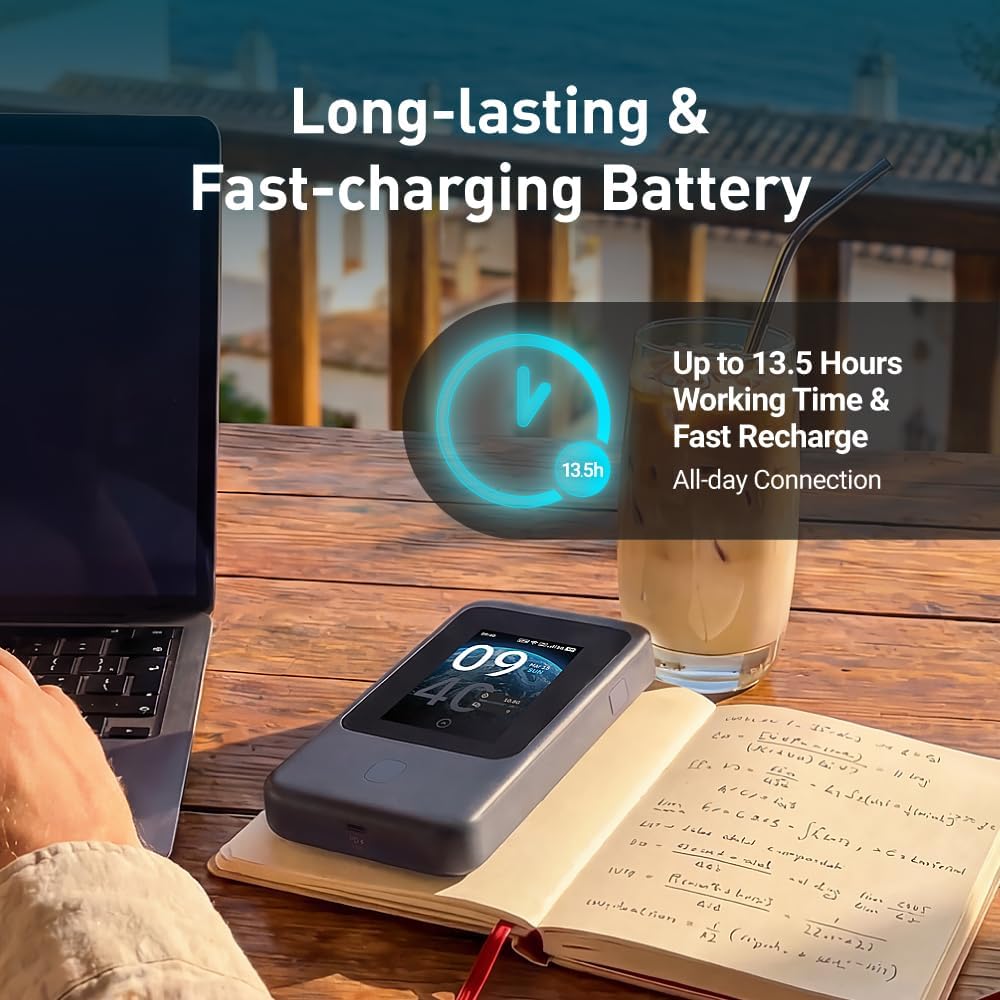
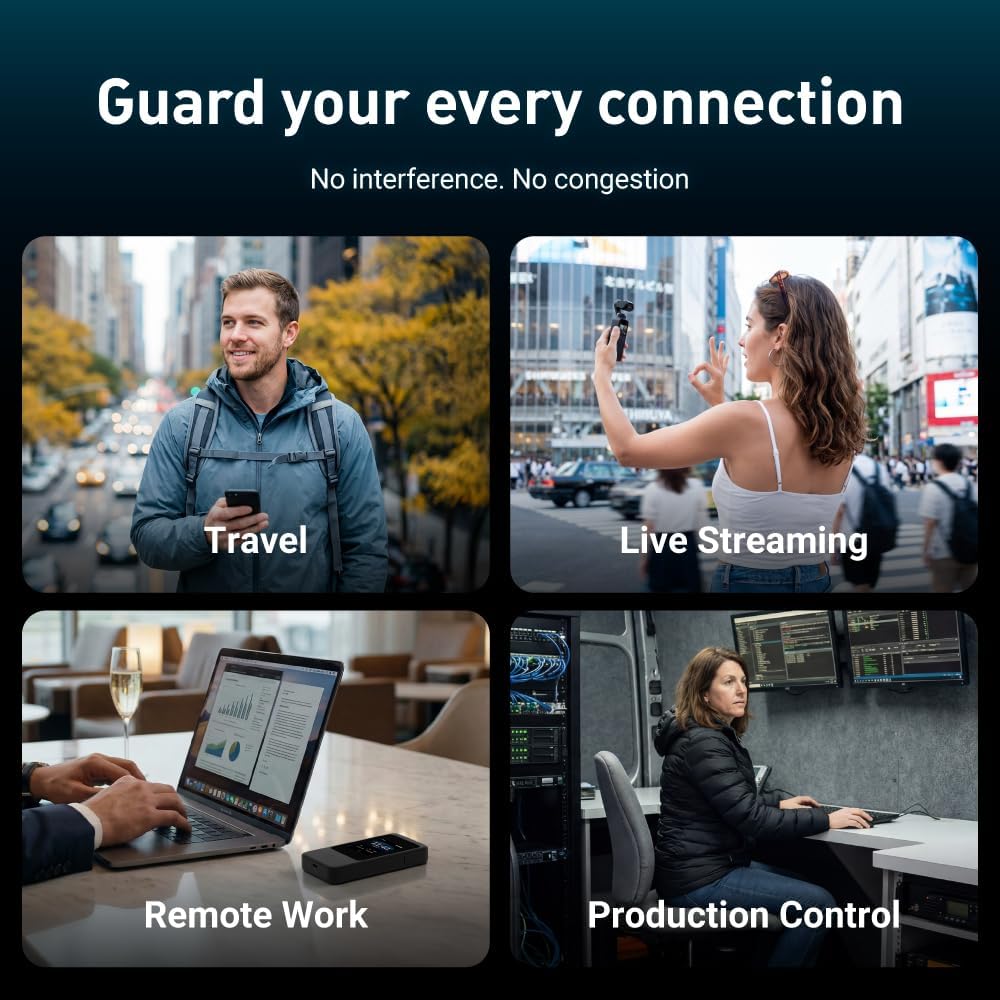
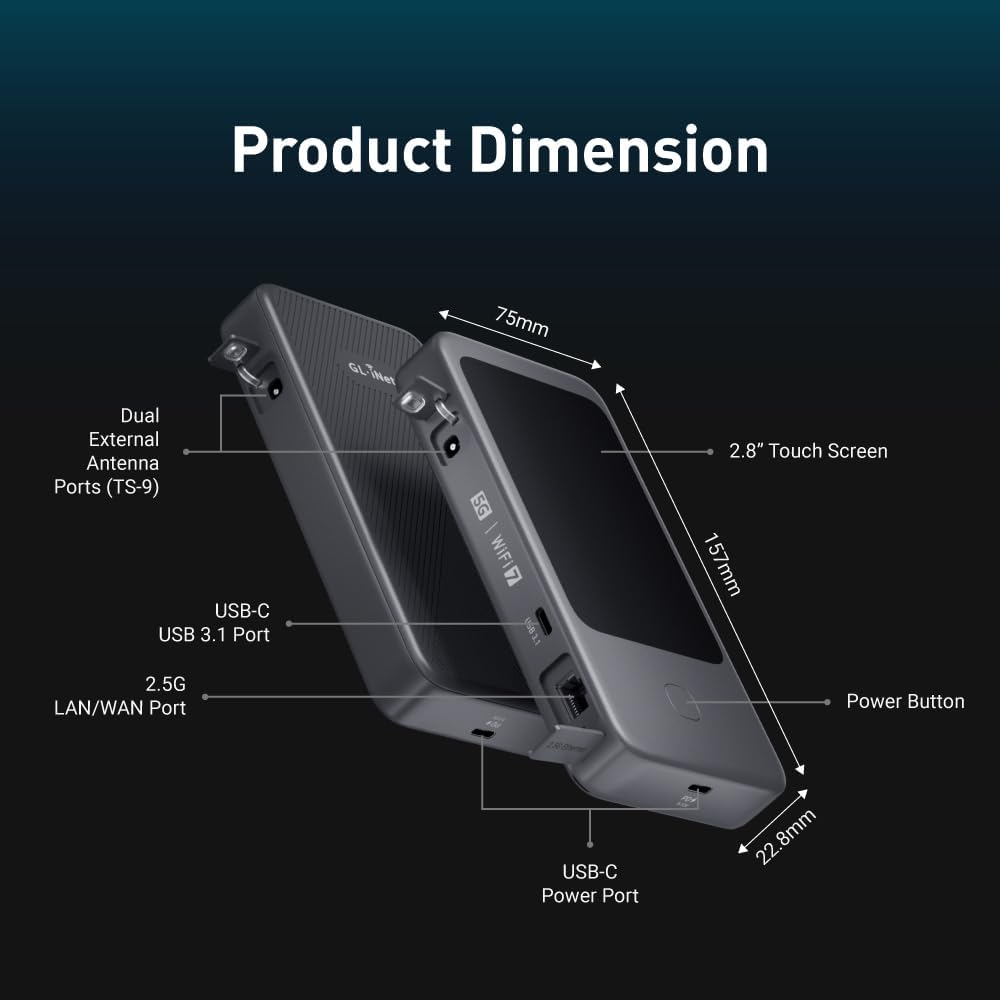
What it is and what problem it solves\nThe GL.iNet MUDI 7 is a portable 5G Wi‑Fi 7 router designed to keep you online on the move. It combines built‑in eSIM with two physical nano-SIM slots, a 2.8" touchscreen for quick control, and a tri‑band Wi‑Fi 7 network. It’s built to support multiple devices, prioritize reliable connectivity in hotels, airports, or remote work sites, and offer a flexible mix of wired and wireless backhaul options. If you travel frequently or run a small remote operation, this device aims to reduce the usual friction of finding dependable internet abroad.\n\n## Key strengths on paper\nOn paper, the MUDI 7 offers a robust feature set: a 5G connection with speeds advertised up to 4.67 Gbps download, tri‑band Wi‑Fi 7 performance (2.4 GHz, 5 GHz, and 6 GHz) with a combined potential for up to 64 connected devices, and a 2.5G Ethernet port alongside a 10 Gbps USB‑C for tethering or external storage. The onboard eSIM plus dual nano‑SIM slots enable quick carrier switching without swapping SIMs, which can be a real time‑saver when you’re hopping between regions. A 13.5‑hour battery promises unplugged use, and the 30W PD fast charging helps you get back online quickly.\n\n## What stands out day to day\nFor travelers who value versatility, the MUDI 7’s Quad‑Path Multi‑WAN failover keeps traffic moving even if one link drops. You can run Ethernet, Wi‑Fi repeater, USB tethering, and 5G concurrently, which is handy for pop‑up shops or on‑the‑go work setups where downtime isn’t acceptable. The 2.8" touchscreen offers direct control for SIM switching, VPN toggling, and data usage monitoring, reducing the need to open apps or dashboards for everyday tasks.\n\n## The good and the not‑so‑perfect parts\nWhat’s compelling is the combination of cellular and traditional backhaul options in a single pocketable device. If you need to work in varied locations with spotty public Wi‑Fi, the MUDI 7 can keep you connected. On the flip side, real‑world speeds depend on carrier plans, network conditions, and device placement, so you shouldn’t expect lab‑perfect consistency every day. The VPN features are pre‑installed and compatible with several providers, which is convenient, but performance will vary with the chosen protocol and server location.\n\n## Who it’s for\nThis router is well suited for digital nomads, freelancers, content creators, and small teams that travel or work in hotels, coworking spaces, or temporary setups. It also fits folks who need a reliable VPN gateway for safer public Wi‑Fi at cafes or airports, plus the ability to keep a home network reachable while abroad.\n\n## Who it isn’t for\nIf you mainly need a budget, single‑SIM device for occasional travel with light device counts, there might be simpler options that focus on basic connectivity. If you don’t demand multi‑WAN failover, or you don’t require 5G or Wi‑Fi 7 performance, you may not see a strong value uplift.\n\n## When it makes sense to buy\nOpt for the MUDI 7 if you prioritize seamless SIM switching on the go, require robust multi‑link failover, and want a capable wired backhaul (2.5G Ethernet) plus a high‑speed wireless network for many devices. It’s a sensible pick if you value the screened combination of eSIM, dual SIMs, and a touchscreen that reduces reliance on apps for everyday admin tasks.\n\n## What to check before buying\nClarify your carrier options in the regions you travel, ensure your data plan supports the 5G bands used by the device, and consider how many devices you typically connect. Also, note that VPN performance depends on your chosen provider and plan, pre‑installed VPNs are convenient but may not match a dedicated business VPN in every scenario.\n\n## Practical use case\nImagine setting up at a hotel with a sluggish public network. You switch to your GL.iNet MUDI 7 via the touchscreen, pull a VPN on the spot, and share the connection with a laptop, phone, and a camera rig—all while monitoring data usage in real time. If you’re streaming a 4K video or joining a live meeting, the multi‑WAN setup helps keep interruptions to a minimum.\n\n## Quick comparison mindset\nIn practice, this device sits between a capable travel router and a portable hotspot with business focus. If you value wired backhaul and multi‑SIM flexibility in one device, the MUDI 7 is worth considering, if you’re mostly tethering from a single source or budget matters, there are lighter alternatives with fewer features.\n\n## FAQ snapshot\n- Can it run as a VPN client and a VPN server simultaneously? Yes, with OpenVPN‑DCO and WireGuard, and it’s pre‑installed for easy setup.\n- How long does the battery last in typical use? The device advertises up to 13.5 hours of untethered use on a full charge.\n- Is it easy to switch between SIMs on the fly? Yes, using the 2.8" touchscreen for quick SIM/eSIM changes.\n\n## Final decision\nIs it worth it? If you travel frequently and need reliable multi‑link connectivity with flexible SIM options, a high‑performance Wi‑Fi 7 network, and convenient on‑device controls, the MUDI 7 delivers a strong feature set that aligns with professional use cases. If your needs are simpler or budget‑driven, you may want to compare lighter options before committing.