

GL.iNet GL-XE3000 (Puli AX) 5G Wi‑Fi 6 Dual‑SIM Router with Built‑In Battery, Multi‑WAN & VPN (OpenWrt)
Product description
Key features that matter for business and travel
If you need dependable internet where “normal” broadband isn’t reliable, the GL.iNet GL-XE3000 (Puli AX) is built for that exact situation. It combines 5G cellular with Wi‑Fi 6, and it leans hard into business-minded features like failover, VPN support, and multi-WAN options.
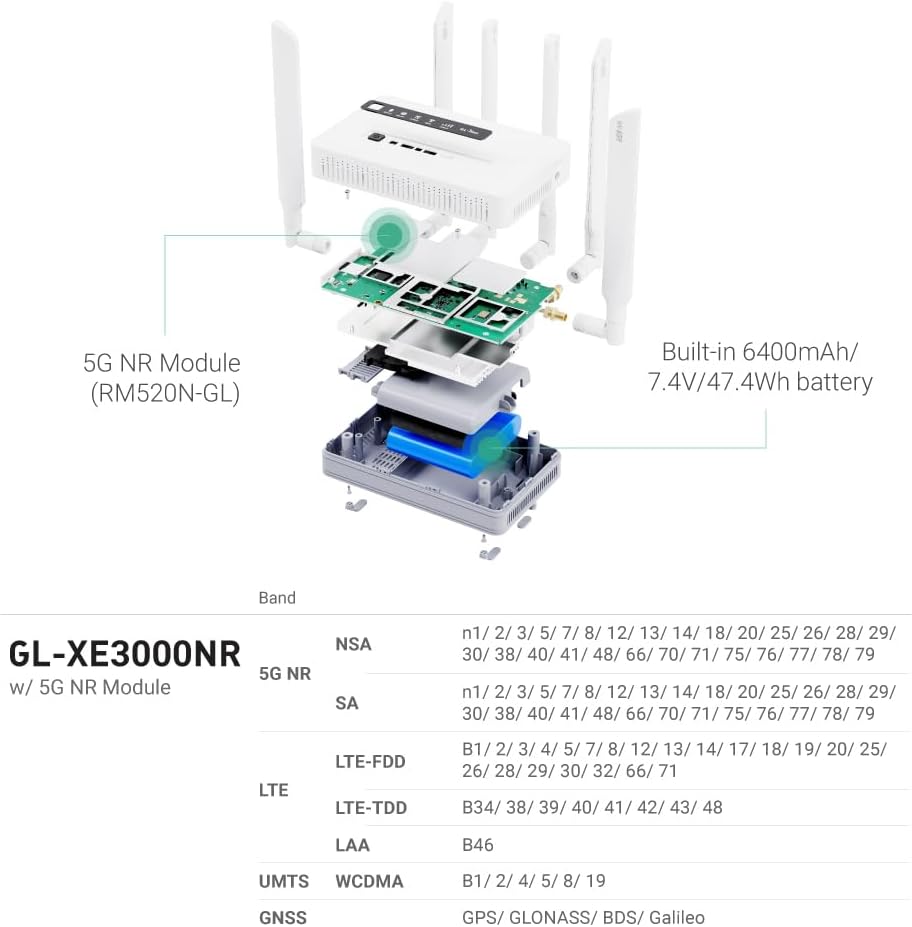
On paper, this is the kind of router that helps keep an office, retail counter, or an event going when networks get unstable—or when power drops. The built-in battery is a big part of that story, and the dual-SIM setup is there so you can choose (and automatically switch to) whichever carrier link is behaving better.
That said, it’s not a “set it and forget it” router for everyone. If you’re not planning to use cellular failover, VPN, or advanced configuration, you may find a simpler Wi‑Fi 6 router is easier to live with.
What you’ll notice day to day (speed, Wi‑Fi 6, and coverage)
The XE3000 targets faster wireless performance via Wi‑Fi 6 and MU‑MIMO, which is designed to support multiple devices at the same time in different scenarios. It’s also rated for up to 574Mbps on 2.4GHz and up to 2402Mbps on 5GHz.
Keep expectations grounded: the provided speed figures are from local network speed tests, and real-world speeds will vary based on your cellular signal and your overall setup.
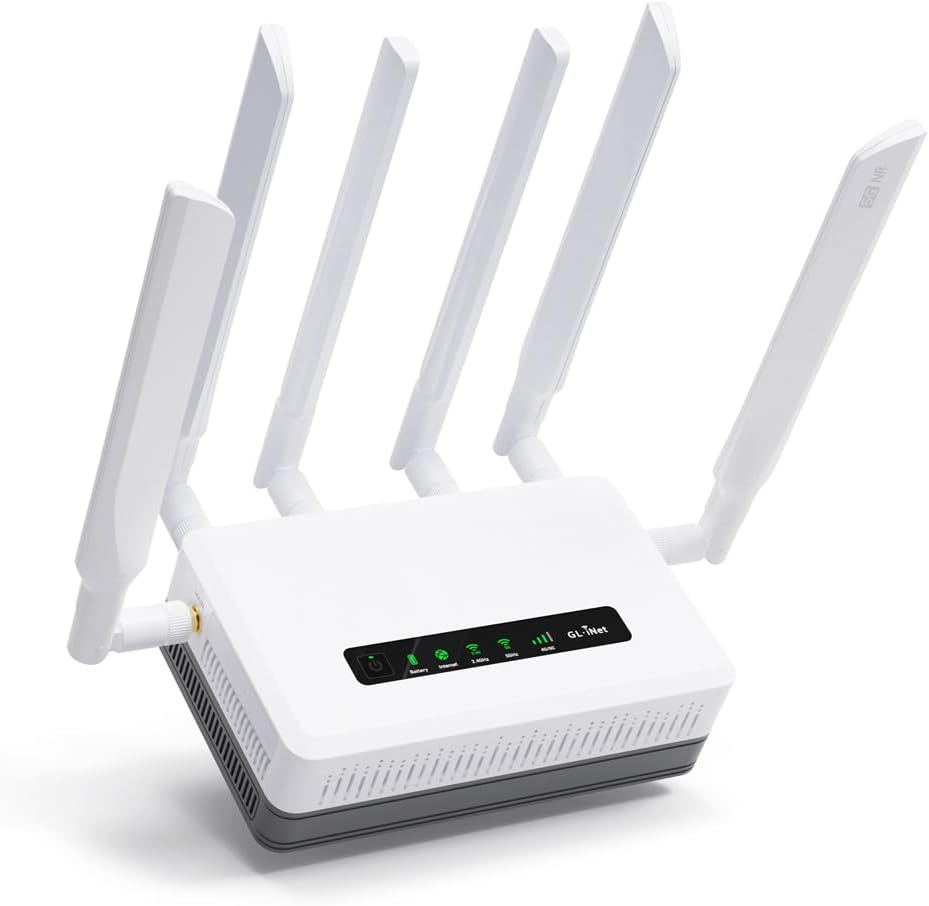
The router also includes detachable antennas, which can matter when you’re running it in warehouses, construction sites, temporary offices, or outdoor-ish setups where you want more control over signal placement.
Dual‑SIM 5G with failover (and the “single standby” idea)
One of the clearest use cases here is resilience. The GL-XE3000 supports 5G under both NSA and SA standards, and it also works with 4G LTE networks. With dual-SIM, you can select the stronger/faster ISP connection and use automatic failover.
A useful way to think about it: it’s aiming to reduce the time you spend babysitting connections when one carrier link stumbles. That’s the difference between “network is down” and “network switched over and keeps moving.”
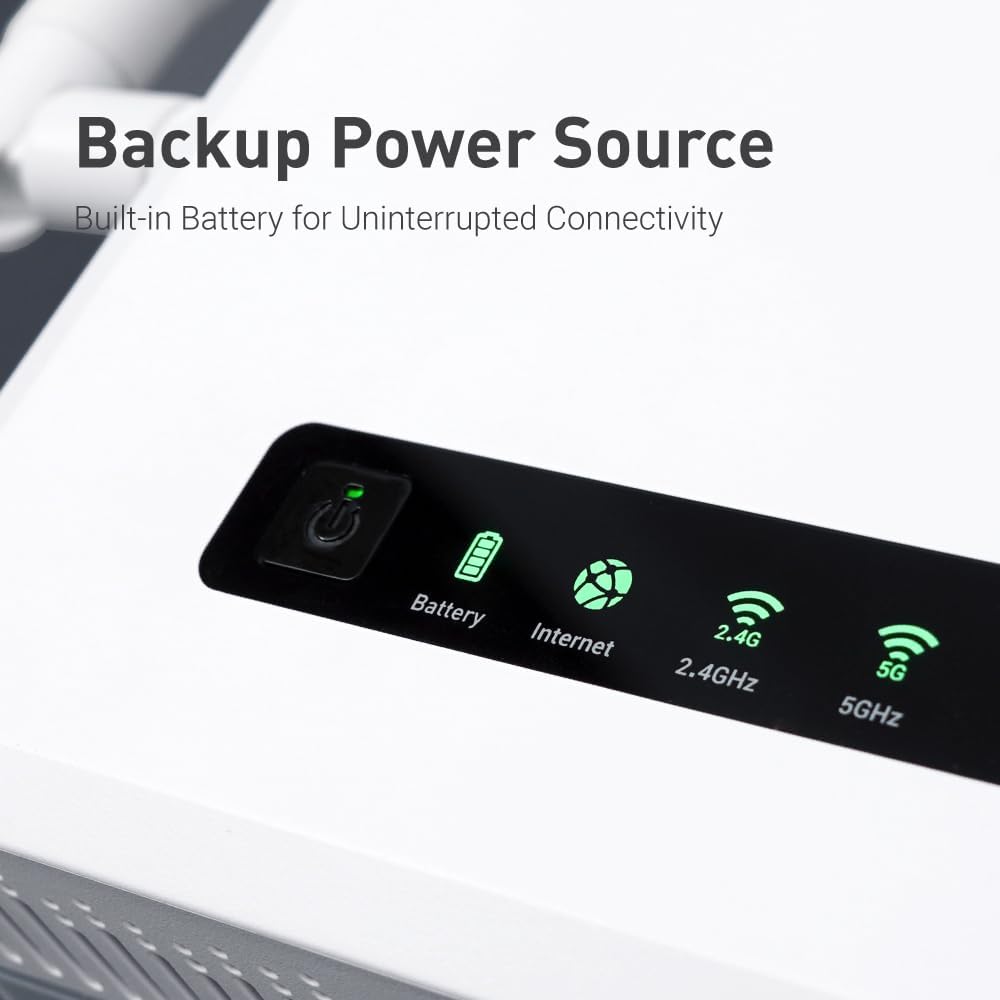
Worth noting, though: the description calls it “dual-SIM with single standby,” which implies it’s not the same thing as simultaneously bonding both SIMs for one combined connection. If your expectation is aggregated throughput from two carriers at the same time, you’ll want to check your use case carefully.
VPN tunneling + secure remote access (OpenVPN and WireGuard)
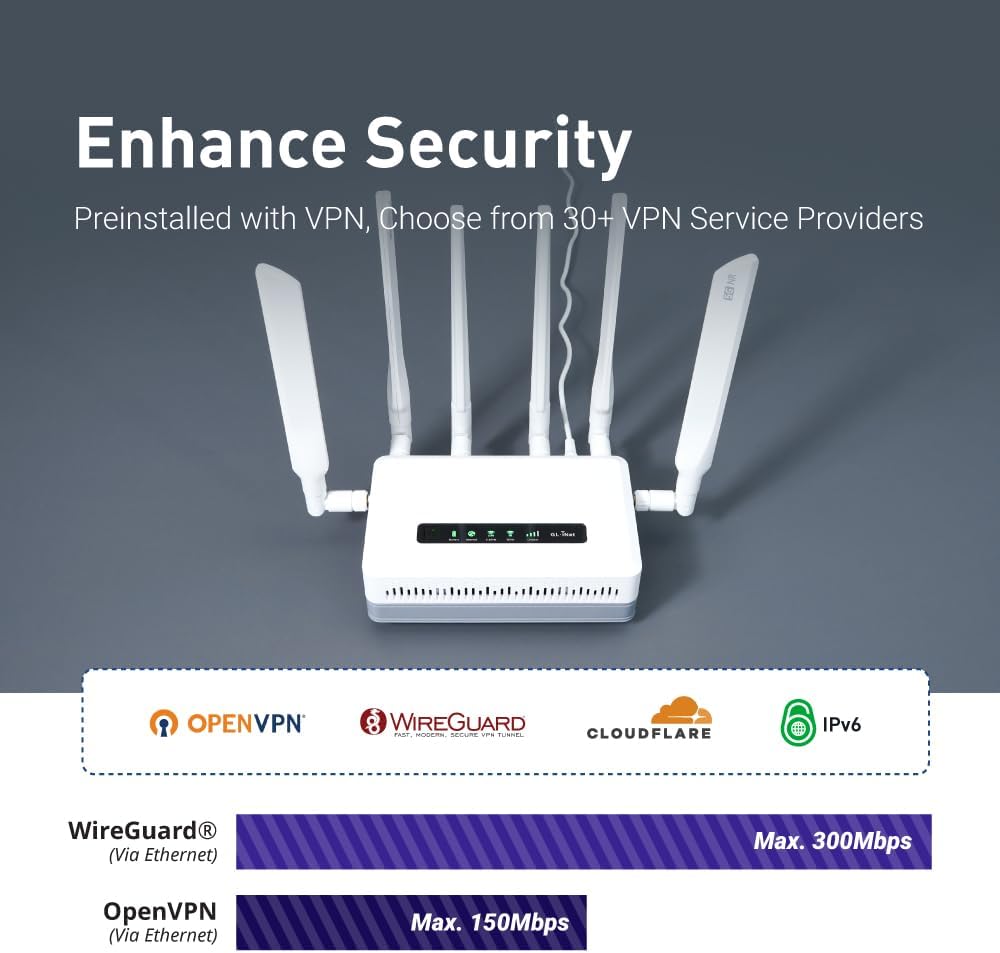
For businesses that need secure access from outside the office, the XE3000 includes pre-installed VPN options—specifically OpenVPN and WireGuard. The pitch here is straightforward: encrypt traffic within the connected network, which can be especially relevant when you’re connecting over public Wi‑Fi.
The router is described as supporting 30+ VPN services. It also lists maximum VPN speeds of 150 Mbps for OpenVPN and 300 Mbps for WireGuard. Since these are test-style figures (and real results depend on configuration and network conditions), treat them as an upper reference point rather than a guarantee.
Multi‑WAN connectivity for real-world redundancy
This router doesn’t just do cellular. It supports multiple WAN input methods, including Ethernet, Repeater, Cellular, and Tethering, with load balancing and failover. There’s also mention of DNS over TLS/HTTPS, which is part of the “privacy and security” angle when you care about how traffic is handled.
If you manage network stability across a small fleet of locations (offices that travel, pop-up retail, or events), the multi-WAN approach is the practical advantage. You can route connectivity through more than one path, so you’re not locked into only one type of internet.
Battery-backed continuity and where it shines
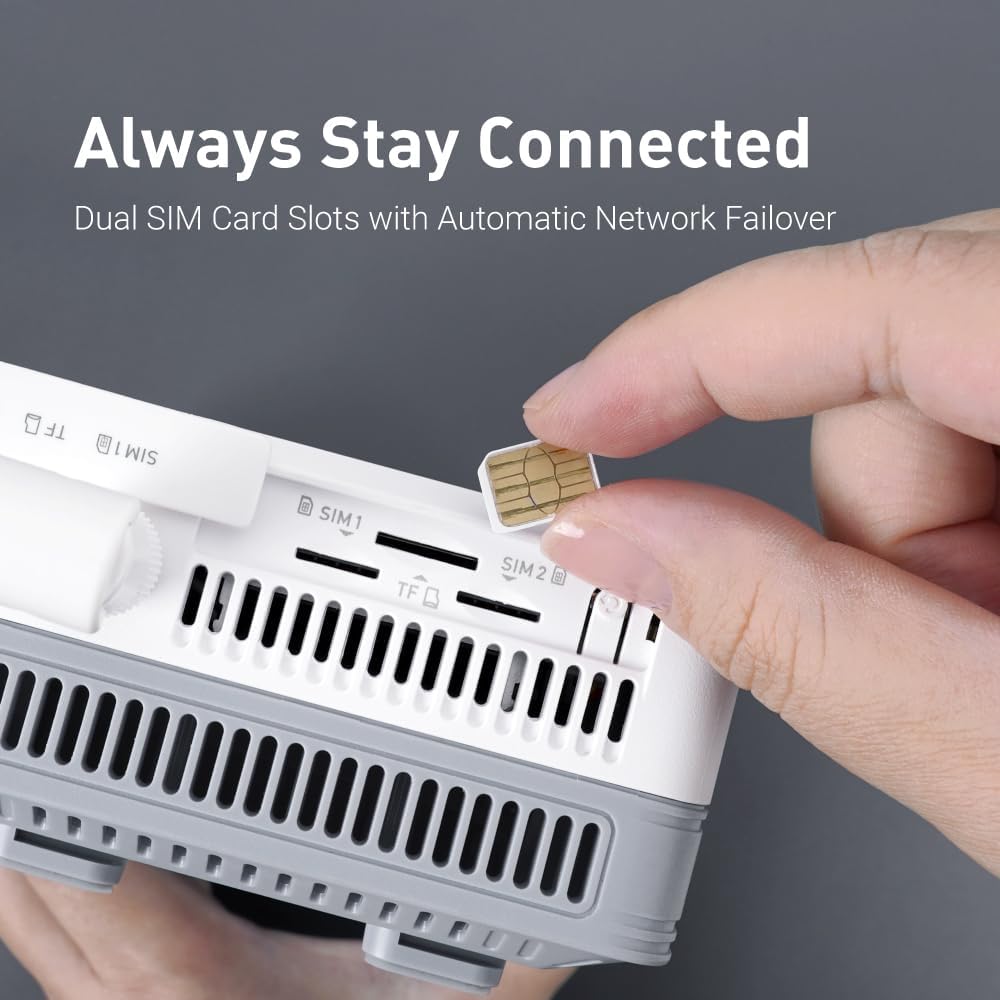
A built-in 6400mAh battery is included, with up to 8 hours of uninterrupted connectivity (as described). That’s meant for situations like power outages—offices, construction sites, and events where downtime hurts operations.
This is where the XE3000 feels most “purpose-built.” Imagine a small office running cloud systems during a short outage: with this router, the intent is to keep meetings, transactions, and cloud services from going completely offline.
There’s one limitation to keep in mind: battery runtime depends on how the router is used and your network conditions. The stated runtime is a best-case expectation, so if your goal is hours and hours of heavy streaming during an outage, you’ll want to sanity-check the tradeoffs.
OpenWrt-based customization (not for everyone)
The GL-XE3000 is supported by proprietary firmware based on OpenWrt, and it’s described as having 5,000+ ready-made plug-ins for advanced customization. It also mentions a no-code interface accessible via the admin panel.
This is powerful if you want control and flexibility. But it can be a little much if you just want to plug it in and run basic home Wi‑Fi. In that situation, the extra configuration depth may feel like overhead.
Compatibility and availability notes (important)
Cellular features are restricted in Russia, Belarus, Cuba, Iran, North Korea, Syria, and the Crimean Peninsula due to modem limitations. If you’re traveling or setting up in one of those regions, this is something to account for before you buy.
The description also states AT&T and T-Mobile certification. If your setup is tied to a specific carrier, that certification detail is a helpful starting point.
What’s included / setup expectations
The provided information doesn’t list everything in the box, so you’ll want to check the amazon US listing for exact package contents. On the software side, the key point is that OpenVPN and WireGuard come pre-installed, so you’re not starting from zero if you’re planning to use VPN.

Final verdict
This is a strong pick if you need 5G cellular internet that stays reliable when the unexpected happens—especially for offices, retail, and events where downtime matters. The combination of Wi‑Fi 6, dual-SIM failover, built-in battery continuity, multi-WAN options, and built-in VPN support makes it feel more “business continuity” than casual home router.
It’s not the best choice if you only care about basic Wi‑Fi coverage and you don’t plan to use cellular redundancy, VPN, or multi-WAN. Also, if you’re expecting simultaneous use of two SIMs for combined throughput, the “single standby” design suggests you should verify how it fits your expectations.

If you’re buying with remote access, secure connectivity, and resilience in mind, the GL-XE3000 (Puli AX) deserves attention.
Mini FAQ
Does it work with public Wi‑Fi safely?
The router supports VPN tunneling using OpenVPN and WireGuard, and it’s described as encrypting traffic within the connected network. That’s the angle for safer access, though your exact security outcome still depends on how you configure VPN.
How does dual-SIM help?
Dual-SIM lets you choose the stronger/faster connection and use automatic failover. The description also mentions “single standby,” so it’s focused on switching rather than combining links.
Is the battery enough for an outage?
It’s rated for up to 8 hours of uninterrupted connectivity in the description. Real use depends on conditions and device load, so consider it an outage buffer—not a guarantee for every high-bandwidth scenario.
Is it good for remote setups?
Yes, the multi-WAN support, detachable antennas, and cellular focus are aimed at remote work, field operations, and temporary office-like environments.
Are there any regional limits?
Yes—cellular features are restricted in several countries/regions (including Russia, Belarus, Cuba, Iran, North Korea, Syria, and the Crimean Peninsula) due to modem limitations.