


Cratree 8K Fiber Optic HDMI Cable (15FT) — 48Gbps, 8K 60Hz / 4K 120Hz, HDR, eARC, HDCP 2.2 & 2.3
Product description
If you’re chasing clean, high-bandwidth video for a serious setup, a fiber optic HDMI cable is one of the more sensible ways to get there. The Cratree 8K Fiber Optic HDMI Cable is built for up to 8K 60Hz and 4K 120Hz performance, with support for HDR, eARC, and HDCP 2.2 & 2.3.
On paper, it’s aimed at people who care about reliability at the signal level—especially when you’re running longer cable paths or want something more resistant to interference than standard copper. Still, there’s one big “gotcha” you should be aware of: it’s described as unidirectional.
The essentials
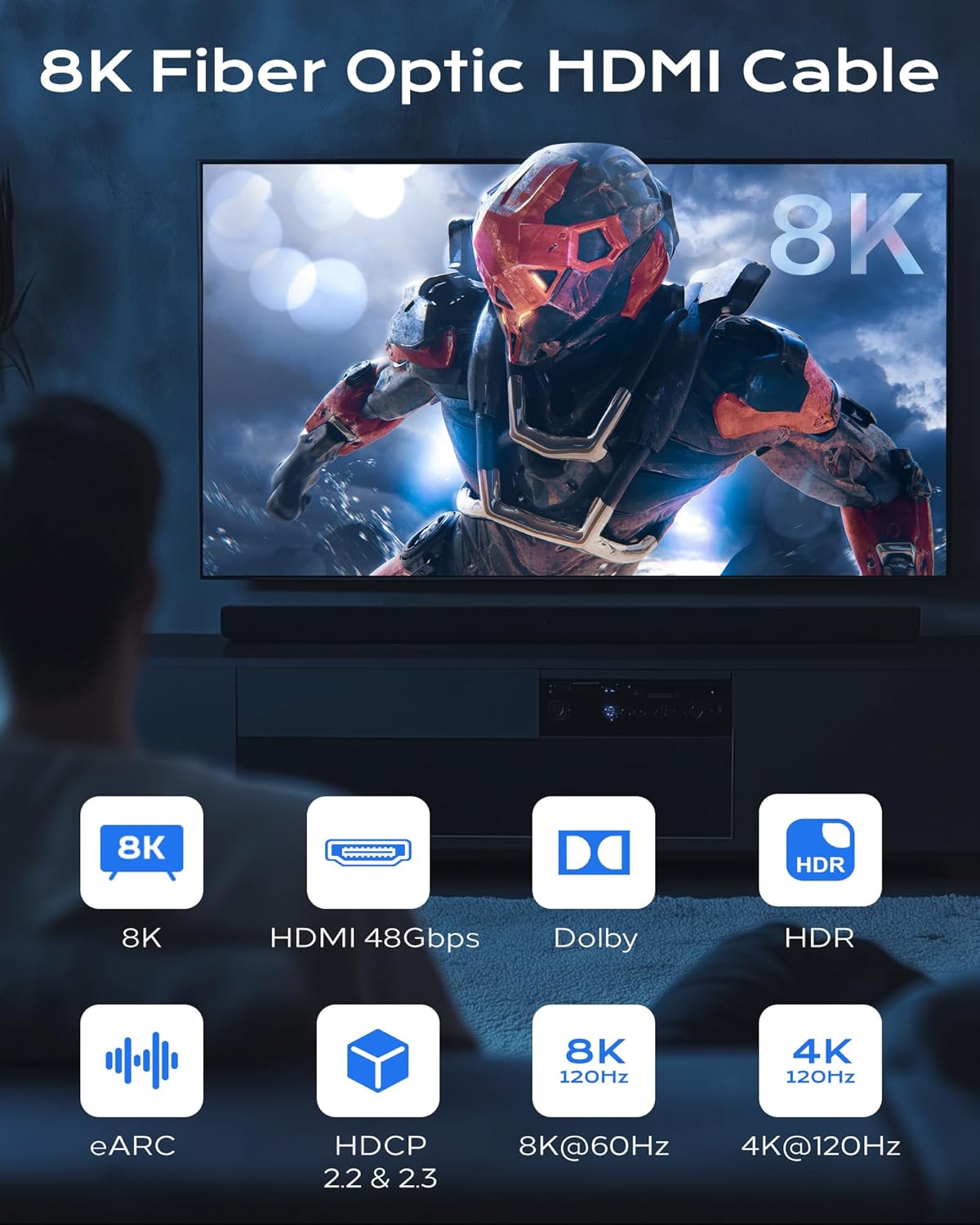
This is a high-speed HDMI cable (listed as 48Gbps) that’s designed to move high-resolution content with low signal loss. It supports 8K 60Hz, 4K 120Hz, and even 2K at 240Hz, which lines up well with setups where you might have a gaming console, a high-end PC, or a media player feeding a monitor or TV.
It’s also positioned as backward compatible with older HDMI standards (the base info mentions compatibility with HDMI 2.0/1.4/1.2/1.1 devices). That matters if you’re upgrading one component at a time instead of replacing your whole chain.
In everyday terms, this is the kind of cable you’d look for when you want fast refresh gaming—think responsive action games on a capable display—without the cable becoming the weak link.
What matters most in real life
A few design choices stand out. First is the fiber optic approach. The description claims advanced fiber optics and 4-layer shielding to help with low signal loss and better anti-interference performance versus traditional copper HDMI cables. That’s the core reason people consider fiber optic HDMI in the first place: it’s about signal integrity when conditions aren’t ideal.
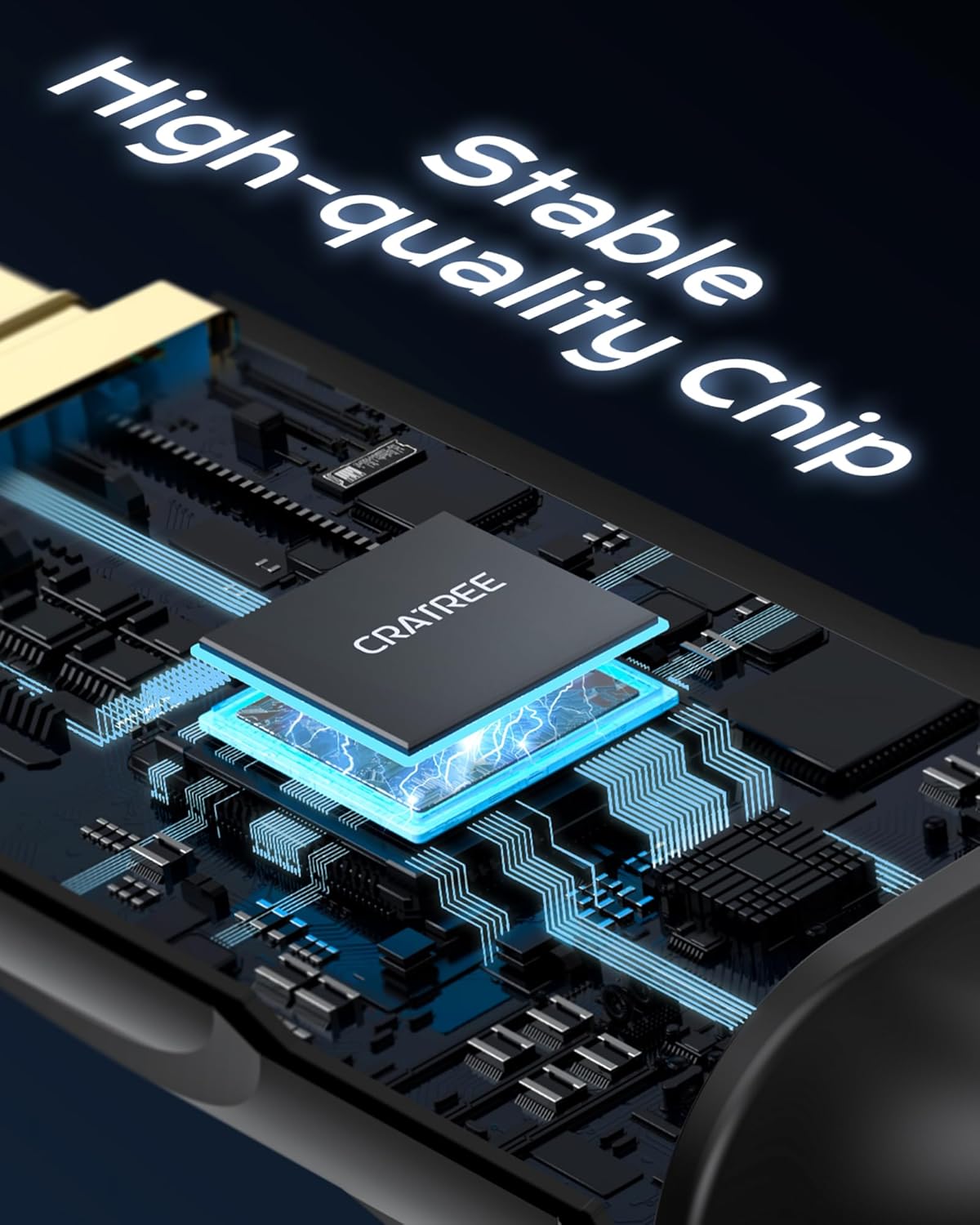
Second is the “no latency” gaming angle. The listing ties the cable to lag-free gaming and immersive audio, including Dolby surround sound. Realistically, the overall feel of gaming still depends on your console/PC and TV/monitor settings—but as a cable, the goal is to avoid dropouts and bottlenecks.
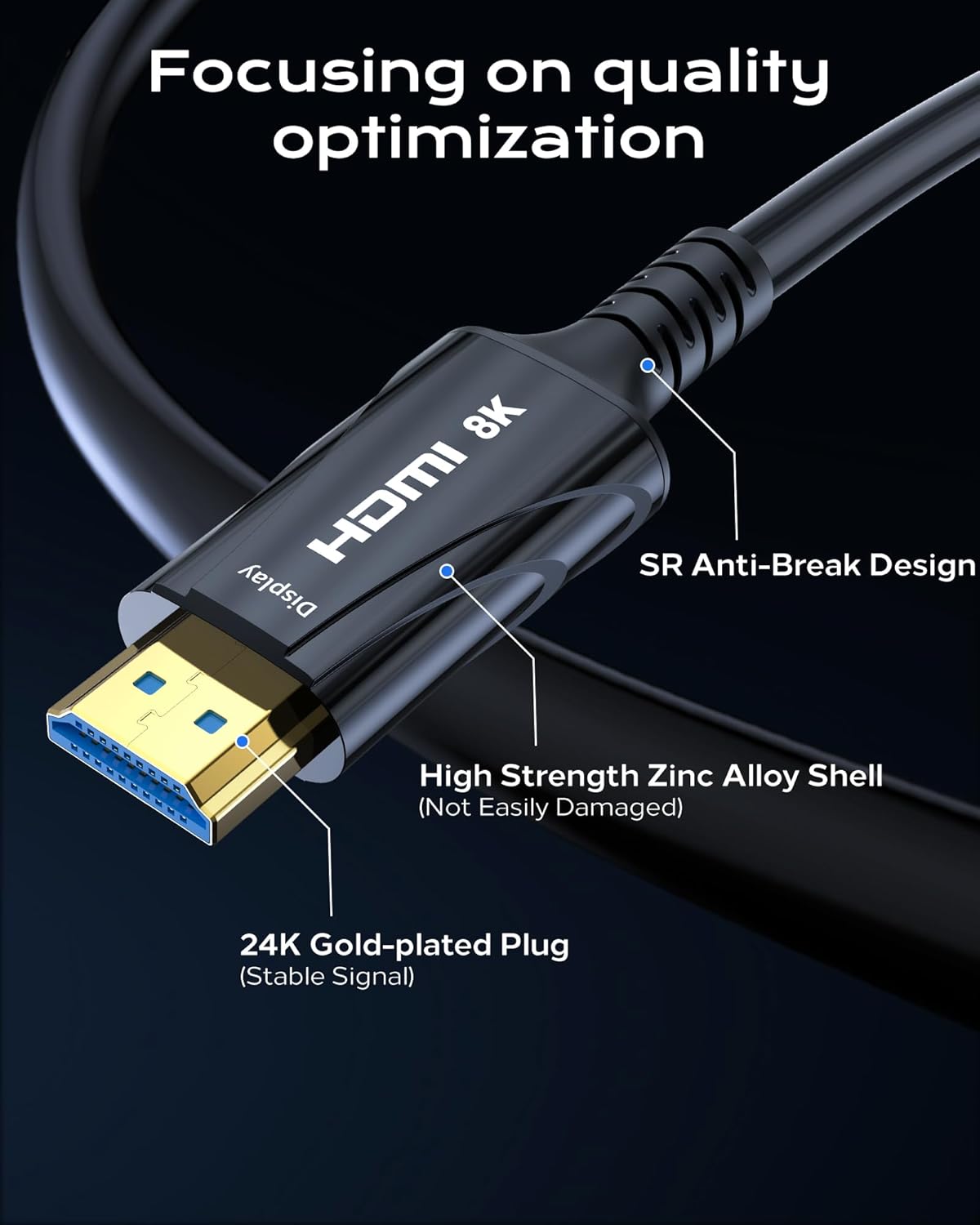
Third is the physical build and connectors: reinforced zinc alloy casing, anti-bend tail design, and 24K gold-plated connectors. Those aren’t flashy specs, but they can matter for day-to-day handling—especially if the cable gets moved during setup.
Key takeaways before you buy
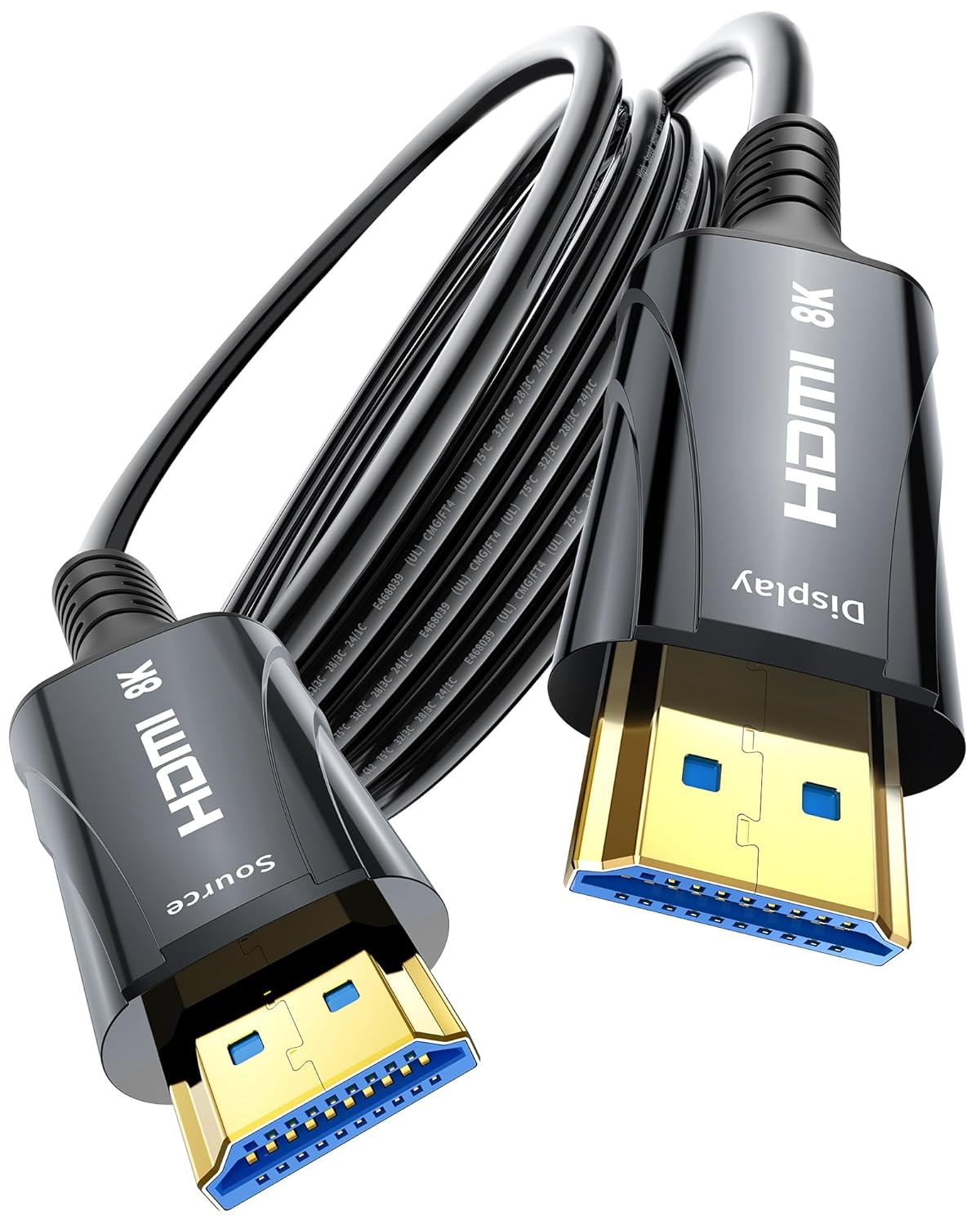
This cable includes a directional requirement. The base info says it has a one-way transmission design, meaning you must connect the “SOURCE” end to the device (like a laptop or Blu-ray player) and the “DISPLAY” end to the monitor/TV/projector. If you reverse it, the listing warns you can get no signal.
It also supports a bundle of modern protections and audio/video features: HDR, eARC, and HDCP 2.2 & 2.3. That’s useful if you’re dealing with newer streaming boxes, consoles, or premium media that relies on those standards.
What you’ll notice day to day
If you’re gaming or watching high-resolution content, the benefit is mainly consistency—stable high-bandwidth transmission that matches the stated refresh/resolution targets. For example, if you run a 4K 120Hz-capable display and a compatible source, the cable is built to match that spec ceiling rather than forcing you into lower modes because the link can’t handle it.
But it may not be for everyone. If you’re using an older display with basic HDMI needs, spending on a fiber optic “8K/48Gbps” cable can feel like overkill. And if you’re the type who doesn’t like to double-check cabling direction, the unidirectional setup could be annoying.

Tech specs
- Name: Cratree 8K Fiber Optic HDMI Cable (15FT)
- Type: HDMI cable
- Capacity: 48Gbps
- Resolution support: up to 8K 60Hz, 4K 120Hz, and 2K 240Hz
- HDR: supported
- Audio return channel (eARC): supported
- HDCP support: HDCP 2.2 and HDCP 2.3
- Design: unidirectional (one-way transmission)
- Compatibility (listed): backward compatible with HDMI 2.0/1.4/1.2/1.1 devices
Who it’s for (and who should skip it)
It’s a solid pick if you have a modern HDMI source and a display that can benefit from high refresh rates or higher-resolution playback, and you want a cable designed to help with low signal loss and anti-interference. It also makes sense if your setup calls for a longer, cleaner signal run than you’d typically get with basic copper, even though the cable length here is 15FT.
It might not be the best match if you’re simply connecting older equipment where you don’t need high-bandwidth modes, or if you tend to plug cables in quickly without checking “SOURCE” vs “DISPLAY.” That directional detail is real—and the listing explicitly warns it can lead to no signal.
Mini FAQ
Does this HDMI cable work in both directions?
No. The listing describes a one-way transmission design. You need to connect the “SOURCE” end to the source device and the “DISPLAY” end to the TV/monitor/projector.

Will it work with older HDMI devices?
The base info says it’s backward compatible with HDMI 2.0/1.4/1.2/1.1 devices, so it should support common older setups as well.
What features does it support for modern TVs?
According to the description, it supports HDR and eARC, plus HDCP 2.2 & 2.3.
Is it meant for gaming?
The listing positions it for lag-free gaming and immersive audio, and it’s rated for high refresh/resolution targets like 4K 120Hz.
Final verdict
Buy it if your goal is high-speed HDMI performance that matches up to 8K 60Hz / 4K 120Hz, and you’re comfortable plugging it in in the correct direction. The fiber optic approach and stated low-loss, anti-interference intent are what you’re paying for here.
Skip it if you don’t need those bandwidth targets, or if you know you’ll forget the unidirectional “SOURCE”/“DISPLAY” setup—because the listing warns that reversing it can result in no signal.