

Cratree 8K Fiber Optic HDMI Cable (100FT) — HDMI 2.1, 48Gbps, supports 8K 60Hz & 4K 120Hz
Product description
If you need a long HDMI run without giving up on modern video features, this Cratree 8K Fiber Optic HDMI Cable is designed for that job. It’s a fiber optic HDMI cable rated for HDMI 2.1-class performance, with support listed for 8K 60Hz and 4K 120Hz, plus HDR and eARC on paper. The 100FT length is the big reason people look at something like this—when you’re trying to connect a media device to a TV, projector, or monitor across a room, distance can turn into a headache with more basic cables.
That said, “fiber optic” cables are a different approach than standard copper HDMI. They can be fantastic for long-distance setups, but they’re also a bit less forgiving about connection handling and compatibility assumptions. So it’s worth checking your use case carefully before buying.
The essentials
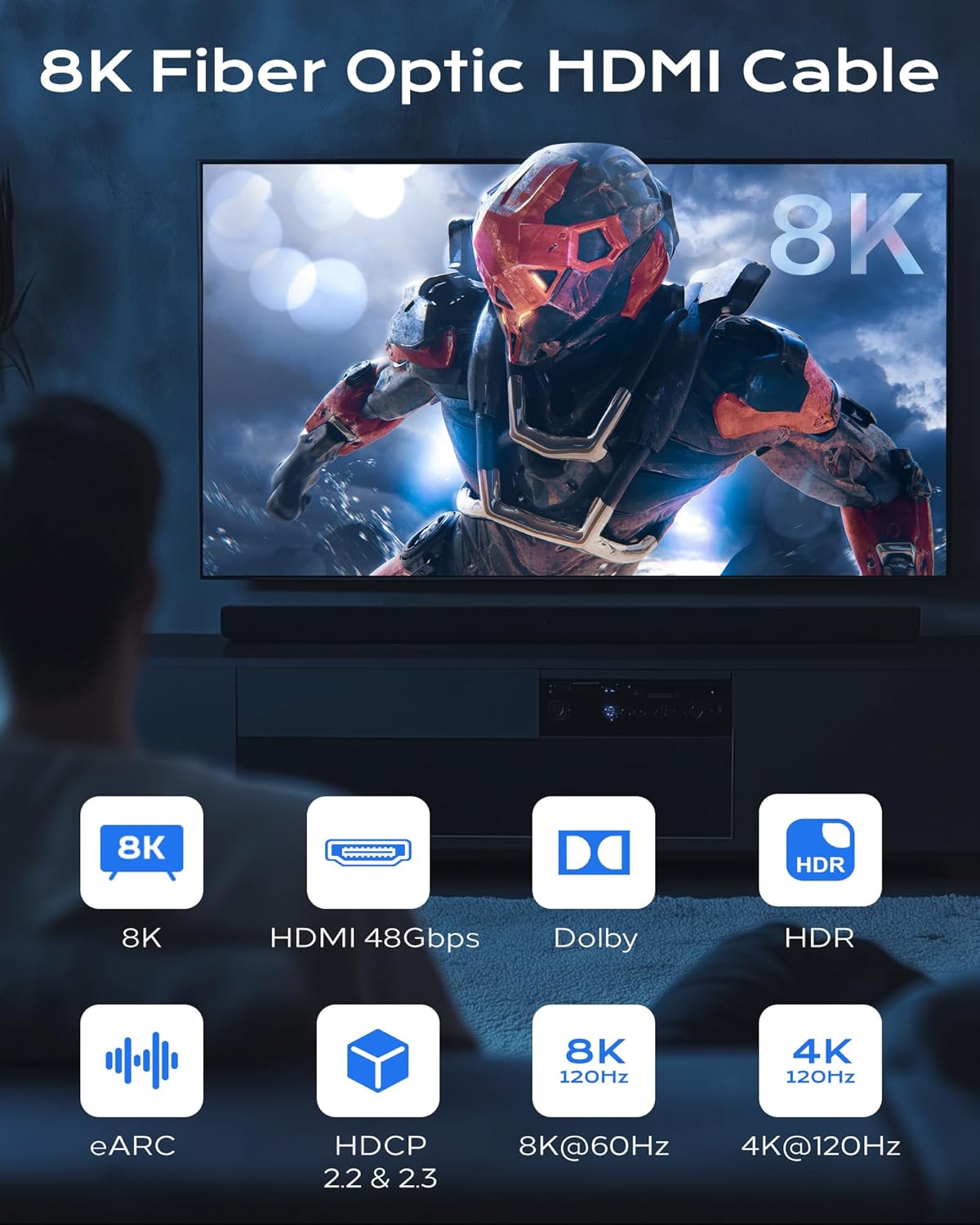
This is a 100-foot HDMI cable built around fiber optic transmission, targeted at high-bandwidth home theater and AV use. The listing claims 48Gbps performance and HDMI 2.1 support, with refresh-rate and format support including:
- 8K 60Hz
- 4K 120Hz
- HDR support (HDR10 is mentioned)
- eARC support
- HDCP 2.2 & 2.3
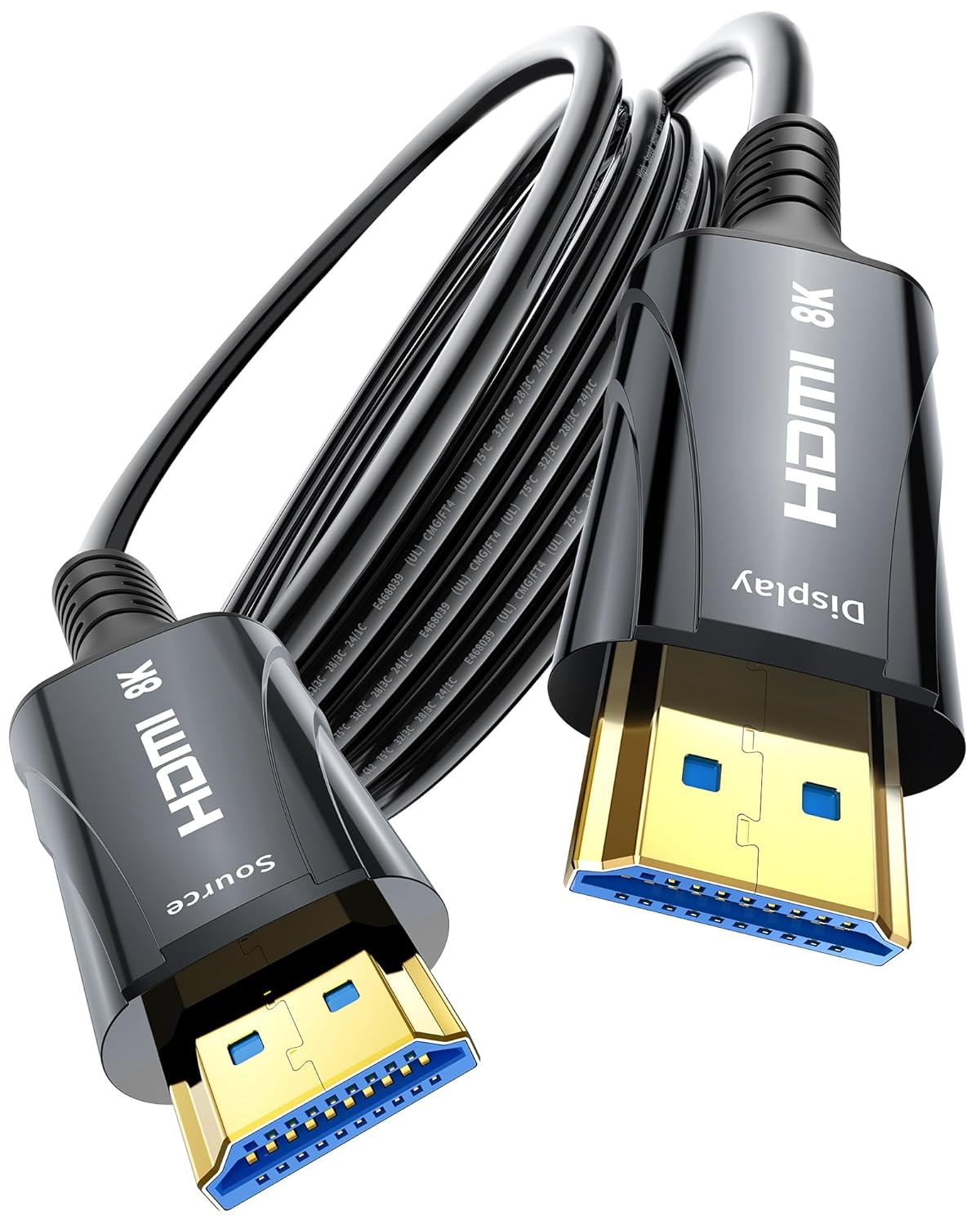
In practical terms, it’s meant for setups where you want smooth high-frame-rate video (like 4K120) and modern metadata features (like HDR and eARC) rather than settling for “it works, but not everything.”
Key features you’ll actually care about
On paper, the appeal here is straightforward: the cable is positioned for high-end HDMI use, not just basic streaming. If your goal is running a single HDMI connection to cover a longer distance while keeping higher refresh rates and the usual modern protections, it lines up with that.
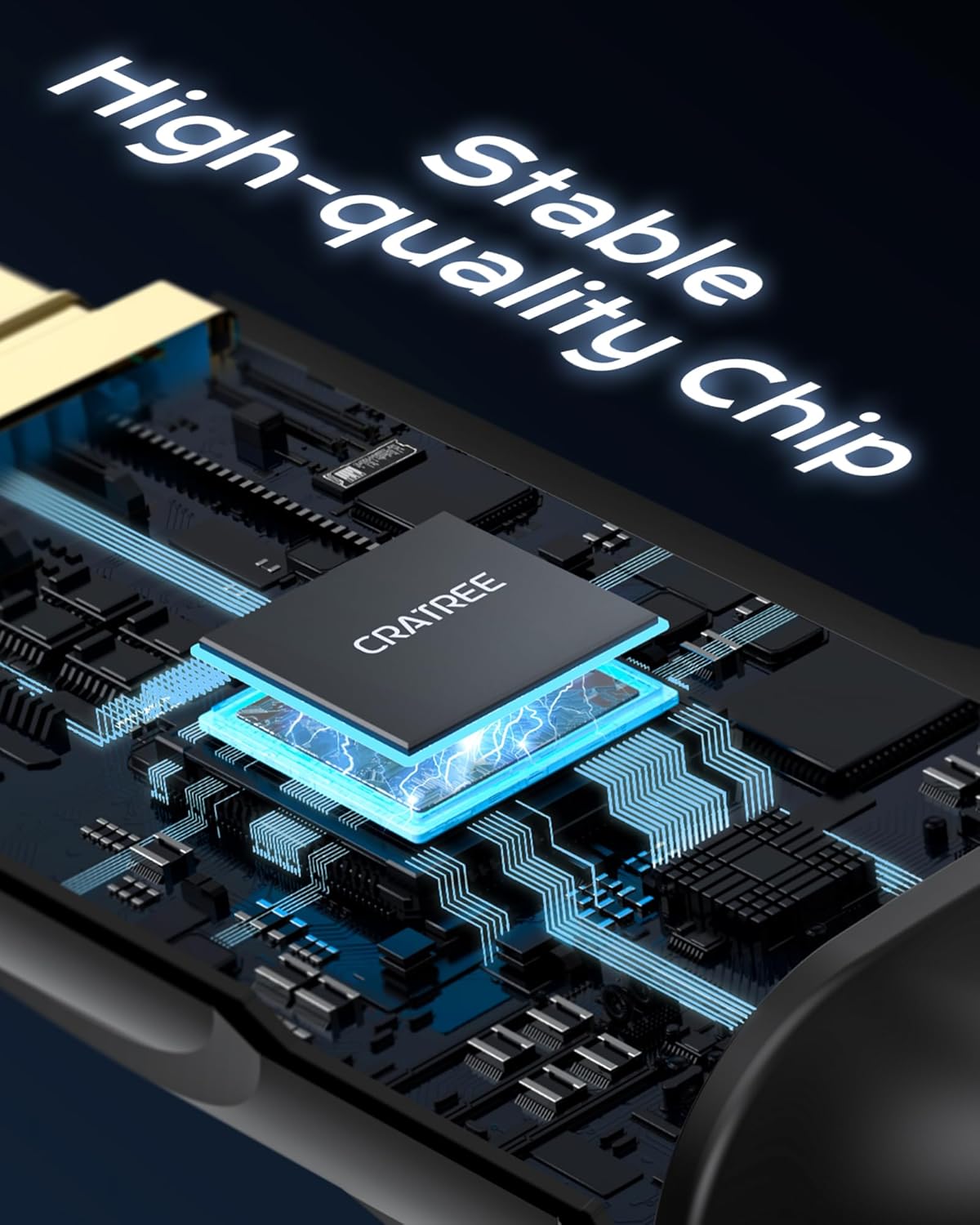
A micro-scenario: imagine mounting a projector on one side of a room and your console/streaming box on the other. With standard HDMI, longer lengths can cause handshake issues or degraded performance. With this kind of long fiber optic HDMI cable, the expectation is steadier signal delivery at higher specs across the distance.
Still, keep expectations grounded. Being able to support 4K120 or 8K60 depends on the entire chain (source device, display/device, and settings). A cable can’t force your TV or console to output those modes.
Where it shines vs. where it may fall short
This cable is at its best when distance is part of the problem. If you routinely deal with long runs between a media source (HDTV/DVR/players) and a TV, projector, or monitor, a fiber optic HDMI approach makes sense for the job.
It may be less ideal if: - you only need a short connection (in that case, simpler copper HDMI options often get the job done) - your setup is very basic and you don’t care about high refresh rates, HDR, or eARC (you may not be getting extra value)
What to check before you buy
Before you commit, double-check the “chain requirements.” Even with a cable that supports advanced formats, your equipment must match the features you care about.
Consider these quick checks:

- Confirm your source device and display support the targeted modes you’re buying for (for example, 4K 120Hz).
- If you plan to use audio through eARC, make sure your TV/audio system path actually uses eARC and supports it.
- Make sure the device negotiation/HDCP requirements matter for the content you watch (HDCP 2.2/2.3 is listed, but the rest of the chain still needs to line up).
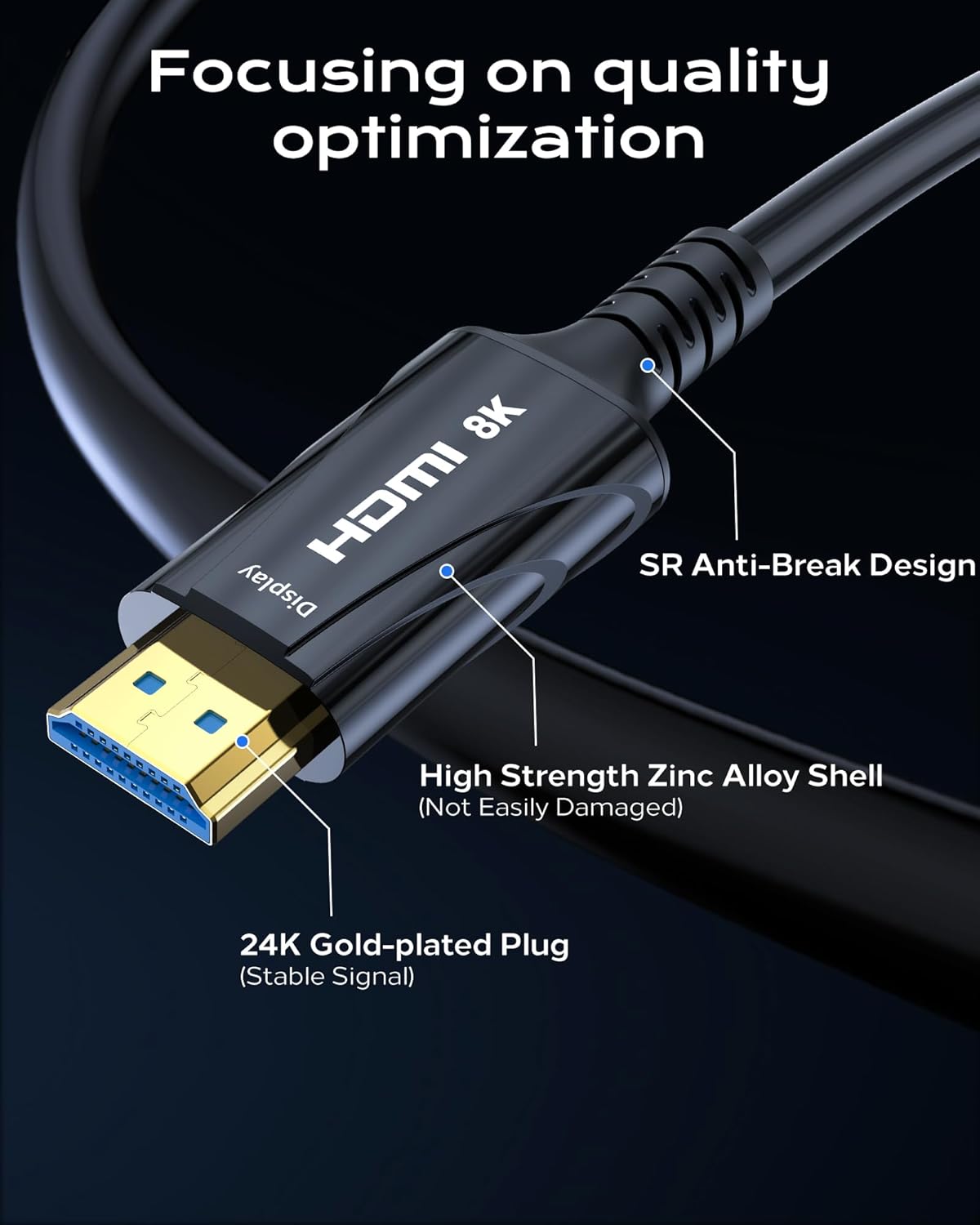
- If you’re routing the cable through tight spots, plan the cable handling—fiber cables can be less about “bend anywhere” and more about mindful installation.
And one note to keep in mind: the listing is strong on supported features, but it doesn’t spell out every practical detail (like connector style or installation constraints). If you’re running it in a very tight cabinet or around sharp corners, it’s worth planning the physical route first.
For who it’s a smart match—and who should skip it
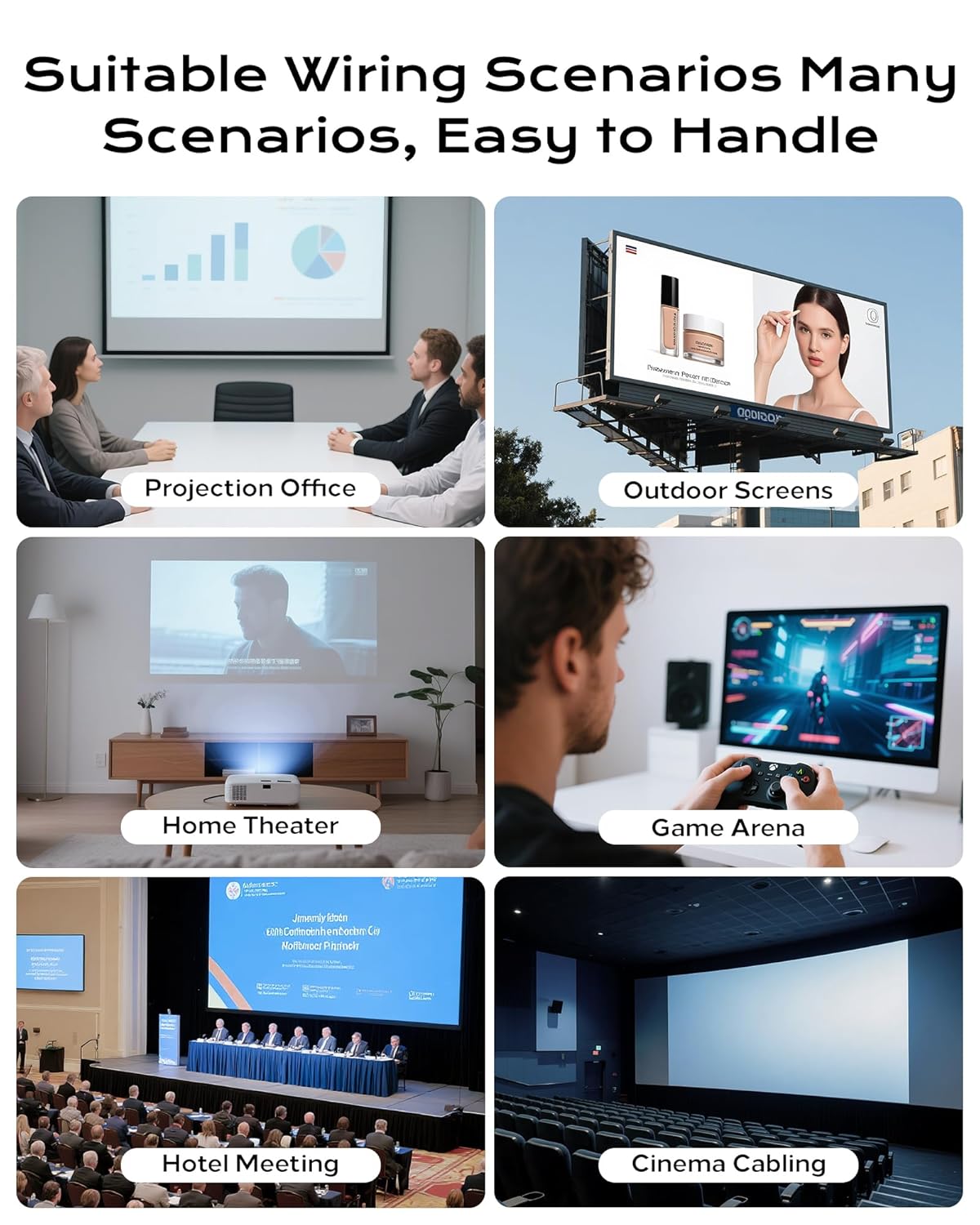
It’s a good fit if you’re building a home theater or AV setup where you need a long HDMI run and care about modern HDMI capabilities like HDR and eARC. It suits buyers who want to avoid the “it works but not at the settings I expect” problem.
It’s not the best match if your setup is short-distance or you only need basic compatibility. In those cases, paying for advanced specs and long cable length can feel like overkill.
Final verdict
Is it worth it? If you truly need a 100-foot HDMI connection and you want a cable built around HDMI 2.1-class bandwidth (48Gbps) with support listed for 8K 60Hz, 4K 120Hz, HDR10, eARC, and HDCP 2.2/2.3, it’s a strong “spec-forward” choice for long runs. It’s the kind of cable that makes sense when you’re trying to preserve performance across distance, not just make a connection.
But if your run is short, or you don’t care about the advanced refresh/HDR/audio features listed, you may not get meaningful value from a fiber optic cable like this. Match the purchase to your actual setup needs first, then let the cable do the job.

Mini FAQ
Will this cable work for a monitor or projector?
The listing says it’s compatible with monitor and projector, along with HDTV and DVD player devices, so it’s intended for those common AV connections.
What video quality and refresh rates does it support?
It lists support for 8K 60Hz and 4K 120Hz, with HDMI 2.1-class performance and 48Gbps.
Does it support HDR and eARC?
HDR10 is mentioned, and eARC is listed as supported. Your source and display must also support those features for it to matter.
Does it handle HDCP?
HDCP 2.2 and 2.3 are listed, which is relevant for protected content playback when the rest of the system supports those standards.
Is 100FT the right length for my setup?
It’s only worth buying at this length if you actually need that distance. Otherwise, a shorter cable can be a simpler, more practical choice.