

CONMDEX 16K HDMI 2.2 Cable (6.6ft) for Stable 8K/120Hz & 4K/240Hz Connections
Product description
What this cable is for (and why stability matters)
If you’ve ever had an HDMI link that “works” for a minute and then starts acting up—black screens, flicker, random dropouts, or shaky VRR behavior—you already know the real problem isn’t just picture quality. It’s signal consistency when bandwidth demand stays high.
The CONMDEX 16K HDMI 2.2 Cable (6.6ft) is built around that idea: keep the connection stable under sustained load, so you get a more consistent handshake and fewer of the negotiation-type issues that show up more often with cheaper high-bandwidth cables. The pitch here is pretty straightforward: less drama between your gaming console, PC, TV, monitor, or soundbar and more “it just keeps working.”
Key takeaways from the spec claims (the parts that affect buying decisions)
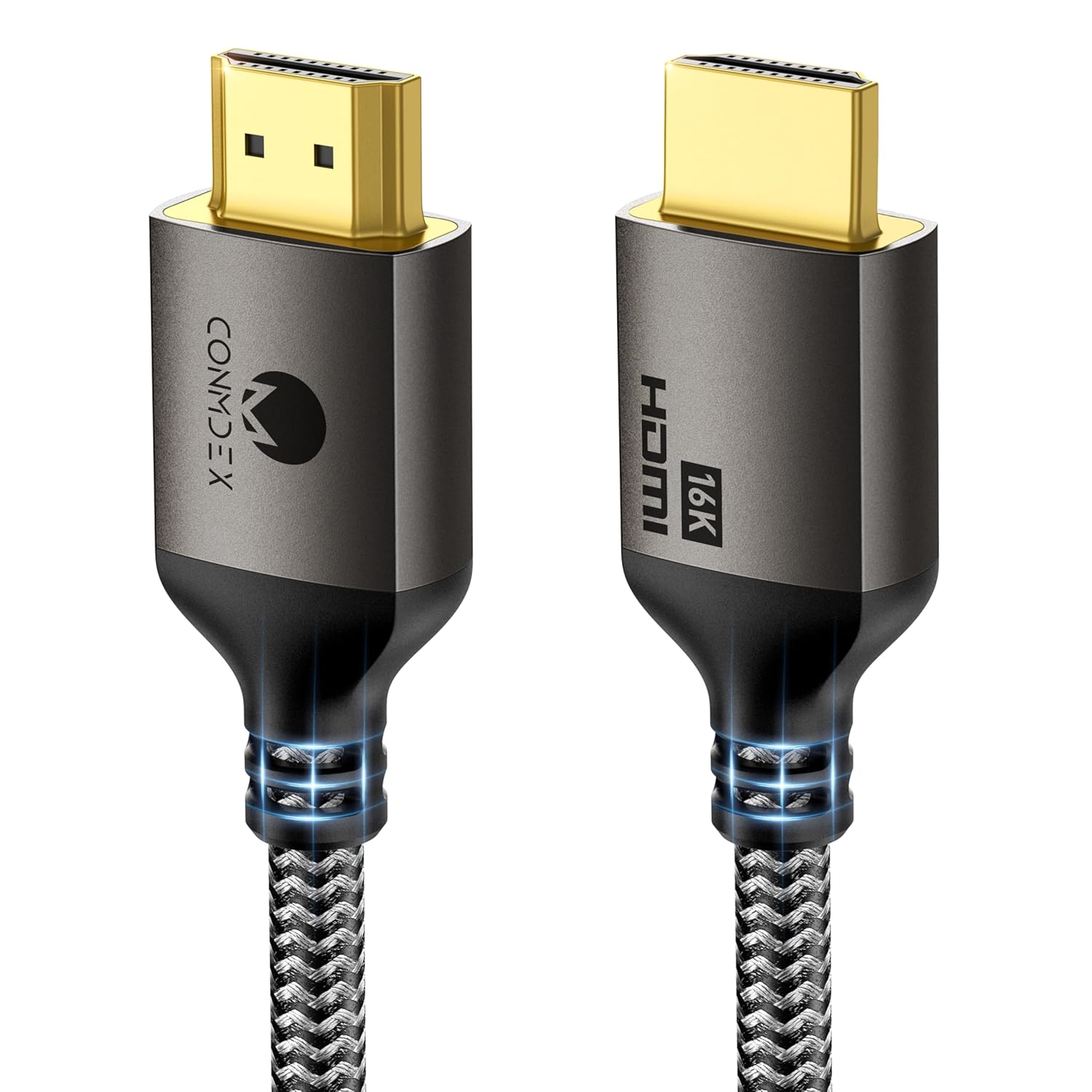
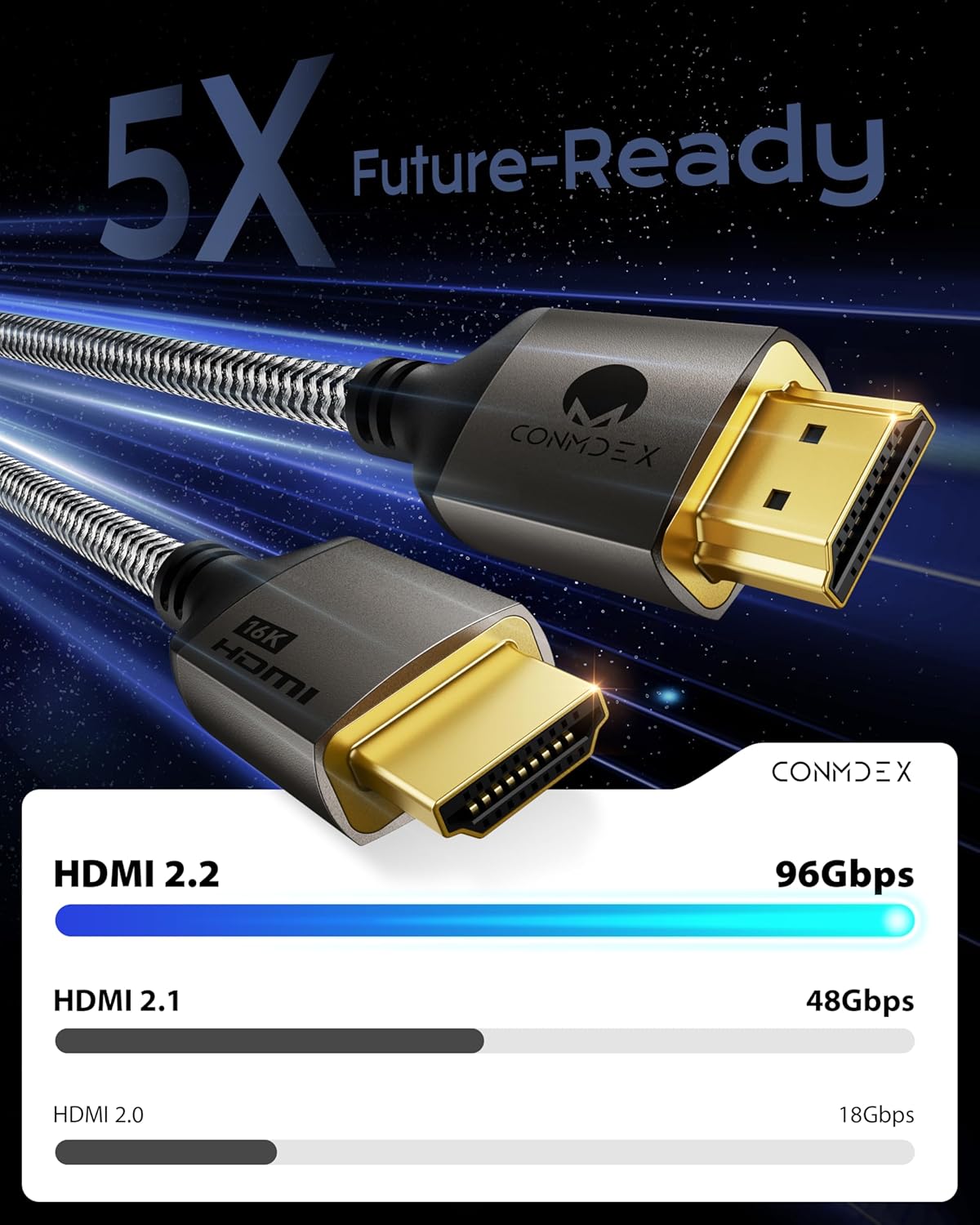
On paper, this is a high-bandwidth HDMI cable positioned for modern gear and higher refresh targets. It’s described as supporting up to 8K@120Hz and 4K@240Hz, with features called out for gaming and entertainment workflows like eARC, HDR, and VRR.
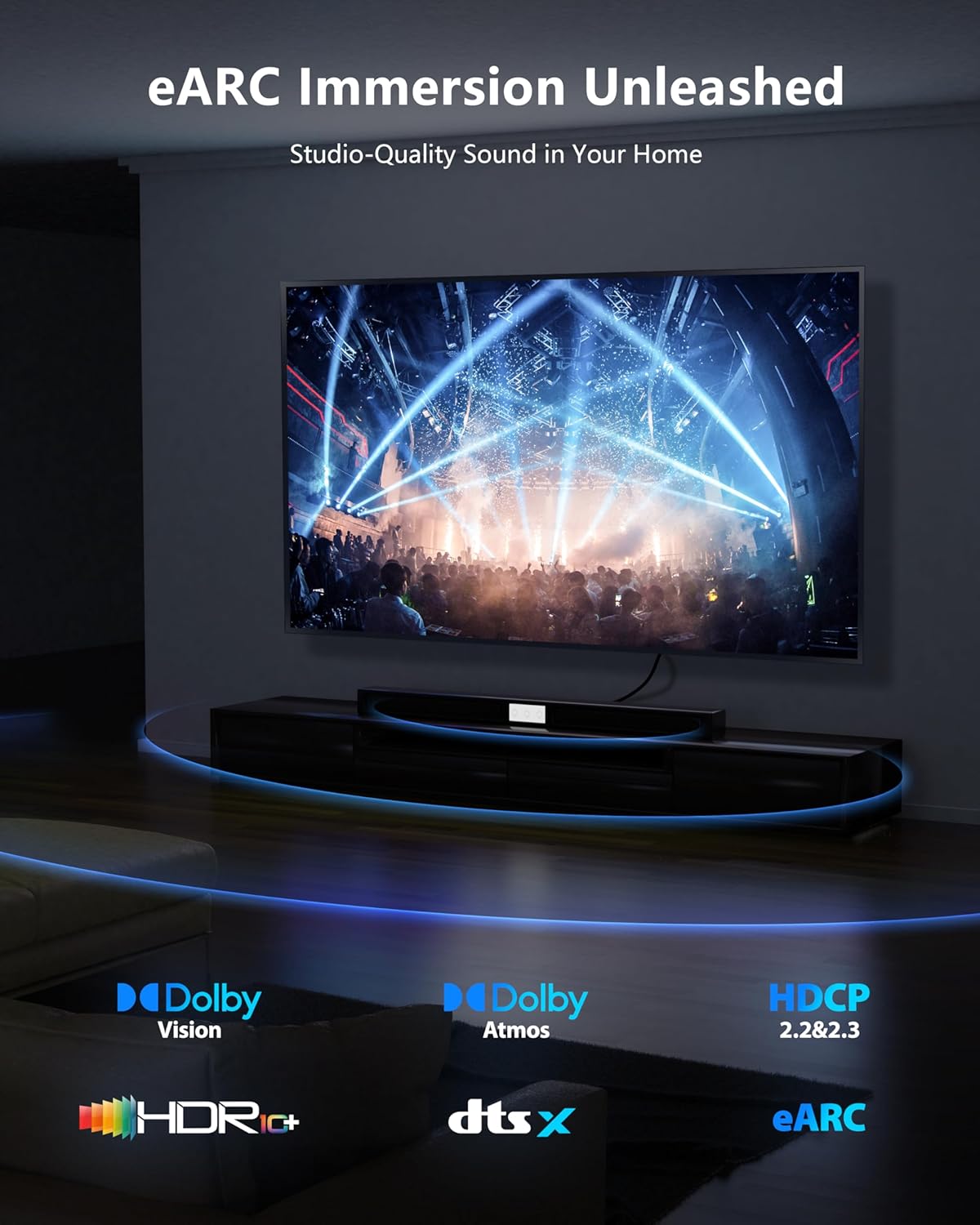
Two things stand out for decision-making. First, it’s specifically framed as designed for smoother VRR behavior during fast action—where unstable links can be most noticeable. Second, it emphasizes eARC reliability for audio, aiming to reduce soundbar connection glitches and audio cutouts that can lead to lip-sync problems.
That said, no cable can magically “fix” every source/device setup issue. If your TV/receiver/monitor settings aren’t configured for the features you want (like the right HDMI mode), you may still see quirks—this cable helps with link stability, not with misconfigurations.
Where it shines in everyday setups
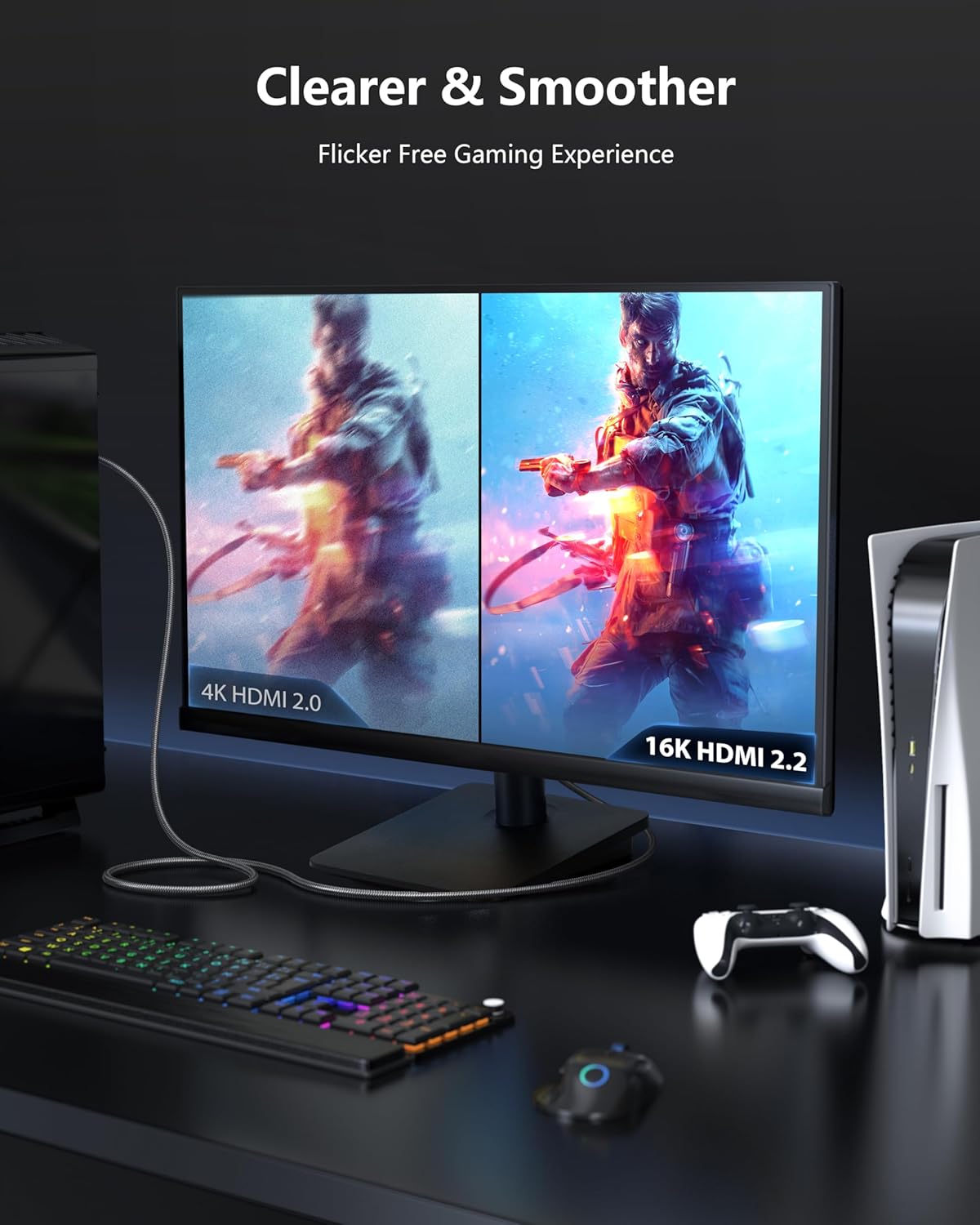
Think of this cable as a practical upgrade when you care about keeping your high-refresh gaming session and your home theater audio behaving the same way session after session.
A common micro-scenario: you boot your console, jump into a VRR-enabled game, and then notice the screen flicker or brief black moments when things get intense. In setups like that, the cable’s focus on avoiding instability under sustained bandwidth load is exactly the use case it’s aiming at. Pair it with a monitor or TV that can actually run the stated refresh targets, and the whole “stable link” concept becomes more meaningful.
For audio, the eARC angle is relevant if your soundbar setup tends to cut out or fall out of sync. If you rely on advanced audio pass-through, this cable is presented as designed to carry that cleanly.
What you’ll notice day to day
The cable’s construction details are part of why it’s positioned as a durable, long-term option rather than a disposable accessory. It’s described as using 30AWG copper conductors, triple-layer shielding, a braided nylon outer jacket, and gold-plated connectors.
It also includes a durability claim: connectors tested for more than 10,000 cycles. That matters if you plug/unplug devices often or if your setup requires cables to move around slightly during rearranging.
Still, remember: cable length matters. At 6.6ft, it should fit many living rooms and monitor desks, but if your layout is more spread out, you may need to look at a different length option.
Tech details that matter (and what they don’t)
Below is what’s explicitly stated in the product information and how it impacts the purchase decision:
- Supports up to 8K@120Hz and 4K@240Hz
- Includes HDMI eARC support for advanced audio transmission
- Features listed: HDR and VRR
- “16K” / HDMI 2.2 positioning with 96Gbps headroom claim
- Cable length: 6.6ft
What it doesn’t tell you (at least in the info provided) is things like whether there are specific certifications beyond the stated claims, or how it will perform in every possible environment (long cable runs, extreme interference, unusual ports). So it’s best treated as a stability-focused upgrade for compatible gear.
Is it the right fit for your setup?

It’s not for everyone, but it does make sense for a specific kind of buyer.
It’s a great fit if you prioritize stable HDMI connections for high-bandwidth gaming and want eARC audio to be less glitch-prone with a soundbar. It makes sense if you’re using a PS5, Xbox Series X (or Series S), a high-end PC, and you’re trying to stay consistent at higher refresh targets like 4K/120 or even above, depending on your display’s capabilities.
It may not suit you if your setup is mostly 1080p/60 and you don’t care much about VRR, HDR, or eARC—at that point, spending on a stability- and bandwidth-heavy cable may feel like overkill. Also, if your goal is a very long-distance run, the 6.6ft length could be a limiting factor.
Buying verdict
Not perfect in the sense that no cable removes every variable in complex HDMI systems—but as a stability-focused HDMI upgrade, the CONMDEX 16K HDMI 2.2 Cable is built for buyers who actually use VRR, HDR, and higher refresh modes.
If your current cable is causing handshake hiccups or audio dropouts, this is the kind of switch that can make the experience feel smoother. If you’re buying for simple, low-bandwidth use, you may want to skip the extra complexity and cost.
Mini FAQ
Frequently asked questions
Does this cable improve picture quality? The information provided focuses more on stability under high bandwidth (black screens, flicker, and VRR dropouts) than on “cosmetic” improvements.
Is it meant for gaming? Yes—gaming use is a core part of the description, with references to VRR and higher refresh targets.
Will it help with soundbar audio issues? It’s positioned to support reliable eARC transmission, which is aimed at reducing connection audio cutouts and lip-sync problems.
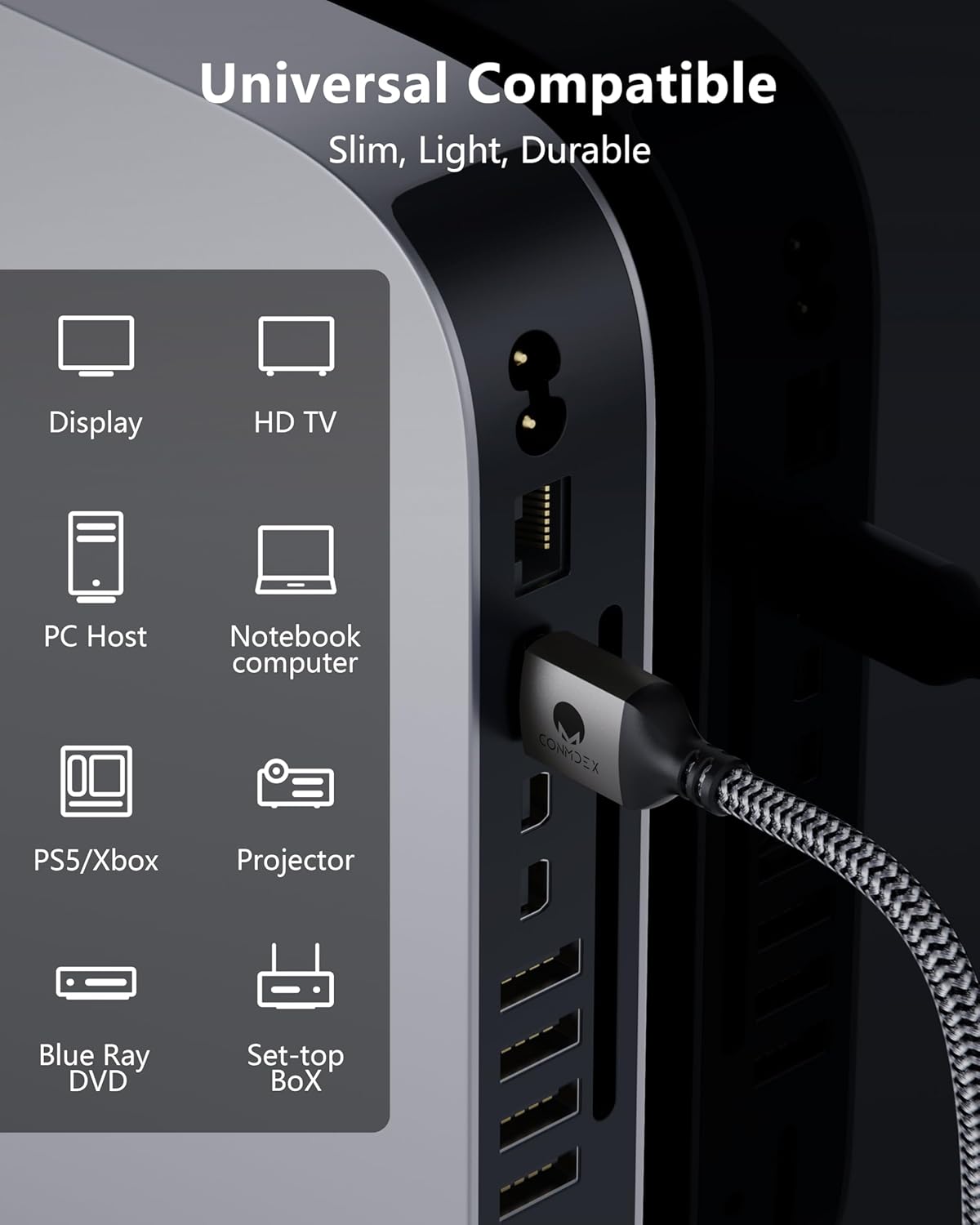
Is this compatible with older HDMI devices? It’s described as plug-and-play and compatible with older HDMI standards like 2.1, 2.0, and 1.4 (as stated).
Should you buy it if you already have an HDMI cable?**
Only if you’re seeing the kinds of instability the description calls out. If your current setup is already stable, the benefit may be smaller than you’d hope.