

1.2Gbps Dual-Band WiFi Extender (EasyMesh Compatible) with Ethernet Port — up to 12,880 sq. ft. coverage
Product description
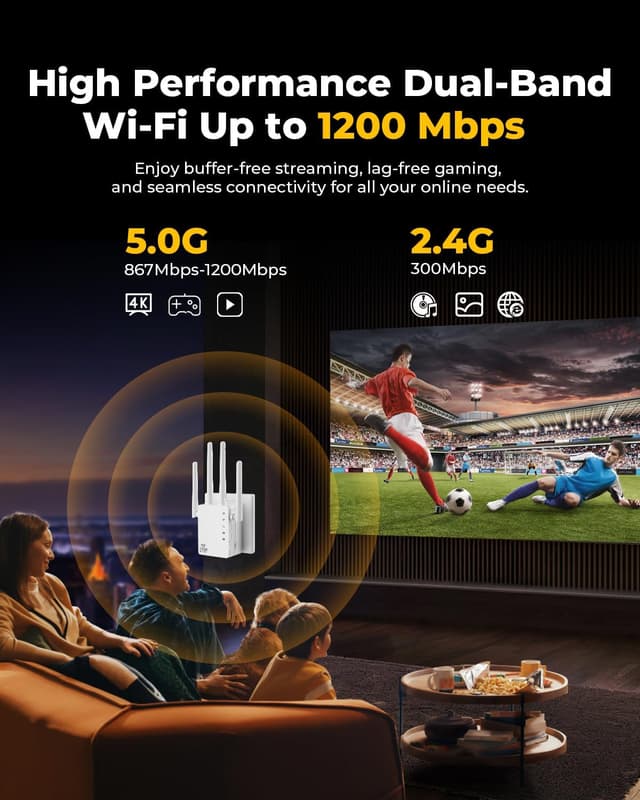
If your WiFi drops the moment you walk into another room—or your video calls start stuttering—this dual-band WiFi extender is built for that exact problem. The 1.2Gbps Dual Band WiFi Extender pushes both 5GHz and 2.4GHz coverage farther, aiming to keep signal strength steadier across a larger home.
It’s also designed around modern home networking, with EasyMesh compatibility so setup can be simpler and your WiFi can stay more unified while you move around. Still, it’s worth being realistic: an extender is a signal booster for coverage, not a magic replacement for a weak router or a home with major dead zones that need different solutions.
At a glance: what this extender is for
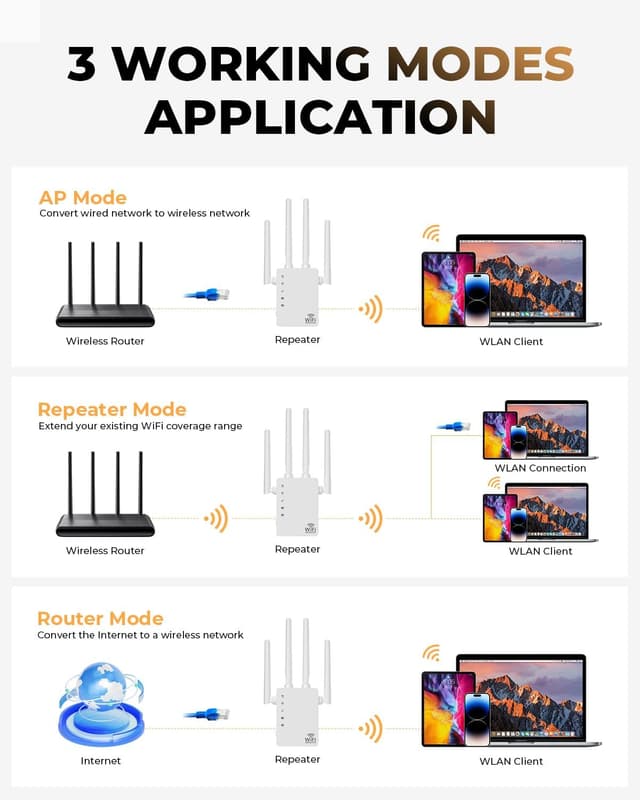
This model is a signal booster that extends WiFi coverage using dual-band support (5GHz/2.4GHz). On paper, it targets the kinds of daily tasks where reliability matters—high-definition streaming, online gaming, and video calls—while also supporting a growing number of connected devices.
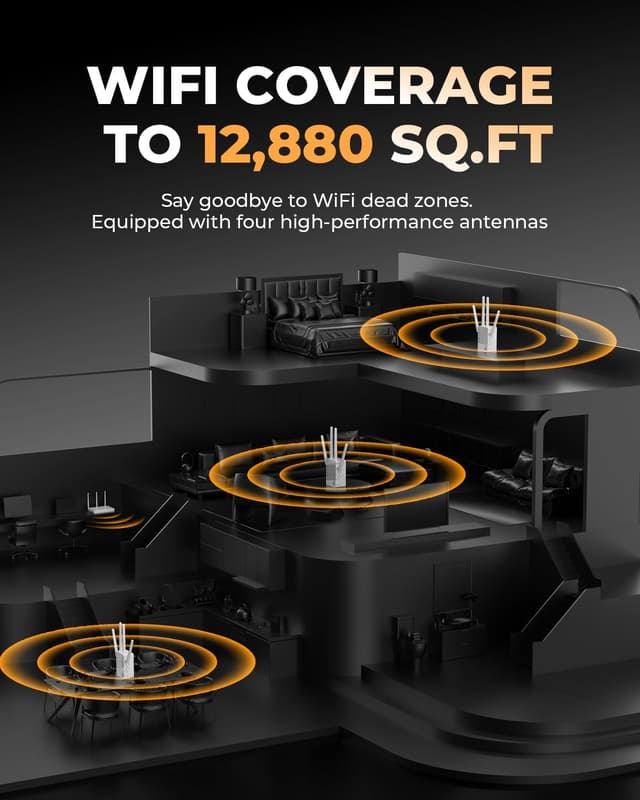
The coverage claim is up to 12,880 square feet, which suggests it’s aimed at medium-to-large homes where WiFi has to reach multiple levels (for example, from basements to upper floors). It also includes a dedicated Ethernet port, giving you a more stable wired option for devices that benefit from lower latency.
Key points: where you’ll notice the difference
If you’re tired of reconnecting, buffering, or having one spot in your home that “just doesn’t work,” this extender’s goal is consistency. By extending both bands, it gives your network more flexibility depending on distance and device needs.
For real-world usage, think about moving from a living room to a bedroom that’s farther from the router. With an extender like this, your device doesn’t have to hunt for whatever signal it can find as you change rooms. And if you can place it strategically, streaming and calls are more likely to stay smooth rather than constantly wobble.
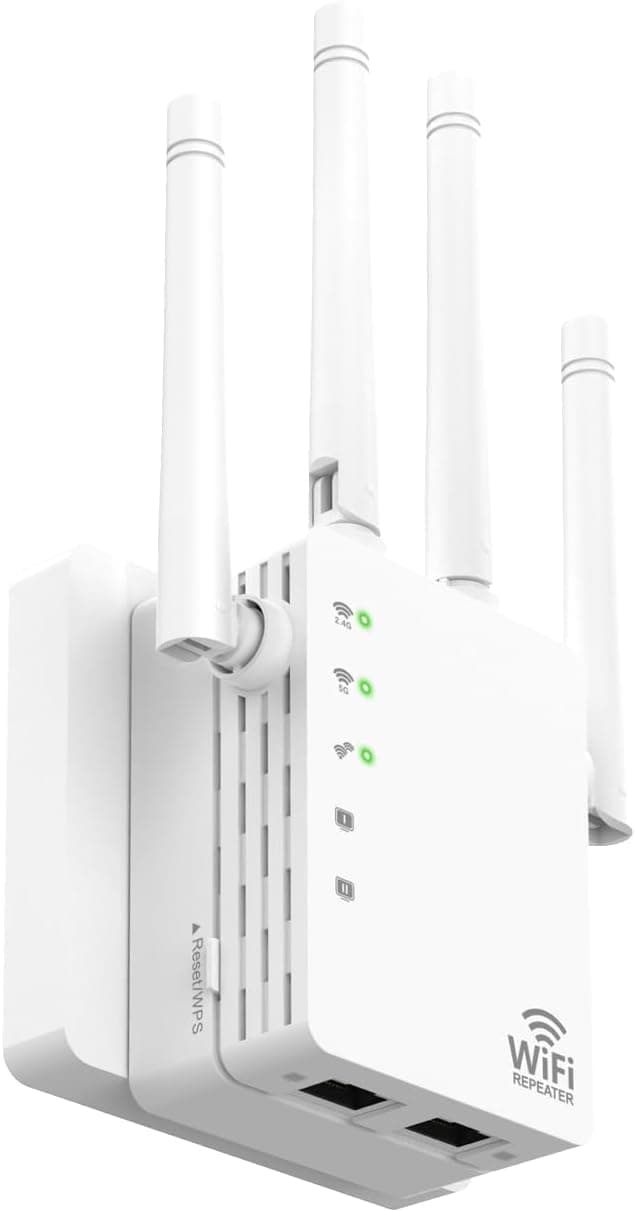
One practical bonus is that Ethernet port. If you have a desktop, a game console, a TV streaming box, or another device where you’d rather not rely on WiFi, using the wired connection can help those sessions feel steadier.
What matters most: compatibility and connection capacity
The package is positioned for EasyMesh-enabled routers. If your router supports EasyMesh, this matters because it can reduce the hassle of setting up a separate network name and helps keep the experience more consistent as you roam.
On device load, it’s described as supporting up to 105 connected devices at once. That’s a strong “family of gadgets” figure for smart home setups—things like sensors, lights, plugs, phones, tablets, and streaming devices all in the same household. Just keep in mind that real performance still depends on your original router and how busy your network gets.
Also, it uses 5GHz/2.4GHz dual-band operation, so you’re not stuck with only one type of signal. That’s helpful because 5GHz is often better for speed while 2.4GHz can be better at reaching farther through obstacles.
The essentials: specs that affect buying decisions
Here are the details that influence how to think about this extender:

- Dual-band support: 5GHz and 2.4GHz
- Transmission speed: 1.2Gbps
- Coverage: up to 12,880 square feet
- EasyMesh compatibility: designed to work seamlessly with EasyMesh-enabled routers
- Connected devices supported: up to 105 devices
- Ethernet port: yes, for a wired connection option
A small limitation to keep in mind: “more speed” claims are only as useful as your router’s capability and the quality of the connection between the extender and your main network. If the extender is placed too far from the router, you can end up boosting a weaker signal rather than improving overall performance.
Who it’s for (and who should think twice)
This WiFi extender makes the most sense if you have: - Coverage gaps across multiple floors or distant rooms - Households with lots of connected devices - An EasyMesh-capable router and you want the setup/roaming experience to feel more unified - At least one device you’d consider running via Ethernet for steadier performance
It might not be the best fit if: - Your main issue is not coverage but overall router performance (extenders won’t fix a fundamentally underpowered router) - You’re expecting the extender to provide “full-speed” everywhere, regardless of distance—placement still matters a lot - You don’t have an EasyMesh-enabled router and you need a smoother roaming experience than a basic extender typically provides
Getting the most from it: placement and setup habits
To get the intended coverage boost, placement is usually the difference between “it works” and “it works well.” A common approach is to position the extender somewhere between the router and the weak areas, not right next to the router and not all the way at the edge where the WiFi is already struggling.
After setup, pay attention to the locations you care about most: where streaming gets choppy, where gaming feels laggy, or where video calls drop quality. If those spots are still weak, you may need to adjust placement rather than assuming the specs guarantee results everywhere.
Should you buy it?
Buy this 1.2Gbps dual-band WiFi extender if you want broader WiFi coverage across a larger home, you’re running an EasyMesh-enabled router, and you have a decent mix of streaming, calls, and gaming where consistency matters. The included Ethernet port is a nice practical touch if you want a wired option for latency-sensitive devices.
You may want to skip it if your main bottleneck is poor router performance or if you know your coverage issues require a different strategy than a signal booster. And if you’re buying without an EasyMesh-compatible router, just be aware that the “seamless” unified experience is more dependent on that compatibility.
Mini FAQ
Does this extender support both 5GHz and 2.4GHz?
Yes. It’s described as a 5GHz/2.4GHz dual-band signal booster.
Is it compatible with EasyMesh routers?
It’s specifically described as EasyMesh compatible, intended to work seamlessly with EasyMesh-enabled routers.
What devices can it support at once?
The product description says it supports up to 105 connected devices at once.
What’s the Ethernet port for?
The description notes a dedicated Ethernet port, giving you a wired connection option for devices that may benefit from lower latency and more stable performance.
How much coverage does it claim?
It’s listed as extending coverage up to 12,880 square feet.