

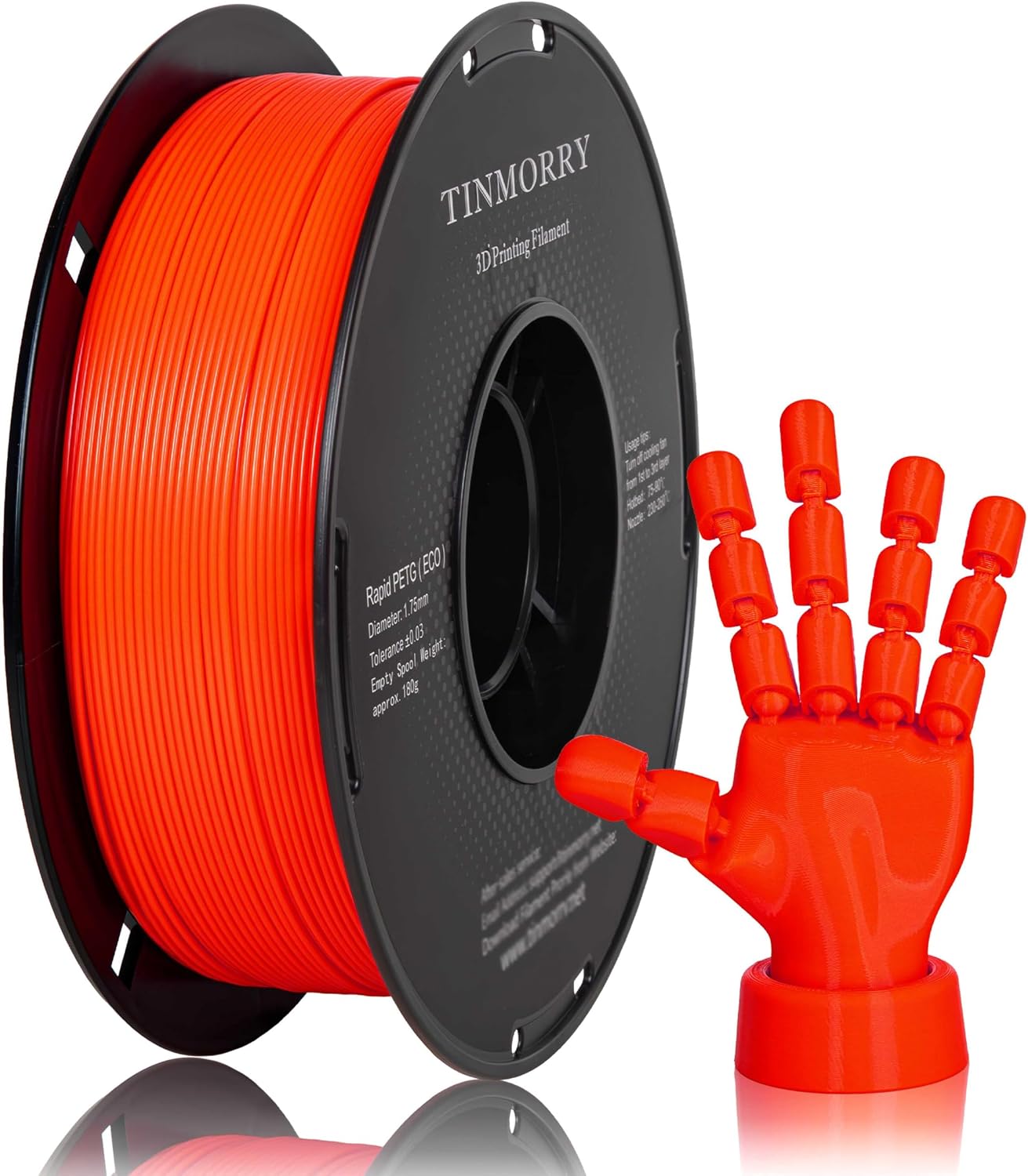
TINMORRY Rapid PETG-Eco PETG Filament 1.75mm (Grey) – 1 kg spool for most FDM 3D printers
Reviews
Price
Product description
What it is and why people buy PETG-Eco
TINMORRY’s Rapid PETG-Eco is a 1.75mm PETG filament on a single 1 kg spool, aimed at FDM printing where you want something more forgiving than the more brittle end of the plastics range. PETG is popular because it tends to balance decent strength with easier real-world printing compared with tougher engineering materials.
This one is positioned around “rapid” printing and a tidy feeding experience. On paper, it’s meant to help you get consistent surface results even when you push speeds, while also staying less prone to jams and tangles than some PETG spools. That’s a sensible brief for anyone who prints regularly—workshop prototypes, functional covers, brackets, and everyday parts—rather than only occasional decorative models.
Still, PETG is not magic. If your printer setup is poor (wet filament storage, wrong temps, or messy first-layer adhesion), you’ll feel it. The biggest limitation to keep in mind is that the guidance provided is quite specific about drying and humidity control.
What matters most in day-to-day printing
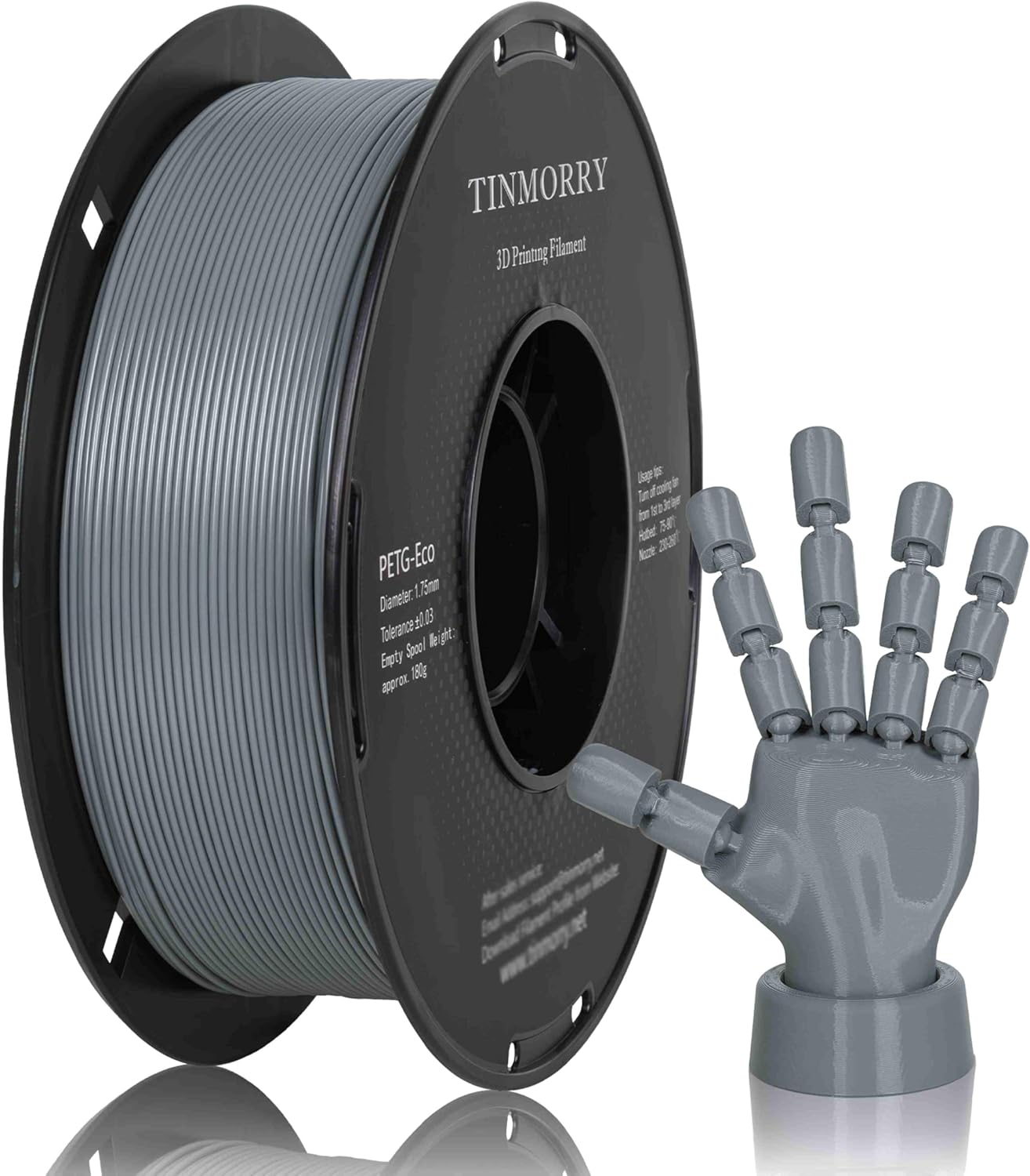
Where this filament earns its keep is mostly in the practical bits: consistent feeding, layer bonding, and a print profile that’s intended to be workable on many FDM machines.
For example, the recommended approach is to dry the filament before use (to get the maximum quality). Then, during printing, keep moisture exposure low—specifically, the advice is to print and store with humidity under 20% RH using a sealed container and desiccant. That matters because PETG quality can slip when moisture creeps in, showing up as stringing or rougher surfaces.
There’s also guidance on first-layer adhesion: it suggests turning off the cooling fan for the first three layers. That’s a small change with a big effect on whether the base layer sticks smoothly instead of lifting or looking uneven.
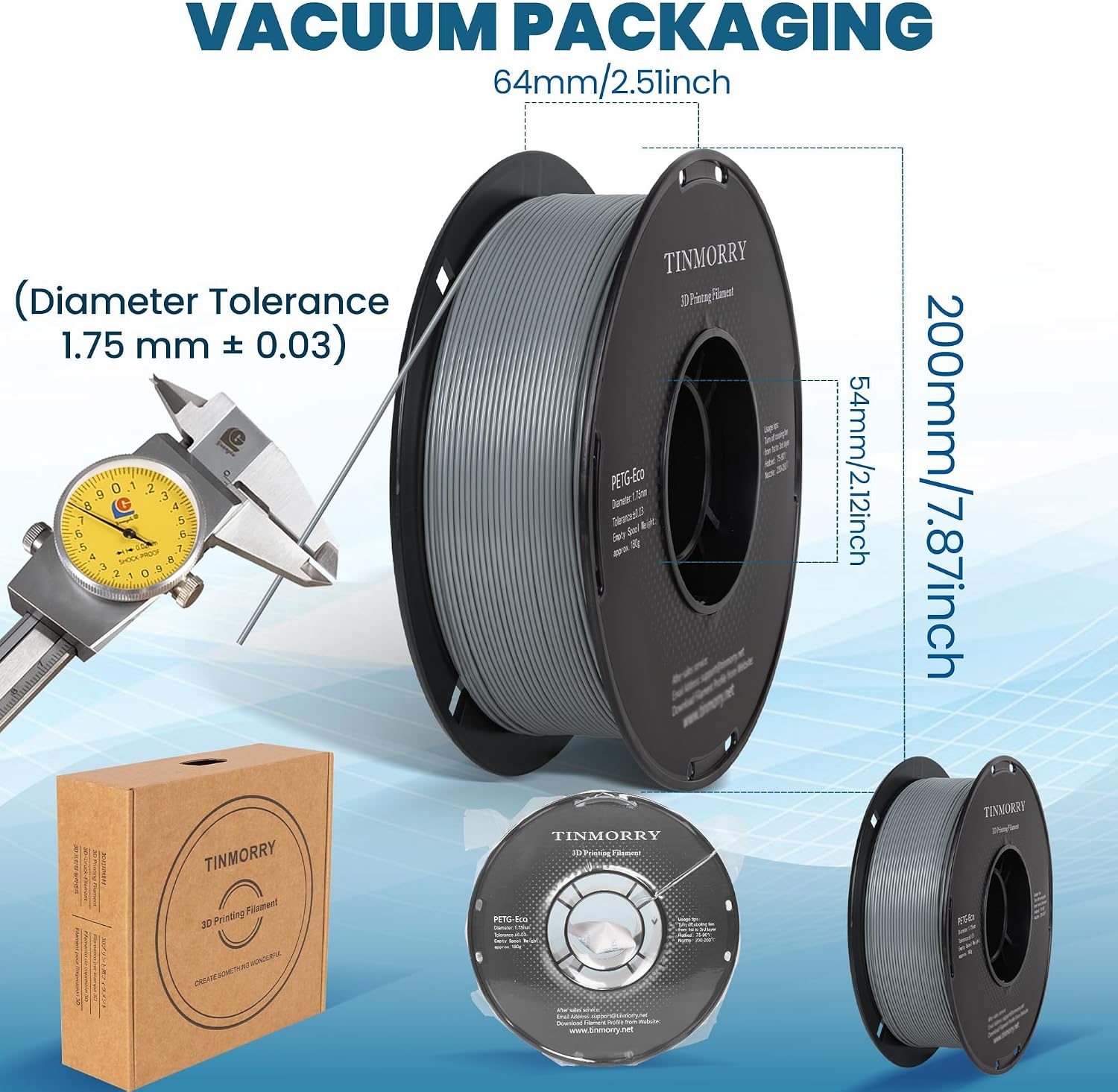
And the “rapid” angle is supported by a stated claim of high-speed printing up to 300 mm/s. Whether your printer truly sustains that depends on your hardware and tuning, but it does indicate that the filament is designed to handle faster workflows without immediately falling apart.
Tech specs you should look at before committing
Technical details
- Name: PETG Filament 1.75mm (Rapid PETG-Eco)
- Type: PETG
- Format: Filament for FDM 3D printing
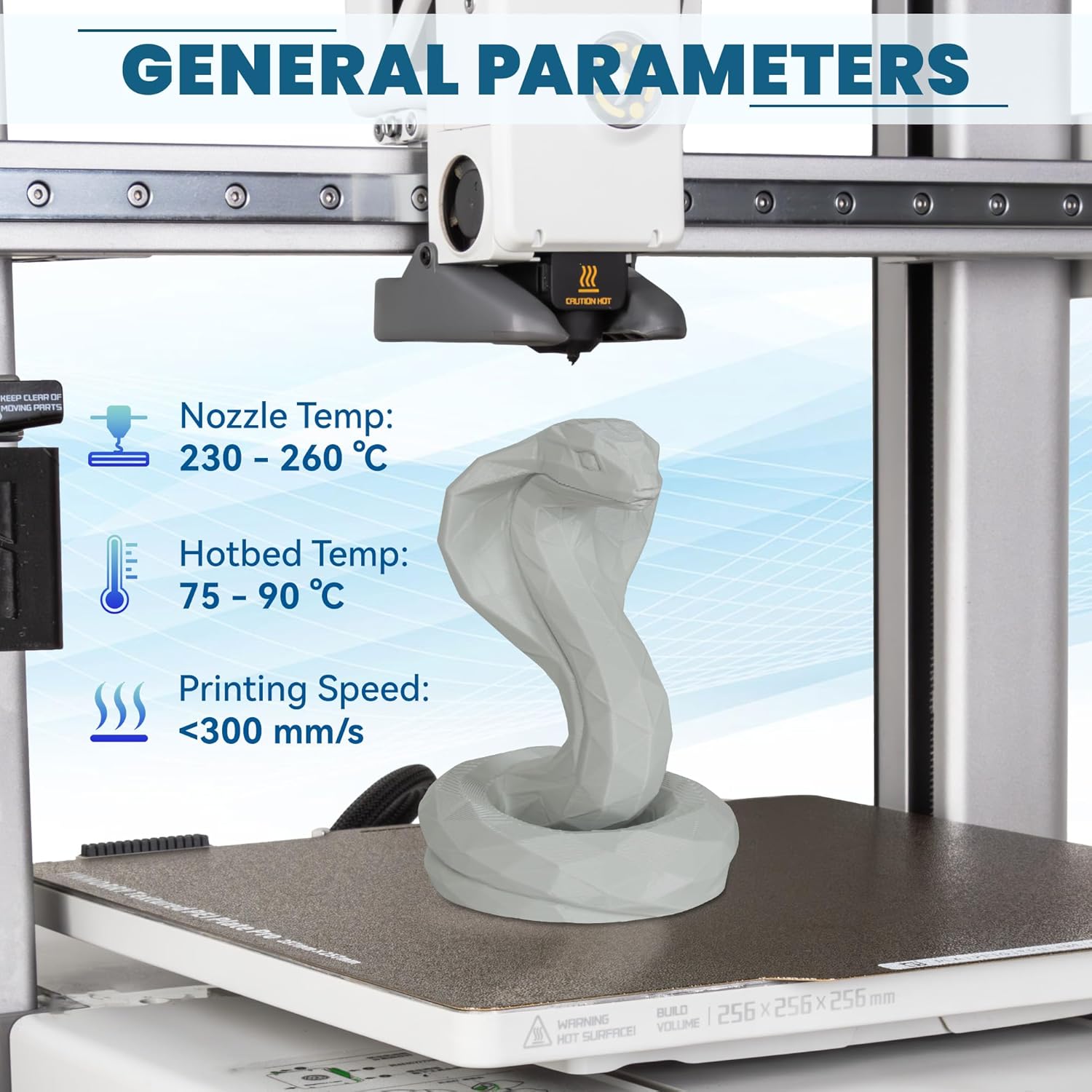
- Size: 1.75mm diameter (stated as 1.75 ± 0.03 mm)
- Capacity: 1 kg spool (single spool)
- Colour: Grey
- Nozzle temperature range: 230–260 °C
- Heated bed temperature range: 75–90 °C
- High-speed printing support (stated): up to 300 mm/s
- Drying guidance (before use): 65 °C for 8 h
- Humidity guidance: maintain < 20% RH (with sealing and desiccant)
Where it shines (and where it can fall short)
If you’re aiming for a practical, more durable PETG than basic filaments, this is the type of spool to consider. The notes mention high hardness, low shrinkage, and strong layer adhesion, plus a comparison that it’s more robust and longer-lasting than PLA across a wider range of applications.
That “less shrinkage / better layer bonding” is exactly the kind of thing you notice when printing functional shapes: parts that need to hold their form reasonably well, or items that will be handled more often.
On the downside, the same guidance that makes it promising also makes it slightly less plug-and-play. If you don’t dry properly or you can’t keep the filament in a sealed, low-humidity storage setup, PETG can disappoint. The recommended humidity control isn’t optional if you care about the surface finish.

Also, the high-speed claim may not translate directly to every printer. Even with a compatible filament, sustained 300 mm/s depends on your printer’s motion system, cooling setup, and overall tuning. If you tend to run stock profiles at conservative settings, you might not “feel” the rapid benefit as strongly.
Getting the best results: practical usage tips
A good way to think about this spool is: follow the workflow, and it’s more likely to behave. The instructions given are refreshingly clear:
Start with drying: dry at 65 °C for 8 h before printing, particularly if the filament hasn’t been stored well. Then print with a sealed approach so humidity exposure stays low.
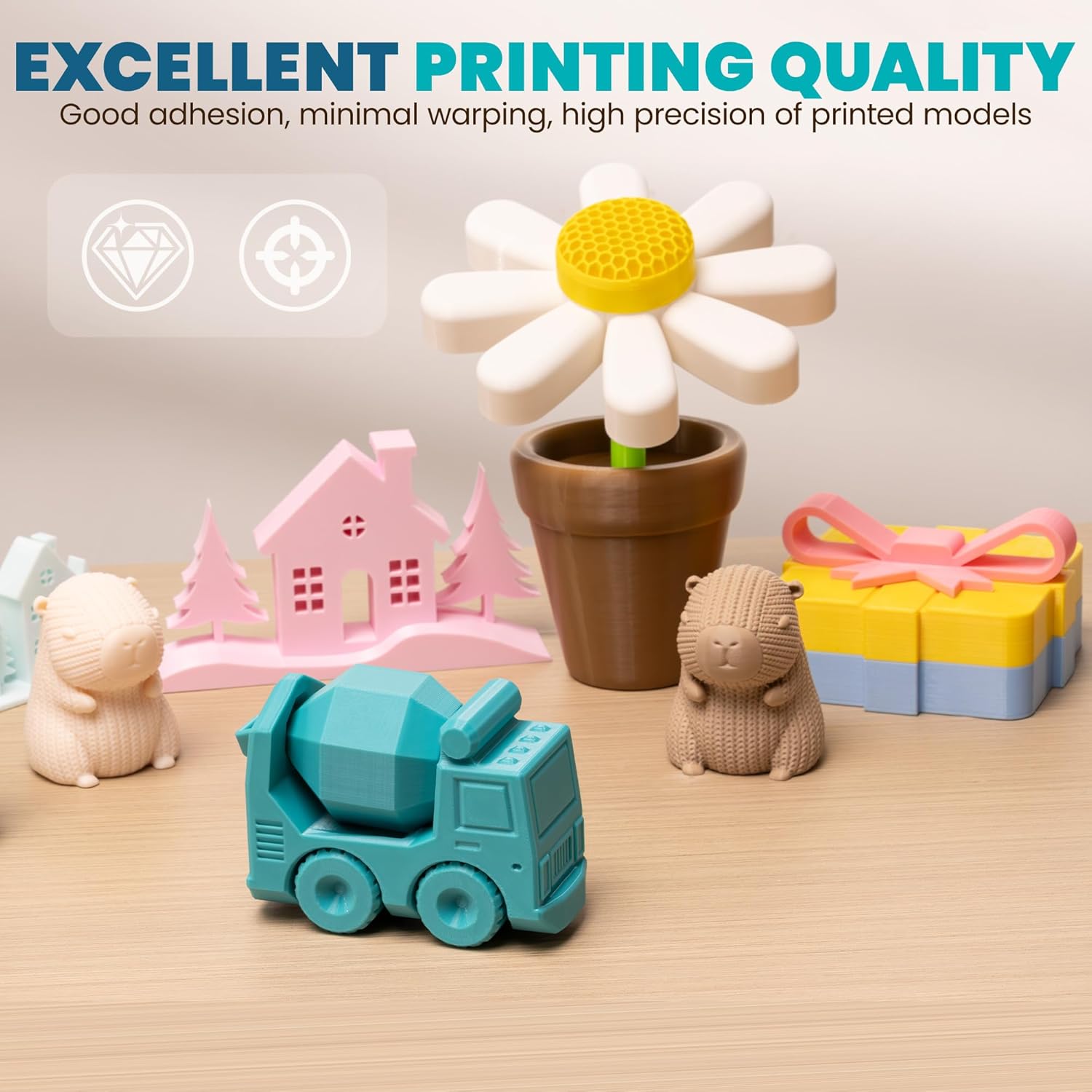
For temperature, the suggested nozzle range is 230–260 °C and the bed is 75–90 °C. If your parts struggle to stick, the document specifically points to first-layer adhesion by switching off the cooling fan from the first to the third layer.
Micro example: imagine printing a small utility clip. You’d dry the spool first, set your nozzle/bed within the recommended ranges, and run the first few layers without fan cooling. Once the part has a solid base, you can move to the rest of the print, which should help the clip maintain shape rather than warping at the edges.
Finally, there’s an emphasis on reduced nozzle obstruction and improved print quality versus other PETG brands (as claimed). You can take that as a hint that it’s designed to be smoother at the nozzle, but you still shouldn’t ignore routine maintenance if you’re regularly printing.
Is it worth it?
Worth considering if you want PETG on a 1.75mm spool that’s geared towards faster FDM printing workflows and stronger layer bonding, and you’re willing to follow the provided drying and humidity guidance.
It’s not the best match if you mainly print infrequently without a way to store filament in a sealed, low-humidity container. In that scenario, the filament may end up fighting moisture issues, and you’ll likely get better results by focusing on storage first.
You’ll probably get the most out of it if you’re printing functional parts where sturdiness, low shrinkage, and consistent layers matter—especially when you’re trying to improve throughput.
Quick FAQ
Questions shoppers usually ask
Do I really need to dry PETG-Eco before printing? The guidance says drying before use is recommended to get maximum print quality, so it’s something worth treating as part of the routine rather than an optional step.
What temperatures should I start with? The suggested nozzle temperature is 230–260 °C and the heated bed 75–90 °C. Your exact start point will depend on your printer, but those ranges are the baseline given.
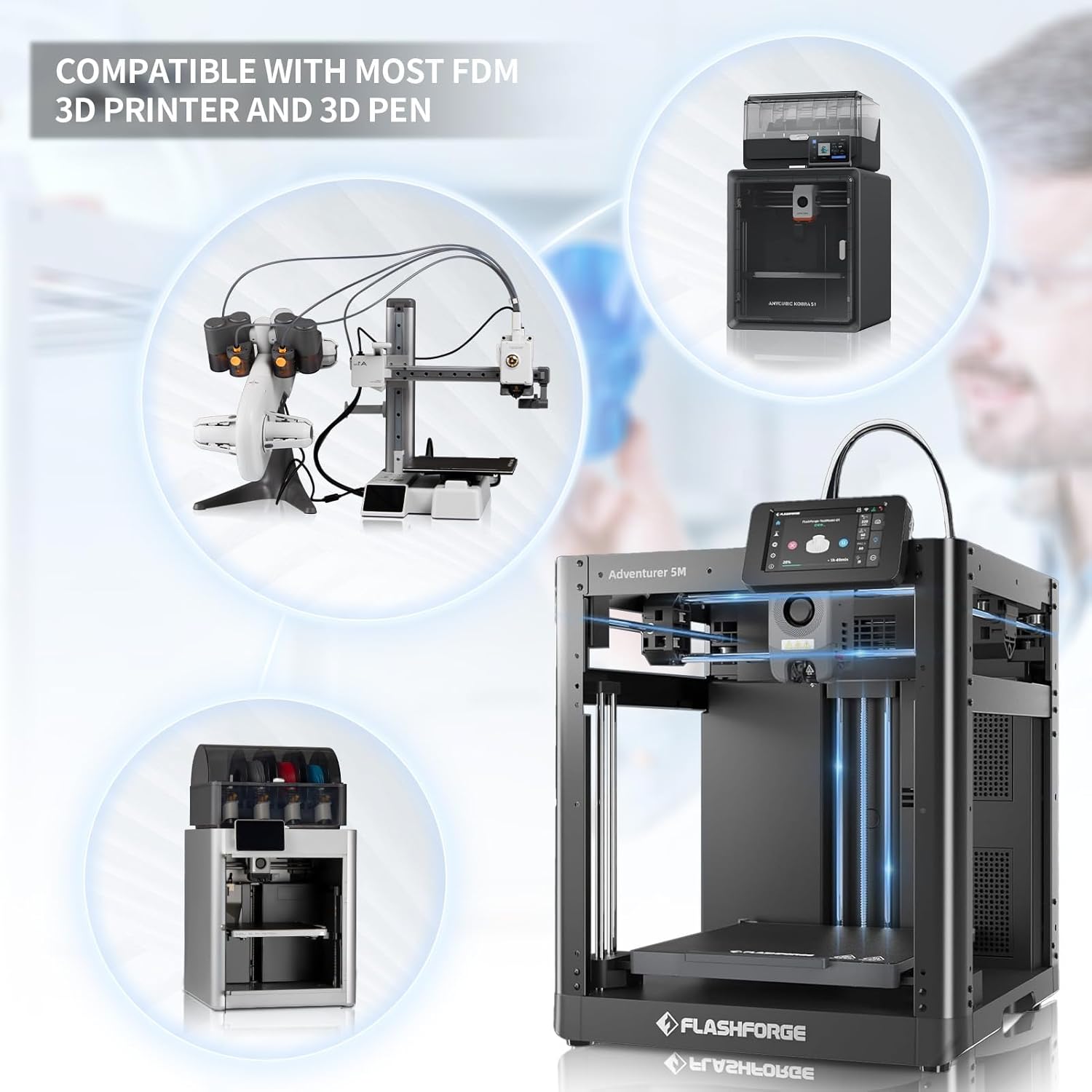
Can I use this filament on most FDM printers? The information states it’s compatible with most FDM 3D printers that use 1.75mm filament.
Is the high-speed claim realistic for my printer? It’s stated to support up to 300 mm/s, but real results depend on your printer tuning and setup. If you run more conservative speeds, you may still benefit, just not see the full “rapid” effect.
How do I prevent printing problems like clogs and tangles? The notes mention improved feeding behaviour and reduced nozzle obstruction, but they also stress low-humidity storage and drying. Those two factors are usually what make the biggest difference in PETG behaviour.