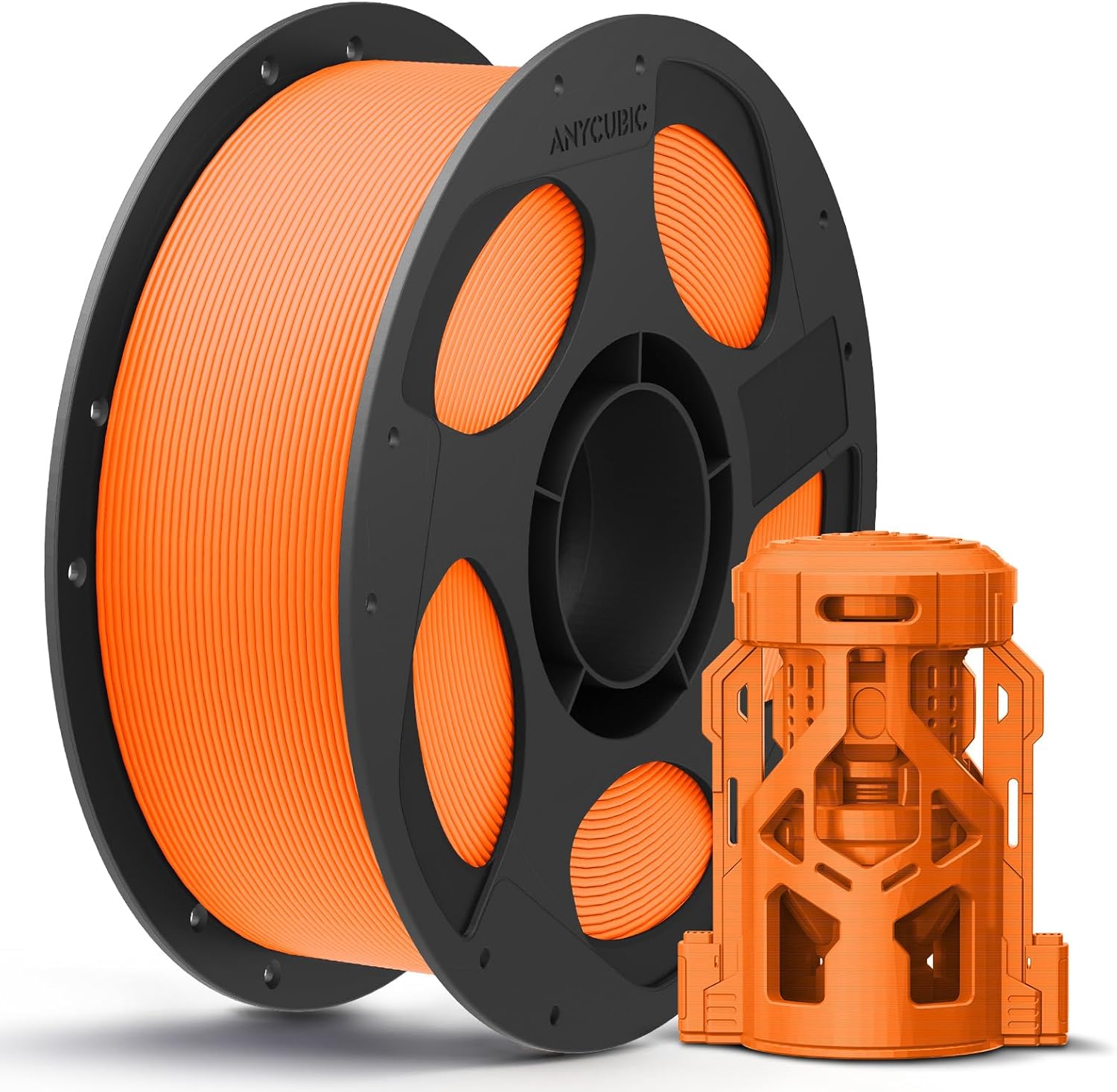
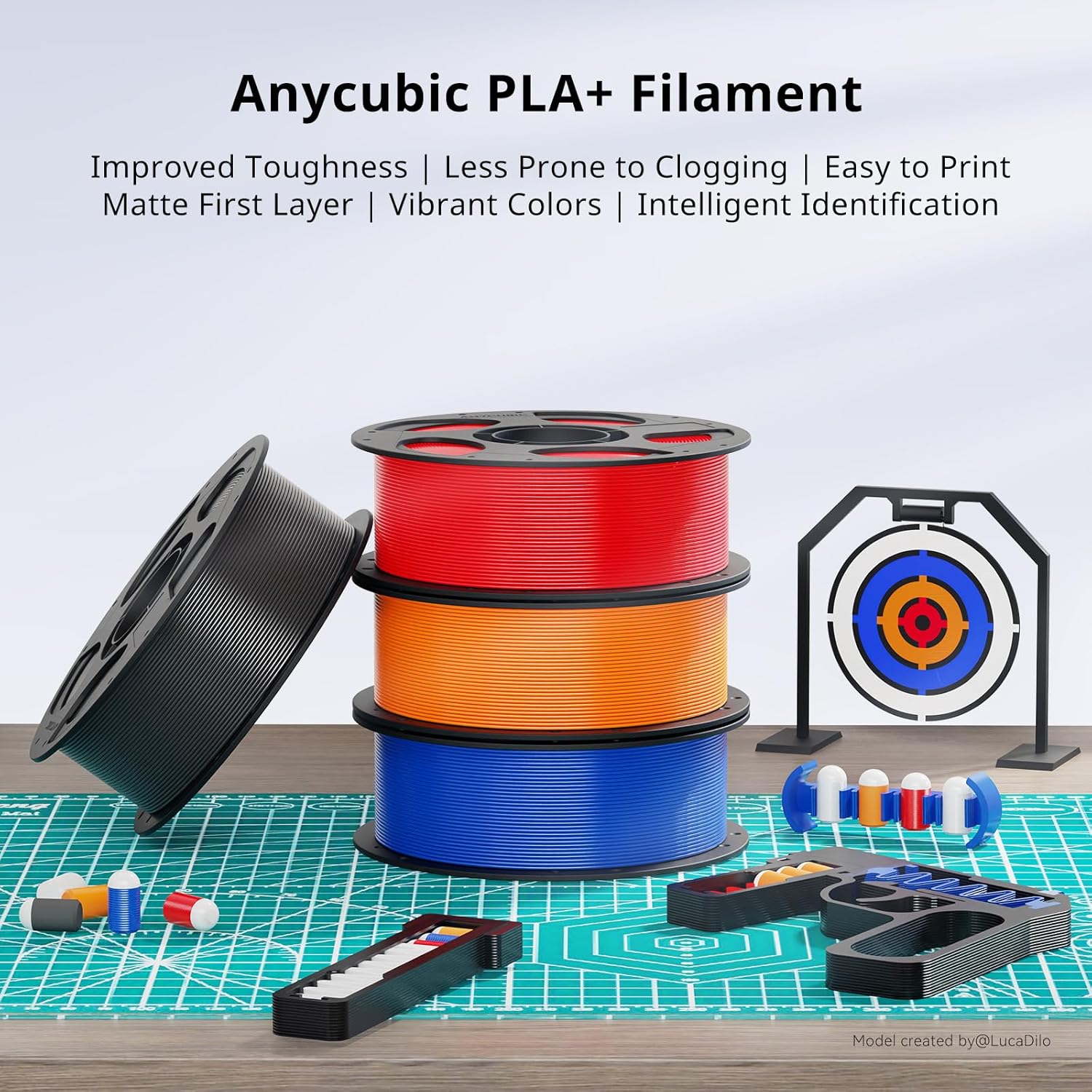
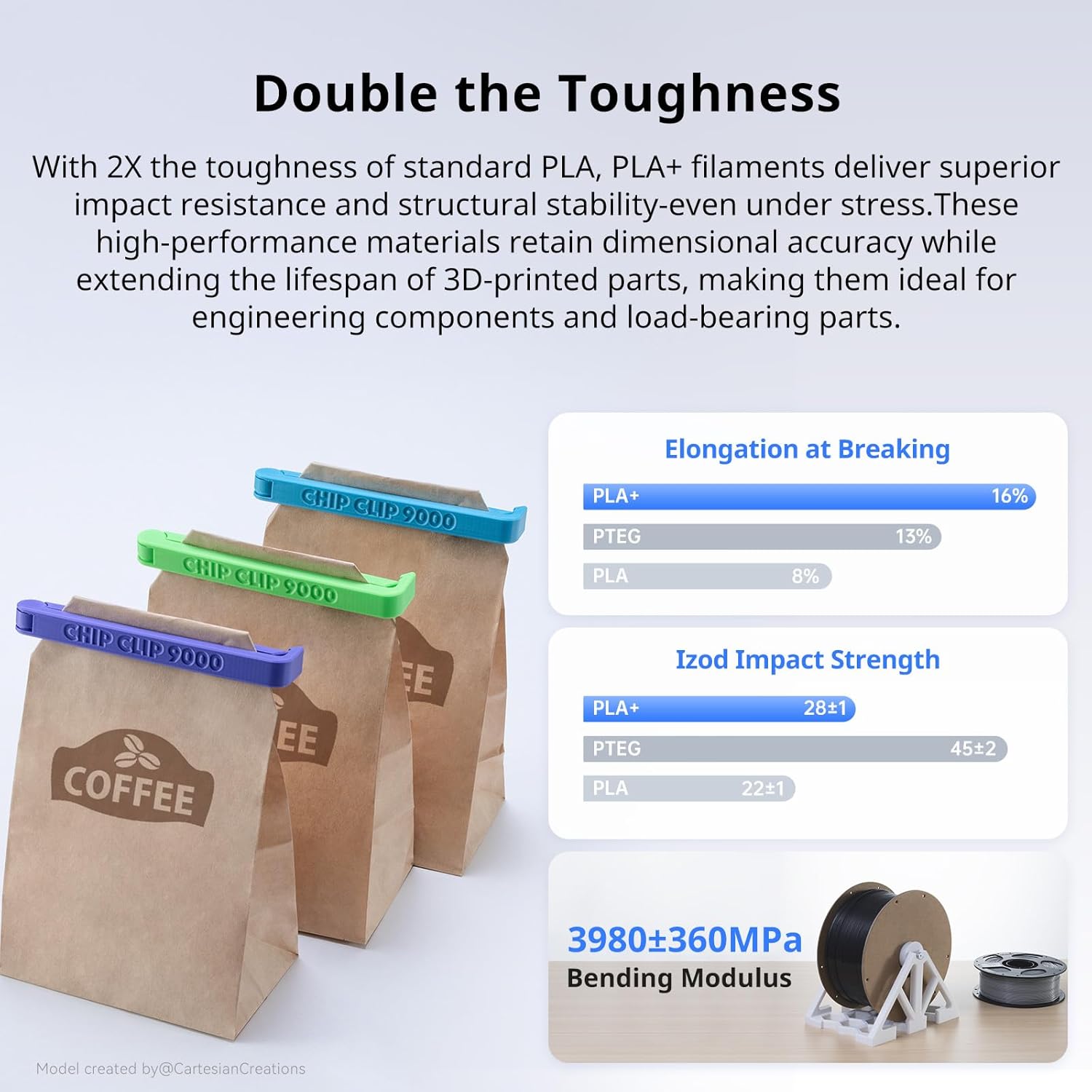
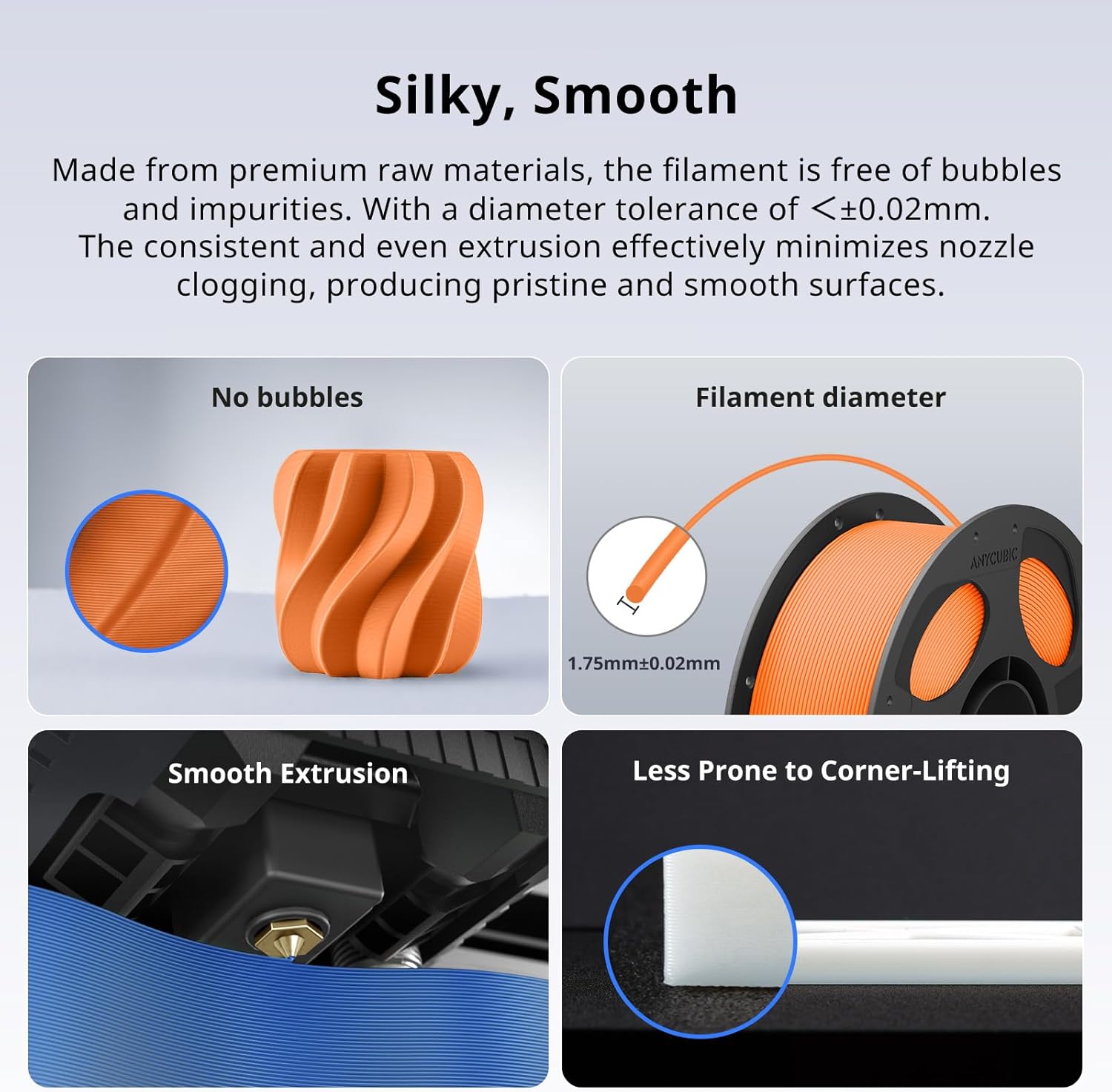
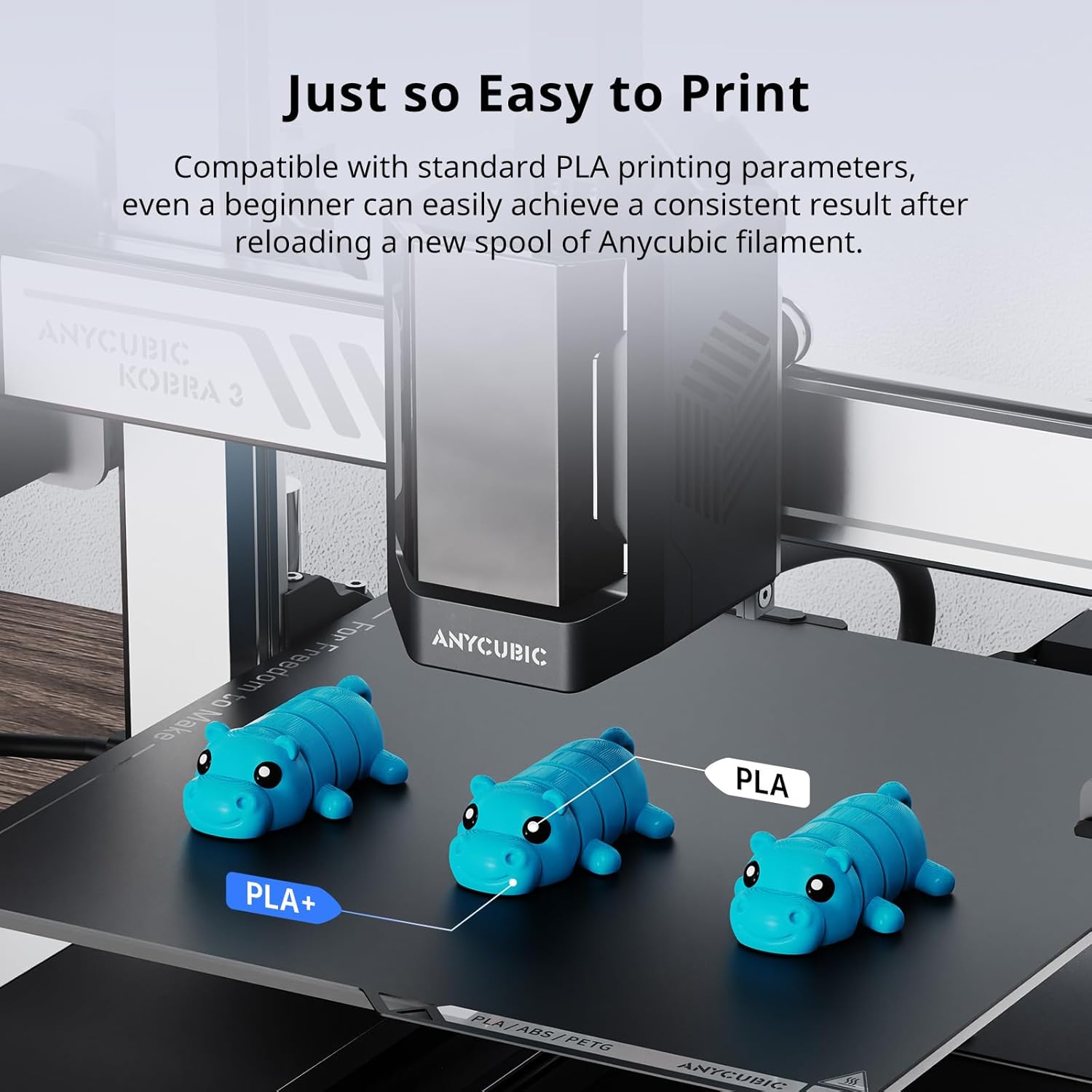
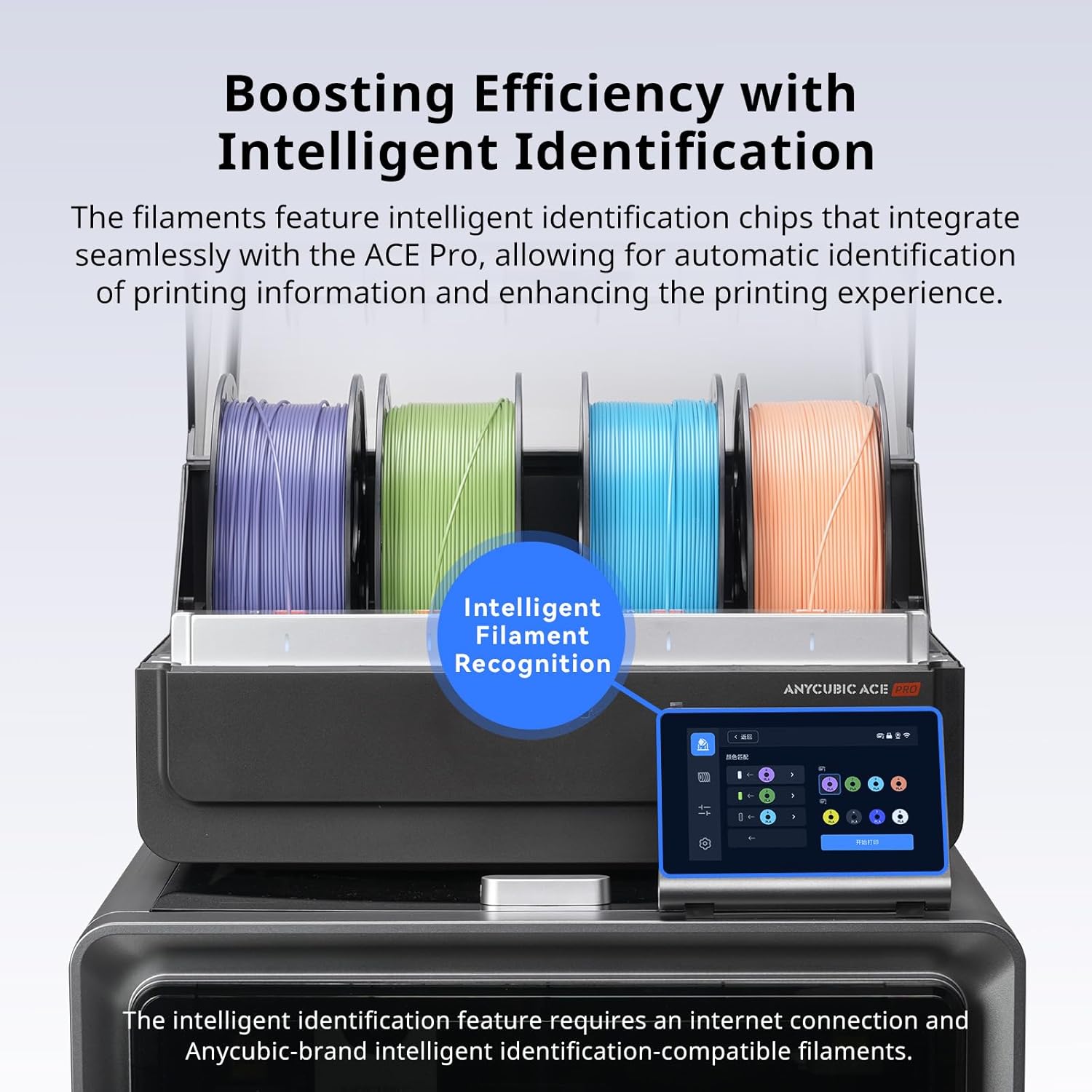
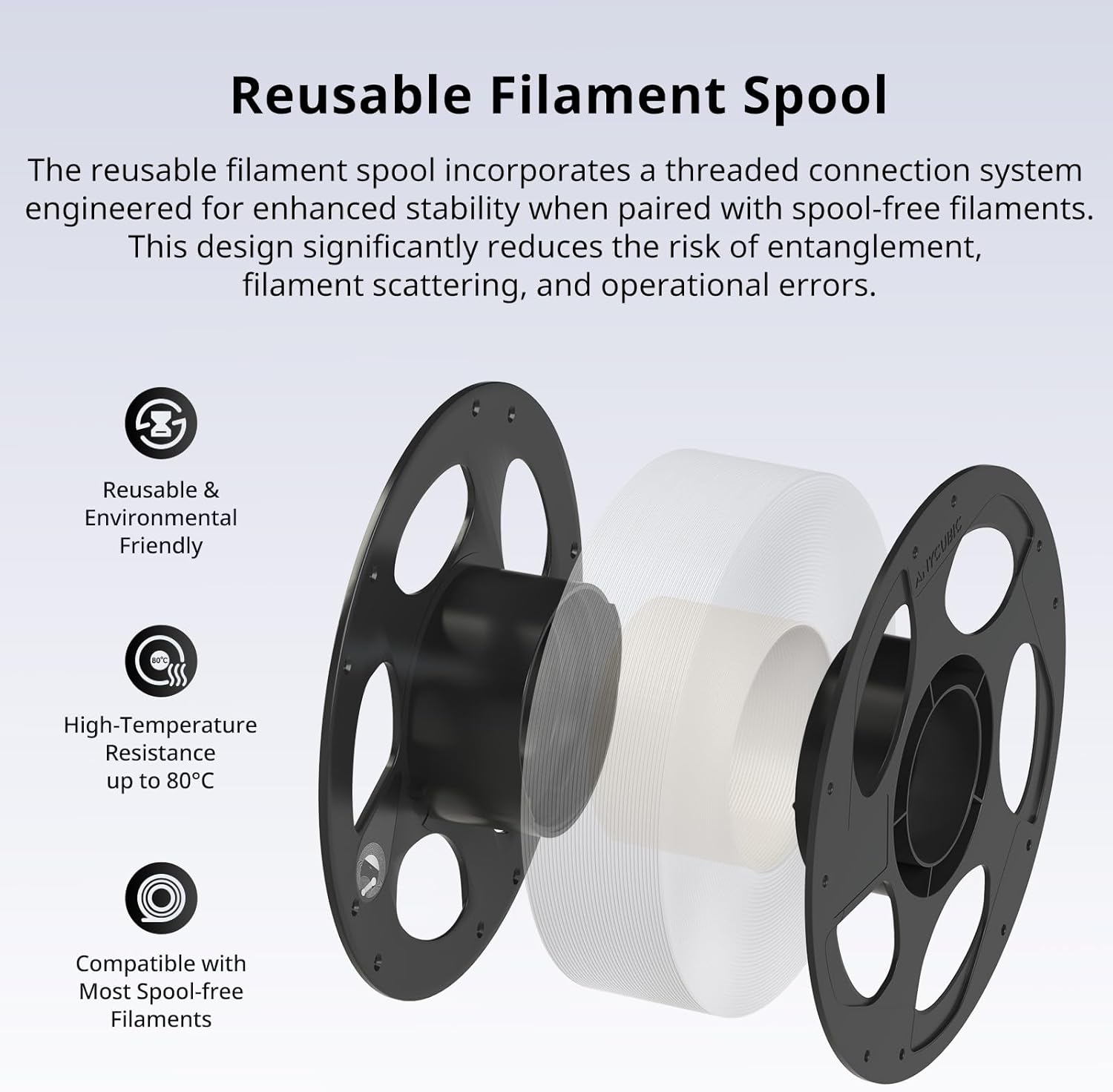
What this is and what it’s for\nAnycubic PLA Plus 3D Printer Filament is a 1.75 mm material designed to combine toughness with good print quality. It’s aimed at hobbyists and makers who want durable prints for models, small engineering parts and artistic pieces, without the fuss of frequent clogging or warping. The orange colour adds visibility for functional parts or display pieces. On the surface, it’s a straightforward PLA filament, but the emphasis on toughness and dimensional stability helps it stand out for pieces that might endure light impacts or handling.\n\n## How it performs in practice\nOn paper, the formulation is claimed to provide higher impact resistance than standard PLA, which can translate into less brittle prints. The manufacturer notes a tidy winding and tight diameter tolerance of +/- 0.02 mm, which supports consistent extrusion and fewer failed layers. In real-world terms, that means fewer prints ruined by slight diameter fluctuations and less need for fine-tuning printer settings. The filament is designed to print smoothly with minimal bubbles or clogging, which reduces interruptions during longer print runs.\n\n## What stands out (and where it may fall short)\nWhat stands out is the combination of high dimensional accuracy, reduced risk of warping and a forgiving extrusion, useful for models, crafts, and small functional parts. The packaging is vacuum-sealed to protect from moisture and dust, which helps keep prints consistent if you’re not printing immediately after opening. The spool is designed to reduce tangles and has a threaded connection system on the reusable spool, potentially lowering operator errors when swapping spools. On the downside, as with any PLA+ formulation, you may still encounter performance variations depending on your printer’s hot end temperature, cooling settings and enclosure. It isn’t marketed as a high-temperature or mechanical-grade material, so expectations should align with typical PLA+ strengths rather than industrial polymers.\n\n## Suitable for (and not ideal for)\nIt’s well-suited for beginners and intermediate users who want reliable prints without excessive post-processing. If you prioritise impact resistance and smooth downstream finishing for display models or light-duty components, this is worth considering. It may not be the best choice if you need parts that endure extreme heat, high-load mechanical use, or require very tight tolerances beyond standard PLA+ capabilities.\n\n## What to check before you buy\n- Confirm your printer’s nozzle and bed temperature compatibility with PLA+ and 1.75 mm filament.\n- Verify your cooling and retraction settings to benefit from the claimed smooth extrusion and reduced clogging.\n- Ensure you’re using dry storage or a dehumidified environment to preserve the filament since moisture can affect print quality.\n- Consider whether you need a highly visible orange for your project or to differentiate parts in assemblies.\n\n## Practical use case (a concrete scenario)\nImagine printing a small handheld prop or a light-duty bracket that needs to survive occasional bumps. The toughness claim suggests the part won’t crack easily under an incidental knock, while the clear tolerances help keep the fit tight in a multi-part assembly. You might still tune cooling to achieve a clean surface finish, but the risk of layer splitting should be lower than with a more brittle PLA variant.\n\n## FAQ (quick answers)\n- Is it compatible with most FDM printers? Yes, it’s advertised as compatible with most FDM 3D printers.\n- Does the spool keep moisture out? The packaging is vacuum-sealed to protect against moisture and dust.\n- Can I print with standard PLA settings? Values vary by printer, but the aim is smooth extrusion with minimal bubbles under proper temperatures.\n\n## Final thoughts\nIf you’re after a practical, easy-to-print filament that balances toughness and finish quality for routine models and crafts, this Anycubic PLA+ offers a sensible mix of stability, repeatability and user-friendly handling. It isn’t a substitute for high-strength engineering plastics, but it does provide a more forgiving print experience than some basic PLA varieties. Consider your typical printing projects, the enclosure and cooling you have, and whether you value the reusable spool design to reduce tangling in ongoing use.\n\n## Is it worth it?\nIs it worth it? Worth considering if you prioritise reliable dimensional accuracy, reduced clogging and a tougher PLA+ option for everyday prints. If your needs lean toward high-temperature performance or critical mechanical tolerances, you may want to compare with alternatives that target those specific requirements.