

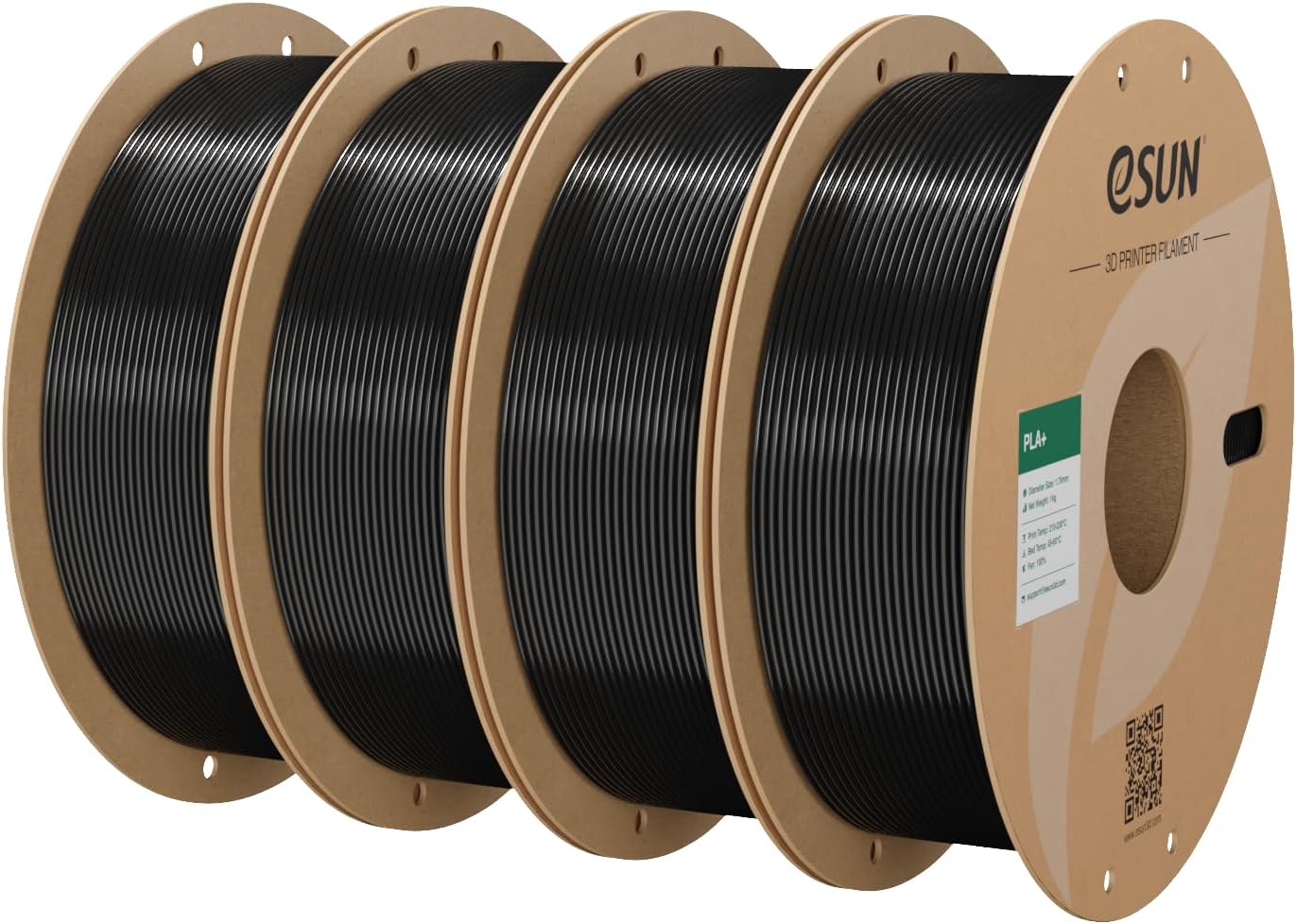
eSUN PLA+ 1.75mm filament (PLA Plus) – enhanced toughness, ±0.03mm accuracy, 4×1KG spools in black
Reviews
Price
Product description
What this filament is for
If you’re moving beyond basic PLA, eSUN PLA+ is aimed at exactly that middle ground: easier printing like standard PLA, but with improved strength and toughness so your parts are less likely to snap the moment they’re dropped or flexed. It’s still PLA+ (not a miracle polymer), so it won’t behave like high-end engineering materials in every scenario — but on paper it ticks a lot of practical boxes for everyday functional prints.
A common buying moment is when your prototypes start needing to be handled, assembled, or mounted, and plain PLA starts feeling a bit brittle. That’s where PLA+ often makes more sense than buying into something more specialised. The description also points to better dimensional control (tolerance stated as ±0.03mm) and low shrinkage, which matters when you’re trying to keep parts consistent from one print to the next.
Key features that matter in day-to-day printing
This filament is positioned as a “PLA+ with sharper behaviour”: improved toughness, good layer bonding, and a workflow that stays close to what you already know with PLA.
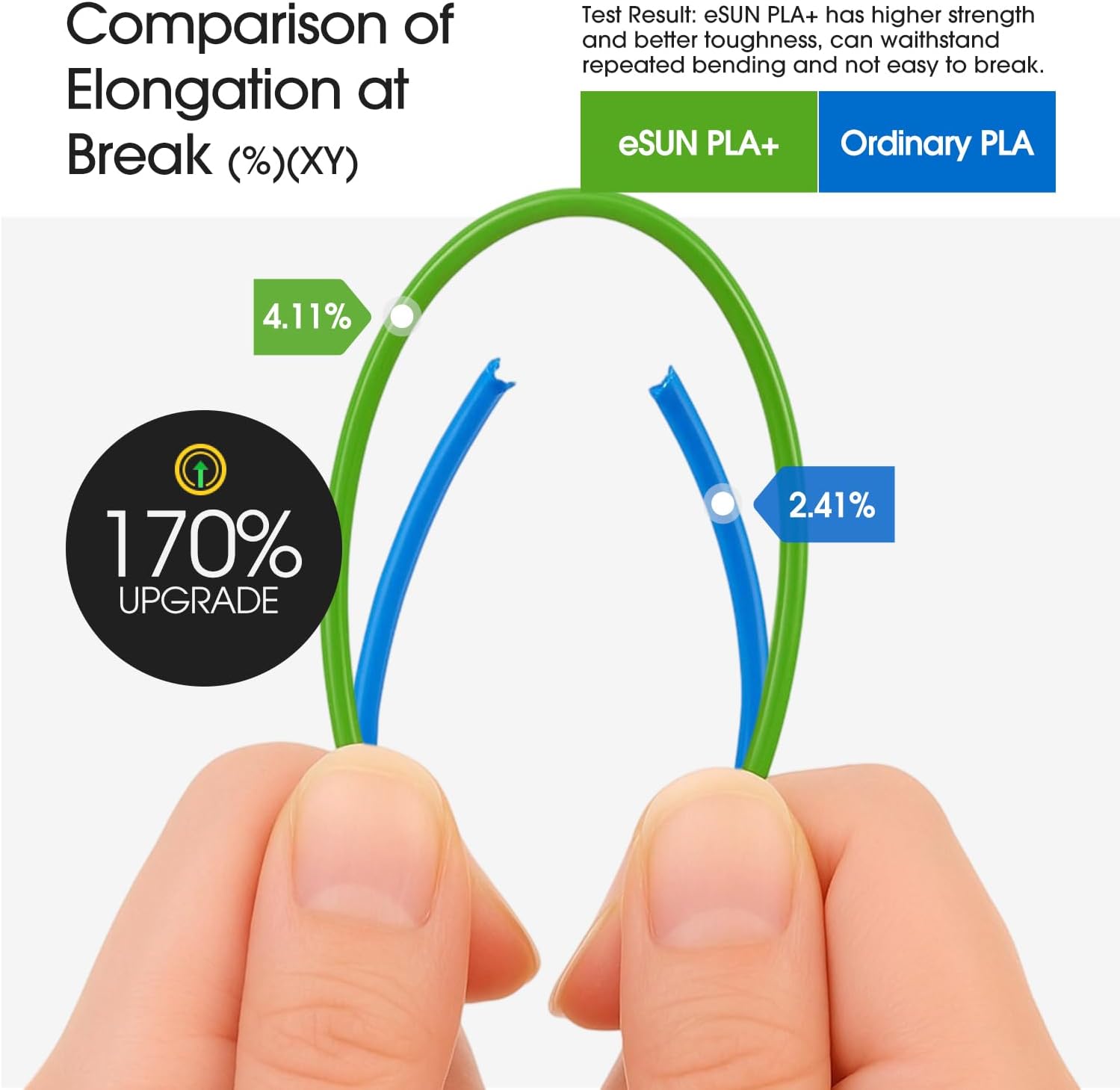
One part of the pitch that stands out is the emphasis on printability and precision. The base information claims: - Enhanced toughness compared with ordinary PLA, described as not easy to break - Good layer bonding performance for functional parts that need a bit more resilience - Low shrinkage and reduced risk of deformation or cracking - Good performance at high speeds (useful if your printer supports faster profiles)
There’s also an operational angle: it’s described as tangle-free and “no plugging”, with smooth, constant feeding and less stringing. That’s the kind of thing you notice over time — fewer clogs, less messing around with re-feeds, and more consistent results.
Print quality and tolerance: what the ±0.03mm claim means
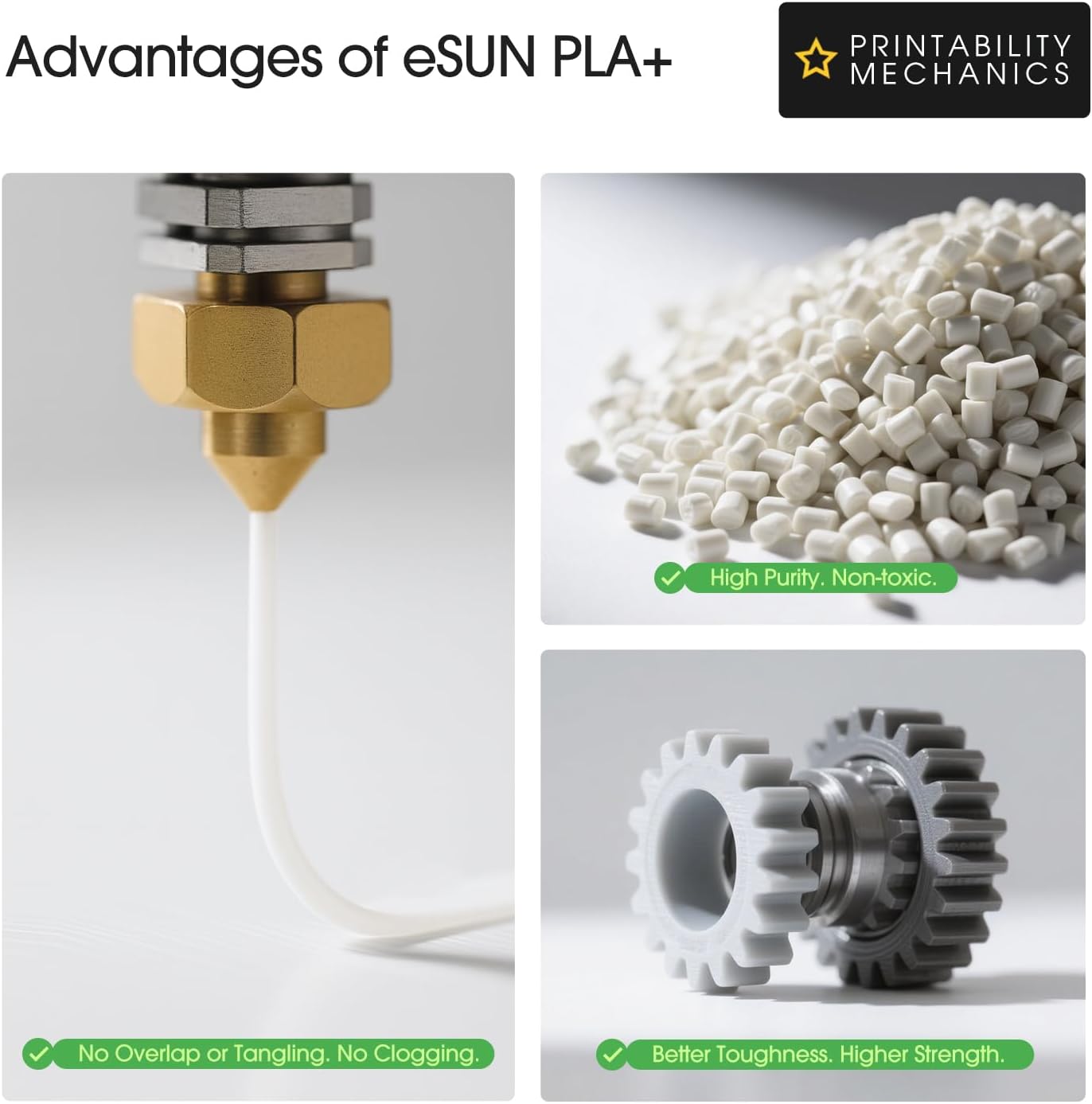
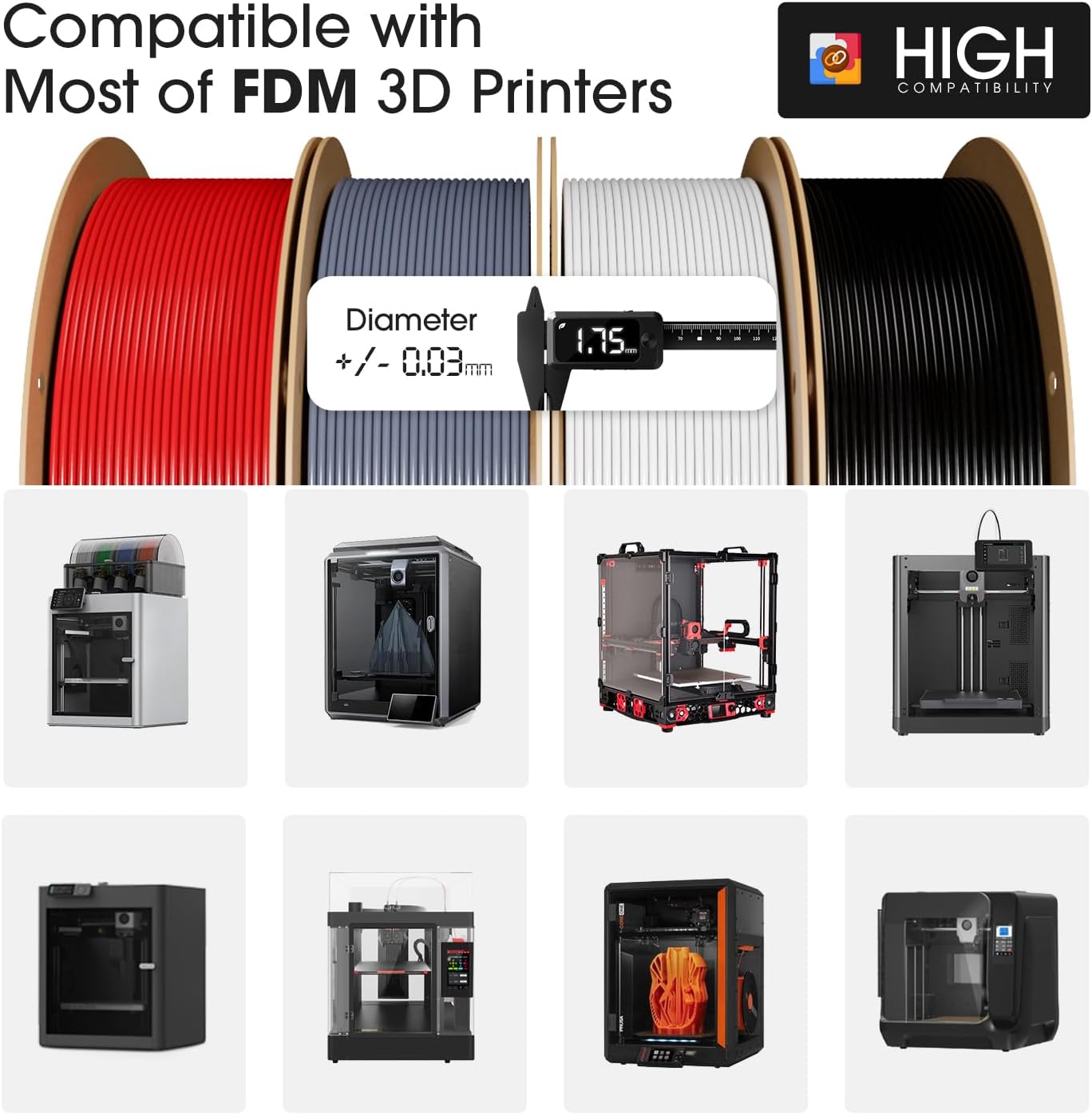
eSUN states a dimensional tolerance of ±0.03mm and describes tight diameter tolerance, alongside claims like low warping and stable prints. In practical terms, better diameter consistency helps printers extrude more predictably, especially if you’re sensitive to fit (slotted parts, interlocking components, small mounts).
That said, it’s worth keeping expectations realistic: dimensional accuracy also depends heavily on your printer setup (calibration, temperature tuning, airflow, bed adhesion). Even with a filament that’s made to tight tolerances, a slightly off profile can still cause gaps or warping.
If you’re the type of maker who measures parts and cares about repeatability, this spec is the sort of detail you’d look for. If you just want “it prints nicely” with minimal fuss, you may find it more than you strictly need — but it should still deliver the PLA-like ease.
Compatibility: where it fits (and where it might not)
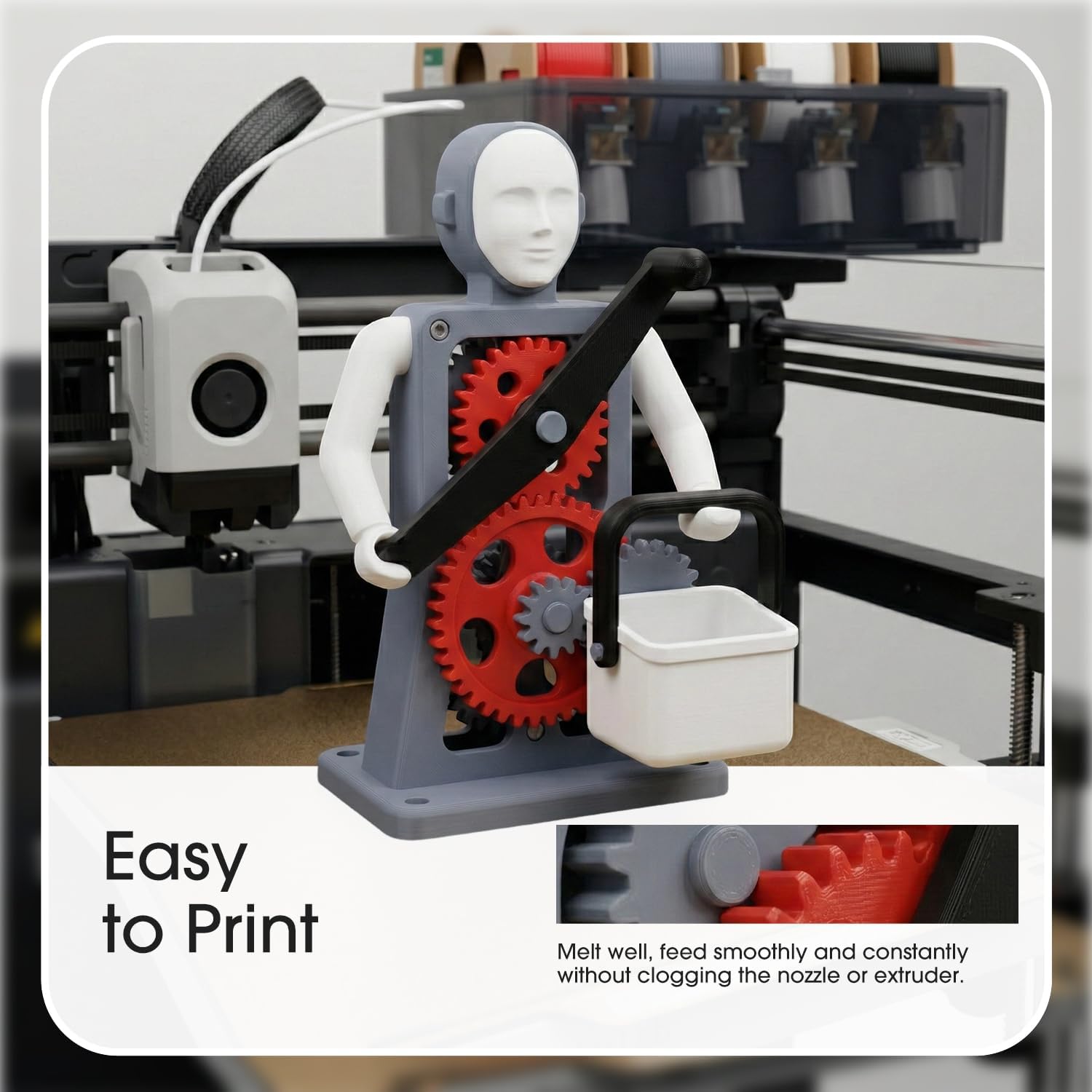
The base details say this filament is compatible with most FDM 3D printers, listing examples such as Prusa, MakerBot, Ultimaker, Ender 3, Flashforge, and Raise3D. It also mentions meeting demands for high-speed printers, with examples like Bambu Lab X1 and P1P/AnkerMake M5/FLSUN V400/voron 2.4/CREALITY K1.
So for most standard 1.75mm FDM setups, it’s a sensible pick.
However, the description is still just that: a compatibility claim, not a guarantee for every printer variant or every hotend/nozzle combination. It would be smart to ensure your printer is set up for PLA/PLA+ style materials and that you can run it reliably at the temperatures and speeds you plan to use.
What’s included and how the pack helps
This is sold as a multi-spool bundle: 4 spools of 1KG filament in black, with a stated total length per reel of 340–350m. Buying a multi-pack can be practical if you’re printing regularly, because it reduces the chance of colour/lot mismatches interrupting projects.
Still, there’s a limitation to be aware of: multi-spool bundles only really shine if you’ll use the material within a reasonable timeframe. If you’re a casual printer who does the odd prototype, you might prefer a single spool so you’re not left with unused filament.
Strength and toughness: the “value” angle
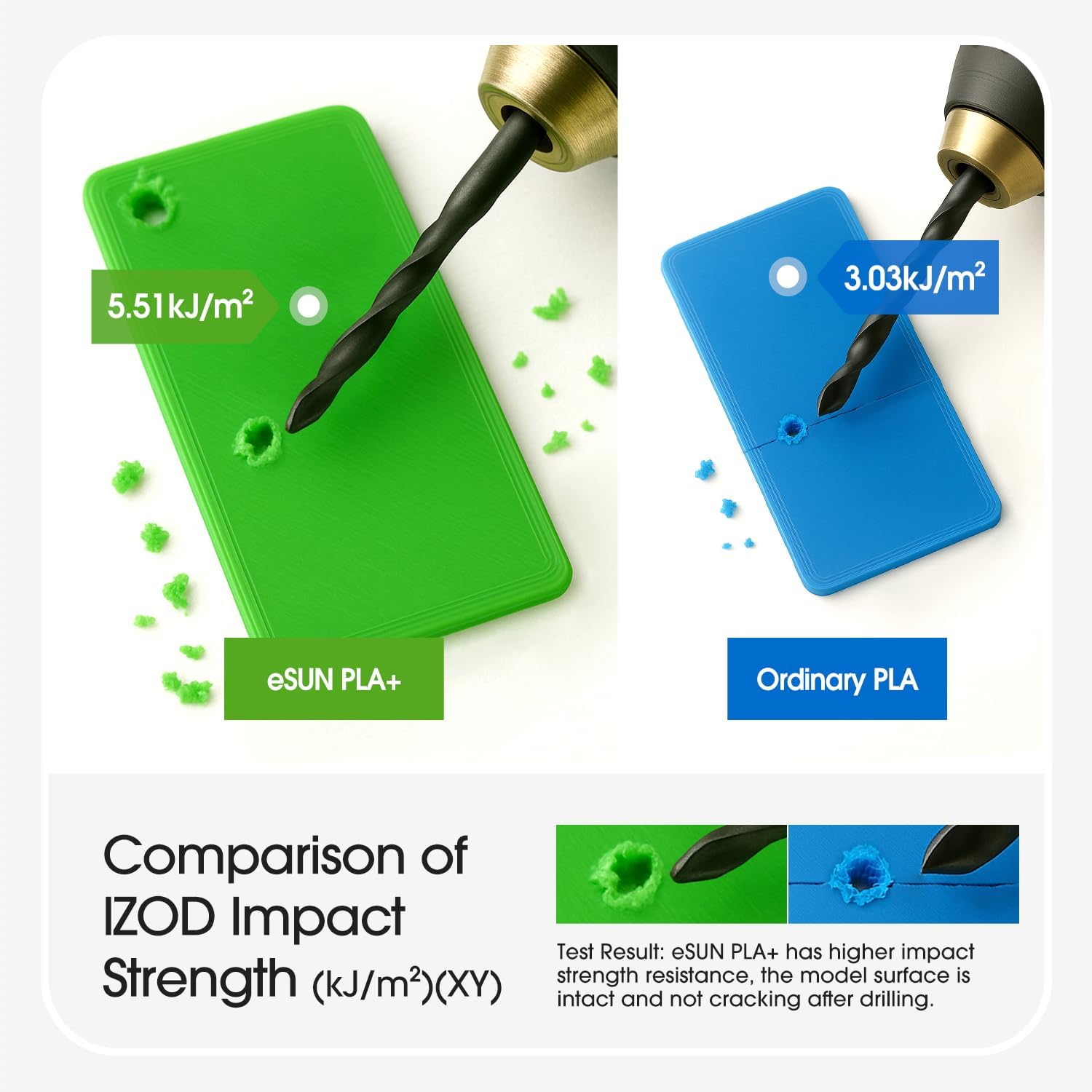
The standout promise here is enhanced toughness: higher strength and better toughness than ordinary PLA, described as not easy to break. That positioning is often aimed at parts that see real handling — hinges, enclosures, brackets, cosplay components that need to survive transport, and general functional prototypes.
But it’s not perfect for every use case. If your projects demand extreme heat resistance, heavy structural load, or harsh outdoor durability, PLA (and PLA+) may still fall short compared with more specialised materials. It’s not presented as an engineering-grade replacement — more like a pragmatic upgrade when PLA feels too fragile.
A small micro-scenario: imagine printing a simple snap-fit clip for a desk cable tidy. With plain PLA, it might eventually crack after repeated stress. With PLA+ on paper offering improved toughness and better layer bonding, you’re aiming for a part that flexes a bit more before it gives up.
Who it suits best (and who should look elsewhere)
It makes sense if you want PLA-like printability but with a tougher feel for functional parts. It also suits you if you care about smoother feeding, fewer headaches like stringing/clogging, and consistent feeding thanks to the tight diameter tolerance.
You may want to skip it if: - You only print decorative models and don’t need toughness improvements - Your projects require material properties beyond what PLA/PLA+ is typically used for - You’re not planning to use the full multi-pack in time (it’s a 4×1KG commitment)
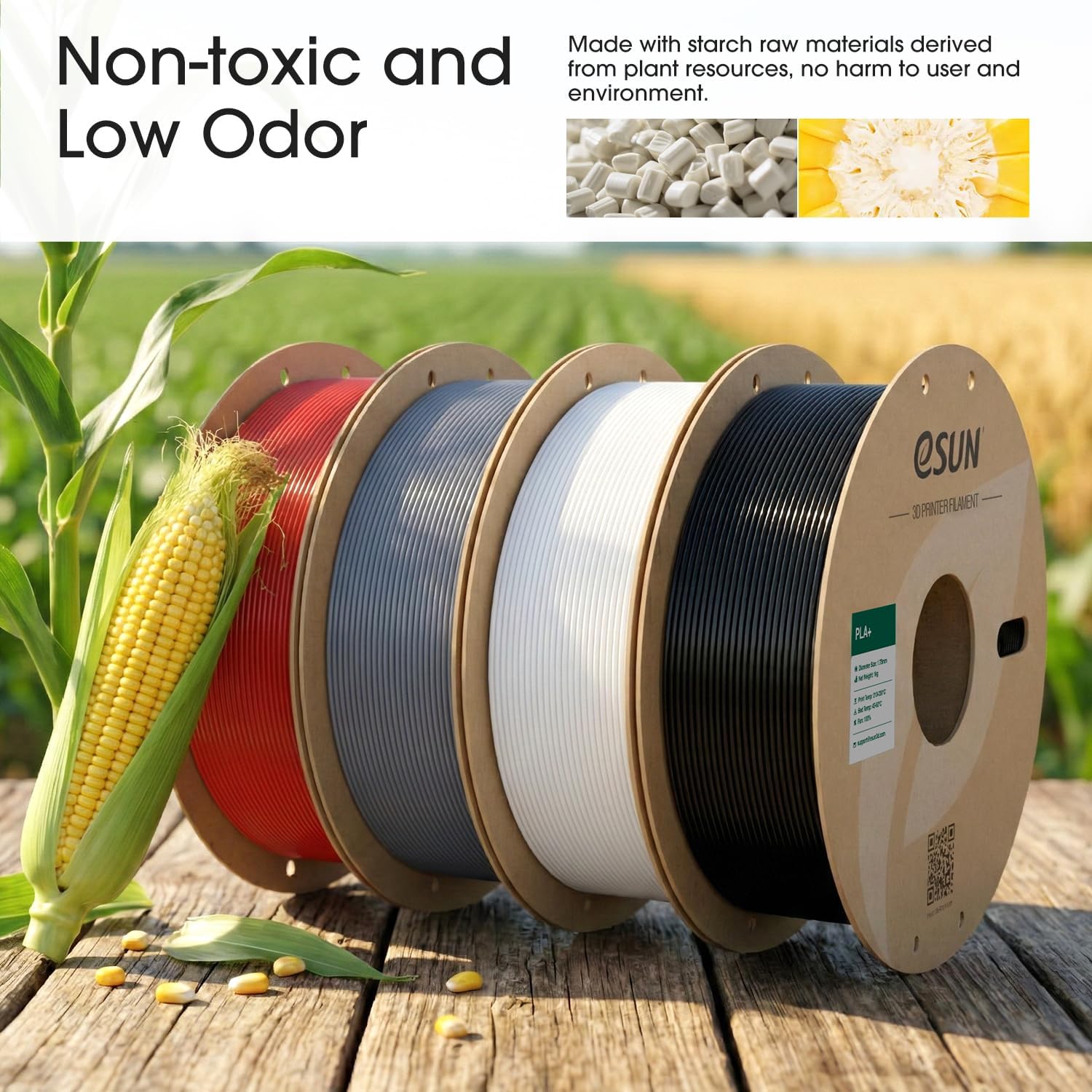
Worth noting: the description references eco-friendly, renewable starch raw materials and says it’s non-toxic and eco-friendly. If that’s important to your buying criteria, it’s another reason this bundle may appeal.
Tech specs
- Type: PLA+
- Diameter: 1.75mm
- Dimensional tolerance: ±0.03mm
- Colour: Black
- Weight: 1KG per spool
- Number of spools: 4
- Total length: 340–350m per 1KG reel
Is it worth it?
Buying verdict With eSUN PLA+ you’re essentially paying for a PLA upgrade: improved toughness, good layer bonding, and a filament presented as dimensionally consistent (±0.03mm) with low shrinkage and reduced warping. For most FDM users running 1.75mm PLA/PLA+ profiles, it’s a solid “functional PLA” route — especially if your parts need a bit more resilience than standard PLA provides.
It’s not the best choice if you’re only after easy decorative prints or if your use case needs properties beyond what PLA+ is meant to deliver. And if you won’t use a 4×1KG bundle soon, a smaller purchase may be the smarter way to manage cost.
If you prioritise repeatability, fewer feeding annoyances, and parts that are less likely to snap, then yes — it’s worth considering.