

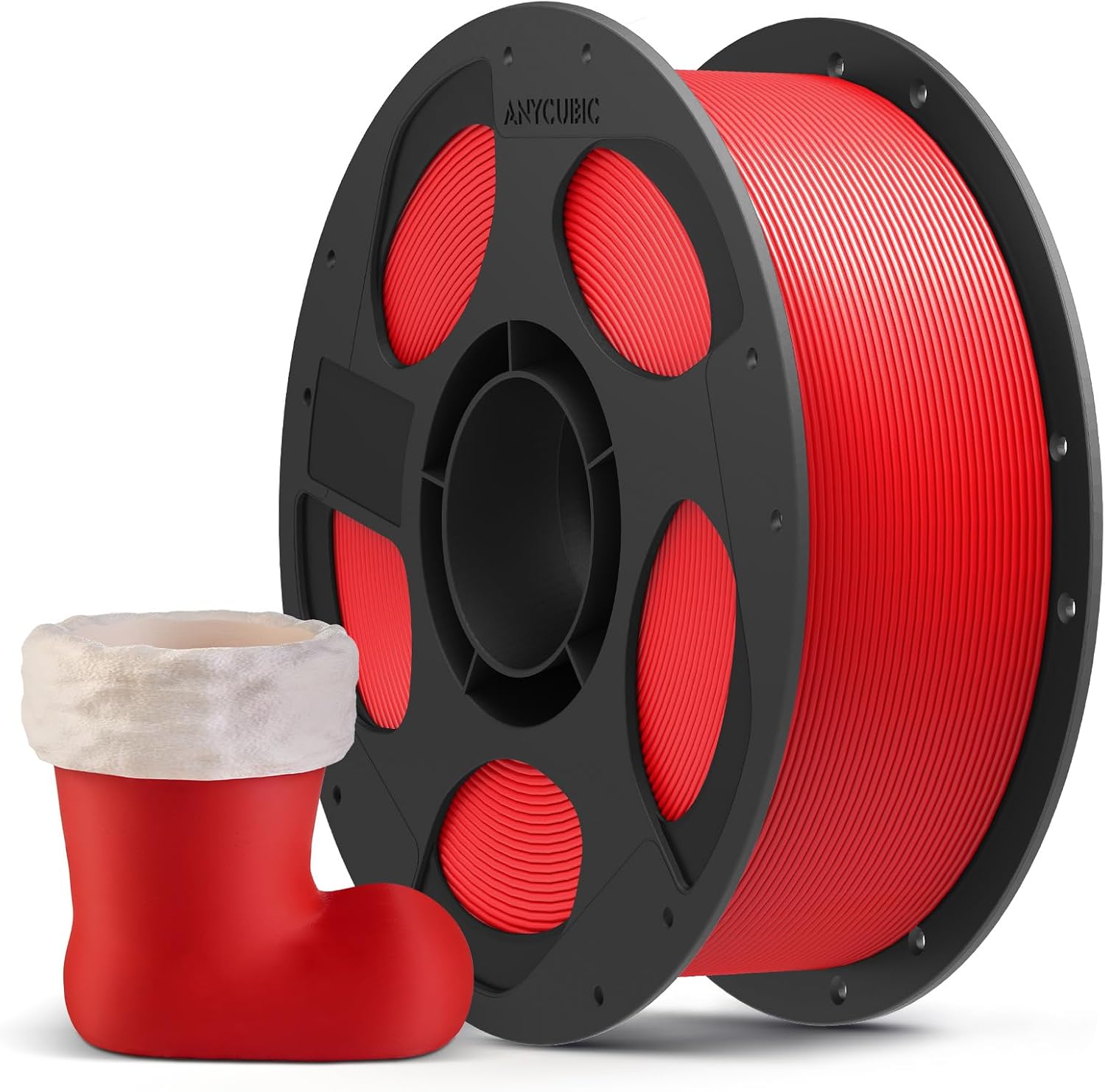
ANYCUBIC PLA Filament 1.75mm (Intelligent Identification), 1kg Reusable Spool, Texture Red
Reviews
Price
Product description
The essentials
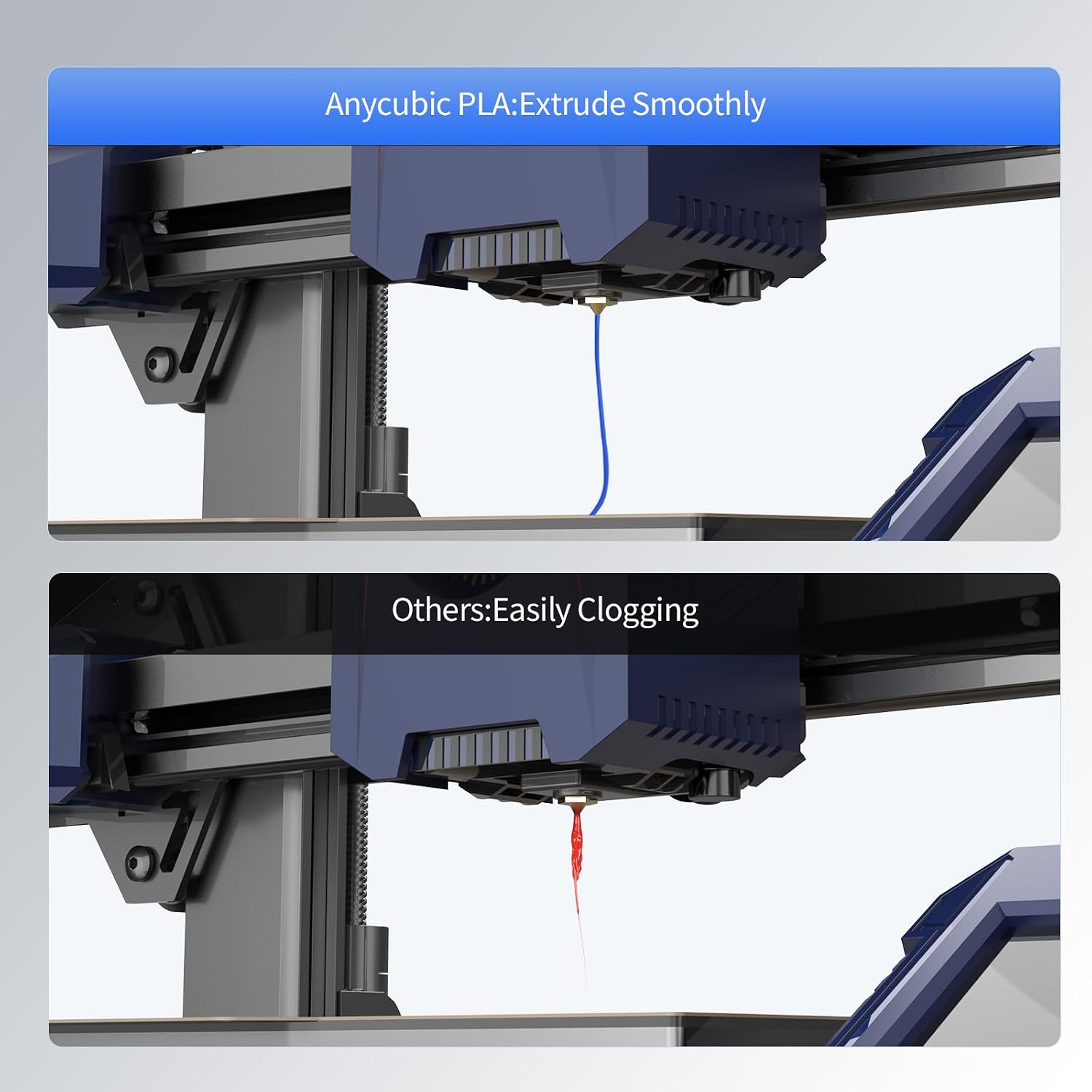
If you’re buying PLA for an FDM 3D printer and you want fewer frustrations during printing, this ANYCUBIC PLA filament is aimed at exactly that. The pitch here is straightforward: consistent filament diameter, stable dimensions, and a calmer feeding experience thanks to a clog-free approach and a reusable spool design.
On paper, it focuses on making layer bonding and bridging feel more reliable. That’s the kind of benefit you notice over multiple prints: fewer interruptions, less fiddling, and surfaces that are described as clean with minimal stringing. The colour is Texture Red, and it comes as 1kg on a reusable spool.
Key takeaways
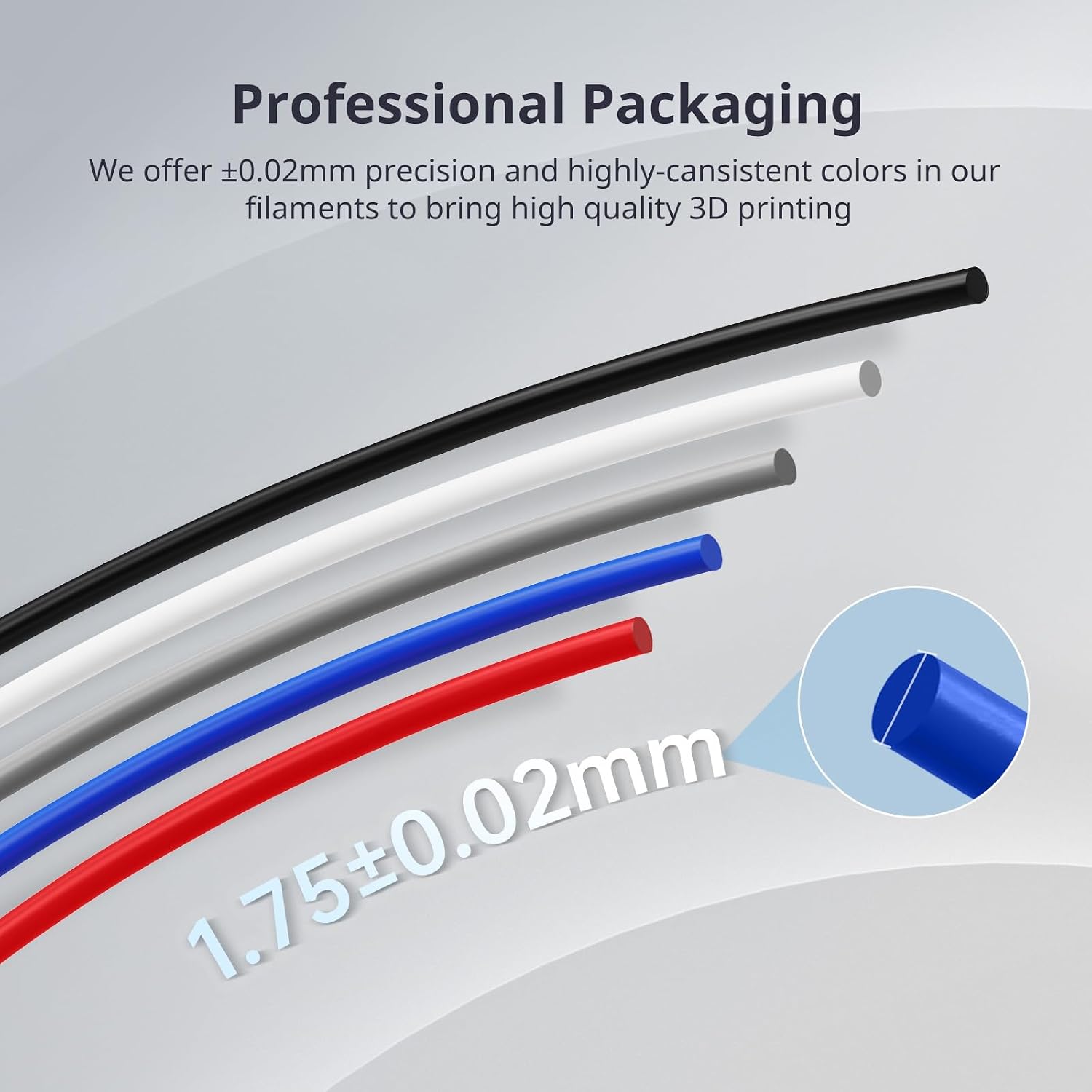
Where this filament seems to be at its best is the everyday “keep printing” scenario: standard PLA-style builds, repeat jobs, and prints where you don’t want to spend your time troubleshooting. The stated dimensional accuracy of +/- 0.02mm is intended to keep the filament flow smoother and more homogeneous, which can help avoid the thicker/thinner feed variation that throws off print consistency.
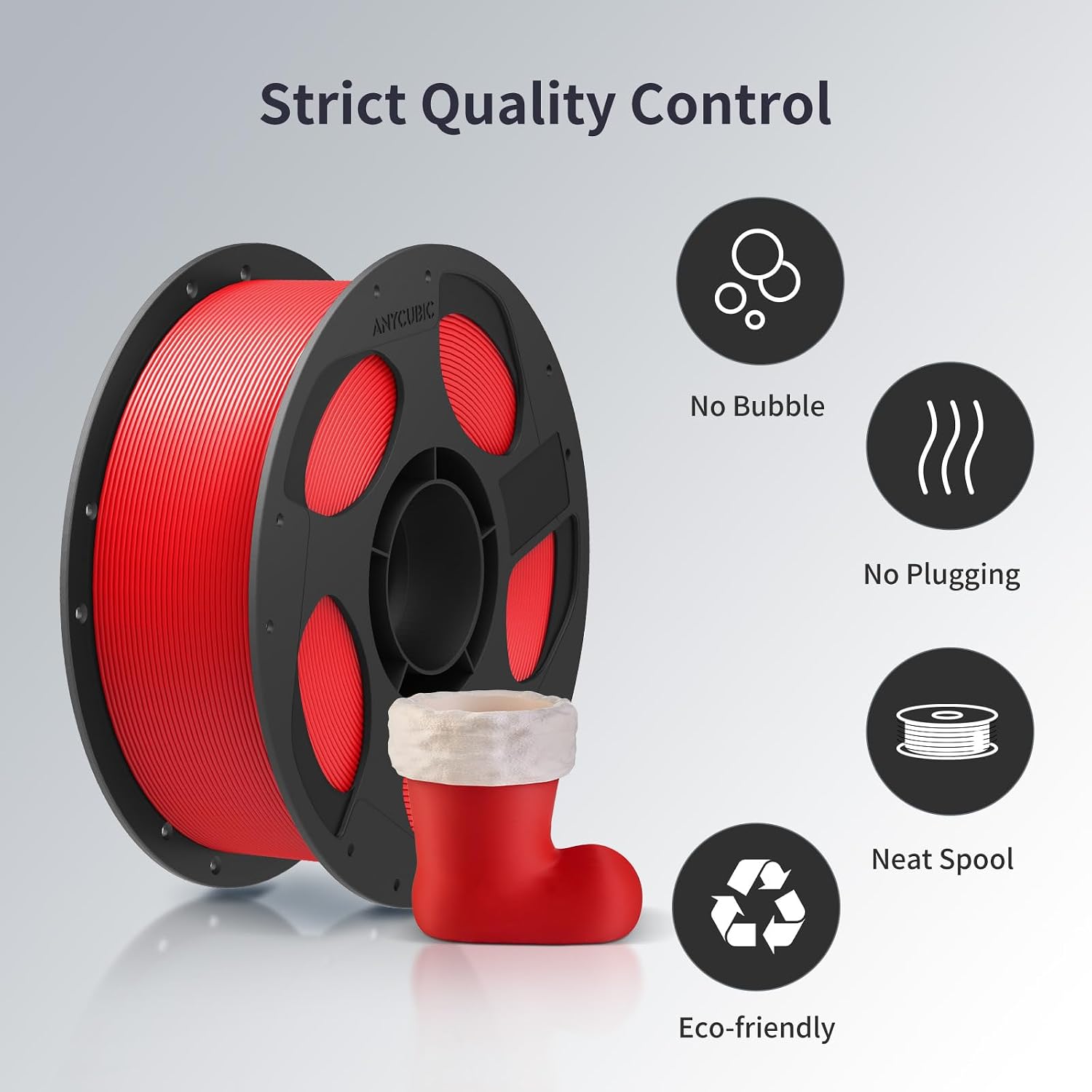
It’s also designed around easier handling. The spool is described as neat on the roll and leaving the spool without crossing turns, with an emphasis on reducing twisting, pulling, and tangling risk. For many people, that matters as much as the material itself—especially if you’ve ever had filament snag or scatter while switching rolls.
Still, it may not be the best match if you’re chasing a very specific aesthetic or material behaviour beyond what PLA typically offers. The “glossiest finish” claim and the clean/stringing performance are helpful, but results will always depend on your printer, settings, and part geometry.
What matters most for print results
Several of the provided details tie directly to common pain points:
- Dimensional accuracy and consistency: the filament diameter tolerance (minimum +/- 0.02mm) is meant to keep extrusion steadier.
- Low shrinkage and stable printing dimensions: the aim is better fusion between layers, supporting smoother bridging.
- Clog-free / bubble-free intentions: it’s described as dried for 24 hours before packaging and vacuum sealed with desiccants.
One practical example: if you’re printing something with small gaps or short horizontal spans (like a bracket with overhangs), bridging quality is often where inconsistent filament flow shows up. This filament is positioned to help there by keeping the feed more consistent—so the printer isn’t constantly “correcting” due to diameter swings.
What you’ll notice day to day
Beyond material specs, the pack claims some workflow benefits.
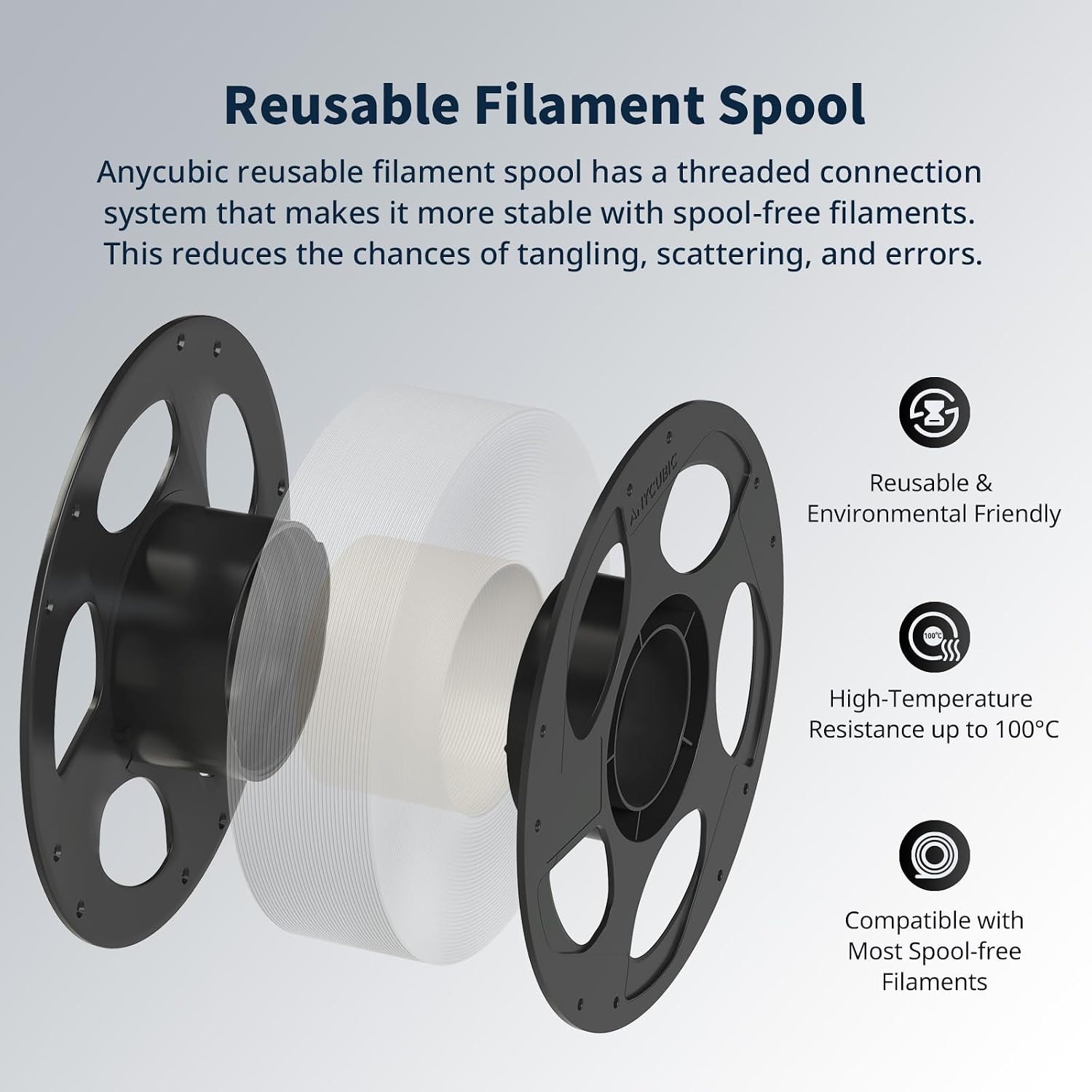
The reusable spool uses a threaded connection system designed for enhanced stability with spool-free filaments, with the goal of reducing entanglement, filament scattering, and operational errors. Whether or not you ever hit those issues, the intention is clearly to make loading and feeding calmer.
Another detail: intelligent identification. The entry doesn’t explain what the printer does with that information, so you’ll want to check your printer’s support if you care about automated detection. If your printer isn’t set up for it, you can still use the filament normally—but you shouldn’t assume you’ll get extra features.
Compatibility and requirements
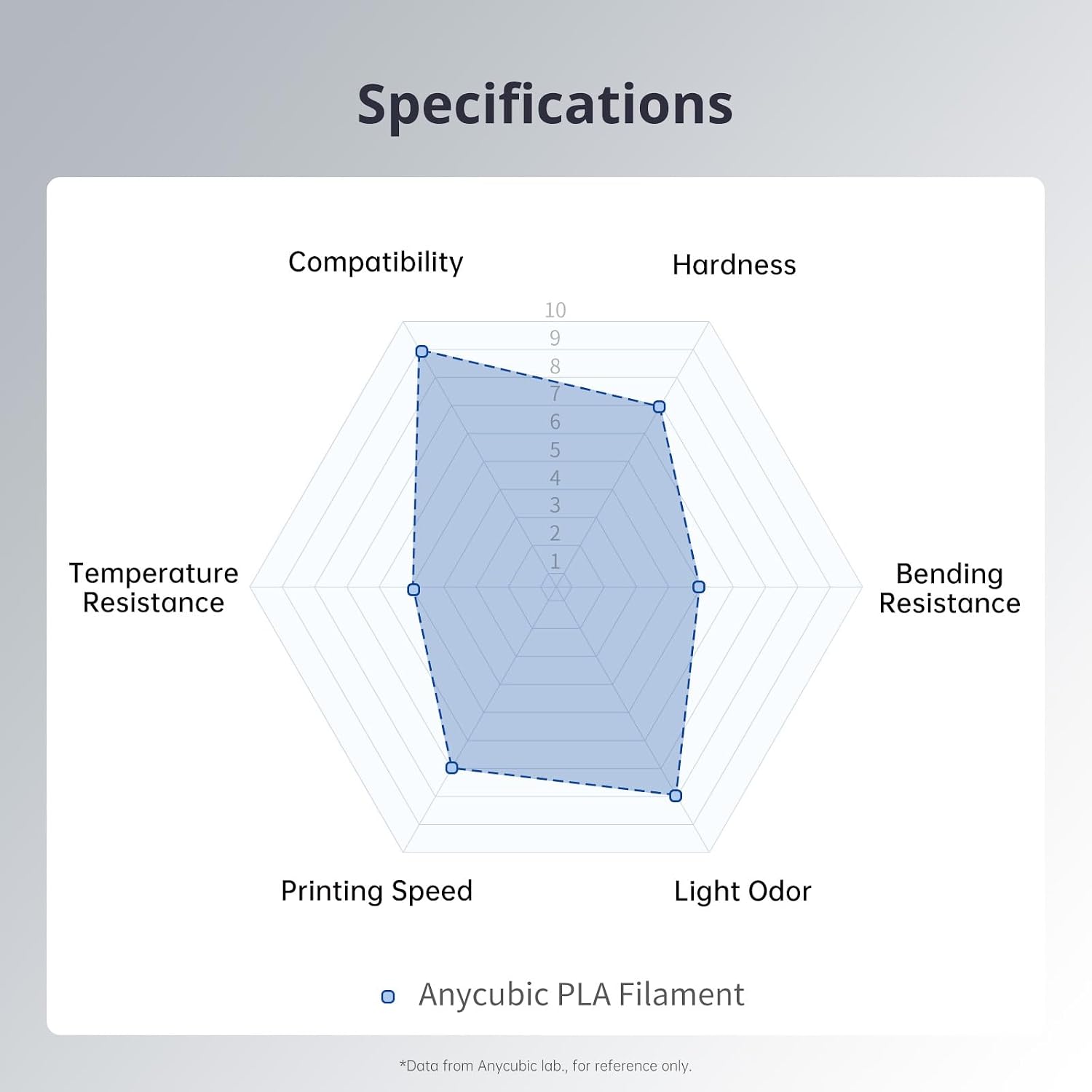
This PLA filament is described as compatible with most FDM 3D printers and 3D pens that use 1.75mm filament. It’s also said to not require a heated bed, which can make it simpler to run—though, as with any PLA setup, your own results may still depend on your printer’s configuration and your specific material handling.
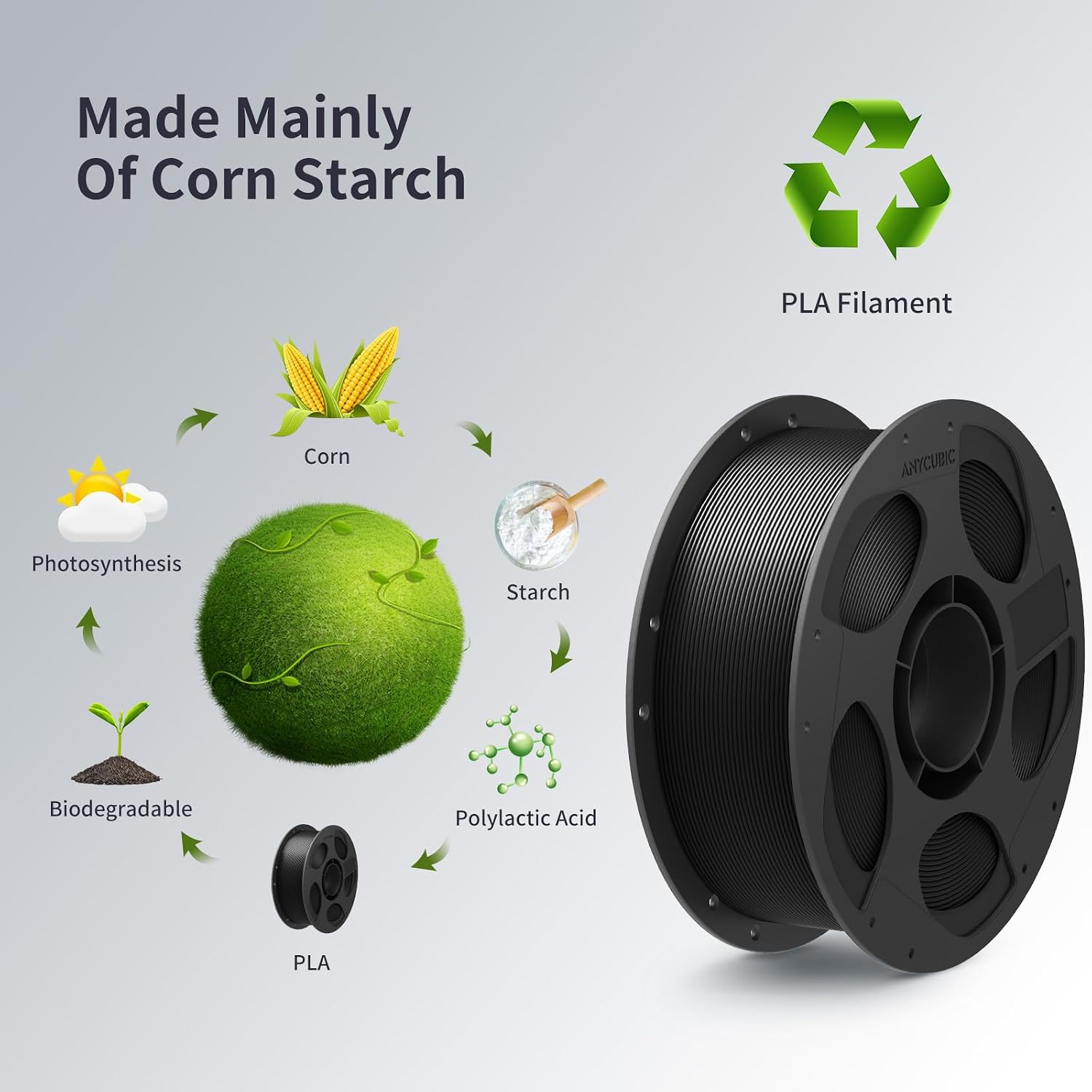
From the “no odour / non-toxic during printing” and “no pollution” notes, it’s presented as a plant-based PLA (starch raw materials from renewable resources) with a lower melting temperature. If you’re sensitive to smells, that’s a reasonable angle to consider.
Installing it (and the small caution)
Setup is described in a fairly standard way for 1.75mm PLA:
- Install the spool on the printer spool holder and preheat the nozzle.
- Cut the filament tip diagonally.
- Guide it through the extruder and feeding tube.
- Manually push until it melts through the nozzle.
The important caution is included: when installing and changing filament, preheating the nozzle is strongly suggested to reduce the risk of a nozzle block.
It’s a small step, but it’s the sort of thing that can save you a lot of hassle—particularly if you’re swapping colours often or reloading after a pause.
Is it worth it?
This is worth considering if you want PLA with a focus on consistency (stated +/- 0.02mm tolerance), smoother feeding, and a reduced chance of clogging—especially for frequent, practical prints where clean results and fewer interruptions matter.
It’s not the best choice if you specifically need performance outside typical PLA expectations, or if you’re relying on “intelligent identification” features and you can’t confirm your printer supports them. Also, if your current printing setup already runs perfectly with another PLA and you’re chasing a particular finish or surface quality that isn’t addressed in your own test prints, you may find you’re paying for features you won’t fully use.
Before you buy, it helps to check: - Your printer/3D pen is designed for 1.75mm filament. - Whether your printer supports the “intelligent identification” function (if that matters to you). - That you’re happy with PLA-style behaviour for your use case (bridging and clean surfaces are the target here).
Mini FAQ
Will it help reduce stringing?
The description claims it produces the cleanest, least stringing prints, but exact results still depend on your printer and settings.
Does it need a heated bed?
It’s described as not needing a heated bed. That said, your part geometry and printer setup can influence whether you still choose to use one.
Is the spool reusable?
Yes. It’s sold with a reusable spool, with a threaded connection system intended to improve stability and reduce entanglement risk.
Is it suitable for most FDM printers?
It’s stated to be compatible with most FDM 3D printers and 3D pens that use 1.75mm filament.
What’s the key install tip?
Preheating the nozzle first is strongly suggested when installing or changing filament to reduce the risk of nozzle block.