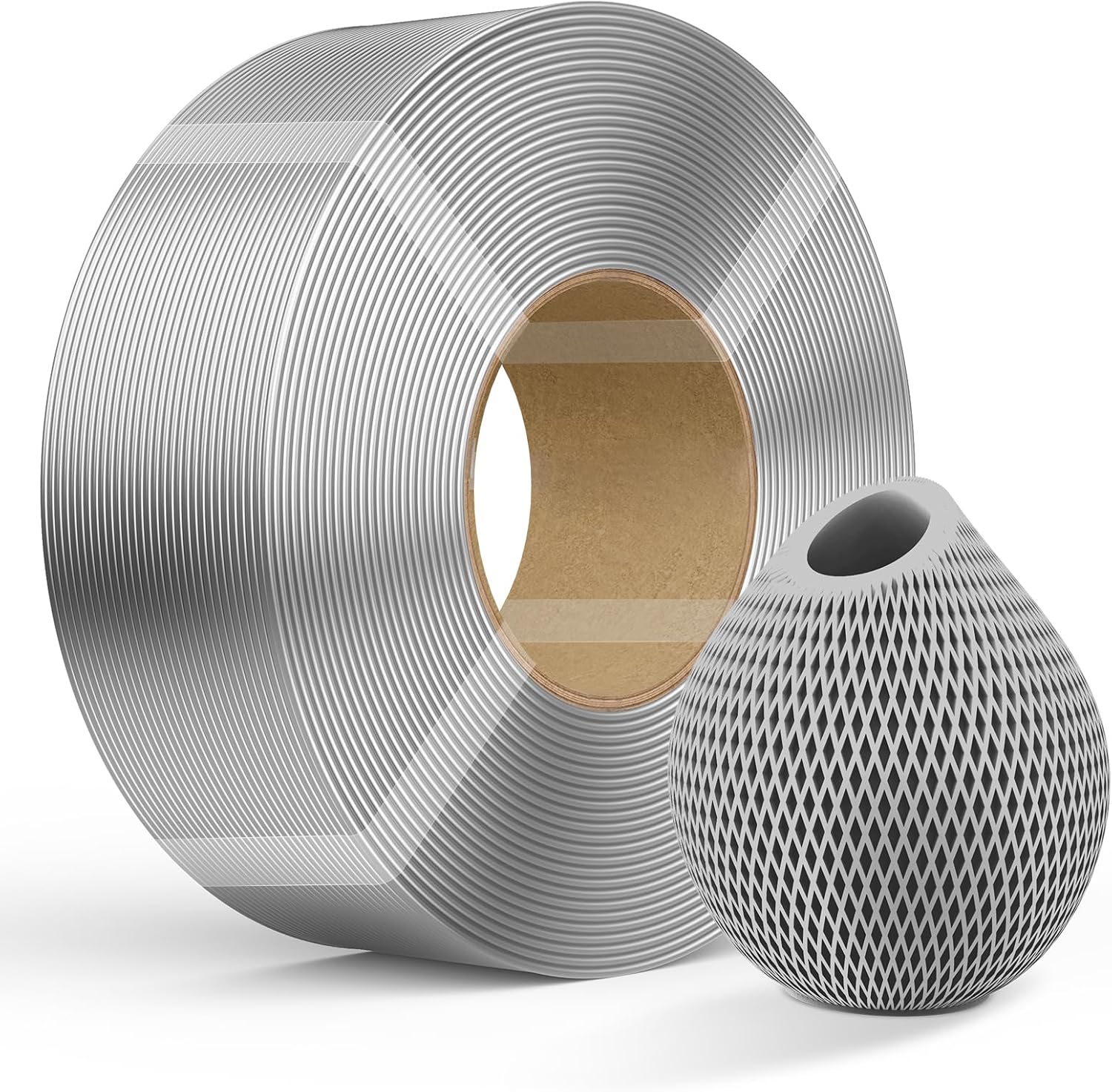
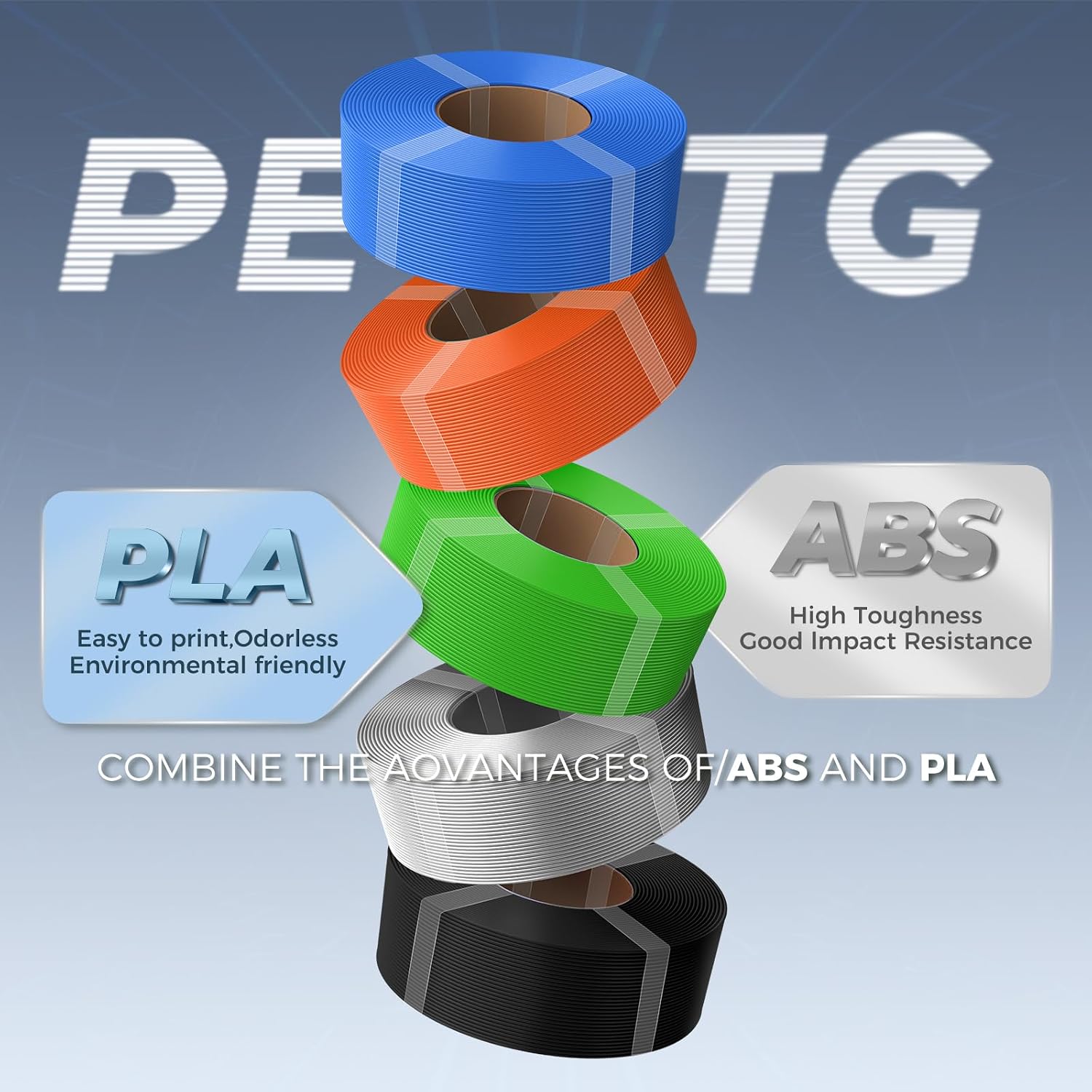
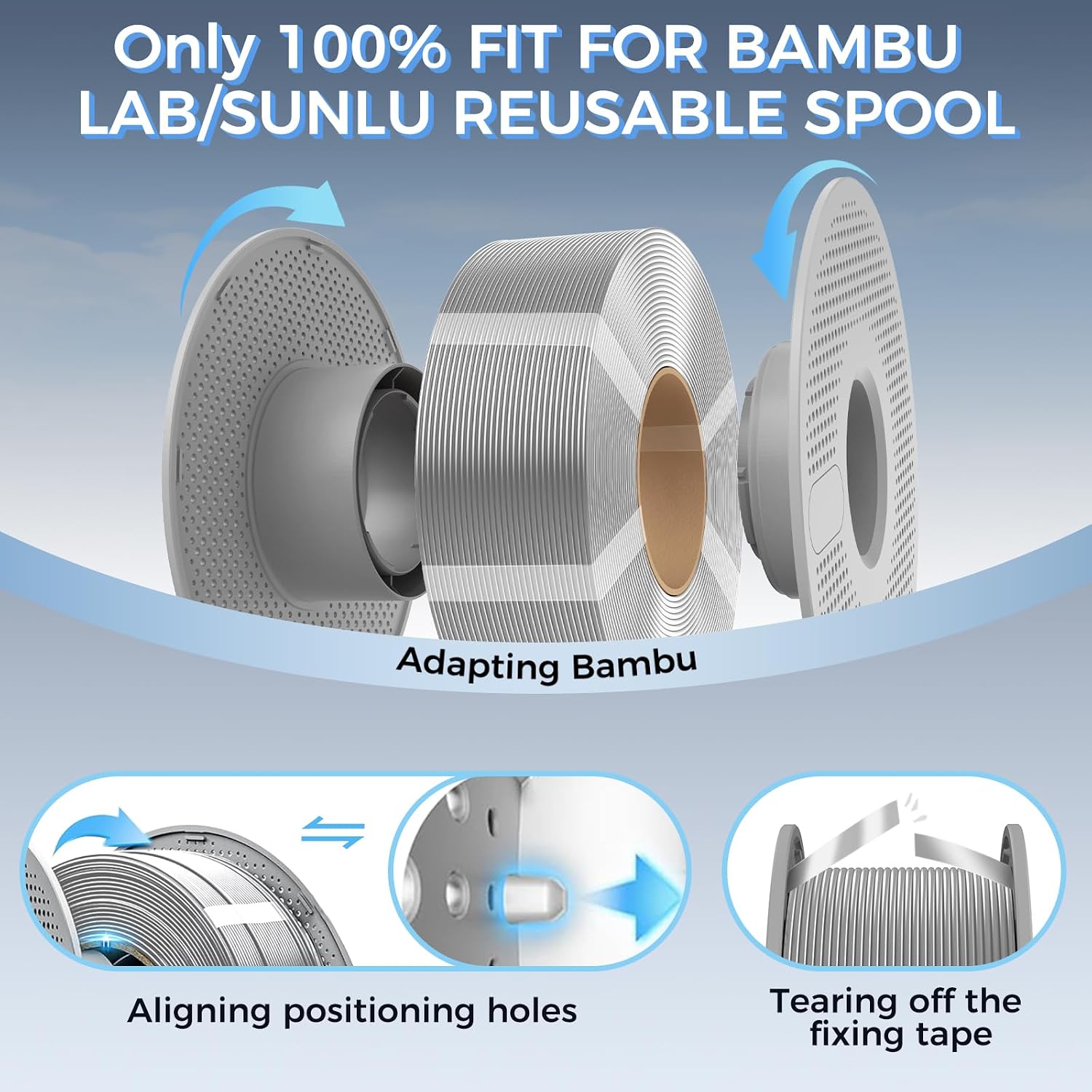
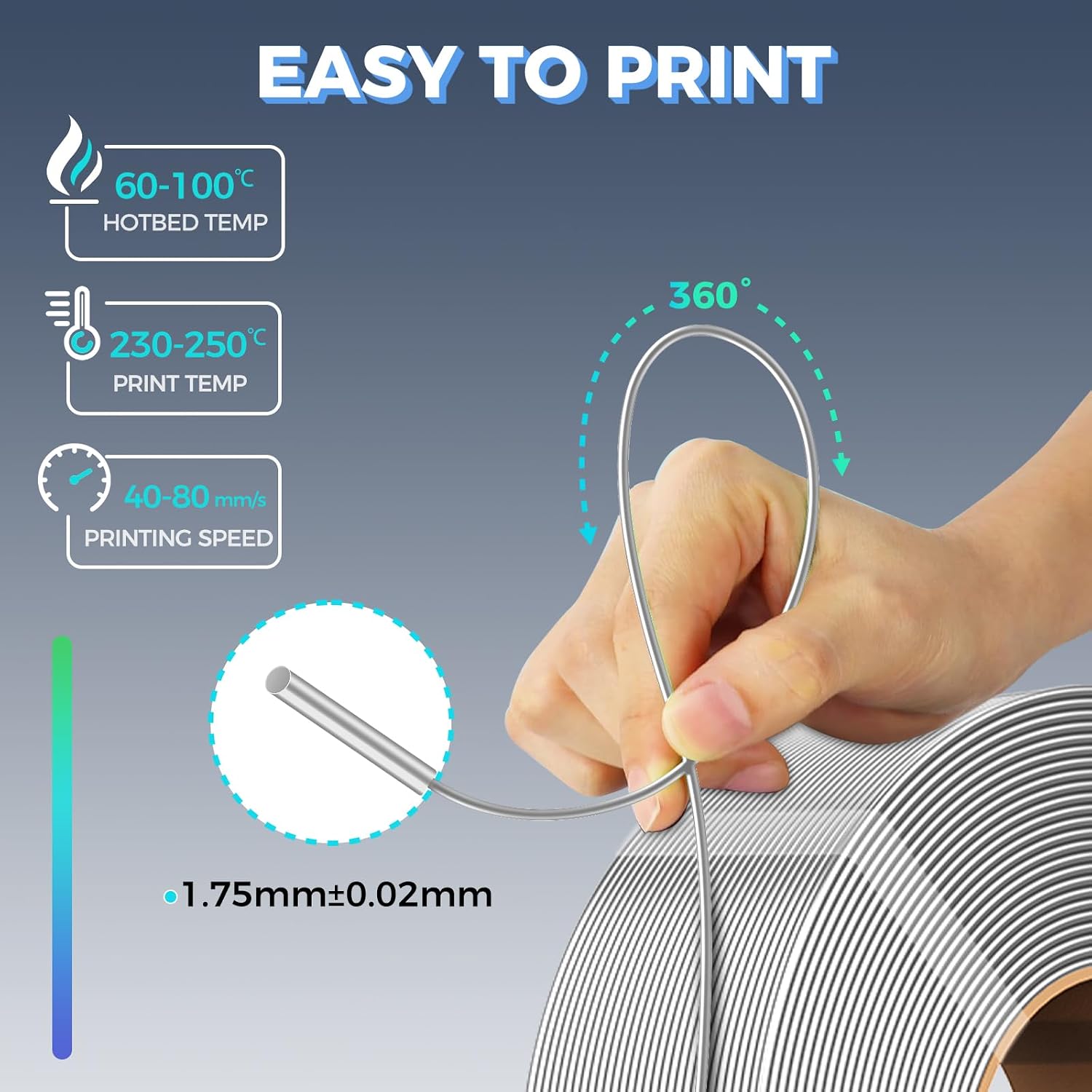
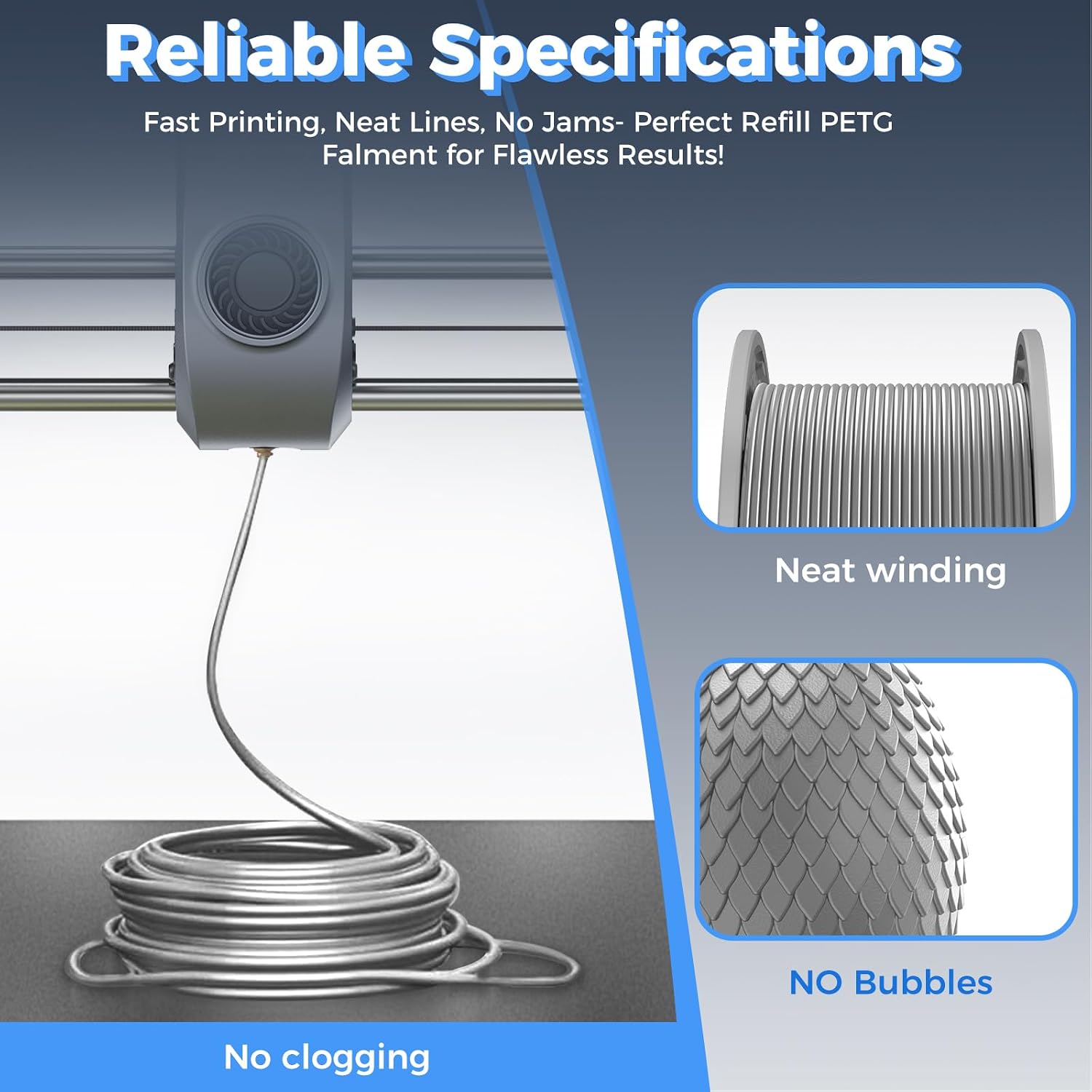
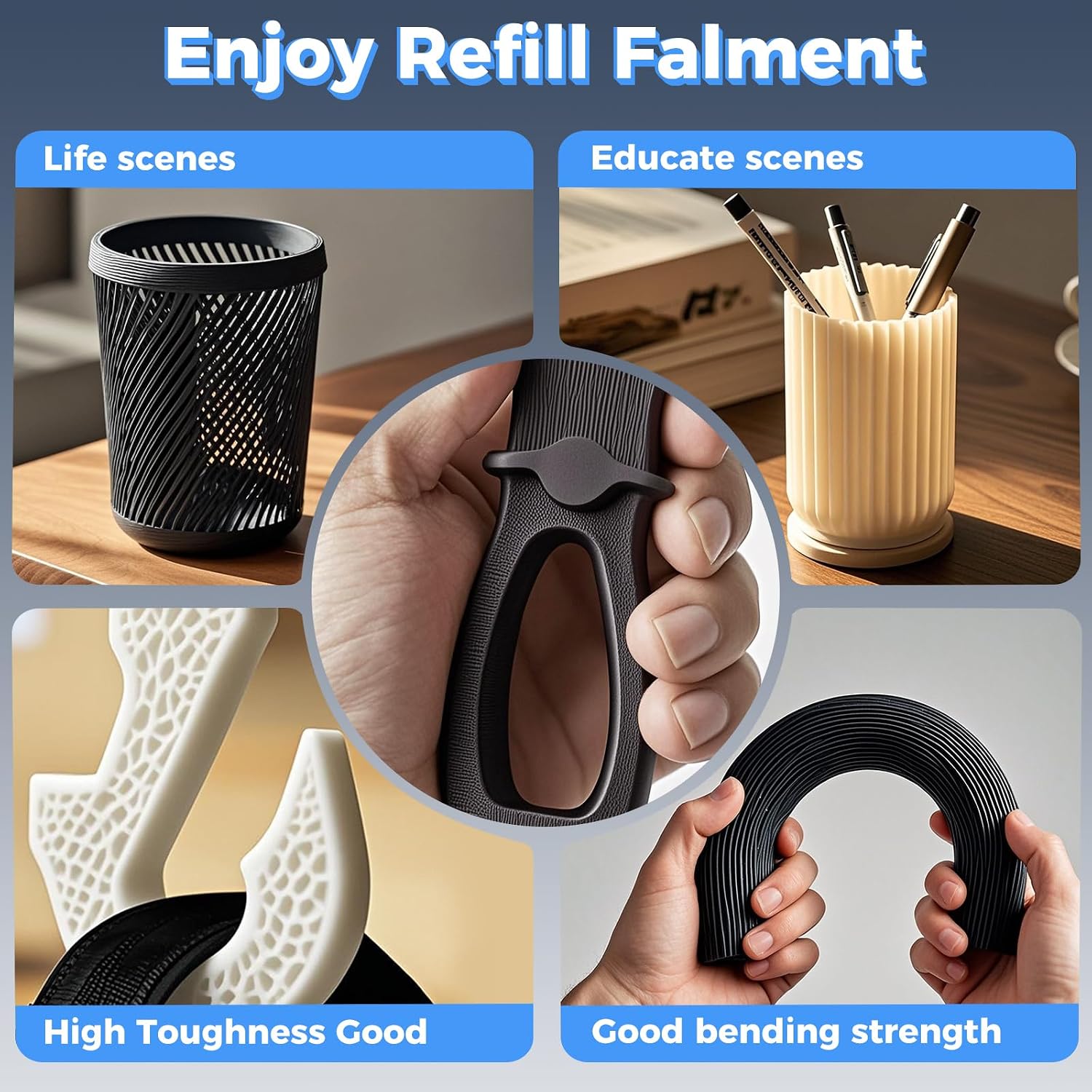
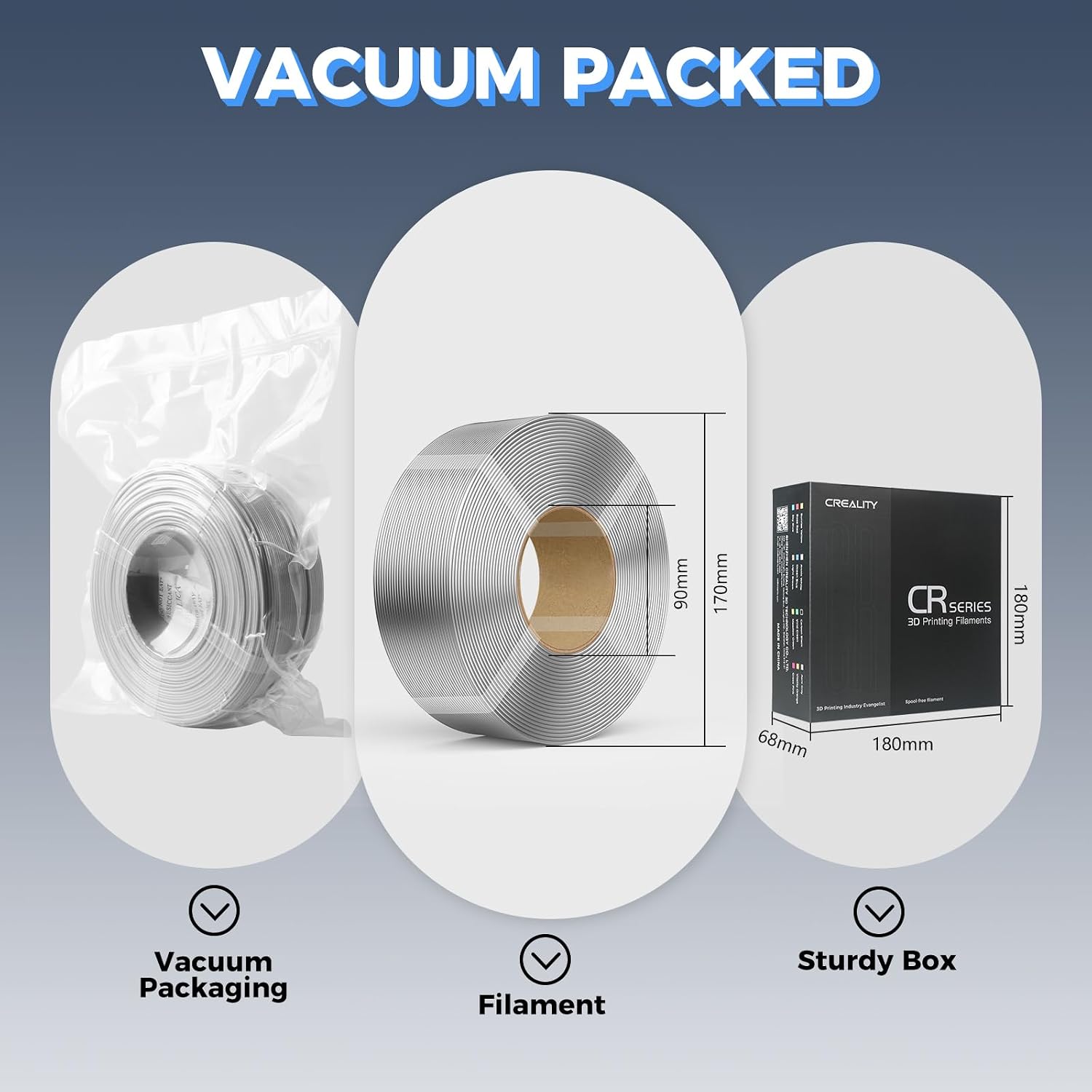
What it is and what it solves\nCreality PETG Filament Refill is a hubless PETG filament designed for use with Bambu Lab reusable spools, along with Marswork metal spools and forthcoming CREALITY detachable spools. With a 1 kg reel and 1.75 mm diameter, it aims to be a practical option for users who want to print with PETG without frequent spool changes. On the paper, PETG blends some of PLA’s ease with ABS-like durability, offering a balance of moderate heat resistance, good impact strength and reasonable dimensional stability.\n\n## How it prints and what to expect\nThe filament is advertised with strong layer adhesion to help minimise warping and improve part integrity. Printing guidance suggests a temperature range of 220–250°C and a bed temperature of 70–80°C for better results, which aligns with typical PETG practice. The material is described as dry and vacuum-sealed before packaging to protect against moisture and dust, a common risk with PETG that can affect print quality if absorbed. Expect good clarity, light transmission and a glossy finish in finished parts.\n\n## Strengths and what stands out\n- Compatibility with multiple spool systems reduces waste from traditional plastic spools.\n- Layer adhesion is positioned to reduce warping and improve dimensional stability.\n- PETG’s general properties—toughness, temperature resistance and impact resistance—make it a practical middle ground for everyday functional prints.\n- The claimed dimensional accuracy ±0.03 mm sets a reasonable expectation for print consistency with a filament of this type.\n\n## Potential limitations and caveats\n- Real-world performance can vary with printer calibration, enclosure, and cooling. For users new to PETG, stringing or oozing can occur if extrusion and retraction settings aren’t optimised.\n- The product description references a range of compatible printers and spool ecosystems, if you use a different rack or spool, it may require adjustment. It may not be perfect for extremely tight tolerance parts where exact dimensional control is critical.\n- Availability and consistency of the exact spool ecosystem (hubless/ detachable spools) can influence how smoothly this filament integrates into your current setup.\n\n## Who this is for\nIf you’re printing with PETG and want a transparent, sturdy material that prints on a broad temperature window, this refill could suit makers who favour Bambu Lab or similar spool systems and want a straightforward 1 kg option. It may appeal to hobbyists and intermediate users who prioritise a practical balance of strength, clarity and print reliability, rather than ultra-high detail in the most demanding parts.\n\n## When it makes sense to buy\n- You already use hubless or detachable spool configurations and want a compatible PETG refill.\n- You’re printing functional parts that require some toughness and good layer adhesion, but don’t need aerospace-grade tolerances.\n- You value packaging that aims to stay dry and dust-free prior to use.\n\n## When you might want to steer clear\n- If your priority is extremely tight tolerances or high-temperature performance beyond typical PETG ranges, or if you rely on very specific print parameters that differ from the suggested 220–250°C / 70–80°C.\n- If you don’t yet have the right spool system or you print in environments with high moisture risk and can’t store filament accordingly.\n\n## What to check before buying\n- Confirm your printer’s compatible spool system (hubless/detachable) and whether you’re using a 1.75 mm filament.\n- Ensure your printer is calibrated for PETG in terms of hot end temperature, bed temperature, and cooling. Small changes can impact adhesion and stringing.\n- Consider starting with a small test print to dial in temperature and retraction settings for a transparent PETG, which can behave differently from other filaments.\n\n## Practical use example\nA simple practical application is printing a functional enclosure insert. Set the hot end around 230°C and the bed around 70°C, print with moderate cooling and adjust retraction to minimise stringing. The result should be a clear, reasonably tough part that holds its shape under use.\n\n## FAQ (based on available data)\n- Is this PETG suitable for Bambu Lab printers? Yes, it’s described as compatible with Bambu Lab models and their spool systems.\n- What printing temperature should I use? A recommended range is 220–250°C with a bed of 70–80°C.\n- Will it resist warping? The supplier notes improved layer adhesion to help reduce warping, though real-world results depend on calibration and enclosure.\n\n## Is it worth it?\nWorth considering if you prioritise a practical PETG option with reliable layer adhesion and compatibility with hubless/detachable spool setups, and you’re looking for a 1 kg reel that suits everyday prints. If your needs demand ultra-tight tolerances or exceptional high-temperature performance, you may want to assess alternatives and run your own tests before committing.